
-
About Us
Why Choose Us?The company possesses advanced capabilities in mold design, injection molding, and automated assembly, supported by a professional quality inspection team to ensure product reliability. A dedicated design team continuously drives product innovation, providing customers with high-quality spray solutions.
 Coming From China, Marketing To The World.
 -
Products
-
News
 English
 Français
 русский
 Español
Plastic Round Shoulder PET Bottle for Versatile Personal Care and Daily Chemical Packaging
Content
- 1 Understanding the Plastic Round Shoulder PET Bottle
- 2 Product Specification Overview
- 3 Why PET Is a Strong Material Choice
- 4 Round Shoulder Design and Consumer Appeal
- 5 Capacity Range and Application Strategy
- 6 Applications in Skin Care and Cosmetics
- 7 Applications in Pharmacy and Health-Related Packaging
- 8 Applications in Cleaning, Air Care, Gardening, and Automotive Products
- 9 Competitive Advantages Over Common Packaging Alternatives
- 10 Manufacturing Strength: From Mold Design to Finished Packaging
- 11 Quality Control and Reliability for Filling Operations
- 12 Customization Opportunities for Brand Differentiation
- 13 Supply Chain Advantages for Global Customers
- 14 Designing a Complete Packaging System
- 15 How This Bottle Supports Product Line Expansion
- 16 Sustainability and Practical Packaging Responsibility
- 17 Buyer Considerations Before Ordering
- 18 Why Work with an Experienced Packaging Manufacturer
- 19 Q&A Section
- 19.1 What products can be packed in the Plastic Round Shoulder PET Bottle?
- 19.2 What capacities are available?
- 19.3 Why choose PET instead of glass?
- 19.4 Can the bottle be matched with pumps or sprayers?
- 19.5 Is the bottle suitable for cosmetic packaging?
- 19.6 Can the bottle be customized?
- 19.7 What makes this bottle different from ordinary plastic bottles?
- 19.8 How should buyers test the bottle before mass production?
- 19.9 Is the bottle useful for product line expansion?
- 19.10 Why is supplier capability important for this product?
- 20 Conclusion
- 21 References
- 22 Product: Plastic Round Shoulder PET Bottle
The Plastic Round Shoulder PET Bottle is a practical, adaptable, and commercially reliable packaging solution designed for brands that need clean appearance, dependable performance, and flexible capacity options. Available in 10ml, 20ml, 30ml, 50ml, 75ml, 100ml, 120ml, 150ml, 200ml, and 250ml sizes, this bottle supports a wide range of product formats, from compact travel samples to regular retail packages and larger daily-use products. Its round shoulder profile gives it a smooth, balanced look that is suitable for skin care, pharmacy, personal care, cosmetics, cleaning products, air care, gardening products, and automotive care formulas.
For modern packaging buyers, a bottle is more than a container. It must protect the formula, support filling efficiency, match brand positioning, accept compatible closures, and remain cost-effective across production and distribution. This PET bottle answers those needs with a combination of lightweight construction, clear product visibility, good strength, and wide compatibility with pumps, sprayers, caps, and other dispensing systems. For brands looking to streamline their packaging portfolio, the same design language can be applied across several capacities, helping maintain shelf consistency while serving different product volumes.
GreenYard Tools Co., Ltd. supports this product with long-term experience in spray product manufacturing and daily chemical packaging solutions. With 16 years of specialization in perfume sprayers, pump heads, caps, bottles, and related packaging components, the company combines product development, mold design, injection molding, automated assembly, and quality inspection into a coordinated manufacturing system. This integrated capability allows customers to source not only bottles but also matched closures and dispensing accessories from a single packaging partner.
Plastic Round Shoulder PET Bottle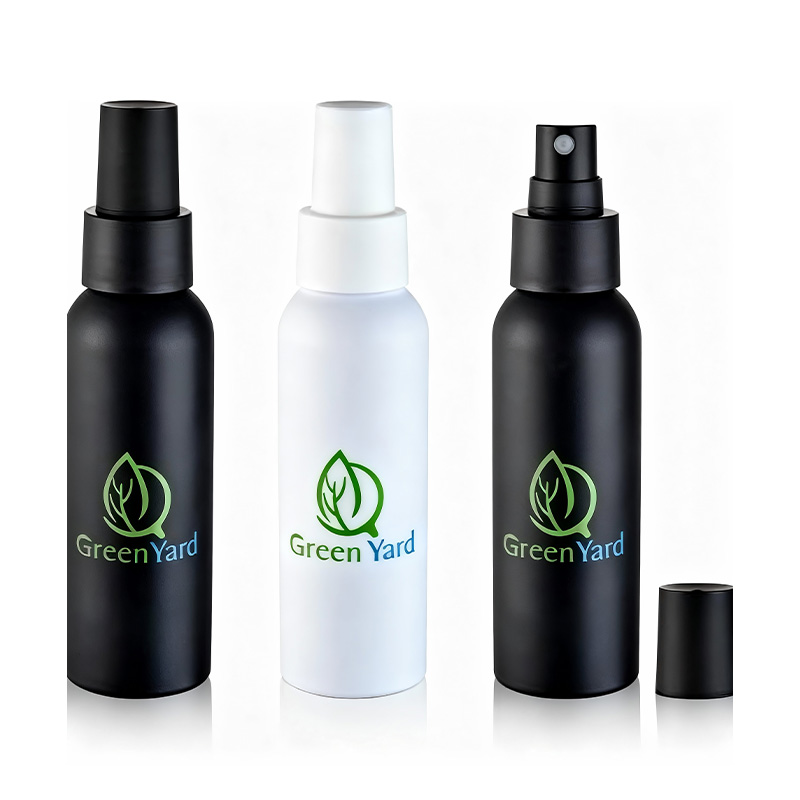
Understanding the Plastic Round Shoulder PET Bottle
The defining feature of this product is its round shoulder shape. Unlike sharp-shoulder bottles that create a more angular visual impression, the round shoulder profile gives the package a softer and more universal appearance. This makes it particularly suitable for personal care and skin care lines, where visual comfort, cleanliness, and approachability are important. At the same time, the form is neutral enough to fit pharmacy, cleaning, air care, gardening, and automotive care categories.
PET, or polyethylene terephthalate, is widely used in packaging because it combines clarity, toughness, light weight, and processability. A PET bottle can present liquid products attractively while offering better impact resistance than glass. Compared with many heavier packaging alternatives, it helps reduce transportation weight and can improve convenience for end users. In many applications, PET offers a strong balance between presentation, cost, and practical durability.
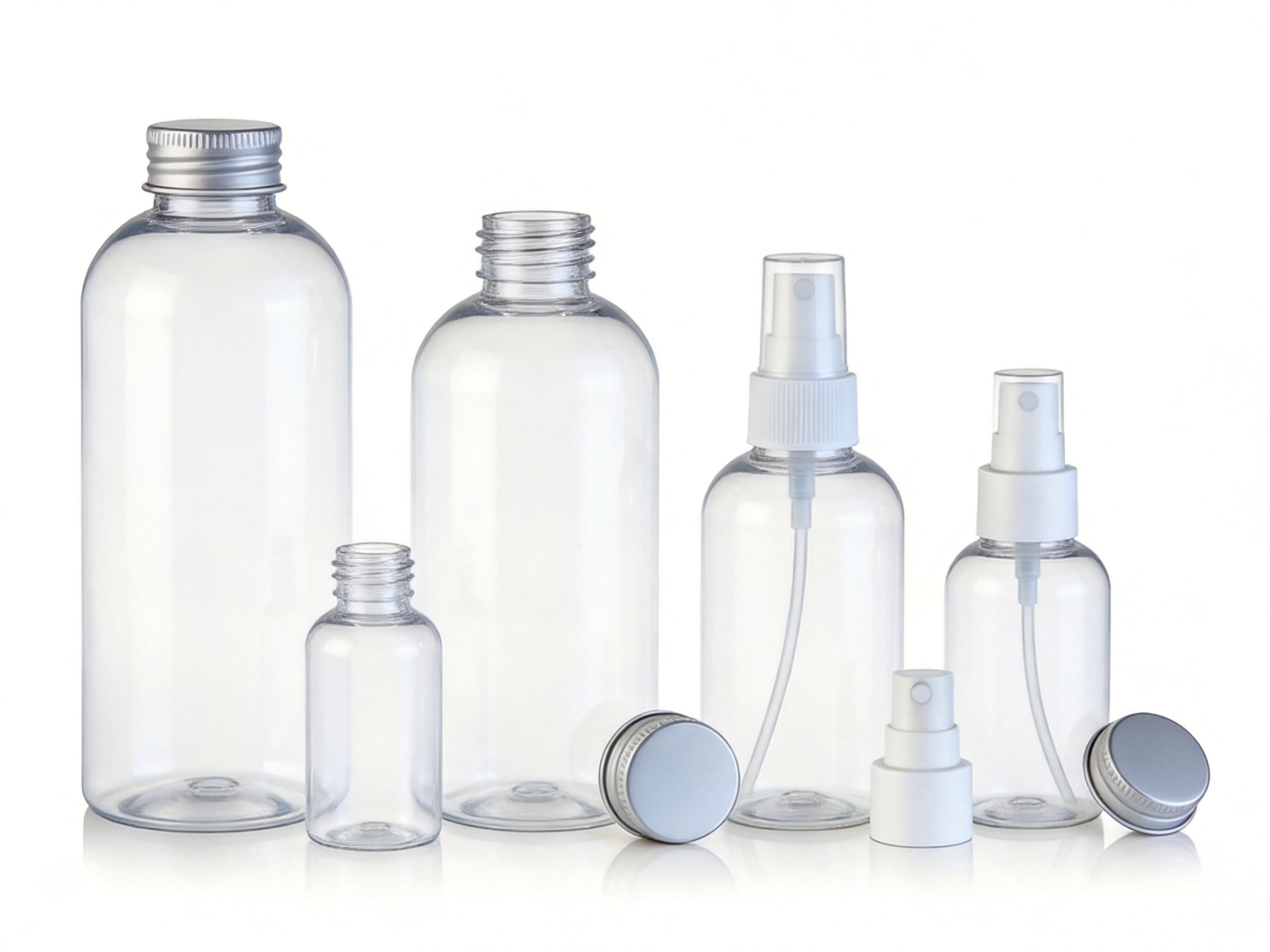
The available capacity range is one of the strongest advantages of this bottle series. Smaller sizes such as 10ml, 20ml, and 30ml are well suited for samples, trial products, concentrated formulas, travel kits, essential liquids, and pharmacy-related items. Medium sizes such as 50ml, 75ml, 100ml, and 120ml can be used for skin care lotions, toners, sanitizing products, hair care products, and personal care liquids. Larger sizes such as 150ml, 200ml, and 250ml are suitable for products requiring more frequent use, including cleaning products, air care liquids, gardening additives, automotive care liquids, and daily-use personal care products.
The bottle is designed for versatility rather than a single narrow market. This is important because many distributors, contract fillers, and brand owners prefer packaging components that can be used across several product lines. A versatile bottle reduces inventory complexity, simplifies procurement, and allows faster launch of new products. When a brand can select different capacities within the same bottle family, it can build sample, travel, standard, and value-size versions without changing the overall packaging identity.
Product Specification Overview
Item |
Details |
Packaging Benefit |
Product Name |
Plastic Round Shoulder PET Bottle |
Clean, smooth, and versatile appearance for multiple markets. |
Material |
PET plastic |
Lightweight, clear, durable, and suitable for many liquid products. |
Available Capacities |
10ml, 20ml, 30ml, 50ml, 75ml, 100ml, 120ml, 150ml, 200ml, 250ml |
Supports samples, travel sizes, standard retail sizes, and larger daily-use products. |
Main Uses |
Skin care, pharmacy, personal care, cosmetics, cleaning products, air care, gardening, automotive care products |
Suitable for brands serving several categories or product families. |
Shoulder Style |
Round shoulder |
Creates a soft, modern, and consumer-friendly silhouette. |
Closure Compatibility |
Can be matched with suitable caps, pumps, sprayers, or dispensing closures depending on product requirements |
Allows customization for liquids, lotions, sprays, and specialty formulas. |
Commercial Advantage |
One bottle family with multiple capacities |
Improves brand consistency and simplifies inventory planning. |
Why PET Is a Strong Material Choice
PET is preferred in many packaging sectors because it delivers a valuable combination of visual and mechanical qualities. Its clarity makes the product inside visible, which is useful for transparent toners, colorful liquids, cleansing formulas, air freshener liquids, and other formulations where appearance influences buying decisions. When customers can see the color and level of the product, the package can communicate freshness, cleanliness, and honesty.
Compared with glass, PET is significantly lighter and less likely to break during transport or daily handling. This matters for e-commerce, retail logistics, salon use, home care, and travel. A bottle that resists breakage helps reduce product loss, customer complaints, and safety concerns. It also lowers the risk of damage during warehouse handling and carton packing.
Compared with some other plastics, PET often offers superior clarity and a more premium look. In categories such as skin care and cosmetics, the bottle’s transparency and surface finish can directly affect brand perception. A well-formed PET bottle can present a neat, refined image without requiring the cost and fragility of glass. This helps brands achieve a balance between visual quality and commercial practicality.
PET is also compatible with many standard filling and labeling processes. It can be decorated with labels, shrink sleeves, printing methods, or other branding treatments depending on the buyer’s requirements. This adaptability gives designers flexibility when building a product family. A minimalist skin care brand may choose a clear bottle with a simple label, while a cleaning product brand may use brighter labels and functional closure systems.
Another benefit of PET is its role in packaging weight reduction. Lightweight packaging can reduce freight burden and improve handling efficiency. While sustainability depends on a full life-cycle view and local recycling systems, PET is widely recognized in many recycling streams. For brands seeking to improve packaging responsibility, PET offers a commonly used material platform that can support recyclable packaging strategies when designed and collected appropriately.
Round Shoulder Design and Consumer Appeal
The shoulder shape of a bottle influences both appearance and usability. A round shoulder design creates a smooth transition from the body to the neck, making the bottle look softer and more elegant. This geometry is suitable for personal care products because it avoids harsh lines and gives the package a friendly, comfortable character. Consumers often associate rounded packaging forms with smoothness, care, and simplicity.
From a practical standpoint, a round shoulder can also assist product flow, especially for liquid products. Although exact performance depends on formula viscosity and bottle design details, smooth internal transitions may help reduce product retention compared with more abrupt forms. For many everyday liquid products, the round shoulder silhouette provides a good compromise between aesthetic value and functional practicality.
The round body also offers flexible labeling space. Brands can apply front and back labels, wraparound labels, or shrink sleeves, depending on capacity and decoration strategy. A cylindrical or near-cylindrical body helps labels sit cleanly and evenly, supporting professional shelf presentation. This is especially useful for brands producing several sizes within one product family, since label artwork can be adapted across capacities while keeping a consistent visual structure.
In retail, packaging silhouette helps consumers recognize a product quickly. A rounded PET bottle can be used for gentle skin care, clinical pharmacy products, modern home care liquids, fragrance refills, plant care additives, or automotive detailing fluids. This broad design acceptance allows the same packaging concept to work across different markets without appearing out of place.
Capacity Range and Application Strategy
The 10ml size is ideal for samples, trial packs, hotel amenities, concentrated active formulas, portable sanitizing liquids, and small pharmacy products. It allows brands to introduce formulas at a low commitment level and is useful for promotional distribution. A sample bottle can help customers test fragrance, texture, and performance before purchasing a larger size.
The 20ml and 30ml sizes are commonly suitable for travel-friendly products, compact skin care items, and specialty liquids. These sizes can be placed in kits, gift sets, professional treatment packages, and e-commerce sample bundles. Their small footprint helps reduce shipping volume while providing enough product for meaningful use.
The 50ml and 75ml sizes bridge the gap between sample and standard retail packaging. They are appropriate for facial toners, lightweight lotions, serums with liquid consistency, pharmacy liquids, cleansing products, and portable personal care products. For premium brands, these sizes can serve as standard units for high-value formulas. For mass-market brands, they can work as trial or travel sizes.
The 100ml and 120ml sizes are widely applicable for retail personal care and cosmetics. Many consumers view these volumes as convenient for bathroom, handbag, travel, or professional use. They offer enough product for repeated application while remaining compact. Brands can pair these bottles with caps, pumps, or fine mist sprayers depending on formula type.
The 150ml, 200ml, and 250ml sizes are suitable for daily-use products and functional liquids. These capacities support cleaning products, air care liquids, gardening solutions, automotive care products, body care liquids, hair care products, and refills. Their larger volume can provide better value for consumers and reduce the frequency of repurchase.
A major advantage of offering many capacities in one design family is portfolio planning. A brand can create a complete size ladder: a 10ml sample, a 30ml travel unit, a 100ml regular retail bottle, and a 250ml value size. This helps marketing teams serve different customer needs without developing unrelated packaging for every volume. It also supports seasonal promotions, subscription kits, professional salon packs, and retail multipacks.
Applications in Skin Care and Cosmetics
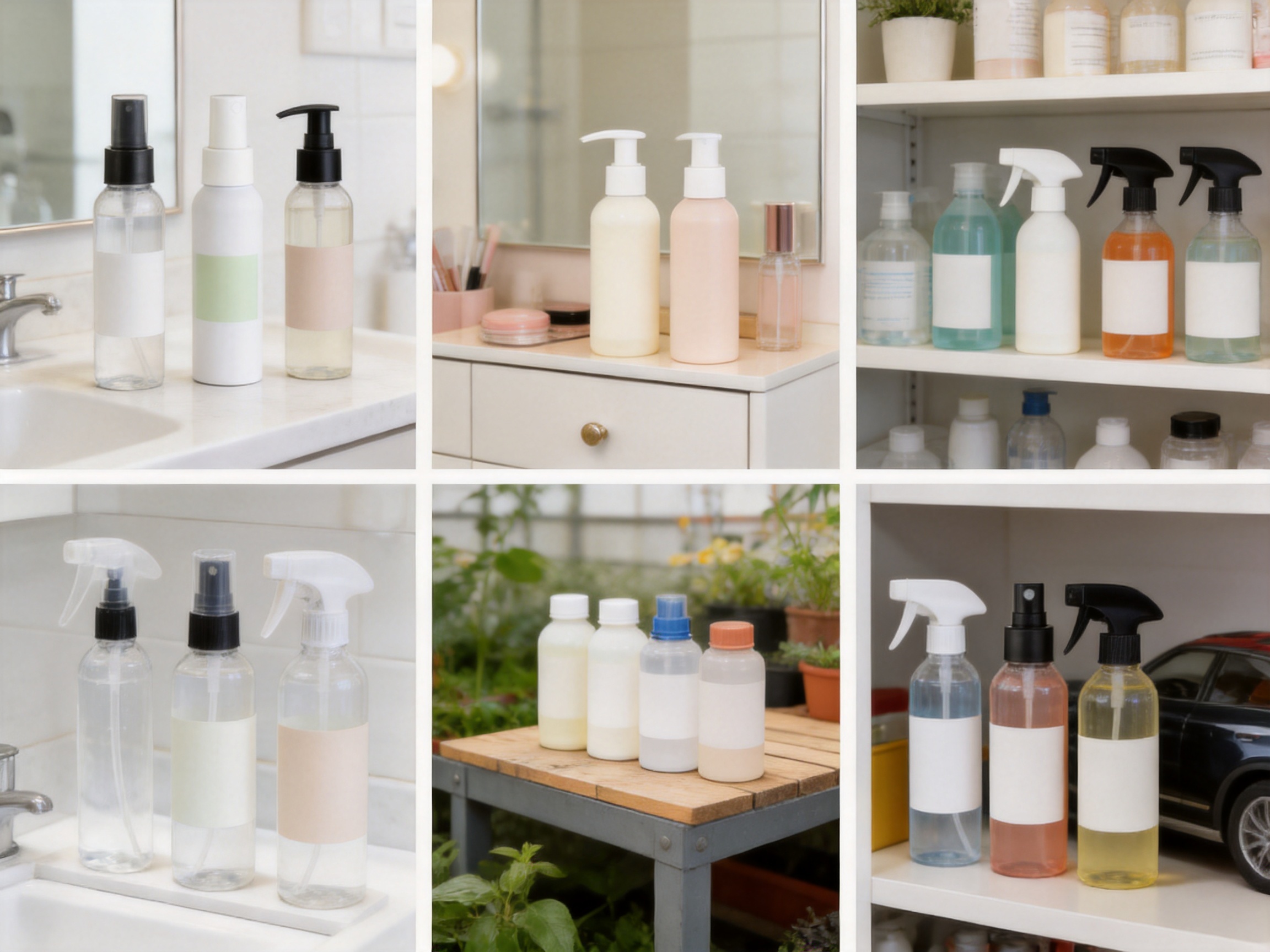
In skin care, packaging must protect the formula while reinforcing brand trust. Consumers expect skin care bottles to look clean, hygienic, and easy to use. The Plastic Round Shoulder PET Bottle fits this expectation because its smooth shape and clear material create a professional appearance suitable for toners, essences, cleansing waters, lightweight lotions, makeup removers, after-sun liquids, and refreshing sprays when paired with an appropriate dispenser.
For cosmetic brands, visual consistency is essential. A series of PET bottles in different capacities can help present a unified product line. For example, a brand may use 30ml bottles for concentrated treatments, 100ml bottles for toners, and 200ml bottles for body care products. The common round shoulder design ties the range together while allowing each formula to have the right volume.
Transparency is also valuable in cosmetics because formula color and texture can become part of the product identity. A clear bottle can display pale botanical extracts, blue hydrating toners, amber oils, or colorful cleansing liquids. If a brand prefers opacity or color protection, PET bottles can often be customized with colorants, coatings, sleeves, or labels depending on project requirements.
When paired with fine mist sprayers, the bottle can be suitable for facial mists, setting sprays, refreshing waters, and hair care sprays. When paired with lotion pumps or dispensing caps, it can support lightweight lotions, cleansing gels, and body care liquids. This compatibility with different dispensing systems is one reason the bottle is useful for cosmetic developers and contract packaging companies.
Applications in Pharmacy and Health-Related Packaging
Pharmacy-related packaging requires clarity, controlled dispensing, and reliable closure compatibility. The smaller and medium capacities of this PET bottle can be appropriate for non-sterile liquid products, topical liquids, cleansing products, care solutions, and other pharmacy-related items where PET compatibility is suitable. The clean shape helps communicate order and professionalism, which is important in health-related categories.
For pharmacy use, labeling space is especially important because instructions, warnings, dosage information, ingredients, and regulatory text may be required. The bottle’s body shape supports clear label application, helping brands or fillers present information in an organized format. In smaller capacities, label design must be carefully managed to preserve readability while maintaining an attractive appearance.
The bottle’s light weight and break resistance are also valuable in pharmacy channels. Consumers may carry small liquid products in bags, first-aid kits, travel cases, or professional care kits. PET helps reduce the risk of breakage compared with glass, improving convenience and safety in daily use. For many non-pressurized liquid applications, this can be a practical packaging advantage.
Applications in Cleaning, Air Care, Gardening, and Automotive Products
The product is not limited to beauty and personal care. Its durability and capacity range make it suitable for a wide range of household and functional liquids. Cleaning products can use medium or larger sizes, especially when paired with suitable trigger sprayers, mini triggers, disc caps, or other closures. The bottle’s shape supports clear branding and instruction labels, which are important for household cleaning categories.
Air care products often require attractive packaging because they are used in visible areas of homes, offices, cars, and public spaces. A round shoulder PET bottle can be used for air freshener liquids, room sprays, fabric refreshers, or fragrance refills when matched with compatible spray components. The clear PET body can show the liquid color and remaining product level, while the rounded form gives the package a softer decorative quality.
Gardening products may include plant care liquids, nutrient concentrates, leaf sprays, or pest-control-related products where the formula and packaging compatibility have been verified. For these applications, bottles must be easy to handle and label clearly. PET’s light weight is beneficial for consumers who may use the product outdoors or carry it between storage and garden areas.
Automotive care products require packaging that can support functional use and a professional appearance. The larger sizes can be used for detailing liquids, interior care products, glass cleaners, or fragrance-related car care products when the formula is suitable for PET. A round shoulder bottle presents a clean, organized look that works well for retail shelves and online product photography.
Competitive Advantages Over Common Packaging Alternatives
Compared with generic commodity bottles, this Plastic Round Shoulder PET Bottle offers a more complete packaging concept because it is available across a broad capacity range. Many competitors may provide isolated sizes, forcing buyers to mix bottle styles from different suppliers. That can create inconsistent shelf appearance, mismatched neck finishes, and additional procurement work. A complete size series helps solve these issues.
Compared with glass bottles, PET bottles reduce weight and breakage risk. Glass can look premium, but it increases shipping weight and is more vulnerable in e-commerce distribution. For high-volume personal care, cleaning, air care, and automotive products, PET often delivers a better operational balance. It allows brands to achieve a clean and transparent look while improving handling convenience.
Compared with poorly designed plastic bottles, the round shoulder design adds visual refinement. A bottle with uneven surfaces, inconsistent wall thickness, or an unattractive shoulder transition can weaken brand image. The smooth round shoulder profile provides a more polished appearance and is suitable for both mass-market and mid-to-premium product lines.
Compared with packaging suppliers that only sell bottles, GreenYard offers broader component expertise. The company manufactures and supplies perfume sprayers, pump heads, caps, bottles, and daily chemical packaging solutions. This is a meaningful advantage because bottle performance often depends on the closure system. A bottle must match the pump, sprayer, cap, gasket, dip tube, and formula requirements. A supplier with experience across the full dispensing system can help customers reduce compatibility risks.
Compared with suppliers that rely heavily on manual assembly, advanced automated assembly helps improve consistency and production efficiency. GreenYard’s production system includes mold design, injection molding, automated assembly, and quality inspection. These capabilities support reliable output and help meet the needs of customers who require stable quality across repeated orders.
Compared with small workshops, a manufacturer with a daily production capacity of one million units can better support large orders, repeat programs, and global supply requirements. Production capacity matters not only for quantity but also for delivery planning. Brands launching seasonal products or supporting retail chains need packaging partners that can align with production schedules and reduce supply uncertainty.
Manufacturing Strength: From Mold Design to Finished Packaging
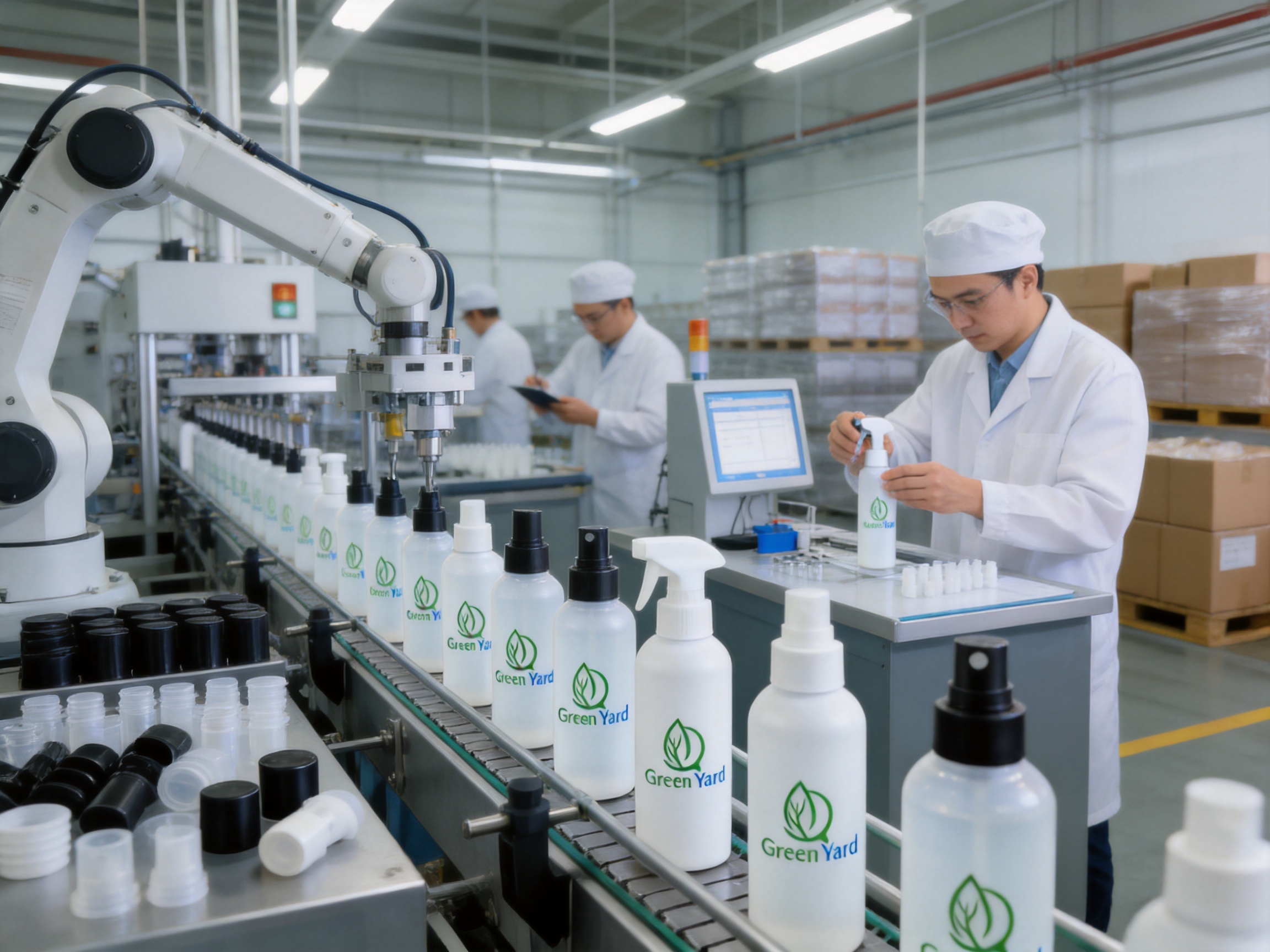
One of the key strengths behind this product is manufacturing integration. Packaging quality starts long before the bottle is filled. It begins with design, tooling, material selection, process control, and inspection planning. GreenYard’s manufacturing foundation includes mold design and injection molding capabilities, which are essential for producing precise packaging components and matched closures.
Mold design affects dimensional accuracy, surface finish, production efficiency, and long-term stability. A well-designed mold helps ensure that bottle components, caps, pumps, and sprayer parts are produced within controlled tolerances. This is particularly important for neck finishes and closure interfaces. If a neck or closure is inconsistent, leakage, poor sealing, difficult assembly, or poor dispensing performance may occur.
Injection molding capability is important for caps, pump components, sprayer parts, and other packaging accessories. By controlling injection molding processes, the manufacturer can manage key parameters such as part dimensions, surface quality, structural strength, and assembly fit. For buyers, this means greater confidence that related components will match the bottle and perform reliably.
Automated assembly adds another level of process control. Pumps and sprayers often include several small parts, such as actuators, closures, stems, springs, gaskets, pistons, and dip tubes. Manual assembly can create variation if not carefully controlled. Automated assembly improves consistency, speed, and repeatability, helping reduce defects and support large-scale orders.
Quality inspection is the final but continuous safeguard. Effective inspection may include dimensional checks, appearance checks, assembly checks, leakage evaluation, functional testing for dispensing components, and packaging review before shipment. The goal is to detect potential issues before products reach the customer. For global buyers, consistent inspection is essential because packaging defects can disrupt filling lines, delay product launches, and damage brand reputation.
Quality Control and Reliability for Filling Operations
Packaging buyers often evaluate a bottle not only by appearance but also by how well it performs during filling, capping, labeling, shipping, and consumer use. A reliable PET bottle should maintain dimensional consistency, stand properly on filling lines, accept labels smoothly, and pair with closures without leakage. These practical factors can determine whether a packaging component is truly cost-effective.
In filling operations, dimensional stability helps equipment run smoothly. If bottle height, diameter, neck size, or wall consistency varies too much, automatic filling and capping machines may require frequent adjustment. That can increase downtime and labor costs. A controlled production process helps reduce these disruptions.
Sealing reliability is another major concern. A bottle must work with the selected cap, pump, sprayer, or dispensing closure. The neck finish and closure system must be compatible to prevent leakage during storage and transport. For products shipped internationally or sold online, leakage prevention is especially important because packages may be exposed to vibration, pressure changes, temperature variation, and rough handling.
Labeling performance also matters. A bottle with a consistent body shape supports accurate label placement and attractive presentation. Wrinkled labels, uneven application, or poor adhesion can reduce perceived product quality. The round body and smooth surface of this PET bottle offer a practical platform for different label styles and decoration approaches.
For consumer use, the bottle should feel comfortable and stable. The round shoulder and simple body shape support easy gripping in many sizes. Smaller bottles can be carried conveniently, while larger bottles remain suitable for household and professional applications. When the product is paired with the correct closure, consumers can dispense the formula cleanly and efficiently.
Customization Opportunities for Brand Differentiation
Although the bottle is practical as a standard packaging option, it can also support customization strategies. Brands may customize color, label design, closure type, sprayer or pump selection, surface decoration, and packaging sets. Customization allows the same bottle structure to serve different markets and brand identities.
Color customization can help distinguish formulas or product categories. Clear PET is suitable for products where liquid visibility is desirable. Transparent tinted colors can create a premium or category-specific appearance. Opaque colors can help create a bold shelf impression or support formulas that should be protected from visible light exposure, depending on compatibility and technical requirements.
Closure selection is one of the most important customization choices. A simple screw cap may be suitable for refills or basic liquids. A disc top cap can support controlled dispensing for personal care products. A fine mist sprayer can turn the bottle into a spray package for toners, air care liquids, or refreshing products. A lotion pump can support certain liquid or low-viscosity lotion formulas. A trigger or mini trigger may be appropriate for cleaning, gardening, or automotive care products.
Labeling and decoration also determine final brand impact. The bottle can support minimalist labels for pharmacy or clean beauty positioning, colorful labels for home care, technical labels for automotive care, or botanical graphics for gardening products. Because the bottle is available in many capacities, brands can keep label architecture consistent across the entire series.
GreenYard’s dedicated design team helps promote product innovation and packaging adaptation. A capable design team can assist customers in selecting suitable combinations of bottle, closure, and decoration. This is especially valuable for buyers launching new products or upgrading from older packaging that lacks consistency or shelf appeal.
Supply Chain Advantages for Global Customers
Packaging supply is a strategic issue for brand owners, contract fillers, and distributors. A bottle may look simple, but an unstable supply chain can cause serious delays. If packaging is unavailable, finished goods cannot be filled, shipped, or sold. A manufacturer with strong production capacity and process control helps customers plan more confidently.
GreenYard’s daily production capacity of one million units supports large-scale packaging programs. This scale is valuable for customers who need repeat orders, multi-size product lines, or seasonal promotions. It also helps support distributors who must maintain inventory for multiple end users.
Because the company produces various packaging components, customers can consolidate sourcing. Instead of purchasing bottles from one supplier, pumps from another, sprayers from a third, and caps from another, buyers can work with one experienced packaging manufacturer for coordinated solutions. This can reduce communication complexity, improve component matching, and simplify quality responsibility.
Global customers also benefit from a manufacturer familiar with international packaging expectations. Personal care, cosmetics, cleaning, air care, gardening, and automotive products may each have different requirements for appearance, function, labeling, and logistics. A supplier with broad market experience can help customers choose practical packaging combinations for their target market.
Located in Yuyao City, Zhejiang Province, China, GreenYard operates in a region with a strong manufacturing foundation. Access to packaging supply chains, tooling resources, skilled labor, and export experience supports efficient production and shipment. For overseas buyers, this industrial environment can be a practical advantage when sourcing custom or standard packaging products.
Designing a Complete Packaging System
A bottle should not be evaluated alone. It is part of a complete packaging system that includes the formula, closure, liner or gasket if required, label, carton, filling equipment, shipping method, and consumer use environment. The Plastic Round Shoulder PET Bottle provides the central container, but the best results come from matching it carefully with the right accessories and process requirements.
For liquid skin care products, a fine mist sprayer may be selected if the formula is sprayable and compatible. For toners and cleansing waters, a screw cap, disc cap, or pump may be considered depending on the desired dispensing experience. For cleaning products, a trigger sprayer or mini trigger may improve usability. For air care products, a mist sprayer can create a fine spray effect when properly matched with the formula.
For pharmacy and specialized products, closure security and label readability may be more important than decorative style. The packaging system should be tested for leakage, compatibility, and ease of use. For gardening and automotive products, chemical compatibility and functional dispensing are especially important. The bottle and closure should be tested with the actual formula before commercial launch.
GreenYard’s experience with crimp pumps, fine mist sprayers, lotion pumps, treatment pumps, foam pumps, droppers, caps, airless bottles, deodorant stick bottles, cream jars, nail polish pumps, trigger sprayers, PET bottles, and roll-on bottles gives customers access to a broad packaging ecosystem. This knowledge is helpful when choosing the correct packaging format for each product type.
How This Bottle Supports Product Line Expansion
Brands often begin with one successful product and later expand into related formulas. A skin care brand may start with a toner, then add a mist, cleanser, essence, and body spray. A cleaning brand may start with one household cleaner, then add fragrance sprays, refills, and specialty surface products. A gardening brand may add plant nutrients, leaf shine, and care sprays. A packaging family with multiple capacities makes this expansion easier.
Using the same bottle style across a product line helps build recognition. Customers can identify the brand quickly even when the product type changes. Retailers also appreciate packaging consistency because it creates a tidy shelf arrangement. E-commerce photography becomes more efficient when bottle shapes are consistent across the range.
The capacity range supports different price points. Smaller bottles can be used for entry-level purchases, samples, and promotional kits. Medium bottles can serve as standard retail items. Larger bottles can offer better value or refill convenience. This creates a flexible commercial strategy without requiring a different packaging design for every price tier.
For contract fillers, the bottle family can reduce operational complexity. If several products use similar bottle shapes and compatible closures, filling line setup may be easier than managing many unrelated containers. This can support faster production changeovers and improved inventory management.
Sustainability and Practical Packaging Responsibility
Packaging sustainability requires more than a single material claim. It involves material selection, weight efficiency, recyclability, durability, transport impact, and product protection. A package that breaks, leaks, or fails during distribution creates waste by damaging both packaging and formula. Therefore, reliability is an important part of responsible packaging.
PET can support lightweight packaging strategies. Reduced weight can lower transportation burden compared with heavier materials such as glass. PET’s durability can also reduce product loss from breakage. For many consumer goods, these practical benefits are significant.
Recyclability depends on local collection and processing systems, but PET is widely recognized in many recycling programs. To improve recyclability, brands should consider decoration choices, label materials, color selection, and closure combinations. Clear or lightly tinted PET may be preferred in some recycling streams, while full-body sleeves or dark colors may require careful evaluation.
Using one bottle family across multiple products can also reduce development waste. Standardized packaging helps companies avoid excessive tooling, simplify stock management, and reduce obsolete packaging inventory. When packaging components can be used across several products, brands can respond more flexibly to demand changes.
GreenYard’s manufacturing capabilities can support customers seeking efficient, practical packaging solutions. Through design coordination, controlled production, and quality inspection, the company helps reduce the risk of packaging failure and unnecessary waste in the supply chain.
Buyer Considerations Before Ordering
Before selecting this PET bottle for a commercial project, buyers should define the product formula, filling volume, dispensing method, target market, decoration style, and logistics conditions. These factors influence the most suitable capacity and closure combination. A 30ml bottle for a facial treatment will have different requirements from a 250ml bottle for automotive care.
Formula compatibility should always be tested. Although PET is widely used, not every formula is suitable for every plastic package. Products with high solvent content, aggressive chemicals, essential oils, alcohol levels, or unusual pH values may require compatibility evaluation. Testing should include storage under realistic temperature and time conditions.
Closure matching is equally important. A fine mist sprayer must produce the desired spray pattern with the actual formula. A pump must deliver the correct dosage and avoid clogging. A cap must seal effectively during shipping and storage. A trigger sprayer must match the bottle size, dip tube length, and intended use.
Decoration should be planned early. Label size, label material, printing method, and bottle color all affect final appearance. For small bottles, label space is limited, so essential information must be prioritized. For larger bottles, brands can use more detailed instructions and marketing graphics.
Packaging samples should be evaluated before mass production. Buyers should inspect appearance, capacity, fit with closures, filling performance, label application, drop resistance where appropriate, and carton packing. A careful sample approval process helps prevent issues during full-scale production.
Why Work with an Experienced Packaging Manufacturer
Choosing a packaging supplier is not only a price decision. Low-cost packaging can become expensive if it causes leakage, filling delays, inconsistent appearance, or customer complaints. An experienced manufacturer helps customers avoid these risks by providing better process knowledge and more stable production.
GreenYard has specialized in spray product manufacturing for 16 years. This long-term experience is important because pump and sprayer packaging requires precision. Dispensing products must move smoothly, seal properly, and deliver consistent output. The company’s background in perfume sprayers, pump heads, caps, bottles, and daily chemical packaging solutions gives it a strong understanding of how bottles and closures work together.
The company’s advanced mold design capability supports product consistency and customization. Tooling quality affects everything from appearance to assembly fit. With mold design experience, the manufacturer can support both standard products and customer-specific development needs.
Injection molding and automated assembly strengthen production reliability. These processes help produce consistent caps, pump parts, and sprayer components at scale. Automated assembly reduces variation and supports high-volume output. Combined with quality inspection, these capabilities help maintain stable supply for global customers.
A dedicated design team adds another layer of value. Packaging innovation is necessary as consumer expectations change. Brands may need lighter packaging, improved dispensing, more attractive shapes, or product line coordination. A design-focused manufacturer can help customers translate market ideas into feasible packaging solutions.
Q&A Section
What products can be packed in the Plastic Round Shoulder PET Bottle?
The bottle is suitable for many liquid or compatible cream-based products, including skin care products, pharmacy-related liquids, personal care formulas, cosmetics, cleaning products, air care products, gardening liquids, and automotive care products. Final suitability should be confirmed through formula compatibility testing.
What capacities are available?
The available capacities include 10ml, 20ml, 30ml, 50ml, 75ml, 100ml, 120ml, 150ml, 200ml, and 250ml. This wide range allows brands to develop samples, travel sizes, standard retail products, and larger daily-use packages within the same bottle family.
Why choose PET instead of glass?
PET is lighter than glass and less likely to break during shipping or daily use. It also offers good clarity, making it suitable for products where liquid visibility is important. For many personal care, cleaning, air care, gardening, and automotive products, PET provides a practical balance of appearance, durability, and cost efficiency.
Can the bottle be matched with pumps or sprayers?
Yes, the bottle can be matched with suitable closures, pumps, fine mist sprayers, trigger sprayers, or caps depending on the neck finish, formula, and application requirements. Because GreenYard also manufactures pump heads, sprayers, caps, and related packaging components, customers can develop more complete packaging systems.
Is the bottle suitable for cosmetic packaging?
Yes, it is suitable for many cosmetic and personal care applications such as toners, facial mists, cleansing liquids, lightweight lotions, hair care liquids, and body care products. The round shoulder shape and PET clarity provide a clean and modern appearance for cosmetic brands.
Can the bottle be customized?
Customization may include capacity selection, closure matching, bottle color, label design, decoration style, and packaging combinations. Specific customization options depend on order requirements, technical feasibility, and production arrangements.
What makes this bottle different from ordinary plastic bottles?
Its advantages include a wide capacity range, smooth round shoulder design, clear PET material, broad application suitability, and compatibility with many dispensing systems. In addition, it is supported by a manufacturer with mold design, injection molding, automated assembly, and quality inspection capabilities.
How should buyers test the bottle before mass production?
Buyers should test formula compatibility, leakage resistance, closure fit, filling performance, label application, appearance, and shipping durability. Testing should use the actual formula and intended closure under realistic storage and transport conditions.
Is the bottle useful for product line expansion?
Yes, the multiple capacities make it easy to build a complete product line. A brand can use smaller bottles for samples, medium sizes for standard retail items, and larger bottles for value sizes or refill products while maintaining a consistent packaging style.
Why is supplier capability important for this product?
Supplier capability affects quality, delivery, customization, and component compatibility. A manufacturer with strong production capacity, technical knowledge, and quality inspection can help reduce risks related to leakage, inconsistent dimensions, poor closure fit, and delayed shipments.
Conclusion
The Plastic Round Shoulder PET Bottle is a versatile packaging choice for brands that need reliable, attractive, and adaptable containers for multiple product categories. With capacities from 10ml to 250ml, it supports samples, travel products, standard retail sizes, and larger daily-use packages. Its round shoulder shape provides a soft and modern appearance, while PET material offers clarity, light weight, and practical durability.
Its broad application range makes it suitable for skin care, pharmacy, cosmetics, personal care, cleaning products, air care, gardening, and automotive care. This versatility helps brands simplify packaging development and build consistent product families. The bottle can be paired with caps, pumps, sprayers, and other dispensing systems according to formula and market needs.
GreenYard Tools Co., Ltd. strengthens the value of this product through 16 years of manufacturing experience, advanced mold design, injection molding, automated assembly, quality inspection, and high daily production capacity. The company’s expertise in sprayers, pump heads, caps, bottles, and daily chemical packaging solutions allows customers to develop complete and coordinated packaging systems.
For buyers seeking an advantage over ordinary packaging options, this bottle offers a strong combination of design flexibility, material practicality, manufacturing support, and commercial scalability. It is not only a container but a foundation for efficient product development, professional presentation, and reliable market supply.
References
1. Yam, K. L. Encyclopedia of Packaging Technology. Wiley.
2. Soroka, W. Fundamentals of Packaging Technology. Institute of Packaging Professionals.
3. Robertson, G. L. Food Packaging: Principles and Practice. CRC Press.
4. Coles, R., McDowell, D., and Kirwan, M. J. Food Packaging Technology. Blackwell Publishing.
5. Plastic Packaging: Properties, Processing, Applications, and Regulations. Industry technical literature on PET packaging materials.
6. Packaging Machinery Manufacturers Institute. Packaging Line Efficiency and Container Compatibility Guidelines.
7. International packaging industry references on PET bottles, dispensing closures, injection molding, and quality inspection practices.
Product: Plastic Round Shoulder PET Bottle

-
Amber Plastic Bottles: Lightweight, Protective, Customizable Packaging for Cosmetics
You have spent months stabilizing a vitamin C serum, only to watch a pallet of amber glass bottles ...
-
How Glass Airless Bottle Packaging Prevents Contamination and Boosts Shelf Life?
Glass airless bottle packaging prevents contamination and extends shelf life by completely eliminat...
-
What Makes a Good Deodorant Stick Bottle for Brands?
A deodorant stick bottle is a twist-up or push-up dispensing container designed to hold and advance...
-
Crimp Pumps Demystified: Choosing the Right Type and Material for Every Cosmetic Formula
Walk into any cosmetic filling facility and you will find crimp pumps on everything from a delicate ...
Copyright © GreenYard Tools Co.,ltd. All Rights Reserved.
Personal Care Packaging Manufacturer Custom Perfume Sprayers Factory