
-
About Us
Why Choose Us?The company possesses advanced capabilities in mold design, injection molding, and automated assembly, supported by a professional quality inspection team to ensure product reliability. A dedicated design team continuously drives product innovation, providing customers with high-quality spray solutions.
 Coming From China, Marketing To The World.
 -
Products
-
News
 English
 Français
 русский
 Español
Long Nozzle Plastic Foam Pump for Precision Foam Dispensing
Content
- 1 Introduction
- 2 Product Overview
- 3 Key Specifications
- 4 Why the Long Nozzle Design Matters
- 5 Controlled Dosage for Efficient Product Use
- 6 Compatibility with Larger Bottle Formats
- 7 Advantages Over Standard Foam Pumps
- 8 Advantages Over Trigger Sprayers and Lotion Pumps
- 9 Material and Structural Benefits
- 10 Manufacturing Strength Behind the Product
- 11 Advanced Mold Design and Product Development
- 12 Injection Molding Precision
- 13 Automated Assembly for Consistency
- 14 Quality Inspection and Reliability
- 15 Application in Cleansing Products
- 16 Application in Serum and Lotion Products
- 17 User Experience Benefits
- 18 Brand Differentiation and Market Value
- 19 Sustainability and Efficiency Considerations
- 20 Supply Capacity for Global Customers
- 21 How to Select the Right Bottle for This Pump
- 22 Formula Compatibility Considerations
- 23 Packaging Design Opportunities
- 24 Practical Benefits for Distributors and Private Label Brands
- 25 Competitive Advantages Summary
- 26 Q&A Section
- 26.1 What is the main purpose of the long nozzle plastic foam pump?
- 26.2 What sizes are available?
- 26.3 How much product does the pump dispense per stroke?
- 26.4 Can the tube length be customized?
- 26.5 What types of products can use this pump?
- 26.6 Why is the long nozzle better than a standard foam pump?
- 26.7 Is the closure made of plastic?
- 26.8 What makes the manufacturer suitable for large orders?
- 26.9 Should the formula be tested with the pump before launch?
- 26.10 Can this pump help improve brand differentiation?
- 27 Conclusion
- 28 References
Introduction
The long nozzle plastic foam pump is a specialized dispensing solution designed for personal care, cleansing, cosmetic, and daily chemical products that require controlled foam output and accurate application. Unlike standard foam pumps that dispense foam only at the bottle opening, this product uses an extended nozzle to guide foam into narrow, small, or targeted areas. This makes it especially useful for cleansing products, facial care items, targeted skin treatments, hygiene products, and formulations that need convenient foam delivery without waste.
As consumer expectations continue to rise, packaging is no longer just a container. It is part of the product experience. A good dispensing pump must protect the formula, deliver the correct dosage, feel comfortable in the hand, and support a clean, hygienic application process. The long nozzle plastic foam pump meets these needs by combining a large closure size, stable foam generation, customizable dip tube length, and precise dosage control of 0.8±0.2 ml per stroke.
This product is available in 40/410 and 42/410 size options, making it suitable for larger bottles often used in cleansing, lotion, serum, and daily care applications. The plastic closure provides a lightweight, durable, and cost-effective packaging choice. The long nozzle design improves application control, while the customizable tube length allows brands to match the pump with different bottle heights and capacities.
For manufacturers and product brands, this pump provides a practical balance of performance, cost efficiency, and customization flexibility. For consumers, it offers a more comfortable and precise dispensing experience. Its design is particularly valuable when foam must be applied into confined areas, along hairlines, around facial contours, onto cleaning tools, or into other small spaces where ordinary pump heads may be inconvenient.
Product Overview
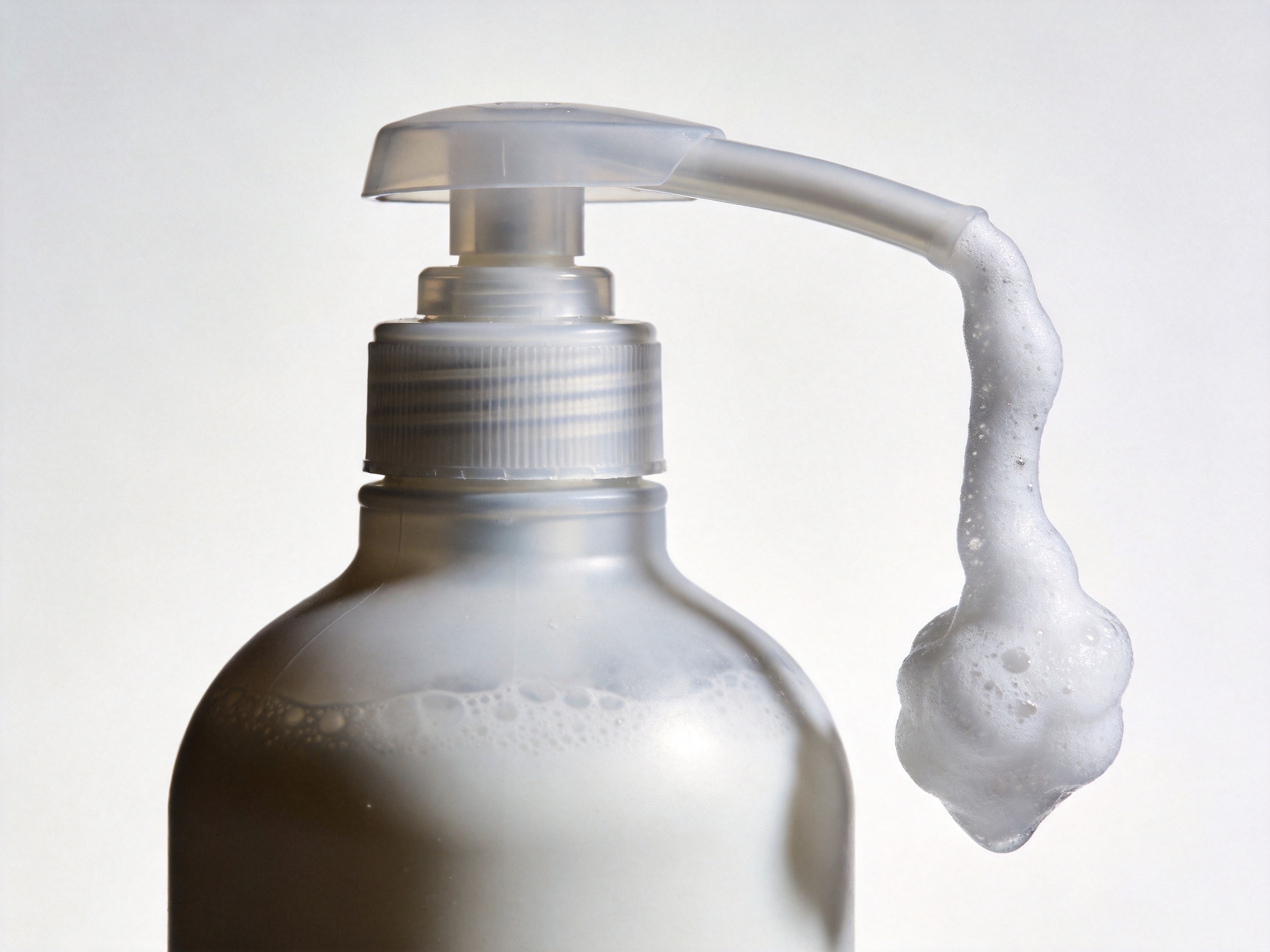
The long nozzle plastic foam pump is engineered to convert liquid formulations into rich foam through a mechanical pumping structure. When the user presses the actuator, the pump draws liquid from the bottle through the dip tube, mixes it with air inside the foam-generating chamber, and releases the foamed product through the long nozzle. This process allows the product to be dispensed in a softer, more voluminous form, improving spreadability and reducing the amount of liquid needed per use.
The product model described in the supplied material is GY-726A1. It belongs to the foam pump category and is developed for use with personal care liquids such as serum, lotion, cleansing formulas, and similar liquid-based products. Its recommended dosage is 0.8±0.2 ml, which provides a generous but controlled output. This dosage range is suitable for products where users need enough foam for effective application but still expect controlled usage and reduced waste.
The pump supports 40/410 and 42/410 closures. These closure sizes are commonly used for larger packaging formats, especially where higher product volume is required. The plastic closure is designed for compatibility, stable sealing, and lightweight handling. The dip tube can be customized according to bottle specifications, allowing the pump to function properly with different bottle depths and shapes.
The long nozzle is the defining feature of this product. It extends the dispensing outlet away from the actuator, helping direct foam into narrow positions. This makes the pump suitable for cleansing products, personal hygiene products, professional salon formulas, pet care products, household foam cleaners, and other applications where accurate foam placement is important.
Key Specifications
Product Type |
Long Nozzle Plastic Foam Pump |
Category |
Foam Pump |
Model |
GY-726A1 |
Available Sizes |
40/410, 42/410 |
Dosage |
0.8±0.2 ml per stroke |
Closure Type |
Plastic |
Tube Length |
Customized according to bottle requirements |
Typical Usage |
Serum, lotion, cleansing products, liquid personal care formulations |
Main Advantage |
Long nozzle for dispensing foam into small and narrow areas |
Why the Long Nozzle Design Matters
In many personal care and cleansing applications, the direction of dispensing is just as important as the amount dispensed. A regular foam pump typically releases foam close to the top of the bottle. While this is acceptable for hand soaps and general cleansers, it may not be ideal when the formula needs to reach a specific point. The long nozzle design solves this limitation by moving the outlet farther from the actuator and allowing the user to control where the foam lands.
This design is especially beneficial for facial cleansing products that require careful application around the nose, chin, hairline, or other contoured areas. It is also useful for products applied to tools, brushes, sponges, or applicators. In professional beauty and care settings, the long nozzle supports cleaner application and helps reduce product mess on counters or hands.
Another important advantage is improved accessibility. Some products need to be applied into narrow bottle caps, cleaning gaps, scalp sections, or targeted skin areas. A standard actuator may be too wide or too short for these tasks. The long nozzle creates distance and direction, allowing foam to be placed accurately without tilting the bottle excessively.
From a consumer experience perspective, the nozzle also gives the product a more specialized and professional feel. Packaging that appears thoughtfully designed can improve user confidence and increase perceived product value. A long nozzle foam pump signals that the product is intended for precise use rather than generic dispensing.
Controlled Dosage for Efficient Product Use
The pump dispenses approximately 0.8±0.2 ml per stroke. This dosage range is important because it balances generous output with usage control. If a pump dispenses too little, the user may need to press repeatedly, creating inconvenience. If it dispenses too much, the product may be wasted and the consumer may feel that the formula is being used too quickly. The 0.8 ml class output offers a comfortable middle ground for many cleansing and care applications.
Controlled dosage also supports formula consistency. For product brands, a predictable output helps guide recommended usage instructions. For example, a cleansing foam may instruct users to apply one or two pumps. If the pump output varies too much, the product experience becomes inconsistent. A stable pump mechanism helps ensure that consumers receive a similar amount each time.
Compared with low-cost generic pumps, a well-engineered foam pump provides better repeatability and smoother actuation. This can reduce complaints related to uneven foam, leakage, sputtering, or weak output. The 0.8±0.2 ml specification indicates that the pump is designed with practical tolerance control suitable for mass production and commercial packaging use.
For thicker liquid formulations such as certain lotions or serum-like products, the pump’s ability to deliver a controlled amount is particularly valuable. It allows the user to apply the product hygienically without dipping fingers into a jar or over-pouring from a bottle. This supports both cleanliness and formula preservation.
Compatibility with Larger Bottle Formats
The available closure sizes, 40/410 and 42/410, make this pump suitable for bottles with larger neck finishes. Larger packaging formats are commonly used for cleansing products, family-size personal care items, professional salon products, and daily chemical applications. A larger closure also gives the pump a strong visual presence and supports ergonomic handling for bigger bottles.
The 40/410 and 42/410 specifications refer to common neck finish standards. Compatibility with these sizes allows the pump to be integrated into existing bottle designs or developed as part of a new packaging system. For brands that already use PE or PET bottles with these neck finishes, the pump can be a convenient upgrade from a standard cap or basic dispenser.
Using a properly matched closure is essential for leakage prevention and product protection. A secure closure helps maintain formula quality during transportation, storage, and everyday use. The plastic closure is lightweight and suitable for large-volume production. It also provides design flexibility in terms of color, surface finish, and visual coordination with the bottle.
Because the tube length can be customized, the pump can be adapted to different bottle heights. This is critical for ensuring that the pump can draw product effectively from the bottom of the bottle. A tube that is too short leaves unused product behind, while a tube that is too long may bend improperly or affect pumping performance. Custom tube length helps optimize function and user satisfaction.
Advantages Over Standard Foam Pumps
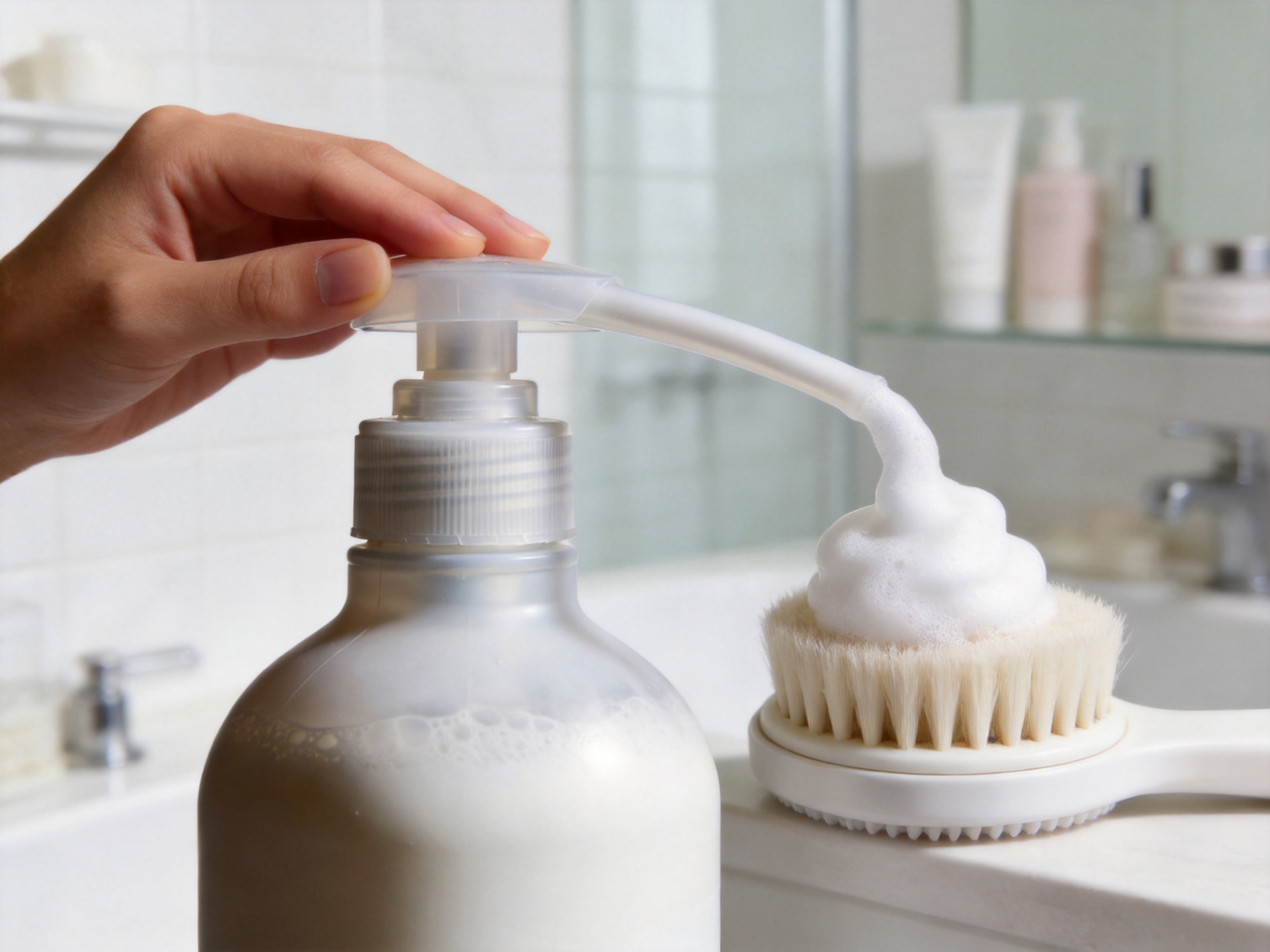
The long nozzle plastic foam pump offers several clear advantages over standard foam pumps. The first is targeted dispensing. Standard foam pumps generally release foam near the pump head, which can be limiting when a user wants to apply foam into a specific narrow area. The long nozzle allows better placement and reduces unnecessary spreading or dripping.
The second advantage is improved hygiene. When foam can be dispensed directly onto the intended area, the user may touch the product less often. This is important for personal care products, facial formulas, professional treatments, and shared-use products. Reduced hand contact can help preserve product cleanliness and improve user confidence.
The third advantage is lower waste. More accurate dispensing means less product is lost on surfaces, hands, or packaging. Over time, this can improve consumer satisfaction because the bottle lasts longer and the product feels more economical.
The fourth advantage is enhanced user experience. A long nozzle gives the user a sense of control and convenience. It can make the product easier to use in bathrooms, salons, travel kits, professional stations, and other environments where mess control matters.
The fifth advantage is differentiation. In competitive personal care markets, packaging design can strongly influence purchasing decisions. Many foam pumps look similar. A long nozzle pump provides a distinct appearance and functional story, helping brands communicate precision, care, and professional quality.
Advantages Over Trigger Sprayers and Lotion Pumps
Although trigger sprayers and lotion pumps are widely used in packaging, they do not always provide the same benefits as a foam pump. Trigger sprayers are suitable for misting or spraying liquids over a wider area, but they may not be ideal for thick foam or targeted personal care use. Lotion pumps can dispense creams or lotions effectively, but they usually release the product as a liquid or semi-liquid rather than foam.
The long nozzle plastic foam pump occupies a specialized position between these packaging options. It delivers foam, not mist, and does so with a controlled mechanical stroke rather than a broad spray pattern. This makes it suitable for products that need a soft, aerated texture and precise placement.
Compared with a trigger sprayer, the foam pump can feel gentler and more suitable for skin-contact formulas. It reduces airborne droplets and helps keep the product concentrated at the application point. This is valuable for facial cleansers, hygiene foams, and other products where users prefer not to inhale mist or overspray surrounding areas.
Compared with a lotion pump, the foam pump improves spreadability and can create a lighter sensory experience. Foam can cover a larger surface area with less liquid, which may help brands formulate products that feel efficient and pleasant. The long nozzle further adds directional control that most lotion pumps do not provide.
Material and Structural Benefits
The pump features a plastic closure and plastic components designed for lightweight durability. Plastic is widely used in personal care packaging because it offers a balance of strength, processability, cost control, and design flexibility. It can be molded into precise internal structures required for foam generation and stable actuation.
A foam pump must perform several functions at once. It must seal properly to the bottle, draw liquid through the dip tube, mix the liquid with air, generate foam through internal mesh or foaming components, and release the foam through the actuator and nozzle. Each part must fit accurately with the others. Poorly molded parts can cause leakage, weak foam, difficult pressing, or inconsistent dosage.
The plastic construction also allows the pump to be produced in different colors or finishes to match brand identity. For example, brands may choose white, natural, black, or custom-colored closures depending on the bottle design. This makes the pump suitable for both mass-market and premium personal care packaging.
Because the pump is designed for larger closure sizes, structural strength matters. The actuator must feel stable during pressing, and the closure must maintain a secure fit. A well-built plastic foam pump offers reliable performance without adding unnecessary weight to the package. This can reduce shipping burden and improve handling convenience.
Manufacturing Strength Behind the Product
GreenYard Tools Co.,ltd. is a high-end packaging material manufacturer from China with 16 years of experience in spray product manufacturing. The company specializes in perfume sprayers, pump heads, caps, bottles, and daily chemical packaging solutions. This broad manufacturing background supports the development of foam pumps that require precision, consistency, and reliable mass production.
The company has a daily production capacity of one million units, which is a strong advantage for customers requiring stable supply. In packaging procurement, production capacity is not only about quantity. It also reflects the manufacturer’s ability to organize materials, control production scheduling, maintain equipment efficiency, and meet delivery requirements for both regular and large-volume orders.
Advanced mold design is one of the company’s important strengths. Foam pump components require tight dimensional control, especially in the actuator, closure, piston, chamber, spring area, and foaming structure. A small variation in part geometry can affect pump performance. Mold design capability allows the manufacturer to develop accurate, repeatable parts and support customized projects.
Injection molding capability is another key factor. High-quality plastic pump components depend on stable injection parameters, proper material selection, mold maintenance, and process control. Reliable injection molding helps ensure smooth surfaces, accurate dimensions, consistent part strength, and reduced defect rates.
Automated assembly improves production consistency. Foam pumps include multiple small components that must be assembled correctly. Automation can reduce human error, improve assembly speed, and ensure consistent alignment. This is especially important when producing high volumes for international customers.
Quality inspection completes the manufacturing system. A pump may look acceptable but still fail if it leaks, dispenses unevenly, or produces poor foam. Quality inspection helps verify appearance, assembly, dosage, sealing, actuation, and functional performance. By combining mold design, injection molding, automated assembly, and quality control, the manufacturer can provide dependable products for demanding packaging applications.
Advanced Mold Design and Product Development
Mold design is the foundation of foam pump quality. Every visible and internal component begins with the mold. For a long nozzle plastic foam pump, the mold must support accurate formation of the extended nozzle while maintaining smooth internal channels for foam flow. If the nozzle channel is uneven, foam may become blocked, collapse, or discharge inconsistently.
Experienced mold engineers consider shrinkage, material flow, cooling, gate placement, part ejection, and dimensional tolerance. These technical details determine whether the finished pump component can be assembled smoothly and function over repeated use. A long nozzle structure may require special attention because its length increases the need for straightness and internal consistency.
Product development also includes testing how the pump works with different liquid formulations. Foam quality may vary depending on viscosity, surfactant system, alcohol content, and other formula characteristics. A capable manufacturer can help customers evaluate pump suitability and adjust specifications such as tube length, closure fit, and actuation design.
For brands launching new products, strong mold and development capability can shorten the path from concept to market. Instead of relying only on standard packaging, customers can explore customized colors, tube lengths, bottle compatibility, and functional requirements. This flexibility is especially valuable in personal care markets where packaging innovation can influence shelf appeal and user loyalty.
Injection Molding Precision
Injection molding determines the consistency of every plastic part in the pump. During injection molding, plastic resin is heated, injected into the mold cavity, cooled, and ejected as a finished component. For pump packaging, precision is essential because many parts must move against each other during use.
If the actuator is too tight, the pump may be difficult to press. If the piston or chamber is not dimensionally accurate, the dosage may vary. If the closure thread is poorly formed, the pump may not seal properly on the bottle. High-quality injection molding reduces these risks by maintaining stable processing conditions.
For the long nozzle component, molding precision influences both appearance and performance. A smooth nozzle supports clean foam discharge and reduces residue buildup. A consistent outlet shape helps create repeatable foam direction. Good molding also improves the tactile impression of the product, making it feel more refined in the user’s hand.
In competitive markets, the difference between an average pump and a superior pump often comes from manufacturing details that consumers may not see directly but experience through daily use. Smooth pressing, stable recovery, clean dispensing, and reduced leakage all depend on precision manufacturing.
Automated Assembly for Consistency
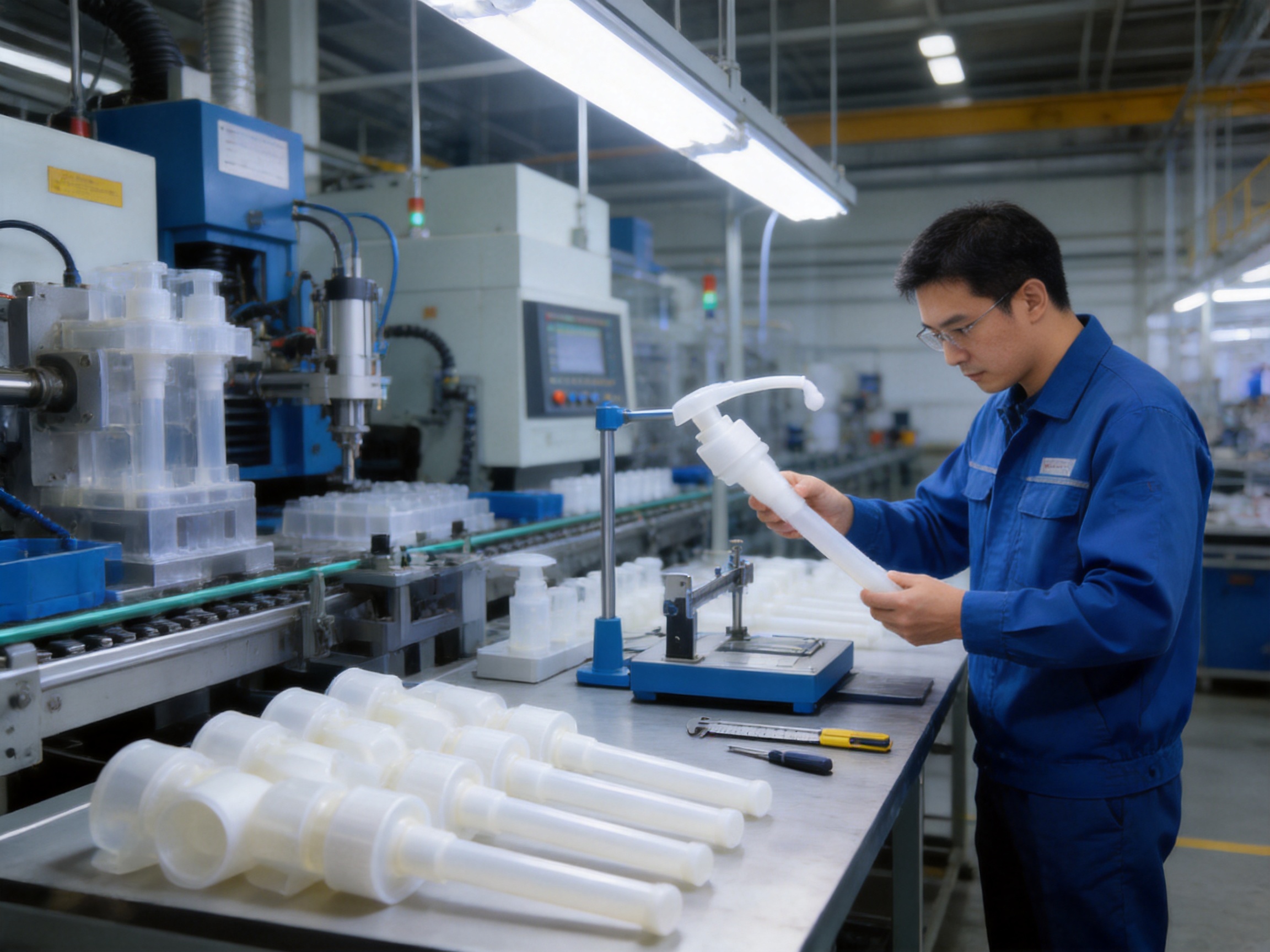
Foam pumps are more complex than simple caps. They include multiple components that must be assembled in the correct order and orientation. Automated assembly equipment helps ensure that each pump is built consistently, especially during high-volume production.
Automation offers several benefits. It improves production speed, reduces manual handling, lowers the chance of assembly errors, and supports stable product quality. For customers ordering large quantities, automated assembly can provide confidence that the first batch and later batches will perform similarly.
Automated systems can also support inline checking or process monitoring. When combined with quality inspection, this helps identify potential issues early and reduce defective output. In packaging manufacturing, preventing defects is more efficient than sorting them after production.
For a product such as a long nozzle foam pump, assembly accuracy is especially important because the foam must travel through internal channels and exit the nozzle properly. Any misalignment can affect flow, dosage, or user experience. Automated assembly helps protect the functional integrity of the product.
Quality Inspection and Reliability
Quality inspection is essential for foam pumps because their performance depends on both mechanical movement and sealing ability. A good inspection process may include appearance checks, dimensional checks, assembly verification, leakage testing, dosage testing, actuation testing, and foam performance evaluation.
Appearance inspection ensures that visible parts meet customer expectations. This includes checking for scratches, color inconsistency, flash, deformation, or contamination. Since packaging contributes to brand image, visual quality matters greatly.
Functional testing verifies that the pump dispenses the expected amount and produces acceptable foam. The dosage specification of 0.8±0.2 ml provides a measurable target. Pumps outside the expected range may affect product usage instructions and consumer satisfaction.
Leakage testing is critical for transportation and storage. A leaking pump can damage cartons, reduce product volume, and create negative consumer impressions. Proper closure fit, sealing structure, and assembly quality all contribute to leakage resistance.
Actuation testing evaluates how the pump feels during pressing and whether it recovers properly after each stroke. Consumers often judge packaging quality by touch. A pump that presses smoothly and returns reliably feels more premium than one that sticks or feels unstable.
Application in Cleansing Products
The supplied product information notes that this pump is widely used on cleansing products. This is one of its strongest application areas. Cleansing formulas often benefit from foam because foam spreads easily, feels gentle, and can improve the perception of cleaning efficiency.
Facial cleansing foams are a clear example. Consumers often prefer a soft foam texture because it feels mild and luxurious on the skin. A long nozzle allows the foam to be dispensed directly onto the palm, a cleansing brush, or a specific facial area. This can make the cleansing routine cleaner and more controlled.
Body cleansing products can also benefit from this pump, especially when used with large bottles. The 40/410 and 42/410 closures are suitable for larger containers that may be placed in bathrooms, salons, spas, or professional care environments. The long nozzle helps direct foam onto washcloths, sponges, or target areas.
Hair and scalp cleansing products may also use this dispensing style. The long nozzle can help direct foam closer to the scalp or into sections of hair, reducing waste on the surface of the hair. While formulation compatibility should always be tested, the nozzle concept is highly relevant for targeted cleansing.
Pet cleansing products and household foam cleaners may also use this packaging format. In these cases, the long nozzle helps apply foam to targeted areas, small gaps, or tools. The same principles of accuracy, hygiene, and waste reduction apply across different categories.
Application in Serum and Lotion Products
The product information also lists serum and lotion as usage examples. While many serums and lotions are not foamed, some liquid-based formulas can be dispensed through foam pumps if their viscosity and surfactant structure are suitable. For such products, foam dispensing can create a lighter texture and improve spreadability.
For serum-like cleansing products, a foam pump can help transform a concentrated liquid into a gentle foam before application. This can improve user comfort and create a differentiated experience. A long nozzle allows targeted application, which is valuable for facial care, body care, or specialized treatment products.
For lotion-style products, compatibility depends on formula thickness. The pump is not intended for heavy creams or highly viscous formulas unless specifically tested. However, lighter lotions and liquid emulsions may be suitable. Brands should conduct compatibility tests to confirm foam quality, pumping smoothness, and long-term performance.
The hygienic advantage is important for serum and lotion categories. Instead of opening a jar and exposing the formula to fingers and air, users can dispense a measured amount through the pump. This can support product cleanliness and improve consumer trust, especially in skincare packaging.
User Experience Benefits
Packaging success depends heavily on user experience. A consumer may choose a product for the formula, but daily satisfaction often depends on how easy and pleasant the package is to use. The long nozzle plastic foam pump improves user experience in several ways.
First, it provides convenient one-hand operation in many situations. The user can press the actuator and direct foam with the nozzle. This is helpful in bathrooms, salons, treatment rooms, and other environments where speed and cleanliness matter.
Second, it reduces mess. Foam can be guided toward the intended area rather than spreading around the bottle top. Less residue around the closure improves the appearance of the package over time and reduces cleaning effort.
Third, it provides a controlled sensory experience. Foam feels soft and voluminous, which can make cleansing and care routines more enjoyable. The pump helps create this texture mechanically, without requiring the user to lather the product manually.
Fourth, it improves confidence. A pump that dispenses smoothly and consistently makes the product feel reliable. Consumers are more likely to repurchase products that are convenient and predictable.
Brand Differentiation and Market Value
In personal care packaging, differentiation is a major competitive factor. Many products compete in similar categories with similar claims. Packaging design can help communicate a brand’s positioning before the consumer even tries the formula. A long nozzle foam pump provides a visible and functional point of difference.
For cleansing products, the long nozzle can suggest precision, professional care, and targeted application. For skincare products, it can support a message of hygienic dispensing and controlled dosage. For daily chemical products, it can communicate convenience and practicality.
The pump’s larger closure sizes also create a strong visual profile on the bottle. This can help the product stand out on retail shelves or online product images. A well-proportioned pump and bottle combination can make the final package look more substantial and premium.
Customization possibilities further support brand differentiation. Color matching, tube length adjustment, and compatibility with different bottle materials such as PE and PET allow brands to create packaging systems that fit their identity and market segment.
Sustainability and Efficiency Considerations
Modern packaging development increasingly considers sustainability, resource efficiency, and responsible production. While pump systems are more complex than simple closures, they can contribute to product efficiency by reducing overuse and waste. Controlled dosage helps consumers use an appropriate amount of formula each time.
Foam dispensing can also improve formula efficiency. Because foam expands the product with air, users may achieve satisfying coverage with less liquid than they would use from an open bottle. This can support a better balance between performance and consumption.
Lightweight plastic construction may reduce transportation weight compared with heavier packaging components. Large-scale production efficiency and automated assembly can also reduce waste associated with inconsistent manufacturing.
For brands seeking more sustainable packaging systems, pump design should be considered together with bottle material, refill strategies, mono-material goals, and local recycling infrastructure. The manufacturer’s ability to support customization can help customers explore packaging solutions aligned with their sustainability targets.
Supply Capacity for Global Customers
A strong packaging supplier must provide not only product design but also dependable supply. GreenYard Tools Co.,ltd. has a daily production capacity of one million units, which supports customers with both routine orders and large-scale market launches. This production capacity is particularly important for personal care brands that need stable packaging supply across multiple sales channels.
International customers often require consistent quality, reliable communication, and timely production planning. A manufacturer with experience in spray product manufacturing, pump heads, caps, bottles, and daily chemical packaging can better understand the needs of global packaging procurement.
Large production capacity also helps reduce supply risk. When a product becomes successful, brands may need to increase order quantities quickly. A manufacturer with strong capacity and automated systems is better positioned to respond to rising demand.
In addition, the company’s location in Yuyao City, Zhejiang Province, China, places it within an active manufacturing region with access to packaging supply chains, materials, molds, and logistics resources. This industrial environment can support efficient production and export operations.
How to Select the Right Bottle for This Pump
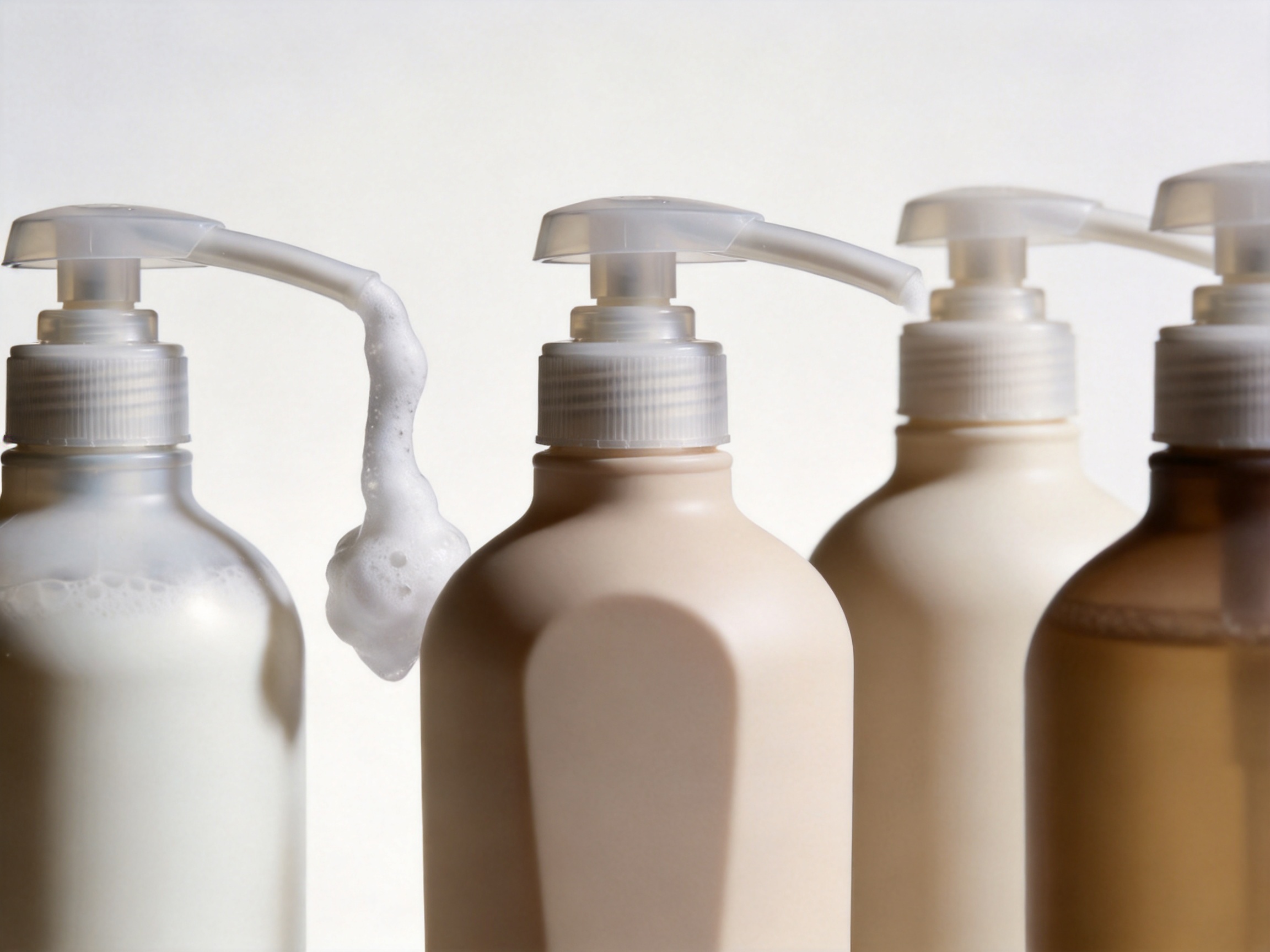
Selecting the right bottle is essential for achieving the best performance from the long nozzle plastic foam pump. The bottle must have a compatible neck finish, appropriate wall strength, suitable material, and correct capacity for the intended product.
The first requirement is neck finish compatibility. Since the pump is available in 40/410 and 42/410 sizes, the bottle should match one of these standards. A mismatched neck can lead to leakage, poor sealing, or inability to assemble the pump securely.
The second requirement is bottle height. Because the tube length is customizable, the customer should provide bottle dimensions to ensure the dip tube reaches near the bottom without excessive bending. Correct tube length improves product evacuation and user satisfaction.
The third requirement is bottle material. PE and PET bottles are common choices for personal care and cleansing products. PET offers clarity and rigidity, while PE offers flexibility and chemical resistance for many formulations. The final choice should consider formula compatibility, appearance, squeezing requirements, and market positioning.
The fourth requirement is bottle stability. A pump with a larger closure and long nozzle should be paired with a bottle that stands securely during use. If the bottle is too narrow or lightweight, pressing the pump may cause instability. Proper packaging design balances aesthetics with practical handling.
Formula Compatibility Considerations
Not every formula is suitable for every foam pump. Foam performance depends on viscosity, surfactant content, solvent system, fragrance, preservatives, and other ingredients. Before commercial production, brands should test the pump with the actual formula.
A formula that is too thick may not draw smoothly through the dip tube or may not foam properly. A formula that is too thin may dispense too quickly or produce unstable foam. Some ingredients may affect plastic components over time, so compatibility testing is important for long-term reliability.
Testing should include initial pumping performance, foam texture, dosage measurement, leakage evaluation, storage stability, and performance after temperature changes. Transportation simulation may also be useful for products shipped internationally.
For cleansing formulas, surfactant systems often support foam generation well. For serums and lotions, special attention should be paid to viscosity and emulsion stability. The pump can provide excellent results when matched with the right formula, but testing is the best way to confirm suitability.
Packaging Design Opportunities
The long nozzle plastic foam pump offers several packaging design opportunities. Brands can build a packaging concept around precision application, hygienic dispensing, controlled dosage, or professional foam delivery. These messages can be reflected in label design, usage instructions, and marketing communication.
Color customization can align the pump with brand identity. A clean white pump may suit facial cleansers and medical-style products. A black pump may communicate professional or premium positioning. Soft pastel colors may fit skincare, baby care, or gentle cleansing lines.
The long nozzle itself can become part of the product’s visual identity. In online product images, it clearly communicates that the package is not a standard pump. This can improve consumer curiosity and help explain the product’s functional advantage.
Brands can also pair the pump with transparent or translucent bottles to show the formula. For foam products, seeing the liquid inside can help consumers understand product volume and usage. Opaque bottles may be preferred for light-sensitive formulas or premium design styles.
Practical Benefits for Distributors and Private Label Brands
Distributors and private label brands often need packaging that is reliable, adaptable, and easy to integrate into different product lines. The long nozzle plastic foam pump supports these needs through standard size options, customizable tube length, and broad application potential.
Because the pump is suitable for cleansing products, serum-like liquids, lotions, and daily care formulas, it can serve multiple product concepts. This reduces the need to source completely different dispensing systems for each product line.
Private label brands can benefit from the pump’s differentiated appearance. Instead of using the same standard pump seen across many competing products, they can offer customers a more specialized dispensing solution. This may help improve shelf appeal and perceived value.
Distributors can present the product as a functional upgrade for customers seeking better foam control. Its long nozzle is easy to explain and demonstrate, making it a practical selling point in both B2B and consumer-facing contexts.
Competitive Advantages Summary
The long nozzle plastic foam pump competes strongly against generic foam pumps, basic lotion pumps, and broad spray dispensers because it provides a unique combination of foam generation, dosage control, and targeted dispensing. Its design is practical rather than decorative, but it also improves visual differentiation.
The 0.8±0.2 ml dosage supports consistent use. The 40/410 and 42/410 size options fit larger bottles. The plastic closure offers lightweight durability. The customized tube length supports bottle compatibility. The long nozzle makes the product especially valuable for narrow or targeted application areas.
Compared with competitors that offer only standard pump heads, this product provides a more specialized user experience. Compared with suppliers that lack advanced production systems, the manufacturer’s mold design, injection molding, automated assembly, quality inspection, and daily production capacity create stronger assurance for commercial supply.
In short, the product is not merely a pump component. It is a functional packaging solution that helps brands improve application precision, reduce waste, enhance hygiene, and strengthen market differentiation.
Q&A Section
What is the main purpose of the long nozzle plastic foam pump?
The main purpose is to dispense foam accurately into small, narrow, or targeted areas. It is especially useful for cleansing products, personal care liquids, and formulas that benefit from controlled foam application.
What sizes are available?
The pump is available in 40/410 and 42/410 closure sizes, making it suitable for larger bottle formats used in personal care and cleansing packaging.
How much product does the pump dispense per stroke?
The pump dispenses approximately 0.8±0.2 ml per stroke. This output provides a controlled but generous amount of foam for many daily care applications.
Can the tube length be customized?
Yes. The dip tube length can be customized according to bottle height and design requirements. This helps ensure effective product evacuation and stable pump performance.
What types of products can use this pump?
Typical applications include cleansing products, liquid personal care formulas, serum-like products, light lotions, hygiene foams, and other compatible liquid formulations. Formula testing is recommended before mass production.
Why is the long nozzle better than a standard foam pump?
The long nozzle provides better direction and reach. It allows the user to place foam more accurately, reduces mess, and helps dispense product into narrow areas where a standard pump may not work as conveniently.
Is the closure made of plastic?
Yes. The pump uses a plastic closure, which provides lightweight handling, practical durability, and cost-effective production for large-volume packaging.
What makes the manufacturer suitable for large orders?
The manufacturer has 16 years of spray product manufacturing experience, advanced mold design, injection molding, automated assembly, quality inspection capabilities, and a daily production capacity of one million units.
Should the formula be tested with the pump before launch?
Yes. Formula compatibility testing is important because foam quality depends on viscosity, surfactant structure, and ingredient compatibility with pump materials.
Can this pump help improve brand differentiation?
Yes. The long nozzle gives the package a distinct appearance and functional advantage. It supports marketing messages such as precision dispensing, hygienic use, professional application, and reduced waste.
Conclusion
The long nozzle plastic foam pump is a high-value dispensing solution for brands that need more than a standard pump. With its 40/410 and 42/410 size options, 0.8±0.2 ml dosage, plastic closure, customizable tube length, and targeted long nozzle, it offers a strong combination of usability, reliability, and market differentiation.
Its greatest advantage lies in precision. The long nozzle enables foam to be delivered into small and narrow spaces, making it ideal for cleansing products and other personal care applications where controlled placement matters. At the same time, the foam pump mechanism improves texture, spreadability, and user comfort.
Behind the product is a manufacturer with extensive experience in packaging materials and spray product manufacturing. GreenYard Tools Co.,ltd. supports product quality through advanced mold design, injection molding, automated assembly, and quality inspection. Its large daily production capacity further strengthens supply reliability for global customers.
For personal care brands, distributors, and private label developers, this pump provides a practical way to improve product performance and consumer experience. It helps reduce waste, enhance hygiene, support controlled usage, and create a more professional package. In a market where packaging can directly influence product value, the long nozzle plastic foam pump stands out as a smart and competitive choice.
References
1. Soroka, W. Fundamentals of Packaging Technology. Institute of Packaging Professionals.
2. Yam, K. L. The Wiley Encyclopedia of Packaging Technology. John Wiley & Sons.
3. Paine, F. A., and Paine, H. Y. A Handbook of Food Packaging. Springer.
4. Robertson, G. L. Food Packaging: Principles and Practice. CRC Press.
5. Coles, R., McDowell, D., and Kirwan, M. J. Food Packaging Technology. Blackwell Publishing.
6. Technical literature on plastic injection molding, pump dispensing systems, and personal care packaging quality control.

-
Foam Pump vs Regular Pump: What's the Difference?
The core difference between a foam pump and a regular pump is how each one delivers product. A regu...
-
Crimp Pumps Demystified: Choosing the Right Type and Material for Every Cosmetic Formula
Walk into any cosmetic filling facility and you will find crimp pumps on everything from a delicate ...
-
Amber Plastic Bottles: Lightweight, Protective, Customizable Packaging for Cosmetics
You have spent months stabilizing a vitamin C serum, only to watch a pallet of amber glass bottles ...
-
Airless Bottles Uncovered: How to Protect Your Skincare and Perfect Every Pump
If you have ever opened a pump bottle of serum and found the last quarter of the product impossible ...
Copyright © GreenYard Tools Co.,ltd. All Rights Reserved.
Personal Care Packaging Manufacturer Custom Perfume Sprayers Factory