
-
About Us
Why Choose Us?The company possesses advanced capabilities in mold design, injection molding, and automated assembly, supported by a professional quality inspection team to ensure product reliability. A dedicated design team continuously drives product innovation, providing customers with high-quality spray solutions.
 Coming From China, Marketing To The World.
 -
Products
-
News
 English
 Français
 русский
 Español
30g/60g Plastic Round Stick Container for Deodorant, Sunscreen, and Balm Packaging
Content
- 1 Product Overview
- 2 Core Product Specifications
- 3 Why Round Stick Packaging Remains a Strong Market Choice
- 4 Key Advantages Over Competing Packaging Options
- 5 Design Features That Support Daily Use
- 6 Manufacturing Strength Behind the Product
- 7 Production Capacity and Supply Reliability
- 8 Customization Opportunities for Brand Differentiation
- 9 Applications Across Personal Care Categories
- 10 Packaging Performance in Retail and E-Commerce
- 11 Sustainability and Practical Material Considerations
- 12 How the Container Supports Product Launch Success
- 13 Advantages for Contract Fillers and Private Label Customers
- 14 Quality Factors Buyers Should Evaluate
- 15 Comparison With Alternative Packaging Formats
- 16 Why Manufacturing Experience Matters
- 17 Brand Positioning Opportunities
- 18 Practical Recommendations for Buyers
- 19 Q&A Section
- 19.1 Q1: What products can be packed in this plastic round stick container?
- 19.2 Q2: What capacities are commonly available?
- 19.3 Q3: Why choose a round stick container instead of a jar?
- 19.4 Q4: Is the package suitable for sunscreen?
- 19.5 Q5: Can the container be customized?
- 19.6 Q6: What manufacturing processes support product quality?
- 19.7 Q7: Why is manufacturing capacity important for this packaging?
- 19.8 Q8: How should a buyer test this container before mass production?
- 20 Conclusion
- 21 References
- 22 Product: 30gram/60gram Plastic Round Stick Container
The 30g/60g plastic round stick container is a practical and versatile packaging solution designed for deodorants, sunscreens, body balms, solid lotions, anti-chafing sticks, cosmetic treatment sticks, and other personal care formulations that require clean twist-up application. Its classic cylindrical profile, user-friendly dispensing structure, and compatibility with balm-based products make it a strong choice for brands seeking dependable stick packaging for daily-use products.
In the personal care market, packaging is not merely a container. It is part of the consumer experience, part of the brand identity, and part of the product’s functional performance. A deodorant or sunscreen stick must be easy to grip, smooth to operate, stable on the shelf, safe during transport, and compatible with the formula inside. The 30g/60g plastic round stick container addresses these needs with a balanced design that supports both commercial practicality and consumer convenience.
This packaging format is particularly suitable for companies that want a familiar, proven, and market-ready format without sacrificing customization potential. The round stick container provides a clean shape, broad formulation compatibility, and flexible capacity options for different product lines. Whether used for an entry-level deodorant, a premium mineral sunscreen stick, a travel-friendly balm, or a daily care treatment product, this container gives brands a reliable foundation for product development and market presentation.
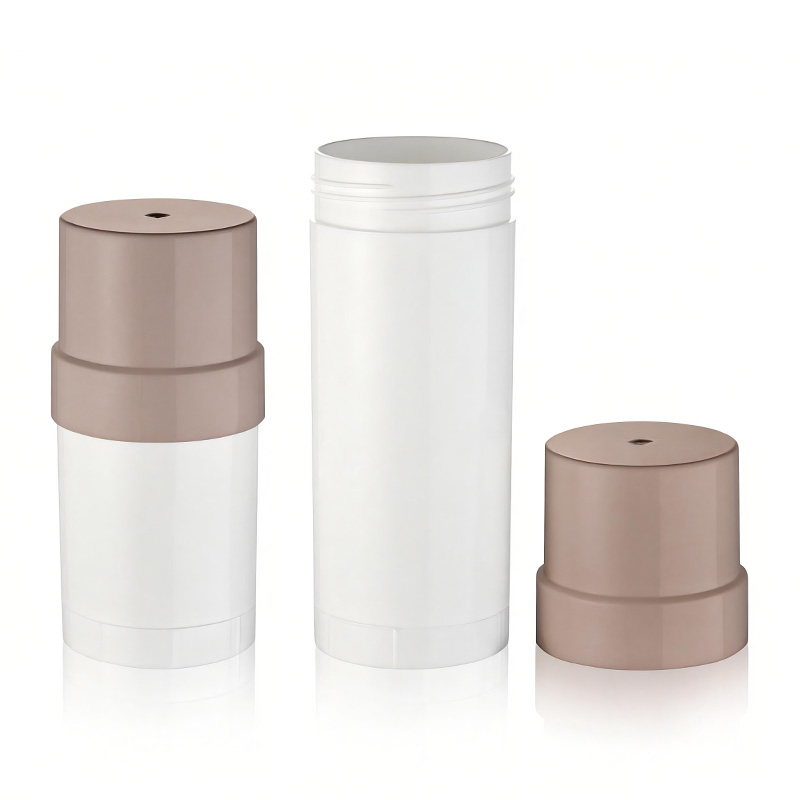
30gram/60gram Plastic Round Stick Container
Product Overview
The product is a plastic round stick container available in commonly requested 30g and 60g capacities. It is classified under deodorant stick bottle packaging, but its application range extends far beyond deodorant. The container can be used for sunscreen, balm, body care, solid fragrance, moisturizing stick, after-sun treatment, sports anti-friction stick, and other semi-solid or solid personal care formulas.
The product model is GY-DS07, a cylindrical plastic stick package designed for simple filling, convenient use, and stable dispensing. The body shape follows a classic round stick format that consumers already understand. This familiarity reduces usage barriers, making it ideal for products sold through supermarkets, pharmacies, cosmetic stores, e-commerce platforms, hotels, gyms, outdoor lifestyle channels, and private label personal care programs.
The round shape gives the container an ergonomic advantage. It is comfortable to hold and rotate, and it enables smooth application over curved body areas such as underarms, shoulders, neck, cheeks, arms, legs, and other areas where balm or sunscreen may be applied. For brands targeting daily personal care, this ease of use is a major advantage because it supports repeat purchase and positive user impressions.
The container is especially effective for formulations that benefit from direct-contact application. Instead of requiring fingers, spatulas, or sprays, a stick package allows the consumer to apply the product directly to the skin. This improves convenience, reduces mess, and supports portable use. For modern consumers who value speed, hygiene, and travel-ready packaging, the twist-up stick format remains one of the most practical solutions.
Core Product Specifications
Product Type |
Plastic round stick container |
Common Capacities |
30g and 60g |
Product Category |
Deodorant stick bottle |
Typical Uses |
Deodorant, sunscreen, balm, solid lotion, personal care treatment sticks |
Design Style |
Classic cylindrical round body |
Application Method |
Direct twist-up stick application |
Customization Potential |
Color, decoration, capacity adjustment, branding, and component matching depending on project requirements |
Manufacturing Support |
Mold design, injection molding, automated assembly, quality inspection, and packaging solution development |
Why Round Stick Packaging Remains a Strong Market Choice
Round stick packaging has remained popular because it solves several practical problems at once. It protects the product, dispenses controlled amounts, allows portable use, and gives the consumer an intuitive method of application. Unlike jars, which require fingers or tools, the stick container keeps the formula contained and allows direct transfer to the skin. Unlike bottles or pumps, it is well suited for solid and semi-solid formulas that should not flow.
For deodorant products, the round stick format is one of the most recognized packaging types in the world. Consumers understand how to remove the cap, turn the base, raise the product, apply it, and close it again. This recognized format is an advantage for new product launches because the package does not require extra explanation. The form itself communicates function.
For sunscreen sticks, round plastic packaging is also highly effective. Sunscreen consumers often want quick application around the face, ears, shoulders, hands, or children’s skin. A stick container supports precise application and helps avoid spills in bags. Compared with lotion bottles, a sunscreen stick is more convenient for outdoor activities, school bags, beach trips, travel kits, and sports use.
For balm products, the cylindrical stick format offers clean and controlled usage. Body balms, barrier sticks, anti-chafing sticks, aftercare balms, tattoo care products, aromatherapy sticks, and solid moisturizers benefit from packaging that can present the formula as a ready-to-use solid product. The container contributes to convenience while also protecting the product from unnecessary handling.
Key Advantages Over Competing Packaging Options
Cleaner Application Than Jars
Compared with cream jars, the plastic round stick container offers a cleaner application experience. Jars require the user to dip fingers into the product, which can create hygiene concerns and may leave residue on hands. Stick packaging allows direct application without finger contact. This is particularly important for deodorants, sunscreens, and treatment balms that are frequently applied outside the home.
For brands promoting hygiene, convenience, or modern personal care routines, a stick package provides a strong advantage. It reduces mess, supports quick use, and gives the consumer a more controlled experience. In e-commerce product reviews, convenience and cleanliness often influence consumer satisfaction, making packaging choice a meaningful commercial factor.
Better Portability Than Bottles
Compared with lotion bottles or liquid sunscreen containers, a solid stick package is easier to carry. It is less likely to leak, easier to store in small bags, and more comfortable for travel. Consumers can carry it in gym bags, handbags, backpacks, sports kits, office drawers, or toiletry cases without worrying about liquid spillage.
This portability is a competitive advantage for brands that target active lifestyles. Deodorant, sunscreen, and anti-friction balm are often used on the go. The round stick container supports this behavior naturally, allowing the product to become part of a consumer’s daily routine.
More Controlled Dispensing Than Squeeze Tubes
Squeeze tubes can release too much product if pressed heavily, and they often require spreading with fingers. A twist-up stick allows users to expose only the needed amount of product and apply it directly. This creates a more controlled application experience and may help reduce product waste.
For higher-value formulations, controlled dispensing becomes even more important. Premium sunscreen sticks, natural deodorants, medicated balms, and specialty skincare sticks can benefit from packaging that helps the consumer use the formula efficiently. The round stick package supports product value by making usage feel deliberate and refined.
Consumer Familiarity Compared With Unusual Custom Shapes
Highly unusual packaging shapes can create visual differentiation, but they may also increase cost, reduce filling compatibility, and confuse users. The classic cylindrical design of this container offers a reliable balance between recognition and branding flexibility. It is simple enough to use across many product categories, yet adaptable enough for color, labeling, finish, and decoration changes.
For brands launching multiple stock keeping units, a consistent round stick format can create packaging harmony. A deodorant, sunscreen, and balm line can share the same visual structure while using different colors or label designs. This supports brand recognition and reduces complexity in packaging procurement.
Design Features That Support Daily Use
Classic Cylindrical Body
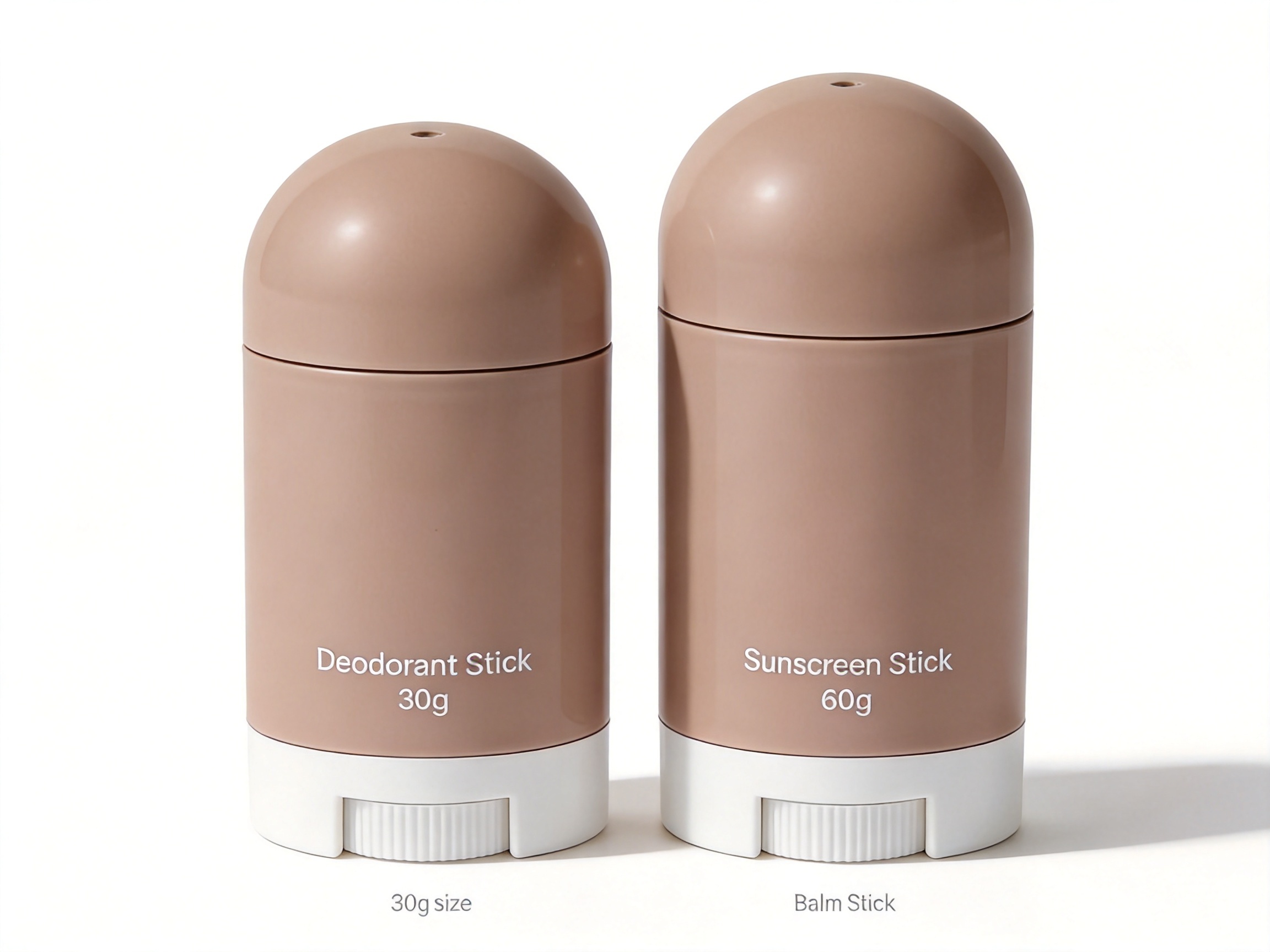
The cylindrical body is one of the most important design features of this container. It feels natural in the hand, can be rotated easily, and works well with a twist-up mechanism. The round profile also allows the product to glide across skin surfaces without sharp corners or awkward edges.
From a production and decoration perspective, the cylindrical body is also practical. Labels can be applied around the surface, colors can be customized, and the shape can suit both minimalist and colorful branding styles. This makes it useful for brands ranging from pharmacy-style products to natural skincare labels and lifestyle-focused personal care lines.
Capacity Options for Different Market Positions
The 30g capacity is suitable for travel-size products, sample launches, compact daily-use sticks, children’s sunscreen sticks, mini deodorants, hotel amenities, promotional products, and low-risk trial purchases. It is also useful for premium formulas where smaller packaging can support an accessible price point.
The 60g capacity is suitable for standard retail deodorants, daily sunscreen sticks, family-oriented balm products, and full-size personal care items. It gives consumers more product volume while maintaining a convenient handheld format. For brands that sell both trial and regular sizes, offering 30g and 60g versions can help build a complete product range.
Capacity flexibility also supports market segmentation. A brand can launch a 30g product for travel retail or subscription boxes and a 60g product for regular retail channels. This creates opportunities for product bundling, seasonal promotions, and differentiated pricing strategies.
Compatibility With Balm-Based Formulations
The container is designed for balm formulations and other stick products that maintain structure at ordinary handling conditions. Typical examples include wax-based deodorants, oil-and-wax sunscreen sticks, anhydrous treatment balms, solid moisturizers, body care sticks, and protective skin barriers.
Packaging compatibility is essential in personal care development. The container must support the formula’s texture, melting point, stability, and application behavior. A suitable stick package helps maintain product shape, protect the contents, and deliver the expected consumer experience. This container is intended to serve that role for many everyday balm formulations.
Manufacturing Strength Behind the Product
A packaging component is only as reliable as the manufacturing system behind it. The company producing this container has long-term experience in personal care packaging, especially spray products, pump heads, caps, bottles, and daily chemical packaging solutions. With years of specialization in packaging manufacturing, the production system is built around precision, repeatability, and high-volume supply capability.
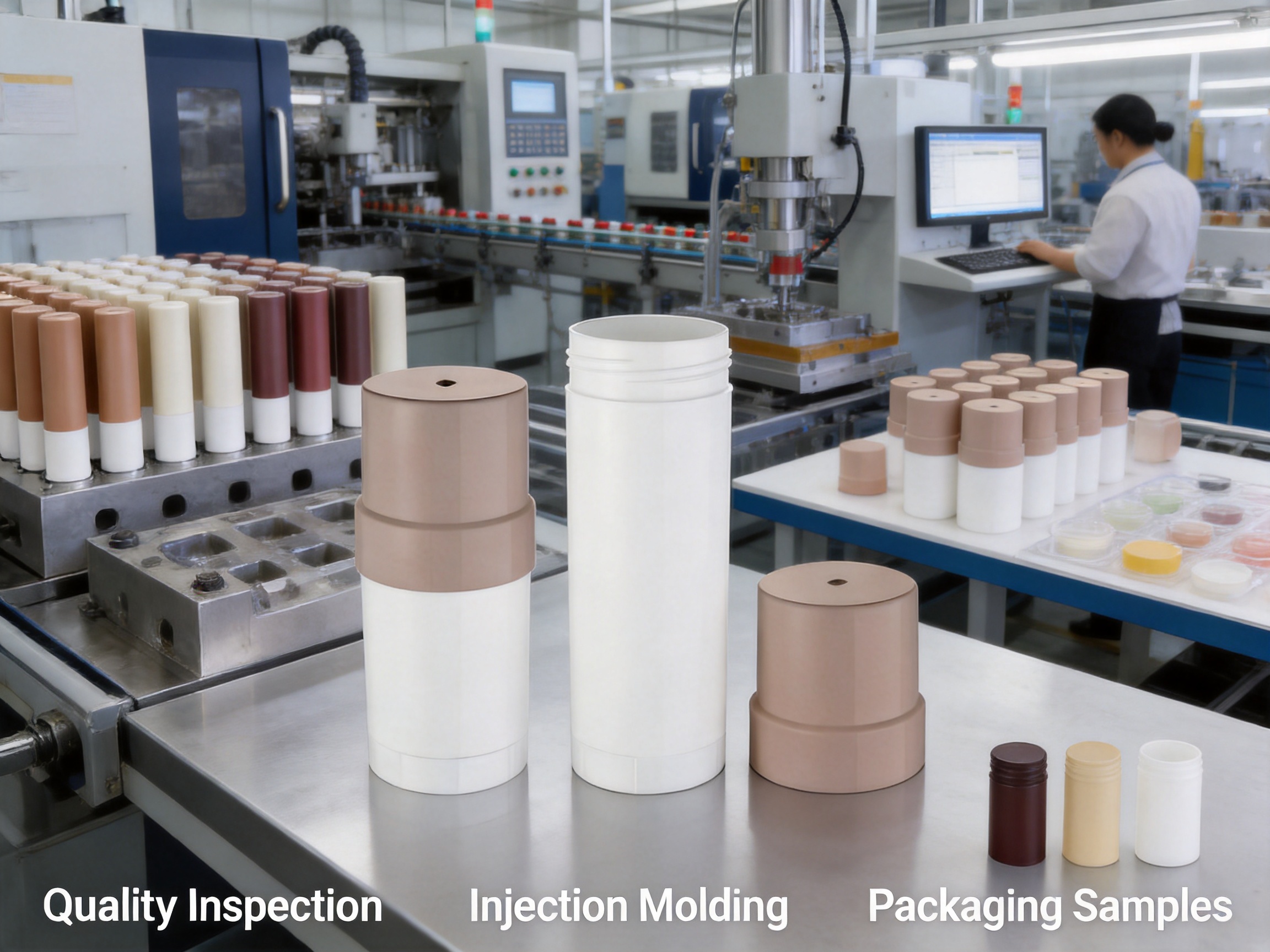
The company’s manufacturing strength includes mold design, injection molding, automated assembly, and quality inspection. These capabilities are especially important for plastic stick containers because dimensional accuracy affects assembly, smooth rotation, filling compatibility, closure fit, and user experience. A stick container that looks simple from the outside requires controlled engineering behind every component.
Mold Design Capability
Mold design is the foundation of stable plastic packaging production. For a round stick container, the mold must support consistent wall thickness, accurate threads or fitting structures, clean surface finish, and repeatable component dimensions. Good mold design reduces defects such as warping, shrinkage, flash, poor cap fit, and uneven appearance.
Advanced mold design also supports customization. When customers need color changes, logo areas, surface texture, different capacities, or component adjustments, a capable mold engineering team can evaluate feasibility and propose efficient solutions. This helps brands move from concept to production with fewer delays.
Injection Molding Precision
Injection molding is a central process for plastic stick packaging. The process must control resin temperature, mold temperature, injection speed, cooling time, pressure, and ejection behavior. These details affect final product quality. A small dimensional deviation may influence how smoothly the base turns, how securely the cap closes, or how well the container performs during filling.
Precision injection molding helps ensure that each container body, cap, base, and internal component fits correctly. Consistent molding also supports visual quality, which is important because personal care packaging must look clean and professional on retail shelves. Consumers often judge product quality from packaging appearance before they ever use the formula.
Automated Assembly
Automated assembly improves efficiency and consistency. For stick containers, multiple components may need to be assembled accurately to create a functional dispensing system. Automation helps reduce manual variation, improves output stability, and supports high-volume orders.
For customers, automated assembly provides practical benefits. It can shorten lead times, improve batch consistency, and reduce the risk of assembly defects. When a brand is preparing for seasonal demand or large retail distribution, reliable assembly capacity becomes a major advantage.
Quality Inspection Systems
Quality inspection is essential for packaging that must perform consistently across thousands or millions of units. Inspection may include appearance checks, dimensional checks, assembly function checks, cap fitting evaluation, rotation performance, sampling tests, packaging integrity review, and customer-specific inspection requirements.
A strong quality inspection process helps protect both the manufacturer and the brand owner. It reduces the possibility of defective packaging entering the filling line or reaching consumers. For personal care products, packaging failure can lead to leakage, poor usability, customer complaints, and brand damage. Quality control is therefore not optional; it is part of the product’s value.
Production Capacity and Supply Reliability
Large-scale production capability is a critical advantage in the packaging industry. The company has a daily production capacity reaching large-volume output, supporting customers that need stable supply for domestic and international markets. This is important for deodorant and sunscreen products, which may experience strong seasonal demand or retail chain requirements.
Supply reliability becomes especially important when brands scale from small batches to nationwide or global distribution. A packaging supplier must be able to support forecasting, repeat orders, consistent quality, and timely delivery. A manufacturer with strong production infrastructure can help customers avoid stockouts, launch delays, and inconsistent packaging quality across batches.
For private label companies, contract fillers, and cosmetic brands, dependable packaging supply can influence the entire production schedule. If packaging arrives late or with quality problems, filling operations may be delayed. A supplier with integrated capabilities in mold design, molding, assembly, and inspection provides a stronger foundation for stable project execution.
Customization Opportunities for Brand Differentiation
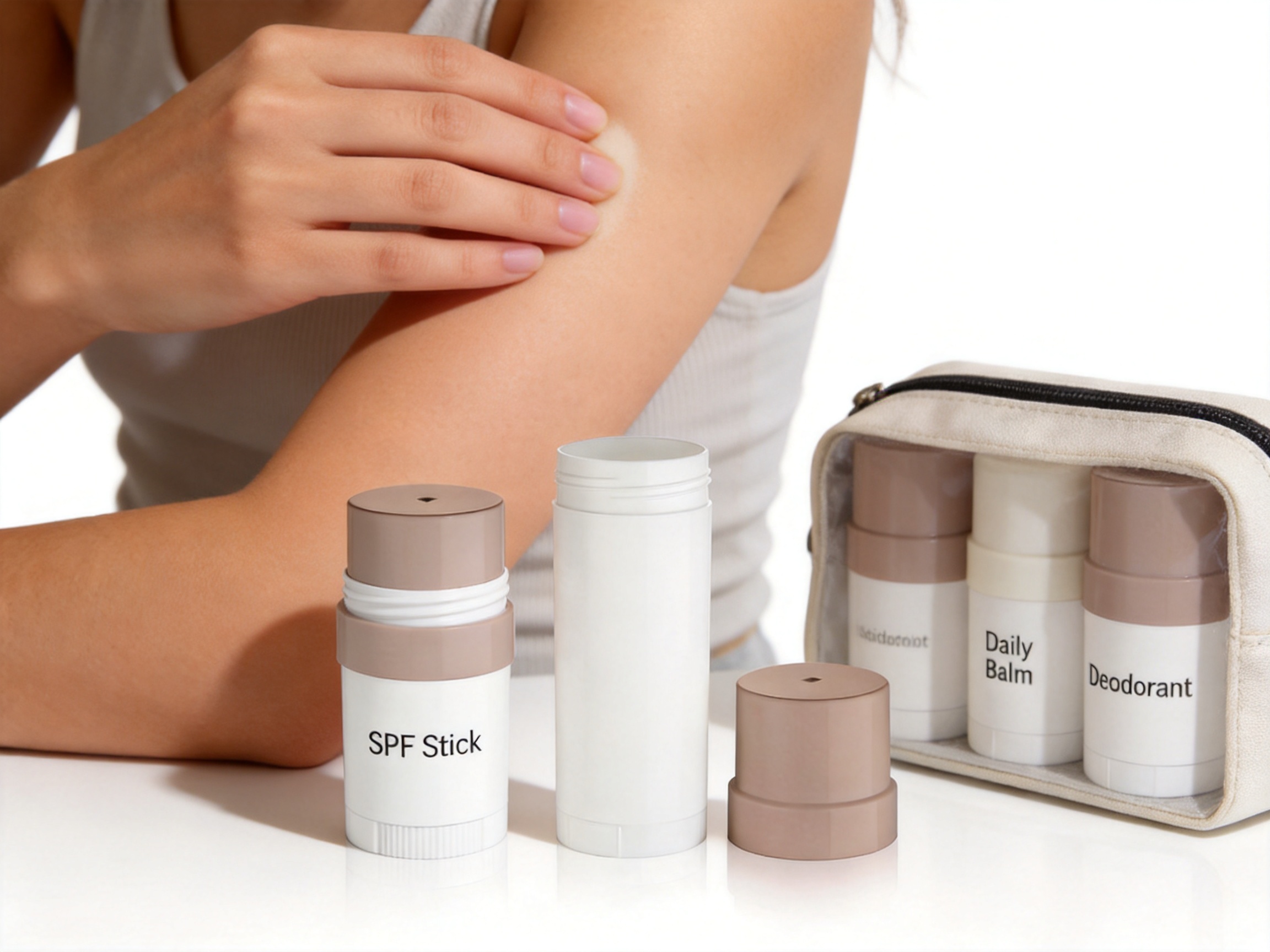
While the round stick container is based on a classic format, it can still support meaningful brand differentiation. Customization options may include color selection, surface finish, labeling, printing, logo placement, cap-body color matching, product line coordination, and project-specific adjustments. These options allow brands to create a packaging identity that aligns with their target market.
For natural deodorant brands, soft neutral colors and simple labels can communicate purity and minimalism. For sports sunscreen brands, bright colors and bold graphics can communicate activity and energy. For children’s sunscreen products, playful colors can make the product more appealing to families. For luxury balm products, matte finishes and elegant label design can create a premium impression.
Customization also supports product organization. A brand may use different colors for different scents, protection levels, formulas, or usage occasions. For example, one color may represent sensitive skin deodorant, another may represent outdoor sunscreen, and another may represent after-sport recovery balm. A consistent container shape combined with color-coded design creates clarity for consumers.
Applications Across Personal Care Categories
Deodorant Sticks
Deodorant is the most obvious application for this type of packaging. A round stick container allows consumers to apply product directly to the underarm area with minimal mess. It is suitable for traditional deodorants, aluminum-free deodorants, natural deodorants, fragrance deodorants, sensitive-skin deodorants, and travel deodorant products.
For deodorant brands, packaging must withstand frequent handling and daily opening and closing. It must also create a secure feeling when the cap is attached. The round stick format provides a practical and familiar solution, making it a suitable choice for both mass-market and specialty deodorant lines.
Sunscreen Sticks
Sunscreen sticks are growing in popularity because they are portable, easy to reapply, and useful for targeted areas. The 30g option can work well for children, travel, face application, and outdoor kits. The 60g option can serve as a full-size product for families, sports users, and beachgoers.
Stick sunscreen packaging can help consumers apply sunscreen without spills, greasy hands, or liquid leakage. It is especially useful for reapplication during outdoor activities such as hiking, cycling, running, swimming, camping, skiing, and school sports. The package supports convenience, which can encourage better sun protection habits.
Solid Lotion and Moisturizing Balms
Solid lotion sticks and moisturizing balms benefit from direct application packaging. These products are often used on dry hands, elbows, knees, heels, or targeted skin areas. A stick container allows users to apply the balm without scooping product from a jar.
This format is also attractive for waterless beauty and personal care products. Anhydrous formulas can reduce water content and may require packaging that presents them as solid products. The round stick container is a suitable match for this trend because it supports clean application and compact storage.
Anti-Chafing and Sports Care Sticks
Anti-chafing products are commonly used by runners, cyclists, hikers, and athletes. These products must be portable and easy to apply before or during activity. A round stick container allows consumers to apply product to thighs, feet, underarms, or other friction-prone areas without touching the formula with their hands.
For sports brands, durability and portability are key selling points. The container’s compact shape and direct-use design help support these product claims. The 30g size may be especially useful for event kits, race-day packs, and travel sports bags, while the 60g size supports regular training use.
Treatment and Specialty Care Sticks
Treatment sticks may include after-bite balms, skin barrier sticks, tattoo care products, aromatherapy sticks, cooling balms, warming balms, and targeted cosmetic products. These products often require controlled local application, making stick packaging highly suitable.
The round stick format can also be used for niche products that need convenient, low-mess delivery. Specialty brands can benefit from the container’s compatibility with balm formulations while using decoration and branding to communicate the product’s purpose clearly.
Packaging Performance in Retail and E-Commerce
Packaging must perform in both physical retail and e-commerce environments. In retail, the container should look clean, stand out through decoration, and feel good in the consumer’s hand. In e-commerce, it must survive shipping, resist damage, and provide a satisfying unboxing experience.
The plastic round stick container provides a compact format that is easy to pack, label, and ship. Its shape is efficient for cartons and display boxes, and its lightweight nature helps reduce transportation burden compared with some heavier packaging alternatives. For online sales, a compact stick product can be placed in mailers, kits, subscription boxes, and promotional bundles.
In retail, the cylindrical shape works well with printed labels, shrink sleeves, cartons, or display trays. Brands can choose packaging decoration that matches their price position and visual identity. A simple plastic stick can become a mass-market product, a pharmacy product, a natural beauty item, or a premium cosmetic stick depending on decoration and formula positioning.
Sustainability and Practical Material Considerations
Sustainability has become an important topic in personal care packaging. While plastic remains widely used because of its durability, moldability, light weight, and cost effectiveness, brands increasingly evaluate material efficiency and responsible packaging choices. A compact stick container can support efficient product delivery by protecting the formula and reducing mess or waste during use.
Plastic packaging offers practical benefits for products that require durability and moisture resistance. Deodorants, sunscreens, and balms are often used in bathrooms, gym bags, outdoor settings, and travel conditions. The packaging must resist everyday handling and protect the formula from external contamination. Plastic is commonly selected for these reasons.
Brands interested in sustainability can discuss material options, lightweighting opportunities, refill concepts, mono-material structures, or decoration choices with the manufacturer depending on project feasibility. Responsible packaging development is not limited to one feature; it involves balancing product protection, consumer use, manufacturing efficiency, transport impact, and end-of-life considerations.
How the Container Supports Product Launch Success
Successful product launches require packaging that is not only attractive but also practical for filling, transport, and consumer use. The 30g/60g plastic round stick container helps reduce development uncertainty because it is based on a well-understood packaging format. Brands can focus more attention on formula, positioning, claims, and marketing while relying on a functional packaging structure.
The availability of two common capacities supports staged launches. A company may introduce a 30g trial product to test the market, then expand into a 60g regular size after consumer demand is confirmed. Alternatively, both capacities can be launched together to offer consumer choice. This flexibility is useful for private label programs, seasonal sunscreen campaigns, and deodorant brand extensions.
Packaging that supports multiple product types also helps brands expand product lines efficiently. Once a brand establishes a round stick design language, it can develop deodorants, balms, and sunscreens in related packaging. This creates visual consistency and may simplify sourcing compared with using unrelated package types for every product.
Advantages for Contract Fillers and Private Label Customers
Contract fillers and private label customers often value packaging that is reliable, easy to source, and compatible with standard production workflows. The round stick container is a practical choice because it is familiar to filling operations and suitable for many anhydrous or balm-based products.
For private label customers, speed to market is often important. A proven stick container can shorten packaging selection time and help customers create retail-ready products quickly. With customization options, private label programs can still achieve distinct branding without requiring fully custom packaging development from the beginning.
For contract fillers, consistent component dimensions and quality are essential. Packaging must work smoothly with filling equipment and assembly processes. The manufacturer’s strengths in mold design, injection molding, assembly, and inspection help support this requirement. Reliable packaging reduces production interruptions and improves overall project efficiency.
Quality Factors Buyers Should Evaluate
When selecting a plastic stick container, buyers should evaluate more than appearance. They should consider rotation smoothness, cap fit, dimensional consistency, formula compatibility, capacity accuracy, filling method, surface decoration quality, transport stability, and supplier communication. A low-cost container that causes filling problems or consumer complaints can become expensive in the long run.
The 30g/60g plastic round stick container offers a strong base because it is supported by manufacturing capabilities that address these quality factors. Precision molding helps maintain consistent structure. Automated assembly helps improve functional stability. Quality inspection helps identify problems before shipment. Together, these strengths create value that goes beyond the visible container.
Buyers should also consider whether the supplier can support future growth. A small launch may require limited quantities, but a successful product can require rapid expansion. Choosing a manufacturer with scalable production capacity helps prepare for long-term growth.
Comparison With Alternative Packaging Formats
Packaging Format |
Main Strength |
Limitation |
Advantage of Round Stick Container |
Cream jar |
Good for thick creams and premium visual presentation |
Requires fingers or tool for application |
Cleaner direct application and better portability |
Squeeze tube |
Useful for lotions and gels |
Can dispense too much product and may require hand spreading |
More controlled use for solid and balm formulas |
Liquid bottle |
Suitable for fluid products |
Risk of leakage and less suitable for solids |
Leak-resistant convenience for semi-solid and solid products |
Spray packaging |
Fast coverage for liquid products |
Not compatible with balm formulas |
Better for deodorant, sunscreen stick, and treatment balm applications |
Unusual custom shape |
High visual differentiation |
May increase cost and reduce production efficiency |
Reliable, familiar, ergonomic, and easier to scale |
Why Manufacturing Experience Matters
Packaging buyers often compare unit prices, but experienced buyers understand that the cheapest container is not always the best commercial choice. Manufacturing experience affects lead time, communication, customization feasibility, quality stability, and problem-solving ability. A supplier with long-term specialization in packaging production can help customers avoid many common difficulties.
The company behind this product has extensive experience in packaging material manufacturing and produces a broad range of personal care packaging components, including sprayers, pump heads, caps, bottles, and daily chemical packaging solutions. This broad product experience is valuable because many customers need multiple packaging components for one product line. A supplier that understands different dispensing systems can provide more complete guidance.
Advanced production capability also supports innovation. A dedicated design team can help develop improved structures, new appearances, and customer-specific packaging solutions. Innovation in packaging is not always dramatic; it may involve small improvements in usability, assembly, decoration, or manufacturing efficiency. These improvements can create meaningful advantages in competitive retail categories.
Brand Positioning Opportunities
The same 30g/60g plastic round stick container can serve many different brand positions. For a clean beauty brand, it can be presented with soft colors, simple typography, and natural formula claims. For a sports brand, it can use bold colors, high-contrast labels, and performance-oriented language. For a family sunscreen brand, it can use bright, friendly decoration and easy-to-understand usage instructions.
For premium cosmetic care, the container can be paired with refined label materials, elegant color matching, and secondary cartons. For mass-market deodorant, it can use efficient decoration and strong shelf communication. This flexibility makes the package commercially useful across different price points and retail environments.
Packaging should support the formula’s story. If the product is a mineral sunscreen stick, the packaging should communicate portability and precise application. If it is a natural deodorant, the packaging should communicate cleanliness and daily comfort. If it is an anti-chafing stick, the packaging should communicate motion, protection, and convenience. The round stick container provides a neutral but effective structure on which these stories can be built.
Practical Recommendations for Buyers
Before placing an order, buyers should confirm the target capacity, formula type, filling temperature, product hardness, expected storage conditions, decoration requirements, and shipment method. These factors influence packaging selection and production planning. For example, a balm filled hot may require evaluation of thermal conditions during filling, while a sunscreen stick may require testing for formula compatibility and stability.
Buyers should request samples for functional testing. Sample testing can include cap removal, twist operation, formula filling, cooling behavior, application feel, label adhesion, drop resistance, carton packing, and consumer handling. Testing helps confirm that the packaging and formulation work together as intended.
For large orders, buyers should also discuss production schedule, inspection standards, packaging method, and customization details. Clear communication at the beginning helps prevent misunderstandings later. A capable manufacturer can provide professional support during this process, helping buyers select an efficient path from sample approval to mass production.
Q&A Section
Q1: What products can be packed in this plastic round stick container?
This container is suitable for deodorants, sunscreens, body balms, solid lotions, anti-chafing sticks, treatment balms, and other solid or semi-solid personal care formulas that are designed for twist-up stick application.
Q2: What capacities are commonly available?
The product is commonly offered in 30g and 60g capacities. These two sizes support both compact trial or travel products and standard daily-use products.
Q3: Why choose a round stick container instead of a jar?
A round stick container allows direct application without dipping fingers into the formula. This improves convenience, reduces mess, and creates a cleaner consumer experience, especially for products used outside the home.
Q4: Is the package suitable for sunscreen?
Yes. It is suitable for sunscreen stick formulations that are designed as solid or balm-based products. The format is convenient for outdoor use, travel, sports, and targeted application areas such as the face, ears, hands, and shoulders.
Q5: Can the container be customized?
Customization may include color selection, decoration, labeling, branding, and project-specific adjustments depending on order requirements and technical feasibility. Buyers should discuss details with the manufacturer during sample and development stages.
Q6: What manufacturing processes support product quality?
The product is supported by mold design, injection molding, automated assembly, and quality inspection. These processes help ensure dimensional consistency, smooth operation, reliable assembly, and stable appearance.
Q7: Why is manufacturing capacity important for this packaging?
Strong manufacturing capacity helps support repeat orders, large-volume supply, seasonal demand, and timely delivery. It is especially important for deodorant and sunscreen products that may require large production runs.
Q8: How should a buyer test this container before mass production?
Buyers should test formula compatibility, filling performance, twist function, cap fit, label adhesion, storage stability, transport performance, and consumer usability. These tests help confirm that the package meets the needs of the final product.
Conclusion
The 30g/60g plastic round stick container is a reliable and versatile packaging choice for deodorant, sunscreen, balm, and personal care stick products. Its classic cylindrical design offers consumer familiarity, ergonomic handling, clean application, and broad market acceptance. The two common capacity options support trial, travel, regular retail, and full-size product strategies.
Compared with jars, bottles, squeeze tubes, and unusual custom shapes, this container provides a strong balance of practicality, usability, portability, and production efficiency. It helps brands deliver products that are easy to apply, easy to carry, and easy to integrate into daily routines. For consumers, the benefit is simple: less mess, more convenience, and a product format they already know how to use.
The value of the container is strengthened by the manufacturer’s advanced capabilities in mold design, injection molding, automated assembly, quality inspection, and packaging solution development. These strengths support stable quality, scalable supply, and customization potential for customers in global personal care markets.
For brands developing deodorant sticks, sunscreen sticks, balm products, or solid treatment formulas, this plastic round stick container offers a dependable packaging foundation. It combines familiar design with manufacturing precision, helping products reach the market with confidence, consistency, and consumer-friendly performance.
References
Packaging Machinery Manufacturers Institute. Packaging Functions and Consumer Product Usability.
Society of Plastics Engineers. Injection Molding Design and Process Control Principles.
Personal Care Products Council. Cosmetic Packaging Considerations for Safety and Consumer Use.
International Journal of Cosmetic Science. Stability and Packaging Compatibility in Personal Care Formulations.
Mintel. Global Trends in Deodorant, Sunscreen, and Solid Personal Care Product Packaging.
Product: 30gram/60gram Plastic Round Stick Container

-
Amber Plastic Bottles: Lightweight, Protective, Customizable Packaging for Cosmetics
You have spent months stabilizing a vitamin C serum, only to watch a pallet of amber glass bottles ...
-
What Is Perfume Spray? How Atomizers Work, Mist Types and Packaging Basics
Press the actuator on a fragrance bottle once and a metered dose of liquid, usually between 0.05 an...
-
How Glass Airless Bottle Packaging Prevents Contamination and Boosts Shelf Life?
Glass airless bottle packaging prevents contamination and extends shelf life by completely eliminat...
-
What Makes a Good Deodorant Stick Bottle for Brands?
A deodorant stick bottle is a twist-up or push-up dispensing container designed to hold and advance...
Copyright © GreenYard Tools Co.,ltd. All Rights Reserved.
Personal Care Packaging Manufacturer Custom Perfume Sprayers Factory