
-
About Us
Why Choose Us?The company possesses advanced capabilities in mold design, injection molding, and automated assembly, supported by a professional quality inspection team to ensure product reliability. A dedicated design team continuously drives product innovation, providing customers with high-quality spray solutions.
 Coming From China, Marketing To The World.
 -
Products
-
News
 English
 Français
 русский
 Español
Compact 28mm Foam Pump for Controlled Personal Care Dispensing
Content
- 1 Product Overview
- 2 Key Specifications
- 3 Why Foam Dispensing Matters in Personal Care Packaging
- 4 Advantages Over Common Competing Foam Pumps
- 5 Manufacturing Strength Behind the Product
- 6 Design and Functional Details
- 7 Application Scenarios
- 8 Packaging Development Benefits for Brands
- 9 How the Pump Supports Product Differentiation
- 10 Compatibility Considerations
- 11 Quality Expectations for Foam Pump Buyers
- 12 Sustainability and Practical Material Use
- 13 Why Manufacturing Experience Matters
- 14 Comparison with Alternative Dispensing Options
- 15 Procurement Guidance for Buyers
- 16 Q&A Section
- 16.1 What is the Compact 28mm Foam Pump used for?
- 16.2 What is the dosage of this foam pump?
- 16.3 What size option is available?
- 16.4 Can the dip tube length be customized?
- 16.5 Why choose a foam pump instead of a flip-top cap?
- 16.6 Is the pump suitable for all lotions?
- 16.7 What are the advantages of the plastic closure?
- 16.8 How does the product compare with generic foam pumps?
- 16.9 What should be tested before mass production?
- 16.10 Why is manufacturing capability important for foam pumps?
- 17 Conclusion
- 18 References
- 19 Product: Compact 28mm Foam Pump
In modern personal care packaging, the dispensing component is no longer a minor accessory; it is a functional interface between the formula, the package, and the end user. A well-designed foam pump can determine whether a hand soap feels premium, whether a sanitizer is dispensed cleanly, whether a body wash creates a pleasant application experience, and whether a brand can maintain dosage consistency across millions of units. The Compact 28mm Foam Pump, model GY-721B1, is designed for precisely this role: compact, controlled, customizable, and suitable for high-volume personal care applications.
This foam pump is intended for products such as hand soap, sanitizer, body wash, lotion, serum-style liquids, and other daily-use personal care formulations that benefit from hygienic, measured, and user-friendly dispensing. With a dosage of 0.35±0.1 ml per stroke, a plastic closure, a customizable dip tube, and a 30-410 size option, it provides a practical combination of dosing control, packaging adaptability, and production efficiency. These features make it a strong choice for personal care brands that require dependable performance, consistent user experience, and scalable supply.
The foam pump category is especially important because foam dispensing changes how consumers experience a liquid product. Instead of squeezing or pouring liquid directly, the pump mixes the product with air through an internal mechanism, creating a soft foam output. This can reduce mess, improve perceived richness, help users spread the product evenly, and support more economical consumption. For hand soaps, sanitizers, and body washes, foam dispensing is often associated with convenience, cleanliness, and premium usability.
Compared with many standard foam pumps on the market, the Compact 28mm Foam Pump emphasizes reliable output, controlled dosage, lightweight plastic construction, customizable tube length, and compatibility with personal care packaging needs. In competitive packaging procurement, these characteristics matter because the pump must not only look suitable on a bottle; it must also perform consistently through transport, storage, retail handling, and repeated daily use.
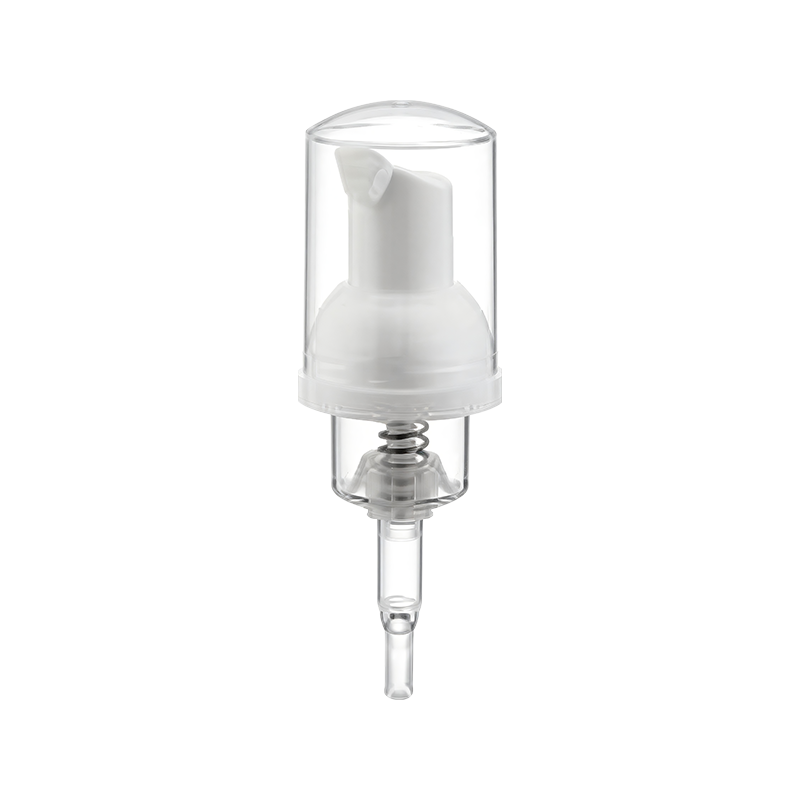
Compact 28mm Foam Pump
Product Overview
The Compact 28mm Foam Pump is a foam dispensing pump head designed for personal care and daily chemical packaging. Its core specification includes a 30-410 size option, a dosage of 0.35±0.1 ml, a plastic closure type, and a customizable tube length. These specifications show that the product is engineered for practical commercial use rather than only aesthetic presentation.
The 30-410 closure size is a widely used neck finish in personal care packaging, helping the pump match a range of bottle designs. Although the product is described as compact and suitable for 28mm-style packaging expectations, the specific listed size option is 30-410, and buyers should confirm bottle neck finish requirements during product selection. This is especially important for brands that use existing bottle molds or source bottles from multiple suppliers.
The dosage of 0.35±0.1 ml per actuation is one of the most important functional values. In personal care dispensing, too much output can cause waste, mess, and higher product consumption than intended. Too little output can frustrate the user and make the product feel weak or inconvenient. The 0.35 ml class dosage is well suited for foam applications where the dispensed material expands into a larger, usable volume after aeration.
The plastic closure makes the pump lightweight, corrosion-resistant, and cost-effective for large-volume production. Plastic closures are also well suited for personal care products because they can be produced in many colors, support brand coordination, and reduce the risk of rust or oxidation that could occur with certain metal components in humid bathroom environments.
The customizable tube length gives the pump broad packaging flexibility. A dip tube must reach near the bottom of the bottle to maximize product evacuation, but it must also avoid excessive bending, curling, or blockage. Custom tube length allows the pump to be tailored to specific bottle heights, shapes, and fill volumes, which is especially valuable for brands that use different bottle sizes within the same product family.
Key Specifications
Specification |
Details |
Practical Value |
Product Type |
Foam pump |
Creates foam output for personal care liquids |
Model |
GY-721B1 |
Identifies the compact foam pump design |
Size Option |
30-410 |
Compatible with selected bottle neck finishes |
Dosage |
0.35±0.1 ml per stroke |
Supports controlled and repeatable dispensing |
Closure Type |
Plastic |
Lightweight, durable, and cost-efficient |
Tube Length |
Customized |
Adapts to multiple bottle heights and capacities |
Typical Uses |
Hand soap, sanitizer, body wash, lotion, serum-style liquids |
Covers a wide range of personal care applications |
Why Foam Dispensing Matters in Personal Care Packaging
Foam dispensing has become popular because it improves both product performance perception and user convenience. When a liquid is converted into foam at the moment of use, the product becomes easier to spread across hands or skin. Consumers often associate foam with cleanliness, softness, and gentle application. For hand soap, foam helps users cover the surface of the hands quickly. For body wash, foam can create a richer cleansing experience. For sanitizer, foam can help control dripping compared with thin liquids.
A foam pump also supports more controlled consumption. Since each actuation dispenses a measured amount, brands can influence how long a bottle lasts and how consumers perceive value. In contrast, open-mouth bottles, flip-top caps, and squeeze dispensers can release inconsistent amounts depending on user pressure, bottle position, and formula viscosity. A foam pump provides a more repeatable experience.
The tactile experience also matters. The feel of pressing the actuator, the smoothness of return, the foam texture, and the cleanliness of the nozzle all contribute to consumer satisfaction. A product may have a high-quality formula, but if the dispenser feels weak, leaks, clogs, or produces uneven foam, the entire product impression suffers. Therefore, the pump is an essential part of the final consumer experience.
The Compact 28mm Foam Pump is positioned as a practical solution for brands seeking foam dispensing in a compact and controlled format. Its dosage range is suitable for repeated daily use, while its customizable dip tube helps adapt it to different bottle structures. This combination is especially valuable for companies managing multiple product lines, private-label programs, or regional packaging variations.
Advantages Over Common Competing Foam Pumps
Many competing foam pumps may appear similar at first glance, but differences become clear during production, filling, assembly, transport, and consumer use. A reliable foam pump must maintain dosage consistency, resist leakage, fit securely to the bottle, support automated assembly, and provide stable foam quality. The Compact 28mm Foam Pump offers advantages in these practical areas.
Controlled Dosage for Consistent Product Use
The 0.35±0.1 ml dosage supports predictable dispensing. Some lower-cost pumps on the market may have wider dosage variation, resulting in inconsistent consumer experience and uneven product consumption. A tighter dosage target helps brands maintain product claims, usage expectations, and cost control. In high-volume production, even a small difference in dispensed amount can affect consumer perception and refill frequency.
Controlled dosage also helps reduce waste. For hand soap and sanitizer products, users may pump several times if the output feels too small, or they may rinse away excess if the output is too large. A balanced dosage encourages efficient use. The foam expansion makes a moderate liquid volume feel sufficient, improving both practicality and perceived value.
Customizable Tube Length for Better Bottle Compatibility
One frequent packaging problem is poor dip tube fit. If the tube is too short, product remains unused at the bottom of the bottle. If the tube is too long, it may curl sharply, restrict flow, or interfere with pump operation. The customizable tube length of this foam pump helps avoid those issues. Brands can match the tube to bottle height and geometry, improving evacuation and reducing consumer complaints about leftover product.
This advantage is particularly important for companies that offer multiple bottle sizes under the same product line. A single pump platform with adjusted tube lengths can simplify sourcing while still supporting different SKUs. That flexibility can reduce procurement complexity, warehouse confusion, and development time.
Plastic Closure for Lightweight and Corrosion-Resistant Packaging
The plastic closure provides a practical advantage for personal care products stored in bathrooms, gyms, clinics, workplaces, and travel bags. Plastic is not vulnerable to rust in the way some metal components can be. It is also lighter, which can reduce shipping weight and improve handling efficiency in bulk supply chains.
Plastic closures can also be customized in color and finish depending on order requirements and production feasibility. This gives brands more options for aligning the pump with bottle color, label design, and product positioning. A family-care hand soap may need a clean white pump, while a premium body wash may require a darker or more elegant color scheme.
Compact Design for Modern Packaging Aesthetics
Compact pump designs are favored in contemporary personal care packaging because they look clean, reduce unnecessary bulk, and fit well with streamlined bottle shapes. A bulky dispenser may make a small bottle appear unbalanced, while a compact pump can improve shelf appearance and user handling. The Compact 28mm Foam Pump supports this trend by offering functional foam dispensing in a practical form.
In competitive retail environments, packaging proportions matter. Consumers often judge quality before reading product details. A compact, well-proportioned foam pump helps the final product appear more refined and intentional. This gives brands a visual advantage over products that use generic or oversized dispensers.
Wide Personal Care Application Range
The product is suitable for hand soap, sanitizer, body wash, lotion, serum-style liquid products, and similar formulations. This broad application range gives it a competitive edge over pumps designed for only one narrow product type. For contract packers and private-label manufacturers, versatility is a significant advantage because it allows one pump family to serve several customer programs.
Of course, formula compatibility should always be validated before mass production. Foam quality depends on surfactant system, viscosity, solvent content, and formulation stability. However, the pump’s target applications align with common personal care categories, making it a strong candidate for many foam-based product concepts.
Manufacturing Strength Behind the Product
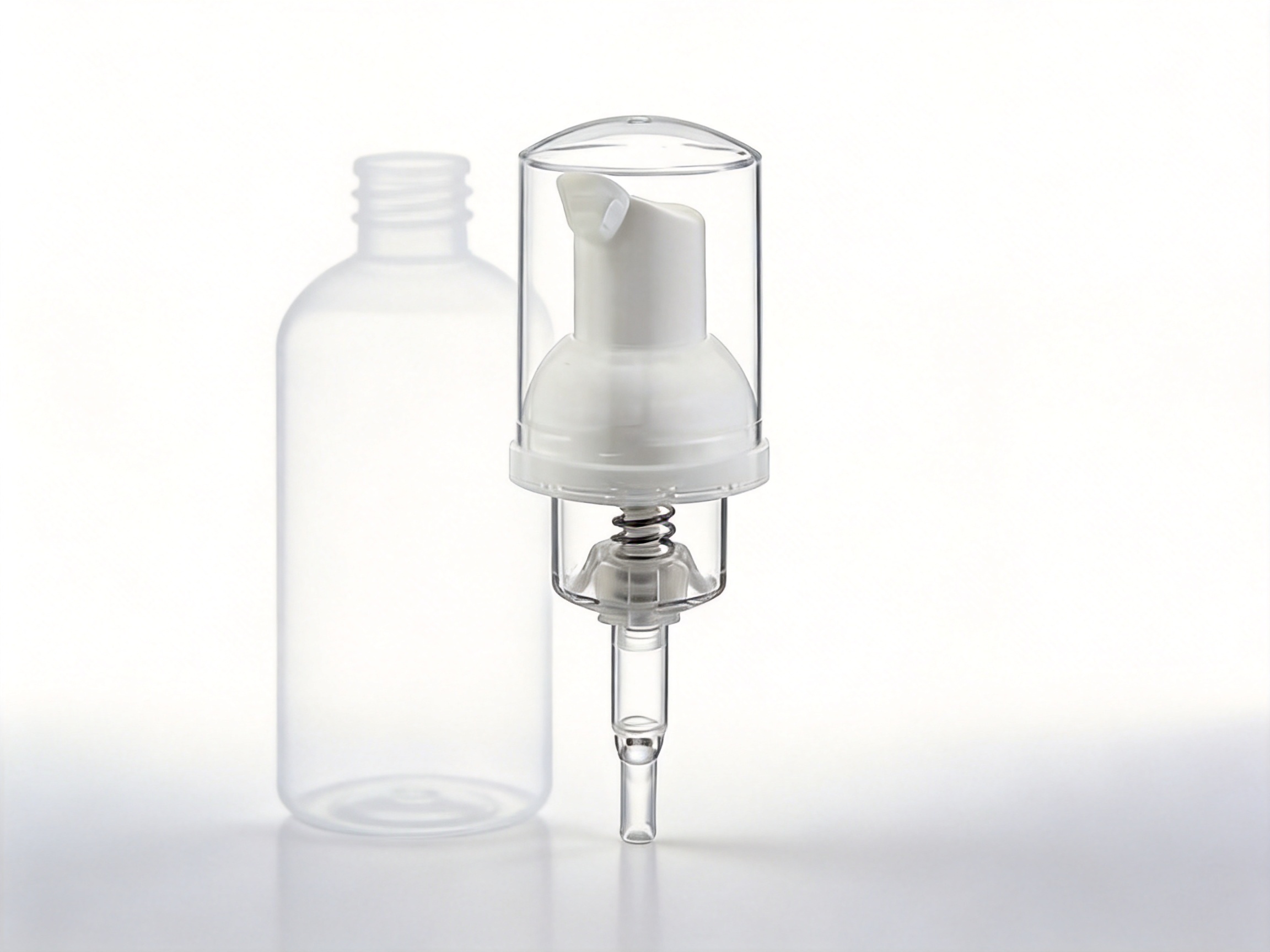
A foam pump is a small component, but it requires precise manufacturing. The product includes molded plastic parts, internal flow channels, spring and valve structures where applicable, mesh or foaming elements depending on design, actuator components, closure elements, and dip tube assembly. If any part is dimensionally unstable or poorly assembled, the pump may leak, jam, deliver poor foam, or fail after repeated use.
GreenYard Tools Co., Ltd. brings sixteen years of specialization in spray and pump packaging manufacturing. The company produces perfume sprayers, pump heads, caps, bottles, and daily chemical packaging solutions, with a daily production capacity reaching one million units. This production scale matters because foam pump customers often require stable delivery, consistent quality, and the ability to handle repeat orders.
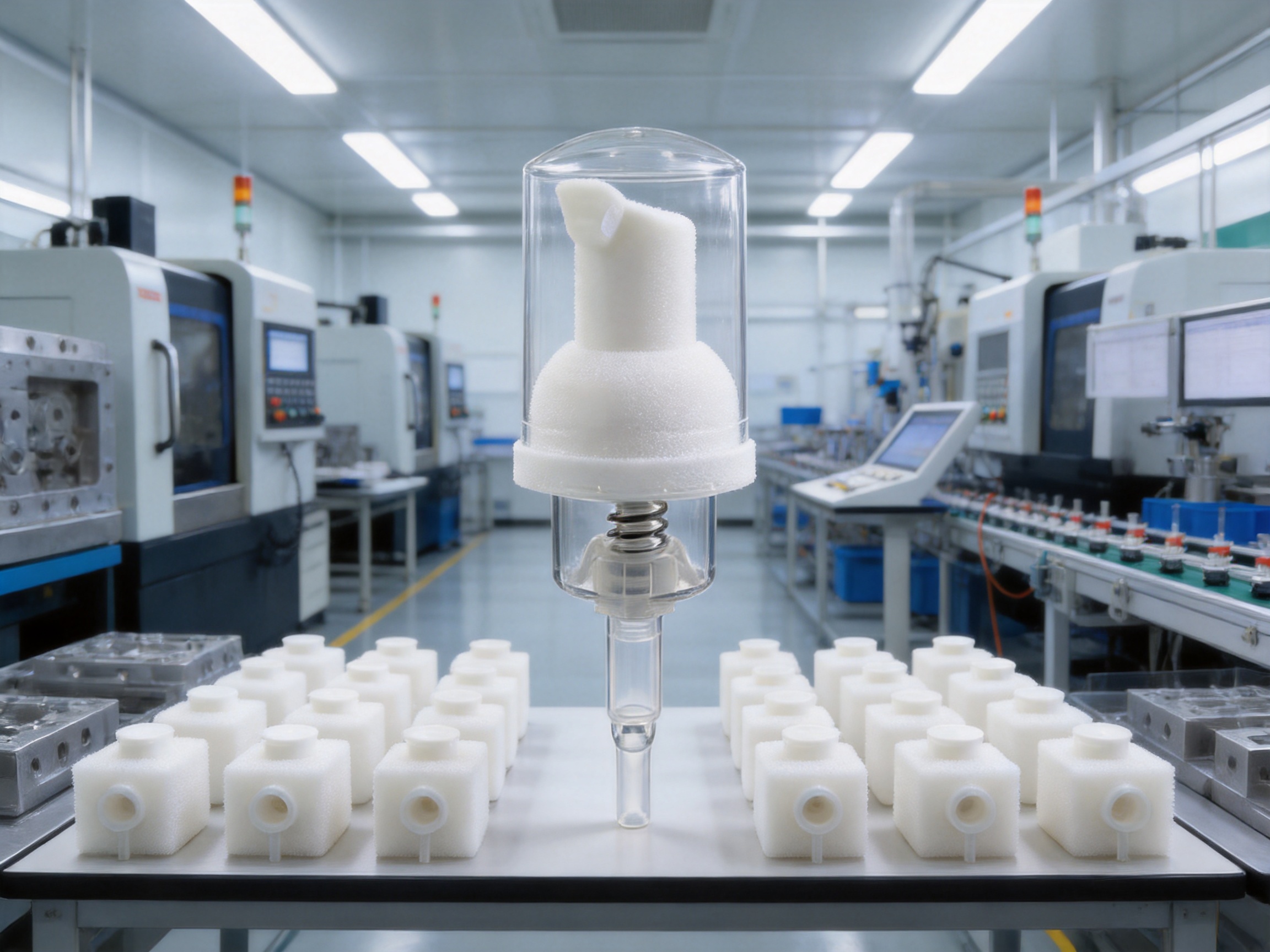
The company’s manufacturing strengths include mold design, injection molding, automated assembly, and quality inspection. These capabilities are essential for producing foam pumps that meet commercial performance expectations. When a supplier controls these processes internally, it can better manage dimensional accuracy, production scheduling, design improvements, and quality feedback.
Mold Design Capability
Mold design is the foundation of plastic pump quality. A foam pump contains small plastic components with precise geometry. The actuator must move smoothly. The closure must fit the bottle neck. Internal parts must align correctly. Flow passages must be formed accurately. Poor mold design can cause flash, warpage, shrinkage variation, weak threads, rough surfaces, or inconsistent assembly fit.
An experienced mold design team can optimize gate locations, cooling channels, parting lines, and cavity balance. These details affect not only part appearance but also long-term production consistency. For high-volume foam pumps, small dimensional deviations can become major quality issues when multiplied across hundreds of thousands or millions of units.
By maintaining advanced mold design capabilities, the manufacturer can also support product innovation and customization. If a customer requires a particular actuator style, closure appearance, color-matching requirement, or compatibility improvement, mold engineering knowledge helps convert the idea into a manufacturable product.
Injection Molding Precision
Injection molding is central to foam pump production. The plastic parts must be produced with stable dimensions, clean surfaces, and sufficient mechanical strength. For the Compact 28mm Foam Pump, the closure and related components must withstand repeated pressing, tightening torque, and transport vibration. The actuator must maintain smooth movement and return. The threads must engage properly with the bottle neck.
Advanced injection molding processes help ensure repeatability. Controlled temperature, pressure, cooling time, resin selection, and machine maintenance all affect the quality of finished components. In pump manufacturing, precision is not optional. A minor defect can cause leakage, poor sealing, uneven actuation, or reduced consumer confidence.
High-volume injection molding also requires process discipline. The ability to produce large quantities daily while maintaining consistent quality is a key supplier advantage. Brands need confidence that the first shipment and the tenth shipment will perform the same way. This is where manufacturing scale must be matched by quality control and technical management.
Automated Assembly
Foam pumps contain multiple small parts that must be assembled correctly and efficiently. Manual assembly may be flexible, but it can introduce variation and labor-related inconsistency. Automated assembly improves speed, repeatability, and cleanliness. It also supports high-volume production requirements and reduces the probability of missing or misaligned components.
For a foam pump, assembly precision affects the press feel, foam generation, sealing performance, and service life. Automated systems can help position components accurately, monitor assembly steps, and maintain production efficiency. This is especially important for customers purchasing large quantities for personal care product launches or ongoing retail supply.
Automation also supports cost stability. When production is efficient, the supplier can better manage lead times and unit cost. This gives customers a practical advantage in competitive markets where packaging budgets are closely controlled.
Quality Inspection and Performance Control
Quality inspection is essential for a component that directly affects consumer use. A foam pump should be checked for appearance, assembly accuracy, dosage, leakage resistance, actuation feel, closure fit, and tube placement. Depending on order requirements, testing may also include compatibility evaluation, transport simulation, and functional life testing.
The manufacturer’s quality inspection capability helps ensure that the pump performs reliably before it reaches the filling line or end consumer. This reduces the risk of costly returns, filling interruptions, product leakage in cartons, and damage to brand reputation. For personal care products, packaging failure can be highly visible because consumers interact with the pump every day.
Quality is not only a final inspection step; it is a system. It begins with raw material selection, continues through molding and assembly, and ends with finished product verification. A supplier with integrated processes can identify root causes more effectively when problems occur and can implement corrective actions quickly.
Design and Functional Details
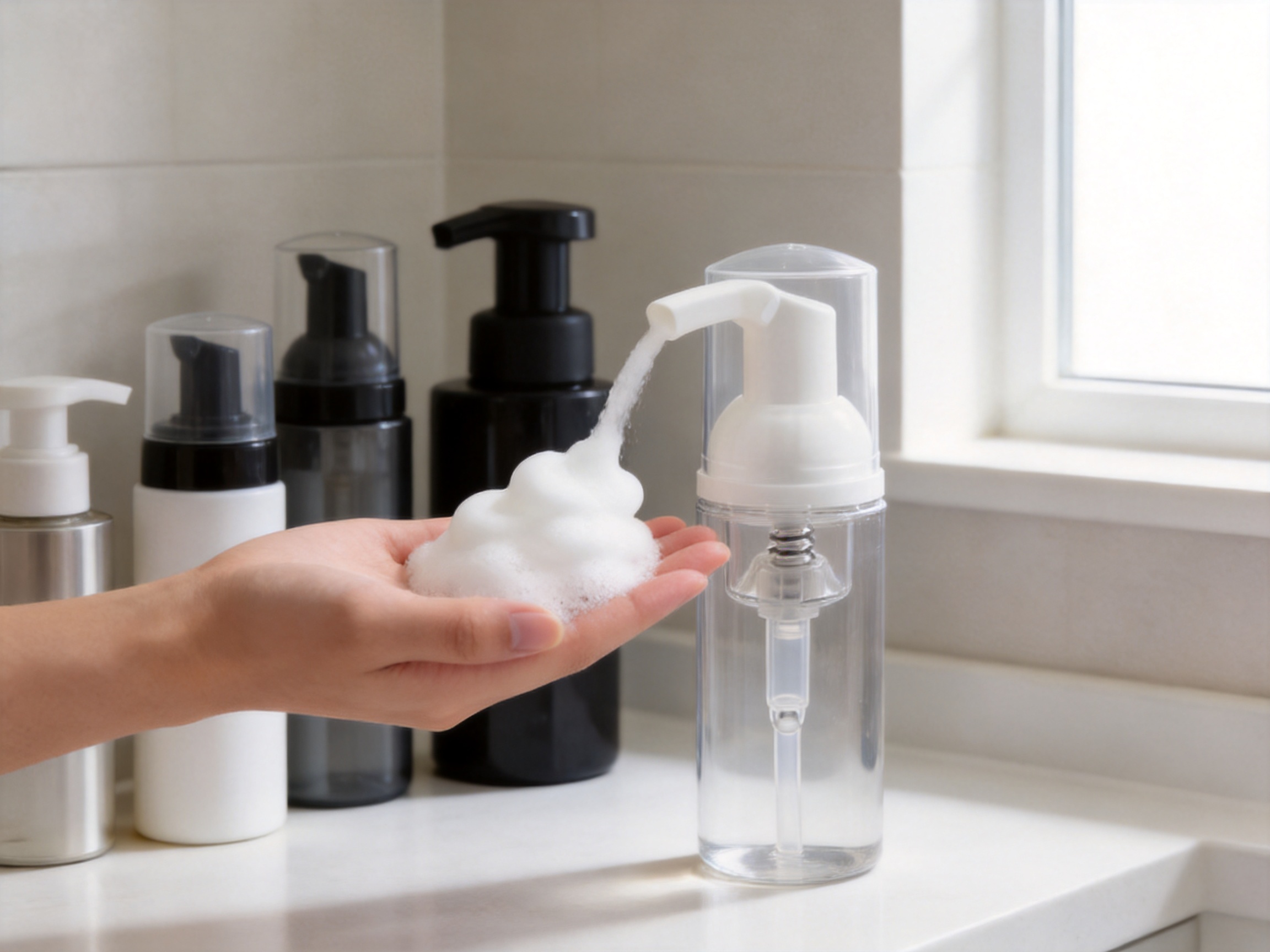
The Compact 28mm Foam Pump is designed around practical personal care usage. It must be comfortable to press, efficient in dispensing, and compatible with common bottle structures. While the visible part of the pump may appear simple, the internal function requires controlled liquid movement and air mixing. The user presses the actuator, the pump draws the liquid formula through the dip tube, and the mechanism creates foam output through internal aeration structures.
The quality of foam depends on pump design and formula compatibility. A good foam pump should produce output that is neither too watery nor too dry for the intended product. It should start reliably after priming and continue dispensing without frequent clogging or inconsistent sputtering. For consumers, the expectation is simple: press the pump and receive usable foam immediately.
The dosage level is especially suitable for applications where users may need one or more pumps depending on product type. Hand soap may require one to two actuations. Body wash may require more, depending on user preference. Sanitizer foam may require enough output to cover hands evenly. The 0.35 ml class dosage provides flexibility without excessive waste.
The plastic closure also contributes to handling comfort. Lightweight packaging is easier for consumers to use, especially in family bathrooms, institutional wash stations, travel-size formats, and refillable personal care systems. The closure’s compatibility with the bottle neck is critical, because a poor seal can result in leakage during transport or use. Proper matching of closure and bottle should always be confirmed during packaging development.
Application Scenarios
Hand Soap
Hand soap is one of the most common applications for foam pumps. Foam soap is popular in homes, restaurants, offices, schools, hotels, and public facilities because it spreads quickly and rinses easily. The Compact 28mm Foam Pump supports controlled hand soap dispensing, helping reduce product waste while delivering a pleasant foam texture.
For brands, foam hand soap can create a premium impression even with economical formulas. The pump helps transform the liquid into a larger apparent volume, making the product feel generous while maintaining controlled liquid consumption. The consistent dosage also supports institutional use, where cost per wash matters.
Sanitizer
Sanitizer packaging demands clean and controlled dispensing. Thin sanitizer liquids can drip or splash when dispensed from unsuitable closures. Foam sanitizer can reduce mess and help users spread the product across the hands. A reliable foam pump improves the hygiene experience by reducing contact with the product and delivering a measured output.
For sanitizer applications, formula compatibility testing is especially important because alcohol content, viscosity, and active ingredients can affect pump materials and foam performance. When properly matched, the Compact 28mm Foam Pump can support convenient sanitizer packaging for personal, commercial, and institutional settings.
Body Wash
Foaming body wash offers a sensory advantage. Consumers often appreciate a soft, airy foam that spreads easily across the skin. The pump provides a controlled and convenient alternative to squeeze bottles, especially for shower products where slippery hands can make flip caps less convenient.
For body wash brands, foam pumps can help differentiate products on the shelf. A foaming format suggests ease of use and a richer cleansing experience. The compact design helps maintain attractive bottle proportions, while the customizable tube length allows compatibility with different bottle heights.
Lotion and Serum-Style Liquids
The product information notes usage for serum, lotion, and related liquid products. In practice, foam pump suitability depends heavily on viscosity and formula structure. Very thick lotions may not foam properly, while lighter emulsion or liquid formulations may perform well if designed for foam dispensing. Brands should conduct pump-formula compatibility tests before final production.
For suitable formulas, the foam pump can deliver a controlled, hygienic user experience. This is particularly valuable for products where users want a measured amount without dipping fingers into a jar or squeezing too much product from a bottle.
Packaging Development Benefits for Brands
For personal care brands, choosing the right pump affects product development, production efficiency, logistics, retail appearance, and consumer satisfaction. The Compact 28mm Foam Pump offers several benefits across the packaging development cycle.
Reduced Development Complexity
Because the pump supports common personal care applications and offers customizable tube length, it can simplify development across multiple bottle sizes. Instead of searching for a completely different dispenser for each product format, brands may be able to use a consistent pump platform with adjustments. This improves design continuity and reduces qualification workload.
Development teams also benefit from working with a manufacturer that understands pumps, sprayers, caps, bottles, and daily chemical packaging. Integrated packaging knowledge helps identify compatibility issues early, such as closure fit, tube length, actuator height, carton clearance, and formula dispensing behavior.
Improved Consumer Experience
Consumers judge packaging by daily use. They expect the pump to press smoothly, dispense reliably, and remain clean around the nozzle. The Compact 28mm Foam Pump supports these expectations through controlled output and foam dispensing. A satisfying pump experience can increase repeat purchases because users associate convenience with product quality.
In competitive personal care categories, formula alone may not be enough. Many products have similar claims, fragrances, and ingredient stories. Packaging can become a decisive factor. A pump that feels stable and delivers attractive foam helps create a memorable user experience.
Support for High-Volume Supply
With a daily production capacity of one million units across its product manufacturing operations, the company is positioned to support large orders and ongoing supply programs. This matters for brands launching products into chain stores, e-commerce channels, hospitality supply, and institutional markets. A packaging delay can affect the entire product launch schedule.
High-volume capacity also supports repeatability. Brands can plan seasonal promotions, multi-region distribution, and private-label programs with greater confidence when the packaging supplier has strong manufacturing capacity and experience.
Practical Cost Efficiency
The plastic closure, automated assembly, and scalable production contribute to cost efficiency. In personal care packaging, the pump must balance performance with affordability. An overly expensive pump may not be viable for mass-market products, while an unreliable low-cost pump can create hidden costs through leakage, returns, complaints, and production downtime.
The Compact 28mm Foam Pump is positioned as a practical solution that supports controlled dispensing without unnecessary complexity. Its value lies not only in unit price but also in consistency, adaptability, and reduced risk during filling and consumer use.
How the Pump Supports Product Differentiation
Product differentiation is essential in personal care markets. Store shelves and online listings are crowded with similar soaps, sanitizers, and body washes. The dispenser can help a product stand out by improving both appearance and function. A foam pump communicates convenience, hygiene, and modernity.
A compact foam pump helps create a clean silhouette. It can be paired with transparent PET bottles, opaque PE bottles, airless-style containers where appropriate, or other personal care bottle formats. The pump’s color and finish can be coordinated with labels and caps in a broader packaging system. This creates a more cohesive brand presentation.
Foam output also supports storytelling. Brands can emphasize gentle cleansing, reduced waste, easy spreading, family-friendly use, or spa-like texture. The pump enables these claims by changing how the formula is delivered. Without the right pump, a foam product cannot achieve its intended experience.
For private-label products, foam dispensing can upgrade perceived quality without requiring a dramatic change in the formula platform. For premium brands, it can reinforce a refined sensory experience. For institutional brands, it can support measured use and cleaner dispensing. The same pump technology can serve different marketing strategies.
Compatibility Considerations
Before mass production, brands should evaluate several compatibility factors. The first is bottle neck finish. The listed size option is 30-410, so the bottle must match the closure specification. Thread quality, sealing surface, and bottle material can all affect fit. Testing should include tightening torque, leakage under inversion or pressure conditions, and shipping simulation when required.
The second factor is formula viscosity. Foam pumps are designed for liquids that can move through the pump and aerate properly. If the formula is too thick, contains large particles, or has unstable surfactant behavior, foam quality may be poor. The formula should be tested at different temperatures, after aging, and after repeated pump use.
The third factor is chemical compatibility. Ingredients such as alcohol, essential oils, solvents, fragrance compounds, acids, or active ingredients may interact with plastic materials or internal components. Compatibility testing helps ensure that the pump will not swell, crack, discolor, clog, or lose function during the product’s shelf life.
The fourth factor is dip tube length. A properly cut tube improves evacuation and reduces waste. The tube should reach close to the bottom of the bottle without pressing hard against the base. Tube angle, bottle shoulder shape, and fill level should also be considered.
The fifth factor is filling line compatibility. Pump height, closure dimensions, and assembly method can affect capping equipment, carton packing, and secondary packaging. Brands should test the pump under real or simulated production conditions before full-scale launch.
Quality Expectations for Foam Pump Buyers
Professional buyers should evaluate foam pumps using more than appearance. Important tests include dosage measurement, leakage testing, actuation force, return speed, foam quality, closure torque, dip tube retention, drop testing, temperature cycling, and long-term formula exposure. A good supplier should be able to discuss these concerns and support practical quality evaluation.
Dosage testing confirms whether the pump delivers the expected amount per actuation. This can be measured over multiple strokes after priming. Leakage testing checks whether product escapes around the closure, actuator, or nozzle during storage and transport. Actuation testing evaluates how the pump feels to the user and whether it continues working after repeated use.
Foam quality should be judged according to the product’s intended experience. Some products require dense foam; others need light foam. The pump and formula must work together. Closure torque testing ensures the pump can be tightened securely without damaging the bottle or threads. Drop and vibration testing help predict transport performance.
Long-term compatibility testing is particularly important. A pump may work well immediately after filling but fail after weeks or months of contact with the formula. Professional packaging validation reduces this risk and helps protect brand reputation.
Sustainability and Practical Material Use
Sustainability is a growing concern in packaging. Foam pumps are more complex than simple caps, so brands must consider material use, durability, refill systems, and responsible production. The plastic closure and compact design of this pump support lightweight packaging, which can reduce material and transport burden compared with heavier alternatives.
Durability is also part of sustainability. A pump that fails early may cause product waste and packaging replacement. Reliable dispensing helps consumers use the full contents of the bottle. Custom dip tube length further supports product evacuation, reducing leftover material at the bottom of the container.
For brands pursuing refill models, pump reliability becomes even more important. If consumers reuse the same pump with refill bottles, the pump must maintain function over extended use. Compatibility and durability testing should be conducted according to the intended refill cycle.
Manufacturing efficiency also contributes to resource responsibility. Advanced mold design, efficient injection molding, automated assembly, and quality inspection can reduce defect rates and production waste. A supplier with mature production systems is better positioned to support stable quality with fewer rejected components.
Why Manufacturing Experience Matters
The company behind this product has sixteen years of experience in spray product manufacturing and produces a broad range of packaging components, including perfume sprayers, pump heads, caps, bottles, and daily chemical packaging solutions. This background is relevant because foam pumps belong to a larger family of precision dispensing products. Knowledge gained from sprayers, lotion pumps, treatment pumps, and caps can strengthen foam pump engineering and quality management.
Experience helps in solving practical problems. For example, if a customer reports leakage during transport, the solution may involve closure fit, gasket design, torque control, bottle neck tolerance, or carton orientation. A supplier familiar with multiple packaging components can analyze the full system rather than treating the pump as an isolated part.
Experience also supports communication with global customers. Packaging buyers may need assistance with specifications, samples, customization, color matching, tube length, and production planning. A mature manufacturer can provide clearer guidance and reduce misunderstandings during development.
Production capacity is another important strength. A daily capacity of one million units reflects the ability to support large-scale manufacturing. However, capacity is valuable only when paired with quality systems. The company’s combination of mold design, injection molding, automated assembly, and inspection provides the foundation for both scale and reliability.
Comparison with Alternative Dispensing Options
To understand the value of the Compact 28mm Foam Pump, it is useful to compare it with other common dispensing systems. Flip-top caps are inexpensive and simple, but they rely on squeezing or pouring, which can cause inconsistent dosage. Disc-top caps offer cleaner opening and closing, but they still do not provide measured foam output. Lotion pumps provide controlled dispensing but do not create foam unless specifically designed for that function. Trigger sprayers are useful for surface sprays but are not ideal for hand soaps or body washes.
Foam pumps occupy a specialized position. They provide controlled dosing like a pump while creating an expanded foam texture. This makes them especially effective for cleansing and hygiene products. The Compact 28mm Foam Pump adds the advantages of compact form, plastic closure, and customizable tube length.
Compared with generic low-cost foam pumps, the key difference is the balance of specification, manufacturing support, and application versatility. A cheaper pump may reduce upfront packaging cost but can increase risk if it leaks, clogs, produces poor foam, or feels flimsy. A better-engineered pump helps protect the total product experience.
Compared with oversized foam pumps, the compact design can improve bottle aesthetics and reduce packaging bulk. This is important for personal care products where shelf appeal and hand feel matter. The pump should enhance the bottle, not dominate it.
Procurement Guidance for Buyers
When sourcing the Compact 28mm Foam Pump, buyers should begin by confirming the bottle neck finish, desired color, dosage expectations, dip tube length, and formula type. Samples should be tested with the actual formula and bottle. Testing with water alone is useful for preliminary checks but does not guarantee performance with the final product.
Buyers should also communicate filling conditions. If the product will be filled hot, stored in cold warehouses, shipped long distances, or sold in humid environments, these conditions should be considered during testing. Packaging performance can change under temperature and pressure variation.
Order planning should include lead time for sampling, approval, color confirmation, tube cutting, mass production, and shipment. For customized requirements, additional time may be needed. Clear communication at the beginning helps avoid delays later.
It is also wise to define quality standards before mass production. Acceptable dosage range, appearance criteria, leakage test requirements, carton packing method, and inspection plan should be agreed upon. This creates a common basis for evaluation and reduces disputes.
Q&A Section
What is the Compact 28mm Foam Pump used for?
It is used for dispensing foam from personal care liquids such as hand soap, sanitizer, body wash, and compatible lotion or serum-style formulations. It is designed to provide hygienic, controlled, and convenient dispensing.
What is the dosage of this foam pump?
The listed dosage is 0.35±0.1 ml per stroke. This supports controlled output and helps reduce waste compared with uncontrolled pouring or squeezing.
What size option is available?
The listed size option is 30-410. Buyers should confirm bottle neck finish compatibility before placing mass production orders.
Can the dip tube length be customized?
Yes. The tube length can be customized to fit different bottle heights and shapes. Proper tube length helps improve product evacuation and pump performance.
Why choose a foam pump instead of a flip-top cap?
A foam pump provides measured dispensing and creates foam at the point of use. A flip-top cap is simpler but usually delivers less consistent output and cannot create foam by itself.
Is the pump suitable for all lotions?
Not necessarily. Suitability depends on viscosity and formulation. Light, foam-compatible liquids may work well, but thick lotions or formulas with particles may not foam properly. Testing with the actual formula is recommended.
What are the advantages of the plastic closure?
The plastic closure is lightweight, cost-effective, corrosion-resistant, and suitable for color customization. It is practical for high-volume personal care packaging.
How does the product compare with generic foam pumps?
Its advantages include controlled dosage, customizable tube length, compact design, broad personal care application potential, and support from an experienced manufacturer with mold design, injection molding, automated assembly, and quality inspection capabilities.
What should be tested before mass production?
Brands should test bottle fit, leakage, dosage, foam quality, actuation feel, dip tube length, chemical compatibility, storage stability, and filling line performance.
Why is manufacturing capability important for foam pumps?
Foam pumps require precise molded parts and accurate assembly. Strong manufacturing capability helps maintain dimensional consistency, reliable function, stable output, and large-scale supply.
Conclusion
The Compact 28mm Foam Pump is a practical and competitive dispensing solution for personal care products that require foam output, controlled dosage, and packaging flexibility. With a 30-410 size option, 0.35±0.1 ml dosage, plastic closure, and customizable tube length, it addresses key requirements for hand soap, sanitizer, body wash, and compatible liquid formulations.
Its advantages over many competing foam pumps lie in the combination of controlled dispensing, compact design, adaptable tube length, personal care versatility, and scalable manufacturing support. For brands, this means better user experience, more consistent product consumption, stronger shelf presentation, and reduced packaging risk.
The manufacturing strength behind the product is equally important. Sixteen years of spray and pump packaging experience, advanced mold design, injection molding, automated assembly, quality inspection, and large daily production capacity provide a strong foundation for reliable supply. In personal care packaging, where consumers interact with the dispenser every day, these capabilities help transform a small component into a meaningful product advantage.
For companies developing foam hand soap, sanitizer, body wash, or related personal care products, the Compact 28mm Foam Pump offers a balanced solution: efficient, customizable, consumer-friendly, and supported by mature manufacturing expertise.
References
Packaging Machinery Manufacturers Institute. Fundamentals of Packaging Technology.
Soroka, Walter. Illustrated Glossary of Packaging Terminology.
Yam, K. L. The Wiley Encyclopedia of Packaging Technology.
Robertson, Gordon L. Food Packaging: Principles and Practice.
Coles, Richard, McDowell, Derek, and Kirwan, Mark J. Food Packaging Technology.
Industry guidance on plastic dispensing closures, pump mechanisms, and personal care packaging quality control practices.
Product: Compact 28mm Foam Pump

-
Foam Pump vs Regular Pump: What's the Difference?
The core difference between a foam pump and a regular pump is how each one delivers product. A regu...
-
Crimp Pumps Demystified: Choosing the Right Type and Material for Every Cosmetic Formula
Walk into any cosmetic filling facility and you will find crimp pumps on everything from a delicate ...
-
Airless Bottles Uncovered: How to Protect Your Skincare and Perfect Every Pump
If you have ever opened a pump bottle of serum and found the last quarter of the product impossible ...
-
What's Inside a Lotion Pump and How Does It Work ?
A lotion pump is a precision dispensing closure that draws liquid product from a bottle and delivers...
Copyright © GreenYard Tools Co.,ltd. All Rights Reserved.
Personal Care Packaging Manufacturer Custom Perfume Sprayers Factory