
-
About Us
Why Choose Us?The company possesses advanced capabilities in mold design, injection molding, and automated assembly, supported by a professional quality inspection team to ensure product reliability. A dedicated design team continuously drives product innovation, providing customers with high-quality spray solutions.
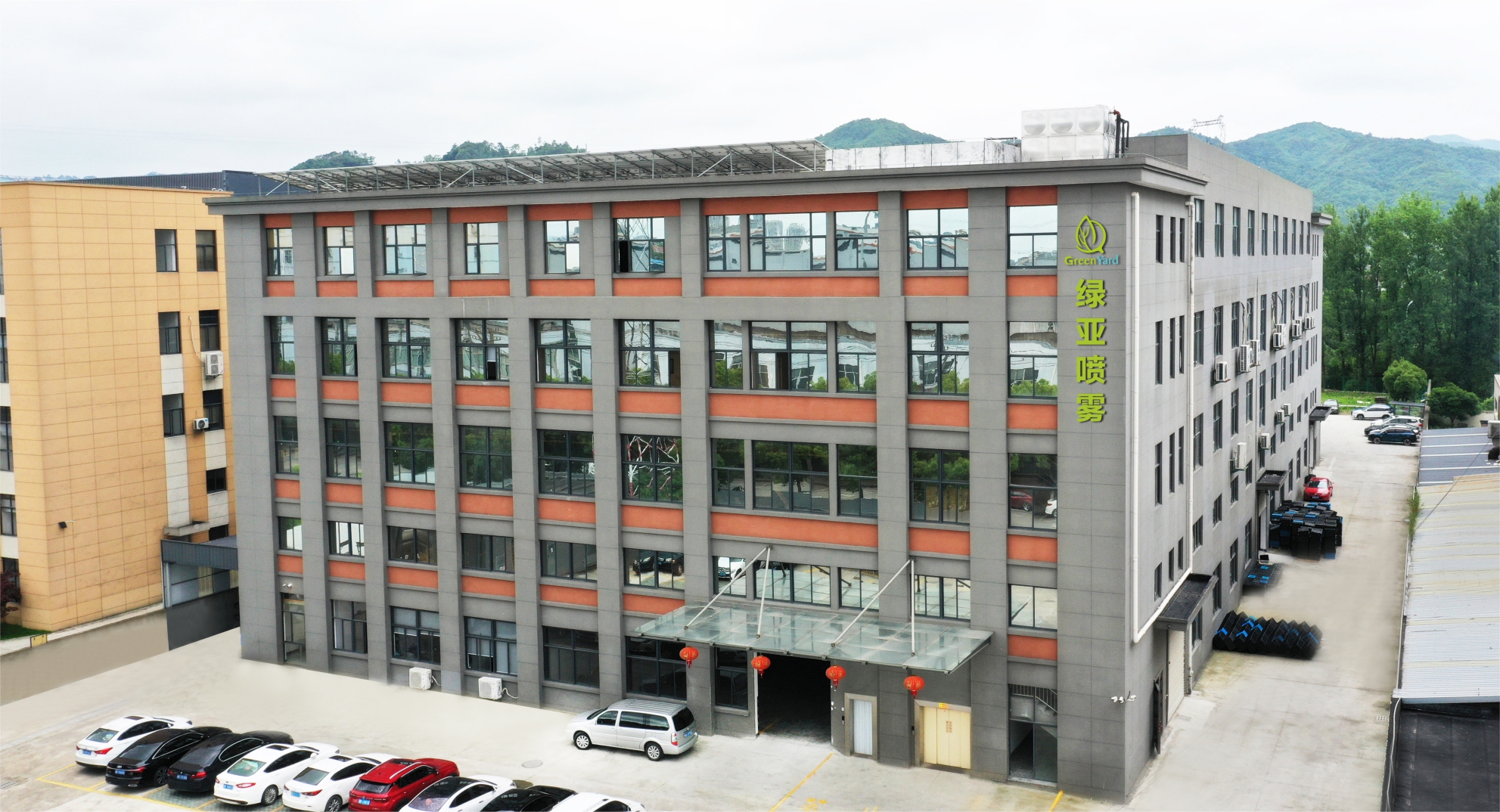 Coming From China, Marketing To The World.
 -
Products
-
News
 English
 Français
 русский
 Español
Airless Bottles Uncovered: How to Protect Your Skincare and Perfect Every Pump
Content
- 1 How to Choose the Right Airless Bottle for Your Skincare Formula
- 1.1 Understanding Viscosity and Why It Drives Bottle Selection
- 1.2 Thin and Low-Viscosity Formulas: Serums, Essences, and Liquid Treatments
- 1.3 Mid-Viscosity Formulas: Emulsions, Fluid Moisturizers, and Light Gels
- 1.4 High-Viscosity Formulas: Rich Creams, Eye Treatments, and Balms
- 1.5 Material Considerations for the Bottle Body
- 1.6 Practical Steps Before Finalizing a Bottle Specification
- 2 Airless Bottles vs. Traditional Bottles: Which Preserves Your Product Better?
- 3 Pump Design Matters: Selecting Airless Bottles for Consistent Dispensing
- 3.1 Output Volume: Getting the Dose Right
- 3.2 Actuation Force: Comfort, Accessibility, and Feel
- 3.3 Actuator Design and Application Experience
- 3.4 Avoiding Product Waste Through Consistent Dispensing
- 3.5 Consistency Across the Bottle Life
- 3.6 Lockable Pump Heads and Travel Considerations
- 3.7 The Role of Packaging Partners in Getting Pump Performance Right
- 4 Putting It All Together: A Framework for Airless Bottle Decisions
If you have ever opened a pump bottle of serum and found the last quarter of the product impossible to dispense — or watched an expensive vitamin C formula turn orange in its container within weeks of opening — you have already experienced the two core problems that airless bottles are designed to solve. Airless packaging eliminates air contact throughout the product's life, and its piston-driven mechanism ensures consistent, waste-free dispensing from the first pump to the last. But choosing the right airless bottle is not simply a matter of picking a size. The formula's viscosity, active ingredient profile, and intended dispensing experience all shape which bottle and pump combination will actually perform in the real world. This article walks through each of those decisions in practical terms, starting with how to match your formula to the right airless bottle, then examining how airless packaging compares to conventional bottles on product preservation, and finally looking at how pump design affects the dispensing experience your customers will have every day.
How to Choose the Right Airless Bottle for Your Skincare Formula
Not every formula is suited to every airless bottle, and not every airless bottle handles every formula equally well. The physical properties of your product — primarily its viscosity, texture, and ingredient complexity — determine which bottle geometry, piston design, and pump mechanism will deliver reliable performance across the full life of the product. Getting this right at the development stage prevents the most common airless packaging failures: incomplete product evacuation, pump clogging, and inconsistent dose delivery.
Understanding Viscosity and Why It Drives Bottle Selection
Viscosity describes how easily a substance flows. Water has very low viscosity; a thick overnight cream has high viscosity. In airless packaging, viscosity matters because the piston inside the bottle must generate enough pressure to push the product upward through the pump's internal channels to the actuator. If the product is too thick for the pump's design, it will not flow freely enough. If it is too thin, the pump may deliver an uncontrolled burst rather than a measured dose.
The challenge is that viscosity is not always intuitive from appearance alone. A gel serum can have surprisingly high resistance to flow despite looking lightweight. An emulsion cream may actually pump more easily than a gel because its oil and water phases allow it to shear thin under pressure. Testing your actual formula in a sample airless bottle — not a water surrogate — is the only reliable way to verify pump performance before committing to a specification.
Thin and Low-Viscosity Formulas: Serums, Essences, and Liquid Treatments
Lightweight serums, hydrating essences, and liquid treatments typically flow with minimal resistance. For these formulas, the primary challenge in airless dispensing is not getting the product out — it is controlling the dose precisely. A pump with a large output volume and a loose-fitting piston can over-dispense low-viscosity serums, creating a frustrating experience for the consumer who finds themselves pumping out twice the intended amount.
For thin formulas, a compact airless bottle with a small-diameter pump and a low output per stroke — typically in the range of 0.15 ml to 0.3 ml — delivers the controlled dosing that actives-rich serums require. Vitamin C serums, retinol treatments, and peptide-based formulations often fall in this category, and precise dosing matters not just for user experience but for product efficacy: these products are formulated for a specific application amount per use.
The bottle geometry for thin formulas can be more compact and upright, as the low-viscosity product flows readily toward the pump head. A straight-walled cylindrical body with a close-fitting piston is a clean and functional choice for this category. Smaller volumes — 15 ml to 30 ml — are also common for serum applications, which suits the smaller footprint of compact airless bottles.
Mid-Viscosity Formulas: Emulsions, Fluid Moisturizers, and Light Gels
Fluid emulsions and light moisturizers represent the broadest and most forgiving viscosity range for airless dispensing. Most standard airless pump mechanisms are optimized for this category, delivering reliable performance with outputs typically between 0.3 ml and 0.8 ml per stroke. The product flows well enough for the pump to draw it upward without excessive actuation force, and it is thick enough to deliver a clear, controlled dose at the actuator.
Gel-based formulas occupy an interesting middle ground here. A water-based gel with a high concentration of carbomer or hyaluronic acid can have a surprisingly high apparent viscosity but will often shear thin under the mechanical pressure of the pump — meaning it pumps more easily than its texture suggests. However, gel formulas can also be prone to trapping air bubbles during filling, which can affect piston performance over time. For gel formulas, it is worth specifying a filling process that minimizes air incorporation and confirming that the piston gasket material is compatible with the gel's base chemistry.
Oval and flat-oval bottle shapes work particularly well for mid-viscosity fluid moisturizers, offering a larger cross-sectional area that reduces the travel distance the piston must cover for a given volume. This also gives the packaging designer more surface area to work with for label or decoration, which is a practical benefit for retail presentation.
High-Viscosity Formulas: Rich Creams, Eye Treatments, and Balms
Dense creams and rich treatment formulas place the greatest demands on an airless pump system. The pump must generate sufficient suction force to pull thick product through the internal channels, and the piston must maintain a consistent seal against the bottle walls without requiring so much friction that it slows or stalls. If either of these is mismatched to the formula, the consumer experience deteriorates quickly: the pump requires multiple hard presses before product appears, the output per stroke varies inconsistently, or the piston fails to rise smoothly, leaving product stranded at the base of the bottle.
For high-viscosity applications, a wider-bore pump with a larger output — typically 0.5 ml to 1.0 ml per stroke — and a stronger spring mechanism is the appropriate starting point. The bottle geometry also matters more at this viscosity range. A shorter, wider bottle with a larger internal diameter reduces the piston travel distance and the pressure required to move product, making it more forgiving of thick formulas than a tall, narrow cylindrical design.
Eye creams and targeted treatment products present a specific sub-case: they are typically high-viscosity but dispensed in very small amounts. For these, a narrow-nose actuator with a controlled tip opening — sometimes called a precision tip or targeted applicator — can be specified to deliver a small, accurate dose of dense product exactly where it is needed, without the broad-spray application pattern of a standard flat actuator.
| Formula Type | Viscosity Level | Recommended Output / Stroke | Bottle Shape Consideration | Common Volume Range |
|---|---|---|---|---|
| Serum / Essence | Low | 0.15 – 0.3 ml | Slim upright cylinder | 15 – 30 ml |
| Fluid Gel / Essence Lotion | Low–Medium | 0.3 – 0.5 ml | Cylinder or oval | 30 – 50 ml |
| Emulsion / Light Moisturizer | Medium | 0.4 – 0.8 ml | Oval or flat oval | 30 – 50 ml |
| Rich Cream / Treatment | High | 0.5 – 1.0 ml | Short wide cylinder or jar-style | 30 – 50 ml |
| Eye Cream / Targeted Treatment | High | 0.1 – 0.25 ml | Slim upright with precision tip | 10 – 20 ml |
Material Considerations for the Bottle Body
Airless bottles are manufactured in several materials, each with practical tradeoffs. The most common options are PP (polypropylene), PETG, acrylic, and glass. Each interacts differently with the formula inside and presents different tradeoffs between aesthetics, weight, chemical resistance, and sustainability.
- PP airless bottles are lightweight, chemically resistant to a broad range of cosmetic ingredients, and well-suited to formulas containing alcohols, acids, or essential oils. They are the most practical choice for everyday skincare products where durability and formula compatibility take priority over premium aesthetics.
- PETG bottles offer high clarity and a glass-like appearance at lower weight than glass. They are compatible with most water-based formulas and offer good impact resistance for travel-friendly packaging. They are less resistant to strong solvents and high concentrations of essential oils than PP.
- Acrylic bottles are the standard choice for luxury skincare packaging. Their optical clarity and ability to be crafted into complex shapes make them a visual standout at retail, but they require careful compatibility testing with formulas containing solvents or high alcohol content, as acrylic can craze or crack with prolonged chemical exposure.
- Glass airless bottles are available in premium applications, particularly for fragrance-adjacent skincare. Glass is chemically inert and creates zero risk of ingredient migration, but the weight and fragility requirements add complexity to both filling and logistics.
For the inner surface that comes into direct contact with the formula — the bottle walls and piston — PP remains the most reliable all-purpose choice for its chemical resistance profile. When the outer shell is a different material for aesthetic reasons, a PP inner sleeve or liner is often used to separate the formula contact surface from the decorative outer layer.
Practical Steps Before Finalizing a Bottle Specification
Before committing to a production run, several validation steps reduce the risk of discovering performance issues after launch. These are not optional formalities — they are the difference between a packaging specification that works reliably at scale and one that generates consumer complaints within the first product cycle.
- Fill sample bottles with your actual formula at the intended fill weight and run a priming test to confirm the pump primes within the acceptable number of strokes — typically no more than four to six strokes from an unfilled state.
- Measure output consistency across a full bottle life by dispensing the complete fill and comparing output per stroke at the beginning, middle, and end of the bottle.
- Conduct a 45-degree tilt and inversion test to confirm the piston maintains its seal and product does not bypass the piston and pool at the base when stored at an angle — a common issue during retail display or travel.
- Run a temperature cycle test exposing filled samples to the upper and lower temperature range expected during shipping and storage to check for piston movement caused by thermal expansion.
- Confirm actuation force with a representative consumer panel, particularly if the product is positioned for older users or those with limited hand strength.
Airless Bottles vs. Traditional Bottles: Which Preserves Your Product Better?
Walk into any pharmacy and you will find moisturizers in open-top jars, serums in dropper bottles, and toners in flip-cap containers — all of them exposing the formula to air every time they are opened. For decades, cosmetic formulas were designed around this reality, with heavy preservative systems and antioxidant stabilizers added specifically to counteract the degradation caused by repeated air exposure. Airless packaging fundamentally changes that equation by removing the air from the dispensing mechanism entirely. Understanding exactly how this difference plays out in practice — and where it matters most — is essential for making the right packaging decision for a given formula.
The Oxidation Problem in Conventional Packaging
Oxidation occurs when ingredients in a cosmetic formula react with oxygen. It is the same process that causes cut fruit to brown, metal to rust, and cooking oil to go rancid — and it is a constant, ongoing process in any open cosmetic container. In a conventional pump bottle, every time the pump is pressed, a small volume of product is dispensed and an equal volume of air is drawn back into the bottle through the dip tube or venting mechanism to equalize pressure. Over the life of the product, this means the formula is repeatedly exposed to fresh oxygen.
For formulas containing oxidation-sensitive ingredients, this ongoing air exposure is a genuine stability challenge. Vitamin C (ascorbic acid) is the most well-known example — it oxidizes to dehydroascorbic acid and then to diketogulonic acid, losing its efficacy and turning the formula yellow or orange in the process. Retinol degrades similarly with air and light exposure. Polyunsaturated plant oils — such as rosehip or sea buckthorn — can undergo lipid oxidation that produces rancid-smelling byproducts. For any formula built around these types of active ingredients, the packaging choice is not simply aesthetic — it directly determines how long the product remains effective.
Open-top jars present an even greater challenge. Every time the jar is opened, the entire surface of the product is exposed to air, and the consumer's fingers introduce a fresh source of microbial contamination. Jars are still widely used in cosmetics because of their accessibility, premium tactile experience, and ability to hold very thick formulas, but from a pure preservation standpoint they require robust preservative systems and generate shorter in-use shelf life compared to sealed dispensing formats.
How Airless Bottles Eliminate the Air Exchange Problem
The defining feature of an airless bottle is the piston that sits beneath the product inside the bottle. When the pump is pressed, it draws product upward from above the piston. The resulting negative pressure causes the piston to rise slightly, maintaining contact with the bottom of the product column. No air enters the bottle to fill the space left by the dispensed product — the piston simply rises to fill the gap.
This mechanism means the formula is never exposed to a fresh volume of incoming air during use. The headspace above the product — which in a conventional bottle would gradually become a reservoir of oxygen — does not exist in an airless format. The product from the first pump to the last is protected by the same sealed environment it was filled into at the factory.
The practical implications of this for formula preservation are significant. Active ingredients that would degrade within weeks in an open conventional bottle can remain stable for the full intended shelf life in an airless format. Brands formulating with minimal or natural preservation systems — which are increasingly popular in the clean beauty segment — rely on airless packaging not as a supplementary measure but as a core component of their stability strategy.
Shelf Life and the Period After Opening
Cosmetic products carry two shelf life designations: the shelf life before opening — the period from manufacturing to first consumer use — and the Period After Opening (PAO), which is the recommended time the product can be safely and effectively used after the first dispensing. The PAO is the figure most directly affected by packaging format.
For conventional pump bottles with standard preservative systems, PAO values of 12 months are common, with some products rated for 6 months (particularly those containing high levels of active ingredients or natural preservation). Airless packaging, by reducing oxidation and limiting microbial ingress during use, can support longer PAO designations for the same formula — subject to stability testing confirmation. This means consumers get more usable product life for their purchase, and brands can reduce the preservative burden in the formula, which is increasingly aligned with consumer expectations in the premium skincare segment.
It is important to note that airless packaging does not eliminate the need for preservatives — it reduces their workload. A product filled into an airless bottle still needs to be microbiologically safe through the full PAO period, accounting for the possibility of microbial contamination at the actuator tip during normal use. The combination of appropriate preservation and airless packaging, however, allows formulators to design more elegant, minimal preservation systems than conventional formats would require.
Protecting Specific Active Ingredient Categories
Different active ingredient categories face different degradation pathways, and airless packaging addresses each in slightly different ways.
- Vitamin C (ascorbic acid and derivatives): Highly susceptible to oxidation, which causes loss of antioxidant activity and discoloration of the formula. Airless packaging significantly slows this process by preventing repeated air exposure during use. Opaque airless bottles that also block light provide additional protection.
- Retinol and retinoid derivatives: Retinol degrades rapidly with both air and light exposure. Airless packaging with opaque walls or UV-protective coatings is a standard specification for retinol-containing products.
- Peptides and growth factors: These ingredients can denature or degrade in the presence of oxygen and certain metal ions. Airless packaging reduces the cumulative oxygen exposure across the product's use period, helping maintain molecular integrity.
- Plant-based oils and lipid-rich formulas: Polyunsaturated fatty acids are prone to lipid oxidation, which produces peroxides and eventually rancid-smelling aldehydes. Airless packaging significantly delays this process by limiting the ongoing oxygen exposure that drives the oxidation cascade.
- Natural and minimally preserved formulas: Products using preservative-free or minimally preserved systems depend heavily on packaging integrity to remain microbiologically safe through the PAO. Airless formats reduce microbial ingress risk and support the stability of these more sensitive formulation strategies.
| Factor | Open-Top Jar | Conventional Pump Bottle | Airless Bottle |
|---|---|---|---|
| Air contact during use | High — full surface exposed each use | Moderate — air re-enters through vent | Minimal — piston prevents air ingress |
| Oxidation risk | High | Moderate | Low |
| Microbial contamination risk | High — direct finger contact | Low–Moderate | Low |
| Suitability for sensitive actives | Poor | Moderate | Strong |
| Preservative system requirements | Robust system needed | Standard system needed | Lighter system may be viable |
| Product evacuation rate | High — manual access to all product | Moderate — residue left in bottle | High — piston pushes to near-zero waste |
When Conventional Packaging Is Still the Right Choice
Airless packaging is not the optimal choice for every cosmetic product, and a balanced view requires acknowledging where conventional formats still have the advantage. Products with very high viscosity — true balms, waxes, or extremely thick butters — may exceed the pumping capacity of any practical airless mechanism and are better served by jars or squeeze tubes. Very large fill volumes, such as body lotion in 300 ml or 500 ml sizes, can be cost-prohibitive in an airless format, where the piston mechanism adds meaningful per-unit cost compared to a simple conventional pump or flip-top bottle.
Products formulated with robust, well-tested preservative systems and without sensitive actives may simply not benefit enough from airless packaging to justify the added cost. A basic body lotion with a generous shelf life, a stable emulsion system, and no light- or oxygen-sensitive ingredients performs reliably in a conventional pump bottle, and switching to airless would add cost without a meaningful preservation benefit.
The decision framework is straightforward: the more a formula depends on active ingredient stability, minimal preservation, or extended PAO performance, the stronger the case for airless packaging. The more it is a robust, stable everyday formula in a large format, the more likely conventional packaging delivers the same consumer experience at lower packaging cost.
Pump Design Matters: Selecting Airless Bottles for Consistent Dispensing
Preservation and formula compatibility are the structural foundations of airless bottle selection, but the consumer's daily experience of the product is shaped almost entirely by the pump. How easy is it to press? How much product comes out each time? Does it spray cleanly or dribble? Does the dose stay consistent from the first pump to the last? These are the questions that determine whether a product feels satisfying and professional to use, or frustrating and unreliable. Pump design is where packaging engineering meets consumer experience, and it deserves as much attention as any other element of product development.
Output Volume: Getting the Dose Right
The output volume per stroke — measured in milliliters — is one of the most important functional specifications for an airless pump. It determines how much product the consumer receives with each press, which affects not only the use experience but also the real-world product usage rate, which in turn affects how long a given fill volume lasts and the consumer's perception of value.
For actives-rich serums and targeted treatments, a small output volume — typically 0.15 ml to 0.3 ml — is appropriate. These products are usually applied in a thin, targeted layer, and the recommended application amount is small by design. A pump that delivers 0.5 ml per stroke would exhaust a 30 ml serum in 60 uses — about two months at once-daily application — which may be acceptable, but if the intended dosage is only 0.15 ml, the same bottle lasts four months, which better aligns with consumer expectations for a premium product at its typical price point.
For moisturizers and richer treatments, a larger output — 0.5 ml to 1.0 ml — is typically expected. Consumers applying moisturizer to the full face and neck area need enough product in a single stroke to cover the application zone without having to pump multiple times, which feels laborious and also breaks down the ritual quality that premium skincare products depend on.
Output calibration should be validated with real users, not just with measurement equipment. A pump that technically delivers 0.5 ml per stroke on a test bench may deliver inconsistent amounts in consumer hands if the actuation force is high enough that users tend to give it a half-press rather than a full press. This is a real phenomenon in consumer testing, and it is one of the reasons that pump actuation force and output volume should be evaluated together rather than in isolation.
Actuation Force: Comfort, Accessibility, and Feel
Actuation force is the amount of pressure required to depress the pump head fully and trigger product dispensing. It is measured in Newtons (N) and is a function of the spring strength inside the pump mechanism, the viscosity of the formula being pushed through the channels, and the friction of the internal components.
A pump that requires too much force is uncomfortable to use and creates accessibility problems for consumers with arthritis, reduced grip strength, or other hand-related limitations. A pump that requires too little force may actuate accidentally in a bag or when the cap is on, leading to product spillage and leakage complaints. The target range for most skincare pump actuators is a moderate, smooth press — firm enough to feel deliberate and controlled, light enough to use one-handed without effort.
High-viscosity formulas inherently create more resistance in the pump mechanism, which increases the effective actuation force at the consumer's fingertip. If a rich cream formula is already at the upper boundary of what a standard pump can handle, specifying a lighter spring does not solve the problem — the formula's viscosity is still contributing resistance. In those cases, a wider-bore pump that reduces flow restriction is a more effective solution than simply adjusting spring tension.
Actuator Design and Application Experience
The actuator is the part the consumer presses and the part through which product exits the bottle. Its design shapes the texture and distribution of the product at the point of application, which can meaningfully affect how the product feels and performs on the skin.
A flat nozzle actuator with a wide opening delivers product in a smooth, slightly spread bead that is easy to pick up with fingertips and apply across a broad area. This is the most common configuration for moisturizers and serums. A narrow-nose or pointed actuator delivers a more precise, targeted bead — used for eye creams, spot treatments, and products intended for application to a specific small zone.
The orifice size of the actuator nozzle is a critical detail that is easy to overlook. If the orifice is too small for the formula's viscosity, product will not exit cleanly and may string or ooze after the pump is released, leaving residue on the actuator that dries and accumulates over time. If it is too large for a thin formula, the product may splatter or spread uncontrollably on dispensing. Matching orifice size to formula viscosity is a specification detail that should be confirmed during the sampling phase.
Avoiding Product Waste Through Consistent Dispensing
One of the significant practical advantages of airless dispensing over conventional packaging is the product evacuation rate — the percentage of the filled product that can actually be dispensed and used. In a conventional pump bottle, the dip tube draws product up from the base of the bottle, but residue clings to the inner wa/product/airless-bottle/lls and accumulates below the dip tube opening, resulting in product that is effectively inaccessible to the pump. Depending on the formula and bottle geometry, this stranded product can represent several percent of the total fill weight — meaningful waste when the product is an expensive actives serum.
In an airless bottle, the rising piston physically sweeps product upward toward the pump opening as the bottle is used. This means the piston maintains contact with the bottom of the product column throughout the product's life, and as the piston approaches the top of its travel, the remaining product is pushed to near-zero residual volume. Well-designed airless bottles can achieve product evacuation rates above 95% of the fill weight — substantially better than the typical performance of a conventional pump bottle with a straight dip tube.
For a 30 ml premium serum, the difference between 85% and 95% evacuation is three milliliters of product — which at typical serum application rates represents several days of additional use. From the consumer's perspective, a bottle that runs out predictably and delivers its product right to the end feels more honest and higher quality than one that goes from dispensing normally to producing nothing while clearly still containing usable product.
Consistency Across the Bottle Life
An ideal airless pump delivers the same volume of product with the same actuation force from the first use to the last. In practice, this consistency depends on how well the piston rises in response to the negative pressure created by each pump stroke, and how uniformly the pump spring tension and internal tolerances are maintained across the production batch.
Dispensing inconsistency — where the output per stroke varies noticeably across the bottle's life — is one of the more common complaints about lower-quality airless pump assemblies. It typically has one of three causes: a piston that moves in uneven increments rather than rising smoothly with each stroke, a spring mechanism that weakens over time and reduces the pump's ability to maintain consistent pressure, or a mismatch between the bottle's internal diameter tolerance and the piston's outer diameter that creates variable friction as the piston travels.
Specifying tight dimensional tolerances for both the bottle body and the piston is the most effective single measure for ensuring dispensing consistency. This is an area where the quality difference between pump suppliers becomes tangible — a well-manufactured piston with consistent diameter and a well-formed bottle with consistent internal bore geometry produce a reliable dispensing experience; looser tolerances create variability that no amount of spring calibration can fully compensate for.
Lockable Pump Heads and Travel Considerations
A practical feature worth specifying for skincare products intended for travel or retail display is a lockable or twist-to-lock pump head. This allows the actuator to be physically locked in the down position, preventing accidental dispensing when the bottle is jostled in a bag or stored in a kit. For airless bottles, where there is no dip tube and product is under slight positive pressure from the piston, an unlocked pump in a travel scenario can occasionally dispense small amounts of product with normal movement — enough to create a mess, though not typically a large spill.
The locking mechanism should be intuitive for the consumer to engage and release — a simple quarter-turn that clearly communicates locked and unlocked positions with a tactile or audible click. Overly complex or ambiguous locking mechanisms generate consumer service complaints and negative reviews, which is a straightforward problem to avoid at the design stage.
| Pump Design Element | Specification to Define | Consumer Impact if Wrong | Validation Method |
|---|---|---|---|
| Output volume | ml per full stroke | Over- or under-dosing; poor perceived value | Weigh output across 10 consecutive strokes |
| Actuation force | Force in Newtons (N) | Discomfort, accessibility issues, accidental dispensing | Gauge test plus consumer panel |
| Actuator orifice size | Orifice diameter (mm) | Stringing, splattering, or actuator clogging | Dispensing visual test with actual formula |
| Piston / bore tolerance | Dimensional tolerance (mm) | Inconsistent output across bottle life | Full-bottle dispensing consistency test |
| Priming stroke count | Max strokes before first dispense | Consumer frustration at first use | Prime test on room-temp filled samples |
| Lock mechanism | Lock type and engagement clarity | Accidental dispensing or confusion | Consumer usability test, travel/bag simulation |
The Role of Packaging Partners in Getting Pump Performance Right
Pump performance is a collaborative output between the packaging supplier, the filler, and the brand's development team. A packaging partner who provides sample bottles for formula testing, shares detailed technical specifications for each pump component, and supports compatibility and consistency testing at the development stage reduces the likelihood of discovering dispensing issues after launch. Airless bottles that look identical on a product page can vary significantly in their piston tolerance, spring characteristics, and actuator orifice geometry — details that are only visible in the component drawings or measurable through physical testing.
Brands developing new products in an airless format should treat the pump specification as a development decision, not a procurement decision. Selecting a pump based on aesthetics and price alone, without testing it with the actual formula across a simulated bottle life, is the single most common source of airless packaging failures that reach consumers.
Putting It All Together: A Framework for Airless Bottle Decisions
Choosing the right airless bottle for a skincare product is a multi-variable decision, but it does not have to be an overwhelming one. The three questions at the center of the decision are clear: Does the bottle and pump mechanism match the formula's viscosity? Does the packaging protect the formula's active ingredients and stability throughout the intended shelf life? And does the pump deliver product accurately, consistently, and comfortably from start to finish?
When all three of those questions are answered through proper testing and specification — rather than assumption — airless packaging delivers on its promise. The active ingredients arrive at the consumer's skin in the same condition they left the filling line. The product lasts to the last drop. And every pump stroke delivers exactly what the formulator intended. That alignment between packaging performance and formula performance is what turns a good skincare product into a great consumer experience.
Whether you are launching a first-to-market vitamin C serum, reformulating an existing moisturizer into a clean-beauty format, or developing a targeted eye treatment for a prestige skincare range, the investment in getting the airless bottle specification right — starting with viscosity matching, moving through material compatibility, and finishing with pump performance validation — is the most direct path to a product that works as well in the consumer's hands as it does in the development lab.
-
How Glass Airless Bottle Packaging Prevents Contamination and Boosts Shelf Life?
Glass airless bottle packaging prevents contamination and extends shelf life by completely eliminat...
-
How the Treatment Cream Pump Enhances the Consumer Skincare Experience ?
A treatment cream pump does more than dispense product — it fundamentally shapes how consumers inte...
-
Crimp Pumps Demystified: Choosing the Right Type and Material for Every Cosmetic Formula
Walk into any cosmetic filling facility and you will find crimp pumps on everything from a delicate ...
-
The Secret to Perfect Skincare Dosing: Choosing the Right Dropper Bottle
The dropper bottle is one of the most familiar formats in skincare — and one of the most underestima...
Copyright © GreenYard Tools Co.,ltd. All Rights Reserved.
Personal Care Packaging Manufacturer Custom Perfume Sprayers Factory