
-
About Us
Why Choose Us?The company possesses advanced capabilities in mold design, injection molding, and automated assembly, supported by a professional quality inspection team to ensure product reliability. A dedicated design team continuously drives product innovation, providing customers with high-quality spray solutions.
 Coming From China, Marketing To The World.
 -
Products
-
News
 English
 Français
 русский
 Español
Crimp Pumps Demystified: Choosing the Right Type and Material for Every Cosmetic Formula
Content
Walk into any cosmetic filling facility and you will find crimp pumps on everything from a delicate eye serum to a thick body cream — yet the pump sitting on one formula would likely fail on another within weeks. The gap between a pump that performs and one that frustrates comes down to two decisions made early in packaging development: matching the pump mechanism to the formula's viscosity, and selecting materials that will not compromise the product over time. This article tackles both questions directly, and adds a third consideration that is becoming increasingly relevant for cosmetic brands: whether a single-use or refillable crimp pump system is the right fit for your product line.
How to Choose the Right Crimp Pump for Different Cosmetic Viscosities
Viscosity — how thick or thin a product flows — is the single most important factor when selecting a crimp pump mechanism. A pump designed for a water-like toner relies on narrow internal channels and a light spring tension that would be completely overwhelmed by a heavy facial oil or a dense moisturizer. Getting this match right from the start prevents the two most common pump complaints in cosmetic production: clogging and under-dispensing.
Thin Formulas: Serums, Toners, and Facial Mists
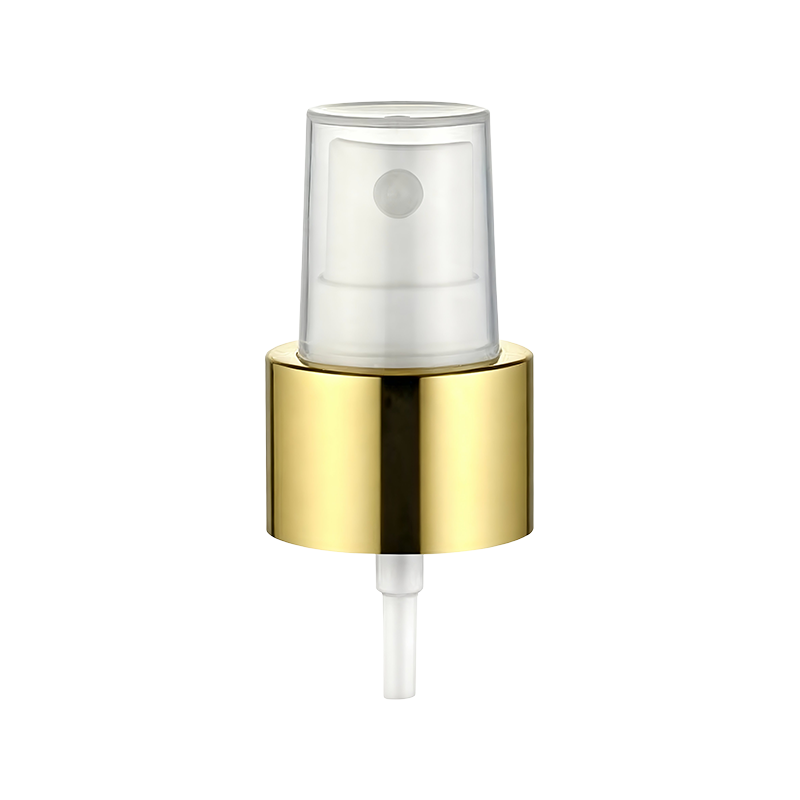
Water-based serums and toners fall at the low end of the viscosity scale. Fine mist sprayers and standard lotion pumps with a small output volume (0.1 ml to 0.5 ml per stroke) are the natural match here. The narrow dip tube and light actuation spring draw these fluids upward with minimal effort. Fine mist sprayers additionally atomize the formula into an even spray pattern — useful for setting sprays, hydrating mists, and leave-on liquid treatments where broad, controlled coverage matters.
One important caveat: if a thin serum contains suspended particles — exfoliating beads, mica, or botanical fragments — a fine mist sprayer will clog. In those cases, a standard lotion pump with a slightly wider dip tube is the safer choice, even for low-viscosity products.
Mid-Range Formulas: Lotions, Emulsions, and Light Oils
This is the broadest category and where most everyday skincare products sit. Lotions, fluid emulsions, and lightweight facial oils typically flow well enough for a standard lotion pump with a medium dip tube diameter and an output of 0.8 ml to 1.5 ml per stroke. The spring tension needs to be strong enough to create suction but light enough for easy actuation — a poorly calibrated spring is why some pump dispensers feel stiff or require multiple primes before product appears.
For facial and body oils specifically, it is worth confirming that the dip tube material is compatible with oil-based formulas, as certain plastics can soften or swell with prolonged oil exposure. We cover this in more detail in the materials section below.
Thick Formulas: Creams, Balms, and High-Viscosity Treatments
Dense creams, overnight masks, and rich body butters require a high-viscosity lotion pump with a wide-bore dip tube and a stronger spring mechanism. These pumps are purpose-built to generate enough suction to pull thick product up from the base of the bottle. The output per stroke is typically higher — often 1.5 ml to 2 ml — which also aligns with the larger application amounts that rich creams usually require.
Airless pumps deserve a mention here as well. While they are often associated with sensitive actives, airless mechanisms also perform very well with thick formulas because the rising piston pushes product toward the pump head rather than relying on suction alone. This makes them an effective option for dense eye creams or treatment balms where consistent dispensing matters as much as oxidation protection.
| Formula Type | Viscosity Range | Recommended Pump | Typical Output per Stroke |
|---|---|---|---|
| Toner / Facial Mist | Very low (water-like) | Fine mist sprayer | 0.1 – 0.3 ml |
| Serum / Essence | Low | Standard lotion pump / Airless pump | 0.3 – 0.8 ml |
| Lotion / Light Oil | Medium | Standard lotion pump | 0.8 – 1.5 ml |
| Cream / Thick Emulsion | High | High-viscosity lotion pump / Airless pump | 1.2 – 2.0 ml |
| Facial Cleanser / Body Wash | Low to medium (surfactant-based) | Foam pump | 0.8 – 1.2 ml (as foam) |
A useful habit before finalizing any pump specification is to run a simple bench test: fill the pump with your actual formula at room temperature and at the upper end of your expected storage temperature, then measure output consistency across multiple strokes. If output varies significantly or the pump requires excessive force, the mechanism likely needs adjustment before moving to production.
How Crimp Pump Materials Affect Product Safety and Shelf Life
Every component inside a crimp pump — the housing, dip tube, spring, gasket, and ferrule — spends the entire product shelf life in direct or near-direct contact with the formula. An incompatible material does not always cause an immediate, visible problem; sometimes the degradation is gradual, showing up as a slow change in formula color, a drop in active ingredient potency, or a pump that starts leaking at month eight. Understanding what each material does and does not tolerate is a foundational part of packaging development.
Polypropylene (PP): The Reliable All-Rounder
PP is the most widely used plastic in crimp pump construction — found in the housing, actuator, and dip tube of the majority of lotion and foam pumps on the market. It offers a good balance of chemical resistance, structural rigidity, and processing ease. PP handles water-based formulas, mild acids, and most preservative systems without issue.
Where PP shows limitations is with high concentrations of essential oils or aromatic compounds. At concentrations above roughly 5–10% (depending on the specific oil), some PP grades can absorb oil molecules over time, causing the plastic to soften or swell. For oil-rich formulas, it is worth requesting a compatibility soak test from your supplier using your specific formula before locking in a specification.
Polyethylene (PE): Flexible and Chemical-Resistant
PE is commonly used for dip tubes and occasionally for gaskets in crimp pumps. It is softer and more flexible than PP, which makes it useful in components that need to flex without cracking. PE offers slightly better resistance to oils and alcohols than PP, making PE-lined dip tubes a common upgrade specification for oil serums and alcohol-based formulas.
One consideration with PE is that its softer structure can compress or deform under high pressure, which is typically not an issue in standard lotion pumps but can be relevant in high-actuation-force applications.
Aluminum Ferrule: Crimping Strength and Recyclability
The aluminum collar is what physically locks the pump onto the bottle neck and creates the tamper-evident seal. Aluminum is strong enough to maintain a consistent crimp without cracking, and its surface can be anodized or lacquer-coated for a premium aesthetic finish. From a sustainability standpoint, aluminum is one of the more recyclable materials in the pump assembly — though the mixed-material nature of the pump as a whole remains a challenge for recycling streams.
The key material concern with aluminum is exposure to highly acidic formulas (pH below 4) or formulas with elevated salt content. Uncoated aluminum can react with acidic environments, causing surface corrosion that may leach into the product. For acidic formulas such as AHA treatments or vitamin C preparations, specifying a lacquer-coated or epoxy-lined aluminum ferrule is a standard precaution.
Glass-Compatible Pump Specifications
Premium skincare and fragrance packaging frequently uses glass bottles, which requires attention to the interface between the crimp ferrule and the glass neck. The ferrule must be sized to match the bottle neck diameter precisely — too loose and the seal leaks; too tight and the crimping process risks cracking the glass. For glass packaging, it is standard practice to confirm the bottle neck tolerance with your glass supplier and cross-reference with the pump's crimp collar specification before production.
Additionally, glass-bottled products are more likely to contain fragrance compounds or high-alcohol bases. In these applications, confirming that the gasket material is rated for alcohol exposure — EPDM gaskets are a common choice here — prevents seal degradation that can cause product to seep around the pump base over time.
| Material | Water-Based Formulas | High Alcohol (>40%) | Oil-Rich Formulas | High Acid (pH <4) |
|---|---|---|---|---|
| PP (housing / dip tube) | Suitable | Verify grade | Test required above 5% | Generally suitable |
| PE (dip tube / gasket) | Suitable | Better than PP | Better than PP | Generally suitable |
| Aluminum ferrule (uncoated) | Suitable | Suitable | Suitable | Coating required |
| Stainless steel spring | Suitable | Suitable | Suitable | Verify with supplier |
| EPDM gasket | Suitable | Preferred choice | Suitable | Suitable |
Single-Use vs. Refillable Crimp Pumps: Pros and Cons for Cosmetic Packaging
For most of cosmetic packaging's history, a crimp pump was treated as a disposable component — used once, discarded with the bottle. That assumption is being reconsidered as brands respond to both consumer demand for reduced packaging waste and regulatory pressure around single-use plastics in several markets. The question is no longer simply whether refillable crimp pump systems are possible — they are — but whether they make practical sense for a given product and brand.
The Case for Single-Use Crimp Pumps
Single-use crimp pumps remain the dominant format for good reasons. The crimp seal provides a tamper-evident, airtight closure that is difficult to replicate with a screw-on or snap-fit refillable system at the same level of sealing integrity. For products that require extended shelf stability or sterile filling conditions, the single-use crimp format removes variables that could introduce contamination during a refill process.
From a manufacturing standpoint, single-use pumps are also simpler to integrate into high-speed filling lines. The tooling for crimping is standardized, widely available, and compatible with most filling facilities globally — an important consideration for brands that manufacture across multiple contract fillers.
- Proven airtight seal with tamper evidence
- Compatible with high-speed filling equipment worldwide
- Lower per-unit cost at scale
- Suitable for sterile and preservative-sensitive formulations
- No consumer behavior change required at point of use
The Case for Refillable Crimp Pump Systems
Refillable systems take several forms. The most common approach in premium cosmetics is an outer packaging unit — often made of glass, heavy plastic, or metal — that is retained by the consumer, combined with a replaceable inner cartridge containing the formula and a lightweight pump mechanism. The consumer purchases the outer vessel once and buys refill cartridges on an ongoing basis.
A second approach involves refill pouches or bottles sold specifically for use with a dedicated refillable pump dispenser. These are more common in haircare and body care categories where the sealing requirements are less stringent than for active-heavy skincare.
The genuine advantages of refillable systems center on reduced packaging material per product cycle and the potential for stronger brand loyalty if the outer packaging is well-designed and desirable enough that consumers keep it on their vanity. Several fragrance houses have built successful refill programs around this principle.
- Reduced packaging waste per product unit over the product's lifecycle
- Opportunity to position brand in the sustainable beauty space
- Premium outer packaging can become a brand identity asset
- Potential for lower cost-per-use for the consumer on repeat purchases
Where Refillable Systems Face Practical Challenges
Refillable crimp pump systems are not a straightforward drop-in replacement for the conventional format. Several practical challenges need to be addressed before launch:
Consumer compliance is one of the most frequently underestimated issues. If the refill process requires more than a few intuitive steps, a meaningful portion of consumers will not use the system correctly — or will revert to purchasing the full-packaging version when the refill is unavailable. The user experience of inserting, seating, and locking the refill cartridge needs to be validated with real consumers, not just internal testing.
Hygiene and contamination risk increases whenever a packaging system is designed to be opened and resealed. For formulas with minimal preservative systems or certified natural preservation, the risk of contamination during a consumer refill process is a legitimate safety consideration that needs to be factored into stability and challenge testing.
Finally, distribution and retail complexity increases. Refill cartridges and full-format units may need to be stocked side by side, the outer packaging needs to be durable enough to survive repeated handling, and the connection mechanism between cartridge and outer vessel needs to maintain its sealing integrity after multiple use cycles.
| Consideration | Single-Use | Refillable |
|---|---|---|
| Seal integrity | High — permanent crimp | Variable — depends on system design |
| Packaging waste per cycle | Higher | Lower (after initial purchase) |
| Consumer effort | None | Moderate — refill process required |
| Upfront tooling / packaging cost | Standard | Higher — bespoke outer vessel |
| Suitability for sensitive formulas | Strong | Requires careful evaluation |
| Brand sustainability messaging | Limited differentiation | Strong potential |
Bringing It All Together
Crimp pump selection is a decision that sits at the intersection of formulation science, material chemistry, and brand strategy. Getting it right means starting with the formula — its viscosity, its chemistry, its sensitivity — and working outward to the pump type, component materials, and packaging format that serve that formula best. The pump should be invisible to the end consumer: it should simply work, every time, without a second thought.
Whether you are specifying a high-viscosity pump for a rich anti-aging cream, evaluating PE versus PP dip tube materials for an oil serum, or exploring a refillable cartridge system for a sustainability-led fragrance launch, the principles are the same: validate early, test with your actual formula, and partner with a packaging supplier who can support that process rather than simply fulfilling a component order. The investment in getting the specification right before production is always smaller than the cost of correcting it after.
-
The Secret to Perfect Skincare Dosing: Choosing the Right Dropper Bottle
The dropper bottle is one of the most familiar formats in skincare — and one of the most underestima...
-
Airless Bottles Uncovered: How to Protect Your Skincare and Perfect Every Pump
If you have ever opened a pump bottle of serum and found the last quarter of the product impossible ...
-
What Makes a Good Deodorant Stick Bottle for Brands?
A deodorant stick bottle is a twist-up or push-up dispensing container designed to hold and advance...
-
What is a Perfume Crimp Pump and Why Use It?
What Is a Perfume Crimp Pump and Why Use It? A perfume crimp pump is a precision liquid dispensing ...
Copyright © GreenYard Tools Co.,ltd. All Rights Reserved.
Personal Care Packaging Manufacturer Custom Perfume Sprayers Factory