
-
About Us
Why Choose Us?The company possesses advanced capabilities in mold design, injection molding, and automated assembly, supported by a professional quality inspection team to ensure product reliability. A dedicated design team continuously drives product innovation, providing customers with high-quality spray solutions.
 Coming From China, Marketing To The World.
 -
Products
-
News
 English
 Français
 русский
 Español
What is a Perfume Crimp Pump and Why Use It?
Content
- 1 What Is a Perfume Crimp Pump and Why Use It?
- 2 How a Crimp Pump Is Structured
- 3 Key Benefits of Choosing a Crimp Pump
- 4 Crimp Pump vs. Screw Pump vs. Snap Pump
- 5 Common Specifications and Customization Options
- 6 Where Crimp Pumps Are Commonly Used
- 7 Manufacturing and Quality Control Considerations
- 8 How to Choose the Right Crimp Pump for Your Product
- 9 Maintaining Spray Consistency Over Time
What Is a Perfume Crimp Pump and Why Use It?
A perfume crimp pump is a precision liquid dispensing mechanism that is permanently attached to a glass or metal fragrance bottle neck by mechanically folding a metal ferrule around the glass finish, rather than screwing the pump onto threads. This crimping process is used because it creates an airtight, tamper-resistant seal that significantly reduces fragrance evaporation, leakage, and oxidation during storage and transport. For alcohol-based perfumes, which are highly volatile and sensitive to air exposure, this sealing method is often the preferred choice over snap-on or screw-type pumps.
In short: if your product is an eau de parfum, eau de toilette, or cologne packaged in a glass bottle, a crimp pump generally offers better long-term sealing performance, a more premium tactile experience, and stronger resistance to tampering than most alternative closure types.
The remainder of this article explains how crimp pumps are built, what technical specifications matter, how they compare to other pump types, and what factors brands should evaluate before selecting a supplier.
How a Crimp Pump Is Structured
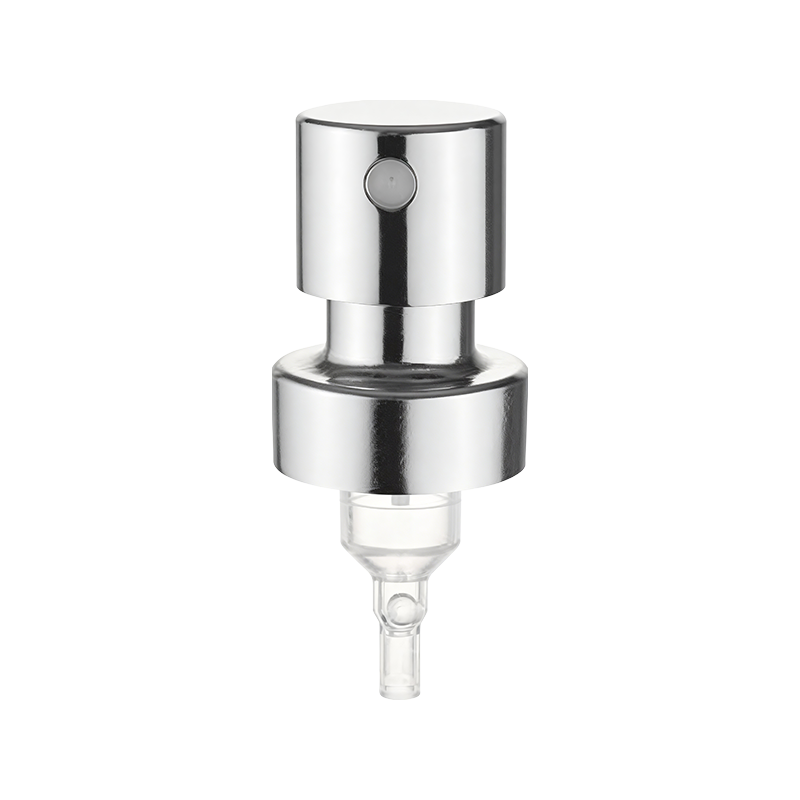
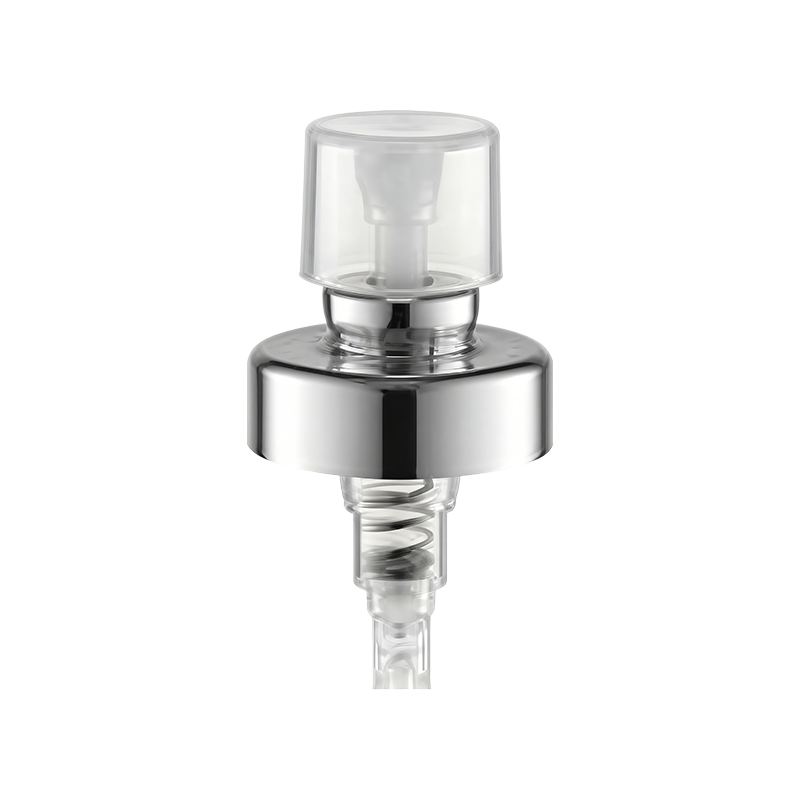
A typical perfume crimp pump is not a single part but an assembly of several components that work together to deliver a controlled, fine mist with every actuation. Understanding each part helps explain why crimp pumps behave differently from screw or snap-fit alternatives.
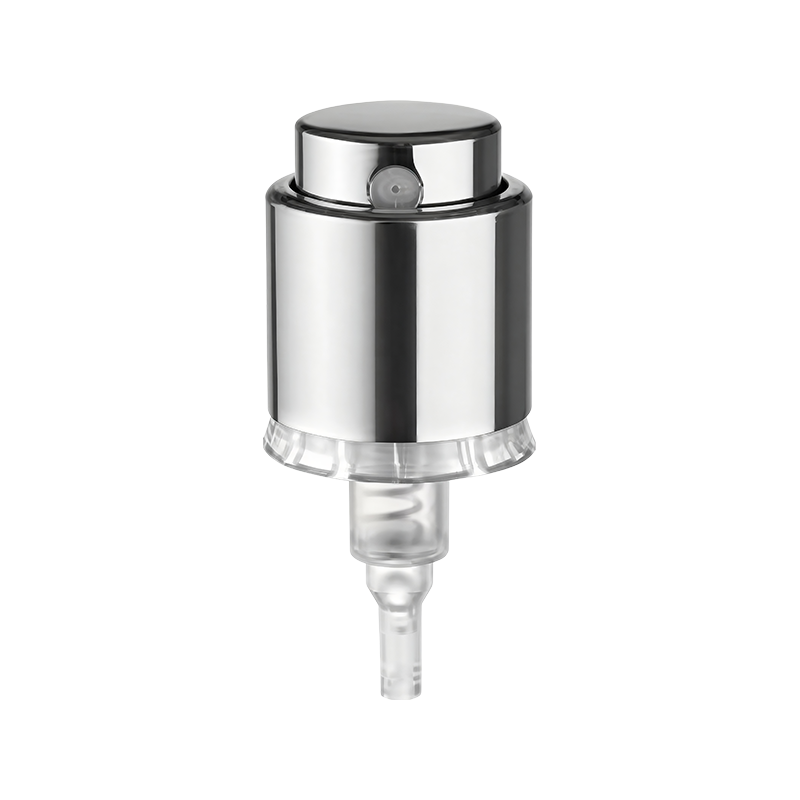
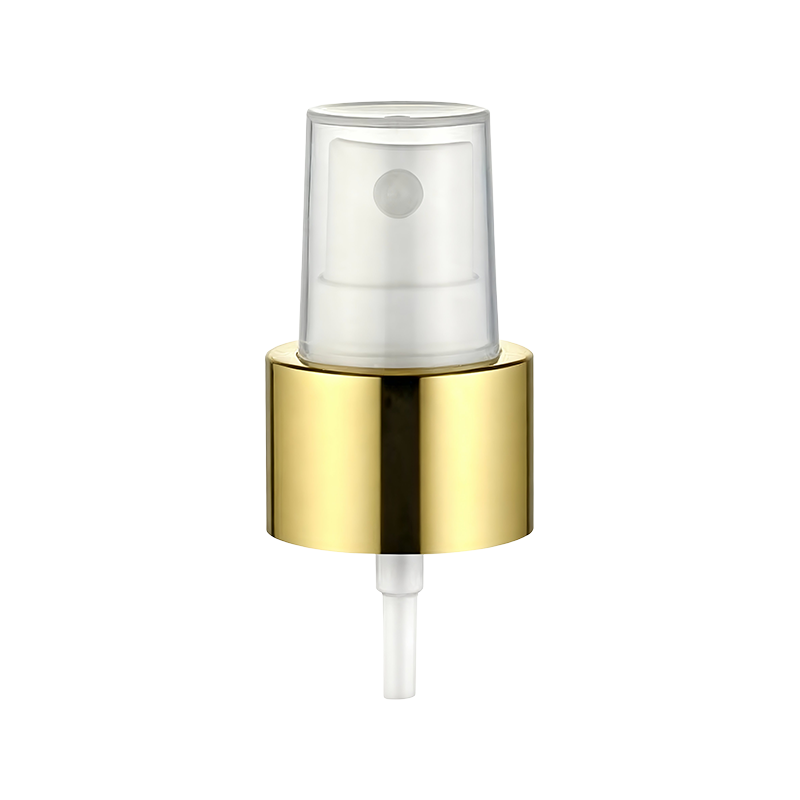
- Metal ferrule (crimp collar) — the outer metal ring that is mechanically compressed onto the bottle neck to lock the pump in place
- Pump housing — typically molded from PP or PBT resin for resistance to alcohol and fragrance oils
- Piston and spring assembly — the internal mechanism that builds pressure with each press of the actuator
- Gasket and seal rings — rubber or elastomer components that prevent leakage around the piston shaft
- Dip tube — a plastic tube extending into the bottle that draws liquid up to the pump chamber
- Actuator and spray nozzle — the visible top piece that the user presses, which shapes the final spray pattern
The crimping step uses a dedicated crimping machine that applies uniform radial pressure to fold the ferrule tightly against the glass finish. This creates a mechanical bond that a threaded closure cannot replicate, which is why crimp pumps are almost always paired with standardized bottle neck profiles such as FEA 15mm or FEA 20mm rather than generic threaded finishes.
Key Benefits of Choosing a Crimp Pump
Superior Sealing Performance
Because the ferrule is physically compressed against the glass neck rather than resting on threads, a properly crimped pump generally achieves tighter sealing tolerances than snap-fit alternatives. This reduces fragrance loss through slow evaporation, which matters over the typical 24–36 month shelf life expected of most retail perfume products.
Consistent, Fine Atomization
Most quality crimp pumps are engineered to deliver a spray output between 0.10ml and 0.20ml per actuation, producing a fine, even mist that limits product waste and improves how the fragrance is perceived on skin or fabric. Inconsistent dosage is one of the most common quality complaints in fragrance packaging, so dosage stability across thousands of actuations is a key performance indicator.
Tamper Resistance and Brand Protection
A crimped closure is significantly harder to remove or refill without leaving visible damage to the ferrule, which supports anti-counterfeiting efforts and reassures customers that the product has not been opened or diluted before purchase.
Premium Tactile Experience
The solid, click-free feel of a well-crimped pump contributes to how customers perceive product quality at the moment of first use. For niche, designer, and gift-set fragrances where unboxing experience influences repeat purchase and word-of-mouth, this small mechanical detail can carry real brand value.
Crimp Pump vs. Screw Pump vs. Snap Pump
Brands new to fragrance packaging often ask how a crimp pump compares to the two other common closure types. The table below summarizes the main practical differences.
| Closure Type | Sealing Strength | Tamper Resistance | Typical Use Case |
|---|---|---|---|
| Crimp pump | High | High | Glass perfume bottles, premium lines |
| Screw pump | Medium | Low to medium | Refillable or budget bottles |
| Snap pump | Medium | Low | Sample vials, travel-size products |
Screw and snap pumps are easier and faster to assemble on filling lines but generally provide a lower level of long-term seal integrity compared to a properly crimped closure, which is one reason crimp pumps remain the standard for premium and mid-to-high volume perfume brands.
Common Specifications and Customization Options
| Specification | Common Range |
|---|---|
| Neck size | FEA 15mm, FEA 20mm |
| Dosage per spray | 0.10ml – 0.20ml |
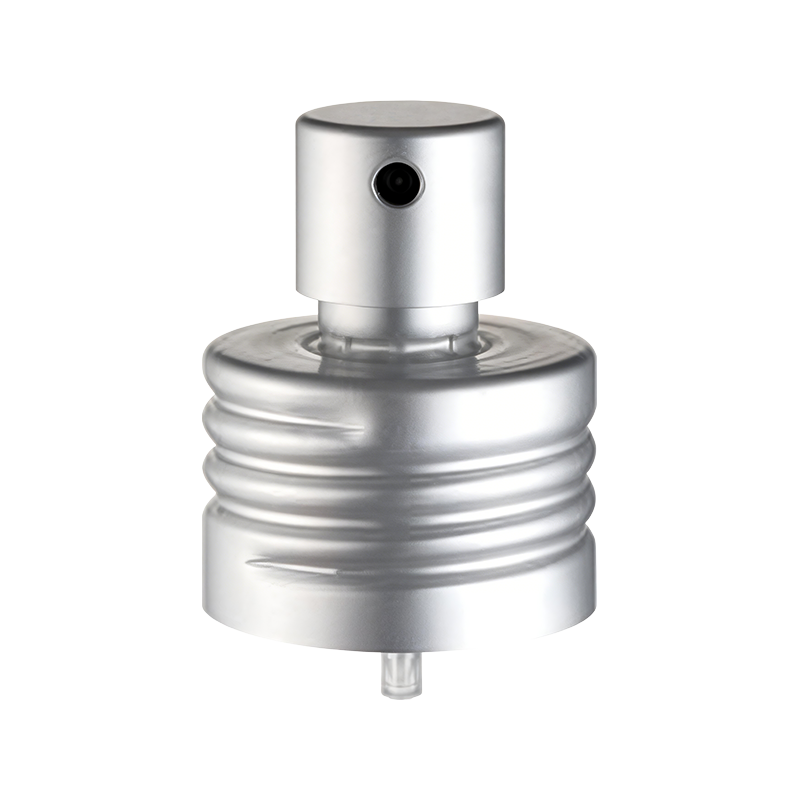
| Ferrule finish | Shiny gold, matte gold, silver, custom color coating |
| Actuator style | Round, square, surface-mount, crystal-compatible |
| Dip tube length | Customized to bottle height |
| Actuation lifespan | Typically rated for several thousand presses |
Ferrule color, actuator shape, and even the crimping height can typically be customized to match a brand's visual identity. Many fragrance brands request color-matched or logo-embossed ferrules when placing bulk production orders, since the ferrule is often the most visible metal component on the finished bottle.
Where Crimp Pumps Are Commonly Used
- Eau de parfum and eau de toilette bottles
- Cologne and aftershave sprays
- Niche and designer fragrance lines requiring premium closures
- Refillable travel atomizers with crimped glass necks
- Gift sets and limited-edition fragrance packaging
- Hotel and hospitality amenity fragrance lines
Because the crimping process requires a matching glass or metal neck profile, crimp pumps are less common on soft plastic bottles, which typically rely on screw or snap closures instead. This makes bottle-and-pump compatibility one of the first things to confirm during product development.
Manufacturing and Quality Control Considerations
The performance of a crimp pump depends heavily on how precisely it is manufactured and tested before it reaches a filling line. Reputable production typically includes several quality checkpoints:
- Dimensional inspection of the ferrule to confirm it matches the target bottle neck tolerance
- Leakage testing under pressure to confirm the crimp seal holds over time
- Dosage consistency testing across repeated actuations
- Compatibility testing with the specific fragrance concentration, since higher alcohol content can affect gasket materials over time
Skipping compatibility testing is one of the most common causes of packaging failures reported after mass production, so requesting a pre-production sample run with the actual fragrance formula is generally worth the added lead time.
How to Choose the Right Crimp Pump for Your Product
When selecting a crimp pump, three factors matter most: compatibility with your bottle neck size, the spray dosage that fits your fragrance concentration, and the chemical resistance of internal components against alcohol and essential oil ingredients. Requesting a compatibility test with your actual bottle and formula before mass production helps avoid costly mismatches at the filling stage.
As a manufacturer of fragrance packaging components, Greenyard Sprayers supplies crimp pumps engineered for FEA-standard bottle necks, with customizable ferrule finishes, actuator shapes, and dosage settings to match different fragrance concentrations and brand requirements. Working with a supplier that offers in-house crimping equipment and batch-level quality testing can help ensure consistent seal performance across production runs, which is particularly important for brands scaling from small pilot batches to full commercial volume.
Maintaining Spray Consistency Over Time
To keep a crimp pump performing reliably after filling, avoid storing finished bottles in extreme heat, which can soften internal gaskets and gradually reduce seal tightness. It is also advisable to test a sample batch after several months of warehouse storage to confirm that spray dosage and mist pattern remain stable, particularly for products intended for long retail shelf life or international shipping.
Brands operating seasonal or limited-edition releases should also consider that ferrule finishes such as gold or silver coating can be sensitive to humidity during long-term storage, so proper packaging and climate-controlled warehousing help preserve both function and appearance until the product reaches the shelf.
-
What's Inside a Lotion Pump and How Does It Work ?
A lotion pump is a precision dispensing closure that draws liquid product from a bottle and delivers...
-
Crimp Pumps Demystified: Choosing the Right Type and Material for Every Cosmetic Formula
Walk into any cosmetic filling facility and you will find crimp pumps on everything from a delicate ...
-
What Is a Fine Mist Sprayer?
A fine mist sprayer is a cosmetic packaging component designed to atomize liquid formulas into ultr...
-
What Makes a Good Deodorant Stick Bottle for Brands?
A deodorant stick bottle is a twist-up or push-up dispensing container designed to hold and advance...
Copyright © GreenYard Tools Co.,ltd. All Rights Reserved.
Personal Care Packaging Manufacturer Custom Perfume Sprayers Factory