
-
About Us
Why Choose Us?The company possesses advanced capabilities in mold design, injection molding, and automated assembly, supported by a professional quality inspection team to ensure product reliability. A dedicated design team continuously drives product innovation, providing customers with high-quality spray solutions.
 Coming From China, Marketing To The World.
 -
Products
-
News
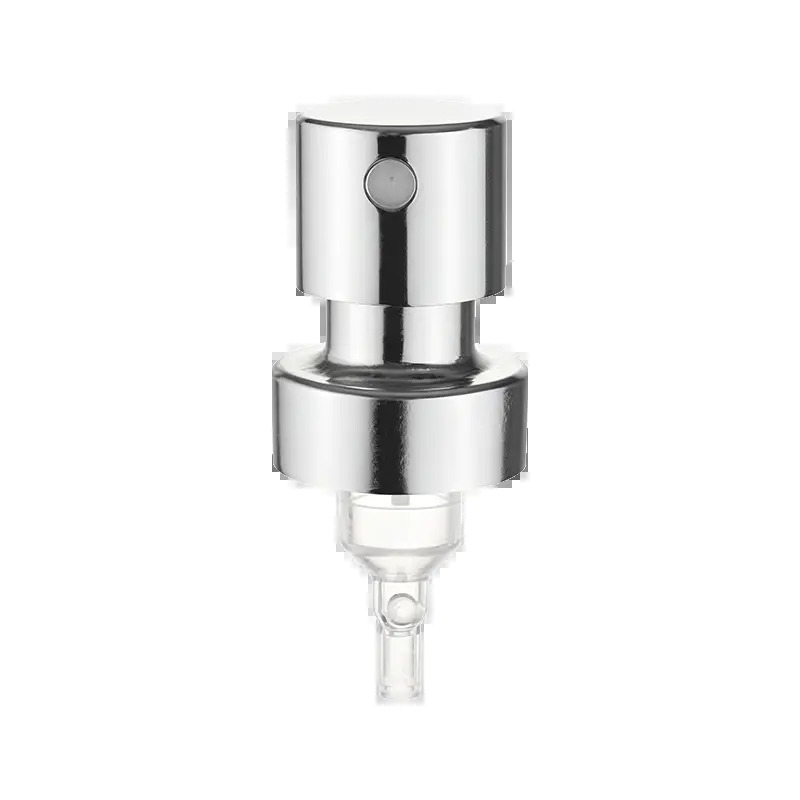 Crimp Pumps Demystified: Choosing the Right Type and Material for Every Cosmetic Formula
 English
 Français
 русский
 Español
Deodorant Stick Bottle Supplier
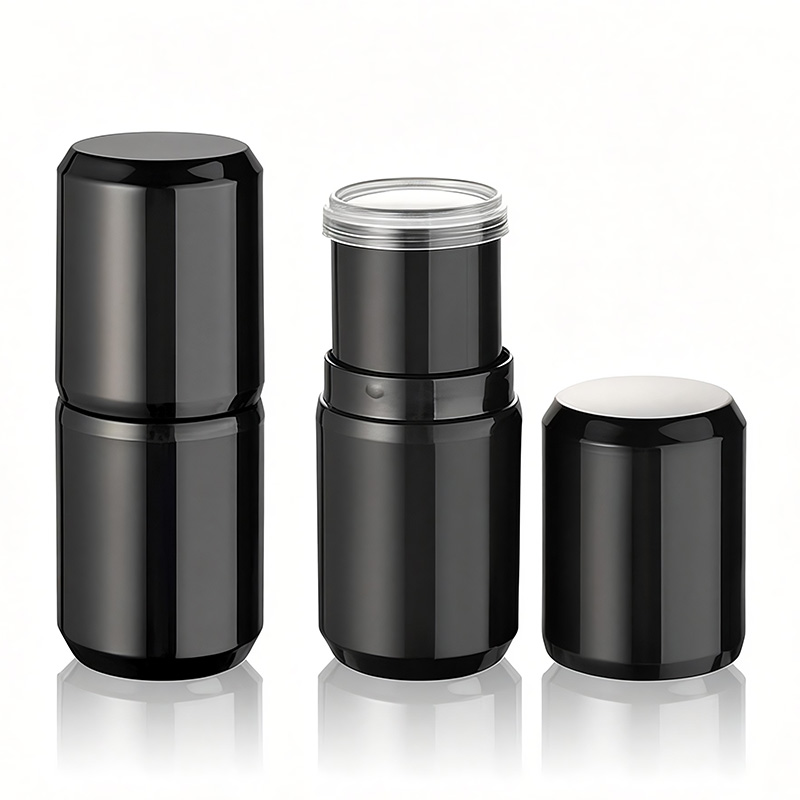
This stick container is made of 100% PP material, featuring excellent environmental friendliness that aligns with sustainable development trends. It comes in a wide variety of sizes to cater to diverse usage scenarios, being perfectly suitable for lip balms, deodorants, highlighter sticks and other similar solid cosmetic products. Its durable PP construction not only ensures safe contact with cosmetics but also offers convenient portability for daily use, travel or on-the-go touch-ups.
Product Catalogue
Recent Articles
-
The Secret to Perfect Skincare Dosing: Choosing the Right Dropper Bottle
The dropper bottle is one of the most familiar formats in skincare — and one of the most underestimated. Most consumers pick up a serum, squeeze the bulb, and give little thought to why the dropper is...
-
What Is a Fine Mist Sprayer?
A fine mist sprayer is a cosmetic packaging component designed to atomize liquid formulas into ultra-fine, evenly distributed droplets — typically between 30 and 100 microns in diameter — delivering ...
-
What's Inside a Lotion Pump and How Does It Work ?
A lotion pump is a precision dispensing closure that draws liquid product from a bottle and delivers a controlled, measured dose to the user's hand with a single press. Inside that small white or colo...
development: 2010- Future
High-end Packaging
Material Manufacturer
Material Manufacturer
-
0㎡
Factory Area
-
0+
Number of Employees
-
0%
Export Volume
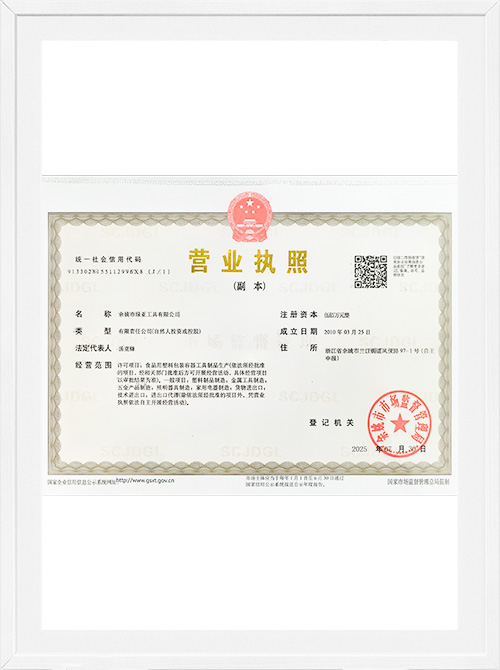
GreenYard Tools Co.,ltd. has been specializing in spray product manufacturing for 16 years, we are wholesale Deodorant Stick Bottle supplier and OEM deodorant stick container factory, mainly producing perfume sprayers, pump heads, and a variety of caps and bottles for daily chemical packaging, with a daily production capacity of one million units. The company possesses advanced capabilities in mold design, injection molding, and automated assembly, supported by a professional quality inspection team to ensure product reliability. A dedicated design team continuously drives product innovation, providing customers with high-quality spray solutions.

Provide You With The Latest Enterprise And Industry News.
Deodorant Stick Bottle Industry knowledge
1. The Role of Material Engineering in Deodorant Stick Bottle Performance
Selecting the right polymer for a deodorant stick bottle directly influences product stability, user experience, and molding precision. Polypropylene (PP) remains the dominant choice for inner barrels and threaded mechanisms due to its excellent chemical resistance and fatigue endurance. For outer shells where clarity and scratch resistance matter, PETG offers a high-gloss, glass-like finish that elevates shelf appeal. Industry observations indicate that bottles using a co-injection molded PP inner core with a PETG outer sleeve achieve a measurably lower breakage rate during drop tests compared to single-material designs. Additionally, the spindle platform that pushes the product upward must maintain tight dimensional tolerances; even a minor deviation can cause sticking or uneven advancement, leading to consumer frustration.
(1) Common Resin Comparison for Stick Packaging
| Material | Typical Application | Key Advantage | Recyclability |
|---|---|---|---|
| Polypropylene (PP) | Inner barrel, screw mechanism | High fatigue resistance, chemical inertness | Widely accepted (5) |
| PETG | Outer shell, transparent cap | Exceptional clarity, impact strength | Growing acceptance (7) |
| Post-Consumer Recycled PP (PCR PP) | Entire stick body | Reduced carbon footprint, circular economy support | Recyclable in PP stream |
2. Structural Durability and the Shift Toward Monomaterial Design
Traditional deodorant stick bottles often combine multiple resin types, adhesives, and metal springs, which complicates the recycling stream. A growing number of packaging engineers now advocate for monomaterial PP constructions where the bottle body, threaded rod, and cap all use the same polymer family. This design philosophy ensures the entire package can enter a single recycling stream without disassembly. Durability testing reveals that well-designed PP threaded rods can withstand over 200 full advancement and retraction cycles without thread stripping, maintaining smooth product delivery throughout the stick's life. The elimination of metal springs further reduces the risk of corrosion in humid bathroom environments.
Material Stiffness Comparison (Relative Flexural Modulus)
Flexural modulus directly correlates with how firmly a deodorant stick bottle resists deformation during use. Materials with higher stiffness maintain structural integrity when the consumer applies pressure to the stick base.
3. Sustainable Packaging Trends Reshaping the Deodorant Category
The personal care industry has witnessed a notable pivot toward refillable and paper-based deodorant stick formats. Brands increasingly seek injection-molded PP outer shells designed for multiple refill cartridge insertions. A well-engineered refillable bottle uses a snap-fit or bayonet-lock mechanism that securely holds the refill while allowing easy consumer replacement. Simultaneously, PCR content integration is accelerating; cosmetic packaging manufacturers now commonly achieve up to 100% post-consumer recycled PP in opaque stick bodies without compromising mechanical performance. The challenge lies in maintaining consistent color and odor neutrality across PCR batches, which requires rigorous supplier quality control.
Sustainability Adoption Trend in Stick Packaging
The upward trajectory reflects how consumer demand and regulatory pressure are converging, pushing deodorant stick bottle manufacturers to invest in closed-loop material systems and refill-compatible tooling.
4. Precision Molding and Assembly: The Backbone of Reliable Stick Dispensing
A deodorant stick bottle's perceived quality hinges on the consistency of its screw mechanism and the seal between the cap and body. Multi-cavity hot runner molds with sequential valve gating ensure uniform wall thickness across the barrel, preventing weak spots that could crack during transport. Automated assembly lines equipped with vision inspection systems detect surface defects, thread damage, or incomplete cap seating at high speed. GreenYard Tools Co.,ltd. has been specializing in spray product manufacturing for 16 years, we are wholesale perfume crimp pump supplier and OEM aluminum crimp pump factory, mainly producing perfume sprayers, pump heads, and a variety of caps and bottles for daily chemical packaging, with a daily production capacity of one million units. The company possesses advanced capabilities in mold design, injection molding, and automated assembly, supported by a professional quality inspection team to ensure product reliability. A dedicated design team continuously drives product innovation, providing customers with high-quality spray solutions.
Key Quality Metric Comparison Across Production Lines
The radar comparison illustrates how automated quality inspection and optimized cooling channels create a measurable divergence in dimensional accuracy and defect reduction between standard and high-precision molding setups.
5. Consumer Experience and Ergonomic Considerations
Ergonomics play a decisive role in deodorant stick bottle design. The diameter of the stick body, the texture of the grip area, and the torque required to advance the product all contribute to daily user satisfaction. Oval or elliptical cross-sections often provide better hand feel than purely circular barrels. Surface finishing techniques like soft-touch overmolding or matte UV coating enhance grip security, especially in wet conditions. Caps designed with audible or tactile click feedback signal proper closure, which consumers associate with product freshness and leak prevention.
Consumer Preference by Feature (Conceptual Distribution)
Brands that prioritize a friction-free, quiet advancement mechanism consistently receive higher repeat purchase intent, as this tactile feedback directly shapes the perception of product quality.
6. Frequently Asked Questions
- Q1: What is the most common failure point in a deodorant stick bottle?
The threaded screw mechanism is the most frequent failure point. If the thread pitch is inconsistent or the material lacks sufficient lubricity, users experience binding, skipping, or complete mechanism lock-up. Using acetal copolymer or lubricated PP grades in the screw component mitigates this risk effectively.
- Q2: Can deodorant stick bottles be made fully recyclable?
Yes, monomaterial PP designs without metal springs or mixed-material labels achieve full recyclability in standard PP waste streams. The cap should also be PP and tethered where possible to ensure it stays with the bottle body through the collection and sorting process.
- Q3: How does PCR content affect the color consistency of a stick bottle?
PCR resin can introduce slight color variation or gray tint. Cosmetic packaging manufacturers address this by blending PCR with virgin material at controlled ratios, using masterbatch colorants with high hiding power, or applying opaque coatings to achieve a uniform brand-specific shade.
- Q4: What testing standards apply to deodorant stick packaging?
Common tests include drop impact resistance (ISTA protocols), mechanism cycling endurance, cap retention force, and seal integrity under temperature cycling. Accelerated aging tests also verify that the stick mechanism performs consistently after extended storage.
- Q5: Is it possible to create a refillable deodorant stick bottle that feels as solid as a single-use one?
Absolutely. A rigid outer shell with internal ribs and a precision snap-fit interface maintains structural stiffness while allowing easy refill insertion. The key is simulating thousands of refill cycles during the design validation phase to ensure the locking mechanism never loosens.
Copyright © GreenYard Tools Co.,ltd. All Rights Reserved.
Wholesale Deodorant Stick Bottle Supplier OEM Deodorant Stick Container Factory