
-
About Us
Why Choose Us?The company possesses advanced capabilities in mold design, injection molding, and automated assembly, supported by a professional quality inspection team to ensure product reliability. A dedicated design team continuously drives product innovation, providing customers with high-quality spray solutions.
 Coming From China, Marketing To The World.
 -
Products
-
News
 English
 Français
 русский
 Español
12-410 0.06CC Mini Plastic Fine Mist Sprayer for Travel and Personal Care Packaging
Content
- 1 1. The Role of Mini Fine Mist Sprayers in Modern Packaging
- 2 2. Product Overview
- 3 3. Controlled 0.06 ml Dosage for Light and Even Application
- 4 4. Compact 12-410 Design for Small Bottles
- 5 5. Suitable Applications Across Personal Care and Fragrance
- 6 6. Smooth and Ribbed Closure Options
- 7 7. Customizable Dip Tube Length
- 8 8. Advantages Compared with Larger or Less Specialized Sprayers
- 9 9. Manufacturing Capabilities Behind the Product
- 10 10. Production Capacity and Supply Advantages
- 11 11. Product Development and Customization Process
- 12 12. Packaging Design Considerations
- 13 13. Quality and Performance Evaluation
- 14 14. Sustainability and Material Efficiency
- 15 15. Why an Experienced Manufacturer Matters
- 16 16. Commercial Benefits for Brands
- 17 17. Ordering and Technical Information to Confirm
- 18 18. Frequently Asked Questions
- 18.1 Q1: What is the neck size of this mini fine mist sprayer?
- 18.2 Q2: What dosage does the sprayer deliver?
- 18.3 Q3: Which products are suitable for this sprayer?
- 18.4 Q4: Can the dip tube length be customized?
- 18.5 Q5: Are different exterior finishes available?
- 18.6 Q6: Is this sprayer suitable for large bottles?
- 18.7 Q7: Can the sprayer be used with alcohol-based perfume?
- 18.8 Q8: How should spray performance be tested?
- 18.9 Q9: Does the manufacturer provide complete packaging solutions?
- 18.10 Q10: What manufacturing capabilities support this product?
- 18.11 Q11: What is the company’s production capacity?
- 18.12 Q12: Can customers request samples before ordering?
- 19 19. Conclusion
- 20 References
- 21 Product: 12-410 0.06CC Mini Plastic Fine Mist Sprayer

Small-format cosmetic and personal care products require packaging that is compact, reliable, attractive, and carefully matched to the product inside. A travel fragrance, pillow mist, facial mist, sample-size treatment, or other single-use liquid product may contain only a small volume, yet its packaging must still deliver consistent performance and a pleasant user experience. The 12-410 0.06CC Mini Plastic Fine Mist Sprayer is designed specifically for this type of application.
With a compact 12-410 neck size and a controlled dosage of 0.06 ml per actuation, this mini sprayer provides a practical solution for brands developing small bottles, trial packages, travel-size products, and limited-volume personal care items. Its compact structure helps preserve the proportions of small containers, while its fine mist output supports even and gentle application. Smooth and ribbed closure options provide additional flexibility for packaging design, and the dip tube can be customized to suit different bottle heights.
The product is manufactured by GreenYard Tools Co., Ltd., a China-based packaging manufacturer specializing in sprayers, pump heads, caps, bottles, and daily chemical packaging solutions. With 16 years of experience, a daily production capacity of approximately one million units, and capabilities covering mold design, injection molding, automated assembly, and quality inspection, the company is equipped to support both standard product requirements and customized packaging programs.
1. The Role of Mini Fine Mist Sprayers in Modern Packaging
Packaging is more than a container closure. It is the point at which the user interacts with a product, and this interaction can influence perceptions of quality, convenience, cleanliness, and value. For mist-based products, the sprayer is especially important because it controls how the liquid leaves the package. A poorly matched pump may produce an uneven stream, excessive dosage, leakage, or an uncomfortable application experience. A well-designed mini fine mist sprayer can help the product feel refined and dependable from the first use.
Small packages present additional engineering challenges. The bottle may have a narrow neck, limited internal capacity, and a short height. The pump must therefore be compact without sacrificing functional stability. The dip tube must reach the liquid effectively, but it must not create unnecessary resistance or interfere with the bottle design. The actuator must also be comfortable to press, while the output should remain sufficiently consistent across repeated uses.
The 12-410 0.06CC Mini Plastic Fine Mist Sprayer addresses these requirements through a compact neck format, low dosage, customizable tube length, and closure options suitable for different packaging styles. It is intended for products where a light, controlled mist is preferred over a large-volume discharge.
2. Product Overview
The product code for this model is GY-604A. It is a plastic fine mist sprayer with a 12-410 size option and a nominal dosage of 0.06 ml per spray. The product is intended for small bottles and compact packaging formats, including travel fragrances, pillow mists, facial mists, samples, and other personal care applications.
Product feature |
Specification or option |
Product type |
Mini plastic fine mist sprayer |
Model |
GY-604A |
Neck size |
12-410 |
Nominal dosage |
0.06 ml per actuation |
Closure finishes |
Smooth and ribbed |
Dip tube |
Customizable length |
Typical applications |
Perfume, pillow mist, facial mist, sample packaging, and travel-size products |
Packaging focus |
Small-capacity and single-use or travel packaging |
The 12-410 designation identifies the compatible bottle neck format. This compact size is useful when the package designer wants to maintain a small overall footprint. The sprayer can be paired with bottles designed for narrow-neck applications, helping brands create compact packaging without using an oversized pump head.
The 0.06 ml dosage is one of the product’s most important functional characteristics. Each actuation is designed to release a light quantity of liquid, making the sprayer appropriate for products that require a delicate mist rather than a heavy application. Dosage performance can vary according to liquid formulation, bottle design, assembly conditions, and testing methods, so customers should confirm compatibility through sample testing before mass production.
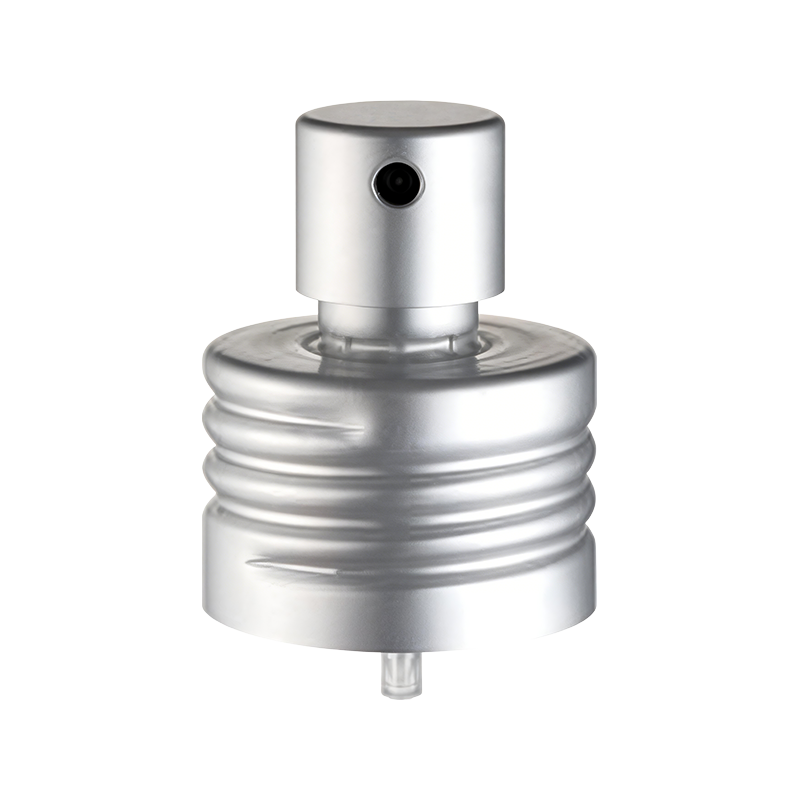
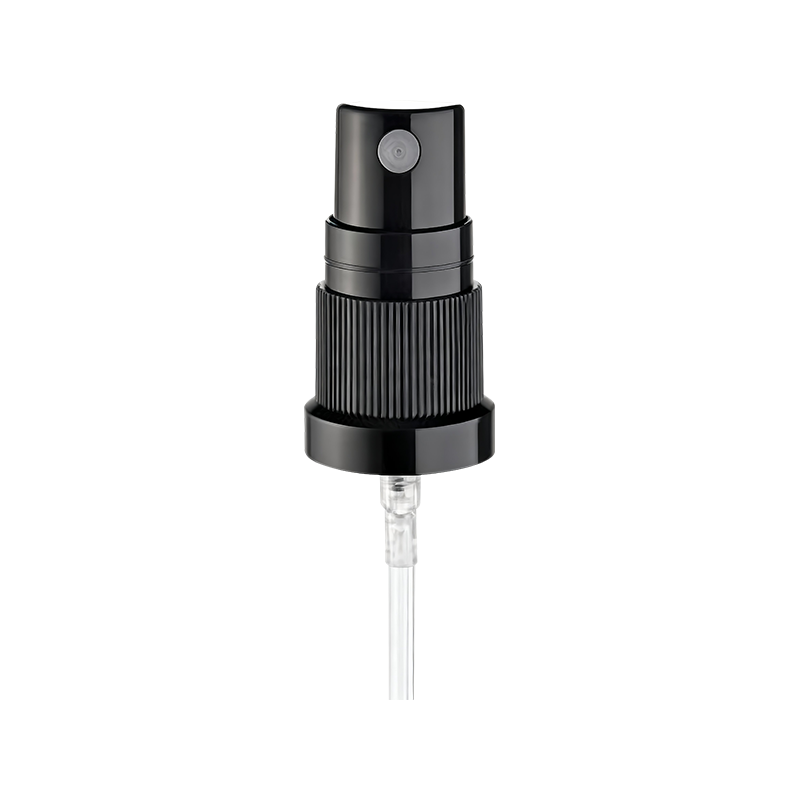
The model is available with smooth or ribbed closure finishes. A smooth finish generally supports a clean and understated visual appearance, while a ribbed finish can provide additional surface texture and a different tactile impression. Both options allow packaging developers to coordinate the sprayer with different bottle shapes, labels, caps, and brand presentation styles.
The tube length is customizable. This is important because small bottles are not all the same height. A tube that is too short may not reach the liquid at the end of the product’s life, while a tube that is too long may require adjustment during assembly. Custom tube length helps the sprayer fit a wider range of bottle dimensions.
3. Controlled 0.06 ml Dosage for Light and Even Application
A fine mist sprayer is selected not only for its appearance but also for its dispensing behavior. The 0.06 ml dosage of this model is intended to deliver a restrained amount of liquid with each pump. This can be beneficial for fragrances, facial mists, pillow sprays, and other products where users prefer a light application.
Controlled dosage may help improve the usability of a product in several ways. First, it can make the application easier to manage. Users can apply one spray and add more only when needed. Second, a smaller discharge can help reduce accidental over-application. Third, it can support more predictable product consumption, which is useful when packaging is designed around a limited volume.
For travel fragrances, a low-dose sprayer can create a refined application experience. Fragrance can be applied to the wrist, neck, clothing, or other suitable areas without producing a large wet spot. For pillow mist, the light output can be used to distribute the product across bedding or nearby fabric. For facial mist, the fine spray may help create a comfortable sensation when used according to the product’s intended directions.
Dosage consistency is also important for product development. When a brand designs a formula and package together, the expected number of actuations per container depends partly on the amount dispensed during each pump. A nominal 0.06 ml output can help the packaging team estimate usage patterns, test user instructions, and plan the relationship between bottle volume and product life.
Actual performance should always be confirmed with the intended liquid. Viscosity, surface tension, alcohol content, oils, fragrances, solvents, and other ingredients can influence spray quality. Compatibility testing allows the brand and supplier to verify priming, spray pattern, output, leakage resistance, and long-term operation under realistic conditions.
4. Compact 12-410 Design for Small Bottles
The compact 12-410 neck format is a key advantage for small-capacity packaging. Large sprayers can make a small bottle look visually unbalanced and may increase the amount of material used in the closure system. A mini sprayer provides a more proportional solution for travel products, samples, promotional units, and trial packages.
Small packaging is increasingly used in fragrance, skin care, personal care, hospitality, subscription boxes, promotional campaigns, and retail sampling. In these applications, package size may be limited by portability, shipping cost, product quantity, or marketing strategy. A small sprayer allows the brand to maintain the convenience of a spray format without using a full-size pump assembly.
The narrow-neck design can also support efficient use of bottle space. For bottle manufacturers, a 12-410 specification provides a defined closure interface for compatible containers. For packaging purchasers, it creates a clear starting point for sourcing bottles, sprayers, and related components as a coordinated system.
Although the sprayer is compact, the packaging development process should still address neck finish accuracy, bottle tolerance, sealing surfaces, and assembly fit. A proper match between bottle and sprayer is necessary for stable performance. Sample evaluation is recommended before a purchase order is finalized, especially when the bottle is supplied by a different manufacturer.
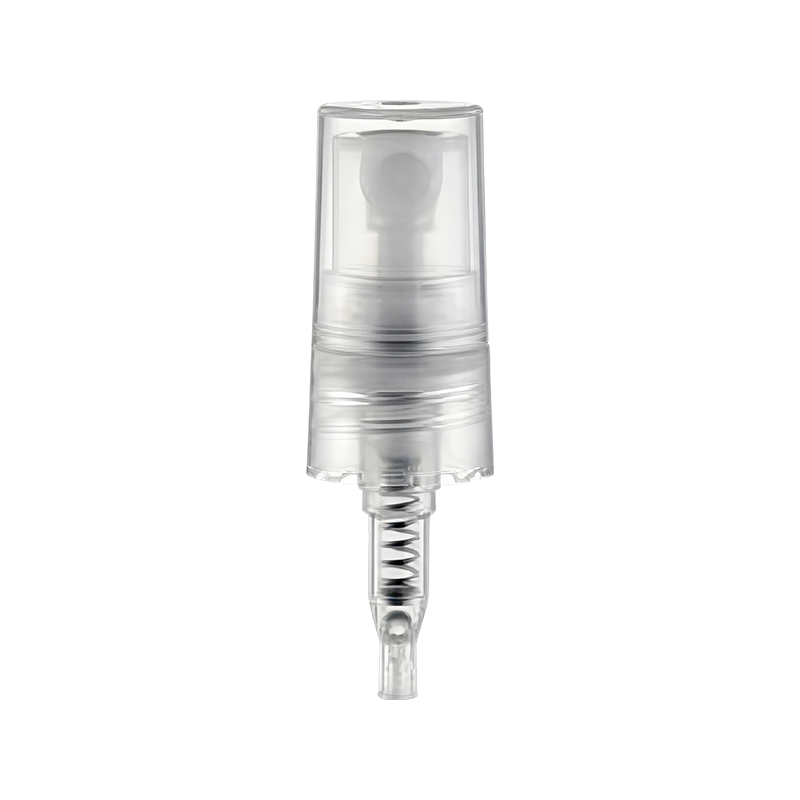
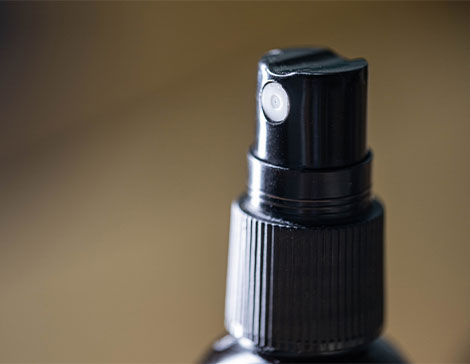
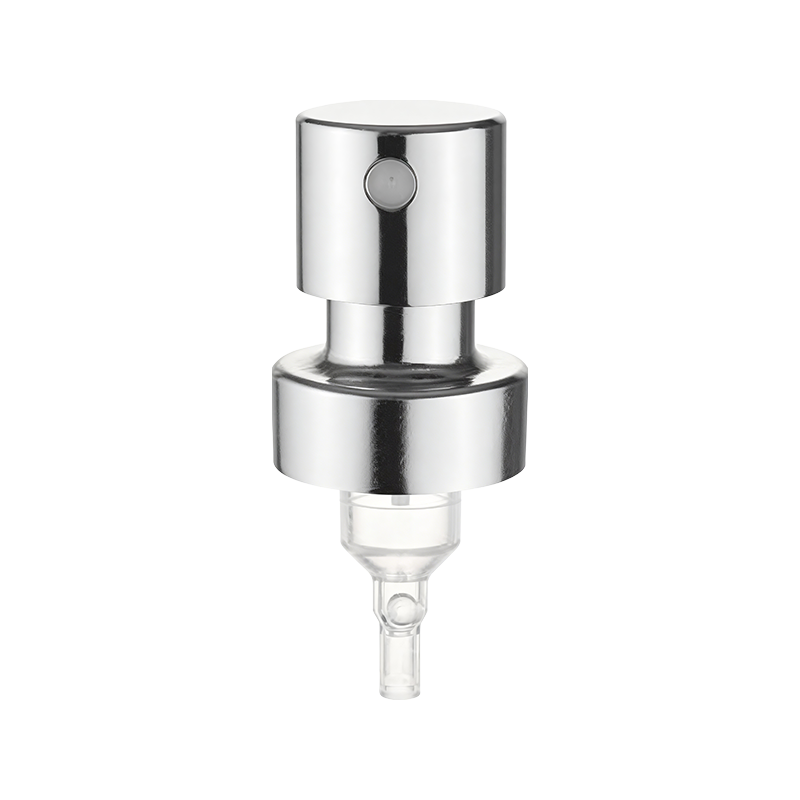
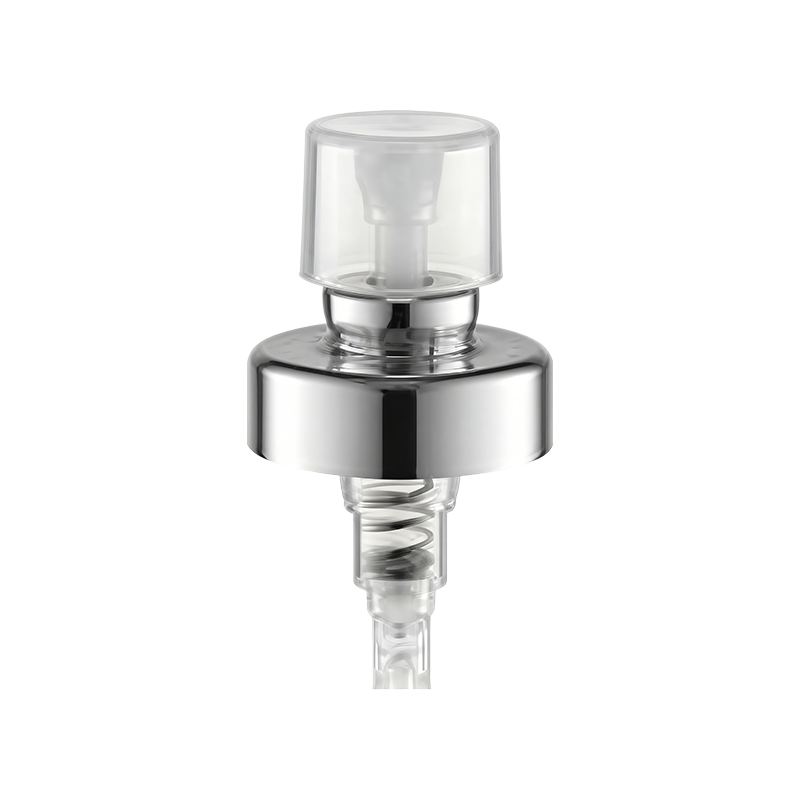
12-410 0.06CC Mini Plastic Fine Mist Sprayer
5. Suitable Applications Across Personal Care and Fragrance
5.1 Travel Fragrance
Travel fragrance is one of the most natural applications for this mini fine mist sprayer. Small perfume bottles need to be convenient to carry, easy to use, and resistant to accidental leakage during transport. A compact 12-410 sprayer preserves the portability of the bottle while providing a familiar pump-and-spray experience.
The 0.06 ml dosage is suitable for users who want controlled fragrance application. It can also support travel products positioned as compact daily-use items rather than large-volume fragrance packages. Brands may use the sprayer for trial sizes, discovery sets, promotional kits, hotel amenities, or direct-to-consumer sample programs.
5.2 Pillow Mist
Pillow mist products are typically applied in a light and distributed manner. The user may spray the product over bedding, pillows, or surrounding fabric according to the product instructions. A fine mist can help spread the liquid more evenly than a concentrated stream. The low dosage may also allow the user to control the intensity of application.
For pillow mist packaging, the choice of bottle and dip tube length should be based on the product’s volume and container dimensions. A customized tube can help the sprayer draw liquid consistently while the bottle is held at different angles during use.
5.3 Facial Mist
Facial mists are often associated with a gentle, comfortable spray sensation. The sprayer should therefore produce a fine and reasonably uniform output when paired with the intended formula. The 0.06 ml dosage provides a controlled starting point for compact facial mist packages, sample bottles, and travel-size skin care products.
Formula compatibility is particularly important in facial care. The brand should test the product with the final liquid to evaluate spray pattern, odor transfer, priming, material compatibility, and storage stability. The sprayer is a packaging component and should be assessed as part of the complete package system.
5.4 Sample and Single-Use Packaging
Sample packaging often prioritizes compact dimensions and a straightforward user experience. A mini sprayer can make a sample feel more like a finished retail product than a basic sachet or open container. This can be valuable for fragrance sampling, personal care trial programs, event distribution, and promotional campaigns.
The product is specifically described as suitable for single-use small packages and travel fragrances. It may also be considered for limited-volume products in which the brand wants to offer a spray format while keeping the package small and cost-conscious.
6. Smooth and Ribbed Closure Options
Packaging appearance has a direct influence on shelf presentation and perceived product quality. The closure is often one of the most visible parts of a small bottle, so its surface finish should match the overall design language of the product.
The smooth option offers a simple, clean appearance. It can work well with minimalist packaging, transparent bottles, modern fragrance designs, and labels that rely on uncluttered visual presentation. The smooth surface may also be suitable when the brand wants the closure to remain visually quiet and allow the bottle or label to receive more attention.
The ribbed option adds texture to the outer surface. Ribbing can create a more tactile appearance and may help differentiate the closure from other components. It can complement classic fragrance packaging, practical personal care products, and designs where the user interaction with the cap or closure is part of the experience.
Offering two finish styles gives packaging teams more freedom without requiring a completely different dispensing concept. Brands can select the appearance that best fits their bottle, label, cap, and target market. During development, the finish should be reviewed under actual production conditions because color, surface treatment, and decoration can affect the final visual result.
7. Customizable Dip Tube Length
The dip tube is a small but essential part of a pump sprayer. It extends into the bottle and provides the path through which the liquid is drawn into the dispensing mechanism. Because bottles vary in height, shoulder shape, and internal geometry, a standard tube length may not be suitable for every project.
Customizable tube length makes this mini sprayer more adaptable to different bottle designs. A packaging developer can provide the bottle dimensions and request a tube length that supports effective liquid uptake. This is particularly useful for short travel bottles, narrow sample containers, and custom-shaped packages.
A properly selected tube should reach close enough to the bottom of the bottle to support good product evacuation, while allowing appropriate clearance from the base. The tube should also be compatible with the bottle’s internal shape and the expected holding angle during use.
Tube customization can improve the practical performance of a packaging system, but it should be confirmed through testing. The customer may need to evaluate initial priming, end-of-life performance, remaining product volume, and operation when the bottle is tilted. These tests help establish whether the tube length is appropriate for the final container.
8. Advantages Compared with Larger or Less Specialized Sprayers
The main competitive advantage of the GY-604A is its focus on small-format packaging. A standard full-size sprayer may function correctly, but it can be unnecessarily large for a travel fragrance or sample bottle. The mini format creates a better proportion between the container and the closure, which can improve the appearance and portability of the finished product.
Another advantage is the controlled 0.06 ml output. Some larger sprayers are designed for higher discharge volumes and may release more liquid than is desirable for a small personal care product. A low-dose sprayer can provide more precise application and may help brands manage product consumption more effectively.
The option of smooth or ribbed closure finishes is also useful when compared with suppliers offering only one exterior style. Packaging programs frequently require visual differentiation between product lines, fragrance variants, or market segments. Two finish choices provide a practical way to adjust the appearance while retaining the same basic dispensing format.
Custom tube length gives the product an advantage over fixed-length alternatives. A fixed tube may require additional trimming, create assembly complications, or perform poorly in a bottle with unusual dimensions. Factory-supported customization can simplify the development process and reduce the need for compromises in bottle selection.
The product is also positioned for specialized applications rather than general-purpose dispensing alone. Its focus on perfume, pillow mist, facial mist, travel products, and single-use small packages means that the design discussion can begin with the specific needs of fine mist and compact packaging. This application-oriented approach can help brands select a component that is more closely aligned with the intended user experience.
9. Manufacturing Capabilities Behind the Product
Reliable packaging depends on more than the visible product design. The manufacturing process must consistently reproduce small components, maintain dimensional accuracy, control assembly quality, and identify defects before shipment. GreenYard Tools Co., Ltd. has developed an integrated manufacturing capability covering mold design, injection molding, automated assembly, and quality inspection.
9.1 Mold Design
Mold design is the foundation of consistent plastic component production. Fine mist sprayers contain multiple small parts with functional relationships that must remain stable during assembly. Mold accuracy affects dimensions, part fit, appearance, and production repeatability.
An experienced mold design team can evaluate the geometry of the sprayer, consider material flow, plan cooling and ejection, and identify areas that may influence part quality. Proper mold development can also support future customization, such as adjustments to closure appearance, component geometry, or compatible packaging requirements.
For a compact sprayer, mold engineering is especially important because the components are small and tolerances may have a significant effect on performance. Consistent molding helps reduce variation between production batches and supports reliable automated assembly.
9.2 Injection Molding
Injection molding is used to produce plastic components with repeatable shapes and surface finishes. The process involves melting a suitable plastic material, injecting it into a mold cavity, allowing it to cool, and removing the formed part. Process control is necessary to manage dimensions, appearance, and structural integrity.
For this mini sprayer, injection molding supports the production of compact components suitable for narrow-neck bottles. It also allows the manufacturer to produce smooth or ribbed exterior finishes according to the selected option. When managed correctly, the process can provide a stable balance between production efficiency and component consistency.
Material selection should be reviewed in relation to the intended formula. Perfumes, alcohol-containing products, oils, water-based mists, and other liquids may interact differently with packaging materials. Customers should discuss the formula and expected storage conditions with the manufacturer and conduct compatibility testing before approval.
9.3 Automated Assembly
Automated assembly can improve production efficiency and reduce variation caused by repetitive manual operations. A sprayer must be assembled from multiple components, and each part must be positioned correctly for the finished pump to operate as intended.
Automation can support consistent component feeding, positioning, and assembly. It can also help the manufacturer achieve high output for large-volume orders. The company reports a daily production capacity of one million units, providing a strong foundation for programs that require substantial quantities or recurring supply.
Automated production does not eliminate the need for inspection. Instead, it works together with process controls and quality checks. When equipment settings, tooling, component supply, and inspection procedures are managed as one system, the manufacturer can improve production stability and order fulfillment capability.
9.4 Quality Inspection
Quality inspection is essential for packaging components that must function reliably after filling, shipping, storage, and repeated consumer use. Inspection may include visual checks, dimensional verification, assembly evaluation, and performance testing according to the customer’s requirements.
For a fine mist sprayer, relevant evaluation areas may include external appearance, closure fit, actuator operation, tube attachment, leakage resistance, priming behavior, spray output, and compatibility with the selected bottle. The exact inspection plan should be agreed upon for each project.
A structured quality approach helps identify issues before products leave the factory. It also provides customers with greater confidence when the sprayer is used for fragrance, facial care, or other products where packaging performance affects the user’s perception of the entire brand.
10. Production Capacity and Supply Advantages
The company’s reported daily capacity of one million units is a significant supply advantage for customers that need reliable volume production. Small sprayers may be used in large quantities because each finished product requires one closure. A brand launching a new sample campaign, travel-size product, or multi-variant fragrance collection may therefore require a substantial number of sprayers within a defined schedule.
High production capacity can help support both initial orders and repeat purchasing. It may also allow the manufacturer to manage different product categories within one broader packaging operation. In addition to fine mist sprayers, the company produces perfume sprayers, pump heads, caps, bottles, and daily chemical packaging solutions.
A broad product portfolio can simplify sourcing for customers that are developing complete packaging systems. Instead of purchasing every component from unrelated suppliers, a brand may be able to coordinate sprayers, pumps, caps, and bottles through one experienced packaging partner. This can help reduce communication complexity and improve the consistency of component planning.
Production capacity should always be evaluated together with quality systems, lead times, tooling requirements, material availability, and order specifications. Customers should request a project schedule and confirm the manufacturing details for their specific design.
11. Product Development and Customization Process
A successful packaging project generally begins with a clear understanding of the liquid formula, bottle dimensions, target dosage, appearance requirements, order quantity, and expected use conditions. For the 12-410 mini sprayer, customers should provide the bottle neck specification, bottle height, desired tube length, formula information, and preferred closure finish.
The next stage typically involves sample selection and testing. Samples allow the customer to check the visual relationship between the bottle and sprayer, evaluate the closure fit, observe the mist quality, and confirm whether the tube reaches the appropriate position inside the container.
Formula compatibility testing is particularly important. The customer should test the sprayer with the final liquid rather than with water alone. The test should consider the formula’s viscosity, alcohol or oil content, fragrance ingredients, preservatives, colorants, and storage conditions. Testing may include short-term operation and longer-term aging or stability evaluation.
If the standard component meets the project requirements, the customer can proceed to production confirmation. If adjustments are needed, the manufacturer can review the tube length, finish, color, packaging arrangement, or other available customization options. Clear technical communication at this stage helps prevent misunderstandings during mass production.
For larger projects, the customer may also request pre-production samples, appearance standards, inspection criteria, packing specifications, and shipment plans. Establishing these requirements before manufacturing begins can make the production process more predictable.
12. Packaging Design Considerations
The sprayer should be considered as part of a complete package rather than as an isolated component. The bottle, neck finish, dip tube, actuator, closure, label, outer carton, and liquid formula all contribute to the final product experience.
For a compact bottle, proportion is important. The sprayer should appear balanced with the bottle diameter and height. A closure that is too large may make the bottle look heavy, while one that is too small may be difficult to operate or visually insignificant. The 12-410 mini format is intended to maintain a compact and coordinated appearance.
Color and decoration may also influence the design. Smooth and ribbed finishes create different visual and tactile effects. Customers should review color samples under the lighting conditions in which the product will be displayed. If the sprayer is paired with a transparent bottle, slight differences in color or gloss may be more visible.
Ergonomics should not be overlooked. Even a small bottle must allow users to press the actuator comfortably. The package should be evaluated in realistic use positions, including one-handed operation, travel use, and repeated spraying. The final cap design, if included, should protect the actuator and remain secure during transport.
Shipping and storage conditions also need consideration. Small sprayers may be packed in bulk, trays, bags, cartons, or other formats depending on the order and assembly process. Packaging should protect the components from deformation, contamination, dust, and unnecessary friction before they are used on the filling line.
13. Quality and Performance Evaluation
Before approving a fine mist sprayer for production, buyers should establish a practical evaluation program. The following areas are commonly relevant for a mini fragrance or personal care sprayer:
Evaluation area |
Purpose |
Visual inspection |
Check color, surface finish, molding marks, contamination, and overall appearance. |
Neck fit |
Confirm that the sprayer matches the bottle neck and seats correctly. |
Leakage resistance |
Evaluate sealing performance during storage, handling, and transport. |
Actuation test |
Check pressing behavior, return action, and repeated operation. |
Spray test |
Observe mist quality, distribution, and output with the intended formula. |
Dosage verification |
Compare measured output with the nominal 0.06 ml specification. |
Tube evaluation |
Confirm liquid uptake and end-of-life performance in the selected bottle. |
Compatibility test |
Assess the interaction between the formula and packaging materials. |
Testing should be conducted using production-intent components whenever possible. A sprayer may perform differently when paired with a different bottle, liquid, or tube length. The complete package system provides the most meaningful results.
Dosage testing should also be interpreted correctly. The nominal 0.06 ml figure is a product specification, but measured values may be affected by test equipment, number of actuations, priming condition, formula properties, and environmental factors. A mutually agreed testing method helps both supplier and customer evaluate performance consistently.
14. Sustainability and Material Efficiency
Small packaging can contribute to material efficiency by using less container volume for trial, travel, or limited-use applications. A compact sprayer can help maintain a small overall package size, which may support efficient packing and transportation. However, sustainability depends on the complete package system, including the bottle material, pump materials, cap, label, carton, shipping method, and product life cycle.
Customers seeking more environmentally responsible packaging should discuss material selection, component reduction, packaging weight, recyclability, and available production options with the manufacturer. The right approach depends on the local recycling infrastructure, the formula, performance requirements, and applicable regulations.
A low-dose sprayer may also help reduce product waste when users can apply a controlled quantity. This benefit depends on actual consumer behavior and product instructions, but precise dispensing is generally useful for products that are intended to be applied gradually or lightly.
Responsible packaging development should balance environmental goals with safety, leakage prevention, product protection, and user convenience. A package that fails during transport or causes excessive product waste may create environmental disadvantages despite having a lower initial material weight.
15. Why an Experienced Manufacturer Matters
Packaging components may appear simple from the outside, but their performance depends on many manufacturing details. Small dimensional differences can affect closure fit, liquid uptake, actuation, and mist formation. An experienced manufacturer is better positioned to identify these relationships during product development and production.
GreenYard Tools Co., Ltd. has specialized in spray product manufacturing for 16 years. Its company profile includes experience in perfume sprayers, pump heads, caps, bottles, and daily chemical packaging solutions. This specialization is relevant to customers that need more than a generic plastic part and want a supplier familiar with dispensing systems.
The company’s capabilities in mold design, injection molding, automated assembly, and quality inspection create an integrated production structure. This can help reduce the separation between design and manufacturing, improve communication about technical changes, and support more consistent mass production.
A dedicated design team also supports product innovation and packaging development. For customers with unusual bottle dimensions, specific appearance requirements, or new product concepts, access to design and engineering resources may be valuable during the sampling and customization stages.
The company serves global markets and provides packaging solutions for personal care and daily chemical products. Its production scale and product range allow it to support projects ranging from small travel packages to larger recurring production programs, subject to order specifications and factory capacity planning.

16. Commercial Benefits for Brands
From a commercial perspective, the 12-410 mini fine mist sprayer can support multiple product strategies. A fragrance company may use it for travel sizes, sample collections, gift sets, or seasonal launches. A skin care brand may select it for facial mist samples or compact refresh products. A personal care company may use it for pillow mist, body mist, or other low-volume liquid applications.
The same basic sprayer format can be coordinated with different bottle designs and surface finishes. This may help a brand create a consistent product family while adapting colors, labels, and bottle shapes for individual products. Smooth and ribbed closure options provide an additional visual distinction without changing the core use concept.
Small packages can also serve as a lower-barrier introduction to a product. Consumers may be more willing to try a travel or sample size before purchasing a full-size product. A reliable fine mist sprayer makes the sample experience closer to the intended full-size experience, which can help the consumer evaluate the formula accurately.
For hospitality and promotional applications, compact spray packaging can be convenient to distribute and store. The package can be designed around the intended quantity and usage period, while the low dosage supports controlled dispensing during the product’s useful life.
17. Ordering and Technical Information to Confirm
Before placing an order, customers should confirm the following details with the supplier:
First, confirm that the bottle uses the 12-410 neck specification and that the sprayer fits the bottle finish correctly. Neck terminology may vary among suppliers, so a physical sample or technical drawing is recommended.
Second, confirm the expected dosage and testing method. The nominal output is 0.06 ml, but the final result should be evaluated with the intended liquid and bottle.
Third, select the preferred closure finish. The product is available in smooth and ribbed options, and customers should specify the desired appearance in the quotation or purchase documentation.
Fourth, provide the required dip tube length. Bottle height, shoulder design, fill volume, and internal base shape should be considered when determining the appropriate tube.
Fifth, discuss material compatibility and storage conditions. Fragrance formulas, alcohol-based products, oils, and water-based products may require different evaluations.
Sixth, confirm order quantity, packaging method, production lead time, inspection requirements, and shipping arrangements. These details are especially important for product launches with fixed market dates.
Finally, request samples for approval before mass production. Sample approval can reduce the risk of mismatch between the sprayer and the final package.
18. Frequently Asked Questions
Q1: What is the neck size of this mini fine mist sprayer?
The sprayer is designed for a 12-410 bottle neck size. Customers should verify the bottle neck finish and dimensions with their bottle supplier before production.
Q2: What dosage does the sprayer deliver?
The nominal dosage is 0.06 ml per actuation. Actual performance should be confirmed with the intended formula, bottle, and agreed testing procedure.
Q3: Which products are suitable for this sprayer?
Typical applications include perfume, travel fragrance, pillow mist, facial mist, sample packaging, and other small-capacity personal care or cosmetic products requiring a light spray.
Q4: Can the dip tube length be customized?
Yes. The tube length can be customized to fit different bottle heights and internal geometries. Customers should provide accurate bottle dimensions for review.
Q5: Are different exterior finishes available?
Yes. The closure is available in smooth and ribbed finishes, allowing brands to select a surface style that matches the bottle and product design.
Q6: Is this sprayer suitable for large bottles?
The product is primarily intended for small bottles, travel packaging, samples, and single-use or limited-volume applications. A larger bottle may require a different dosage, tube length, or sprayer format.
Q7: Can the sprayer be used with alcohol-based perfume?
It may be suitable for perfume applications, but compatibility must be tested with the specific fragrance formula. Alcohol concentration, fragrance ingredients, storage time, and temperature can influence packaging performance.
Q8: How should spray performance be tested?
Testing should use the final liquid and intended bottle. Important checks include priming, mist distribution, dosage, repeated actuation, leakage resistance, tube performance, and storage stability.
Q9: Does the manufacturer provide complete packaging solutions?
The company produces perfume sprayers, pump heads, caps, bottles, and daily chemical packaging solutions. Customers can discuss whether additional components are available for their specific project.
Q10: What manufacturing capabilities support this product?
The manufacturer has capabilities in mold design, injection molding, automated assembly, and quality inspection. These processes support repeatable component production and high-volume supply.
Q11: What is the company’s production capacity?
The company reports a daily production capacity of one million units. Actual capacity and delivery timing depend on product specifications, order quantity, tooling, materials, and production scheduling.
Q12: Can customers request samples before ordering?
Customers should request samples for fit, appearance, spray, dosage, and compatibility evaluation before approving mass production. Sample procedures can be discussed directly with the supplier.
19. Conclusion
The 12-410 0.06CC Mini Plastic Fine Mist Sprayer is a focused solution for small-format fragrance, cosmetic, and personal care packaging. Its compact neck size is suited to travel and sample bottles, while the controlled 0.06 ml dosage supports light and measured application. Smooth and ribbed closure finishes provide visual flexibility, and customized tube length allows the sprayer to fit different bottle dimensions.
Compared with larger or less specialized sprayers, this model offers advantages in compactness, dosage control, design proportion, and application suitability. It is particularly relevant to travel fragrance, pillow mist, facial mist, single-use packages, and other products that require a fine and gentle spray from a small container.
The product is supported by an experienced manufacturing organization with 16 years of specialization in spray packaging. Integrated mold design, injection molding, automated assembly, and quality inspection provide a strong foundation for consistent production. The company’s reported daily capacity of one million units and broader portfolio of sprayers, pump heads, caps, and bottles can also support customers seeking scalable personal care packaging solutions.
For the best result, buyers should evaluate the sprayer as part of a complete package system. Bottle compatibility, formula properties, tube length, dosage, leakage resistance, appearance, and storage conditions should all be confirmed through sample testing. When correctly matched with the bottle and liquid, this mini fine mist sprayer can provide a practical, attractive, and dependable dispensing solution for modern travel and personal care products.
References
1. Product specification information for the GY-604A 12-410 0.06CC Mini Plastic Fine Mist Sprayer, including dosage, closure options, tube customization, and recommended applications.
2. GreenYard Tools Co., Ltd. company information concerning spray packaging manufacturing, product categories, production capacity, and manufacturing capabilities.
3. General packaging engineering principles for pump selection, bottle neck compatibility, dip tube sizing, and liquid dispensing evaluation.
4. General cosmetic and personal care packaging development practices concerning formula compatibility, leakage testing, dosage verification, and production approval.
5. General injection molding and automated assembly principles applied to plastic packaging component manufacturing.
Product: 12-410 0.06CC Mini Plastic Fine Mist Sprayer

-
What Is Perfume Spray? How Atomizers Work, Mist Types and Packaging Basics
Press the actuator on a fragrance bottle once and a metered dose of liquid, usually between 0.05 an...
-
Amber Plastic Bottles: Lightweight, Protective, Customizable Packaging for Cosmetics
You have spent months stabilizing a vitamin C serum, only to watch a pallet of amber glass bottles ...
-
Spray Bottles Explained: Choosing the Right Fine Mist Sprayer
What Makes a Good Spray Bottle A good spray bottle depends almost entirely on the quality of its pu...
-
What Is a Fine Mist Sprayer?
A fine mist sprayer is a cosmetic packaging component designed to atomize liquid formulas into ultr...
Copyright © GreenYard Tools Co.,ltd. All Rights Reserved.
Personal Care Packaging Manufacturer Custom Perfume Sprayers Factory