
-
About Us
Why Choose Us?The company possesses advanced capabilities in mold design, injection molding, and automated assembly, supported by a professional quality inspection team to ensure product reliability. A dedicated design team continuously drives product innovation, providing customers with high-quality spray solutions.
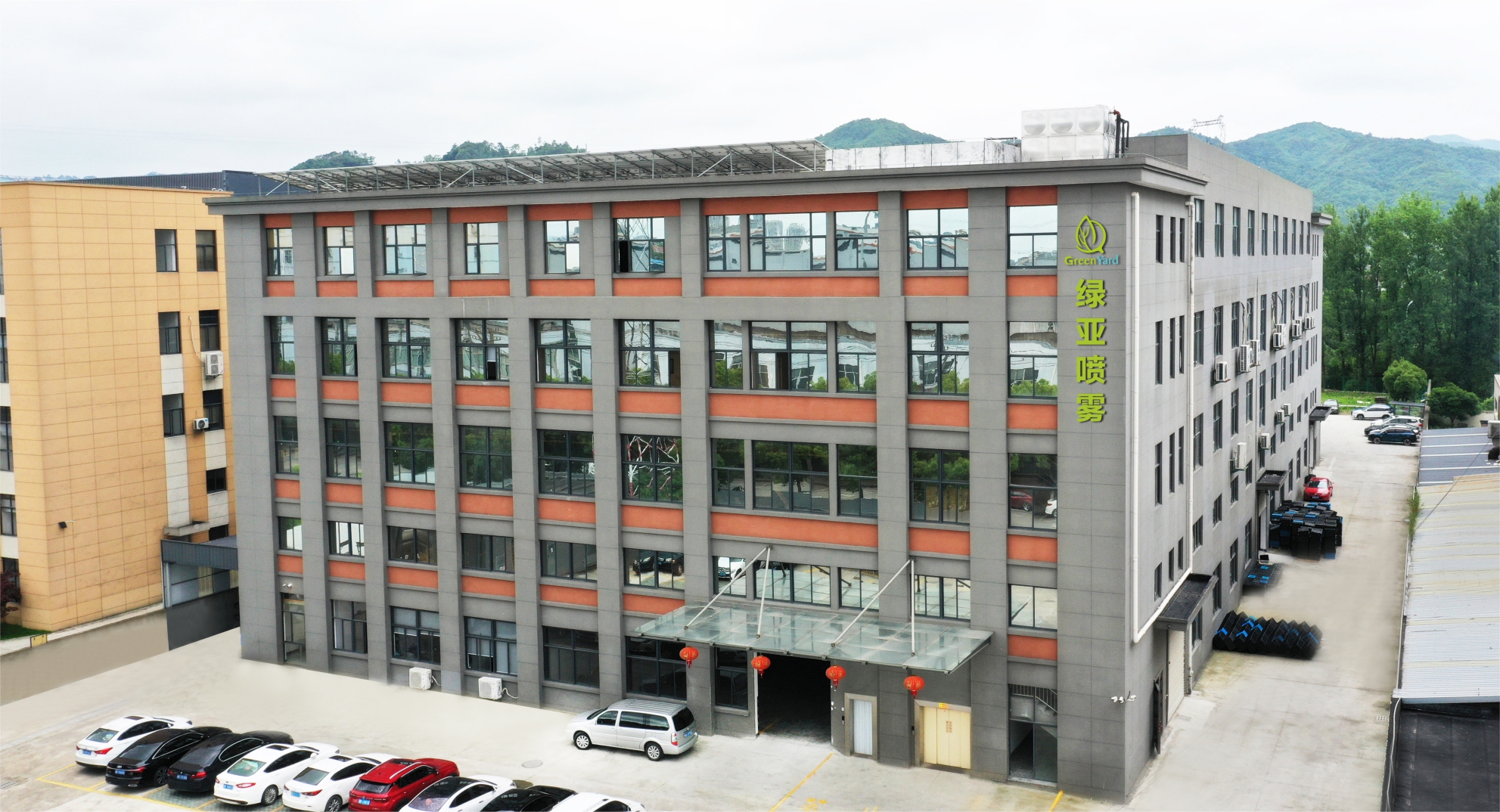 Coming From China, Marketing To The World.
 -
Products
-
News
 English
 Français
 русский
 Español
Plastic Foundation Cream Dose Pump: Precision Packaging for Modern Skincare
Content
- 1 Understanding the Plastic Foundation Cream Dose Pump
- 2 Why Controlled Dosing Matters in Cosmetics
- 3 Advantages Compared with Basic Cosmetic Closures
- 4 Design Features That Support Packaging Development
- 5 Suitable Applications for the Dose Pump
- 6 Manufacturing Strengths Behind the Product
- 7 How the Product Compares with Other Dispensing Formats
- 8 Compatibility Testing and Technical Evaluation
- 9 Benefits for Cosmetic Brands and Packaging Buyers
- 10 Manufacturing Process from Concept to Finished Pump
- 10.1 Stage One: Product Requirement Review
- 10.2 Stage Two: Sample Selection and Adjustment
- 10.3 Stage Three: Mold and Component Preparation
- 10.4 Stage Four: Injection Molding
- 10.5 Stage Five: Automated Assembly
- 10.6 Stage Six: Quality Inspection and Packing
- 10.7 Stage Seven: Delivery and Technical Follow-Up
- 11 Material and Sustainability Considerations
- 12 Practical Guidance for Brand Development Teams
- 13 Why Manufacturer Experience Matters
- 14 Quality, Reliability, and Consumer Confidence
- 15 Frequently Asked Questions
- 15.1 What type of product is the GY-802G1?
- 15.2 What is the dosage per pump?
- 15.3 What bottle neck size does it use?
- 15.4 Can the tube length be customized?
- 15.5 Is the pump suitable for liquid foundation?
- 15.6 Can it be used for gel products?
- 15.7 What is the advantage of the smooth closure?
- 15.8 How does the pump compare with a jar?
- 15.9 Does the pump provide sterile packaging?
- 15.10 What manufacturing capabilities does GreenYard provide?
- 15.11 What should buyers test before mass production?
- 15.12 Can the pump support a premium cosmetic product?
- 16 Conclusion
- 17 References
- 18 Product: Plastic Foundation Cream Dose Pump
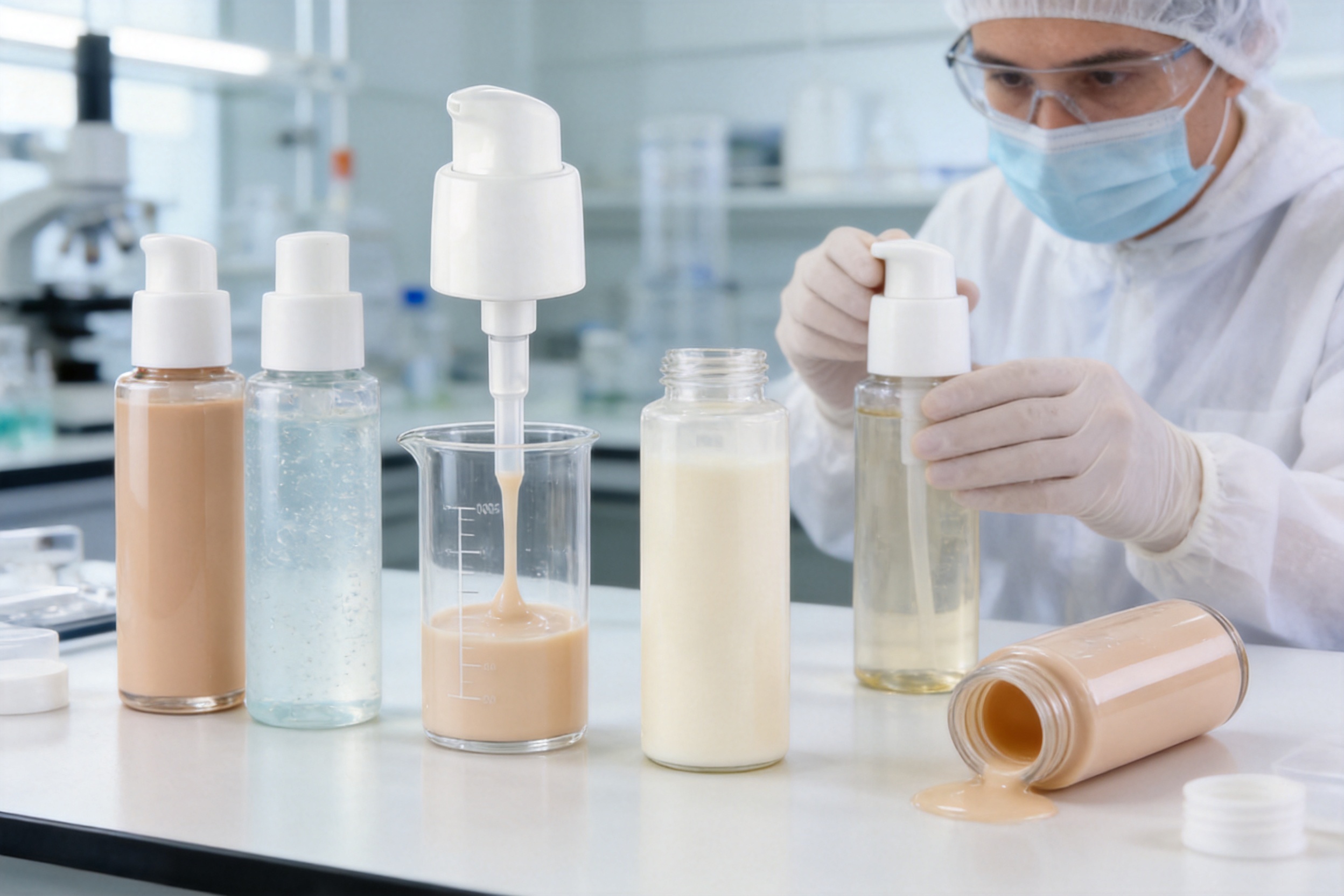
In modern skincare and color cosmetics, packaging is more than a container. It is part of the user experience, a protection system for the formulation, a tool for accurate dosing, and an important visual element of the finished product. For foundations, gels, emulsions, essences, and other liquid or semi-liquid products, the dispensing component must deliver reliable performance every time the consumer presses the pump.
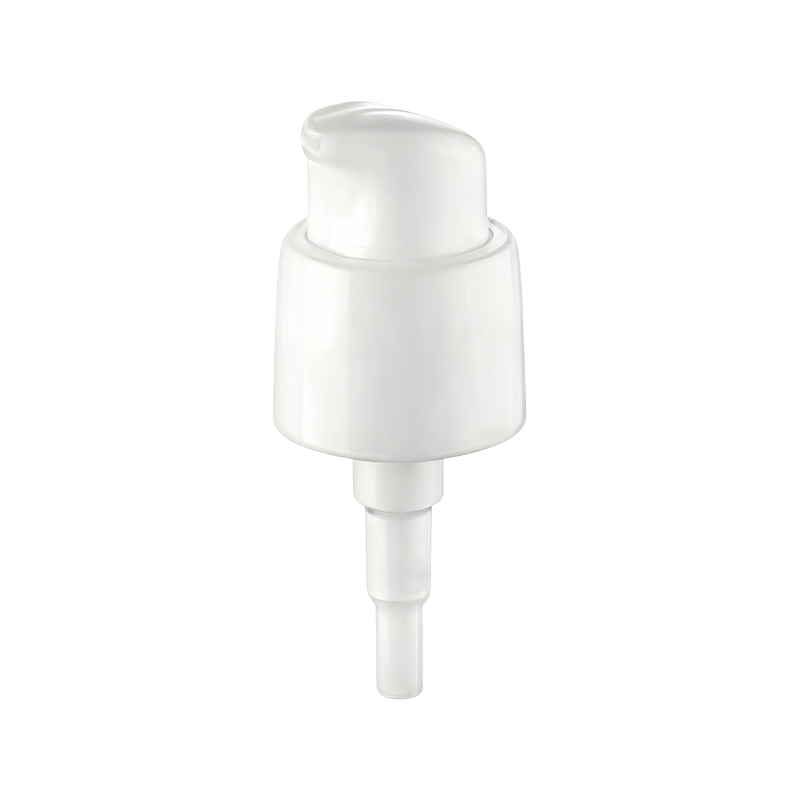
The Plastic Foundation Cream Dose Pump GY-802G1 is designed for this purpose. With a nominal dosage of 0.2 ml, an 18-410 size option, a smooth closure, and a customizable tube length, it provides a practical solution for brands seeking controlled and hygienic dispensing. Its structure is suitable for personal care and cosmetic packaging applications where precision, convenience, and compatibility are essential.
Unlike ordinary caps or open-mouth containers, a dose pump helps reduce direct contact between the product and the surrounding environment. It allows consumers to dispense a measured amount without repeatedly inserting fingers, spatulas, or other tools into the package. This design can support better product hygiene, reduce unnecessary waste, and create a more professional experience for both everyday skincare and premium cosmetic products.
Manufactured by GreenYard Tools Co., Ltd., a China-based personal care packaging manufacturer with 16 years of experience in spray product manufacturing, the pump reflects a production system supported by mold design, injection molding, automated assembly, and quality inspection. The company also produces perfume sprayers, pump heads, caps, bottles, and daily chemical packaging solutions, giving it broad experience across the packaging supply chain.
Understanding the Plastic Foundation Cream Dose Pump
The GY-802G1 is a treatment pump intended for cosmetic and skincare formulations. Its product description identifies it as a plastic foundation cream dose pump, while its listed usage includes foundation, gel, emulsions, essences, and similar products. The pump is designed to dispense a controlled quantity of approximately 0.2 ml per actuation.
A dispensing dosage of 0.2 ml is useful for products that require gradual application. Foundation, for example, is often applied in small amounts and built up according to the desired coverage. A pump that releases a relatively consistent dose helps the user begin with a manageable quantity rather than dispensing an excessive amount. The same advantage applies to facial essences, treatment products, lightweight creams, and gel-based formulas.
The pump is listed with an 18-410 size option. In cosmetic packaging terminology, the first number generally represents the neck diameter, while the second number refers to the thread configuration. Compatibility should always be confirmed through bottle samples, technical drawings, and closure testing, but the 18-410 specification provides a clear starting point for packaging development.
The smooth closure gives the pump a clean and understated appearance. This finish can work with a broad range of bottle designs, including transparent, opaque, colored, frosted, or decorated containers. Because the pump head is visually simple, it can support many brand identities without competing with the label, bottle shape, or formulation color.
The tube length is customizable. This is an important practical feature because bottles may differ in height, shoulder design, internal geometry, and filling volume. A tube that is too short can leave product at the bottom of the bottle, while an excessively long tube may interfere with internal operation or create unnecessary material use. Custom tube length allows the pump to be adapted to the selected bottle rather than forcing the bottle to fit a fixed tube.
Product characteristic | Specification or application |
Product model | GY-802G1 |
Product type | Plastic foundation cream dose pump |
Category | Treatment pump |
Size option | 18-410 |
Nominal dosage | 0.2 ml per actuation |
Closure type | Smooth |
Tube length | Customizable |
Recommended uses | Foundation, gel, emulsion, essence, and similar products |
Packaging applications | Skincare, color cosmetics, and personal care products |
Why Controlled Dosing Matters in Cosmetics
Controlled dosing is one of the most important functions of a treatment pump. When a consumer uses a product directly from a wide-mouth jar or squeezes it from an unsuitable opening, the quantity dispensed can vary significantly. Too much product may be wasted, while too little may lead to repeated applications and frustration.
The 0.2 ml dosage of the GY-802G1 is intended to promote a more consistent dispensing experience. A repeatable dose can help consumers understand how much product they are applying. It may also support usage instructions such as “one pump,” “two pumps,” or “apply a small amount.” These simple instructions are easier to communicate when the package delivers a relatively stable quantity per actuation.
For foundation products, controlled dispensing can help users manage coverage. A small dose is suitable for testing shade, applying a light layer, or building coverage gradually. For treatment products and essences, a controlled dose can make daily routines more straightforward. For gels and emulsions, it can reduce the likelihood of over-application and improve the perceived value of the product.
Accurate dosing also supports product positioning. A premium formulation benefits from packaging that feels deliberate and precise. When the pump operates smoothly and releases an appropriate quantity, the consumer may perceive the product as more refined and better engineered. Packaging cannot replace formula quality, but it can reinforce the quality message.
From a manufacturing and filling perspective, a defined dose can also make product planning easier. Brands may estimate the approximate number of applications in a package based on its fill volume and the expected dosage. Actual results depend on formula viscosity, filling accuracy, pump variation, temperature, and user behavior, but the nominal specification provides a useful reference during product development.
Advantages Compared with Basic Cosmetic Closures
Improved Hygiene
A pump reduces the need for direct contact with the product. With a jar, users commonly touch the formula each time they apply it. This can introduce oils, moisture, dust, or other contaminants. A pump provides a more closed dispensing route and helps limit repeated exposure during normal use.
Although no packaging system can guarantee sterility unless it is specifically designed and validated for sterile applications, a pump can support a cleaner everyday dispensing routine. This is especially valuable for facial products that are used around sensitive areas or applied repeatedly over an extended period.
More Convenient Application
The press-and-dispense format is familiar to consumers. It is quick, simple, and easy to use with one hand. This convenience is important in morning skincare routines, professional makeup environments, travel situations, and retail settings where a customer may want to test a product without using a separate tool.
Compared with a screw cap, a pump can reduce the number of steps required to access the formulation. Compared with a squeeze tube, it may offer more controlled delivery for products that need a measured amount. Compared with an open jar, it provides a cleaner and more compact application process.
Reduced Product Waste
A controlled dose can help reduce the amount of product dispensed beyond what the user needs. This is particularly relevant for high-value foundations, treatment serums, and specialty emulsions. Less over-dispensing can improve consumer satisfaction and may help the product last longer under normal use.
The customizable tube length can also support more effective access to the product inside the bottle. When the tube is matched to the bottle design, the package can be configured to draw product from an appropriate position within the container. Final performance depends on bottle geometry and formula characteristics, so compatibility evaluation remains necessary.
Professional Appearance
The smooth closure has a clean surface and a simple visual profile. This makes it suitable for minimalist, clinical, natural, luxury, and mass-market packaging styles. The pump can be combined with a range of bottle materials, colors, decoration techniques, and labels.
In a crowded cosmetics market, a refined dispensing component can contribute to shelf appeal. Consumers often assess packaging before trying a product. A well-proportioned pump can make the bottle appear more functional, modern, and suitable for a professional skincare routine.
Flexible Product Compatibility
The GY-802G1 is identified for foundation, gel, emulsions, essences, and similar products. These categories include a wide range of viscosities and textures. The pump’s suitability for a particular formula must be confirmed through testing, but the intended application range demonstrates flexibility in product development.
This flexibility can help packaging buyers simplify sourcing. Instead of selecting a separate dispensing solution for every liquid or semi-liquid formula, a brand may evaluate one pump platform across several related product lines. Shared components can support visual consistency and potentially simplify inventory planning.
Plastic Foundation Cream Dose Pump
Design Features That Support Packaging Development
18-410 Neck Compatibility
The 18-410 size option gives packaging engineers a defined closure reference. Standardized neck finishes can make it easier to identify compatible bottles and begin sample testing. However, nominal size alone should not be treated as a substitute for a complete compatibility review.
During development, the pump and bottle should be checked for thread engagement, sealing performance, vertical alignment, shoulder clearance, dip-tube position, and overall appearance. The closure should sit securely and consistently on the bottle without excessive looseness, cross-threading, or visible gaps.
Customizable Dip Tube
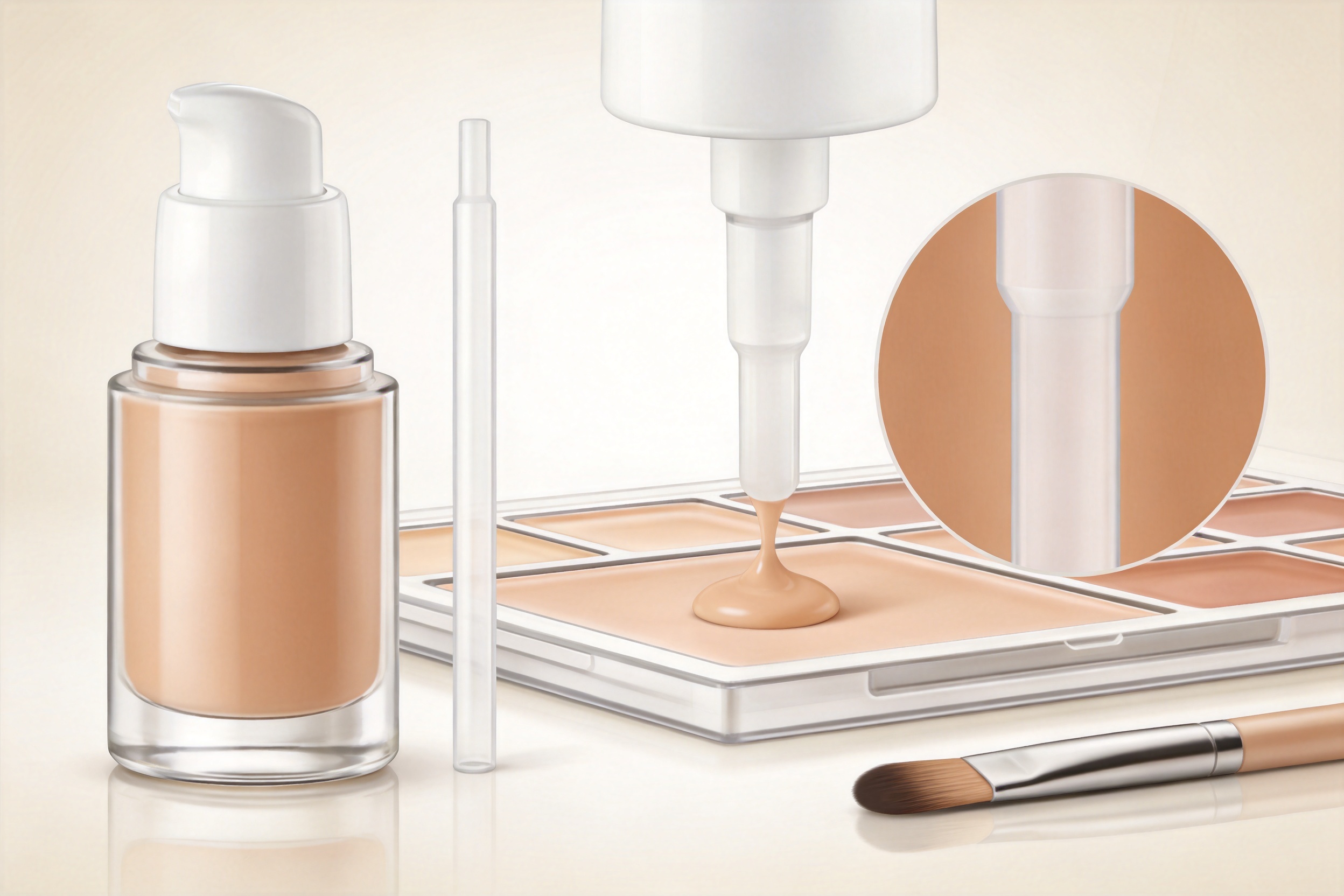
Tube length customization is particularly useful when the pump is paired with bottles of different capacities. A small bottle may require a short tube, while a taller bottle may need a longer tube to improve product pick-up. The tube should be selected according to the internal bottom profile and the expected remaining product level at the end of use.
The tube should also be considered alongside the formula. A high-viscosity cream, a thin essence, and a gel may respond differently during priming and dispensing. Tube diameter, pump chamber design, formula flow, and bottle orientation all influence the final user experience.
Smooth Surface Finish
A smooth closure is easy to integrate into a variety of packaging designs. It can be used as a neutral base for a bottle with a strong visual identity, or it can be customized through color matching and other finishing options when available through the supplier’s production program.
The smooth finish may also be easier to wipe and maintain during filling, assembly, transport, and retail display. Cosmetic packaging is frequently handled by multiple people before reaching the consumer, so a surface that maintains a neat appearance can support quality perception throughout the supply chain.
Measured 0.2 ml Output
The nominal 0.2 ml output is appropriate for controlled application. It gives product developers a measurable performance target for testing. During evaluation, the output should be assessed over repeated actuations rather than after a single press. Initial priming, stroke speed, formula temperature, and storage conditions can affect the observed result.
Brands may also evaluate the number of pumps required to achieve the intended consumer application. For instance, a light foundation application may require fewer actuations than full coverage, while an essence may be applied with one or two pumps depending on the formulation and dispensing instructions.
Suitable Applications for the Dose Pump
Liquid and Cream Foundations
Foundation is one of the most logical applications for a precision dose pump. Users often prefer to dispense small amounts onto the back of the hand, a palette, a sponge, or a brush. The pump gives them a controlled starting quantity and makes it easier to add more product gradually.
The packaging can support both light and buildable coverage products. It is suitable for a brand that wants to present foundation as a hygienic, convenient, and professional product. Before commercialization, the formulation should be tested for viscosity, pigment loading, settling behavior, and compatibility with the pump’s internal components.
Skincare Essences
Essences are commonly applied after cleansing and before heavier treatments or moisturizers. A pump can make the application routine fast and clean. A 0.2 ml dose may help consumers dispense a moderate amount without pouring excess product onto the hand.
The package may also help protect the remaining formula from repeated open exposure. Product stability still depends on the complete formulation and packaging system, including preservative strategy, bottle material, pump design, storage conditions, and filling process.
Emulsions and Lightweight Treatments
Emulsions often require a dispensing system that can handle a texture thicker than water but lighter than a dense cream. The treatment pump format can be suitable for such products when the formulation has been validated through practical testing.
Examples may include facial lotions, brightening emulsions, moisturizing treatments, and specialized daily-care products. A consistent pump can help consumers establish a repeatable routine and can make product instructions easier to understand.
Gel Products
Gels can vary significantly in viscosity and flow behavior. Some are thin and pourable, while others are dense, elastic, or highly structured. The GY-802G1 is listed for gel usage, but each gel formula should be tested individually to confirm priming, dispensing, recovery, and end-of-pack performance.
When compatible, the pump can be advantageous for styling gels, facial gels, after-sun products, eye-area treatments, and other semi-liquid personal care applications. The closed dispensing format can also reduce the mess associated with open jars or wide dispensing orifices.
Other Personal Care Formulations
Because the pump is intended for liquid and semi-liquid cosmetic products, brands may consider it for a broad range of personal care concepts. Potential applications include daily treatment lotions, moisturizing gels, facial primers, makeup base products, and selected body-care emulsions.
Application suitability should be based on formula testing rather than product category alone. Factors such as viscosity, abrasiveness, particle content, alcohol level, oil phase, fragrance, pH, and preservative system may influence pump performance and material compatibility.
Manufacturing Strengths Behind the Product
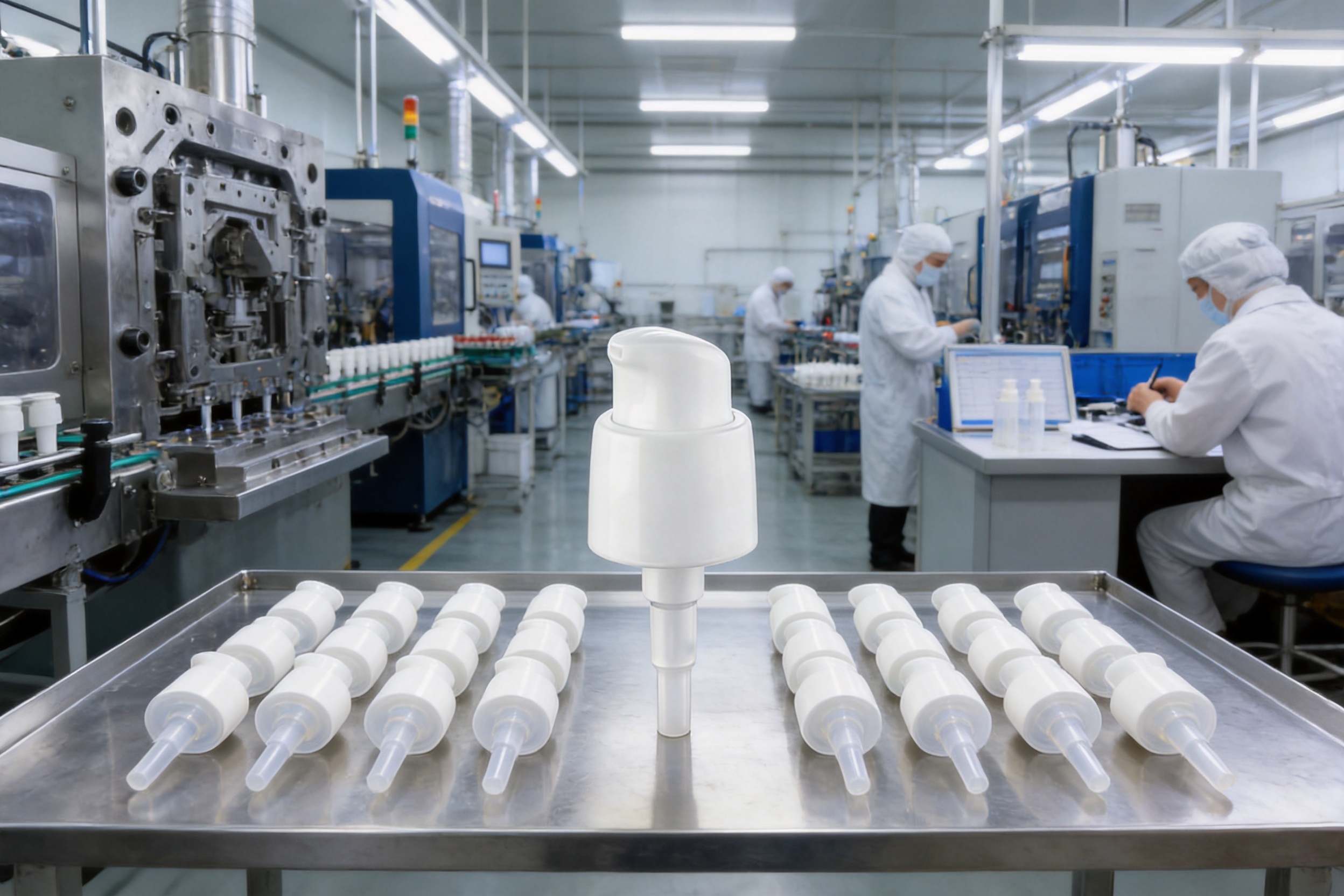
A reliable cosmetic pump depends on more than its visible appearance. It requires accurate components, controlled assembly, consistent springs or internal mechanisms where applicable, suitable materials, and inspection procedures that identify defects before shipment. GreenYard Tools Co., Ltd. states that it has specialized in spray product manufacturing for 16 years and has developed capabilities across several important production stages.
Mold Design and Development
Mold design is a central part of plastic packaging manufacturing. The mold determines the dimensions, surface quality, geometry, and repeatability of injection-molded components. A well-designed mold can support efficient production while helping maintain consistent fit between parts.
For a treatment pump, dimensional control is especially important around the closure, actuator, internal housing, and connection points. Small deviations may affect assembly, appearance, or the user’s perception of pump smoothness. Experience in mold design allows a manufacturer to consider manufacturability and performance from the earliest development stages.
GreenYard’s stated mold design capability supports its ability to develop and refine packaging components for different product requirements. This is valuable for buyers seeking customized packaging rather than only off-the-shelf components.
Injection Molding
Injection molding is widely used for plastic packaging because it can produce high volumes of parts with repeatable geometry. Molten plastic is injected into a mold, cooled, and released as a finished component or semi-finished part. Process conditions must be managed carefully to maintain appearance and dimensional stability.
For cosmetic pump components, injection molding quality may influence surface smoothness, closure fit, actuator movement, and the visual consistency of the finished package. Proper control can help reduce issues such as flash, short shots, sink marks, warping, and inconsistent color.
The manufacturer’s injection molding capability is also relevant to production scalability. GreenYard reports a daily production capacity of one million units across its product manufacturing operations. Such capacity can support large-volume orders while providing a foundation for repeat supply programs.
Automated Assembly
Pumps contain multiple components that must be assembled in the correct order and orientation. Automated assembly can improve production speed and support consistency when properly configured. It may reduce dependence on manual handling for repetitive steps and help standardize the insertion, fitting, and checking of components.
Automation is particularly useful for a manufacturer serving global customers with recurring orders. A stable assembly process can help reduce variation between production batches. It can also support higher output while maintaining a controlled workflow.
For buyers, automated assembly is an important indicator of manufacturing readiness. It suggests that the supplier has invested in production systems rather than relying only on small-scale manual assembly. This may be especially important for brands planning regional launches, contract manufacturing programs, or multiple product lines.
Quality Inspection
Quality inspection is required to evaluate both individual parts and assembled pumps. Typical checks may include visual inspection, dimensional verification, closure fit, actuation performance, leakage evaluation, and dosage assessment. The exact inspection program should be agreed between the buyer and supplier according to the product specification.
Inspection is also important because packaging defects can affect more than appearance. A poorly assembled pump may leak, fail to prime, dispense inconsistently, or create an unpleasant user experience. A systematic inspection process helps identify such issues before products are packed and shipped.
Design and Innovation Support
GreenYard states that it has a dedicated design team and continuously promotes product innovation. This type of support can be useful for brands that need assistance selecting a closure, adapting a tube, developing a packaging concept, or aligning a pump with a specific bottle.
Packaging development often involves collaboration among the brand, formula manufacturer, bottle supplier, filling facility, and pump manufacturer. A supplier with design and engineering capabilities can help coordinate these requirements more effectively than a company that only supplies a standard component.
How the Product Compares with Other Dispensing Formats
Every dispensing format has strengths and limitations. The best choice depends on formula behavior, desired positioning, bottle design, dosage requirements, cost targets, and consumer preferences. The plastic foundation cream dose pump is especially appropriate when controlled dispensing and a clean user experience are priorities.
Packaging format | Main advantages | Considerations |
Foundation dose pump | Controlled dosage, convenient use, clean appearance, customizable tube | Requires formula and bottle compatibility testing |
Wide-mouth jar | Simple filling and broad access to thick products | More direct contact and less controlled dosing |
Squeeze tube | Lightweight, familiar, and suitable for many creams and gels | Dispensed quantity may vary with pressure |
Dropper | Useful for thin liquids and measured drops | May be less suitable for thicker formulas |
Trigger sprayer | Useful for larger-volume body, household, or hair-care products | Generally unsuitable for small-dose facial foundation packaging |
Airless package | Can support product evacuation and reduced air exposure | Often involves a more complex package structure and higher development requirements |
Compared with a jar, the treatment pump provides a more measured and contact-reduced method of dispensing. Compared with a dropper, it is better aligned with creamier or more viscous formulations. Compared with a trigger sprayer, it offers a compact and controlled format for facial and personal care products.
An airless package may provide additional protection or evacuation advantages for certain sensitive formulations, but the overall system can be more complex. The GY-802G1 offers a practical alternative for products that do not require a specialized airless construction but still benefit from controlled dispensing.
Compatibility Testing and Technical Evaluation
Before a treatment pump is approved for mass production, the complete packaging system should be tested. This includes the pump, bottle, formula, decoration, filling process, cap if used, and expected transportation conditions. Product descriptions provide a useful starting point, but laboratory and production trials are essential.
Dimensional Fit
The first step is to confirm that the 18-410 pump fits the selected bottle neck. The pump should engage with the bottle correctly and maintain a stable seal. Testing should include multiple samples from different production batches where possible.
Priming Performance
A pump may require several actuations before the formula reaches the actuator. The number of priming strokes should be measured and recorded. A good user experience generally requires predictable and reasonable priming performance, although the result depends on the formula and internal air path.
Dosage Consistency
Dosage should be measured over repeated actuations. Testing can compare the first usable dose, middle-of-life doses, and doses near the end of the package. The formula should be evaluated under relevant temperature conditions because viscosity may change during storage and transport.
Leakage and Sealing
The assembled package should be checked for leakage during upright storage, inverted storage where relevant, vibration, and transportation simulation. The exact test method should match the product’s distribution conditions. Leakage testing is especially important for retail shipments and export orders.
Formula Compatibility
The formula should be examined for changes in color, odor, viscosity, texture, and stability after contact with the pump and bottle materials. The pump should also be checked for swelling, cracking, discoloration, sticking, or deterioration. Products containing high levels of alcohol, oils, acids, solvents, pigments, or active ingredients may require additional compatibility studies.
User Experience
Technical performance should be combined with practical consumer testing. Users may evaluate the pump’s actuation force, smoothness, sound, rebound, dose size, and ease of use. A pump that meets dimensional requirements but feels stiff or inconsistent may still be unsuitable for a premium product.
Benefits for Cosmetic Brands and Packaging Buyers
Support for Premium Positioning
A precision dose pump can help a brand communicate quality and professionalism. It offers a more engineered appearance than a basic open cap and can make a product feel easier to use. When paired with a well-designed bottle, the pump can support premium, dermocosmetic, clinical, or high-performance positioning.
Efficient Product Architecture
Because the tube length can be customized, the pump can be developed around the selected bottle architecture. This gives packaging designers greater freedom when choosing bottle height, shoulder shape, and capacity. The result can be a more integrated package rather than a compromise between a fixed pump and an unsuitable bottle.
Potential Platform Reuse
A pump intended for foundation, gel, emulsion, and essence applications may be evaluated across multiple products in a brand portfolio. Reusing a compatible pump style can help create visual consistency between product families. It may also simplify technical training for filling operators and reduce the number of packaging components managed by procurement teams.
Large-Volume Production Capability
GreenYard reports a daily production capacity of one million units. For buyers, capacity is relevant when planning product launches, promotional campaigns, seasonal demand, and international distribution. A supplier with a substantial production base may be better positioned to support repeat orders than a small workshop with limited equipment.
Integrated Manufacturing Services
The company’s capabilities include mold design, injection molding, automated assembly, and quality inspection. This integrated structure can reduce the need to coordinate every step with separate suppliers. It may also make communication more efficient when a product requires customization or technical adjustment.
GreenYard’s product range includes perfume sprayers, pump heads, caps, bottles, and daily chemical packaging solutions. This broad portfolio may help buyers source related packaging components from one experienced manufacturer. Consolidated sourcing can simplify project management, although each component must still be separately tested and approved.
Global Market Orientation
The company describes its products as serving global markets. International packaging supply requires attention to consistent specifications, export packing, documentation, production scheduling, and communication across time zones. A manufacturer accustomed to overseas customers may be able to provide a more suitable service structure for international brands and distributors.
Manufacturing Process from Concept to Finished Pump
The development of a cosmetic pump typically begins with a product brief. The buyer identifies the formula, bottle size, desired dosage, closure appearance, color, application, target market, and estimated annual quantity. Technical teams then determine whether an existing pump can meet the requirements or whether adjustments are needed.
Stage One: Product Requirement Review
At the beginning of the project, the supplier reviews the desired neck finish, nominal output, tube length, bottle dimensions, formulation viscosity, and visual requirements. For the GY-802G1, the starting specifications include 18-410 compatibility, 0.2 ml dosage, smooth closure, and use with foundation, gel, and related skincare products.
Stage Two: Sample Selection and Adjustment
Samples are supplied for bottle matching and formula testing. At this stage, the buyer can assess appearance, actuation, fit, and dispensing behavior. Tube length may be adjusted according to the bottle. If color or finishing changes are required, the target should be documented and approved through physical samples or agreed color standards.
Stage Three: Mold and Component Preparation
Where a custom part or modification is required, mold design and component preparation become important. The manufacturer evaluates dimensions, material flow, assembly relationships, and production efficiency. Proper planning at this stage can reduce later problems and support stable mass production.
Stage Four: Injection Molding
Plastic components are produced through injection molding under controlled process conditions. Operators and quality personnel monitor the appearance and dimensions of molded parts. Consistency is important because the pump will be assembled from multiple pieces that must work together.
Stage Five: Automated Assembly
Components are assembled into completed pump units. Automated equipment can help maintain repeatable positioning and production speed. The assembled units may then undergo additional inspection or functional testing according to the order requirements.
Stage Six: Quality Inspection and Packing
Finished pumps are checked for visible defects, assembly condition, closure quality, and other agreed criteria. Products that pass inspection are packed for storage or shipment. Packaging methods should protect the components from dust, crushing, moisture, and unnecessary handling during transportation.
Stage Seven: Delivery and Technical Follow-Up
After delivery, the buyer may conduct incoming inspection and filling-line trials. Feedback from these trials can be used to refine tube length, bottle matching, operating instructions, or quality standards for future orders. Long-term cooperation is strengthened when technical feedback is recorded and applied to subsequent production.
Material and Sustainability Considerations
Plastic packaging remains widely used because it is lightweight, adaptable, and suitable for high-volume manufacturing. A plastic treatment pump can be designed in many shapes and finishes while supporting efficient production. Its relatively low weight may also be useful in distribution compared with heavier packaging alternatives.
At the same time, responsible packaging development requires attention to material selection, component count, recyclability, and end-of-life management. Buyers should discuss the materials used in the pump and bottle, local recycling requirements, and any restrictions in the target market. If a package combines several materials, separation at disposal may be more difficult.
Material reduction should not compromise pump performance. A component that fails, leaks, or causes product waste may create a greater environmental burden than a slightly more robust component. The best approach is to balance lightweight design with durability, reliable dispensing, and appropriate protection for the formula.
Brands may also evaluate whether the pump can be used with bottles that contain recycled resin or whether the package can be developed with a simplified material structure. These decisions require technical validation and should be discussed with the packaging manufacturer early in the project.
Practical Guidance for Brand Development Teams
When considering the GY-802G1 for a new product, the development team should prepare a complete technical brief. The brief should include the formula type, approximate viscosity, filling volume, bottle drawing, neck finish, desired color, decoration requirements, target dosage, market, and forecasted order quantity.
Requesting samples is essential. The pump should be tested with the intended bottle and the actual formula rather than with water alone. Water testing may reveal basic flow behavior, but it cannot accurately represent a foundation, gel, emulsion, or essence with different viscosity and surface characteristics.
The team should record the number of priming strokes, average dosage, actuation force, leakage behavior, bottle evacuation, and appearance after storage. Testing should include both fresh samples and packages that have undergone accelerated or real-time stability evaluation where appropriate.
Filling-line trials should confirm that the pump can be assembled efficiently after the bottle is filled. The line should evaluate insertion, capping or closure application, torque if applicable, handling, labeling clearance, and final packing. A pump that works in a laboratory but slows production or creates alignment problems may require further adjustment.
Transportation testing should reflect the product’s actual distribution route. Export shipments may experience vibration, temperature variation, compression, and changes in orientation. The completed package should be evaluated after transportation simulation or representative shipment trials.
Finally, the brand should establish acceptance criteria before mass production. These criteria may cover appearance, color, dosage range, actuation, leakage, tube position, closure fit, and packaging cleanliness. Clear standards help both the buyer and manufacturer maintain consistent expectations.
Why Manufacturer Experience Matters
Cosmetic packaging projects often involve tight launch schedules and multiple technical variables. An experienced manufacturer can contribute more than production capacity. It can help identify compatibility risks, recommend suitable components, explain customization options, and organize quality checks.
GreenYard Tools Co., Ltd. states that it has 16 years of experience in spray product manufacturing. Its focus on perfume sprayers, pump heads, caps, bottles, and daily chemical packaging means that it operates within a product sector where appearance, function, and consistency must work together.
The company’s reported capabilities in mold design, injection molding, automated assembly, and quality inspection provide an integrated foundation for packaging production. Its stated daily production capacity of one million units indicates that it is equipped to address substantial order volumes and ongoing supply requirements.
A dedicated design team can also be important when a brand wants to move beyond a basic component. Design assistance may help refine the proportion of the pump, coordinate it with the bottle, adjust the tube, or create a more unified appearance across multiple products.
For overseas buyers, direct communication with a packaging manufacturer can simplify the development process. Technical questions about size, dosage, closure, tube length, and application can be addressed in one project discussion. This can help reduce delays caused by unclear specifications or fragmented supplier responsibilities.
Quality, Reliability, and Consumer Confidence
Consumers expect cosmetic packaging to work from the first use until the product is finished. The pump should prime within a reasonable number of strokes, dispense the formula without excessive splashing or dripping, return to position after actuation, and remain secure on the bottle.
Reliability is especially important for foundation and skincare products because they are often used daily. A pump that becomes difficult to press, releases an inconsistent dose, or leaks around the closure can damage the consumer’s perception of the entire product.
The GY-802G1’s defined dosage and standardized size provide clear performance targets. Its customizable tube length supports more precise adaptation to the bottle. Its smooth closure supports a clean visual presentation. Together, these features create a practical balance between functionality and appearance.
Of course, final reliability depends on the entire packaging system. The bottle must have a suitable neck finish and internal shape. The formula must be compatible with the pump. The filling process must be controlled. The pump must be stored and transported properly. Quality is achieved through cooperation across these stages rather than through one component alone.
Frequently Asked Questions
What type of product is the GY-802G1?
The GY-802G1 is a plastic treatment pump designed for cosmetic and skincare applications. It is described as a foundation cream dose pump and is listed for foundation, gel, emulsions, essences, and similar products.
What is the dosage per pump?
The listed dosage is 0.2 ml per actuation. Actual dispensing performance should be confirmed with the intended formula, bottle, and testing conditions because viscosity and operating behavior can affect the measured result.
What bottle neck size does it use?
The listed size option is 18-410. Buyers should confirm the bottle neck finish through physical samples and technical specifications before placing a mass-production order.
Can the tube length be customized?
Yes. The tube length is listed as customizable. This allows the pump to be adapted to different bottle heights and internal geometries.
Is the pump suitable for liquid foundation?
It is listed for foundation usage. Liquid and cream foundation formulas should still undergo compatibility and dispensing tests to confirm priming, dosage, pigment handling, and end-of-pack performance.
Can it be used for gel products?
Yes, gel is included among the listed applications. Because gel viscosity varies widely, each formula should be tested individually before approval.
What is the advantage of the smooth closure?
The smooth closure provides a clean, simple appearance that can complement many cosmetic bottle designs. It may be suitable for minimalist, professional, premium, and everyday personal care packaging.
How does the pump compare with a jar?
The pump offers more controlled dispensing and reduces the need for direct contact with the formula. A jar may be easier for very thick products, but it generally provides less precise dosing and more frequent product exposure during use.
Does the pump provide sterile packaging?
No automatic assumption of sterility should be made. The pump can support a cleaner dispensing routine, but sterile performance requires a specially designed and validated packaging system.
What manufacturing capabilities does GreenYard provide?
GreenYard states that it provides mold design, injection molding, automated assembly, and quality inspection. The company also reports a daily production capacity of one million units and offers perfume sprayers, pump heads, caps, bottles, and other daily chemical packaging solutions.
What should buyers test before mass production?
Buyers should test bottle fit, priming, dosage consistency, actuation force, leakage, formula compatibility, tube length, transportation durability, and filling-line performance. Acceptance criteria should be agreed before production begins.
Yes. Its controlled 0.2 ml dosage, smooth closure, and clean dispensing format can support premium skincare, foundation, treatment, and essence positioning when combined with a suitable bottle and high-quality decoration.
Conclusion
The Plastic Foundation Cream Dose Pump GY-802G1 is a practical packaging solution for brands that need controlled, hygienic, and convenient dispensing. Its 0.2 ml dosage supports gradual application and consistent product usage. The 18-410 size option provides a defined starting point for bottle matching, while the customizable tube length allows the pump to be adapted to different packaging designs.
Its application range includes foundation, gel, emulsions, essences, and similar skincare products. Compared with basic jars, open caps, and less precise dispensing formats, the pump can provide a cleaner user experience, better portion control, reduced over-dispensing, and a more professional appearance.
The product is supported by GreenYard Tools Co., Ltd.’s stated experience in spray product manufacturing, including mold design, injection molding, automated assembly, and quality inspection. The company’s reported daily production capacity of one million units and broad product portfolio further support its ability to serve personal care packaging projects at different scales.
For successful commercialization, the pump should be evaluated as part of a complete system. Formula, bottle, tube, pump, filling process, transportation, and consumer use must all be considered together. With appropriate testing and technical coordination, the GY-802G1 can help cosmetic brands create packaging that combines precision, convenience, visual simplicity, and dependable manufacturing support.
References
GreenYard Tools Co., Ltd. Product specification for Plastic Foundation Cream Dose Pump GY-802G1.
GreenYard Tools Co., Ltd. Company information concerning mold design, injection molding, automated assembly, quality inspection, and production capacity.
Cosmetic packaging development practices for pump compatibility, dosage evaluation, leakage testing, and formula-package interaction.
Personal care packaging design principles concerning hygiene, controlled dispensing, user convenience, and product presentation.
Plastic injection molding and automated assembly principles for cosmetic packaging components.
Product: Plastic Foundation Cream Dose Pump

-
How the Treatment Cream Pump Enhances the Consumer Skincare Experience ?
A treatment cream pump does more than dispense product — it fundamentally shapes how consumers inte...
-
Amber Plastic Bottles: Lightweight, Protective, Customizable Packaging for Cosmetics
You have spent months stabilizing a vitamin C serum, only to watch a pallet of amber glass bottles ...
-
Crimp Pumps Demystified: Choosing the Right Type and Material for Every Cosmetic Formula
Walk into any cosmetic filling facility and you will find crimp pumps on everything from a delicate ...
-
Airless Bottles Uncovered: How to Protect Your Skincare and Perfect Every Pump
If you have ever opened a pump bottle of serum and found the last quarter of the product impossible ...
Copyright © GreenYard Tools Co.,ltd. All Rights Reserved.
Personal Care Packaging Manufacturer Custom Perfume Sprayers Factory