
-
About Us
Why Choose Us?The company possesses advanced capabilities in mold design, injection molding, and automated assembly, supported by a professional quality inspection team to ensure product reliability. A dedicated design team continuously drives product innovation, providing customers with high-quality spray solutions.
 Coming From China, Marketing To The World.
-
Products
-
News
 English
 Français
 русский
 Español
Plastic Flower Foaming Dispenser Pump for Playful, Precise Personal Care Packaging
Content
- 1 Product Overview
- 2 How a Shaped Foam Pump Works
- 3 Distinctive Advantages Over Conventional Foam Pumps
- 4 Recommended Product Applications
- 5 Manufacturing Strengths Behind the Product
- 6 From Concept to Finished Pump
- 7 Why Manufacturing Experience Matters
- 8 Branding and Customization Opportunities
- 9 Quality and User Experience Considerations
- 10 Packaging Efficiency and Commercial Value
- 11 Selection and Development Checklist
- 12 Q&A
- 12.1 What is the Plastic Flower Foaming Dispenser Pump?
- 12.2 What is the model number?
- 12.3 Which bottle neck sizes are available?
- 12.4 How much product does the pump dispense?
- 12.5 Can the dip tube length be customized?
- 12.6 Is the pump suitable for baby products?
- 12.7 Can it be used for serum and lotion?
- 12.8 What makes this pump different from a conventional foam pump?
- 12.9 What manufacturing capabilities support this product?
- 12.10 How should customers confirm compatibility?
- 12.11 Can the pump be used for high-volume production?
- 12.12 What should be considered when designing the bottle?
- 13 Conclusion
- 14 References
- 15 Product: Plastic Flower Foaming Dispenser Pump
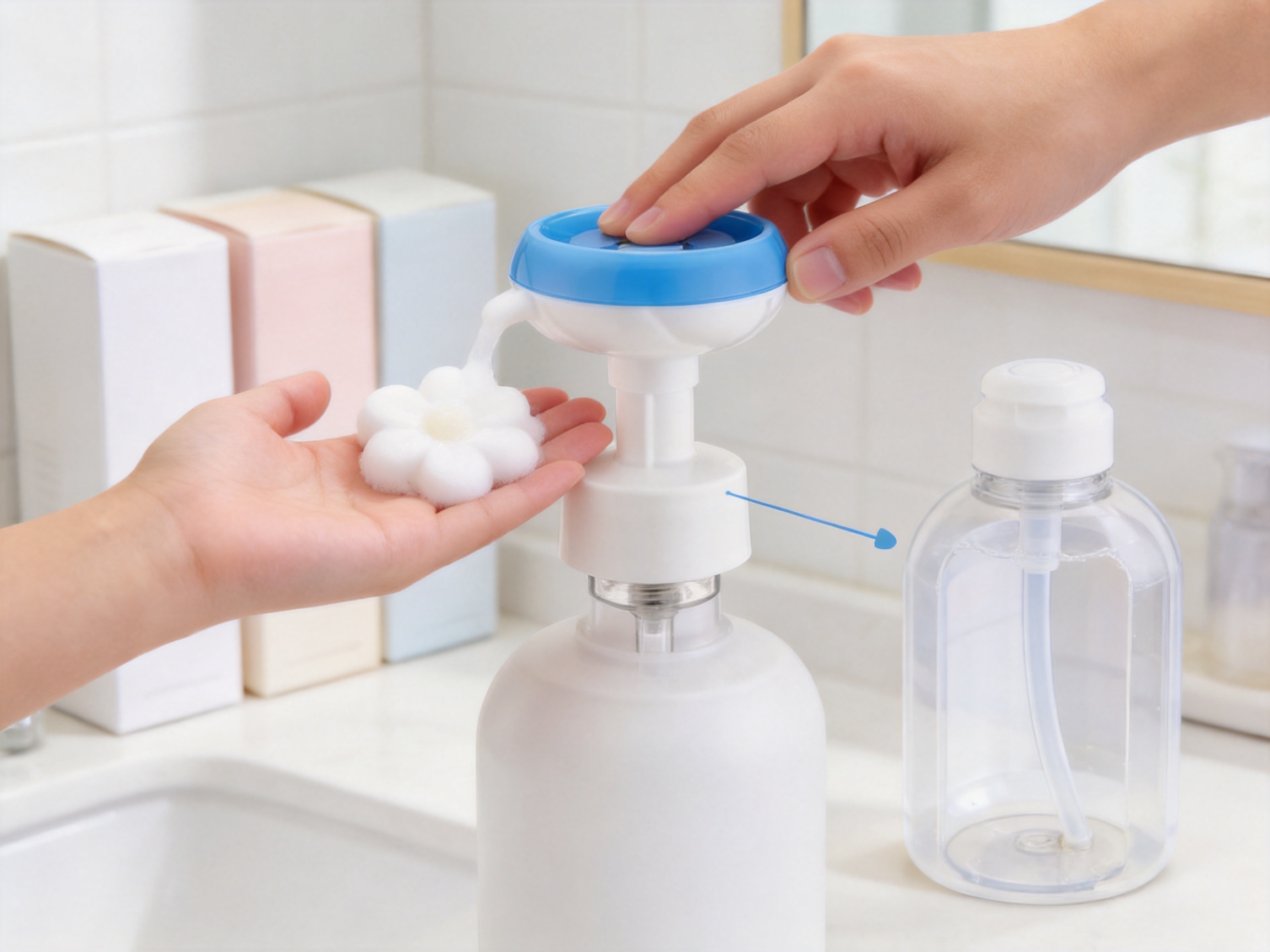
Packaging is an important part of the personal care experience. It protects the formulation, supports controlled use, communicates product quality, and can make everyday routines more enjoyable. For baby care, skincare, and other gentle-use products, the dispensing system is especially important because consumers expect convenience, cleanliness, consistency, and a pleasant application experience. The Plastic Flower Foaming Dispenser Pump, model GY-727A1, combines these requirements in one distinctive packaging component.
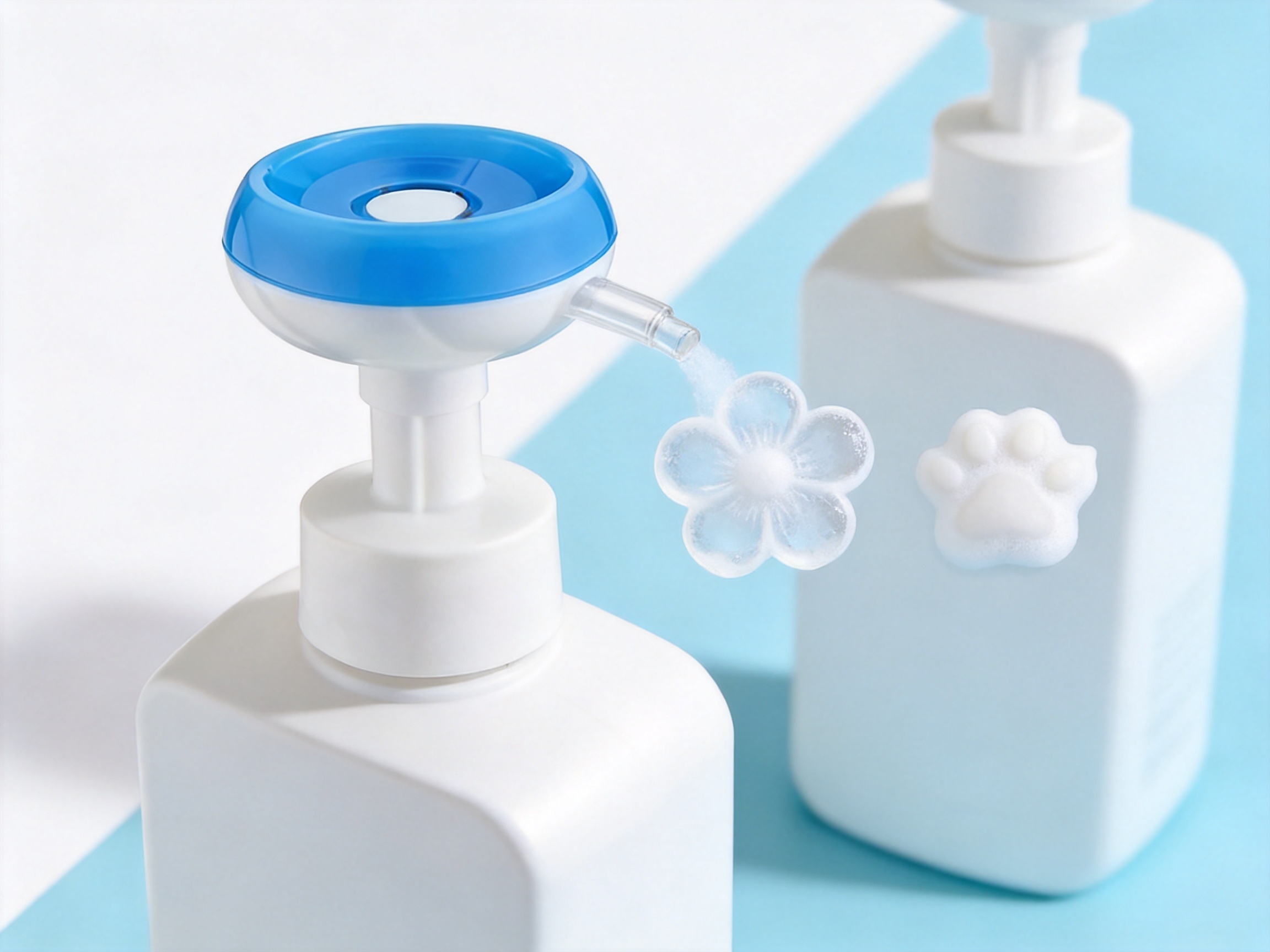
Designed for foaming formulations, this pump can transform a liquid product into an attractive foam shape resembling a flower or a cat claw. The playful output makes it particularly suitable for baby care products, while the controlled dosage of approximately 0.8±0.2 ml per actuation supports efficient and hygienic application. With available neck sizes of 40/410 and 42/410, a customizable tube length, and a lightweight plastic closure, the pump can be adapted to a variety of larger-format bottles and product concepts.
The GY-727A1 is more than a decorative dispenser. It is a practical packaging solution developed for brands that want visual differentiation without sacrificing usability. It can be used with suitable serums, lotions, and other liquid personal care formulations, helping product developers create an engaging consumer experience while maintaining reliable dispensing performance.
Product Overview
The Plastic Flower Foaming Dispenser Pump is a specialized foam pump designed to produce a shaped foam output. Unlike a conventional lotion pump that releases a simple stream or portion of liquid, this dispenser creates a more expressive application effect. The foam can appear as a flower or cat claw, depending on the selected outlet design and formulation behavior.
This feature makes the pump well suited to baby wash, children’s cleansing products, mild personal care products, and playful skincare concepts. It can also be considered for adult products that benefit from a distinctive visual presentation. A shaped foam can encourage correct dosage, make handwashing or cleansing more appealing, and provide a memorable point of difference on retail shelves.
The pump uses a plastic closure and is available in two stated size options: 40/410 and 42/410. These formats are commonly associated with larger bottle openings and provide flexibility for packaging designers working with different container platforms. The dip tube length can be customized, allowing the pump to be matched to the selected bottle height and internal geometry.
Each actuation delivers approximately 0.8±0.2 ml. This dosage is suitable for applications where consumers need a controlled amount of product without repeatedly pressing the pump. The actual dispensing performance may vary according to the formulation, viscosity, air-to-liquid ratio, bottle design, and testing conditions, so compatibility testing remains an important part of product development.
Product name |
Plastic Flower Foaming Dispenser Pump |
Model |
GY-727A1 |
Product category |
Foam Pump |
Available size options |
40/410 and 42/410 |
Nominal dosage |
Approximately 0.8±0.2 ml per actuation |
Closure material |
Plastic |
Dip tube length |
Customized according to bottle and application requirements |
Recommended uses |
Serums, lotions, baby care products, and other suitable liquid formulations |
Special output |
Flower-shaped or cat-claw-shaped foam |

Plastic Flower Foaming Dispenser Pump
How a Shaped Foam Pump Works
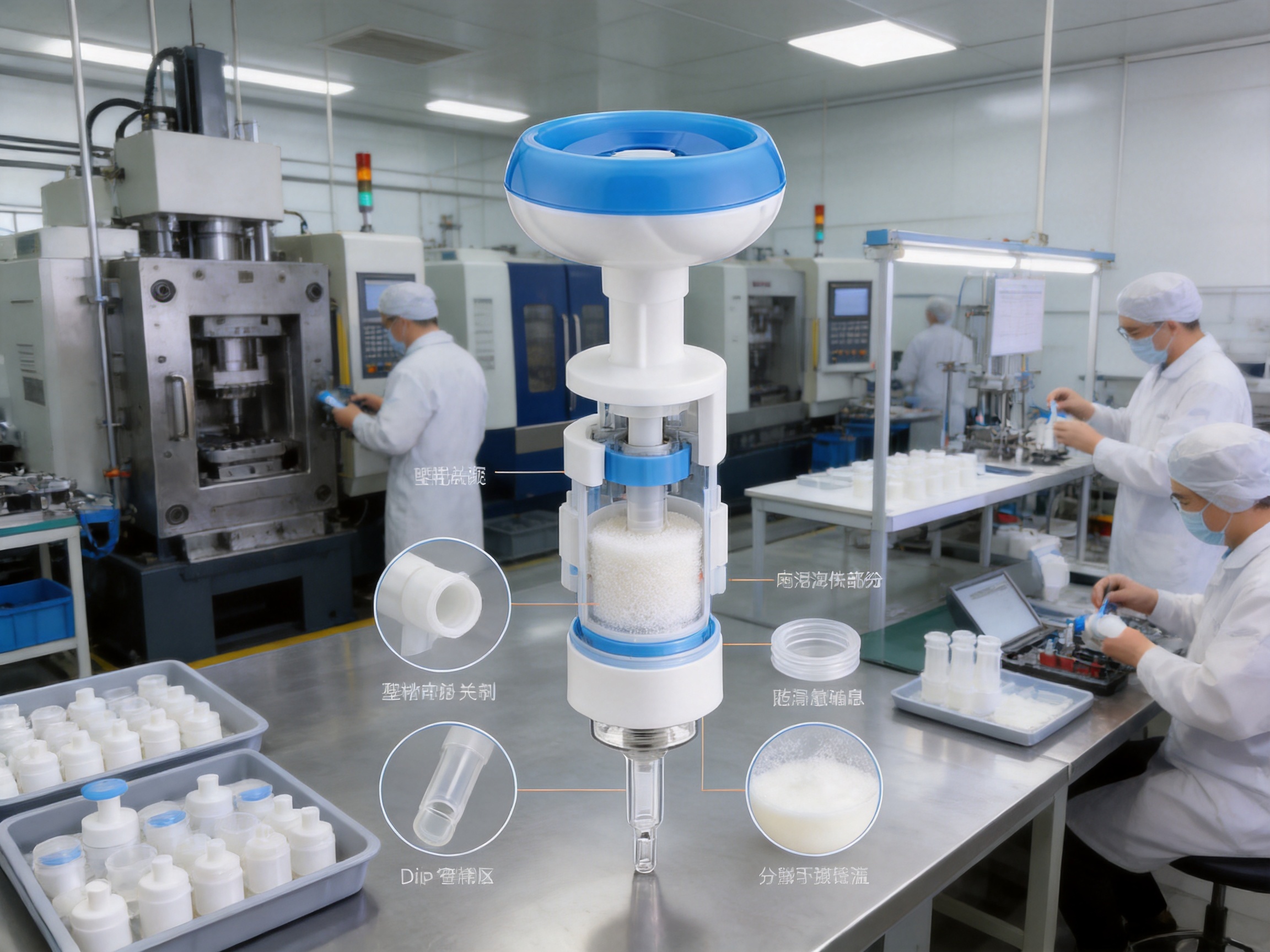
A foam pump generally combines liquid product with air during the pumping process. When the actuator is pressed, internal components move the formulation through a liquid pathway while drawing air into a mixing chamber. The combination is then pushed through a fine mesh or foam-generating structure, producing a lighter and more expanded foam than the original liquid formulation.
In the GY-727A1, the outlet design adds another functional layer. Instead of allowing the foam to leave through a conventional round opening, the outlet can shape the emerging foam into a recognizable form. The result may resemble a flower or a cat claw, creating a playful presentation at the moment of use.
The quality of the final foam depends on several factors. These include the formulation’s viscosity, surfactant system, air content, surface tension, temperature, storage conditions, and compatibility with the internal components. For this reason, the pump and the formula should be evaluated together rather than separately. A pump that performs well with one formulation may produce a different texture or shape with another.
For product developers, this interaction provides both creative opportunity and technical responsibility. The pump can support a distinctive product identity, but the selected formula should be tested for smooth priming, consistent output, acceptable foam density, and stable performance throughout the expected product life.
Controlled Dispensing Through Every Actuation
The stated dosage of approximately 0.8±0.2 ml gives the pump a practical balance between economy and user convenience. A controlled dose can help consumers apply an appropriate amount of cleanser, lotion, or serum without pouring excess product from the container. It can also improve the consistency of daily use and make consumption easier to estimate.
In baby care applications, controlled dosing is particularly valuable. Parents often use products while holding or assisting a child, so a one-handed pump that delivers a measured quantity can make the routine simpler. The pump reduces the need to open a cap, tip a bottle, or estimate a dose from a wide opening.
Dosage consistency should be confirmed under real packaging conditions. Testing should consider the full bottle, the final tube length, the selected formulation, storage orientation, and repeated use. Priming behavior after filling and after extended storage should also be evaluated before commercial production.
Distinctive Advantages Over Conventional Foam Pumps
Visual Differentiation
Many foam pumps offer similar basic functionality: they create an airy product that can be spread easily on the skin. The flower or cat-claw output of the GY-727A1 adds a visible and memorable feature that is not typically associated with ordinary foam dispensers. This design can help a product stand out in a crowded personal care category.
Visual differentiation is important for both physical retail and online presentation. On a store shelf, the shaped foam can support demonstrations and attract attention. In digital marketing, the output can be shown in photographs or short videos that communicate the product experience before purchase. The foam shape may also encourage consumers to share their experience, particularly in baby care and family-oriented product categories.
More Engaging for Baby Care
Children may be more willing to participate in cleansing routines when the product feels enjoyable and interactive. A flower-shaped or cat-claw-shaped foam can turn an ordinary application into a playful moment. For parents, this can support easier bath-time routines, handwashing habits, and skincare applications.
The playful design does not replace the need for suitable ingredients, safety evaluation, or responsible labeling. Instead, it enhances the user interface of the package. The pump offers an opportunity to combine a carefully developed baby care formula with packaging that feels friendly and approachable.
Hygienic, No-Tip Dispensing
A pump format allows the user to dispense product without directly touching the remaining contents inside the bottle. This can reduce unnecessary contact and help maintain a cleaner routine than open-mouth jars or bottles that must be poured. The closed pump assembly also supports convenient storage and transport when properly matched with a compatible bottle and protective components.
For lotions, serums, and cleansing products, the pump can deliver product directly into the hand or onto the desired application area. The user does not need to insert fingers into the container, which can be especially beneficial for products intended for repeated family use.
Adaptability Through Custom Tube Length
The dip tube length is customizable. This is an important advantage because bottles differ in height, shoulder shape, bottom design, and internal volume. A tube that is too short may leave unusable product at the bottom, while a tube that is too long may bend, interfere with internal components, or reduce reliable intake.
Custom tube length allows the pump to be integrated more effectively with the selected bottle. It also gives packaging engineers more freedom when developing a complete set rather than forcing the bottle design to conform to a fixed tube dimension.
Flexible Neck Size Options
The 40/410 and 42/410 options provide packaging flexibility for larger bottle formats. Brands can review the available neck finish against their preferred bottle design, fill volume, label proportions, and overall visual appearance. Offering more than one size option can simplify the process of creating different product variants or adapting the pump to an existing packaging platform.
Compatibility should be confirmed through dimensional checks and practical testing. The bottle neck, closure threads, gasket or sealing components, dip tube, and actuator must work together as a complete system. When properly matched, the available size options can help reduce the need for extensive packaging redesign.
Lightweight Plastic Construction
The plastic closure provides a lightweight and practical solution for personal care packaging. Lower package weight can make handling more comfortable for consumers and may help brands manage shipping and logistics requirements. Plastic also offers design flexibility for molded components, color matching, surface treatments, and decorative applications.
A plastic pump can be designed for everyday use while maintaining a cost-conscious structure. For high-volume personal care products, the balance between appearance, functionality, and manufacturing efficiency is an important consideration. The GY-727A1 is positioned as a practical component that can deliver a distinctive user experience without requiring an unnecessarily complex package.
Recommended Product Applications
Baby Cleansers and Bath Products
The most natural application for the pump is baby care. Mild body washes, hand washes, hair cleansers, and bath products can benefit from the shaped foam output. A flower or cat claw can make the product more inviting while the foam texture helps distribute the cleanser over the skin.
For baby products, packaging must be easy for parents to understand and operate. The actuator should be accessible, the bottle should remain stable during use, and the dosage should be suitable for the intended application. The pump can contribute to this experience by offering a direct, controlled dispensing action.
Children’s Personal Care
Children’s hand soap, face wash, and gentle cleansing products may also use the pump. The unusual foam shape can help distinguish a children’s range from standard adult packaging. It may support themed product lines, seasonal designs, or educational routines focused on hygiene.
In these applications, the packaging appearance should be coordinated with the product’s colors, label graphics, and communication style. The pump can be matched with a colorful bottle or a simple minimalist design depending on the brand’s positioning.
Serums and Lightweight Lotions
The product information identifies serum and lotion as potential uses. A foam pump is most appropriate when the formula is designed or adjusted to create stable foam. Some lightweight personal care liquids can be dispensed through a foam-generating mechanism, but their viscosity and surfactant composition must be verified.
For a serum, the shaped foam can create a fresh and unusual application ritual. For a lightweight lotion, it may help distribute the product evenly across the skin. Product developers should conduct formula compatibility tests to confirm that the pump does not alter the desired texture, fragrance, appearance, or stability of the formulation.
Family and Daily Care Products
The pump can be considered for family-use products where convenience and easy handling are priorities. Examples may include gentle cleansing liquids, moisturizing care products, and other suitable daily-use formulas. The measured output can reduce overuse, while the foam format may make the product easier to spread.
Because the component is available in larger neck sizes, it can support bottles with sufficient capacity for shared household use. The final package should be assessed for grip, balance, opening force, closure security, and storage safety.
Manufacturing Strengths Behind the Product
The manufacturer behind the product is a China-based packaging material producer with 16 years of experience in spray and dispensing product manufacturing. Its product range includes perfume sprayers, pump heads, caps, bottles, and daily chemical packaging solutions. This broader product scope is valuable because pump performance is closely connected to the rest of the package.
The company reports a daily production capacity of one million units. Such capacity indicates an industrial manufacturing structure designed to support substantial order volumes and recurring production programs. For customers developing personal care products for regional or global distribution, production capability can be an important factor in supply planning.
Mold Design and Development
Mold design is central to the production of precise plastic packaging components. Pump housings, actuators, closures, outlet structures, and internal parts often require accurate dimensions and carefully controlled surfaces. A specialized mold design capability allows the manufacturer to evaluate part geometry, assembly relationships, draft angles, material flow, and production efficiency before mass manufacturing.
For the GY-727A1, the shaped foam outlet makes the design of the dispensing head especially important. The outlet needs to support the desired visual effect while remaining practical to mold, assemble, clean, inspect, and use. A well-developed mold can contribute to repeatable part dimensions and stable assembly performance.
Injection Molding
Injection molding is used to form many of the plastic components found in dispensing systems. The process involves melting a selected plastic material and injecting it into a mold cavity under controlled conditions. After cooling, the molded component is removed and prepared for assembly or further inspection.
Consistent injection molding requires control of material preparation, temperature, pressure, cooling time, cycle time, and part ejection. Variations in these conditions can affect dimensions, appearance, strength, and fit. An experienced manufacturer can establish process parameters that support stable production across large quantities.
For a pump closure or actuator, dimensional accuracy matters because the part must connect properly with the bottle and internal mechanism. A small deviation can affect sealing, alignment, actuation, or appearance. The manufacturer’s investment in injection molding capability supports the repeatable production required for professional personal care packaging.
Automated Assembly
Foam pumps contain multiple components that must be positioned correctly. Automated assembly can improve production efficiency and reduce dependence on manual handling for repetitive steps. It may also help standardize component insertion, alignment, and testing procedures.
Automation is particularly useful when the manufacturer produces high quantities. Consistent assembly conditions can support uniform pump feel, stable component placement, and reliable output. Automated systems may be combined with operator oversight and sampling inspections to create a balanced production process.
For customers, assembly capability can reduce the complexity of managing multiple suppliers. A manufacturer that can mold parts and assemble complete pump heads may provide a more coordinated route from component development to finished packaging supply.
Quality Inspection
Quality inspection is essential for dispensing packaging because defects may affect both consumer experience and product protection. Relevant checks can include visual appearance, dimensional accuracy, thread fit, component presence, actuation behavior, leakage resistance, tube attachment, and dispensing performance.
Foam pumps may also require evaluation of priming and output consistency. The product should be tested after filling, after storage, and during repeated use. The exact test program depends on the customer’s formula, bottle, filling process, transport conditions, and regulatory requirements.
The manufacturer describes a quality inspection capability intended to support reliable products. This capability is important for customers seeking stable supply and consistent packaging performance across production batches.
From Concept to Finished Pump
A professional packaging project usually begins with a review of the product concept. The customer identifies the intended formula, bottle capacity, target market, visual style, dispensing method, and expected order volume. The manufacturer can then evaluate the appropriate pump structure and available size option.
For the GY-727A1, the first technical questions may include whether the bottle uses a 40/410 or 42/410 neck finish, what dip tube length is required, and whether the formulation can create the intended foam. The customer may also need to confirm the preferred outlet appearance, pump color, bottle material, and decoration approach.
Design Evaluation
During design evaluation, the package should be considered as a complete system. The pump must fit the bottle neck correctly, the dip tube must reach the appropriate area of the bottle, and the actuator must be comfortable to press. The outlet should produce the desired foam shape without excessive residue or blockage under normal use.
Design evaluation may include sample testing, dimensional review, filling trials, and user handling assessments. If the product is intended for babies or children, the package should also be assessed by adults responsible for opening, operating, cleaning, and storing it.
Formula and Packaging Compatibility
Compatibility testing helps determine whether the formulation interacts appropriately with the pump and bottle materials. The test program may examine odor transfer, color change, swelling, cracking, stress, leakage, dosage, foam stability, and long-term storage behavior.
Different formulas behave differently. A low-viscosity cleanser may prime quickly and create abundant foam, while a richer lotion may require a different internal configuration or may not be suitable for the same output. The manufacturer and product owner should review formulation details early in the development process.
Tube Customization
Custom tube length is one of the practical features of this pump. The tube should be selected according to the bottle’s internal height and bottom profile. A correctly sized tube helps the pump access product efficiently and reduces the amount left behind during normal use.
Tube selection should be confirmed using production-intent bottles rather than only preliminary samples. Differences in bottle wall thickness, shoulder design, and base geometry can affect the required length. A final assembly trial can help verify that the tube remains properly positioned after filling and transportation.
Production and Inspection
Once the design is approved, production can move into molding, component preparation, assembly, and quality inspection. An organized process helps maintain consistency from the first production batch to subsequent repeat orders. Production documentation, sampling plans, and agreed acceptance criteria can further support communication between the manufacturer and customer.
For large orders, capacity planning is also important. The reported daily capacity of one million units provides a strong foundation for high-volume supply, although actual lead times depend on order quantity, decoration requirements, mold availability, component configuration, material sourcing, and production scheduling.
Why Manufacturing Experience Matters
Packaging components may look simple from the outside, but their performance depends on the interaction of many small parts. A pump must provide an appropriate actuation force, maintain a stable connection to the bottle, deliver product through the tube, mix liquid with air, and create an acceptable foam output. Each stage must work consistently for the complete package to feel reliable.
Sixteen years of experience in spray product manufacturing gives the manufacturer a substantial background in these types of components. Experience can help teams identify common development risks, select practical structures, improve mold designs, and respond to application-specific requirements.
The company’s involvement in perfume sprayers, pump heads, caps, bottles, and daily chemical packaging also provides a broader understanding of packaging systems. This can support customers who want to develop a coordinated bottle and pump combination rather than purchasing disconnected parts from multiple sources.
A dedicated design team can further support innovation. In the case of the GY-727A1, the shaped foam feature shows how a standard dispensing function can be developed into a more distinctive consumer experience. Product innovation is particularly useful in categories where many competing packages offer similar basic benefits.
Branding and Customization Opportunities
The pump can serve as an important visual element of a finished package. Color selection may be coordinated with the bottle, label, carton, or formula appearance. A soft pastel tone can support a baby care concept, while bright colors may emphasize a playful children’s range. Neutral colors can create a more modern or premium presentation.
Surface appearance also affects how the package feels in the hand. A smooth finish may communicate cleanliness and simplicity, while a matte appearance can create a softer visual impression. The specific decoration options depend on the selected material, manufacturing process, order quantity, and technical requirements.
Brands can also use the shaped foam as part of their product communication. Packaging copy may explain that the pump creates a flower or cat-claw foam, while demonstrations can show the proper pressing method. Clear instructions are helpful because consumers may not immediately understand that the special shape is produced by the dispenser rather than by a separate applicator.
Customization should preserve the core function of the pump. Excessive surface decoration, incompatible coatings, or changes to the outlet geometry may affect performance. Any customization should therefore be reviewed and tested with the manufacturer before commercialization.
Quality and User Experience Considerations
A successful foam pump must be easy to operate. The pressing surface should provide sufficient area for comfortable actuation, and the required force should be appropriate for the intended adult user. The pump should return smoothly after pressing and should not feel loose or unstable when installed on the bottle.
Priming is another important consideration. After the bottle is filled and the pump is installed, the user may need to press the actuator several times before product reaches the outlet. The number of priming strokes should be evaluated during testing. Excessive priming can create frustration, especially in products designed for daily family use.
Output consistency should be reviewed across the life of the package. The first pump, middle-use pump, and final pump should be compared for dosage, texture, shape, and ease of actuation. The final output may change if the bottle is stored in different positions or if the formulation settles over time.
Leakage resistance is equally important. The pump and bottle assembly should be tested under appropriate transport and storage conditions. Testing may include upright storage, inverted storage, vibration, temperature variation, and repeated opening or closing when relevant to the final package design.
While the shaped output is a major attraction, it should not compromise cleanliness. The outlet should be evaluated for residual foam, dripping, drying, or blockage. A suitable formulation and proper use instructions can help maintain a more consistent appearance at the outlet.
Packaging Efficiency and Commercial Value
For personal care brands, packaging must balance performance with commercial practicality. A component may be attractive, but it also needs to be manufacturable, supplyable, and suitable for the target price point. The plastic construction, available neck sizes, and high-volume production capability support a practical approach to product development.
The pump can add value in several ways. First, it creates a memorable dispensing moment that may support product recognition. Second, it can encourage measured use, which may help consumers manage product consumption. Third, it can make baby care and children’s products feel more approachable. Fourth, it may reduce the need for additional applicators or complicated dispensing accessories.
For brands launching multiple products, the two available neck options and customizable tube length can help create a family of packages with related functionality. A common pump platform may be adapted to different bottle heights or product sizes, subject to compatibility and performance testing.
High manufacturing capacity can also support commercial growth. A brand may begin with a regional launch and later increase volumes as demand develops. Working with an experienced factory that has injection molding, automated assembly, and inspection capabilities can make it easier to plan for repeat orders and larger production requirements.
Selection and Development Checklist
Before placing a production order, customers should confirm the required neck finish. The bottle should be checked against the 40/410 or 42/410 specification, including thread form, neck height, sealing surface, and overall tolerance.
The formulation should be tested with the pump. The test should examine dosage, foam density, foam shape, priming, actuation force, residue, and stability. If the formula changes, the compatibility review should be repeated because even small changes in viscosity or surfactant concentration can influence performance.
The tube length should be specified based on the final bottle rather than an approximate bottle drawing. Customers should also confirm whether the tube material and color need to meet particular product or market requirements.
Appearance requirements should be documented. This may include pump color, gloss level, surface finish, visible marks, acceptable molding lines, and decoration standards. Clear specifications help reduce misunderstandings during production inspection.
Packaging and shipping conditions should be reviewed as well. The pump heads should be packed to prevent deformation, contamination, scratching, or accidental actuation. The customer and manufacturer can agree on inner packaging, outer carton configuration, labeling, and quantity per carton.
Finally, the finished package should undergo user evaluation. Adults should test the pump while holding the bottle in realistic conditions. For baby and children’s products, the evaluation should focus on parent convenience, bottle stability, dosing, cleaning, and the overall appeal of the foam output.
Q&A
What is the Plastic Flower Foaming Dispenser Pump?
It is a plastic foam pump designed to dispense a liquid formulation as a shaped foam. The output can resemble a flower or cat claw, making the pump especially suitable for playful personal care and baby care products.
What is the model number?
The product model is GY-727A1.
Which bottle neck sizes are available?
The stated size options are 40/410 and 42/410. The selected pump should be matched with a compatible bottle neck finish and tested as a complete package.
How much product does the pump dispense?
The nominal dosage is approximately 0.8±0.2 ml per actuation. Actual results can vary according to the formula, bottle, storage conditions, and test method.
Can the dip tube length be customized?
Yes. The tube length can be customized to suit the bottle height, internal design, and product requirements.
Is the pump suitable for baby products?
Yes. The flower-shaped or cat-claw-shaped foam makes the pump particularly suitable for baby care and children’s personal care products. The formula, bottle, and complete package must still undergo appropriate safety and compatibility evaluation.
Can it be used for serum and lotion?
The product information identifies serum and lotion as possible applications. Suitability depends on the formulation’s viscosity, foaming behavior, ingredient compatibility, and the desired dispensing result. Formula-and-pump testing is recommended before mass production.
What makes this pump different from a conventional foam pump?
Its primary difference is the shaped foam output. Conventional foam pumps generally produce a standard foam stream or mound, while this design can create a flower-like or cat-claw-like form that adds visual appeal and product differentiation.
What manufacturing capabilities support this product?
The manufacturer reports experience in mold design, injection molding, automated assembly, and quality inspection. It has operated in spray product manufacturing for 16 years and reports a daily production capacity of one million units.
How should customers confirm compatibility?
Customers should provide the final bottle and formulation details, confirm the correct neck size, select the appropriate tube length, and perform testing for leakage, dosage, priming, actuation force, foam quality, storage stability, and repeated use.
Can the pump be used for high-volume production?
The reported production capacity is suitable for substantial order programs. Actual capacity and lead time depend on order quantity, component configuration, customization, tooling, material availability, and production scheduling.
What should be considered when designing the bottle?
The bottle should provide a compatible neck finish, adequate stability, suitable internal height for the dip tube, and a shape that is comfortable to hold. The bottle’s shoulder and base design should support efficient product intake throughout use.
Conclusion
The Plastic Flower Foaming Dispenser Pump offers a distinctive combination of shaped foam presentation, controlled dosing, packaging flexibility, and practical plastic construction. With a dosage of approximately 0.8±0.2 ml, available 40/410 and 42/410 sizes, and customizable tube length, it can be adapted to a variety of personal care packaging projects.
Its ability to create flower-shaped or cat-claw-shaped foam gives it a clear advantage over ordinary foam pumps that provide only a standard output. This visual feature can improve product recognition, support playful baby care concepts, and make daily cleansing or skincare routines more engaging.
The manufacturing foundation is equally important. Experience in spray packaging, mold design, injection molding, automated assembly, and quality inspection provides a structured basis for producing reliable pump components at scale. A reported daily capacity of one million units further supports customers seeking a long-term packaging supply partner.
For the best result, the pump should be developed together with the final formula and bottle. Careful testing of compatibility, dosage, foam shape, priming, leakage resistance, and repeated use will help ensure that the finished package performs as intended. When these factors are properly coordinated, the GY-727A1 can become both a functional dispensing component and a memorable part of the consumer experience.
References
1. Product specification information for Plastic Flower Foaming Dispenser Pump, model GY-727A1.
2. Internal product details covering 40/410 and 42/410 size options, 0.8±0.2 ml dosage, plastic closure, customized tube length, and recommended applications.
3. General principles of foam pump operation, including liquid-air mixing, internal mesh structures, priming, and dosage control.
4. General packaging development practices for personal care, baby care, lotion, serum, and cleansing products.
5. Manufacturer information concerning mold design, injection molding, automated assembly, quality inspection, product innovation, and production capacity.
6. General quality evaluation considerations for dispensing pumps, including compatibility, leakage resistance, actuation, storage, repeated-use performance, and package-system testing.
Product: Plastic Flower Foaming Dispenser Pump

-
Amber Plastic Bottles: Lightweight, Protective, Customizable Packaging for Cosmetics
You have spent months stabilizing a vitamin C serum, only to watch a pallet of amber glass bottles ...
-
Crimp Pumps Demystified: Choosing the Right Type and Material for Every Cosmetic Formula
Walk into any cosmetic filling facility and you will find crimp pumps on everything from a delicate ...
-
Best Skincare Packaging: How to Choose Bottles, Pumps & Jars That Last
The last time a skincare brand sent us a bottle to test, the cap looked premium but the pump leaked...
-
Airless Pump Makeup Packaging: How It Works and What Brands Should Specify
Open a foundation that has been sitting in a warehouse for eighteen months and the first thing a pa...
Copyright © GreenYard Tools Co.,ltd. All Rights Reserved.
Personal Care Packaging Manufacturer Custom Perfume Sprayers Factory