
-
About Us
Why Choose Us?The company possesses advanced capabilities in mold design, injection molding, and automated assembly, supported by a professional quality inspection team to ensure product reliability. A dedicated design team continuously drives product innovation, providing customers with high-quality spray solutions.
 Coming From China, Marketing To The World.
-
Products
-
News
 English
 Français
 русский
 Español
Twist-Type Sponge Applicator Bottle for Foundation and Blush
Content
- 1 1. Product Overview
- 2 2. Why the Sponge Applicator Format Matters
- 3 3. Advantages Compared with Conventional Cosmetic Packaging
- 4 4. Applications in Foundation and Blush
- 5 5. User Experience and Daily Convenience
- 6 6. Customization and Brand Presentation
- 7 7. Manufacturing Capabilities Supporting the Product
- 8 8. Product Development from Sample to Mass Production
- 9 9. Sustainability and Material Efficiency Considerations
- 10 10. Commercial Value for Cosmetic Brands
- 11 11. Quality and Performance Evaluation
- 12 12. Instructions for Responsible Use
- 13 13. Manufacturer Strengths and Service Potential
- 14 14. Recommended Buyer Checklist
- 15 15. Frequently Asked Questions
- 15.1 Q1: What is the GY-DS11A designed for?
- 15.2 Q2: What is the available capacity?
- 15.3 Q3: How does the dispensing system work?
- 15.4 Q4: Can it be used for products other than foundation?
- 15.5 Q5: Does the package require a separate makeup sponge?
- 15.6 Q6: What customization options are available?
- 15.7 Q7: Is the package suitable for travel?
- 15.8 Q8: How should the formula be tested with the package?
- 15.9 Q9: What manufacturing capabilities does the supplier provide?
- 15.10 Q10: What makes this format different from a conventional bottle?
- 15.11 Q11: Can the package be used for highly pigmented blush?
- 15.12 Q12: What information should a buyer request before ordering?
- 16 16. Conclusion
- 17 References
- 18 Product: GY-DS11A Twist Type Sponge Applicator Bottle For Foundation
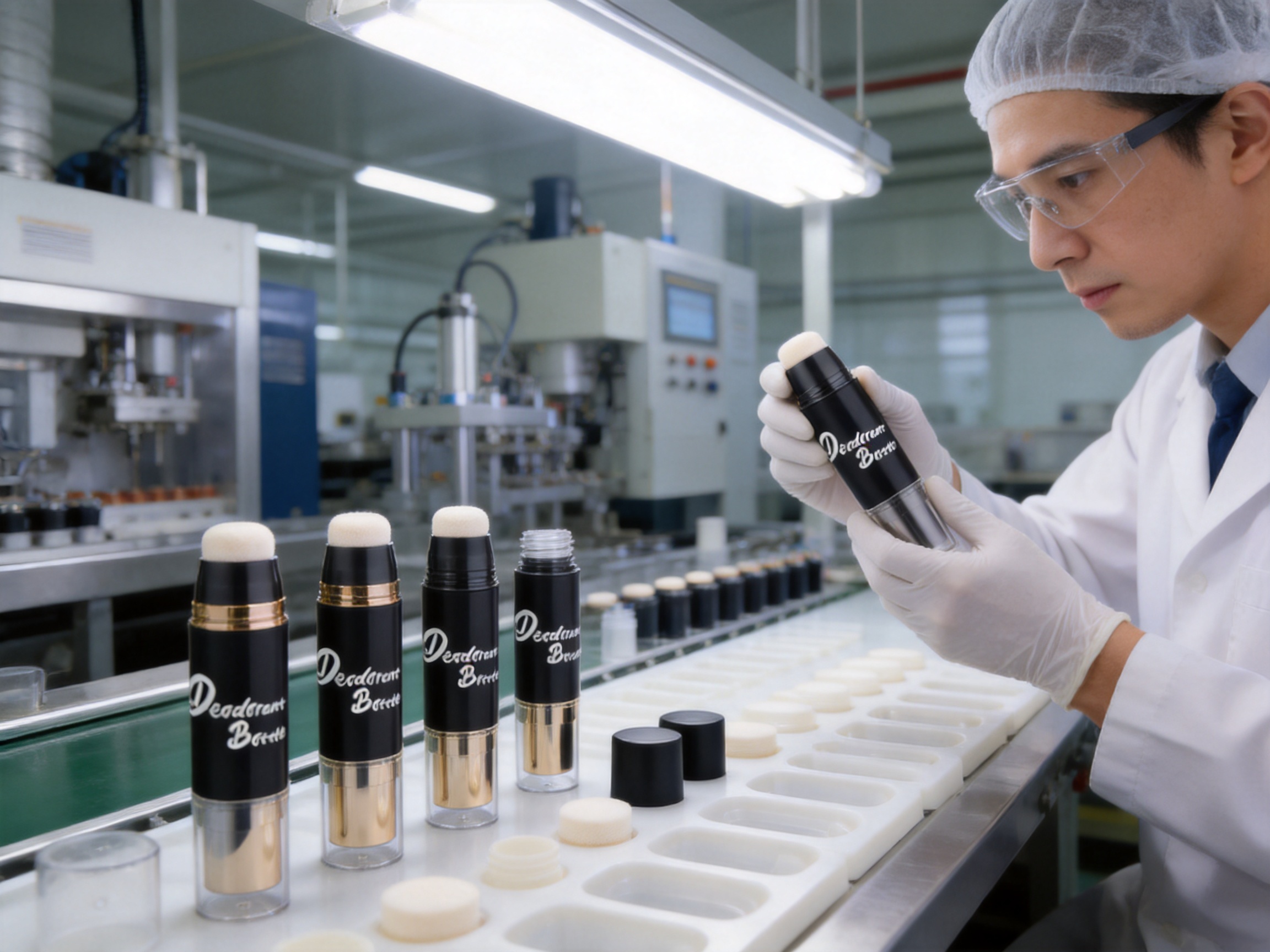
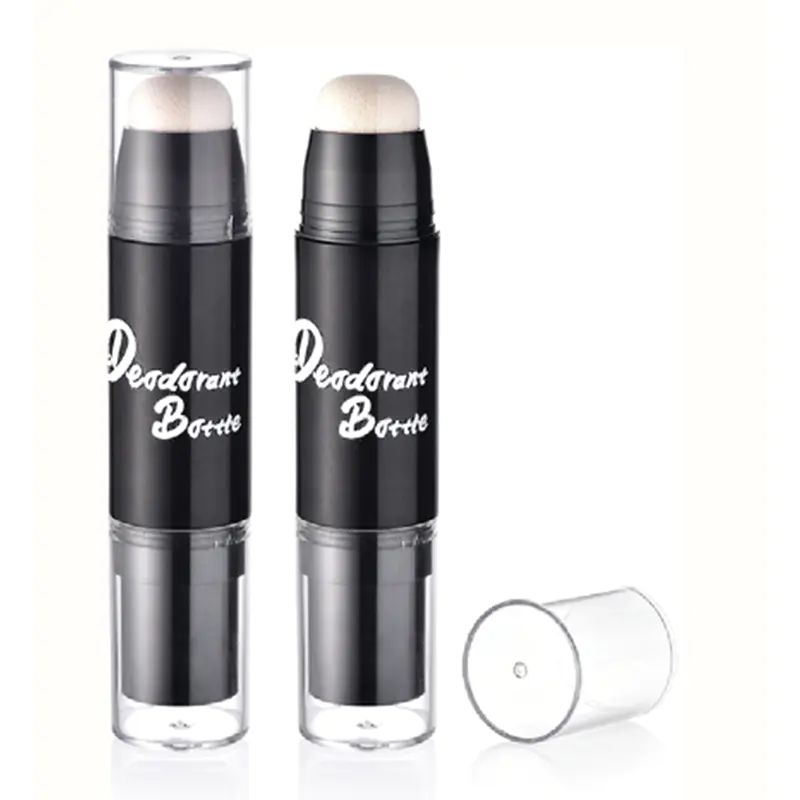
Choosing the right primary package is one of the most important decisions in the development of a foundation or blush product. Packaging must protect the formula, support clean and controlled dispensing, provide a pleasant application experience, and communicate the product’s positioning at the point of sale. The GY-DS11A twist-type sponge applicator bottle is designed to address these requirements with a compact 10-gram format, an integrated sponge head, and a practical twist-dispensing structure.
Unlike a conventional bottle that requires a separate pump, dropper, brush, or beauty sponge, this package combines product storage and application in one portable unit. The user can twist the base to move liquid foundation or blush toward the sponge head, then apply the product directly to the skin. This simplified format can reduce the number of separate accessories required during daily use and may make the product especially attractive for travel, handbags, quick touch-ups, and compact cosmetic collections.
The product is manufactured by GreenYard Tools Co., Ltd., a China-based personal care packaging manufacturer with experience in perfume sprayers, pump heads, caps, bottles, and daily chemical packaging solutions. The company supports packaging production through mold design, injection molding, automated assembly, and quality inspection. With reported daily production capacity of approximately one million units, it is positioned to serve both developing cosmetic brands and established customers that need stable, repeatable packaging supply.
This article examines the GY-DS11A in detail, including its structure, intended applications, user benefits, customization possibilities, manufacturing process, quality considerations, and commercial value for cosmetic brands.
GY-DS11A Twist Type Sponge Applicator Bottle For Foundation
1. Product Overview
The GY-DS11A is a twist-type sponge applicator bottle with an available capacity of 10 grams. Its design is intended for liquid foundation and blush, with the sponge head delivering the formula directly onto the skin. The package belongs to a compact cosmetic container category and can also be considered suitable for selected balm, cream, or other controlled-dispensing applications when the formula is compatible with the internal mechanism and sponge material.
The product’s main concept is straightforward: the formula is stored inside the container, while the lower twist mechanism helps control movement toward the applicator. The sponge head then spreads the product over the skin. This arrangement combines storage, metering, and application into a single package format.
Its 10-gram volume is particularly appropriate for products intended to be lightweight, portable, or offered in a smaller size. A compact format can be used for sample-sized products, travel editions, limited collections, professional makeup kits, seasonal launches, and products designed for consumers who prefer smaller quantities. It may also be suitable for color cosmetics that are used selectively, such as blush, highlighting products, tinted treatments, or localized complexion products.
Product feature |
Specification or application |
Model |
GY-DS11A |
Package type |
Twist-type sponge applicator bottle |
Available volume |
10 grams |
Primary application |
Liquid foundation and blush |
Applicator |
Integrated sponge head |
Dispensing method |
Twist-controlled delivery |
Customization options |
Screen printing, hot stamping, 3D printing, and other finishing methods |
Typical market positioning |
Portable, hygienic, convenient cosmetic packaging |
The compact construction gives brands flexibility when developing a product line. The same general packaging concept can be positioned as a practical daily-use item, a travel-friendly cosmetic, a touch-up product, or a small-format premium product with customized decoration.
2. Why the Sponge Applicator Format Matters
Traditional liquid foundation packaging often uses a glass bottle with a pump, a squeeze tube, or a bottle paired with a separate applicator. These formats can be effective, but they may require additional tools or steps. A user may need to dispense foundation onto the back of the hand, a palette, or a separate sponge before applying it to the face. That process can create additional product contact, extra cleanup, and more components to carry.
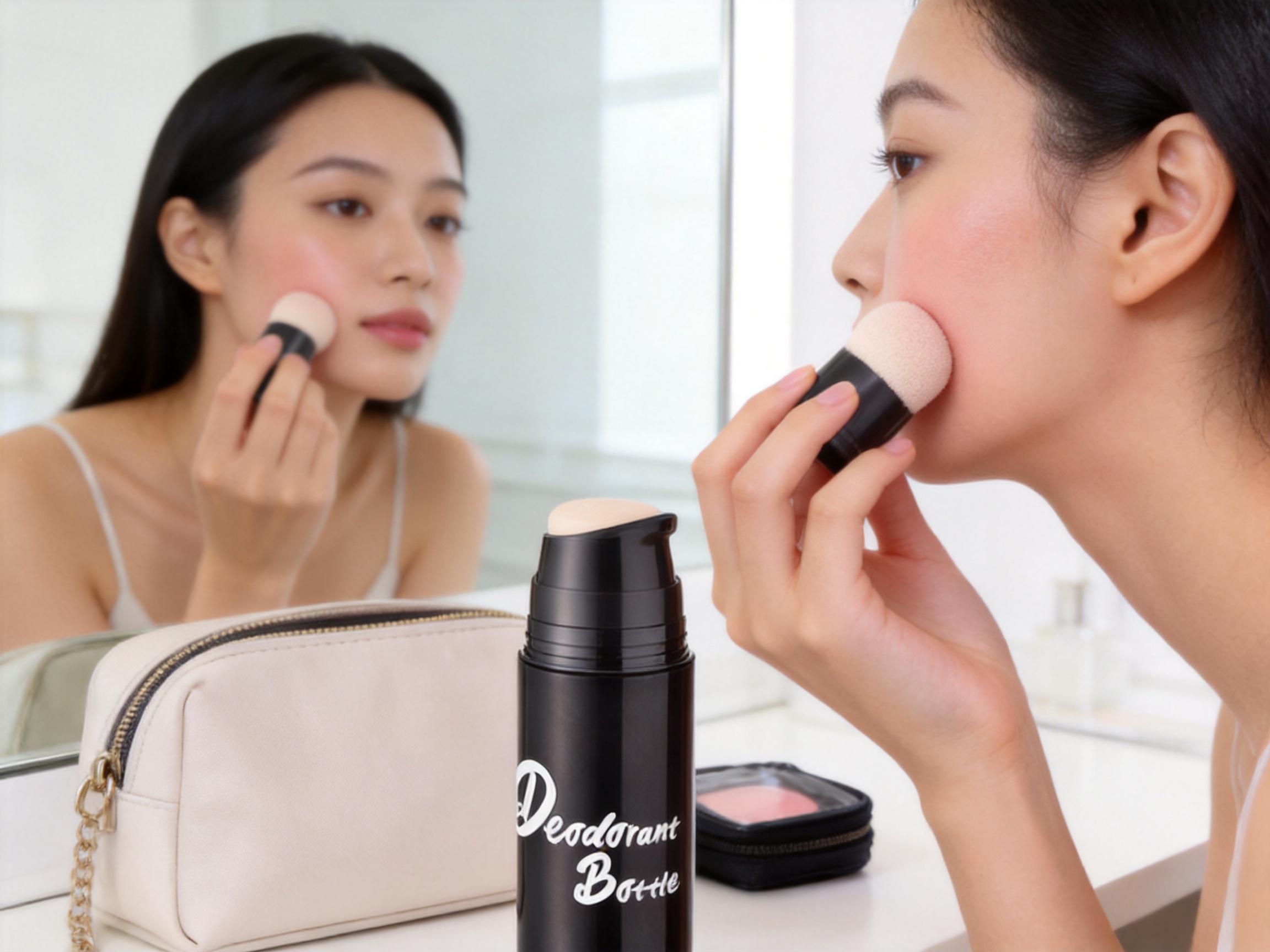
The GY-DS11A addresses this issue by placing the sponge applicator directly on the package. The product can be applied from the container without requiring a separate makeup sponge for basic use. This can simplify the consumer experience and make the product feel more intuitive, particularly for quick application or touch-up situations.
The sponge head may also help distribute the formula in a soft and controlled manner. Foundation and blush generally require blending rather than a single concentrated deposit. A sponge can support gradual spreading and localized application, which is useful when the consumer wants to build coverage or apply color to a specific area.
The direct-application format may be especially beneficial for modern cosmetic products that emphasize convenience. Consumers increasingly value packaging that is easy to understand, easy to carry, and efficient during busy routines. A compact twist package can support these expectations without the bulk associated with larger bottles and separate tools.
2.1 Direct application
The integrated sponge head allows the formula to be applied directly to the skin. This eliminates the need to pour or pump the product into another container before use. For foundation, the user can work in small areas and blend the formula across the face. For blush, the same format can be used for controlled placement on the cheeks, provided that the formula’s texture and color intensity are suitable for sponge delivery.
2.2 Portable construction
A 10-gram package is easy to carry in a cosmetic bag, handbag, or travel case. Its smaller format can be useful for consumers who do not want to carry a full-size foundation bottle. It can also serve brands that want to offer a mini version, trial format, or compact product for retail promotions.
2.3 Reduced accessory dependence
Because the applicator is integrated, the user does not necessarily need to carry a separate sponge or brush for basic application. This can reduce the number of components in the consumer’s cosmetic routine. It may also give the package a stronger functional identity than a standard bottle with a conventional cap.
2.4 Controlled product use
The twist mechanism is designed to support controlled product delivery. Controlled dispensing is important for complexion products because too much formula can lead to waste, uneven coverage, or a heavy finish. A twist-operated package allows the consumer to begin with a smaller amount and dispense more when required.
3. Advantages Compared with Conventional Cosmetic Packaging
Every package format has a suitable application range, and no single design is ideal for every formula. The value of the GY-DS11A lies in the way it combines several functions in a small package. Compared with a standard jar, it can provide a more direct application experience. Compared with a conventional bottle, it can reduce the need for a separate tool. Compared with some squeeze formats, it can offer a more structured and visually distinctive user experience.
3.1 Versus a conventional open jar
A cream jar requires the user to open the container and normally use a finger, spatula, brush, or separate applicator. This can expose the formula to repeated contact with hands and the surrounding environment. The GY-DS11A provides a closed container with a built-in applicator, which may support a cleaner and more controlled routine when used correctly.
The twist format can also provide a stronger sense of portability. A small jar may be easy to carry, but the consumer still needs to apply the product with a finger or separate tool. The sponge applicator brings the application step into the package itself.
3.2 Versus a standard pump bottle
A pump bottle can deliver a measured amount of foundation, but the product is generally dispensed onto another surface or tool. The GY-DS11A is designed to move the formula toward the sponge head, allowing immediate application. This can reduce the number of steps between dispensing and blending.
The compact size may also make it more suitable for travel or targeted use than a larger pump bottle. In addition, the integrated applicator can provide a stronger visual point of difference on retail shelves, online product pages, and promotional material.
3.3 Versus a dropper bottle
Dropper packaging is often associated with serums, skincare liquids, or highly fluid cosmetic products. It usually requires the user to dispense the formula onto the hand or another tool. For foundation and blush, direct application from a sponge may be more convenient because the user can begin blending immediately.
A sponge applicator can also help distribute a thicker or more emulsion-based formula, while a dropper is generally selected for formulas with specific flow characteristics. Final compatibility must always be confirmed through laboratory and packaging testing, but the applicator concept is well aligned with products that benefit from soft spreading and gradual build-up.
3.4 Versus a squeeze tube
A squeeze tube is lightweight and familiar, but it may dispense product quickly or unevenly if the user applies too much pressure. It also normally requires a separate applicator. The twist structure of the GY-DS11A is intended to provide a more deliberate delivery process and an integrated application surface.
3.5 Versus a traditional deodorant stick package
Although the product is listed within a deodorant stick bottle category, its sponge-head structure is specifically described for foundation and blush. A standard deodorant stick typically uses a solid stick elevator and a broad molded outlet, while this package uses an applicator head intended for liquid or semi-liquid cosmetic delivery. The classification reflects the compact twist-container family, but the product’s actual proposed use is complexion makeup and similar cosmetic products.
Comparison factor |
Standard pump bottle |
Open jar |
GY-DS11A sponge applicator bottle |
Built-in applicator |
Usually no |
No |
Yes |
Direct application |
Usually no |
Only with fingers or a separate tool |
Yes |
Portability |
Depends on size |
Generally good, but may need a tool |
Strong suitability due to compact 10-gram format |
Dispensing control |
Controlled by pump stroke |
Controlled manually |
Controlled through twisting and application |
Product contact during use |
Often through a separate tool or hand |
Often direct hand or tool contact |
Through the integrated sponge head |
Brand differentiation |
Moderate |
Moderate |
High potential through applicator design and decoration |
4. Applications in Foundation and Blush
The product information identifies foundation and blush as the primary uses. These applications share an important requirement: the product must be distributed evenly and blended comfortably on the skin. The sponge head is intended to deliver a smooth application and can help users work with small quantities at a time.
4.1 Liquid foundation
For liquid foundation, the package can support a direct application routine. The user may twist the base gradually, move a small quantity toward the sponge, and apply the product to the forehead, cheeks, nose, or chin. The sponge can then be used to spread and blend the formula.
This type of format may be suitable for lightweight foundation, sheer-to-medium coverage products, tinted complexion formulas, and portable touch-up foundations. Formula developers should evaluate viscosity, flow behavior, drying speed, pigment load, and compatibility with the sponge. A formula that is too thick may not move efficiently through the dispensing path, while a formula that is too fluid may deliver more quickly than intended.
4.2 Liquid blush
Blush often requires precision because a small amount of pigment can create a visible result. An integrated sponge can help place the product on the cheeks and blend the color across a defined area. A twist-controlled delivery system may allow the user to start with a limited amount and build intensity gradually.
For highly pigmented blush, controlled dispensing is particularly valuable. The brand may also choose a sponge material and surface texture that supports a soft finish rather than a concentrated spot. Testing should include different shades because pigments, oils, waxes, and emulsion systems can affect flow and sponge interaction.
4.3 Other possible cosmetic uses
The product description also references lip balm and blush in some application notes. This indicates that the compact format may be considered for additional cosmetic products, subject to formula compatibility and technical validation. Potential applications could include tinted balm, color corrector, cream highlighter, localized treatment, or other products that benefit from portable controlled application.
However, brands should not assume that one package is automatically suitable for every formula. Each intended use requires compatibility checks, filling trials, leakage testing, stability testing, and consumer-use evaluation. The package should be selected according to the formula’s viscosity, solvent system, pigment characteristics, preservation requirements, and intended shelf life.
5. User Experience and Daily Convenience
Packaging is not only a technical container. It is part of the product experience. The GY-DS11A creates a user journey that begins with twisting, continues with direct sponge application, and ends with recapping the product for storage. A simple sequence can improve the perceived convenience of the cosmetic and help distinguish it from products that require multiple tools.
The compact design is suitable for consumers who frequently apply makeup outside the home. A user may keep the product in a purse, desk drawer, travel bag, or professional makeup kit. Since the applicator is integrated, there is less need to carry a separate sponge for occasional touch-ups.
The format may also appeal to consumers who prefer controlled, targeted application. Instead of dispensing a large quantity onto a palette, the user can work with a smaller amount and build coverage. This approach can help reduce unnecessary product waste, although actual performance depends on the formula, the user’s technique, and the efficiency of the dispensing mechanism.
5.1 Application comfort
The sponge head is described as delivering smooth application on the skin. A comfortable sponge should feel soft enough for repeated use while maintaining enough structure to move the product effectively. The head should also retain its shape during normal application and should not shed particles or absorb an excessive amount of formula.
Application comfort should be verified through real-use testing with different skin types, foundation textures, and application pressures. Brands may conduct evaluations for streaking, patchiness, blending time, coverage uniformity, and the sensation of the sponge against the skin.
5.2 Hygiene considerations
An integrated applicator can reduce the number of separate tools handled by the consumer, but the sponge remains a component that contacts the skin. Clear use instructions are therefore important. The product should be capped after use, stored in a clean and dry environment, and handled according to the brand’s recommended routine.
Manufacturers and brands should evaluate the interaction between the sponge, formula, air exposure, and repeated use. Packaging hygiene testing may include microbial risk assessment, compatibility studies, closure evaluation, and simulated consumer-use testing. A clean-looking design can support consumer confidence, but technical testing is required to substantiate performance and shelf-life expectations.
5.3 Travel suitability
Compact packaging is often associated with travel, but travel performance depends on more than size. The container should be evaluated for leakage, cap security, pressure changes, vibration, impact, and repeated opening and closing. A package that remains clean and closed during transport can provide meaningful value for consumers and reduce the risk of cosmetic products contaminating other belongings.
6. Customization and Brand Presentation
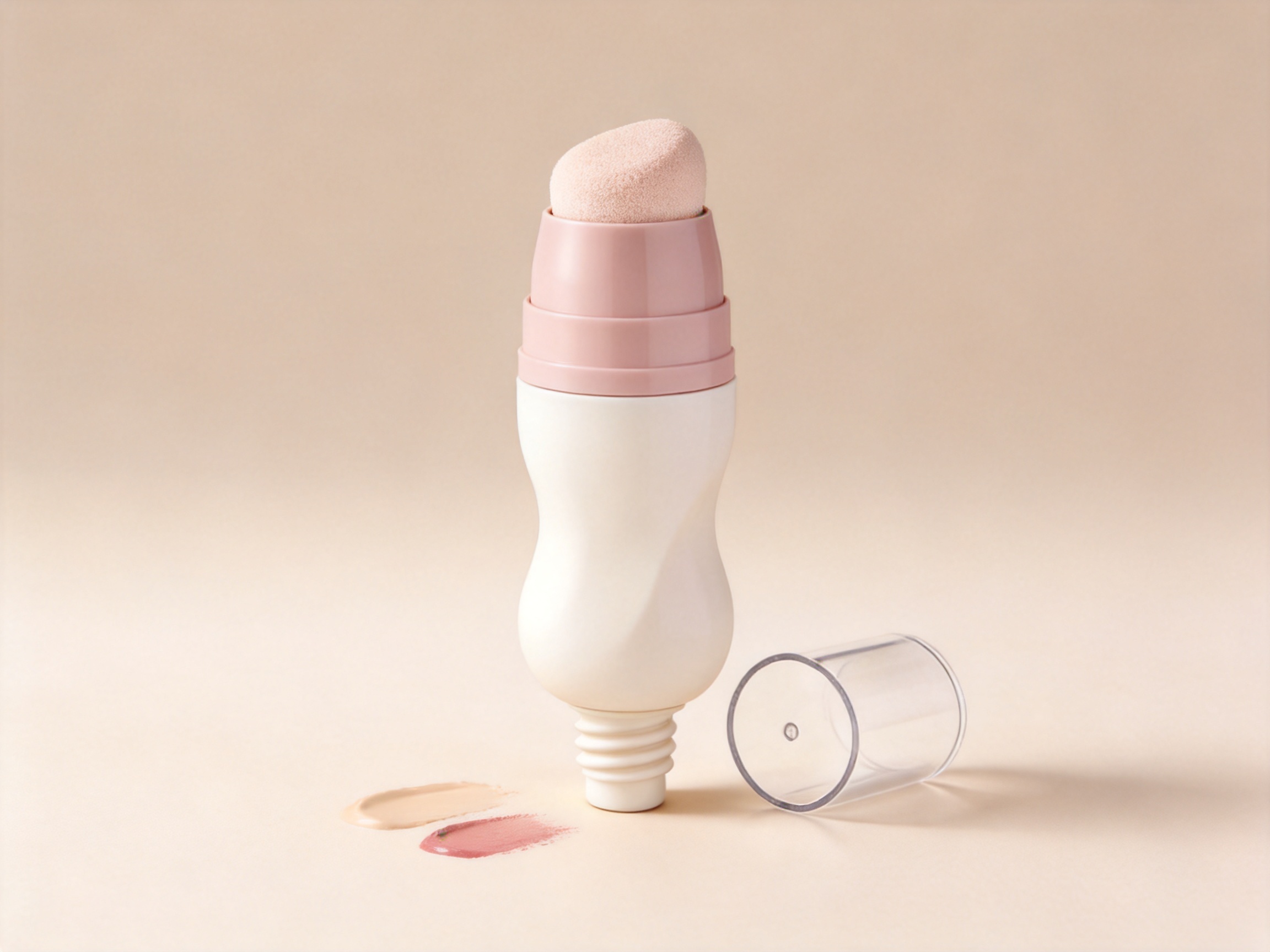
Cosmetic packaging must perform technically while also expressing the identity of the product. The GY-DS11A offers several surface-finishing possibilities, including screen printing, hot stamping, and 3D printing. These options allow brands to customize the appearance according to their product positioning, target consumer, and retail channel.
6.1 Screen printing
Screen printing can be used for logos, product names, shade information, usage instructions, or decorative patterns. It is a practical option for clear, recognizable graphics and can be adapted to different color schemes. Multiple ink colors may be considered depending on the artwork, surface material, and production requirements.
For a compact container, print clarity is especially important because the available decoration area is limited. Typography should remain legible at a small scale, while key information should be arranged so that it remains visible during normal handling.
6.2 Hot stamping
Hot stamping can create a more decorative or premium appearance through metallic or specialty foil effects. Gold, silver, rose gold, and other visual treatments may be considered for products positioned in prestige, gift, or limited-edition categories. Hot stamping can also be combined with a simple base color to create contrast and visual hierarchy.
6.3 Three-dimensional printing
Three-dimensional printing effects can provide raised or tactile decoration. This option may help a package stand out in online images and in physical retail displays. It can be considered for logos, patterns, or selected graphic elements that benefit from a dimensional appearance.
6.4 Color and material coordination
Brands can coordinate the body, cap, twist component, and sponge head area with the visual identity of the formula. Foundation collections may use shade families, while blush collections may use color-coded packaging. Neutral colors can create a clean and clinical impression, whereas vivid colors may support a youthful or trend-oriented product line.
Decoration should be evaluated for rub resistance, adhesion, chemical resistance, and appearance after repeated handling. The package may be exposed to oils, alcohol-based products, makeup residue, and cleaning materials during use. Testing helps ensure that the selected finish remains attractive throughout the intended product life.
7. Manufacturing Capabilities Supporting the Product
The strength of a packaging product depends heavily on the manufacturer’s ability to control design, tooling, molding, assembly, and inspection as an integrated process. GreenYard Tools Co., Ltd. describes itself as a high-end packaging material manufacturer specializing in spray product manufacturing for 16 years. Its broader product range includes perfume sprayers, pump heads, caps, bottles, and daily chemical packaging solutions.
This experience is relevant to the GY-DS11A because compact cosmetic packaging often requires multiple parts to work together accurately. The bottle body, twist structure, applicator component, cap, and internal dispensing elements must be compatible in dimensions and function. A manufacturer with capabilities across mold design, injection molding, assembly, and inspection can coordinate these stages more efficiently than a supplier that relies entirely on unrelated external processes.
7.1 Mold design
Mold design is the foundation of consistent plastic component production. For a twist-type package, tooling must account for the shape of the container, the fit of the cap, the movement of the twist mechanism, and the interfaces between individual components. Small dimensional differences can affect assembly force, rotation feel, sealing, and overall appearance.
Experienced mold engineers can review the product structure, identify areas that may create molding difficulty, and recommend improvements before mass production. Proper mold design can support stable wall thickness, clean surfaces, reliable part release, and repeatable dimensions.
7.2 Injection molding
Injection molding allows plastic packaging components to be produced at scale with consistent shape and surface quality. The process requires control of material selection, melt temperature, injection pressure, cooling conditions, cycle time, and mold maintenance. These factors can influence the final appearance and functional performance of the package.
For a compact cosmetic container, molding accuracy affects cap fit, component alignment, print positioning, and the smooth operation of the twist mechanism. Stable molding conditions also help reduce defects such as short shots, flash, sink marks, warpage, discoloration, and surface imperfections.
7.3 Automated assembly
Automated assembly can improve productivity and consistency when the package contains several parts. It can help control component orientation, insertion depth, assembly force, and production speed. Automation may also reduce variation caused by repetitive manual handling.
For the GY-DS11A, assembly control is important because the applicator and twist components must be positioned correctly. A package that looks attractive but does not dispense consistently will not provide a satisfactory consumer experience. Automated equipment, combined with appropriate operator oversight, can help maintain repeatability across large production runs.
7.4 Quality inspection
Quality inspection is necessary at incoming material, in-process, and finished-product stages. Inspection may include visual checks, dimensional measurements, component fit, rotation behavior, dispensing performance, leakage evaluation, and decoration quality.
The manufacturer’s reported daily capacity of one million units indicates that it is equipped for large-volume production. Capacity alone does not guarantee quality, so production planning should also include documented specifications, approved samples, quality standards, sampling plans, and corrective-action procedures. These systems help ensure that high output is supported by stable manufacturing control.
Manufacturing stage |
Primary purpose |
Relevance to the applicator bottle |
Product and mold design |
Develop accurate tooling and component geometry |
Supports cap fit, twist movement, and component alignment |
Injection molding |
Produce consistent plastic parts |
Influences appearance, strength, and dimensional stability |
Automated assembly |
Combine components efficiently |
Helps maintain repeatable insertion and dispensing performance |
Surface finishing |
Add brand graphics and decorative effects |
Enables screen printing, hot stamping, and 3D decoration |
Quality inspection |
Identify functional and cosmetic defects |
Verifies leakage resistance, fit, appearance, and operation |
8. Product Development from Sample to Mass Production
Brands considering the GY-DS11A should treat packaging development as a staged process. The first stage is usually application definition. The brand should identify the formula type, target fill quantity, shade range, expected shelf life, intended market, decoration requirements, and consumer-use scenario.
The next stage is sample evaluation. Samples should be tested with the actual formula rather than only with water or a basic substitute. The brand should assess whether the formula moves through the package, whether the sponge applies the product evenly, whether the twist mechanism is comfortable, and whether the package remains clean during use.
Compatibility testing is particularly important for color cosmetics. Pigments, oils, solvents, preservatives, fragrances, and other ingredients may interact with plastic components, seals, adhesives, coatings, or sponge materials. Testing should look for swelling, cracking, color change, odor transfer, leakage, clogging, separation, and changes in dispensing performance.
After the initial sample stage, the design may be refined. Adjustments can include changes to the cap, the twist resistance, the sponge specification, the internal pathway, the decorative area, or the filling process. An approved final sample should then be documented as a reference for production.
8.1 Formula compatibility
The 10-gram container should be paired with a formula whose flow behavior is suitable for the dispensing system. Foundation and blush can vary widely in viscosity and pigment concentration. A light fluid, a creamy emulsion, and a highly pigmented treatment may all behave differently inside the same package.
Compatibility studies should include storage at different temperatures, repeated dispensing cycles, and long-term observation. The product should be evaluated after exposure to heat, cold, humidity, and normal handling. These studies help determine whether the package and formula continue to function together over the intended shelf life.
8.2 Filling and production validation
Filling equipment must be compatible with the container’s opening and internal structure. The filling process should achieve the specified quantity while minimizing air entrapment, contamination, and external residue. After filling, the package should be assembled and inspected according to documented procedures.
Production validation can include a pilot run before full-scale manufacturing. A pilot run helps reveal issues involving filling speed, component supply, assembly alignment, decoration positioning, and final inspection. It also gives the brand an opportunity to confirm that the production appearance matches the approved sample.
8.3 Packaging and transportation
Finished units should be protected during storage and transportation. Secondary packaging should prevent excessive friction, impact, dust exposure, and deformation. For decorated cosmetic packaging, dividers or protective materials may be required to reduce rubbing between units.
Transportation testing may simulate vibration, drops, stacking, and temperature changes. The goal is to confirm that the cap remains secure, the decoration remains intact, and the twist mechanism does not become damaged before the product reaches the consumer.
9. Sustainability and Material Efficiency Considerations
Compact packaging can support material efficiency by using a smaller overall format for a targeted amount of cosmetic product. A 10-gram package may be appropriate for products where portability and controlled use are more important than large-volume storage. Smaller packaging can also allow brands to launch trial sizes and reduce the amount of unused formula remaining after a consumer’s preferred shade or product type changes.
However, sustainability should be evaluated across the entire package system rather than by size alone. The number of components, material choices, decoration methods, filling efficiency, transport requirements, and end-of-life options all influence environmental performance. Brands should review the package structure with the manufacturer and assess opportunities to reduce unnecessary components or optimize material use without compromising safety and function.
Accurate dispensing may also contribute to responsible product use by helping consumers apply smaller quantities. This does not automatically establish a sustainability claim, but it can be a practical benefit when the dispensing performance is consistent and the consumer understands how to use the package.
10. Commercial Value for Cosmetic Brands
The GY-DS11A offers several commercial possibilities. A brand can use the package to create a distinctive product presentation without developing an entirely new container from the beginning. The integrated sponge gives the product a functional story that can be communicated through packaging copy, demonstrations, online video, and retail displays.
The compact size may support multiple price points and product strategies. It could be used for an entry-level mini product, a premium portable edition, a travel assortment, a sample program, or a limited seasonal release. It may also be useful for shade collections, where each color is packaged in a small, coordinated unit.
The format can be attractive for direct-to-consumer brands because its application method is easy to demonstrate visually. A short product video can show the twisting action, sponge delivery, and blending process. This helps consumers understand the product before purchase and may reduce confusion about how the package works.
10.1 Retail differentiation
In a crowded cosmetic market, an unusual but practical package can help a product attract attention. Standard bottles are familiar, but they may look similar across competing products. A built-in sponge applicator creates a recognizable silhouette and offers a clear functional distinction.
Decoration options further support differentiation. Screen printing can communicate a clean, accessible design, while hot stamping or three-dimensional printing can support a more premium presentation. Brands can select an appearance that matches their formula positioning without changing the basic dispensing concept.
10.2 Product line extension
Once a brand validates one formula with the package, the same platform may support a coordinated line of compatible products. Possible extensions include multiple foundation shades, blush colors, complexion correctors, or portable treatment products. Each extension should undergo its own compatibility and performance testing, but a common package family can create visual consistency across the range.
10.3 Supply capability
A reported production capacity of one million units per day can be valuable for brands that need larger quantities or expect rapid growth. High-volume production can help support larger launches, promotional campaigns, and repeat orders. The company’s experience in automated assembly and quality inspection may also help customers move from small development batches toward stable mass production.
Before placing a commercial order, brands should confirm minimum order quantities, lead times, material specifications, decoration capabilities, sample approval procedures, quality standards, packaging configuration, and export requirements. Clear technical communication is essential for avoiding misunderstandings during production.
11. Quality and Performance Evaluation
A professional evaluation of the GY-DS11A should cover both the package and the filled product. A visually attractive sample is not enough. The complete system must deliver reliable performance from filling through consumer use.
11.1 Visual inspection
Visual inspection should examine color uniformity, molding quality, flash, scratches, dents, contamination, print alignment, foil adhesion, and surface finish. The cap and body should have a consistent appearance, and the sponge head should be free from visible defects.
11.2 Dimensional inspection
Critical dimensions should be measured against approved specifications. These may include the container diameter, height, cap dimensions, component interfaces, opening dimensions, and twist-related features. Dimensional consistency helps support reliable assembly and consumer handling.
11.3 Dispensing evaluation
Dispensing tests should determine whether the product moves toward the sponge at an appropriate rate. Evaluation can include the number of twists required to initiate delivery, the amount released per operating cycle, the uniformity of delivery, and the possibility of over-dispensing.
Testing should be performed with the actual formula and repeated after storage. A package that works well when new may behave differently after exposure to heat, cold, or extended contact with the formula. Repeated-use testing can help identify clogging, drying, leakage, or changes in twist resistance.
11.4 Closure and leakage testing
The closed package should be tested under conditions that simulate transportation and daily use. This can include inversion, vibration, pressure changes, impact, and repeated opening and closing. The purpose is to confirm that the product remains contained and that the applicator area is protected when the cap is in place.
11.5 Consumer-use testing
Consumer-use testing can provide information that laboratory measurements may not reveal. Participants can evaluate ease of twisting, application smoothness, blending, grip comfort, cleaning expectations, cap handling, and overall convenience. Feedback can help the brand determine whether the package instructions are clear and whether the product meets its intended user profile.
12. Instructions for Responsible Use
Brands should provide clear use instructions with every cosmetic product using this type of package. The user should be advised to remove any protective component, twist the base gradually, and avoid excessive force. The formula should be applied in small amounts and blended according to the product’s recommended technique.
The sponge head should not be shared between users. The cap should be replaced after each use, and the package should be stored away from excessive heat and direct sunlight. If the product develops an unusual odor, visible contamination, or a significant change in texture, the consumer should follow the brand’s safety guidance.
Instructions should also explain that the sponge is part of the dispensing system. Consumers should not attempt to remove it unless the product documentation specifically allows removal. Unapproved modification could affect leakage resistance, hygiene, and dispensing performance.
13. Manufacturer Strengths and Service Potential
GreenYard Tools Co., Ltd. presents itself as a manufacturer focused on personal care packaging and spray-related products. Its portfolio includes perfume sprayers, perfume pump heads, lotion pumps, caps, bottles, and other daily chemical packaging solutions. This product range suggests experience with the component families commonly used in beauty and personal care packaging.
The company’s stated 16 years of spray product manufacturing experience is relevant to customers seeking a supplier familiar with precision components, small moving parts, closure systems, and high-volume production. Although the GY-DS11A is a sponge applicator bottle rather than a conventional spray package, the same manufacturing disciplines—tooling accuracy, injection molding control, assembly stability, and inspection—are important to its performance.
The company also identifies mold design, injection molding, automated assembly, and quality inspection as core capabilities. Maintaining these activities within an organized production system can help improve communication between engineering, manufacturing, and quality teams. It may also support faster adjustment when a customer requires a customized color, surface treatment, label area, or component specification.
A dedicated design team can contribute to product innovation by helping customers adapt an existing package platform to a particular market or formula. Customization may involve decoration, appearance, structural details, or application positioning. The exact scope of customization should be confirmed during technical discussion and sample development.
For international customers, supplier evaluation should include factory communication, documentation, production records, sample consistency, inspection procedures, logistics coordination, and after-sales support. A manufacturer’s ability to provide clear specifications and timely responses is as important as production capacity when launching a cosmetic product.
14. Recommended Buyer Checklist
Before selecting the GY-DS11A for a commercial foundation or blush product, buyers should review the following questions:
First, is the formula compatible with the package, the twist pathway, and the sponge material? Compatibility should be tested using the final formula, including pigments, fragrance, oils, preservatives, and other functional ingredients.
Second, does the 10-gram volume match the intended product positioning? The size may be excellent for travel, trials, touch-ups, and compact cosmetic collections, but a larger consumer product may require another format.
Third, does the dispensing performance remain stable throughout the expected shelf life? Testing should include storage, repeated use, and different environmental conditions.
Fourth, does the sponge provide the desired application result? The brand should assess softness, absorption, blendability, coverage control, and cleaning expectations.
Fifth, is the cap sufficiently secure for transport and everyday carrying? Leakage and impact tests should be included before approval.
Sixth, which decoration method best supports the brand identity? Screen printing, hot stamping, and 3D printing have different visual and technical characteristics.
Seventh, can the supplier meet the required production volume and delivery schedule? Capacity, minimum order quantity, tooling lead time, decoration lead time, and shipping arrangements should be discussed in advance.
Eighth, are inspection standards clearly documented? The approved sample, acceptable quality limits, defect classifications, and testing procedures should be agreed upon before mass production.
15. Frequently Asked Questions
Q1: What is the GY-DS11A designed for?
The GY-DS11A is a twist-type sponge applicator bottle designed primarily for liquid foundation and blush. Its integrated sponge head is intended to deliver and spread the formula directly on the skin.
Q2: What is the available capacity?
The listed available volume is 10 grams. This compact capacity is suitable for travel products, sample formats, touch-up cosmetics, small collections, and portable daily-use products.
Q3: How does the dispensing system work?
The user twists the base to help move the formula toward the sponge applicator. The product can then be applied directly to the skin and blended through the sponge head.
Q4: Can it be used for products other than foundation?
The product information identifies foundation and blush as the main uses and also references lip balm and similar cosmetic applications in some descriptions. Other uses may be possible, but each formula must be tested for viscosity, compatibility, flow, stability, and sponge performance before commercial approval.
Q5: Does the package require a separate makeup sponge?
The integrated sponge head is intended to provide direct application, so a separate sponge is not necessarily required for basic use. Consumers may still choose to use another tool for personal preference or for specific blending techniques.
Q6: What customization options are available?
Available surface-finishing options include screen printing, hot stamping, and 3D printing. Brands should confirm artwork requirements, color limitations, minimum quantities, durability testing, and production lead times with the manufacturer.
Q7: Is the package suitable for travel?
The compact 10-gram size is well suited to portable use. However, the complete filled package should undergo leakage, impact, vibration, and transportation testing before it is promoted specifically for travel.
Q8: How should the formula be tested with the package?
Testing should use the final commercial formula and include dispensing trials, storage stability, repeated-use evaluation, leakage checks, sponge performance, odor assessment, and visual inspection. Testing at different temperatures can help identify long-term compatibility issues.
Q9: What manufacturing capabilities does the supplier provide?
GreenYard Tools Co., Ltd. describes capabilities in mold design, injection molding, automated assembly, and quality inspection. The company also produces perfume sprayers, pump heads, caps, bottles, and other personal care packaging products.
Q10: What makes this format different from a conventional bottle?
The key difference is the integrated sponge applicator. Instead of dispensing the foundation or blush onto a hand, palette, or separate tool, the package is designed to bring the product directly to the application surface.
Q11: Can the package be used for highly pigmented blush?
It may be possible, but the formula and sponge must be evaluated carefully. Highly pigmented products require controlled dispensing and effective blending. A development trial should confirm that the product does not clog, over-release, stain the sponge excessively, or apply unevenly.
Q12: What information should a buyer request before ordering?
Buyers should request technical specifications, sample units, decoration samples, material information, filling guidance, compatibility-testing recommendations, production lead times, minimum order quantities, packaging details, and quality inspection standards.
16. Conclusion
The GY-DS11A twist-type sponge applicator bottle provides a compact and functional packaging solution for liquid foundation and blush. Its 10-gram size supports portability, while the integrated sponge head simplifies the path from dispensing to application. The twist mechanism is intended to help users control product delivery, and the direct-application format can reduce reliance on separate makeup tools.
Compared with conventional jars, pump bottles, dropper containers, and squeeze tubes, the package offers a distinctive combination of storage, controlled delivery, and application. This combination may help cosmetic brands create more convenient products and develop a stronger point of difference in a competitive market.
The package also provides customization potential through screen printing, hot stamping, 3D printing, and other surface-finishing methods. These options allow brands to adapt the appearance for different product categories, price levels, target consumers, and retail environments.
Its commercial success depends on more than appearance. Formula compatibility, sponge performance, leakage resistance, filling accuracy, shelf-life stability, transportation durability, and consumer-use testing should all be addressed during development. When these factors are managed properly, the GY-DS11A can support a practical and visually distinctive cosmetic product.
GreenYard Tools Co., Ltd.’s reported experience in personal care packaging, mold design, injection molding, automated assembly, and quality inspection provides a manufacturing foundation for customers seeking scalable production. Its broad product portfolio and reported high daily capacity may also support brands that need packaging for multiple personal care categories.
For brands seeking a portable foundation or blush package with an integrated applicator, the GY-DS11A represents a useful platform for product innovation. Its compact structure, direct sponge application, customization options, and manufacturing support make it suitable for travel cosmetics, small-format launches, touch-up products, and modern beauty collections.
References
1. Product specification materials for the GY-DS11A twist-type sponge applicator bottle, including stated volume, applications, and finishing options.
2. Manufacturer information concerning personal care packaging production, mold design, injection molding, automated assembly, and quality inspection.
3. Cosmetic packaging development practices covering formula compatibility, dispensing performance, leakage resistance, stability testing, and consumer-use evaluation.
4. General quality-control principles for injection-molded cosmetic packaging components and assembled personal care containers.
5. General packaging design principles for portable cosmetics, integrated applicators, surface decoration, and product-line presentation.
6. General technical considerations for foundation and blush formulations, including viscosity, pigment concentration, flow behavior, and sponge application.
Product: GY-DS11A Twist Type Sponge Applicator Bottle For Foundation

-
Roll On Bottles: Types, Refill Guide, and Packaging Buying Tips for Your Brand
The first sample rolled smoothly, the second clicked, and the third leaked after ten presses. Three...
-
What Makes a Good Deodorant Stick Bottle for Brands?
A deodorant stick bottle is a twist-up or push-up dispensing container designed to hold and advance...
-
Crimp Pumps Demystified: Choosing the Right Type and Material for Every Cosmetic Formula
Walk into any cosmetic filling facility and you will find crimp pumps on everything from a delicate ...
-
Continuous Mist Bottle Buying Guide: Pre-Compression Pumps and Mist Specs
A buyer presses the trigger on a continuous mist bottle and holds it: the mist runs unbroken for se...
Copyright © GreenYard Tools Co.,ltd. All Rights Reserved.
Personal Care Packaging Manufacturer Custom Perfume Sprayers Factory