
-
About Us
Why Choose Us?The company possesses advanced capabilities in mold design, injection molding, and automated assembly, supported by a professional quality inspection team to ensure product reliability. A dedicated design team continuously drives product innovation, providing customers with high-quality spray solutions.
 Coming From China, Marketing To The World.
 -
Products
-
News
 English
 Français
 русский
 Español
Compact 4g, 6g, 8g, and 10g Deodorant Stick Bottle for Blush and Highlighter Packaging
Content
- 1 Product Overview
- 2 Key Product Specifications
- 3 Why Stick Packaging Works for Blush and Highlighter
- 4 Capacity Options and Their Commercial Value
- 5 Advantages Over Conventional Cosmetic Containers
- 6 Advantages Over Competitor Packaging Options
- 7 User Experience and Consumer Appeal
- 8 Manufacturing Strength Behind the Product
- 9 Advanced Mold Design and Product Consistency
- 10 Injection Molding Quality for Cosmetic Packaging
- 11 Automated Assembly and Production Efficiency
- 12 Quality Inspection and Reliability
- 13 Applications in the Beauty Market
- 14 Branding and Customization Potential
- 15 Supply Chain Benefits for Cosmetic Brands
- 16 Sustainability and Practical Material Considerations
- 17 How the Package Supports Product Launch Strategy
- 18 Recommended Product Development Considerations
- 19 Q&A Section
- 19.1 What products is this deodorant stick bottle suitable for?
- 19.2 What capacities are available?
- 19.3 Why is stick packaging useful for blush and highlighter?
- 19.4 How does this package compare with jars?
- 19.5 How does the package help cosmetic brands compete?
- 19.6 What manufacturing strengths support this product?
- 19.7 Why is mold design important for a small stick bottle?
- 19.8 Can this package be used for promotional cosmetic sets?
- 19.9 What should brands test before choosing this package?
- 19.10 Why choose a manufacturer with high production capacity?
- 20 Conclusion
- 21 References
- 22 Product: GY-DS09 4gram/6gram/8gram/10gram Deodorant Stick Bottle
Modern beauty packaging must do more than hold a formula. It must protect the product, support convenient application, match the visual identity of a cosmetics line, and perform consistently through filling, storage, transport, retail display, and everyday consumer use. The 4gram, 6gram, 8gram, and 10gram deodorant stick bottle is designed for this exact packaging need: a compact, portable, and practical stick-format container suitable for blush, highlighter, and similar solid or semi-solid face makeup products.
This packaging format combines the familiar convenience of a deodorant stick bottle with the growing demand for on-the-go makeup. For cosmetic brands developing cream blush, shimmer stick, facial highlighter, contour stick, balm-style color cosmetics, trial-size cosmetics, travel-size products, or promotional beauty kits, a small-capacity stick bottle offers excellent usability and strong commercial flexibility. The available 4g, 6g, 8g, and 10g capacities allow brands to choose a size that matches their formula, target audience, pricing strategy, and distribution channel.
Compared with many conventional cosmetic containers, such as wide-mouth jars, pan compacts, or simple tube packaging, this stick bottle structure offers several important advantages. It reduces direct finger contact with the formula, supports more hygienic product use, improves portability, and allows targeted application. Its compact body can be carried in handbags, travel pouches, makeup kits, and retail sample packs. For face makeup products that require quick use during daily routines, travel, office touch-ups, or professional makeup work, this packaging style can improve the consumer experience while helping brands present their products in a clean and modern way.
The product is especially suitable for blush and facial highlighter because these formulas are often applied to specific areas of the face. A stick package helps consumers apply product directly to the cheeks, cheekbones, brow bone, nose bridge, or other highlight areas. Instead of scooping cream from a jar or using a separate applicator, the user can twist or push the product upward depending on the package structure, apply it directly, and blend with fingers, a sponge, or a brush. This simple usage pattern aligns with current beauty market trends: fast routines, portable cosmetics, multi-purpose makeup, and packaging that supports clean beauty habits.
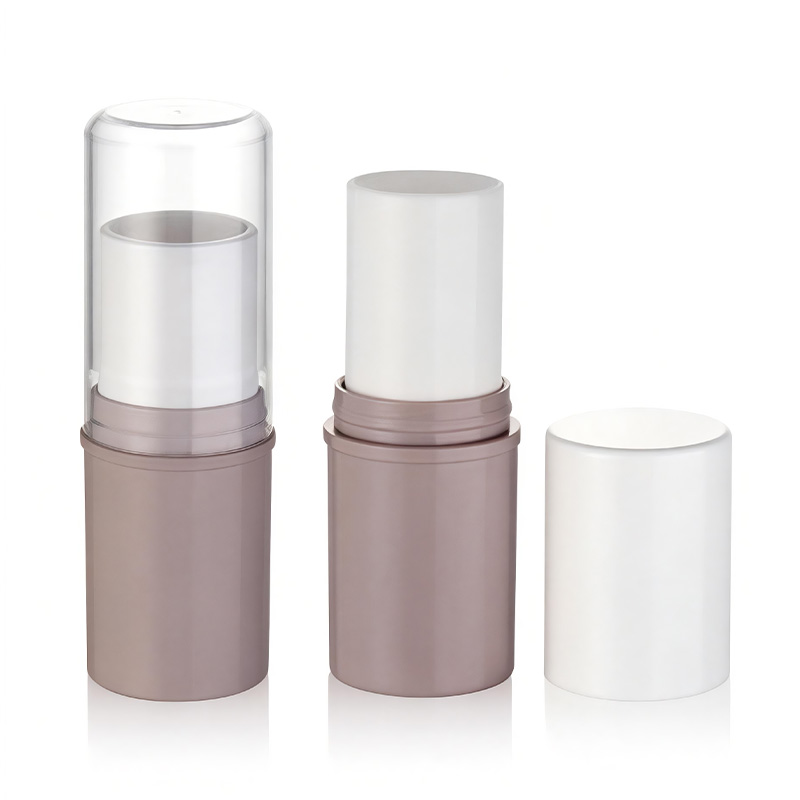
GY-DS09 4gram/6gram/8gram/10gram Deodorant Stick Bottle
Product Overview
The 4g, 6g, 8g, and 10g deodorant stick bottle is a compact cosmetic packaging solution developed for small-format solid and semi-solid products. While the product belongs to the deodorant stick bottle category, its application extends naturally into color cosmetics and facial care packaging. Its listed usage includes blush, highlighter, and similar cosmetic products, making it a versatile option for beauty brands that require a neat and convenient package for stick-based formulas.
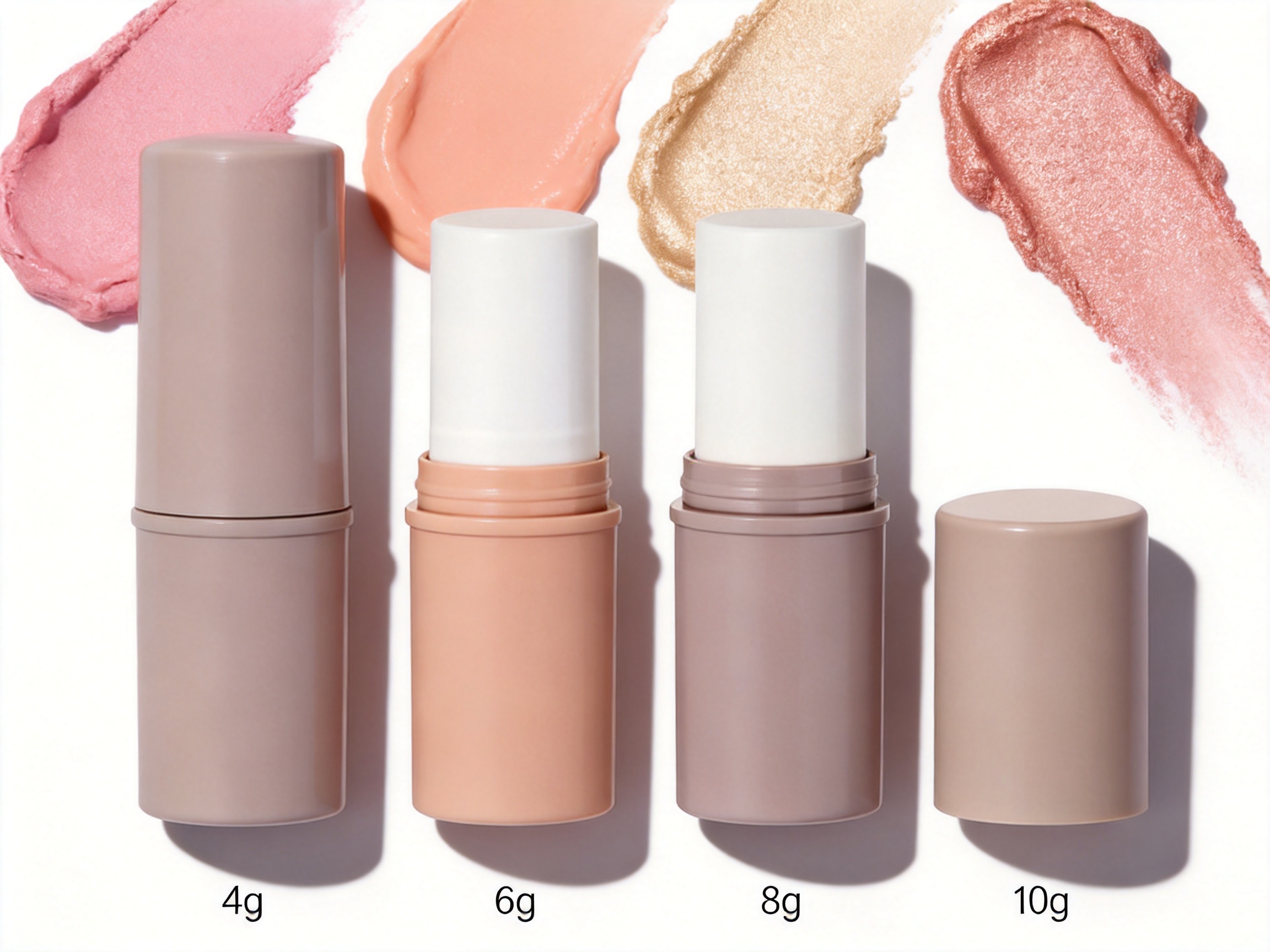
The available capacities make this packaging useful for different product positioning. A 4g version can serve as a sample size, trial product, gift set component, or compact item for minimal makeup lines. A 6g size can be suitable for travel retail, promotional sets, or niche cosmetic collections. The 8g option provides a balance between portability and everyday use, while the 10g size is appropriate for full-size products that still need a compact, consumer-friendly format. This range helps brands reduce the need for entirely different packaging platforms when expanding their product line, because multiple capacities can support multiple product tiers.
The compact shape also makes this packaging attractive for brands targeting active consumers. Many consumers now prefer cosmetics that are easy to carry and simple to use without a complex routine. A small stick bottle is convenient for commuters, students, travelers, makeup artists, and anyone who wants fast application. For brands, this creates an opportunity to offer face makeup in a format that is both practical and visually appealing.
Because the package is suitable for blush and highlighter, it can be used for a wide range of product concepts. Examples include cream blush sticks, shimmer balm sticks, illuminating complexion sticks, multi-use cheek and lip colors, contouring products, bronzing sticks, and compact facial care balms. The same packaging idea can also support limited-edition collections, seasonal color launches, influencer collaborations, and sample campaigns. In a crowded beauty market, flexible packaging is valuable because it allows brands to respond quickly to changing trends without rebuilding their entire packaging supply chain.
Key Product Specifications
Item |
Details |
Product Type |
Deodorant stick bottle suitable for cosmetic stick packaging |
Available Capacity |
4gram, 6gram, 8gram, and 10gram |
Recommended Applications |
Blush, highlighter, facial makeup, and similar solid or semi-solid cosmetic products |
Main Packaging Advantage |
Compact, portable, practical, and suitable for targeted application |
Market Position |
Travel-size cosmetics, trial-size products, daily-use makeup, promotional kits, and portable beauty lines |
Manufacturing Support |
Mold design, injection molding, automated assembly, and quality inspection |
Why Stick Packaging Works for Blush and Highlighter
Blush and highlighter have become central products in modern makeup routines. Consumers want healthy color, natural radiance, and a quick method to enhance facial features. Stick packaging supports these needs because it offers control, convenience, and speed. Instead of opening a jar or carrying a separate brush, the consumer can apply the product directly from the package. This can make makeup feel more intuitive, especially for customers who prefer simple beauty routines.
For blush, the stick format allows users to place color precisely on the cheeks. It can be drawn lightly onto the skin and blended outward for a natural effect. For highlighter, the same structure allows application to smaller zones where light reflection is desired. This direct-to-skin use can improve product efficiency because the consumer applies formula only where needed. It also supports repeat use during the day, which is important for consumers who refresh their makeup after work, travel, exercise, or social events.
Compared with a pan compact, stick packaging can reduce the need for powder brushes and avoid powder fallout. Compared with a jar, it can reduce the need to dip fingers into the product. Compared with flexible tubes, a stick package can provide a more controlled solid product presentation. These differences are meaningful in the beauty market, where consumers increasingly care about cleanliness, portability, and user experience.
Stick packaging also supports product storytelling. A cosmetic brand can describe the product as easy, portable, mess-reducing, and suitable for daily touch-ups. These benefits are simple for consumers to understand. The package itself communicates convenience because its shape is familiar and practical. When displayed in retail environments, a neat series of 4g, 6g, 8g, and 10g sticks can also create an organized and professional appearance.
Capacity Options and Their Commercial Value
One of the strongest advantages of this deodorant stick bottle is the availability of four capacities: 4g, 6g, 8g, and 10g. This capacity range gives brands more control over product planning. In cosmetics, packaging size affects price, formula cost, shelf impact, user perception, shipping weight, and launch strategy. A packaging supplier that offers several sizes within one product concept helps customers build a more complete product line.
The 4g capacity is ideal for very compact applications. It can be used for sample products, miniature blush sticks, travel-friendly highlighters, gift-with-purchase programs, subscription beauty boxes, and limited trial campaigns. Small packages are useful when a brand wants to introduce a new shade, formula, or seasonal product without requiring consumers to purchase a full-size item. For online cosmetic brands, small sizes can also support sampling strategies and reduce the barrier to first purchase.
The 6g capacity offers slightly more product while still keeping the package very portable. It can suit brands that want a travel-size product but also want the consumer to feel they are receiving enough formula for repeated use. This size may be appropriate for promotional kits, starter sets, or makeup collections built around convenience.
The 8g capacity provides a useful balance. It is compact enough for everyday carry but large enough for more regular use. A cream blush or highlighter in this size can feel like a practical product for daily makeup. For many brands, this size may be a strong choice for core product lines because it supports both portability and value.
The 10g capacity is suitable for a more complete retail product. It gives the consumer more formula while preserving the convenience of a compact stick bottle. This size can be attractive for full-size blush, highlighter, contour, balm, or multi-use face products. It can also serve brands that want a stronger shelf presence without moving into bulky packaging.
By offering these four sizes, the package gives brands room to build product families. A company can launch a 10g full-size product and later introduce 4g mini versions for gift sets. It can create shade collections in smaller sizes, or use the 6g and 8g versions for regional markets where travel-size or lower-price products are preferred. This flexibility is a major advantage over competitors that offer only one capacity or require customers to source different containers from different suppliers.
Advantages Over Conventional Cosmetic Containers
Many beauty products are still packed in jars, compacts, and tubes. Each format has value, but the compact deodorant stick bottle provides a combination of benefits that can be difficult to achieve with traditional packaging. Its key strengths are portability, controlled use, hygienic handling, visual simplicity, and strong compatibility with modern makeup habits.
Jars are common for creams and balms, but they often require finger contact or an extra spatula. For color cosmetics such as blush or highlighter, this can be less convenient when the consumer is outside the home. A stick bottle reduces the need for extra tools. The product can be applied directly to the skin, helping consumers use the formula quickly and cleanly.
Pan compacts are familiar and attractive, but they often require a brush, sponge, or fingertip. Powder products may also create fallout, while cream pan products can show surface marks after repeated use. Stick packaging presents the formula in a more protected and contained form. The cap helps cover the product between uses, and the body supports simple transport.
Flexible tubes can be useful for liquid and cream products, but they do not offer the same direct solid-stick experience. With tubes, consumers must squeeze out product, control the amount, and blend from the fingertip or applicator. With a stick container, the formula can remain shaped for direct application. This can reduce mess and improve perceived convenience.
Large deodorant-style packages may be too bulky for facial makeup. The 4g to 10g range solves this issue by adapting the familiar stick concept to small cosmetic quantities. The result is a package that feels appropriate for makeup rather than personal care alone. This is especially important for blush and highlighter, where a small amount of product is used at a time.
Another advantage is product differentiation. Many cosmetic shelves are crowded with similar jars and compacts. A compact stick bottle can help a brand stand out, especially when combined with attractive colors, finishes, labeling, or custom decoration. The package shape can communicate ease of use, portability, and a modern approach to beauty.
Advantages Over Competitor Packaging Options
In a competitive cosmetics market, packaging selection can influence brand success. A package that is too large may increase cost and reduce portability. A package that is too small may feel low-value. A package that is difficult to use may discourage repeat purchase. The 4g, 6g, 8g, and 10g deodorant stick bottle addresses these challenges by offering flexible sizing and a practical structure.
Compared with competitors that provide only one or two capacity choices, this product gives cosmetic brands four useful options. This allows a brand to create sample, travel, standard, and premium-size products within one packaging concept. It also supports better inventory planning because a brand can test multiple sizes and adjust future orders based on market response.
Compared with low-precision packaging, a product supported by advanced mold design and injection molding can provide more consistent dimensions and improved assembly reliability. Cosmetic packaging must perform well across large production volumes. Caps should fit properly, bodies should remain stable, and components should assemble cleanly. Consistency is essential for filling lines, labeling, packing, and consumer satisfaction.
Compared with packaging suppliers that depend heavily on manual production, a manufacturer with automated assembly capabilities can improve efficiency and reduce variation. Automation supports repeatable assembly actions, stable output, and better control of high-volume orders. For cosmetic brands preparing seasonal launches or large retail orders, production reliability is a major competitive advantage.
Compared with suppliers that focus only on basic containers, a manufacturer with experience in spray products, pump heads, caps, bottles, and daily chemical packaging can bring broader technical knowledge to product development. Experience across categories helps solve practical packaging issues such as component fit, material performance, production efficiency, and quality inspection. This broader manufacturing background is useful for customers that need dependable packaging rather than a simple stock item.
The product’s compact size also creates a cost and logistics advantage. Smaller packaging can reduce shipping volume and support efficient retail display. It can be used in multi-pack sets, color collections, and sample bundles. For e-commerce brands, lightweight compact packaging can help improve fulfillment efficiency and reduce the risk of bulky parcels. For retail brands, compact units can support attractive counter displays and checkout-area promotions.
User Experience and Consumer Appeal
Consumer experience is one of the main reasons to choose this packaging format. A good cosmetic package should feel natural in the hand, be easy to open and close, and support clean application. The compact deodorant stick bottle is designed around these expectations. Its small format is suitable for daily carrying, while its stick concept is familiar to consumers who already use deodorant, lip balm, sunscreen sticks, or face sticks.
For blush users, the format encourages fast application. A consumer can swipe the product onto the cheeks and blend with fingertips. This is especially appealing for younger consumers, minimal-makeup users, and people who prefer cream formulas. For highlighter users, the package can support more precise placement and reduce product waste. A small stick is easier to guide along the cheekbones or nose bridge than a large applicator or open jar.
Hygiene is another consumer-facing advantage. Although all makeup products require proper use and storage, a stick bottle helps limit repeated dipping into the formula. The cap covers the product between uses, helping protect it from dust and direct contact with items inside a bag. This can improve consumer confidence, especially for products used on the face.
Portability also matters. Many consumers now carry cosmetics for touch-ups throughout the day. A compact 4g to 10g stick bottle is easy to place in a makeup pouch, handbag, pocket, gym bag, or travel case. The package is suitable for people who prefer quick beauty solutions that do not require a full makeup station. This mobility makes the product relevant for modern lifestyles.
The packaging also supports visual appeal. Its small size can look neat, cute, and premium depending on design choices. Brands can use color matching to identify shades, create limited-edition packaging, or develop minimalist designs for clean beauty lines. Because the format is compact, even small decorative details can make a strong impression.

Manufacturing Strength Behind the Product
The performance of a cosmetic stick bottle depends not only on its design but also on the manufacturing system behind it. A strong packaging manufacturer must control product development from mold design through production and inspection. GreenYard Tools Co., Ltd. has developed high-end packaging manufacturing capabilities through 16 years of specialization in spray product manufacturing and daily chemical packaging solutions. The company’s production scope includes perfume sprayers, pump heads, caps, bottles, lotion pumps, and related packaging products, giving it broad technical experience in precision plastic components.
One of the company’s important strengths is its mold design capability. Mold design is fundamental to the quality of plastic packaging. A well-designed mold supports stable dimensions, smooth surfaces, efficient cycle times, and consistent component fit. For a compact stick bottle, precision is important because small parts must assemble correctly. The cap, body, and internal components must work together without looseness, deformation, or poor alignment. Advanced mold design helps ensure that these details are controlled from the beginning.
Injection molding is another core process. High-quality injection molding requires suitable materials, controlled temperature, stable pressure, accurate timing, and careful mold maintenance. For cosmetic packaging, appearance is especially important. Surface quality, color consistency, part strength, and dimensional stability affect how consumers perceive the finished product. A manufacturer with advanced injection molding capability can produce large quantities while maintaining stable quality.
Automated assembly is also a major advantage. Packaging products often include multiple components, and assembly quality affects final function. Automation can improve speed, repeatability, and cleanliness compared with inconsistent manual assembly. For high-volume cosmetic packaging orders, automated systems help maintain efficiency and reduce assembly errors. This is especially valuable when customers require reliable delivery schedules.
Quality inspection completes the manufacturing chain. Cosmetic packaging must meet practical standards for appearance, fit, function, and durability. Inspection processes can identify defects before products reach customers. This reduces the risk of filling-line problems, customer complaints, and product returns. For brands that sell internationally, dependable inspection is essential because packaging issues can become costly after goods enter distribution.
The company’s daily production capacity of one million units reflects its ability to support large orders. Production capacity is important for customers with growing sales, seasonal promotions, or multinational distribution. A supplier that can produce at scale gives brands greater confidence when planning launches. At the same time, the company’s dedicated design team supports product innovation, helping customers adapt packaging ideas to market trends.
Advanced Mold Design and Product Consistency
For a small cosmetic stick bottle, mold design has a direct effect on consumer experience. If the body dimensions vary too much, filling and assembly can become difficult. If the cap fit is inconsistent, the product may feel low-quality. If surfaces are rough or uneven, the package may not match the expectations of beauty consumers. Therefore, mold design is not a hidden technical step; it is one of the main reasons a package performs well.
Advanced mold design allows the manufacturer to control wall thickness, part shrinkage, surface finish, and structural strength. These factors matter because compact packaging must be both lightweight and durable. A small stick bottle should not feel fragile, yet it should remain easy to carry. Good mold engineering helps achieve this balance.
Precise molds also support repeat orders. Cosmetic brands often need packaging replenishment after the first production run. If the second batch looks or fits differently from the first, it can create problems for brand consistency. Stable molds and controlled production reduce this risk. This is particularly important for brands that use the packaging for multiple shades, collections, or regional markets.
Customization can also benefit from strong mold design knowledge. Cosmetic brands may want specific colors, surface effects, decorative elements, or component adjustments. A manufacturer with design and molding experience can advise on what is practical, cost-effective, and suitable for production. This helps customers avoid packaging concepts that look good in theory but fail in manufacturing.
Injection Molding Quality for Cosmetic Packaging
Injection molding is one of the most important processes in plastic cosmetic packaging production. During injection molding, melted plastic is injected into a mold cavity and cooled into the desired component shape. Although the process is common, producing attractive and consistent cosmetic packaging requires skill and control. Cosmetic customers expect smooth surfaces, clean edges, consistent colors, and reliable dimensions.
For the 4g, 6g, 8g, and 10g stick bottle, injection molding quality affects how the product looks and works. The package must maintain its shape, protect the formula, and support assembly with other components. Poor molding can result in warping, flash, sink marks, color variation, or weak areas. These issues can affect both appearance and function.
A manufacturer with advanced injection molding capability can manage production variables more effectively. This includes material preparation, molding temperature, injection pressure, cooling time, and machine stability. The goal is not only to make one good part, but to make thousands or millions of consistent parts. Consistency is the foundation of reliable cosmetic packaging.
High-quality molding also helps brands improve their image. Consumers often judge cosmetic products by packaging before trying the formula. A clean, well-formed container communicates professionalism and care. For blush and highlighter products, which are often purchased for visual and emotional appeal, packaging quality contributes to perceived value.
Automated Assembly and Production Efficiency
Automated assembly improves the reliability of packaging production. Small stick bottles may include several components that need correct placement and stable fit. Manual assembly can work for small batches, but as order volume grows, manual processes may introduce variation. Automation helps standardize the assembly process and maintain consistent output.
For customers, automated assembly can mean more dependable lead times and better batch consistency. It can also reduce the risk of missing or incorrectly assembled parts. This matters for cosmetic brands because packaging problems often appear during filling or final packing. If a component does not fit properly, it can slow down the filling line and increase costs.
Automation also supports scalability. A brand may start with a smaller launch and later expand after market success. A supplier with automated systems can support this growth more easily than a supplier limited to labor-intensive methods. This makes the packaging choice safer for brands that expect long-term development.
In addition, automated assembly can help improve cleanliness and handling control. Cosmetic packaging should be kept neat throughout production. While packaging is not the formula itself, its cleanliness and presentation influence customer confidence. Controlled assembly processes support a more professional supply chain.
Quality Inspection and Reliability
Quality inspection is essential in cosmetic packaging because even small defects can affect brand reputation. A cap that does not close correctly, a body that is scratched, a component that does not assemble smoothly, or a package that looks inconsistent can create problems for both the brand and the consumer. Inspection helps prevent these issues before shipment.
Reliable inspection may include checks for appearance, dimensions, assembly fit, surface quality, color consistency, and functional performance. For a stick bottle, inspectors may examine whether components fit properly, whether the package opens and closes as expected, and whether visible surfaces meet cosmetic standards. These checks support both the filling process and final consumer use.
Quality control is especially important for international customers. Packaging may travel long distances and pass through multiple stages before reaching the consumer. Defects discovered after shipment can be expensive to correct. A manufacturer with strong inspection systems reduces customer risk and helps maintain a stable supply chain.
GreenYard Tools Co., Ltd. emphasizes quality inspection as part of its manufacturing strength. Combined with mold design, injection molding, and automated assembly, inspection helps create a complete production system. This integrated approach is a major advantage over suppliers that rely only on basic production without thorough control.
Applications in the Beauty Market
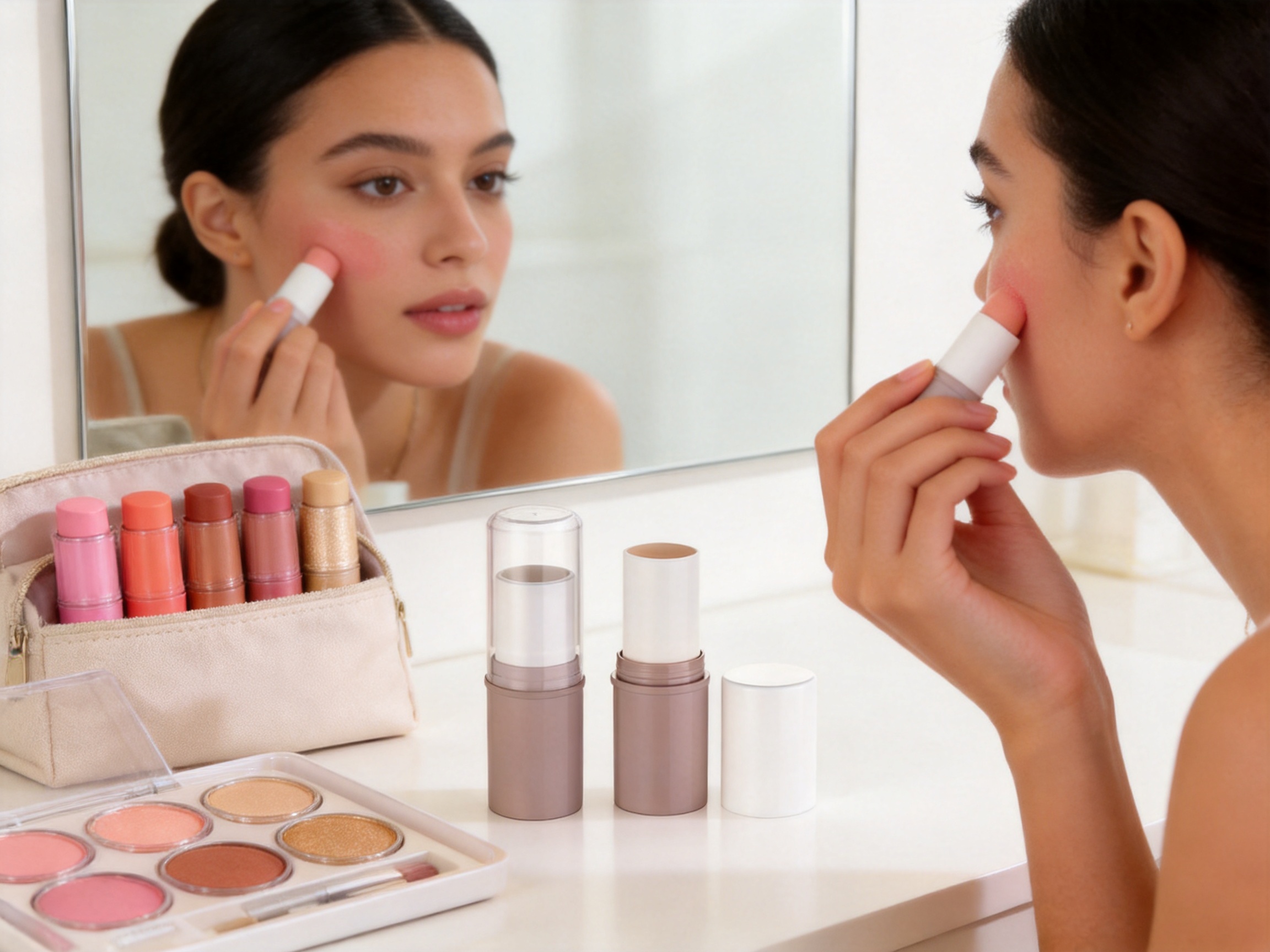
The 4g, 6g, 8g, and 10g deodorant stick bottle can support many cosmetic product concepts. Its primary listed applications are blush and highlighter, but the stick format is also suitable for related facial makeup and personal care items when formula compatibility is confirmed. This flexibility makes it valuable for beauty brands that want to create compact, easy-to-use products.
For cream blush, the packaging helps deliver a soft, blendable product directly to the cheeks. Cream blush has grown in popularity because it can create a natural, skin-like finish. A stick package reinforces this trend by making application simple. Consumers can apply, blend, and build color without a complicated tool set.
For highlighter, the package supports controlled placement. Highlighter is often applied to targeted areas, so a small stick can help reduce over-application. It also makes the product convenient for touch-ups, especially when consumers want to refresh radiance during the day.
For multi-use color sticks, the package can support products marketed for cheeks, lips, or eyes, depending on formula safety and regulatory suitability. Many consumers appreciate multi-purpose products because they simplify makeup bags and reduce the number of items needed for travel. A compact stick bottle is well aligned with this trend.
For promotional beauty kits, the smaller 4g and 6g capacities are especially useful. Brands can include several shades in one set, allowing consumers to try different colors. This is valuable for blush and highlighter because shade discovery is important. Mini products can encourage customers to test formulas before purchasing full sizes.
For professional makeup artists, compact stick packaging can help organize multiple shades. Small units are easier to pack, identify, and apply quickly during work. The package can also reduce mess compared with open jars, which is useful in fast-paced professional environments.
Branding and Customization Potential
Packaging is a brand communication tool. The same stick bottle can support different visual identities depending on color, finish, labeling, and decoration. A minimalist beauty brand may choose simple colors and clean typography. A youth-oriented makeup line may use bright colors and playful decoration. A premium line may prefer elegant shades, matte finishes, or metallic details.
The compact size of the package makes design discipline important. Every visible surface should communicate clearly. Shade names, logos, product claims, and usage instructions must be arranged carefully. Because the package is small, strong color coding can help consumers identify shades quickly. For blush and highlighter lines, packaging color can be coordinated with formula color to improve shelf navigation.
Customization may include body color, cap color, surface finish, label design, and other decorative choices depending on production feasibility. A manufacturer with mold design and injection molding experience can help customers evaluate practical options. This support is valuable because packaging must remain manufacturable, durable, and cost-effective.
For brands launching multiple shades, consistent packaging structure across capacities can help create a unified product family. A 4g mini and 10g full-size item can share similar design language, making the product line easy to recognize. This improves brand continuity and supports repeat purchase.
Supply Chain Benefits for Cosmetic Brands
Choosing packaging is also a supply chain decision. A package must be available in reliable quantities, produced consistently, and delivered according to launch schedules. Delays or inconsistent quality can disrupt product development, filling, marketing campaigns, and retail commitments. Therefore, the manufacturer’s production strength matters as much as the package design.
With a daily production capacity of one million units, GreenYard Tools Co., Ltd. is positioned to support both growing and established customers. Large capacity can help brands prepare for seasonal demand, promotional campaigns, and rapid reorder needs. It also suggests strong production organization and equipment investment.
The company’s experience in perfume sprayers, pump heads, caps, bottles, and daily chemical packaging provides broad manufacturing knowledge. This is useful for customers that need more than one packaging type. A brand may require stick bottles, lotion pumps, fine mist sprayers, caps, bottles, or other packaging components for a complete product range. Working with an experienced packaging manufacturer can simplify sourcing and improve coordination.
In addition, the company’s design team supports product innovation. Beauty markets change quickly, and packaging trends evolve with consumer preferences. A supplier that understands design and production can help customers adapt more efficiently. This can be especially useful when developing new cosmetic formats, special packaging effects, or capacity variations.
Sustainability and Practical Material Considerations
Modern packaging decisions often include sustainability considerations. While the provided product information focuses on capacity and usage, responsible packaging development generally includes attention to material selection, efficient production, lightweight design, and product protection. Compact packaging can support sustainability goals by reducing unnecessary bulk and helping brands match package size to actual formula quantity.
A 4g to 10g stick bottle is efficient for products used in small amounts. Oversized packaging can create waste and increase shipping volume. By offering several capacities, the package allows brands to choose a size that fits the formula and expected usage. This can reduce overpackaging and improve consumer satisfaction.
Manufacturing efficiency also matters. Advanced mold design and automated assembly can reduce production errors and improve consistency. Fewer defects can mean less waste during manufacturing. Quality inspection helps prevent defective packaging from reaching customers, reducing the risk of discarded filled products.
Brands should evaluate formula compatibility, material requirements, decoration methods, and local regulations when selecting final packaging. A professional packaging supplier can support this evaluation by providing technical information and production guidance. This helps brands make responsible and practical decisions.
How the Package Supports Product Launch Strategy
The capacity range of this deodorant stick bottle makes it useful for staged product launches. A beauty brand can begin with a small trial run using 4g or 6g packages to test formula acceptance, shade popularity, and consumer feedback. If demand grows, the brand can introduce 8g or 10g versions for full-size retail. This approach reduces risk and gives the brand more data before committing to a larger launch.
The package can also support shade expansion. Blush and highlighter products often depend on shade variety. Smaller capacities make it easier to offer multiple colors in sets or collections. Consumers may purchase several mini shades rather than one full-size product, allowing the brand to increase engagement and product discovery.
For holiday or seasonal promotions, compact stick bottles are useful in gift boxes, advent calendars, travel kits, and limited-edition bundles. Their small size makes them easy to combine with other products such as lip balm, mascara, mist sprayers, or skincare miniatures. This creates cross-selling opportunities for brands.
For e-commerce, the package is also practical. Compact units are easier to ship than bulky jars or fragile compacts. They can fit into smaller parcels and sample mailers depending on the final design and packing requirements. This is useful for direct-to-consumer brands that rely on online sales.
Recommended Product Development Considerations
When selecting this packaging for blush, highlighter, or similar cosmetics, brands should consider formula hardness, melting point, filling method, product stability, and application feel. Stick packaging works best when the formula can maintain its shape during normal use and storage. The formula should also release smoothly onto the skin without crumbling, leaking, or becoming too soft.
Brands should test compatibility between the formula and package materials. Cosmetic formulas can contain oils, waxes, pigments, fragrances, and active ingredients that may interact with packaging over time. Compatibility testing helps confirm that the package protects the formula and maintains appearance throughout shelf life.
Filling tests are also important. The selected 4g, 6g, 8g, or 10g capacity should match filling equipment and production requirements. The formula should cool or set properly inside the package if hot filling is used. The packaging supplier and filling partner should coordinate early to avoid production issues.
Decoration should be planned with both branding and durability in mind. Labels, printing, and surface treatments must remain attractive during handling, shipping, and use. Because the product may be carried in bags or makeup pouches, decoration should be chosen to resist normal wear as much as possible.
Q&A Section
What products is this deodorant stick bottle suitable for?
It is suitable for blush, highlighter, and similar solid or semi-solid cosmetic products. It can also be considered for related face makeup products such as contour sticks, shimmer sticks, balm-style products, and multi-use color cosmetics when formula compatibility is confirmed.
What capacities are available?
The package is available in 4gram, 6gram, 8gram, and 10gram capacities. These options allow brands to create sample sizes, travel sizes, standard daily-use products, and full-size compact products within one packaging concept.
Why is stick packaging useful for blush and highlighter?
Stick packaging supports direct and targeted application. Users can apply blush to the cheeks or highlighter to specific facial areas, then blend as desired. This format is portable, convenient, and reduces the need for additional tools during touch-ups.
How does this package compare with jars?
Compared with jars, a stick bottle can reduce direct finger contact with the formula and make application faster. It is also easier to carry and use outside the home, which is important for modern on-the-go beauty routines.
How does the package help cosmetic brands compete?
The package offers flexible sizing, compact design, practical application, and strong portability. These advantages help brands develop sample programs, travel products, shade sets, and full-size retail items while maintaining a unified packaging style.
What manufacturing strengths support this product?
The manufacturer has strengths in mold design, injection molding, automated assembly, and quality inspection. These capabilities help improve dimensional consistency, appearance quality, assembly reliability, and large-scale production efficiency.
Why is mold design important for a small stick bottle?
Mold design affects the precision, surface quality, component fit, and repeatability of plastic parts. For compact cosmetic packaging, small dimensional differences can affect cap fit, assembly, and consumer perception, so precision mold design is essential.
Can this package be used for promotional cosmetic sets?
Yes. The 4g and 6g capacities are especially suitable for trial products, shade discovery kits, gift sets, and promotional campaigns. The compact format also works well in travel kits and limited-edition collections.
What should brands test before choosing this package?
Brands should test formula compatibility, filling performance, product stability, application behavior, decoration durability, and shipping performance. These tests help ensure that the final product performs well from production to consumer use.
Why choose a manufacturer with high production capacity?
High production capacity helps support large orders, seasonal launches, and repeat demand. A supplier capable of large-scale production gives cosmetic brands more confidence when planning retail distribution and future growth.
Conclusion
The 4g, 6g, 8g, and 10g deodorant stick bottle is a practical and commercially flexible packaging solution for blush, highlighter, and similar cosmetic products. Its compact size, direct application style, and multiple capacity options make it well suited for modern beauty trends, including portable makeup, clean application habits, travel-size products, and shade discovery sets.
Its advantages over conventional jars, compacts, and tubes are clear. It offers better portability, more targeted use, reduced need for extra tools, and a neat format that fits easily into daily routines. For brands, the four available capacities create product planning flexibility, allowing mini, travel, standard, and full-size compact products to share a consistent packaging concept.
The strength of the package is further supported by advanced manufacturing capabilities. With 16 years of packaging manufacturing experience, expertise in mold design, injection molding, automated assembly, and quality inspection, as well as a daily production capacity of one million units, GreenYard Tools Co., Ltd. provides the technical and production foundation needed for reliable cosmetic packaging supply. For beauty brands seeking a compact, versatile, and market-ready stick bottle for blush and highlighter products, this packaging offers a strong balance of function, appearance, scalability, and consumer appeal.
References
Cosmetic Packaging: Materials, Design, and Functionality, industry technical handbook.
Principles of Injection Molding for Plastic Packaging Components, manufacturing process reference.
Global Beauty and Personal Care Packaging Trends, market analysis report.
Quality Control Methods for Cosmetic Packaging Production, packaging inspection guide.
Consumer Behavior in Portable Beauty and Travel-Size Cosmetics, beauty market research summary.
Product: GY-DS09 4gram/6gram/8gram/10gram Deodorant Stick Bottle

-
How Glass Airless Bottle Packaging Prevents Contamination and Boosts Shelf Life?
Glass airless bottle packaging prevents contamination and extends shelf life by completely eliminat...
-
What Is Perfume Spray? How Atomizers Work, Mist Types and Packaging Basics
Press the actuator on a fragrance bottle once and a metered dose of liquid, usually between 0.05 an...
-
Amber Plastic Bottles: Lightweight, Protective, Customizable Packaging for Cosmetics
You have spent months stabilizing a vitamin C serum, only to watch a pallet of amber glass bottles ...
-
Crimp Pumps Demystified: Choosing the Right Type and Material for Every Cosmetic Formula
Walk into any cosmetic filling facility and you will find crimp pumps on everything from a delicate ...
Copyright © GreenYard Tools Co.,ltd. All Rights Reserved.
Personal Care Packaging Manufacturer Custom Perfume Sprayers Factory