
-
About Us
Why Choose Us?The company possesses advanced capabilities in mold design, injection molding, and automated assembly, supported by a professional quality inspection team to ensure product reliability. A dedicated design team continuously drives product innovation, providing customers with high-quality spray solutions.
 Coming From China, Marketing To The World.
-
Products
-
News
 English
 Français
 русский
 Español
Left-Right Lock Polish Dispenser Pump: A Controlled Solution for Nail Care Packaging
Content
- 1 Understanding the Left-Right Lock Polish Dispenser Pump
- 2 Key Product Specifications
- 3 Why Controlled Dispensing Matters in Nail Care
- 4 Advantages of the Left-Right Lock Design
- 5 Size Flexibility for Different Packaging Programs
- 6 Applications for Nail Polish Remover
- 7 Applications for Cuticle Oil and Nail Treatments
- 8 Use in Makeup Remover Packaging
- 9 Comparison with Basic Non-Locking Closures
- 10 Manufacturing Capabilities Behind the Product
- 11 Design and Development Support
- 12 Recommended Product Development Process
- 13 Packaging and Branding Opportunities
- 14 Benefits for Professional and Consumer Markets
- 15 Quality, Reliability, and Supply Considerations
- 16 Environmental and Efficiency Considerations
- 17 Technical Questions to Consider Before Ordering
- 18 Frequently Asked Questions
- 18.1 What is the GY-703C1 dispenser pump designed for?
- 18.2 What sizes are available?
- 18.3 What does the left-right lock do?
- 18.4 Is the pump suitable for nail polish remover?
- 18.5 Can the dispenser be used for cuticle oil?
- 18.6 Can it be used for makeup remover?
- 18.7 Does the pump work with every bottle?
- 18.8 What are the main advantages over a simple open bottle?
- 18.9 What are the main advantages over a non-locking pump?
- 18.10 Can the product be customized?
- 18.11 What manufacturing capabilities does the supplier provide?
- 18.12 What testing should be completed before mass production?
- 18.13 Is the dispenser suitable for professional salons?
- 18.14 Is it suitable for travel products?
- 18.15 How should buyers choose between 24mm, 28mm, and 33mm?
- 19 Conclusion
- 20 References
- 21 Product: Left Right Lock Polish Dispenser Pump
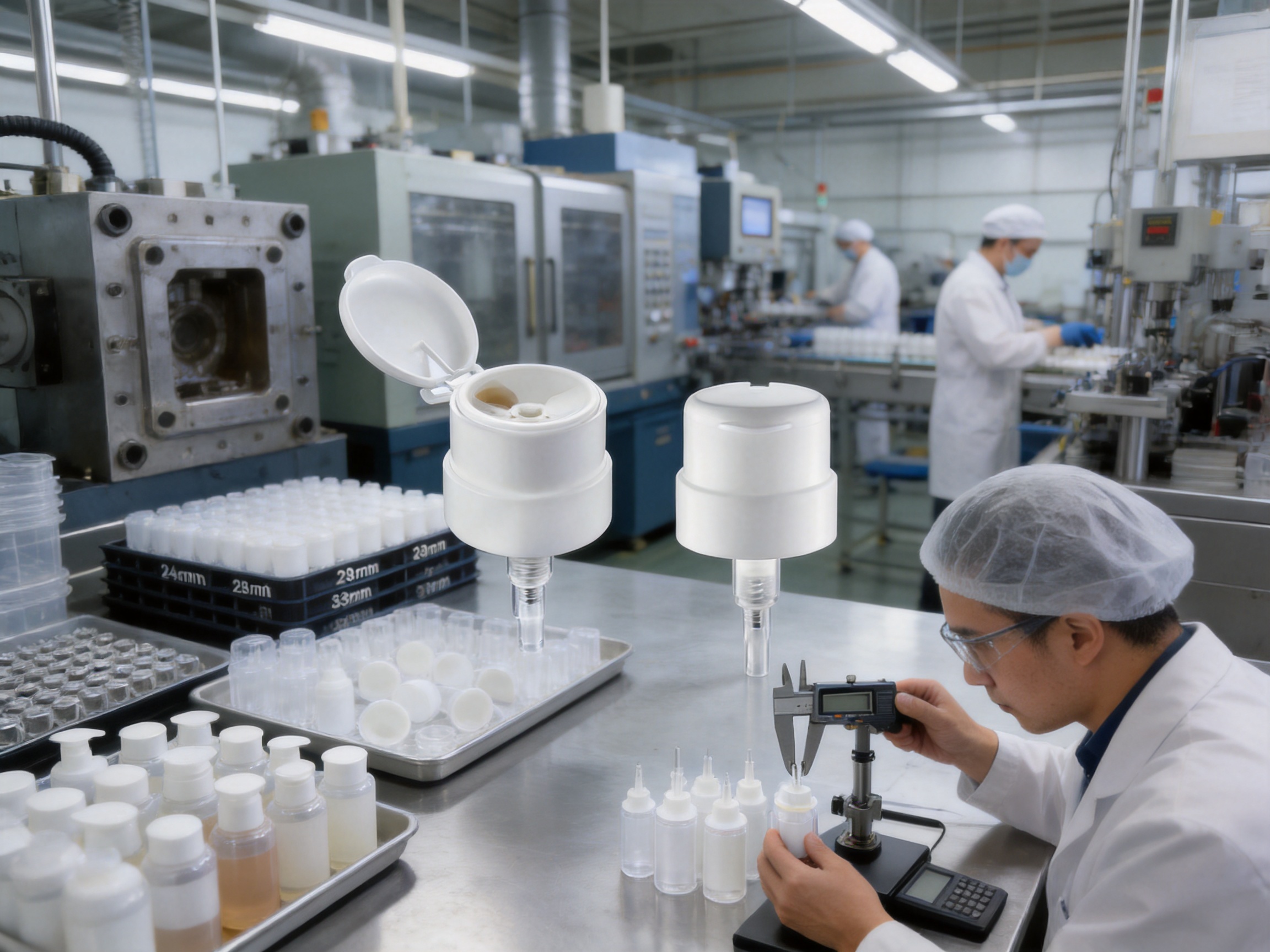
In nail care and personal care packaging, the dispenser is more than a simple closure. It determines how easily a product can be accessed, how accurately it can be applied, how securely the container can be transported, and how professional the finished package appears. The Left-Right Lock Polish Dispenser Pump, model GY-703C1, is designed to address these practical requirements with a controlled dispensing format for nail polish remover, cuticle oil, makeup remover, and other liquid-based nail treatment products.
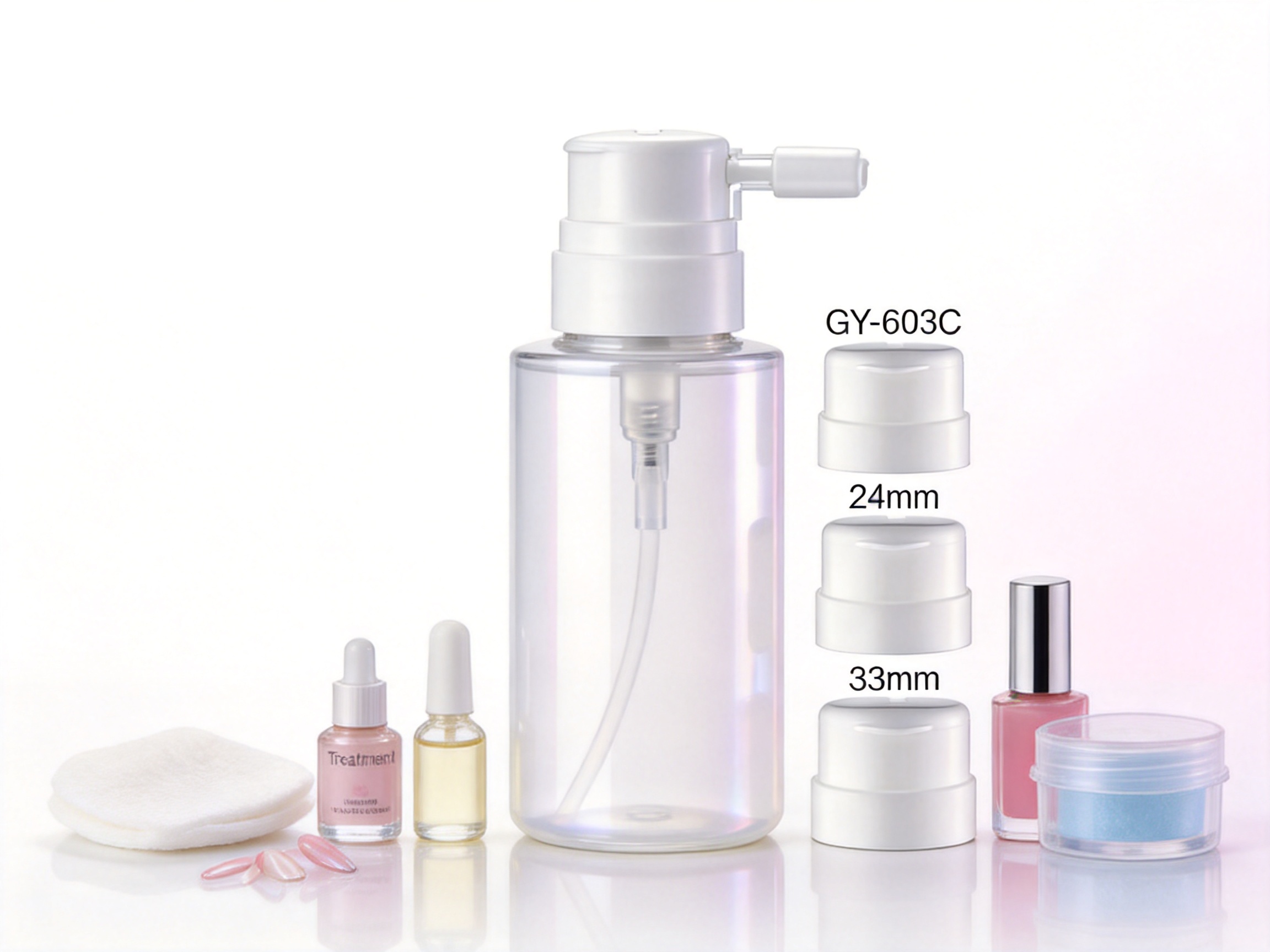
Available in 24mm, 28mm, and 33mm sizes, this dispenser pump gives packaging developers several options for matching the closure to different container dimensions and product quantities. Its left-right locking concept is intended to provide a convenient operating experience while helping reduce accidental dispensing during storage, shipment, and everyday handling. For brands seeking a practical, hygienic, and adaptable nail care closure, the pump offers a balanced combination of functionality, size flexibility, and production support.
The dispenser is manufactured by GreenYard Tools Co., Ltd., a China-based packaging manufacturer specializing in perfume sprayers, pump heads, caps, bottles, and daily chemical packaging solutions. With 16 years of experience, a reported daily production capacity of one million units, and capabilities covering mold design, injection molding, automated assembly, and quality inspection, the company is positioned to support both standard product supply and customized packaging programs.
Understanding the Left-Right Lock Polish Dispenser Pump
The GY-703C1 is a nail polish pump designed for products that require controlled application rather than unrestricted pouring. It is suitable for nail polish remover, cuticle oil, nail treatments, makeup remover, and similar liquid formulations. Instead of asking users to pour a product directly from a bottle, the pump allows the package to deliver a measured amount through a dispensing action.
This format is especially valuable when the product must be applied to a cotton pad, cosmetic tool, nail surface, or small treatment area. Users can dispense the required amount gradually, which may help avoid waste and reduce the risk of spilling liquid across a work surface. The approach is useful for both professional nail technicians and consumers performing personal care routines at home.
The left-right locking mechanism is a central feature of the design. A lock can help prevent unintended activation when the package is placed in a cosmetic bag, retail carton, salon drawer, or shipping case. The operating direction also gives the closure a clear user interaction: the pump can be unlocked for use and returned to a locked position when the product is not being dispensed.
Although the pump is primarily categorized as a nail polish pump, its application range extends beyond conventional nail polish remover packaging. The product can support other compatible liquid personal care formulations where controlled dispensing, portability, and clean handling are important. Final compatibility should always be confirmed through testing with the selected bottle, formula, decoration, and filling process.
Key Product Specifications
Product model |
GY-703C1 |
Product type |
Left-right lock polish dispenser pump |
Primary category |
Nail polish pump |
Available sizes |
24mm, 28mm, and 33mm |
Typical applications |
Nail polish remover, cuticle oil, nail treatments, and makeup remover |
Application style |
Controlled dispensing for liquid-based products |
Locking format |
Left-right locking operation |
Suitable customer segments |
Personal care brands, nail care manufacturers, salons, retailers, and professional users |
The three available size options provide a practical starting point for different packaging programs. A 24mm version may be appropriate for smaller containers or compact personal care products. A 28mm option can support a broader range of mainstream packaging formats, while a 33mm version may be selected for larger packages or designs requiring a wider closure interface. The correct size depends on the bottle neck, product volume, dispensing requirements, and overall package design.
Size selection should not be based on diameter alone. Packaging developers should also evaluate neck finish specifications, sealing performance, dip tube length, pump output, product viscosity, bottle material, and filling equipment. A professional supplier can assist with matching the dispenser to the rest of the package and can arrange sample testing before mass production.

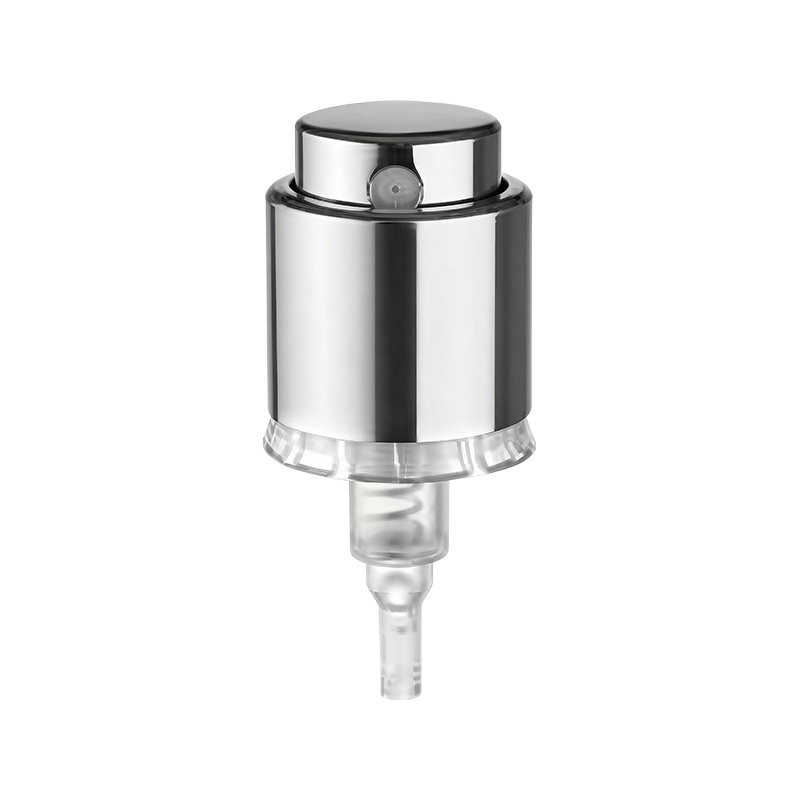
Left Right Lock Polish Dispenser Pump
Why Controlled Dispensing Matters in Nail Care
Nail care formulas are often used in small quantities, but they can create significant inconvenience when dispensed inaccurately. Nail polish remover may be applied to a cotton pad, while cuticle oil may be placed directly around the nail. A nail treatment may need to be brushed, dabbed, or spread across a limited area. In each situation, excess product can lead to waste, mess, or an unnecessarily unpleasant user experience.
A dispenser pump gives the user greater control than a simple open bottle. Rather than tipping the container and estimating how much liquid will flow out, the user can activate the pump in a deliberate manner. This is particularly useful for products that are used frequently or carried in a cosmetic bag, where leakage and accidental opening can damage other items.
Controlled dispensing can also support a more consistent routine. Salon professionals may want to apply similar amounts during repeated services, while consumers may appreciate a package that makes product use straightforward. The pump does not replace the need for correct formulation and application instructions, but it can make the physical delivery of the formula more convenient.
Hygiene is another important consideration. A pump can reduce the need to pour product into an open dish or repeatedly insert tools into a container. When used correctly, the dispenser helps keep the product inside the package until it is needed. This may be beneficial for formulas used around the hands and nails, where clean handling is an important part of the overall care experience.
Advantages of the Left-Right Lock Design
Reduced Risk of Accidental Activation
One of the clearest benefits of a locking pump is the additional control it provides during storage and transport. A package may be placed inside a handbag, travel case, salon trolley, warehouse carton, or retail shelf. Without a reliable locking position, pressure from surrounding objects could potentially activate a pump. The left-right locking concept is intended to help keep the dispenser in a secure state when the product is not being used.
This feature can be especially valuable for liquid nail care products. A spilled bottle of remover can affect fabrics, labels, other cosmetics, and internal packaging materials. By incorporating a lock into the dispenser format, the package can offer an extra layer of protection against unintended product release. The final level of security should be verified through transport, drop, vibration, and leakage testing appropriate to the finished package.
Clear User Operation
A lock that moves from one side to another can give users a clear indication of whether the pump is ready for operation. This simple interaction may reduce confusion compared with a closure that has no visible operating status. For retail products, intuitive operation can contribute to a better first-use experience and reduce the need for complicated instructions.
The lock also supports repeated use. A customer can unlock the pump before application and return it to the locked position afterward. This makes the package suitable for products that are used over a period of time rather than consumed in a single application.
Improved Portability
Nail care products are commonly used at home, in salons, during travel, and in mobile beauty services. Portability requires more than a small bottle. The closure must also help the package remain secure while it is being moved. A locking pump can contribute to a more travel-friendly format, provided the complete package is properly assembled and tested.
Compared with basic non-locking dispensing closures, the GY-703C1 offers a functional feature aimed at everyday handling. This can help packaging developers create a more dependable product concept for customers who carry nail treatments or remover between locations.
Size Flexibility for Different Packaging Programs
The availability of 24mm, 28mm, and 33mm options is an important advantage for brands managing multiple product lines. Different formulas and market segments may require different bottle volumes. A compact nail treatment could need a smaller package, while a professional-use remover may be offered in a larger format. Several size choices make it easier to develop a coordinated range without relying on a single closure dimension.
Size flexibility may also support packaging differentiation. A brand can use one closure family across several products while assigning different bottle capacities or visual treatments to each item. This helps create consistency on the retail shelf while allowing the package to communicate product quantity and intended use.
For private-label and contract-filling programs, multiple size options can simplify product development. A supplier may be able to provide samples in several diameters so that the customer can compare the visual balance, dispensing behavior, and fit of each version. This process can reduce the risk of selecting a closure that appears suitable but does not perform well with the intended bottle or formula.
Packaging engineers should evaluate the pump and bottle as one system. A compatible size must provide an appropriate mechanical fit, a reliable seal, and sufficient structural stability. The bottle shoulder, neck finish, cap geometry, dip tube, and internal components all influence the final result. Proper testing is necessary before commercial release.
Applications for Nail Polish Remover
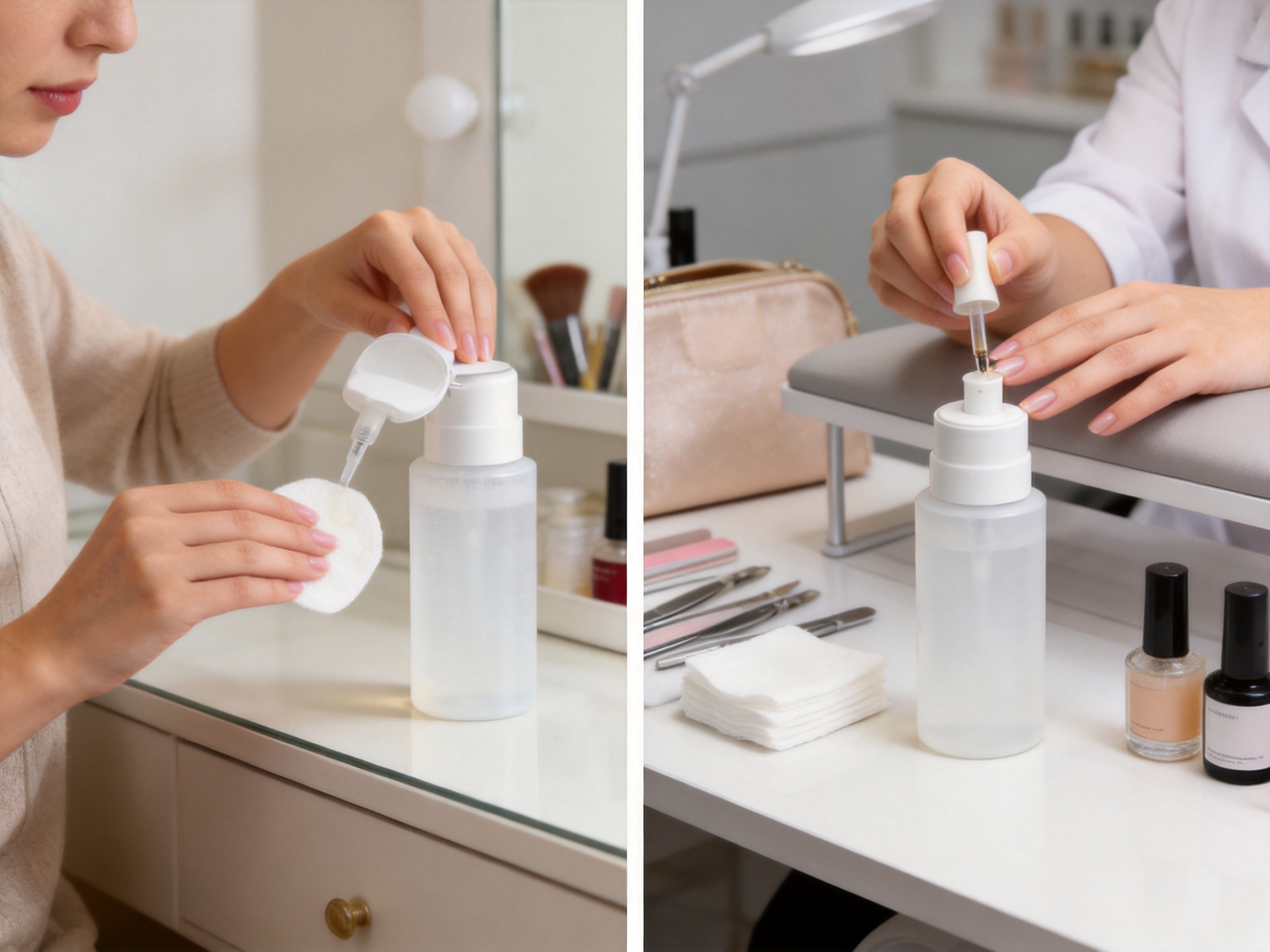
Nail polish remover is one of the most direct applications for the GY-703C1. Remover is often used with cotton pads, lint-free wipes, or professional nail tools. A controlled pump can help users dispense enough liquid for the task without unnecessarily flooding the applicator.
For home users, controlled access can make the routine cleaner and easier to manage. The bottle can remain upright while the dispenser is activated, reducing the need to tilt or invert the container. This may be useful on small bathroom counters, dressing tables, or manicure stations where space is limited.
For salons, the pump format can support a more organized workflow. Professionals may use remover repeatedly throughout the day and need packaging that is easy to operate while maintaining a neat workstation. A locking feature can also provide confidence when several products are stored together or moved between service areas.
Because remover formulas vary in solvent content and composition, compatibility testing is essential. The pump materials, sealing components, and internal pathway should be assessed against the intended formula. Testing may include long-term contact evaluation, actuation performance, leakage checks, and appearance inspection.
Applications for Cuticle Oil and Nail Treatments
Cuticle oil and nail treatments require careful application around a small area. Users generally do not need a large quantity, and excessive product can make the hands feel oily or create unnecessary waste. A controlled dispenser can help deliver a manageable amount for each nail or treatment step.
The pump may be paired with a suitable applicator, cotton pad, or treatment tool depending on the product concept. A brand can create different user instructions while retaining the same basic dispenser platform. This makes the closure useful for product families that include moisturizing treatments, conditioning liquids, and other nail care solutions.
For premium nail care products, the package should communicate precision and cleanliness. A left-right locking pump can contribute to that impression by combining a functional mechanism with a structured, purpose-built appearance. The final presentation can be further enhanced through bottle selection, color matching, printing, labeling, and secondary packaging.
As with remover, treatment formulas must be evaluated for compatibility. Oils, solvents, fragrances, botanical extracts, and other ingredients may interact differently with packaging components. A complete product development program should include formula-packaging testing under relevant storage conditions.
Use in Makeup Remover Packaging
The product information identifies makeup removal as an intended usage area. Liquid makeup remover can benefit from the same controlled dispensing characteristics required by nail care products. Users may apply the liquid to cotton pads or cosmetic wipes, and a pump can provide a more deliberate alternative to pouring from an open-neck bottle.
This cross-category application gives brands greater flexibility when planning product ranges. A supplier does not need to be limited to one narrow cosmetic segment if the dispenser can support several compatible liquid formulas. The same basic closure may be considered for eye makeup remover, facial cleansing liquids, or other personal care products, subject to formula and performance validation.
When used for makeup remover, the package should be evaluated for user comfort, smooth actuation, leakage resistance, and compatibility with frequent daily use. The closure should complement the bottle size and product positioning. A compact version may suit travel or trial products, while a larger version may be selected for regular household use.
Comparison with Basic Non-Locking Closures
Packaging options should be compared according to the needs of the product rather than by appearance alone. A basic non-locking closure may be adequate for certain low-risk applications, but it may offer less protection against accidental activation during handling. The left-right lock design provides an additional operational position intended for storage and transport.
Compared with a simple open bottle, the pump provides more controlled application and can reduce the need to pour liquid. This may help improve cleanliness and user confidence. Compared with a basic dispensing cap, the pump format may provide a more deliberate action for products that are used in small quantities.
Compared with a single-size closure, the three available size options offer greater flexibility for packaging development. A brand can select the diameter that best matches the chosen bottle rather than redesigning the entire product around a limited closure range.
Compared with closures that focus only on appearance, the GY-703C1 is designed around a practical use case: controlled dispensing of nail care and personal care liquids. Its value comes from the combination of a locking mechanism, application versatility, and available size choices.
These advantages do not mean that every product should use the same pump. Formula viscosity, container material, neck finish, dispensing output, regulatory requirements, and target market must all be considered. The best closure is the one that performs reliably with the complete package and product system.
Manufacturing Capabilities Behind the Product
The performance of a dispenser depends on both its design and its manufacturing quality. Small variations in molded components, assembly alignment, sealing surfaces, and internal parts can influence actuation, leakage resistance, and locking behavior. For this reason, a packaging supplier’s manufacturing capabilities are an important part of product selection.
GreenYard Tools Co., Ltd. has specialized in spray product manufacturing for 16 years. Its product range includes perfume sprayers, pump heads, caps, bottles, and daily chemical packaging solutions. This experience gives the company a broad understanding of the components and production requirements involved in personal care packaging.
The company reports a daily production capacity of one million units. High production capacity can be valuable for customers that need stable supply across large commercial programs. It may also support production planning for brands that operate in several markets or require regular replenishment.
Capacity alone is not enough to guarantee a successful packaging program. It must be supported by process control, inspection, equipment maintenance, material management, and production scheduling. The company’s stated capabilities in mold design, injection molding, automated assembly, and quality inspection represent key stages in the development and production of dispenser components.
Mold Design
Mold design influences dimensional accuracy, surface quality, cycle efficiency, and the repeatability of molded parts. For a locking dispenser, the mold must support the precise formation of operating features, connection points, sealing surfaces, and external components. A well-developed mold can help reduce defects and improve consistency across production batches.
In-house or closely managed mold design capabilities can also support product customization. Customers may require different colors, decorative treatments, bottle interfaces, or structural adjustments. Engineering support at the mold stage can help identify manufacturing limitations before mass production begins.
Injection Molding
Injection molding is widely used for producing plastic packaging components because it can create complex shapes at high volume. The process requires careful control of material selection, temperature, pressure, cooling, and cycle time. Consistent molding is important for components that must fit together and operate repeatedly.
For the GY-703C1, injection-molded parts must support the required lock movement and package assembly. Dimensional consistency helps ensure that the pump components function as intended and that the finished closure maintains a professional appearance. Proper process management can also help limit visual defects such as sink marks, flash, distortion, or inconsistent color.
Automated Assembly
Automated assembly can improve repeatability and production efficiency when multiple components must be joined in a defined sequence. It can help reduce dependence on manual handling and support stable output for high-volume orders. Automation is particularly useful when the product includes moving or interacting parts that require consistent positioning.
Assembly equipment should be configured to protect components from damage while ensuring that each part is correctly installed. Quality checks during or after assembly can identify missing components, misalignment, incomplete joining, or abnormal operation before products are packed for shipment.
Quality Inspection
Quality inspection is essential for packaging that comes into contact with cosmetic and personal care formulas. Inspection may include appearance checks, dimensional verification, assembly evaluation, actuation testing, locking checks, and leakage assessment. The exact inspection plan should reflect customer requirements and the intended product application.
A reliable inspection system helps identify variation before products reach the filling plant or the market. It can also provide useful data for continuous improvement. When a supplier combines inspection with mold, molding, and assembly capabilities, it can respond more effectively to production issues and customer feedback.
Design and Development Support
GreenYard Tools Co., Ltd. is supported by a dedicated design team, according to the supplied company information. Design support can be useful at several stages of a packaging project. It may help customers evaluate closure options, develop a coordinated bottle and pump appearance, and identify practical solutions for a specific product concept.
Packaging design involves more than creating an attractive shape. The design must consider how the user holds the bottle, how the pump is activated, how the product is refilled or disposed of, and how the package performs during transportation. The left-right lock format should be considered as part of the complete user experience, including the visual indication of locked and unlocked positions.
A design team can also help customers make better use of the available size range. The 24mm, 28mm, and 33mm versions can be evaluated against the intended bottle proportions, label area, product quantity, and shelf presentation. A closure that is mechanically suitable should also look balanced with the container and communicate the product’s positioning.
Customization may include color, surface finish, decoration, and package coordination. Any customization should preserve the functional requirements of the pump. Changes to external parts, materials, or assembly conditions may require additional testing to confirm that locking, dispensing, and sealing performance remain acceptable.
Recommended Product Development Process
A structured development process can help customers obtain the best result from the dispenser. The first step is to define the product formula, container capacity, intended use, target market, and expected distribution conditions. These details establish the technical and commercial requirements for the package.
The second step is to select an appropriate closure size. The 24mm, 28mm, and 33mm options should be reviewed against the bottle neck finish and overall package design. Samples should be assembled with the intended bottle rather than evaluated as separate components only.
The third step is formula compatibility testing. The selected product should remain in contact with the pump components under appropriate time and temperature conditions. The evaluation should look for swelling, cracking, discoloration, odor transfer, softening, leakage, or changes in pump operation.
The fourth step is dispensing evaluation. Test users or technical personnel can assess the amount delivered per actuation, the ease of pressing or activating the pump, the consistency of output, and the ability to apply the liquid cleanly. If the formula is unusually thin, volatile, oily, or viscous, additional testing may be needed.
The fifth step is lock and transport testing. The package should be checked in both locked and unlocked conditions. Transport simulation may include vibration, drops, compression, temperature variation, and orientation changes. The purpose is to confirm that the package remains secure and that the dispenser is not unintentionally activated.
The final step is pilot production and quality approval. A pilot run can reveal issues that are not visible during laboratory evaluation. It can also confirm that the pump works with the customer’s filling line, labeling equipment, secondary packaging, and production workflow.
Packaging and Branding Opportunities
The dispenser is an important visible component of the package, especially in personal care products where consumers associate appearance with quality and ease of use. The left-right locking format can become part of the product’s functional identity. Clear visual communication may help users understand how to open, dispense, and secure the package.
Color selection can distinguish product variants such as remover, cuticle oil, strengthening treatment, and moisturizing treatment. A coordinated color system may help consumers identify products quickly while maintaining a consistent brand family. Surface finish and decoration can further influence whether the package appears professional, clinical, natural, premium, or convenient.
The available sizes also create opportunities for product segmentation. A smaller bottle may serve travel, trial, or specialty applications, while a larger format may support salons or frequent users. The same pump concept can contribute to a unified range across different volumes.
Packaging teams should make sure that decoration does not interfere with the lock or the user’s ability to see its operating position. Labels and printed graphics should be positioned so that they support, rather than obscure, the operating instructions. The final package should communicate both product benefits and practical use.
Benefits for Professional and Consumer Markets
Professional nail technicians often value speed, cleanliness, repeatability, and reliable access to products. A controlled pump can support an efficient workstation by helping dispense liquid without repeatedly opening and closing a bottle. The lock may be useful when products are stored in drawers, carried between stations, or moved to a client service area.
Consumers may value simplicity and portability. A package that is easy to unlock, dispense, and relock can fit naturally into a home manicure routine. The pump can also be suitable for personal care users who want to reduce spills and maintain a tidy cosmetic storage area.
Retailers and distributors may benefit from a package that offers a clear functional difference from basic bottles. A locking dispenser can be presented as a convenience and portability feature, provided that marketing claims accurately reflect verified performance. The three size options may also help retailers build a broader assortment.
Contract manufacturers and private-label businesses may appreciate the combination of standard product availability and manufacturing support. A supplier with mold, molding, assembly, and inspection resources can potentially coordinate several packaging components and help streamline the development process.
Quality, Reliability, and Supply Considerations
For a packaging program to succeed, the supplier must provide more than an attractive sample. Customers should consider production consistency, communication, lead time, inspection procedures, packaging methods, and shipment protection. A high-volume manufacturer can be especially valuable when a product becomes commercially successful and demand increases.
GreenYard Tools Co., Ltd. states that it serves global markets with daily chemical packaging solutions. Its reported production scale and technical capabilities may support customers that need reliable recurring supply. However, every project should include clear specifications, approved samples, quality standards, and agreed inspection requirements.
Before placing a large order, customers should confirm the selected size, material specifications, color standard, assembly condition, packing quantity, and acceptable defect limits. Written approval of the final sample can reduce misunderstanding between development and mass production.
Packaging storage is also important. Pumps should be protected from excessive heat, moisture, dust, and deformation before use. Customers should follow the supplier’s recommended storage conditions and conduct incoming inspection when goods arrive. Proper handling helps preserve the condition of the components before filling.
Environmental and Efficiency Considerations
Personal care packaging decisions increasingly consider material efficiency, shipping efficiency, durability, and end-of-life handling. A dispenser should be evaluated as part of the complete package rather than in isolation. The bottle, pump, label, secondary packaging, and transport method all contribute to the product’s overall material footprint.
A controlled pump may help reduce product waste by allowing users to dispense an appropriate amount. Less wasted formula can improve the practical efficiency of the package, although the environmental outcome depends on the full product system and user behavior.
Design teams can also examine whether the package uses an appropriate amount of material for the required strength and performance. Lightweighting should not compromise sealing, locking, actuation, or transport durability. Any material reduction should be validated through testing.
Customers interested in specific sustainability requirements should discuss material options, recycling guidance, colorants, decoration, and component separation with the supplier. Environmental claims should be based on documented specifications and applicable market requirements.
Technical Questions to Consider Before Ordering
Before selecting the GY-703C1 for a commercial product, buyers should provide information about the formula’s viscosity, solvent content, oil content, fragrance system, and expected shelf life. They should also identify the bottle material, neck finish, nominal volume, filling method, and intended dispensing direction.
It is useful to clarify whether the product will be sold for home use, professional salon use, travel, retail display, or a combination of applications. Distribution conditions may influence the required leakage and transport testing. Export markets may also have specific packaging, labeling, or chemical compliance requirements.
Customers should request samples in all potentially suitable sizes and compare them on the actual bottle. They should record the pump’s operating feel, lock position, output, visual appearance, and interaction with labels or decorations. Early comparison can prevent costly changes later in the project.
The supplier should also be asked about minimum order quantities, sample availability, color matching, customization options, packaging configuration, production lead time, and inspection documentation. Clear communication at the beginning creates a more efficient path to mass production.
Frequently Asked Questions
What is the GY-703C1 dispenser pump designed for?
The GY-703C1 is designed for controlled dispensing of liquid nail care and personal care products. Typical applications include nail polish remover, cuticle oil, nail treatments, and makeup remover.
What sizes are available?
The dispenser is available in 24mm, 28mm, and 33mm sizes. The correct option depends on the bottle neck finish, container design, formula, and packaging requirements.
What does the left-right lock do?
The left-right lock provides a locked and unlocked operating position. It is intended to help reduce accidental dispensing during storage, transport, and everyday handling. The complete package should still undergo leakage and transport testing.
Is the pump suitable for nail polish remover?
Yes. Nail polish remover is one of the primary intended applications. Because remover formulas can differ significantly, compatibility testing should be completed with the exact formula and selected package components.
Can the dispenser be used for cuticle oil?
Yes. The pump is suitable for controlled dispensing of cuticle oil and other nail treatments, subject to formula compatibility and performance testing.
Can it be used for makeup remover?
Yes. The supplied product information identifies makeup remover as an intended usage area. The final package should be evaluated for dispensing performance, leakage resistance, and compatibility with the makeup remover formula.
Does the pump work with every bottle?
No pump should be assumed to work with every bottle. The selected diameter must match the bottle neck finish and package geometry. Samples should be assembled and tested with the intended bottle before production approval.
What are the main advantages over a simple open bottle?
The dispenser can provide more controlled application, reduce the need to pour liquid, support cleaner handling, and offer a locking position for storage and transport. These benefits can improve convenience for both professional and consumer users.
What are the main advantages over a non-locking pump?
The primary difference is the left-right locking function. This feature is intended to help prevent unintended activation when the package is carried, stored, or transported. The available size options also provide flexibility for different packaging programs.
Can the product be customized?
Customization should be discussed with the supplier. Potential considerations may include color, surface treatment, decoration, bottle coordination, and other packaging requirements. Functional testing is necessary whenever customization affects materials or component design.
What manufacturing capabilities does the supplier provide?
The company states that it has capabilities in mold design, injection molding, automated assembly, and quality inspection. It also reports 16 years of experience in spray product manufacturing and a daily production capacity of one million units.
What testing should be completed before mass production?
Recommended evaluations include dimensional fit, formula compatibility, dispensing output, actuation, locking function, leakage resistance, transport durability, appearance, and filling-line performance. The exact testing plan should reflect the product formula and market requirements.
Is the dispenser suitable for professional salons?
It can be considered for professional salon use because it is designed for controlled access to nail care liquids and can be relocked between uses. Salons should evaluate the package under their actual workflow and storage conditions.
Is it suitable for travel products?
The locking feature may support travel-oriented packaging by helping reduce unintended activation. However, travel suitability must be confirmed through complete-package leakage, vibration, drop, pressure, and temperature testing.
How should buyers choose between 24mm, 28mm, and 33mm?
Buyers should compare the bottle neck finish, product volume, package proportions, dispensing requirements, and filling equipment. Samples in each relevant size should be tested on the proposed bottle before a final choice is made.
Conclusion
The Left-Right Lock Polish Dispenser Pump is a practical packaging option for nail polish remover, cuticle oil, nail treatments, makeup remover, and other compatible liquid personal care products. Its controlled dispensing format can help users apply products more neatly and consistently, while the left-right locking mechanism is intended to reduce accidental activation during storage, transport, and everyday use.
The availability of 24mm, 28mm, and 33mm sizes gives packaging developers flexibility when creating different bottle formats, product quantities, and market offerings. Compared with basic non-locking or open-bottle solutions, the pump can provide advantages in portability, operating control, and user convenience. Its value is strongest when it is matched carefully with the formula, bottle, filling process, and intended distribution environment.
Behind the product is a manufacturer with stated experience in mold design, injection molding, automated assembly, and quality inspection. GreenYard Tools Co., Ltd. reports 16 years of spray product manufacturing experience and a daily production capacity of one million units. These capabilities can support customers seeking dependable personal care packaging, product development assistance, and scalable supply.
For the best result, customers should request samples, confirm the bottle interface, test formula compatibility, evaluate dispensing and locking performance, and approve production standards before ordering at scale. With appropriate technical validation, the GY-703C1 can serve as a functional and adaptable closure for modern nail care and personal care packaging programs.
References
1. GreenYard Tools Co., Ltd. Product information for GY-703C1 Left-Right Lock Polish Dispenser Pump.
2. GreenYard Tools Co., Ltd. Company information regarding mold design, injection molding, automated assembly, quality inspection, and production capacity.
3. Cosmetic packaging development principles covering closure compatibility, leakage evaluation, dispensing performance, and user handling.
4. Personal care packaging quality practices for formula compatibility, transport testing, component inspection, and production approval.
5. Nail care product application considerations for nail polish remover, cuticle oil, nail treatments, and makeup remover.
6. General packaging engineering guidance for selecting neck finishes, pump sizes, bottle interfaces, and complete-package testing.
7. Personal care packaging sustainability considerations covering material efficiency, product waste reduction, durability, and end-of-life evaluation.
Product: Left Right Lock Polish Dispenser Pump

-
Airless Pump Makeup Packaging: How It Works and What Brands Should Specify
Open a foundation that has been sitting in a warehouse for eighteen months and the first thing a pa...
-
Amber Plastic Bottles: Lightweight, Protective, Customizable Packaging for Cosmetics
You have spent months stabilizing a vitamin C serum, only to watch a pallet of amber glass bottles ...
-
Crimp Pumps Demystified: Choosing the Right Type and Material for Every Cosmetic Formula
Walk into any cosmetic filling facility and you will find crimp pumps on everything from a delicate ...
-
Airless Bottles Uncovered: How to Protect Your Skincare and Perfect Every Pump
If you have ever opened a pump bottle of serum and found the last quarter of the product impossible ...
Copyright © GreenYard Tools Co.,ltd. All Rights Reserved.
Personal Care Packaging Manufacturer Custom Perfume Sprayers Factory