
-
About Us
Why Choose Us?The company possesses advanced capabilities in mold design, injection molding, and automated assembly, supported by a professional quality inspection team to ensure product reliability. A dedicated design team continuously drives product innovation, providing customers with high-quality spray solutions.
 Coming From China, Marketing To The World.
 -
Products
-
News
 English
 Français
 русский
 Español
Plastic House Cleaning Stream Spray Trigger Sprayer: Efficient Dispensing for Modern Packaging
Content
- 1 Product Overview
- 2 Why Trigger Sprayers Matter in Household Cleaning
- 3 Key Advantages of the GY-101B1 Trigger Sprayer
- 4 Comparison with Common Alternative Dispensing Formats
- 5 Household Cleaning Applications
- 6 Additional Commercial and Professional Uses
- 7 Manufacturing Capabilities Behind the Product
- 8 Why Choose an Experienced Spray Packaging Manufacturer
- 9 Packaging Development Considerations
- 10 Advantages for Product Brands and Contract Fillers
- 11 Product Quality and Competitive Differentiation
- 12 Recommended Evaluation Process
- 13 Maintenance, Handling, and Responsible Use
- 14 Sustainability and Material Efficiency Considerations
- 15 Supply and Customization Support
- 16 Frequently Asked Questions
- 16.1 What is the GY-101B1?
- 16.2 What bottle neck size does it use?
- 16.3 How much liquid does it dispense?
- 16.4 Is it only suitable for household cleaning?
- 16.5 How does it compare with a fine mist sprayer?
- 16.6 How does it compare with an open-mouth cap?
- 16.7 Can the sprayer be used with automotive products?
- 16.8 Can it be used for gardening products?
- 16.9 What manufacturing capabilities support this product?
- 16.10 Can the package be customized?
- 16.11 What should be tested before ordering in volume?
- 16.12 Who is the product suitable for?
- 17 Conclusion
- 18 References
- 19 Product: Plastic House Cleaning Stream Spray Trigger Sprayer
Household cleaning products require packaging that is practical, dependable, and easy to use. Whether the product is a surface cleaner, bathroom disinfectant, automotive maintenance solution, gardening treatment, or general-purpose detergent, the dispensing closure plays an important role in the user experience. A well-designed trigger sprayer must deliver a consistent dose, provide a comfortable operation, protect the liquid inside the bottle, and remain reliable throughout the product’s service life.
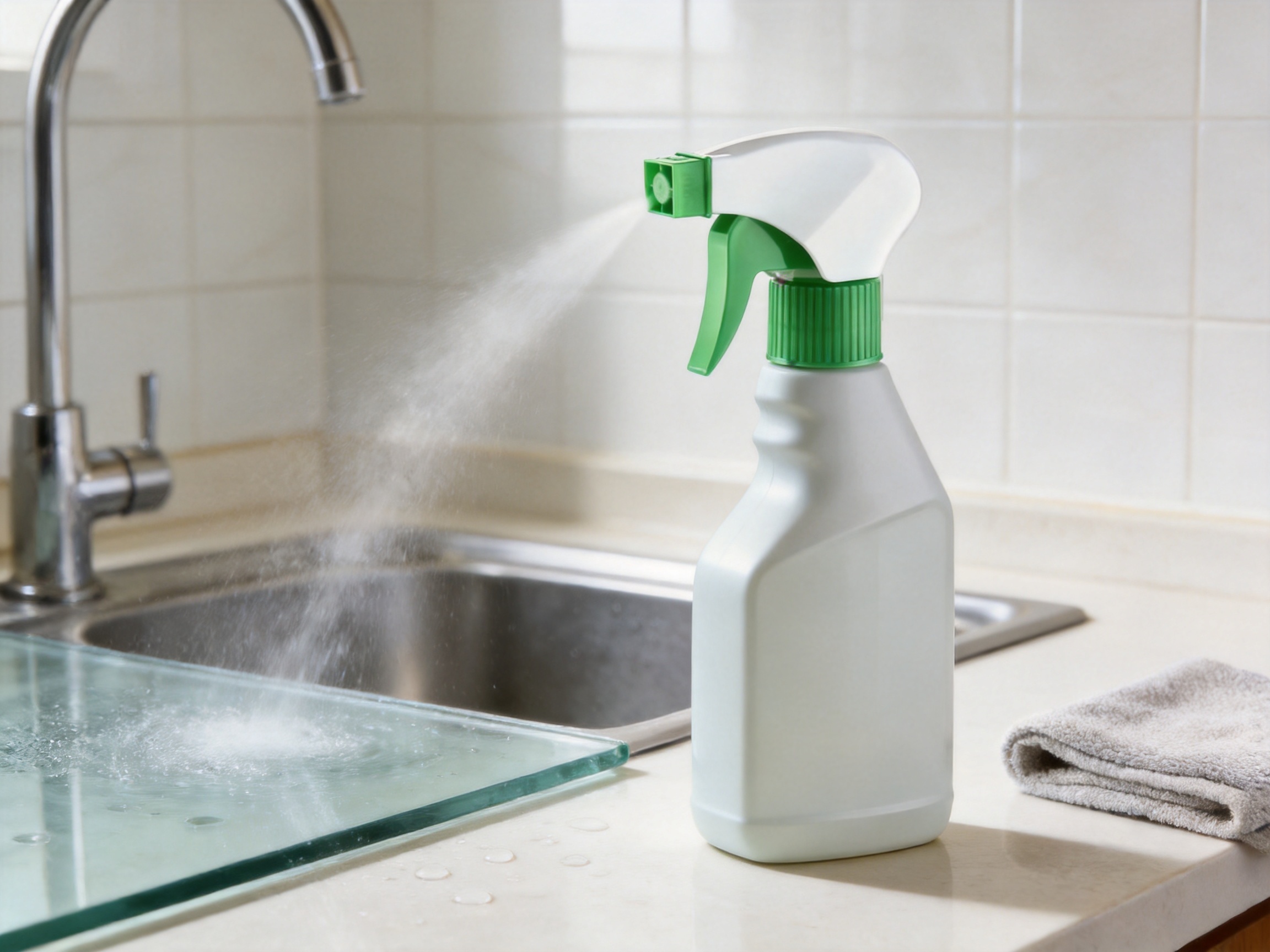
The GY-101B1 Plastic House Cleaning Stream Spray Trigger Sprayer is designed to meet these requirements with a standard 28mm neck size and an approximate dosage of 0.75ml per spray. Its primary usage is house cleaning, but its versatile dispensing performance also supports automotive care, gardening and horticulture, industrial and commercial applications, and selected personal and beauty care products.
As a plastic trigger sprayer, the GY-101B1 provides a practical alternative to less controlled dispensing formats such as open caps, squeeze bottles, or basic flip-top closures. It helps direct the product toward the intended surface, reduces unnecessary spills, and offers a more efficient method of applying liquids. For manufacturers, it can also serve as a flexible packaging component suitable for many bottle designs and product categories.
Manufactured by GreenYard Tools Co., Ltd., a China-based packaging manufacturer with 16 years of experience in spray product production, this trigger sprayer benefits from integrated mold design, injection molding, automated assembly, and quality inspection capabilities. These manufacturing strengths support consistent production, dependable component fit, and the ability to develop packaging solutions for global markets.
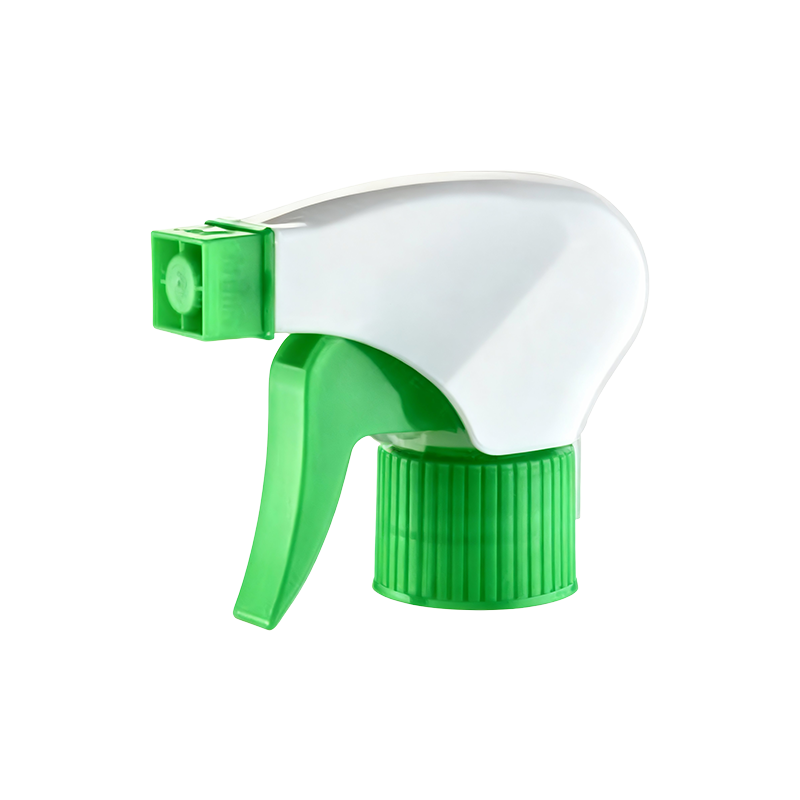
Plastic House Cleaning Stream Spray Trigger Sprayer
Product Overview
The GY-101B1 is a plastic stream spray trigger designed for liquid products that require controlled, directional dispensing. Its 28mm size is a commonly used specification for many household and professional packaging formats. The sprayer is paired with a trigger mechanism that allows the user to activate the pump with a natural finger movement, producing a measured spray of approximately 0.75ml per actuation.
The trigger format is especially suitable for products that are applied over a relatively broad area or need to be directed toward a specific location. Instead of pouring a liquid from the bottle, the user can aim the nozzle and dispense the product in a controlled stream or spray pattern. This makes the package useful for countertops, sinks, tiles, glass, floors, vehicle surfaces, garden equipment, and other target areas.
The product information identifies house cleaning as the primary usage. However, the structure of the trigger sprayer allows it to be considered for several other applications. Its practical design makes it suitable for cleaning concentrates, ready-to-use household formulas, car-care products, plant-care solutions, maintenance liquids, and some personal-care or beauty products where a trigger format is appropriate.
Product model |
GY-101B1 |
Product type |
Plastic stream spray trigger sprayer |
Available size |
28mm |
Approximate dosage |
0.75ml per spray |
Primary usage |
House cleaning |
Additional application areas |
Automotive care, gardening and horticulture, industrial and commercial use, and selected personal and beauty care applications |
Material category |
Plastic packaging component |
The 0.75ml dosage offers a balance between coverage and control. A user can dispense enough liquid for many ordinary cleaning tasks without releasing an excessive quantity at once. The exact result will depend on the formula, bottle configuration, nozzle setting, actuation speed, and other packaging variables, but the stated dosage provides a useful specification for product planning and filling calculations.
Why Trigger Sprayers Matter in Household Cleaning
Packaging is more than a container for a cleaning product. It is the interface between the formula and the consumer. Even a highly effective cleaning liquid may deliver a poor customer experience if the package leaks, sprays unpredictably, requires excessive hand pressure, or makes it difficult to reach the intended surface.
A trigger sprayer helps solve these problems by combining product storage and application in one convenient format. The bottle can remain upright during storage, while the trigger provides a familiar method of dispensing. The user can hold the package with one hand, aim the nozzle, and apply the product directly where it is needed.
This format also supports better control of product consumption. With an open-mouth bottle, users may pour too much liquid or spill the formula during application. A trigger sprayer can deliver smaller, repeated doses and make the amount of product easier to manage. For concentrated cleaning formulas, controlled dispensing is particularly important because excessive use may be wasteful or may require additional rinsing.
Another benefit is application distance. A trigger sprayer can help users keep their hands away from the treated surface and may reduce the need to touch contaminated areas during cleaning. When paired with suitable labeling and responsible formula design, the package can contribute to a more convenient household cleaning routine.
Trigger sprayers are also suitable for frequent-use products. Consumers may use a surface cleaner several times per week or even several times per day. A durable, smooth-operating trigger can make repeated use less tiring than a closure that must be opened, poured, and closed for every application.
Key Advantages of the GY-101B1 Trigger Sprayer
Controlled 0.75ml Dispensing
The stated dosage of approximately 0.75ml per spray gives the GY-101B1 a clear performance reference. A defined dosage helps brand owners estimate the number of applications available from a filled bottle and supports more consistent consumer use. It can also assist filling teams, product developers, and marketing departments when they prepare usage instructions or performance comparisons.
Compared with unrestricted pouring, a metered trigger action can reduce over-application. Users can build coverage gradually by making additional actuations when necessary. This is useful for cleaning tasks that vary in size, from wiping a small appliance to treating a large countertop or vehicle panel.
Standard 28mm Compatibility
The 28mm size is a practical specification for packaging development. A standard neck size can simplify bottle selection and allow manufacturers to evaluate multiple bottle shapes without redesigning the complete dispensing system for every project. This may help reduce development time and support more efficient packaging procurement.
For brands that offer several liquid products, a shared neck specification can also create a consistent visual family. Different bottle capacities or silhouettes may use compatible closures, helping the product range appear coordinated on retail shelves or in professional supply catalogs.
Versatile Stream Application
The stream spray format is well suited to products that must be directed toward a particular area. The user can apply the liquid along a line, across a surface, or toward a difficult-to-reach location. This differs from dispensing systems that release a single concentrated drop or require the product to be spread manually after pouring.
Directional dispensing can be useful for household cleaning, where the target may be a narrow edge, a corner, a sink basin, a tile joint, or a vertical surface. It can also support automotive care applications such as dashboard cleaning, wheel treatment, or maintenance products, provided that the formula and spray pattern are appropriate for the intended surface.
Convenient Trigger Operation
The trigger mechanism is designed around a familiar hand movement. This makes the product intuitive for many consumers and reduces the learning curve associated with more specialized packaging. The user can hold the bottle securely, position the nozzle, and operate the trigger with the fingers.
Ease of use is a significant competitive factor in household packaging. Consumers often compare products not only by cleaning performance but also by how comfortable and efficient they are during use. A sprayer that operates smoothly and delivers a predictable application can contribute to positive product perception.
Broad Application Potential
Although the primary application is house cleaning, the GY-101B1 can support a broader range of product categories. Its stated application areas include household cleaning and hygiene, automotive care, gardening and horticulture, industrial and commercial use, and personal and beauty care.
This breadth allows packaging buyers to consider one sprayer platform for multiple formulas or market segments. A supplier with experience across spray packaging can help evaluate whether the sprayer is suitable for a particular liquid, viscosity, bottle, and usage condition.
Plastic Construction for Scalable Production
Plastic packaging components are widely used because they can be molded into functional shapes, produced at scale, and integrated with automated assembly systems. For a trigger sprayer, plastic construction allows the housing, trigger, nozzle elements, and related components to be formed with precise geometry suited to the dispensing function.
Plastic also provides design flexibility. Manufacturers can develop different colors, finishes, and visual configurations while retaining the basic operating concept. This gives brands opportunities to coordinate the sprayer with bottle colors, label artwork, product positioning, or retail requirements.
Comparison with Common Alternative Dispensing Formats
The GY-101B1 should be evaluated according to the needs of the formula, bottle, and intended user. No closure is ideal for every product, but the trigger format offers several practical advantages when compared with other common dispensing options.
Dispensing format |
Typical strength |
Potential limitation compared with a trigger sprayer |
Where a trigger sprayer may be preferable |
Open-mouth cap |
Simple construction and low operating complexity |
Less control during pouring and greater risk of spills |
Surface cleaners and products requiring directed application |
Flip-top cap |
Compact and easy to close |
Usually requires tilting or squeezing the bottle for application |
Products used over broad or vertical surfaces |
Lotion pump |
Suitable for creams, lotions, and thicker personal-care formulas |
Not normally intended for directional surface spraying |
Liquid cleaning and maintenance products needing reach |
Fine mist sprayer |
Creates a fine aerosol-like mist for light applications |
May not provide the desired stream or surface coverage |
Tasks requiring a more directed or substantial liquid application |
Trigger sprayer |
Convenient actuation, directional dispensing, and broad application potential |
Requires a suitable bottle neck and enough space for the trigger mechanism |
Household, automotive, gardening, and professional cleaning products |
Compared with a fine mist sprayer, a stream trigger can be more suitable when the liquid needs to reach a surface with a stronger, more concentrated application. Compared with a lotion pump, it provides a different type of user experience focused on distance and area coverage rather than hand dispensing. Compared with a basic cap, it offers greater convenience and control for repeated applications.
These advantages can help a product stand out in competitive markets. Packaging that is easier to operate may encourage repeat purchase, particularly when the formula is used frequently. A reliable trigger also reinforces the impression that the product has been thoughtfully designed from the bottle through to the dispensing experience.
Household Cleaning Applications
Kitchen and Food-Preparation Areas
Household surface cleaners are often applied to countertops, cabinet fronts, appliance exteriors, sinks, and other kitchen surfaces. A trigger sprayer allows the user to direct the cleaning solution onto a cloth or directly onto the target area, depending on the product instructions.
The 0.75ml dosage can support controlled application for routine wiping tasks. The user may apply a small number of sprays to a cloth for light cleaning or increase the number of actuations for a larger surface. This flexibility is useful because kitchen cleaning needs can vary significantly from one use to another.
Bathrooms and Sanitary Areas
Bathroom cleaning products often need to reach vertical surfaces, corners, fixtures, tiles, and shower areas. A trigger format provides a practical way to direct the formula without turning the bottle upside down or pouring liquid onto a cloth first.
The package can be positioned for comfortable use around sinks, bathtubs, toilet exteriors, shower doors, and tile surfaces. The final suitability depends on the chemical compatibility of the formula and the instructions provided by the product manufacturer, but the dispensing format is well matched to many bathroom cleaning routines.
Glass and Mirror Care
Glass cleaners benefit from even, controlled application. Too much liquid can create additional wiping work, while too little may not provide adequate coverage. A trigger sprayer helps users apply a measured quantity across the surface and then wipe it with a suitable cloth.
For this type of product, the spray pattern and formula characteristics should be evaluated together. The GY-101B1 provides the dispensing mechanism, while the brand owner determines the liquid formulation, labeling, and recommended technique.
Floor and General Surface Cleaning
For spot cleaning, a trigger sprayer can provide a quick alternative to preparing a bucket or using a large-volume dispensing system. It can be used for localized marks, spills, high-touch areas, and routine maintenance tasks.
The format also works well for refillable household cleaning systems when the bottle and formula are designed for repeated use. A durable trigger component may help maintain a consistent user experience from one refill cycle to the next, subject to appropriate cleaning, storage, and compatibility testing.
Additional Commercial and Professional Uses
Automotive Care
Automotive products frequently require controlled application to dashboards, wheels, tires, glass, upholstery, engine-bay surfaces, or exterior panels. A trigger sprayer can help users direct the liquid and avoid applying it indiscriminately to nearby areas.
Professional detailers and vehicle owners may value a sprayer that supports repeated actuations during a single task. The GY-101B1’s 0.75ml dosage provides a reference point for estimating product consumption, while the 28mm neck size can support suitable bottle development for automotive-care brands.
Gardening and Horticulture
Gardening products may require application to leaves, stems, pots, tools, or localized areas of a growing environment. A trigger format offers a convenient way to distribute a liquid over a target area without using a larger pump sprayer.
Formula compatibility, plant safety, and application instructions remain essential. Packaging suppliers and product owners should confirm that the sprayer materials and components are appropriate for the intended gardening liquid and storage conditions.
Industrial and Commercial Cleaning
Commercial cleaning teams often need packaging that is easy to identify, simple to operate, and suitable for repetitive use. A trigger sprayer can support janitorial products, facility maintenance liquids, workshop cleaners, and other professional solutions.
In commercial settings, packaging performance affects labor efficiency. A sprayer that enables quick, directed application may reduce unnecessary handling steps. It can also help workers apply product to defined areas without repeatedly opening and closing a cap.
Personal and Beauty Care
Some personal-care products use spray packaging for hair treatments, body products, sanitizing solutions, grooming products, or specialty treatments. Although the GY-101B1 is primarily positioned for house cleaning, its broad application description indicates potential relevance to selected personal and beauty care projects.
For personal-care use, additional testing may be required. The formula, contact expectations, packaging appearance, dosage, and consumer safety requirements may differ from those of household cleaners. A professional packaging manufacturer can help determine whether the trigger configuration is suitable for the specific product concept.

Manufacturing Capabilities Behind the Product
The performance of a trigger sprayer depends on more than its visible exterior. Internal component geometry, material selection, molding accuracy, assembly quality, and inspection procedures all influence the final user experience. GreenYard Tools Co., Ltd. operates as an integrated spray product manufacturer with capabilities across several important stages of production.
Mold Design and Development
Mold design is one of the foundations of consistent plastic packaging production. A well-developed mold must support accurate dimensions, appropriate material flow, efficient cooling, reliable part release, and repeatable cycle performance.
For a trigger sprayer, mold accuracy is important because several components must work together. The trigger, housing, nozzle, closure, and internal elements need suitable dimensional relationships. If a molded part varies excessively, it may influence assembly, actuation, sealing, or the visual quality of the finished product.
GreenYard’s mold design capability enables the company to work on packaging structures with attention to functional details. This is valuable for customers seeking custom adaptations, coordinated packaging systems, or production improvements rather than simply purchasing a generic component.
Injection Molding
Injection molding allows plastic components to be produced efficiently and at high volume. The process involves melting a selected plastic material, injecting it into a mold cavity, allowing it to cool, and removing the finished part for subsequent handling or assembly.
Stable injection molding requires control of important variables such as material drying, melt temperature, injection pressure, holding pressure, cooling time, and cycle consistency. Good process control helps reduce issues such as warping, short shots, sink marks, flash, dimensional variation, and surface defects.
Because GreenYard specializes in spray product manufacturing, its molding operations are aligned with the requirements of pump heads, sprayers, caps, and related packaging parts. This specialization can be an advantage over suppliers that treat sprayers as a secondary product category without dedicated process knowledge.
Automated Assembly
Trigger sprayers contain multiple parts that must be assembled in the correct sequence and orientation. Automated assembly can improve production efficiency while reducing variation associated with manual operations. It can also support stable output when large quantities are required for household, commercial, or international product programs.
Automation is particularly valuable for products manufactured in high volumes. It can help maintain repeatable insertion, fitting, and closure operations while allowing production teams to monitor line performance. When combined with suitable inspection procedures, automated assembly contributes to a more consistent finished product.
Quality Inspection
Quality inspection helps identify issues before products reach the customer. Inspection may include visual checks, dimensional evaluation, assembly verification, actuation testing, dosage checks, leakage testing, and other product-specific assessments.
For a trigger sprayer, quality control should focus on the relationship between appearance and function. A component may look acceptable but still require evaluation for smooth operation, sealing performance, or dispensing consistency. A robust inspection approach therefore examines the sprayer as a complete dispensing system rather than only as a molded plastic part.
Large-Scale Production Capacity
GreenYard has a stated daily production capacity of one million units. This capacity is significant for customers that require stable supply, scheduled deliveries, or packaging programs across multiple markets. High output can also support large household-cleaning launches, seasonal campaigns, contract manufacturing projects, and private-label product lines.
Production capacity alone does not guarantee quality, but it becomes a meaningful advantage when supported by mold development, injection molding, automated assembly, and quality inspection. The combination provides a foundation for balancing volume, consistency, and delivery requirements.
Why Choose an Experienced Spray Packaging Manufacturer
Spray packaging requires specialized knowledge because the dispensing component must interact with the formula, bottle, user, and supply chain. An experienced manufacturer understands that a trigger sprayer is not an isolated accessory. It forms part of a complete package involving the bottle neck, dip tube or internal pathway, closure fit, liquid properties, label design, shipping conditions, and end-use instructions.
GreenYard Tools Co., Ltd. has focused on spray product manufacturing for 16 years. This concentration allows the company to build experience across perfume sprayers, pump heads, caps, bottles, and daily chemical packaging solutions. Such a product portfolio supports cross-category knowledge that can be useful when developing packaging for cleaning, beauty, personal-care, and maintenance products.
A specialized manufacturer can also help customers identify potential risks earlier. For example, a formula may be too aggressive for a selected plastic, a bottle neck may not provide the desired fit, or a spray pattern may not match the intended use. Early technical evaluation can prevent costly changes after filling or commercial launch.
Another advantage is communication efficiency. Customers working with a manufacturer that understands both molds and finished packaging can discuss product requirements in practical terms. They can review size, dosage, application, appearance, assembly, and production expectations within one coordinated development process.
Packaging Development Considerations
Formula Compatibility
Before commercial production, the trigger sprayer should be tested with the intended formula. Cleaning liquids can vary widely in acidity, alkalinity, solvent content, surfactant concentration, fragrance, colorant, and viscosity. These characteristics may affect the materials, seals, internal pathways, and long-term performance of the sprayer.
Compatibility testing should reflect real storage and usage conditions. Samples may be exposed to the formula for an appropriate period, followed by evaluation of actuation, leakage, appearance, dosage, and structural integrity. Testing should be determined by the product developer and packaging supplier according to the formula and market requirements.
Bottle and Neck Matching
The 28mm specification must be matched with a bottle that has the correct neck finish and dimensional profile. The bottle should provide appropriate support for the sprayer and maintain a reliable seal after closure application.
Bottle shape is also important for ergonomics. A user must be able to hold the package comfortably while operating the trigger. The shoulder, body diameter, weight, and center of gravity can influence how easy the product is to use, especially when the bottle is full or when repeated actuation is required.
Dosage and User Instructions
The approximate 0.75ml dosage can support clear usage guidance. Product owners may explain how many sprays are appropriate for a small surface, a cloth, or a larger area, depending on the formula and cleaning method. Clear instructions can improve consumer satisfaction and help prevent unnecessary product waste.
Dosage should be verified under actual project conditions. Differences in formula viscosity, bottle configuration, nozzle design, and testing method can affect the final output. The stated product specification is a useful reference, while final technical data should be confirmed during product qualification.
Visual Design and Brand Positioning
Although the GY-101B1 is a functional component, its visible shape contributes to the overall appearance of the package. Color selection, finish, label placement, bottle proportions, and closure coordination can influence how consumers perceive the product.
A clean, professional sprayer can support premium positioning, while a practical color-coded configuration may help distinguish different cleaning formulas. For commercial users, clear identification can simplify storage and reduce the risk of selecting the wrong product during a busy maintenance task.
Shipping and Storage
Packaging components should be evaluated for transportation and storage conditions. Trigger sprayers may be shipped in bulk before assembly with filled bottles, or they may be delivered as part of a complete packaging program. Protective packing, carton configuration, pallet loading, and warehouse handling all influence the condition of the parts when they reach the filling line.
Filled products should also be tested for leakage and stability during transport. Vibration, pressure changes, temperature variation, and orientation can place stress on the closure and bottle system. A packaging supplier with experience in daily chemical packaging can help customers plan appropriate validation procedures.
Advantages for Product Brands and Contract Fillers
For product brands, the GY-101B1 offers an opportunity to combine a familiar trigger format with a defined 28mm size and 0.75ml dosage. This can simplify the preparation of product specifications and support consistent packaging decisions across multiple cleaning products.
For contract fillers, a standardized trigger sprayer can help organize purchasing and assembly operations. If several customer projects use compatible bottle necks and similar closure requirements, production planning may become more efficient. The supplier’s automated assembly and high-volume production capabilities can further support large orders.
For distributors, the product’s broad application potential can make it relevant to several customer groups. Household cleaning brands, automotive-care suppliers, gardening product companies, industrial maintenance businesses, and selected personal-care manufacturers may all have interest in trigger packaging.
For emerging brands, a practical trigger sprayer can provide a professional package without requiring an entirely unique dispensing concept. The 28mm format may allow the brand to focus development resources on formula performance, bottle design, labeling, and market positioning while using an established dispensing structure.
Product Quality and Competitive Differentiation
In a competitive packaging market, product differentiation often comes from the combination of function, supply reliability, and technical support. The GY-101B1’s advantages include its controlled dosage, versatile application range, standard size, and compatibility with high-volume manufacturing processes.
Competitors may offer trigger sprayers with different neck sizes, spray outputs, visual styles, or actuation characteristics. A buyer should compare these factors according to the intended product. The best choice is not necessarily the sprayer with the highest output or the lowest unit price. It is the component that provides the most suitable balance of dispensing performance, user comfort, compatibility, quality, and supply support.
The GY-101B1 is particularly compelling for projects that require a practical stream application rather than a fine mist. Its stated house-cleaning usage aligns with products that need to cover surfaces efficiently while maintaining control over the amount dispensed.
Manufacturing depth is another differentiator. A company with capabilities in mold design, injection molding, automated assembly, and inspection can offer more than a trading relationship. It can provide a coordinated production resource for customers that need reliable packaging development and repeat supply.
Recommended Evaluation Process
Step One: Define the Product Application
The first step is to identify exactly how the product will be used. The buyer should consider whether the liquid is sprayed onto a cloth, directly onto a surface, across a large area, or toward a narrow target. The expected use frequency, bottle capacity, storage position, and consumer profile should also be recorded.
Step Two: Confirm Formula Requirements
The formula should be reviewed for viscosity, pH, solvents, surfactants, oils, fragrance, abrasiveness, and other characteristics. This information helps determine whether the sprayer materials and internal components are appropriate. Compatibility should be validated through practical testing rather than assumed from appearance alone.
Step Three: Match the Bottle
The bottle should be selected or designed around the 28mm neck requirement. The complete bottle-and-sprayer assembly should be checked for fit, sealing, appearance, balance, and hand comfort. If the bottle is too large or heavy for comfortable trigger operation, the final package may not perform as expected in the market.
Step Four: Verify Dispensing Performance
Test samples should be evaluated for dosage, spray or stream pattern, priming behavior, actuation force, leakage, and repeated-use performance. The tests should represent the actual filled product and intended operating conditions as closely as possible.
Step Five: Conduct Pilot Production
A pilot run can reveal issues that may not appear during laboratory evaluation. It can verify filling-line compatibility, closure application, assembly speed, label positioning, carton packing, and finished-product handling. Pilot production is also useful for confirming whether the selected sprayer performs consistently at a larger scale.
Step Six: Establish Quality Standards
Before mass production, the customer and supplier should agree on acceptable standards for appearance, dimensions, dosage, leakage, actuation, packaging, and sampling. Clear specifications help both sides maintain a consistent understanding of product quality during repeat orders.

Maintenance, Handling, and Responsible Use
Users should follow the instructions supplied with the filled cleaning product. The trigger sprayer is a dispensing component, while safe use depends on the formula, label directions, surface compatibility, ventilation requirements, and storage instructions established by the product owner.
For household products, the bottle should be stored in an appropriate location and kept away from children when required by the formula classification. The nozzle should be handled according to its intended open, spray, or closed position. If the package becomes damaged or the trigger no longer operates correctly, the product should be managed according to the brand owner’s safety guidance.
Manufacturers and fillers should also consider how the sprayer will be used throughout the product’s life. If a product is designed for repeated use, the trigger should be evaluated for multiple actuations and storage cycles. If the package is intended for a single project or limited-use product, the testing plan may be adjusted accordingly.
Sustainability and Material Efficiency Considerations
Plastic packaging decisions should consider the complete product life cycle, including material selection, production efficiency, shipping, consumer use, and end-of-life handling. A trigger sprayer can support controlled dispensing, which may help users apply only the amount needed for a task. Reduced over-application can contribute to more efficient formula consumption.
Manufacturing efficiency is also relevant. Injection molding and automated assembly can support repeatable production and reduce avoidable defects when processes are properly managed. High production capacity may improve manufacturing utilization and help suppliers plan material and energy use more effectively.
Brand owners should evaluate recycling instructions and local waste-management conditions when developing the complete package. The bottle, trigger, label, and other elements may not all be treated in the same way by every recycling system. Clear consumer communication and responsible package design are important parts of a broader sustainability strategy.
The most suitable sustainability approach depends on the formula, market, bottle material, closure construction, regulatory environment, and available recycling infrastructure. Packaging suppliers can contribute technical information, while the brand owner remains responsible for the final product and its market-specific claims.
Supply and Customization Support
GreenYard Tools Co., Ltd. presents itself as a high-end packaging material manufacturer specializing in spray products. Its product range includes perfume sprayers, pump heads, caps, bottles, and daily chemical packaging solutions. This range can support customers that want to coordinate several packaging components through one supplier.
The company’s dedicated design team supports product innovation and packaging development. For customers with specific appearance or performance requirements, design support may help evaluate alternative shapes, colors, finishes, and component configurations. Customization should be discussed according to order volume, tooling requirements, formula compatibility, testing needs, and delivery schedule.
Supply continuity is particularly important for cleaning products sold through retail, professional distribution, or international channels. A sprayer shortage can interrupt filling operations and delay finished-product delivery. A manufacturer with substantial daily production capacity and integrated processes may provide stronger support for planning repeat orders and scaling successful products.
Customers can contact the supplier for technical discussions, quotation requests, sample evaluation, packaging coordination, and production planning. The company is located at No. 97-1 Fengyi Road, Lanjiang Street, Yuyao City, Zhejiang Province, China. Contact information includes the telephone number +86-0574-62493001, the mobile number +86-13116696325, and the email address [email protected].
Frequently Asked Questions
What is the GY-101B1?
The GY-101B1 is a plastic house-cleaning stream spray trigger sprayer. It is designed for controlled liquid dispensing and is identified as a product in the Trigger Sprayer / Mini Trigger category.
What bottle neck size does it use?
The available size is 28mm. The bottle must have a compatible neck finish and dimensions to ensure suitable fit, sealing, appearance, and operation.
How much liquid does it dispense?
The stated dosage is approximately 0.75ml per spray. Actual performance should be confirmed with the intended formula, bottle, and production configuration.
Is it only suitable for household cleaning?
House cleaning is the primary stated usage, but the product information also identifies household hygiene, automotive care, gardening and horticulture, industrial and commercial use, and selected personal and beauty care applications. Suitability should be confirmed through formula and performance testing.
How does it compare with a fine mist sprayer?
A fine mist sprayer is intended to produce a lighter, more dispersed mist. The GY-101B1 is positioned as a stream spray trigger, making it more appropriate for directed application and surface coverage when a stronger or more concentrated output is preferred.
How does it compare with an open-mouth cap?
A trigger sprayer generally offers better control and direction during application. An open-mouth cap may be simpler, but pouring can create spills or release more product than necessary, especially when cleaning a vertical or hard-to-reach surface.
Can the sprayer be used with automotive products?
The product information lists automotive care as an additional application area. The specific automotive formula should be tested for compatibility with the sprayer materials and components before mass production.
Can it be used for gardening products?
Gardening and horticulture are listed application areas. The product developer should confirm that the liquid, storage conditions, spray pattern, and application instructions are suitable for the intended plants, tools, or surfaces.
What manufacturing capabilities support this product?
The manufacturer has capabilities in mold design, injection molding, automated assembly, and quality inspection. It also reports a daily production capacity of one million units and 16 years of experience in spray product manufacturing.
Can the package be customized?
Customization may be possible depending on the required color, appearance, components, tooling, dosage, bottle pairing, order volume, and technical specifications. Customers should discuss their project requirements with the manufacturer before confirming production.
What should be tested before ordering in volume?
Important evaluations may include formula compatibility, leakage, dosage, spray pattern, actuation force, repeated-use performance, bottle fit, filling-line operation, transport stability, and visual quality. The final testing program should reflect the product and market requirements.
Who is the product suitable for?
The GY-101B1 may be suitable for household cleaning brands, contract fillers, automotive-care manufacturers, gardening product companies, industrial maintenance suppliers, distributors, and selected personal-care businesses seeking a practical 28mm trigger dispensing solution.
Conclusion
The GY-101B1 Plastic House Cleaning Stream Spray Trigger Sprayer is a practical packaging solution for liquid products that require controlled, directional, and convenient dispensing. Its 28mm size, approximate 0.75ml dosage, and stream spray format make it well suited to household cleaning applications and potentially useful across automotive care, gardening, commercial maintenance, industrial use, and selected personal-care projects.
Its advantages over basic caps and less directional dispensing formats include easier operation, improved application control, reduced pouring risk, and greater suitability for repeated surface treatment. Compared with fine mist sprayers, it offers a more focused stream-oriented application for products that need to reach a defined surface.
The product is also supported by an experienced manufacturing organization with 16 years of spray product expertise. GreenYard Tools Co., Ltd. combines mold design, injection molding, automated assembly, quality inspection, design support, and high-volume production capacity. These capabilities give customers a stronger foundation for product development, quality consistency, and supply planning.
For the best results, the sprayer should be evaluated as part of a complete packaging system. Formula compatibility, bottle fit, dosage, user comfort, leakage resistance, filling-line performance, transport stability, and market requirements should all be considered before mass production. When these factors are properly coordinated, the GY-101B1 can help brands deliver a more efficient and professional cleaning-product experience.
References
1. Product specification sheet for GY-101B1 Plastic House Cleaning Stream Spray Trigger Sprayer.
2. GreenYard Tools Co., Ltd. company information and manufacturing capability profile.
3. Packaging development principles for household cleaning and daily chemical products.
4. General guidance on injection molding, automated assembly, and quality inspection for plastic dispensing components.
5. General packaging compatibility and performance evaluation practices for liquid cleaning products.
Product: Plastic House Cleaning Stream Spray Trigger Sprayer

-
Trigger Sprayer Guide: How It Works, Types & Buying Tips
What Is a Trigger Sprayer A trigger sprayer is a mechanical pump closure mounted on a bottle neck t...
-
Spray Bottles Explained: Choosing the Right Fine Mist Sprayer
What Makes a Good Spray Bottle A good spray bottle depends almost entirely on the quality of its pu...
-
Amber Plastic Bottles: Lightweight, Protective, Customizable Packaging for Cosmetics
You have spent months stabilizing a vitamin C serum, only to watch a pallet of amber glass bottles ...
-
What Is a Fine Mist Sprayer?
A fine mist sprayer is a cosmetic packaging component designed to atomize liquid formulas into ultr...
Copyright © GreenYard Tools Co.,ltd. All Rights Reserved.
Personal Care Packaging Manufacturer Custom Perfume Sprayers Factory