
-
About Us
Why Choose Us?The company possesses advanced capabilities in mold design, injection molding, and automated assembly, supported by a professional quality inspection team to ensure product reliability. A dedicated design team continuously drives product innovation, providing customers with high-quality spray solutions.
 Coming From China, Marketing To The World.
 -
Products
-
News
 English
 Français
 русский
 Español
6-Gram Plastic Round Mini Highlighter and Blush Deodorant Stick Packaging
Content
- 1 Product Overview
- 2 Designed for Highlighter and Blush Applications
- 3 Diamond-Like Angular Design and Visual Differentiation
- 4 Functional Advantages of Stick Packaging
- 5 Manufacturing Expertise Behind the Packaging
- 6 Material and Formula Compatibility Considerations
- 7 Customization Opportunities
- 8 Advantages for Brands and Product Developers
- 9 Comparison with Alternative Cosmetic Packaging Formats
- 10 Quality, Reliability, and Supply Considerations
- 11 Responsible Packaging Development
- 12 Recommended Development Process
- 13 Why This Mini Stick Package Can Stand Out in the Market
- 14 Applications Beyond Highlighter and Blush
- 15 Q&A
- 15.1 What is the capacity of the GY-DS10B package?
- 15.2 What products can be filled into this package?
- 15.3 Is it only intended for deodorant?
- 15.4 What makes the design different from a standard round stick?
- 15.5 Why is a 6-gram size useful for cosmetics?
- 15.6 Can consumers apply the product directly from the package?
- 15.7 Can the package be customized?
- 15.8 What manufacturing capabilities support this product?
- 15.9 What should be tested before placing a commercial order?
- 15.10 Is the package suitable for travel products?
- 15.11 Can it be used for a shade collection?
- 15.12 How does the manufacturer support large orders?
- 15.13 What information should a brand provide when requesting a quotation?
- 15.14 Does the package guarantee product stability?
- 16 Conclusion
- 17 References
- 18 Product: 6Gram Plastic Round Mini Size Highlighter Deodorant Stick
6-Gram Plastic Round Mini Highlighter and Blush Deodorant Stick Packaging
Packaging plays a decisive role in the performance, usability, appearance, and market positioning of a cosmetic product. For solid makeup products such as highlighter, blush, contour balm, cream color, and other portable formulas, the container must do more than simply hold the product. It must protect the formula, support clean application, offer convenient portability, and communicate the product’s visual identity to consumers.
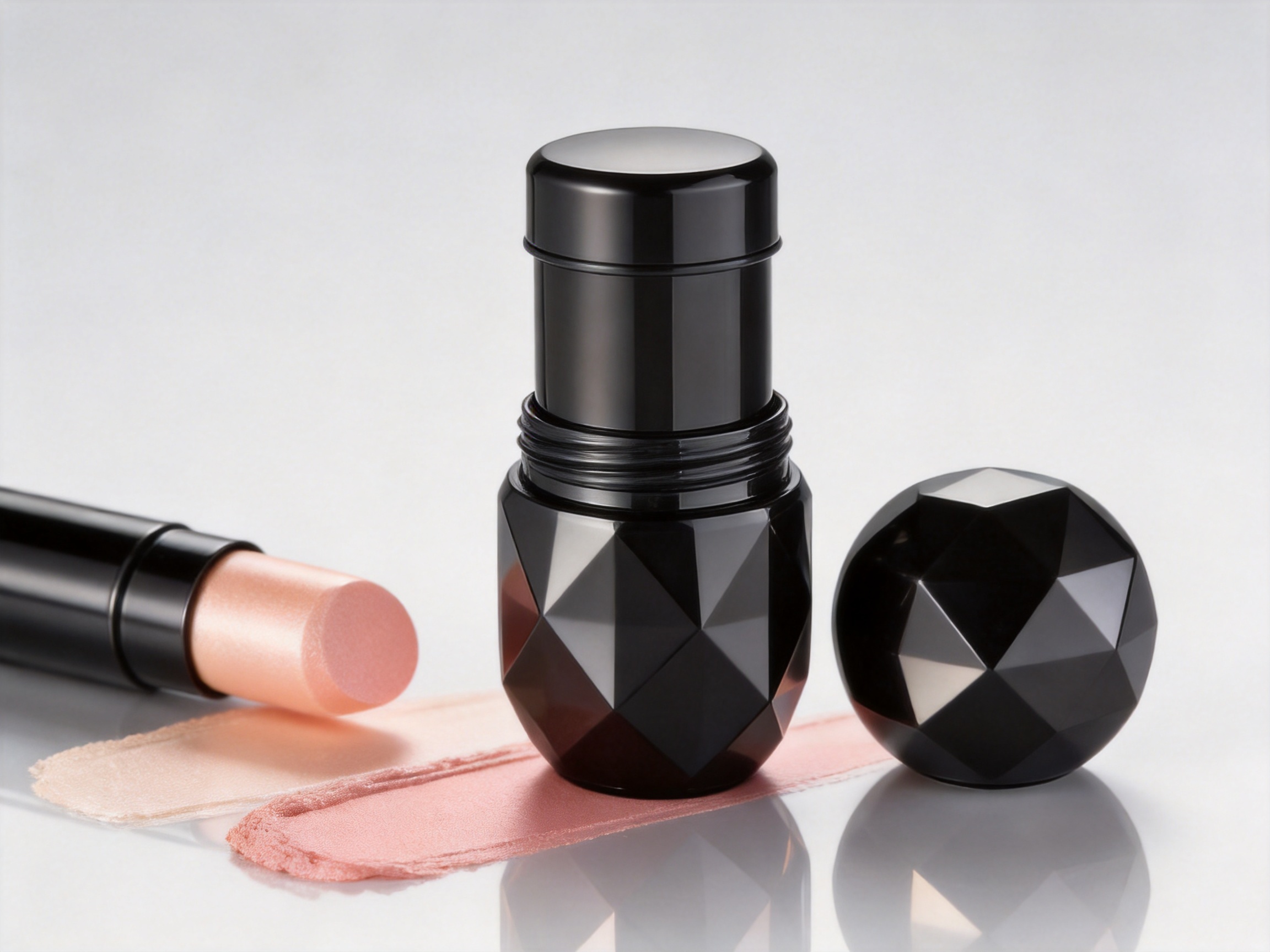
The GY-DS10B is a compact 6-gram plastic round mini deodorant stick package developed for cosmetic applications. Although its structure is suitable for stick-format personal care products, its size and design make it especially practical for highlighter, blush, and similar face makeup products. Its diamond-like angular appearance gives the package a more distinctive and premium visual character than a basic cylindrical container, while its small capacity supports travel-friendly and trial-size product concepts.
With a compact form, practical stick mechanism, and decorative potential, this package offers a balanced solution for brands seeking a portable cosmetic container with strong shelf appeal. It is suitable for independent beauty brands, professional cosmetics manufacturers, contract fillers, promotional product developers, travel-size collections, and companies creating limited-edition or seasonal makeup products.
Product Overview
The package has an available capacity of 6 grams and is designed as a small round stick container. Its compact size is appropriate for products that are applied directly to the face or body, including highlighter, blush, cream color, balm, solid fragrance, and other semi-solid formulations.
The package is identified as GY-DS10B and belongs to the deodorant stick bottle category. In cosmetic packaging development, this type of container is often selected because its internal structure can support a solid product that needs to be raised, applied, and protected after use. The stick format creates a clean and familiar user experience without requiring a brush, sponge, spatula, or separate applicator.
The angular, diamond-like exterior design is one of the product’s most visible characteristics. Instead of relying on a completely plain round wall, the design introduces geometric facets that create additional visual interest. These surfaces can reflect light differently depending on the viewing angle, helping the container look more refined and distinctive on a retail display, vanity table, makeup bag, or promotional photograph.
Product identification |
GY-DS10B |
Product type |
Plastic round mini stick package |
Available capacity |
6 grams |
Recommended applications |
Blush, highlighter, cream color, balm, solid cosmetic and similar products |
Design feature |
Diamond-like angular exterior |
Primary benefit |
Compact, portable and visually distinctive packaging |
Packaging category |
Deodorant stick bottle |
The 6-gram capacity provides a useful middle ground between a sample package and a full-size cosmetic stick. It can contain enough product for repeated use while remaining small enough for handbags, travel cases, pockets, event kits, and beauty subscription boxes. The format can also support brands that want to reduce the initial purchase commitment for consumers testing a new shade or formula.
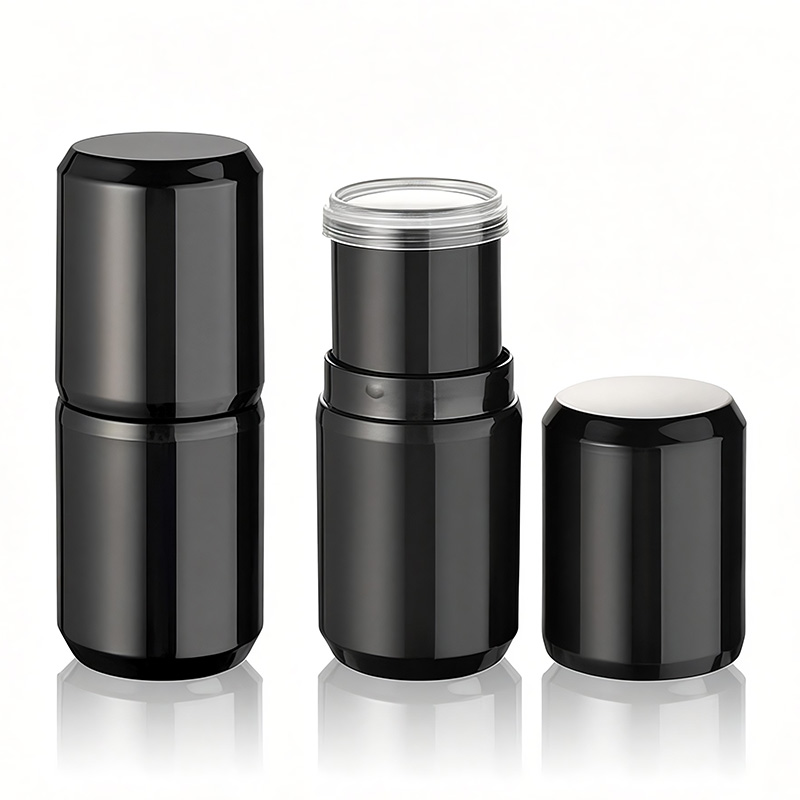
6Gram Plastic Round Mini Size Highlighter Deodorant Stick
Designed for Highlighter and Blush Applications
Highlighter and blush products are increasingly available in cream, balm, solid, and stick formats. These product types are valued for their blendability, natural finish, and convenient application. However, their packaging must be designed with the same level of care as the formula itself. A container that is too large may reduce portability, while a container that is too complicated can make daily application less convenient.
The GY-DS10B is well suited to highlighter because its slim and compact format can support targeted application. A consumer may apply the product to the cheekbones, bridge of the nose, brow bones, inner corners of the eyes, or other areas that benefit from controlled illumination. The stick format allows the product to be applied directly, reducing the need for additional tools during routine use.
For blush, the package can support cream or balm formulas that are applied to the cheeks and blended with fingers, a sponge, or a brush. A 6-gram size allows the brand to present blush as a convenient everyday essential rather than a bulky cosmetic item. The container can also be positioned as a portable touch-up product for consumers who want to refresh their makeup throughout the day.
The package may also be considered for contour sticks, bronzing balms, shimmer sticks, lip-and-cheek products, eye color sticks, solid primers, and other semi-solid cosmetic concepts. Final compatibility depends on the formula, filling temperature, cooling behavior, viscosity, shrinkage, and other technical factors. Brands should conduct a packaging compatibility assessment before commercial production.
Direct Application Benefits
One of the primary advantages of stick packaging is direct application. Consumers can use the product without first opening a separate jar or handling a loose cosmetic pan. This can make the application process faster and more convenient, particularly when the product is used outside the home.
Direct application can also support a more controlled product experience. The user can apply a small amount, build coverage gradually, and blend according to personal preference. This is especially useful for highlighter and blush, where a subtle finish may be preferred in one situation and a more intense result in another.
For brands, the stick format can create a clear product identity. A highlighter in a stick container communicates portability and ease of use immediately. A blush stick suggests quick application and blendability. The package therefore contributes to the product story as well as its physical protection.
Suitable Size for Modern Beauty Routines
Consumers often carry several products at the same time, including foundation, concealer, powder, lip products, skincare items, and fragrance. A compact 6-gram package can occupy less space than a large traditional cosmetic container. Its small footprint makes it suitable for makeup bags, travel organizers, office drawers, gym bags, and event kits.
The size is also relevant to the growing demand for practical and flexible beauty routines. Consumers may want products that can be applied quickly, stored easily, and carried between locations. Mini packaging can support this behavior while also allowing brands to create coordinated collections of different shades or functions.
Diamond-Like Angular Design and Visual Differentiation
Packaging design affects how a consumer first interprets a product. A plain container may appear functional but ordinary, whereas a carefully shaped package can establish a stronger visual impression before the product is opened. The GY-DS10B uses an angular, diamond-like design to create a more decorative appearance within a compact form.
Geometric surfaces can produce highlights and shadows that change as the package is moved or viewed from different directions. This gives the container a dynamic appearance and can help it stand out among smooth cylindrical packages. The design may be particularly effective for highlighter and shimmer products because its visual language is associated with light, reflection, facets, and radiance.
The angular structure also creates opportunities for brand customization. Depending on the selected material, color, finish, decoration, and cap treatment, the package may be presented as elegant, youthful, minimalist, luxurious, playful, or professional. The same base design can therefore support different market positions.
Advantages Over Basic Cylindrical Packaging
Traditional round stick packaging can be efficient, but it may look similar to many competing products. When several containers share the same diameter and smooth exterior, the product may have fewer visual cues to attract attention. A diamond-like angular design introduces a recognizable shape that can help a product achieve greater distinction.
The design can also improve the tactile experience. Faceted surfaces may provide a more interesting grip than a completely smooth wall, although the final ergonomic effect depends on the exact dimensions, surface finish, and cap structure. In a crowded retail or online environment, both appearance and touch can contribute to perceived product quality.
For digital marketing, distinctive geometry can be valuable in product photography, video content, social media presentations, and influencer demonstrations. Angular surfaces can create visual effects under studio lighting and help the package appear more memorable in close-up images.
Premium Appearance Without Excessive Complexity
A premium appearance does not always require a large, heavy, or mechanically complicated package. In many cases, visual refinement can be achieved through shape, proportion, surface finish, color coordination, and decoration. The GY-DS10B combines a small format with a decorative exterior, allowing brands to pursue an elevated appearance while retaining the convenience of a mini package.
This balance can be useful for brands developing accessible premium products. The container can support a polished presentation without making the product feel unnecessarily oversized. It is also suitable for limited-edition collections where the visual design must attract attention while the overall format remains practical for manufacturing and distribution.
Functional Advantages of Stick Packaging
The package is designed around the basic requirements of a stick container: holding the product securely, allowing it to rise for use, and protecting it when not in use. These functions are important for both consumer satisfaction and product quality. A package that is attractive but difficult to operate may create complaints, while a package that operates well but lacks visual appeal may struggle to compete.
Stick packaging can reduce the need for separate tools and can provide a clean presentation on the vanity. When the cap is removed, the product is ready for application. When the cap is replaced, the remaining product is covered and easier to carry than an exposed balm or cream in an open container.
Portability
The 6-gram capacity is a strong advantage for portability. The package can be included in small cosmetic pouches and travel kits without taking up excessive space. It can also be used for promotional sampling, gift sets, beauty boxes, and compact collections that encourage consumers to try multiple products.
Portability is especially relevant to highlighter and blush because these products are often used for quick touch-ups. A consumer may want to refresh makeup before a meeting, dinner, event, photograph, or social occasion. A small stick package provides a straightforward way to carry the product and apply it when needed.
Convenient Storage
Unlike a wide jar or palette, a round mini stick package can be stored vertically or horizontally depending on the consumer’s needs. Its compact shape can fit into organizers and storage compartments that may not accommodate larger cosmetic formats. This contributes to a tidy and manageable product experience.
For retailers and distributors, compact packaging may also simplify secondary packaging and shipping arrangements. The exact efficiency depends on carton dimensions, cap design, product orientation, and packing method, but smaller individual units can support flexible assortment planning.
Controlled Product Exposure
In a stick format, only the required amount of product is exposed during application. The rest remains inside the package. This can help reduce unnecessary contact with the product compared with an open jar in which the full surface may be exposed whenever the lid is removed.
Brands should still evaluate microbiological protection according to the formula and intended use. Packaging alone does not replace appropriate formulation preservation, filling hygiene, stability testing, or consumer usage guidance. Nevertheless, the closed stick format can be an effective component of a well-designed product system.
Manufacturing Expertise Behind the Packaging
GreenYard Tools Co., Ltd. is a China-based personal care packaging manufacturer with 16 years of experience in spray product and packaging manufacturing. The company produces perfume sprayers, pump heads, caps, bottles, and daily chemical packaging solutions. Its broader capabilities are relevant to cosmetic packaging development because successful packaging production requires coordinated control over materials, molds, molding, assembly, inspection, and customization.
The company reports a daily production capacity of one million units. This level of capacity can support both ongoing commercial programs and larger-volume launches, subject to product specifications, production schedules, material availability, and quality requirements. For brands planning a regional or global rollout, manufacturing capacity is an important consideration because packaging shortages can delay filling, marketing, and retail delivery.
The company’s manufacturing strengths include mold design, injection molding, automated assembly, and quality inspection. These stages are closely connected. A well-designed mold supports consistent dimensions, efficient production, and reliable appearance. Injection molding transforms the selected plastic material into the required package components. Automated assembly helps maintain repeatability, while inspection systems help identify defects before shipment.
Mold Design and Development
Mold design is fundamental to the performance of a plastic cosmetic package. The mold must reflect the intended geometry while also accounting for material flow, cooling, wall thickness, draft angles, part ejection, and dimensional stability. This is particularly important for an angular design because the visual quality of facets depends on accurate tool construction and consistent molding conditions.
A capable mold design team can help evaluate whether a proposed package shape is suitable for efficient production. The team may consider how the part will be formed, where potential weld lines could appear, how the cap and body will fit, and how decoration areas can be integrated into the design. Early technical review can reduce the risk of expensive changes later in the development cycle.
For brands seeking customization, mold expertise is also important when modifying dimensions, adapting the package for a different formula, or creating a new decorative component. A manufacturer with in-house or closely coordinated mold capabilities can provide more direct communication between the design concept and the production tool.
Injection Molding
Injection molding is widely used for plastic packaging because it can produce repeatable components at commercial volumes. Resin is heated, injected into a mold cavity, cooled, and removed as a formed part. The process can support complex shapes, controlled dimensions, and a wide range of surface appearances.
For the GY-DS10B, injection molding is relevant to the production of the outer package components and other plastic parts associated with the stick structure. Process parameters must be managed carefully to support consistent filling, minimize visible defects, and maintain the intended angular profile. Factors such as temperature, pressure, cycle time, cooling, and material behavior can influence the final result.
Consistent injection molding is especially important for small cosmetic packages. Minor dimensional changes can affect cap fit, mechanism movement, decoration alignment, and overall appearance. Stable production conditions help ensure that the package performs consistently across different production batches.
Automated Assembly
Automated assembly can improve repeatability when multiple package components must be combined. It may help maintain consistent insertion, fitting, positioning, and operating performance. Automation can also support higher production efficiency and reduce variation associated with manual handling.
In packaging manufacturing, assembly quality is not limited to whether parts are physically connected. The assembled product should also have appropriate fit, appearance, movement, and closure behavior. A cap should sit correctly, the stick mechanism should operate smoothly, and the finished package should meet the agreed specification.
Automation is particularly valuable for manufacturers serving global customers with demanding delivery schedules. It can support stable output while allowing quality personnel to focus on process monitoring, testing, sampling, and corrective action.
Quality Inspection
Quality inspection helps verify that finished packaging conforms to technical and visual requirements. Typical inspection considerations may include dimensions, surface condition, color consistency, component fit, cap closure, mechanism operation, cleanliness, and packaging integrity. Specific inspection procedures should be agreed between the manufacturer and customer according to the project.
Inspection is essential for protecting the brand’s reputation. Consumers may interpret scratches, flash, uneven color, loose caps, difficult movement, or poor assembly as evidence of an inferior product, even when the cosmetic formula itself performs well. A structured quality system helps reduce these risks.
For international projects, quality documentation and sample approval procedures can provide additional confidence. Brands may request pre-production samples, approved color standards, dimensional drawings, inspection reports, and production samples for comparison. These tools help align expectations between the packaging manufacturer, filling facility, brand owner, and logistics partners.
Material and Formula Compatibility Considerations
Before commercial filling, the package should be tested with the intended formula. A cosmetic stick can contain oils, waxes, pigments, emollients, fragrances, powders, or other ingredients that may interact with packaging materials over time. Compatibility testing helps evaluate whether the formula causes swelling, cracking, discoloration, odor transfer, stress, leakage, or changes in operating performance.
Testing should consider the expected shelf life and distribution conditions. Products may be exposed to heat, cold, humidity, vibration, light, and repeated handling. A package that performs well under normal room conditions should also be evaluated under accelerated or simulated conditions appropriate to the product.
Filling Process Review
The filling method can influence the suitability of a stick package. Some formulas are filled while warm and then cooled inside the container, while others may require a different process. The filling temperature, cooling rate, product viscosity, solidification behavior, and fill volume should be reviewed with the packaging supplier and filling partner.
Brands should also check whether the internal dimensions support the required product weight and shape. A 6-gram nominal capacity does not automatically guarantee that every formula will fill to exactly the same volume or produce the same finished surface. Product density and shrinkage can affect the final result.
Proper filling trials can identify issues such as sink marks, separation, cracking, air pockets, poor release, or incomplete filling. These problems may be addressed through formula adjustment, filling parameter changes, cooling control, or packaging modifications.
Closure and Leakage Assessment
The cap and body should be evaluated together to confirm that the package closes securely and protects the product during storage and transport. Closure testing may include repeated opening and closing, vibration, inversion, compression, and temperature exposure, depending on the product’s requirements.
For a portable cosmetic stick, cap security is particularly important. The package may be placed in a handbag or travel case where it can experience movement and pressure. A secure closure helps protect the product from contact with other items and reduces the risk of accidental exposure.
Customization Opportunities
Although the standard product has a defined shape and capacity, cosmetic brands often require packaging that reflects a particular identity. Customization may involve color, surface finish, decoration, cap treatment, labeling, printing, or coordinated secondary packaging. The available options should be confirmed during project development.
Color can be used to organize a shade range or communicate product function. For example, a brand may choose one color family for highlighters, another for blushes, and a third for contour products. Alternatively, the package may use a single signature color across an entire collection to create visual consistency.
Surface finish can change the perceived character of the container. Glossy finishes may emphasize reflection and brightness, while matte finishes may create a softer and more understated appearance. Frosted, metallic, translucent, or opaque treatments can also support different design directions, subject to material and decoration feasibility.
Brand Decoration
Printing, labeling, hot stamping, coating, and other decorative methods may be considered for displaying a logo, product name, shade information, or regulatory details. The appropriate process depends on the surface geometry, required durability, quantity, and visual effect.
Because the exterior includes angular surfaces, decoration placement should be reviewed carefully. Large graphics may need to avoid abrupt transitions between facets, while smaller marks may be positioned on a stable visible area. Artwork approval and physical samples can help confirm the final appearance before mass production.
Decoration should also be tested for rub resistance and handling durability. Cosmetic packaging may be repeatedly touched, placed in bags, exposed to oils from hands, and cleaned occasionally. A decoration method that looks attractive initially should remain legible and presentable throughout normal use.
Advantages for Brands and Product Developers
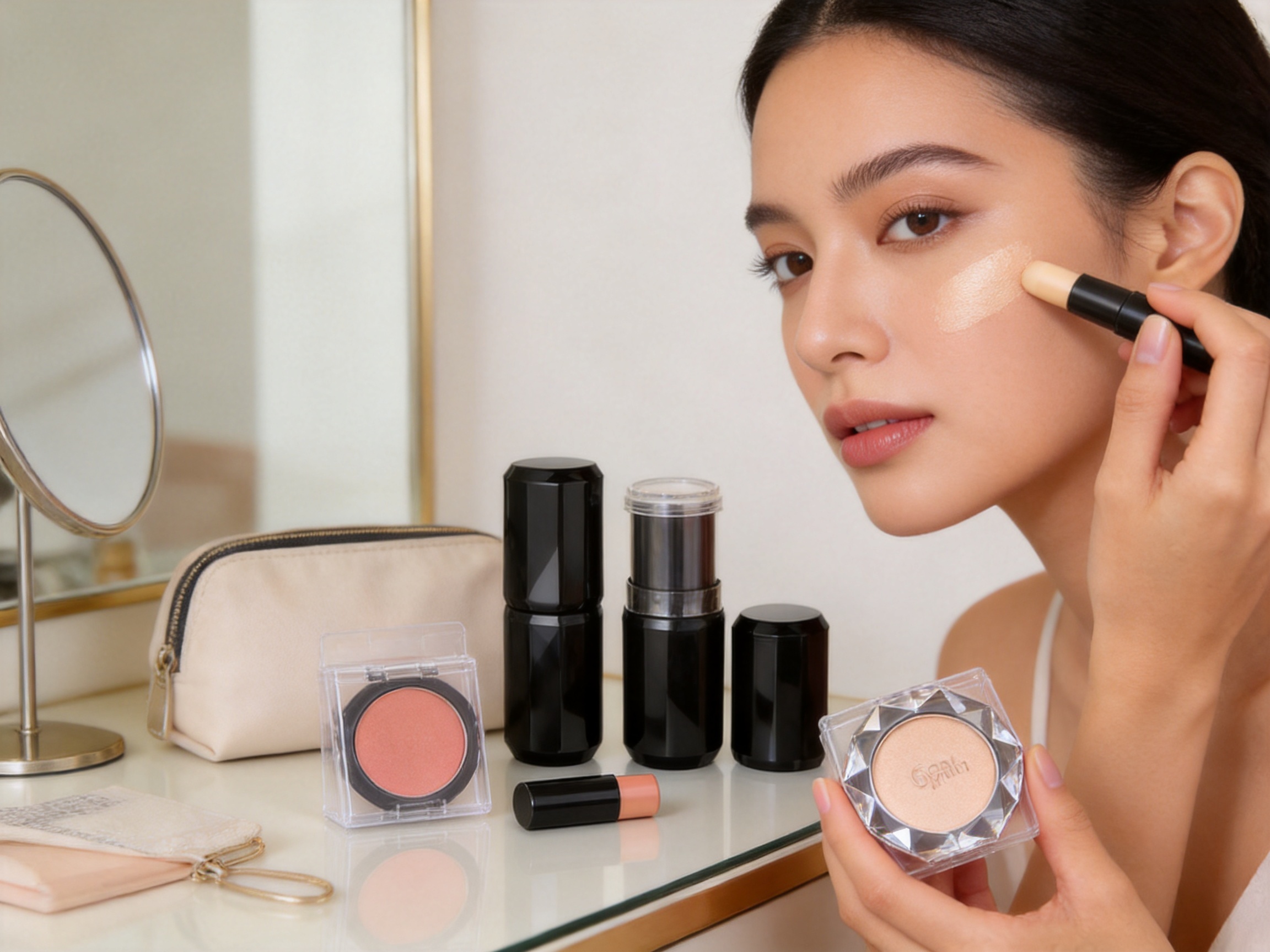
The GY-DS10B offers several advantages for brands developing compact cosmetic products. Its 6-gram capacity supports a practical product size, while the stick structure creates a convenient application format. The angular design offers stronger visual differentiation than a basic smooth container, and the manufacturer’s production capabilities support development from mold design through quality inspection.
For emerging brands, the package can provide a distinctive foundation for a small but visually memorable product. A compact format may reduce the perceived risk of launching a new shade or formula, especially when used in a trial collection, seasonal release, or curated set.
For established brands, the package may serve as an addition to an existing portfolio. It can be used for travel versions, special collections, professional kits, promotional launches, or products intended for quick touch-ups. Its design can also create a bridge between makeup packaging and personal care packaging, allowing a brand to explore a broader range of stick-format products.
Support for Product Line Extensions
A single package format can support multiple product concepts. A brand may use the same base container for several highlighter shades, blush shades, bronzers, balms, or solid treatment products. This creates a consistent appearance across the range and can simplify merchandising.
Using a common format may also help the brand develop a recognizable packaging language. Consumers may learn to associate the angular mini stick with a particular category or product family. This recognition can be useful when the products are displayed together online or in stores.
Efficient Product Communication
The package communicates several benefits immediately. Its small size suggests portability, the stick format suggests direct application, and the angular design suggests a more decorative or premium positioning. These signals can support marketing messages without requiring lengthy explanations.
Product communication must still be accurate. Claims about formula performance, wear time, skin benefits, sustainability, or compatibility should be supported by appropriate testing and documentation. The package can strengthen the presentation, but the final consumer promise should reflect the complete product system.
Potential for Gift and Promotional Sets
The compact package is suitable for multi-item sets. Brands can combine several colors or functions in a gift box, travel kit, advent calendar, beauty subscription, or promotional bundle. The small format may make it possible to offer a variety of shades without creating an oversized package.
It can also be used for event sampling and brand discovery. A 6-gram product can offer more substantial use than a single-use sample while remaining compact enough for distribution at exhibitions, beauty events, retail promotions, and media campaigns.
Comparison with Alternative Cosmetic Packaging Formats
Cosmetic brands have many packaging choices, including jars, palettes, squeeze tubes, compacts, liquid wands, and larger stick containers. The right format depends on the formula, application method, market positioning, price point, and expected consumer behavior.
Packaging format |
Typical strength |
Potential limitation |
Advantage of the 6-gram stick format |
Open jar |
Easy access to creams and balms |
More direct contact with the product |
Supports direct application with a covered format |
Large makeup palette |
Offers multiple shades in one unit |
Less compact for single-product use |
Provides focused portability for one product or shade |
Liquid bottle with wand |
Suitable for fluid formulas |
Requires a compatible liquid formula and applicator |
Designed for solid or semi-solid stick concepts |
Standard smooth stick |
Simple and familiar appearance |
May have limited visual distinction |
Angular exterior creates a more recognizable design |
Large full-size stick |
Provides more product quantity |
Can be less portable and less suitable for trial formats |
6-gram capacity supports compact and travel-friendly concepts |
Compared with an open jar, the mini stick can provide a cleaner and more portable experience. Compared with a large palette, it offers a focused format for one product or shade. Compared with a plain cylindrical stick, the angular design can provide stronger visual identity. These advantages do not make the package suitable for every formula, but they make it a compelling option for a specific group of cosmetic and personal care applications.
Quality, Reliability, and Supply Considerations
Reliable packaging supply requires more than production capacity. It depends on clear communication, accurate specifications, stable materials, controlled processes, inspection, and responsive technical support. GreenYard’s stated capabilities in mold design, injection molding, automated assembly, and quality inspection provide a foundation for managing these requirements.
Brands should define the project requirements at the beginning of development. Important details may include capacity, component dimensions, material expectations, color standards, decoration, formula type, filling method, delivery location, quality standards, and annual demand. Clear information enables the manufacturer to evaluate feasibility and prepare appropriate samples.
Sample approval is an important stage. A physical sample allows the brand and manufacturer to assess appearance, ergonomics, cap fit, mechanism operation, decoration, and formula filling behavior. It is preferable to identify adjustments before mass production begins.
Production Consistency
Consistency is essential when a product is sold repeatedly over time. Consumers expect each package to have the same shape, color, closure feel, and operating performance. Production control helps reduce variation between batches and supports a uniform brand presentation.
For a faceted package, consistency also affects how the light interacts with the surface. Uneven molding, inconsistent gloss, or color variation may be more noticeable on angular components. Inspection should therefore consider both measurable dimensions and visual standards.
Logistics and Packaging Protection
Finished packages should be protected during internal handling, packing, transportation, and storage. Small cosmetic components can be vulnerable to scratches, dust, compression, and impact if they are not properly arranged. The secondary packing method should be selected according to the package shape, shipment conditions, and customer requirements.
Brands should also consider the relationship between the primary package and the final retail carton. The carton must protect the package while presenting the product attractively. It may also carry required information such as ingredients, net content, batch details, usage instructions, and responsible-party information, according to the target market’s regulations.
Responsible Packaging Development
Packaging decisions should consider the full product life cycle, including material selection, manufacturing, transportation, consumer use, and end-of-life handling. A compact package can reduce the amount of material and shipping space compared with a much larger container, although the overall environmental impact depends on the materials, components, decoration, production energy, and disposal systems available in the target market.
Brands interested in responsible packaging should discuss material options and decoration requirements with the manufacturer at the design stage. They may also evaluate whether unnecessary components can be reduced, whether secondary packaging can be optimized, and whether the package can be clearly identified for appropriate disposal.
Environmental claims should be specific, verifiable, and compliant with applicable advertising requirements. Statements about recyclability, recycled content, reduced material use, or environmental performance should be based on documented evidence rather than assumptions.
Balancing Appearance and Practicality
Decorative packaging can increase appeal, but excessive coatings, mixed materials, or permanently attached components may complicate recycling or processing. A responsible design review should balance visual quality, durability, product protection, manufacturing efficiency, and end-of-life considerations.
The angular design of the GY-DS10B provides visual distinction through geometry itself. This may allow a brand to achieve a premium impression through shape and color coordination without relying exclusively on elaborate decorative treatments. The final choice should be based on the brand’s design goals and technical requirements.
Recommended Development Process
A structured development process can help a brand move efficiently from concept to finished packaging. The first step is to define the product formula and intended use. The brand should identify whether the product is a highlighter, blush, balm, contour stick, solid treatment, or another application, and provide relevant technical information to the packaging supplier.
The next step is package evaluation. The brand can review the 6-gram capacity, external dimensions, design, cap, mechanism, and decoration possibilities. At this stage, it is useful to consider how the package will be held, applied, stored, photographed, shipped, and displayed.
Sample production follows the initial review. Samples should be inspected visually and mechanically. If the product is filled into the package, the formula should be evaluated for compatibility, filling behavior, cooling, surface quality, and ease of application.
After sample approval, the brand and manufacturer should confirm production specifications. These may include approved color samples, artwork, material details, component drawings, tolerances, packing requirements, inspection standards, and delivery schedules.
Mass production should begin only after the relevant specifications have been confirmed. During production, quality control should monitor the agreed standards. Finished goods should be packed in a way that protects them during logistics and storage.
Important Questions for Project Planning
Brands should clarify the intended annual quantity, initial order quantity, target market, filling location, product weight, formula characteristics, required decoration, color expectations, and delivery deadline. It is also useful to specify whether the product will be sold alone, in a gift set, or in a larger collection.
Technical communication is especially important when the package is used for a formula that has not previously been filled into a stick container. Filling trials can help determine whether the package and formula work together effectively before the final production plan is approved.

Why This Mini Stick Package Can Stand Out in the Market
The beauty market includes many cosmetic containers that compete for attention through color, shape, convenience, and price. A successful package must therefore combine several qualities rather than relying on only one feature. The GY-DS10B combines a compact 6-gram capacity, direct-use stick format, and diamond-like angular design in one product concept.
Its strongest competitive advantage is the combination of portability and visual differentiation. Many small packages are convenient but visually generic. Many decorative packages look attractive but are too large or difficult to carry. This mini stick aims to offer both a practical size and a distinctive appearance.
The package may also appeal to brands that want flexible positioning. It can support everyday makeup, travel cosmetics, premium mini collections, promotional products, and limited-edition releases. Its application range is broad enough to support product experimentation while remaining focused on solid and semi-solid formats.
Manufacturing support adds another important advantage. The manufacturer’s experience in personal care packaging, together with mold design, injection molding, automated assembly, inspection, and large-scale production capabilities, can help brands develop packaging with a clearer path from concept to commercial supply.
Applications Beyond Highlighter and Blush
Although the listed applications include blush and highlighter, the package may be considered for a wider group of products. Cream contour, bronzer, shimmer balm, solid primer, eye makeup stick, lip-and-cheek color, fragrance balm, and selected treatment products may all be possible depending on formula compatibility and filling requirements.
A brand could also use the container for a multi-purpose product designed for cheeks, lips, and eyes. Such a product would benefit from a portable package because consumers may want to carry it for quick touch-ups. The compact size can reinforce the idea of one product serving several beauty functions.
For professional makeup artists, the package may be suitable for kit organization when individual shades or products need to be identified and carried separately. For consumers, it can support minimalist routines in which a small number of multi-use products replaces a larger collection of individual items.
These applications should be developed carefully. Each formula has different requirements, and a packaging format that works well for one product may require adjustment for another. Compatibility, fill weight, application feel, storage stability, and closure performance should be assessed for every new product concept.
Q&A
What is the capacity of the GY-DS10B package?
The available capacity is 6 grams. The actual filled weight may vary according to the density and filling behavior of the selected formula, so brands should confirm the final fill specification through production trials.
What products can be filled into this package?
The package is suitable for products such as highlighter, blush, cream color, balm, contour, bronzer, shimmer products, and other solid or semi-solid cosmetic concepts. Formula compatibility and filling feasibility should be tested before mass production.
Is it only intended for deodorant?
No. The package belongs to the deodorant stick bottle category, but its compact size and stick structure also make it suitable for cosmetic applications. The supplied product information specifically identifies blush and highlighter as recommended uses.
What makes the design different from a standard round stick?
The package features a diamond-like angular exterior rather than a completely plain cylindrical surface. The facets provide visual interest, create changing reflections, and can give the product a more premium and recognizable appearance.
Why is a 6-gram size useful for cosmetics?
A 6-gram size provides a compact format that is easy to carry and suitable for travel, touch-ups, promotional sets, trial products, and limited-edition collections. It can hold enough product for repeated use while occupying less space than many full-size formats.
Can consumers apply the product directly from the package?
Yes. The stick format is designed to support direct application, reducing the need for a separate applicator. Consumers may apply the product directly and blend it with fingers, a sponge, or a brush according to the formula and desired finish.
Can the package be customized?
Customization possibilities may include color, surface finish, decoration, printing, labeling, and coordinated secondary packaging. The exact options depend on the project specification, order quantity, materials, design requirements, and manufacturing feasibility.
What manufacturing capabilities support this product?
The manufacturer has reported capabilities in mold design, injection molding, automated assembly, and quality inspection. These processes support the production of plastic packaging components and help maintain consistency in dimensions, appearance, fit, and operation.
What should be tested before placing a commercial order?
Brands should evaluate formula compatibility, filling behavior, product weight, cooling or solidification, cap fit, mechanism operation, closure security, decoration durability, appearance, and performance under appropriate storage and transport conditions.
Is the package suitable for travel products?
Its compact 6-gram capacity makes it suitable for travel-friendly product concepts. Brands should still conduct closure, transport, temperature, and handling tests to confirm that the complete filled package is appropriate for the intended distribution environment.
Can it be used for a shade collection?
Yes. A brand can potentially use the same package format for multiple highlighter, blush, contour, or bronzer shades. Different colors, decorations, or labels can help consumers distinguish individual products while maintaining a consistent collection appearance.
How does the manufacturer support large orders?
The company reports a daily production capacity of one million units and operates capabilities covering mold design, injection molding, automated assembly, and inspection. Actual capacity for a particular project depends on specifications, order quantity, production planning, and delivery requirements.
What information should a brand provide when requesting a quotation?
A brand should provide the intended application, formula type, target fill weight, quantity, preferred color, decoration requirements, delivery destination, expected schedule, and any quality or regulatory requirements. Formula information is important for compatibility and filling assessment.
Does the package guarantee product stability?
No package can guarantee stability without testing. Product stability depends on the formula, packaging materials, filling process, storage conditions, and other factors. Brands should conduct appropriate stability and compatibility studies for the complete product system.
Conclusion
The 6-gram GY-DS10B plastic round mini stick package is a practical and visually distinctive solution for highlighter, blush, and similar cosmetic products. Its compact capacity supports portability, travel use, touch-ups, promotional programs, and multi-shade collections. Its stick format enables direct application, while its covered structure helps protect the product between uses.
The diamond-like angular design provides an important advantage over basic smooth cylindrical packaging. It gives the container a more recognizable silhouette, creates attractive light and shadow effects, and offers a foundation for premium, modern, or specialized product positioning. The design can help a brand communicate convenience and visual quality at the same time.
The manufacturer’s experience in personal care packaging and its stated capabilities in mold design, injection molding, automated assembly, and quality inspection provide valuable support for product development. Its reported high production capacity can also serve brands planning larger commercial programs, subject to project requirements and production scheduling.
For the best results, brands should treat packaging development as a complete technical process. Formula compatibility, filling behavior, closure security, mechanism performance, decoration durability, transport protection, and quality standards should all be evaluated before mass production. With appropriate testing and customization, this mini stick package can become a strong foundation for portable, attractive, and functional cosmetic products.
References
1. Product specification for GY-DS10B, 6-gram plastic round mini highlighter and deodorant stick packaging.
2. Internal product information describing volume, application areas, compact dimensions, and diamond-like angular design.
3. General principles of plastic injection molding, mold design, component assembly, and packaging quality inspection.
4. General cosmetic packaging development practices covering formula compatibility, filling trials, stability evaluation, and transport testing.
5. General personal care packaging design principles relating to portability, direct application, closure protection, decoration, and consumer usability.
6. Manufacturer-provided company information concerning personal care packaging production, mold development, injection molding, automated assembly, quality inspection, and production capacity.
Product: 6Gram Plastic Round Mini Size Highlighter Deodorant Stick

-
What Makes a Good Deodorant Stick Bottle for Brands?
A deodorant stick bottle is a twist-up or push-up dispensing container designed to hold and advance...
-
How Glass Airless Bottle Packaging Prevents Contamination and Boosts Shelf Life?
Glass airless bottle packaging prevents contamination and extends shelf life by completely eliminat...
-
Deodorant Containers Eco Friendly: Sustainable Bottle Guide
Deodorant Containers Eco Friendly: The Direct Answer The most eco-friendly deodorant containers are...
-
Amber Plastic Bottles: Lightweight, Protective, Customizable Packaging for Cosmetics
You have spent months stabilizing a vitamin C serum, only to watch a pallet of amber glass bottles ...
Copyright © GreenYard Tools Co.,ltd. All Rights Reserved.
Personal Care Packaging Manufacturer Custom Perfume Sprayers Factory