
-
About Us
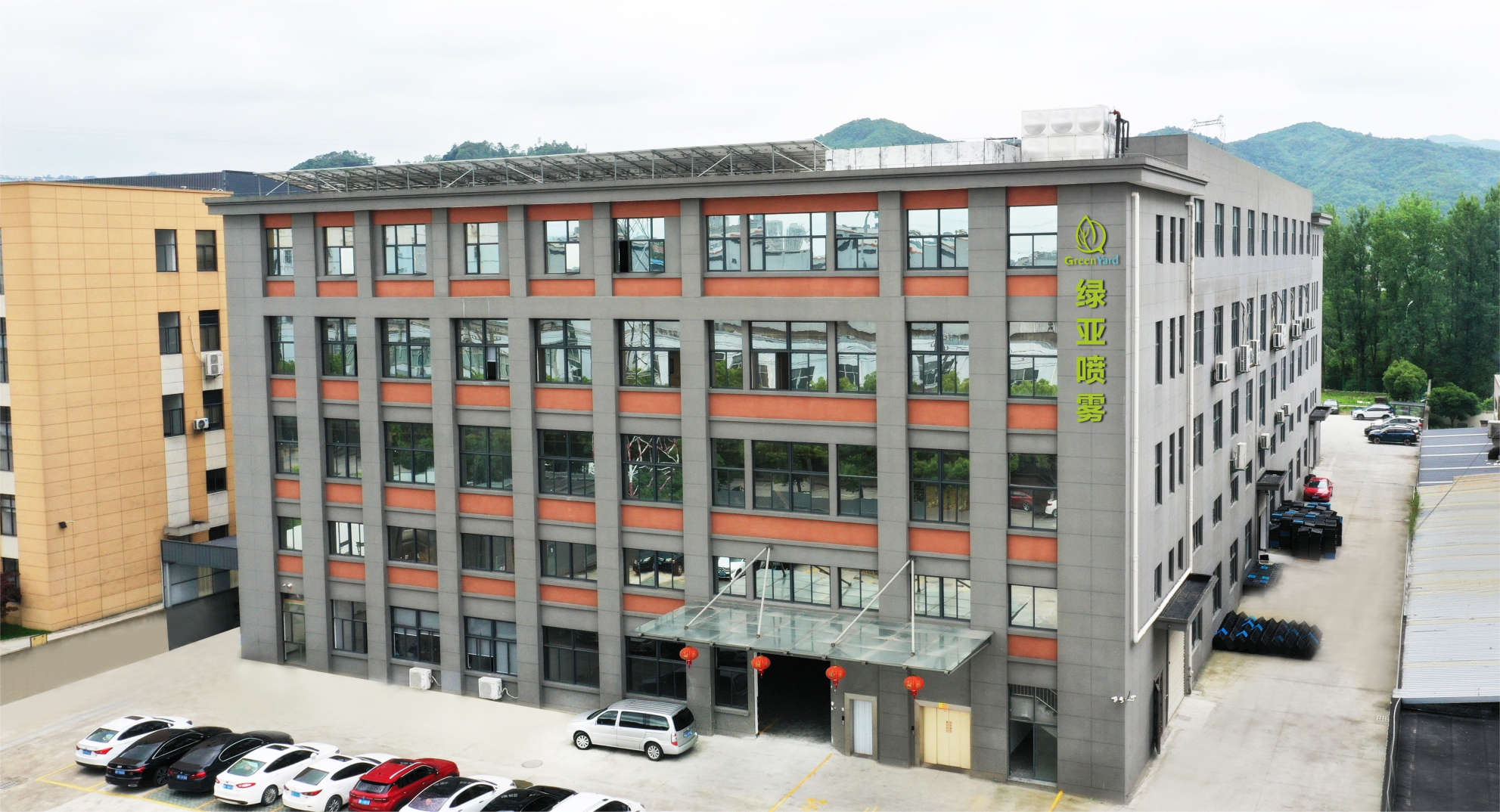
Why Choose Us?The company possesses advanced capabilities in mold design, injection molding, and automated assembly, supported by a professional quality inspection team to ensure product reliability. A dedicated design team continuously drives product innovation, providing customers with high-quality spray solutions.
 Coming From China, Marketing To The World.
-
Products
-
News
 English
 Français
 русский
 Español
Plastic Replaceable Airless Bottle: A Sustainable Packaging Solution for Modern Skincare
Content
- 1 Understanding the Replaceable Airless Bottle Concept
- 2 Key Product Specifications
- 3 Advantages of Airless Dispensing for Skincare
- 4 The Sustainability Value of Replaceable Inner Cartridges
- 5 Comparison with Conventional Packaging Formats
- 6 Suitable Applications for the GY-3602A
- 7 Manufacturing Strengths Behind the Packaging
- 8 Why Manufacturing Scale Matters to Packaging Buyers
- 9 Customization and Product Development Considerations
- 10 Recommended Testing Before Commercial Launch
- 11 Packaging Design and Brand Presentation
- 12 Commercial Benefits for Skincare Brands
- 13 Purchasing Guidance for Importers and Product Developers
- 14 Q&A: Common Questions About the Replaceable Airless Bottle
- 14.1 What is the main purpose of the GY-3602A?
- 14.2 What capacities are available?
- 14.3 What type of closure does it use?
- 14.4 How does the replaceable cartridge feature work?
- 14.5 Is the package suitable for every skincare formula?
- 14.6 Is the bottle recyclable?
- 14.7 What advantage does it have over a cream jar?
- 14.8 Can the package be customized?
- 14.9 What manufacturing capabilities does GreenYard provide?
- 14.10 What should a buyer test before placing a large order?
- 15 Conclusion
- 16 References
- 17 Product: Plastic Replacable Airless Bottle
The packaging selected for a skincare product influences far more than its appearance. It affects product protection, dispensing performance, consumer convenience, production efficiency, transportation, and the environmental profile of the complete product. For creams, moisturizers, serums, and other facial care formulations, the container must help maintain formula quality while offering a clean and controlled user experience. The Plastic Replaceable Airless Bottle, model GY-3602A, is designed to address these requirements through an airless dispensing structure, replaceable inner cartridges, and a compact plastic package suitable for personal care applications.
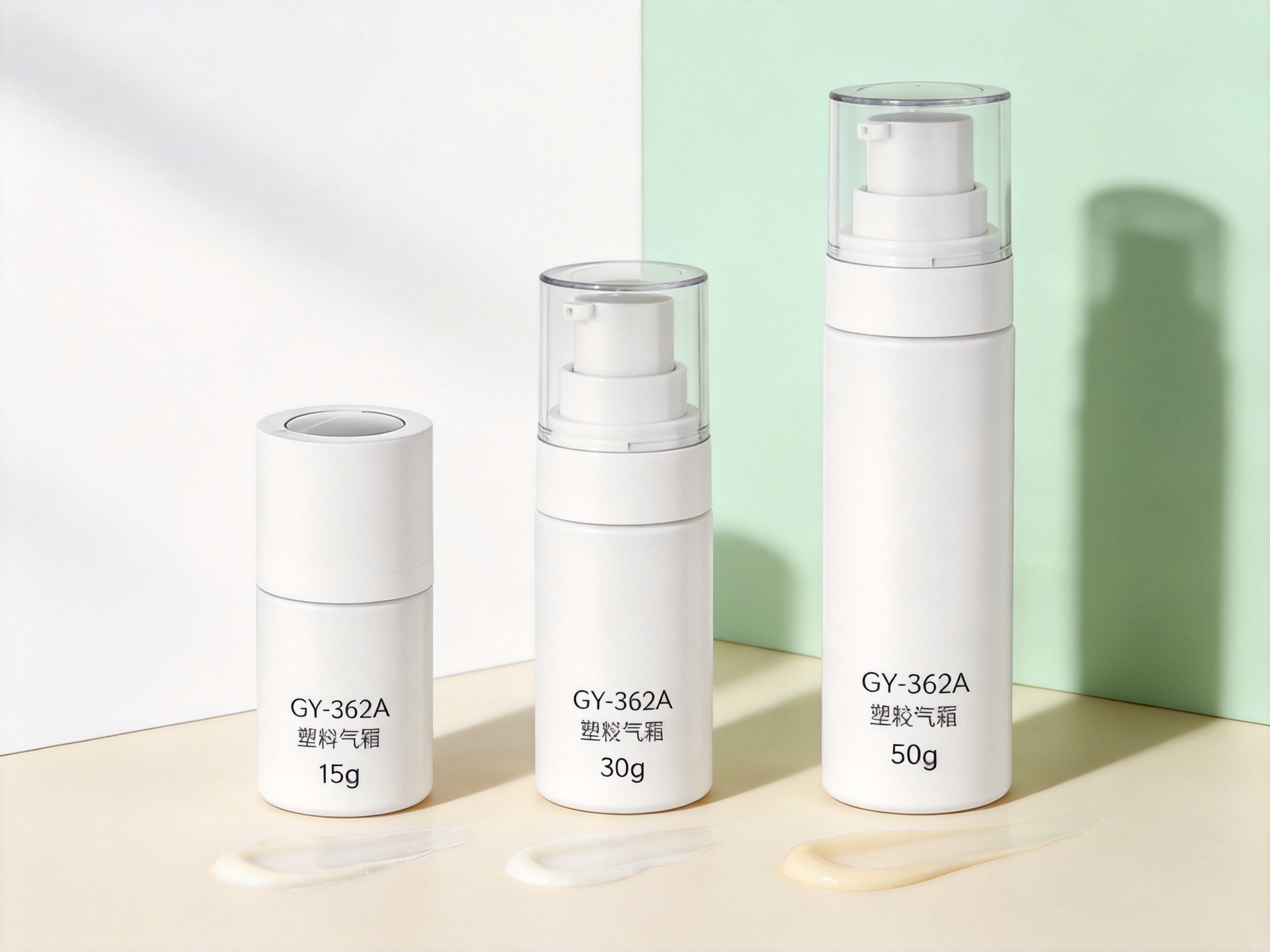
Available in 15-gram, 30-gram, and 50-gram capacities, this package gives skincare brands several filling options without requiring a completely different packaging concept for every product size. Its snap-on closure supports efficient assembly and provides a secure seal when properly matched with the corresponding components. The product is intended for creams, facial care products, moisturizers, serums, and other skincare treatments that benefit from hygienic and controlled dispensing.
The most distinctive feature of this package is its replaceable inner cartridge system. Rather than treating the entire outer pump package as disposable after the first fill is finished, the pump head can be refilled with a replacement inner cartridge. This design can support a more circular use model, reduce unnecessary material consumption, and provide brands with a practical way to combine premium packaging with improved sustainability objectives.
Manufactured by GreenYard Tools Co., Ltd., a China-based personal care packaging manufacturer with extensive experience in spray and dispensing products, the GY-3602A reflects the company’s capabilities in mold design, injection molding, automated assembly, and quality inspection. GreenYard produces perfume sprayers, pump heads, caps, bottles, and daily chemical packaging solutions, with reported daily production capacity reaching one million units. These capabilities are important for customers seeking consistent quality, scalable supply, and packaging components that can be integrated into larger personal care production programs.
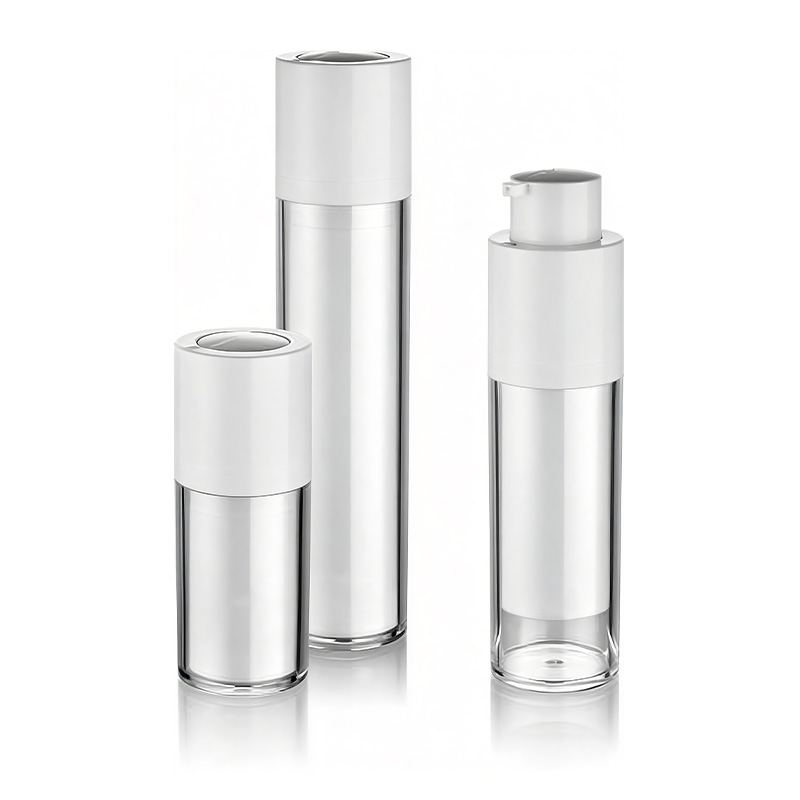
Plastic Replacable Airless Bottle
Understanding the Replaceable Airless Bottle Concept
An airless package is designed to dispense a product without relying on a conventional dip tube that draws the formula upward through the container. Instead, an internal mechanism moves the product toward the dispensing outlet as the package is used. This structure can help limit the amount of air introduced into the formula during normal dispensing and can support more complete product evacuation than many traditional jar formats.
The GY-3602A extends the airless concept by using a replaceable inner cartridge. The outer package and dispensing components can remain part of the product system while the used cartridge is removed and replaced. The precise replacement procedure, compatibility requirements, and filling method should be confirmed with the manufacturer and tested with the intended formula, but the basic concept gives brands an alternative to single-use packaging structures.
This approach is particularly relevant to modern skincare because many products are positioned around purity, performance, and responsible consumption. A package that helps protect a formula while also supporting refilling can reinforce a brand’s sustainability message. It may also create a repeat-purchase experience in which customers purchase replacement cartridges instead of buying a completely new package every time.
Unlike an open cream jar, an airless bottle limits the amount of direct contact between the product and the user’s hands. This can be beneficial for products used on the face, around sensitive areas, or in professional skincare routines. Controlled dispensing also makes it easier for the user to release a small amount of product at a time, helping reduce accidental overuse and unnecessary waste.
The replaceable system is not merely an environmental feature. It can also become a product architecture for brands. A company may use the same outer package across a family of creams or treatments while changing the inner formulation cartridge. This can simplify the visual identity of a product range and potentially reduce the need to introduce a completely new package for each formula or size.
Key Product Specifications
| Specification | Details |
|---|---|
| Product model | GY-3602A |
| Product type | Plastic replaceable airless bottle |
| Available volume | 15 grams, 30 grams, and 50 grams |
| Closure type | Snap-on |
| Recommended usage | Creams, facial care products, moisturizers, serums, and skincare treatments |
| Core design feature | Replaceable inner cartridge with airless dispensing structure |
| Packaging material category | Plastic personal care packaging |
| Manufacturing capabilities | Mold design, injection molding, automated assembly, and quality inspection |
| Customization potential | To be discussed according to formula, decoration, assembly, and project requirements |
The three capacity choices are practical for different product positioning strategies. The 15-gram version may suit trial sizes, travel formats, concentrated treatments, gift sets, or premium products used in smaller quantities. The 30-gram version can serve as a balanced option for daily skincare products, promotional launches, and compact retail packaging. The 50-gram version offers more capacity for regular-use creams, moisturizers, and treatment products intended to remain in a consumer’s routine for a longer period.
Because filling weight can vary according to formula density, the listed gram capacities should be evaluated together with the formula’s specific characteristics. Brands should conduct filling trials to confirm the actual fill volume, headspace, dispensing behavior, and compatibility of the inner cartridge with the selected formulation.
Advantages of Airless Dispensing for Skincare
Improved Formula Protection
Many skincare formulas can be affected by repeated exposure to air, light, moisture, or contamination. Although the precise stability performance depends on the formulation and the complete package system, an airless structure can help reduce direct air exchange during ordinary use. This makes the format attractive for creams, facial treatments, and other products where formula protection is an important consideration.
Traditional wide-mouth jars expose the contents whenever the lid is removed. The user may touch the cream directly, and air enters the jar throughout the product’s service life. A pump-based airless format creates a more controlled route from the package to the user. The consumer presses the dispensing area, receives a measured portion, and does not need to place fingers into the product.
This distinction can be valuable for premium facial care products. A brand that invests in sophisticated formulations may want packaging that communicates the same level of care. The GY-3602A provides a clean, structured dispensing experience that can complement products positioned around efficacy, hygiene, and professional quality.
Controlled Product Delivery
A pump system can help users dispense a repeatable portion of product. The actual output per actuation depends on the pump design, formula viscosity, and assembly conditions, so dosage claims should be verified through testing. Even so, pump dispensing is generally easier to control than scooping product from an open jar.
Controlled delivery can support several commercial benefits. Consumers may find it easier to follow a skincare routine when the package provides a simple and repeatable operation. Brands can also design usage instructions around a certain number of pump actions, provided those instructions are supported by suitable product testing. More consistent dispensing may reduce mess on bathroom counters, minimize contact with the formula, and make the product easier to use while traveling.
Hygienic User Experience
Facial care products are often applied to clean skin, and consumers increasingly expect packaging that supports hygienic handling. A pump format helps keep the remaining contents inside the package rather than exposing them to repeated finger contact. The snap-on closure also helps protect the package during storage and transport when it is correctly fitted.
Hygiene performance is always dependent on the full packaging system, the formula, the filling process, and the user’s handling habits. Nevertheless, the GY-3602A provides a structure that is more controlled than many open-container formats. It is therefore suitable for brands seeking a convenient package for moisturizers, serums, creams, and facial treatments.
Better Access to Remaining Product
Some conventional packages leave a noticeable amount of product inside the container because the user cannot easily reach the sides or bottom. An airless mechanism is designed to move product toward the dispensing area as the package is used. This can help improve product evacuation and reduce the amount left behind, although the final evacuation rate should be measured using the intended formula and packaging configuration.
Higher product recovery can improve consumer satisfaction. Customers generally expect to receive as much of the purchased product as possible, especially when the formula is concentrated or premium-priced. Better access to the remaining cream may also reduce the temptation to cut open or damage the package in order to recover leftover contents.
The Sustainability Value of Replaceable Inner Cartridges
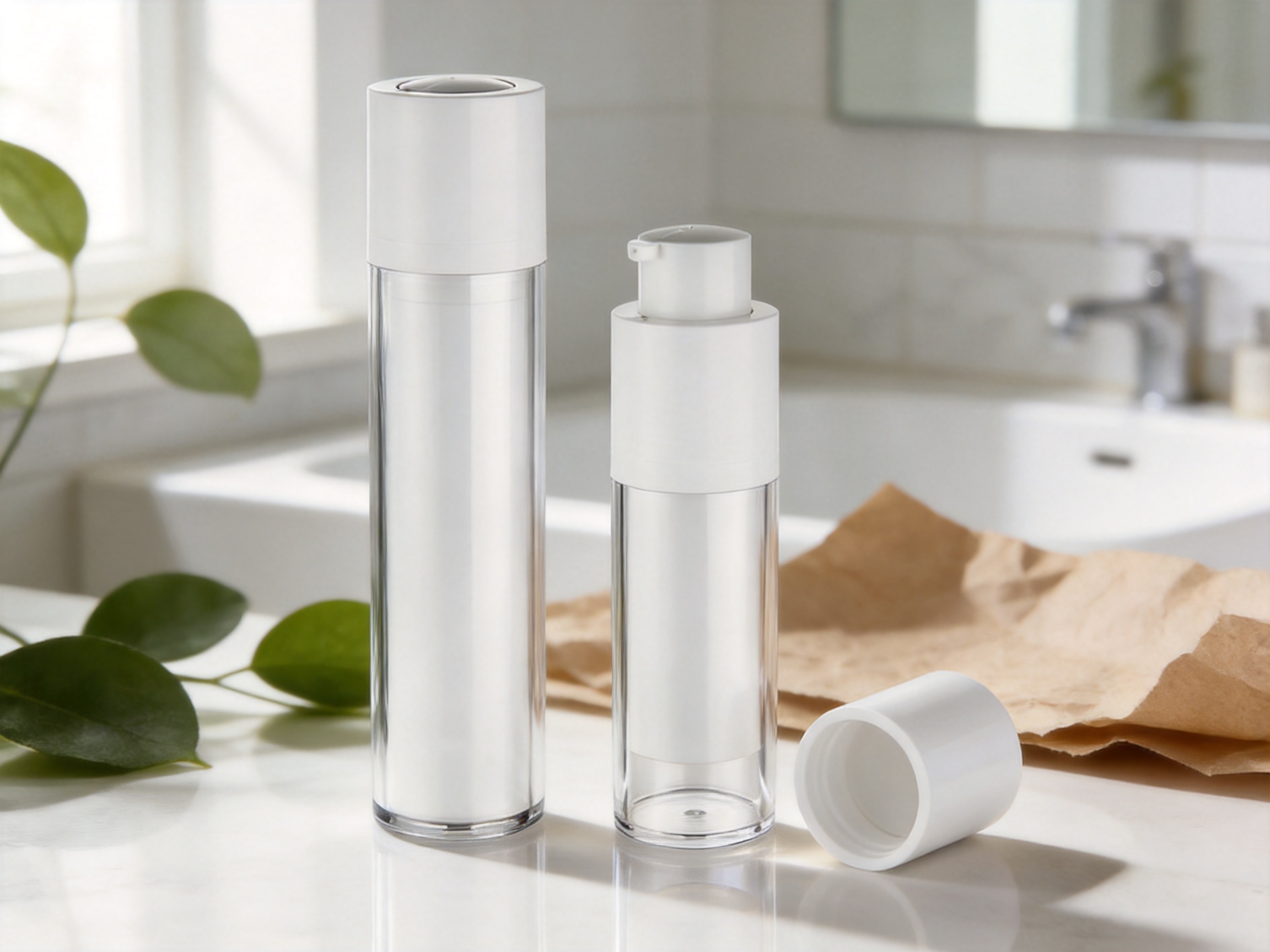
The replaceable inner cartridge is the central environmental advantage of this packaging design. Conventional packaging often requires the user to discard the entire bottle or jar once the product has been consumed. A replaceable model creates the possibility of retaining selected outer components while exchanging only the inner cartridge. This can reduce the number of complete packages required over the life of a product system.
The environmental outcome depends on the materials used, the cartridge design, the logistics of collecting or replacing cartridges, and consumer participation. A refillable package should therefore be evaluated as a complete system rather than promoted only on the basis of its refill feature. Brands should assess cartridge weight, outer component durability, transport efficiency, cleaning requirements, and end-of-life handling before making detailed environmental claims.
Even with these considerations, the replaceable design gives companies more options than a conventional single-use package. It can support refill programs, subscription models, professional-use systems, and retail replacement sales. It may also encourage consumers to keep the outer package for longer, which can help reduce the frequency with which complete packages are purchased and discarded.
Reducing Unnecessary Packaging Replacement
When an outer package is durable and visually appealing, replacing only the inner cartridge may preserve the consumer’s connection with the original product. The bottle can remain part of the daily routine while the used cartridge is exchanged. This can reduce the perception that a new full package is required every time the formula runs out.
For premium skincare companies, this approach can be especially useful. An attractive outer package may be designed as a long-term part of the brand experience, while replacement cartridges can be supplied in simpler packaging. The result may be a more efficient relationship between product presentation and material use.
Supporting Responsible Brand Positioning
Sustainability is increasingly considered during packaging selection, but consumers also expect practical performance. A package that is difficult to refill, leaks, or dispenses inconsistently will not create a positive user experience. The GY-3602A combines the refill concept with airless dispensing and a snap-on closure, allowing brands to present sustainability as part of a functional packaging solution rather than as an isolated marketing message.
Brands can communicate the replaceable cartridge concept through clear instructions, refill reminders, packaging symbols, and retail education. They should explain what part is replaced, how the replacement is installed, and how each component should be handled after use. Clear communication can improve consumer participation and reduce incorrect disposal.
Comparison with Conventional Packaging Formats
Compared with Open Cream Jars
Open cream jars are familiar, visually versatile, and often simple to fill. However, they expose the contents whenever the lid is removed and require the user to touch the formula or use a separate spatula. This may be less convenient for daily facial care routines. A replaceable airless bottle offers a more enclosed dispensing route and can provide a cleaner, more controlled operation.
Jars can also make it difficult to remove product from the bottom or around the inner wall. The airless structure of the GY-3602A is intended to move product toward the outlet, potentially improving the user’s ability to access the contents. The best choice still depends on the formula, target market, product positioning, and desired visual design.
Compared with Conventional Pump Bottles
Conventional pump bottles are convenient and widely used, but many rely on a dip tube. The dip tube must reach through the formula, and its performance can be influenced by viscosity, product level, and container geometry. An airless system uses a different product movement principle and can offer advantages for formulas that require a more protected dispensing environment.
The replaceable cartridge feature creates another distinction. A standard pump bottle is commonly treated as a single-use primary package, while the GY-3602A can be developed as part of a refill or replacement system. This may give brands a stronger platform for repeat purchases and packaging reduction initiatives.
Compared with Soft Refill Pouches
Refill pouches can use less material than rigid containers and may be efficient for certain product categories. However, they may not provide the same premium appearance, controlled dispensing, or structural protection as a rigid airless package. The GY-3602A is more suitable for brands that want a durable, attractive, and pump-based consumer experience.
A hybrid model is also possible. A rigid replaceable airless outer package can be used for the primary user experience, while the replacement cartridge is supplied through a more material-efficient format, depending on the technical design and filling process. Such a system would require careful compatibility, sealing, transport, and consumer-use testing.
Suitable Applications for the GY-3602A
The package is intended for cream and facial care products, but its application potential extends across several skincare segments. Moisturizers are an obvious fit because consumers use them frequently and appreciate clean dispensing. Night creams, day creams, barrier creams, and anti-aging products can also benefit from a compact airless package.
Serums with a thicker or emulsion-based consistency may be suitable when the formula’s viscosity is compatible with the pump system. Treatment products can use the package to create a more precise and hygienic application routine. Brands should conduct compatibility testing before filling any product, particularly when the formulation contains active ingredients, essential oils, solvents, acids, or other components that may interact with packaging materials.
The 15-gram capacity can be used for travel sizes, introductory kits, professional sampling, and limited-edition collections. The 30-gram size may be appropriate for standard facial care products, while the 50-gram size can support a full-size cream or a larger treatment product. Using multiple sizes within one packaging family can help a brand create a coherent product range while serving different customer needs.
The package may also be appropriate for hotel amenities, spa products, dermatology-focused skincare, gift sets, and direct-to-consumer subscription programs. Each application requires its own testing program for filling, labeling, shipping, storage, and consumer handling.
Manufacturing Strengths Behind the Packaging
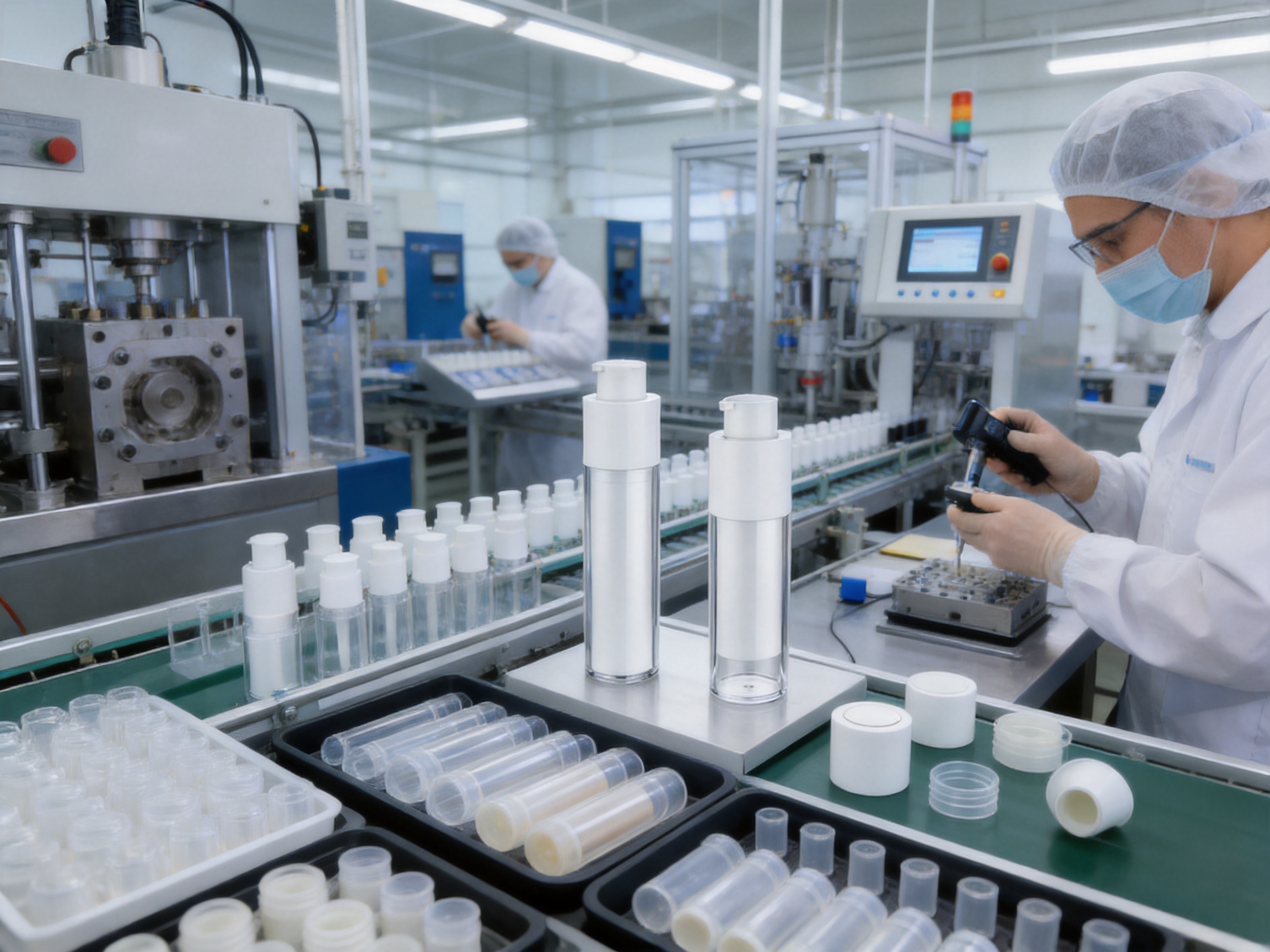
A packaging concept can only deliver commercial value when it is supported by reliable manufacturing. GreenYard Tools Co., Ltd. specializes in spray products and personal care packaging, including perfume sprayers, pump heads, caps, bottles, and related daily chemical packaging solutions. Its reported experience in this field extends across 16 years, giving the company a substantial background in component design, production coordination, assembly, and quality control.
Mold Design
Mold design is one of the most important steps in manufacturing plastic packaging. The mold affects dimensions, surface finish, wall consistency, component fit, production cycle time, and the overall repeatability of the part. A replaceable airless bottle includes several interfaces that must work together, including the bottle body, pump head, closure, cartridge, and sealing areas.
GreenYard’s mold design capability allows the company to develop and refine tooling for packaging components. Good mold engineering can help reduce flash, improve part consistency, support stable assembly, and create a more attractive external finish. It can also help manufacturers evaluate how a component will behave during high-volume production rather than only during a small prototype run.
Injection Molding
Injection molding is widely used for plastic packaging because it supports efficient production of repeatable components in large quantities. Resin is heated, injected into a mold, cooled, and ejected as a finished part. The process must be controlled carefully because temperature, pressure, cooling, material flow, and cycle timing can affect the final result.
For a snap-on closure, dimensional accuracy is especially important. The closure must fit securely without being excessively difficult to install. The bottle and inner cartridge must also maintain suitable tolerances to support sealing and assembly. GreenYard’s injection molding capabilities can support the production of the plastic components required for the GY-3602A and other personal care packaging products.
Automated Assembly
Airless packaging often consists of multiple components that must be assembled in the correct sequence. Automated assembly can improve repeatability and production efficiency while reducing variation caused by manual handling. It can also support more consistent placement of internal components and closures.
For brands purchasing packaging at scale, assembly consistency is essential. A component that looks correct but is not properly fitted may lead to leakage, poor dispensing, or a disappointing consumer experience. Automation, supported by suitable inspection procedures, helps manufacturers control the relationship between individual parts and the final package.
Quality Inspection
Quality inspection can include dimensional checks, appearance inspection, closure verification, assembly evaluation, dispensing tests, and leak testing. The exact inspection plan should be developed according to the package configuration and customer requirements. For an airless bottle, inspection should pay particular attention to the dispensing mechanism, cartridge fit, snap-on closure, visible defects, and package integrity.
GreenYard states that it has advanced quality inspection capabilities to support reliable packaging production. For customers, this can provide a stronger foundation for incoming quality control and production planning. It remains important for each buyer to establish written specifications, approved samples, acceptance criteria, and batch inspection procedures before starting mass production.
Why Manufacturing Scale Matters to Packaging Buyers
GreenYard reports daily production capacity of one million units. Production scale can be valuable for customers with large or recurring orders because it may support more stable scheduling and greater capacity for repeat production. A supplier with multiple internal capabilities can also reduce the need to coordinate mold development, component production, assembly, and inspection among separate vendors.
Centralized manufacturing may simplify communication. When the same organization understands the mold, plastic components, pump parts, assembly process, and inspection requirements, technical issues can be reviewed more efficiently. This can be especially important when a customer is developing a refillable package, because the outer bottle and replacement cartridge must function as a coordinated system.
Scale should not be judged by capacity alone. Buyers should also evaluate lead times, sample approval procedures, quality systems, material documentation, production flexibility, communication, and after-sales support. A high-capacity supplier is most valuable when it can maintain consistent standards across prototypes, pilot runs, and mass production.
Customization and Product Development Considerations
Personal care brands often require more than a standard package. They may need specific colors, surface finishes, decoration methods, labels, printing, logo placement, or special assembly instructions. The GY-3602A can serve as a base packaging format, while project-specific details should be discussed with the manufacturer before tooling or production begins.
Customization should start with the formula and user experience. The brand should define the product viscosity, intended dosage, use frequency, target capacity, filling method, closure requirements, and desired shelf life. These details influence the selection of the cartridge, pump, bottle material, and sealing structure.
Color matching should be evaluated using approved physical samples because plastic appearance can change according to resin, additives, surface texture, wall thickness, and lighting conditions. Surface decoration should also be tested for abrasion resistance, compatibility with oils or creams, and durability during transportation.
For a refillable package, the replacement process must be simple enough for consumers or professional operators to perform correctly. The package should be evaluated for cartridge insertion force, alignment, sealing, removal, and resistance to accidental separation. Instructions should be written in clear language and tested with representative users.
Recommended Testing Before Commercial Launch
Packaging performance cannot be determined by appearance alone. Before commercial launch, brands should test the complete package with the actual formula, filling process, labeling, secondary packaging, and intended distribution conditions.
Formula Compatibility Testing
Compatibility testing examines whether the formula affects the plastic, pump, cartridge, closure, seals, decoration, or other package components. Testing may include elevated-temperature storage, room-temperature storage, low-temperature exposure, freeze-thaw cycles, and long-term observation. The appropriate program depends on the formula and the intended market.
Changes to color, odor, viscosity, leakage, brittleness, swelling, stress cracking, or dispensing performance should be recorded. Active ingredients and fragrance components may require special attention because they can behave differently from simple water-based formulations.
Dispensing Performance Testing
Dispensing tests should measure the amount released per actuation, the number of actuations needed to initiate flow, the consistency of output, and the percentage of product that remains after normal use. Testing should be performed with the minimum, nominal, and maximum expected viscosity ranges whenever possible.
The package should also be tested after storage, transport simulation, and repeated use. A pump that performs well when new may behave differently after exposure to temperature changes or after many dispensing cycles.
Leak and Closure Testing
The snap-on closure should be evaluated for proper fit, retention, sealing, and resistance to handling. Packages may be exposed to inverted storage, vibration, drop simulation, pressure variation, and transportation conditions. The purpose is to identify whether the package can maintain integrity under realistic distribution conditions.
Refill and Cartridge Testing
The replaceable cartridge system should be tested through repeated installation and removal cycles. The test should examine whether the cartridge remains secure, whether the outer package maintains its function, and whether the dispensing performance changes after replacement. If the cartridge is intended to be filled by the consumer, the process should also be assessed for cleanliness, simplicity, and error risk.
Refill instructions should explain how to remove the used cartridge, install the replacement, close the package, and dispose of or return the used component. If the replacement is intended to be performed by a retailer, salon, clinic, or filling station, the operating procedure should be documented and validated.
Packaging Design and Brand Presentation
Although performance is essential, packaging also serves as a visual communication tool. A compact airless bottle can present a modern and organized appearance on a retail shelf, in an online product photograph, or in a professional treatment environment. The bottle format can support a clean design language for brands focused on skincare science, minimalism, wellness, or sustainability.
The outer component can be decorated in a way that distinguishes the brand while the inner cartridge supports repeat use. A coordinated packaging family using 15-gram, 30-gram, and 50-gram capacities can create visual consistency across multiple products. This may help consumers understand that different products belong to the same range.
The package should remain easy to identify and operate. Excessive decoration should not obscure dosage information, ingredient details, usage instructions, batch information, or refill guidance. A successful design combines visual appeal with practical communication.
Commercial Benefits for Skincare Brands
The replaceable airless bottle can support several commercial strategies. First, it can differentiate a skincare product from conventional jar packaging. Second, it can give the brand a refill or replacement story that encourages repeat purchases. Third, it can create a premium user experience through controlled dispensing and a more hygienic format.
Replacement cartridges may also support customer retention. Instead of selling a complete package for every purchase, a brand can offer an initial package followed by replacement units. This structure may be suitable for subscription programs, loyalty schemes, treatment courses, and recurring-use moisturizers.
The three available capacities allow brands to organize product lines around different consumption patterns. Smaller packages can introduce consumers to a formula, while larger formats can serve established users. The same core packaging concept may be used across multiple product categories, simplifying brand recognition and potentially reducing design complexity.
For international customers, supplier capability is another important consideration. GreenYard’s focus on personal care packaging and its experience with global markets position it as a potential partner for brands that require coordinated sourcing of bottles, caps, pumps, and sprayers. Customers should still confirm export documentation, regulatory requirements, material declarations, and shipment terms for their specific destination markets.
Purchasing Guidance for Importers and Product Developers
Buyers should begin by confirming the intended product type, formula viscosity, capacity, closure requirements, and expected annual demand. They should request product samples and evaluate the package with the actual formula rather than relying only on empty-container testing.
A technical inquiry should include questions about available materials, cartridge replacement procedures, minimum order quantities, color options, decoration methods, filling compatibility, sample lead time, mold ownership, production lead time, inspection standards, and packaging for shipment. If the package will be marketed as environmentally responsible, the buyer should also request information relevant to recycling, refill logistics, and component separation.
Commercial approval should be based on a signed specification or approved sample. The specification should identify critical dimensions, acceptable appearance standards, closure performance, pump output, material requirements, printing tolerances, and packaging quantities. Clear specifications help prevent disagreements between the buyer and supplier after mass production begins.
Buyers should also consider spare components and replacement supply. A refillable package depends on the continued availability of compatible inner cartridges. The brand should therefore discuss long-term supply planning and whether the cartridge design will remain available for future production cycles.
Q&A: Common Questions About the Replaceable Airless Bottle
What is the main purpose of the GY-3602A?
The GY-3602A is a plastic replaceable airless bottle designed for creams, facial care products, moisturizers, serums, and related skincare treatments. It combines airless dispensing with a replaceable inner cartridge concept.
What capacities are available?
The listed capacities are 15 grams, 30 grams, and 50 grams. The suitable size depends on the formula, usage frequency, product positioning, and target market.
What type of closure does it use?
The package uses a snap-on closure. The fit and sealing performance should be verified with the selected components and tested under the intended transportation and storage conditions.
How does the replaceable cartridge feature work?
The pump head and outer package are designed to work with a replaceable inner cartridge after the original cartridge has been used. The exact replacement steps should be confirmed with the supplier and communicated clearly to the end user or filling operator.
Is the package suitable for every skincare formula?
No packaging system should be assumed to be compatible with every formula. Brands should conduct compatibility, stability, dispensing, and leakage testing with the actual product before commercial production.
Is the bottle recyclable?
Recyclability depends on the materials, local recycling infrastructure, component design, and separation requirements. A brand should obtain material information and evaluate the complete package before making recycling claims.
What advantage does it have over a cream jar?
The airless bottle offers a more controlled dispensing route and reduces the need for direct contact with the product. It may also improve access to remaining contents and support a replaceable cartridge model that is not normally available with a conventional jar.
Can the package be customized?
Customization options should be discussed with GreenYard according to the required color, decoration, labeling, surface finish, capacity, formula, and order volume. Physical samples should be approved before mass production.
What manufacturing capabilities does GreenYard provide?
GreenYard specializes in personal care packaging and reports capabilities in mold design, injection molding, automated assembly, and quality inspection. Its product range includes perfume sprayers, pump heads, caps, bottles, and other daily chemical packaging solutions.
What should a buyer test before placing a large order?
The buyer should test formula compatibility, dispensing consistency, pump initiation, leakage resistance, closure retention, cartridge replacement, appearance, transportation durability, and long-term storage performance.
Conclusion
The Plastic Replaceable Airless Bottle provides a practical response to several important packaging challenges in modern skincare. Its 15-gram, 30-gram, and 50-gram capacities offer flexibility for different product sizes, while the snap-on closure supports a secure and convenient package structure. The airless dispensing concept can improve hygiene, control product delivery, and help protect the formula during normal use.
Its replaceable inner cartridge is the most distinctive advantage. By allowing the package system to be used with replacement cartridges, the design can support refill programs, reduce the need for complete package replacement, and strengthen a brand’s sustainability strategy. The environmental value must be verified through a complete life-cycle and end-of-life assessment, but the format gives brands a strong foundation for more responsible packaging development.
GreenYard Tools Co., Ltd. contributes manufacturing experience in mold design, injection molding, automated assembly, and quality inspection. Its reported production capacity and specialization in personal care packaging make it suitable for customers seeking a scalable supplier for bottles, pump heads, caps, sprayers, and related components.
For best results, brands should treat the GY-3602A as part of a complete packaging development program. Formula compatibility, dispensing behavior, refill procedures, closure performance, transport resistance, decoration, and consumer instructions should all be validated before launch. When these elements are properly coordinated, the replaceable airless bottle can deliver a combination of functionality, premium presentation, production scalability, and sustainability-oriented design for the global skincare market.
References
1. GreenYard Tools Co., Ltd. Product information for Plastic Replaceable Airless Bottle, model GY-3602A.
2. GreenYard Tools Co., Ltd. Company information concerning personal care packaging manufacturing, mold design, injection molding, automated assembly, and quality inspection.
3. General packaging development principles for cosmetic bottles, airless dispensing systems, closures, and refillable packaging formats.
4. General cosmetic packaging compatibility practices for creams, facial care products, serums, moisturizers, and skincare treatments.
5. General sustainable packaging principles concerning refill systems, material reduction, component durability, consumer instructions, and end-of-life evaluation.
Product: Plastic Replacable Airless Bottle

-
Airless Bottles Uncovered: How to Protect Your Skincare and Perfect Every Pump
If you have ever opened a pump bottle of serum and found the last quarter of the product impossible ...
-
Amber Plastic Bottles: Lightweight, Protective, Customizable Packaging for Cosmetics
You have spent months stabilizing a vitamin C serum, only to watch a pallet of amber glass bottles ...
-
Airless Pump Makeup Packaging: How It Works and What Brands Should Specify
Open a foundation that has been sitting in a warehouse for eighteen months and the first thing a pa...
-
How Glass Airless Bottle Packaging Prevents Contamination and Boosts Shelf Life?
Glass airless bottle packaging prevents contamination and extends shelf life by completely eliminat...
Copyright © GreenYard Tools Co.,ltd. All Rights Reserved.
Personal Care Packaging Manufacturer Custom Perfume Sprayers Factory