
-
About Us
Why Choose Us?The company possesses advanced capabilities in mold design, injection molding, and automated assembly, supported by a professional quality inspection team to ensure product reliability. A dedicated design team continuously drives product innovation, providing customers with high-quality spray solutions.
 Coming From China, Marketing To The World.
-
Products
-
News
 English
 Français
 русский
 Español
0.12CC All-Plastic Recyclable Fine Mist Sprayer for Sustainable Packaging
Content
- 1 Product Overview
- 2 Why Dosage Precision Matters
- 3 The Environmental Value of an All-Plastic Construction
- 4 Advantages Compared with Traditional Mixed-Material Sprayers
- 5 Flexible Neck-Finish Options
- 6 Customized Dip-Tube Length
- 7 Application Areas
- 8 Manufacturing Capabilities Behind the Product
- 9 Production Capacity and Supply Reliability
- 10 Design and Development Support
- 11 Quality and Compatibility Considerations
- 12 How the Product Supports Brand Differentiation
- 13 Recommended Development Process
- 14 Frequently Asked Questions
- 14.1 What is the dosage of the GY-608A sprayer?
- 14.2 Is the sprayer made with metal components?
- 14.3 Can the sprayer be used for perfume?
- 14.4 Is it suitable for body mist products?
- 14.5 Can it be used for pharmacy products?
- 14.6 What neck sizes are available?
- 14.7 Can the dip tube be customized?
- 14.8 Does direct recyclability apply in every country?
- 14.9 What manufacturing capabilities support the product?
- 14.10 What should be tested before placing a large order?
- 15 Conclusion
- 16 References
- 17 Product: 0.12CC All Plastic Recyclable Mist Sprayer

Packaging is becoming an increasingly important part of product development. Brands in personal care, fragrance, pharmacy, and daily chemical markets are expected to deliver attractive packaging while also reducing material complexity, improving recyclability, and maintaining reliable dispensing performance. A sprayer is not merely a closure. It influences the user experience, the accuracy of product application, the protection of the formula, and the environmental profile of the complete package.
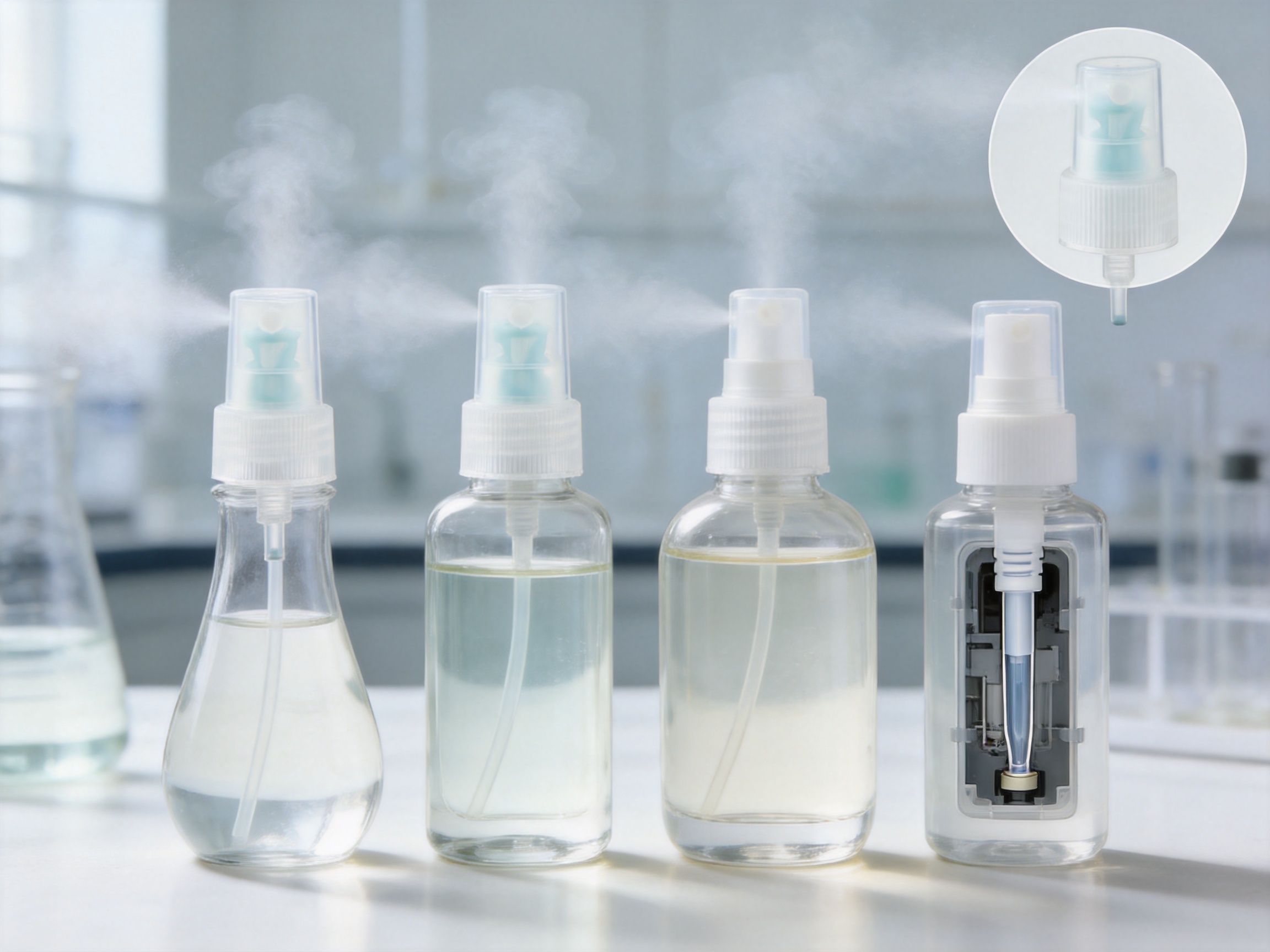
The 0.12CC All-Plastic Recyclable Mist Sprayer, identified as model GY-608A, is designed to address these requirements in one compact dispensing solution. It delivers a controlled 0.12 ml dosage per actuation and produces a fine, soft, evenly distributed mist. Its all-plastic construction eliminates metal components, allowing the sprayer to be recycled directly without the disassembly normally required for mixed-material pump assemblies.
With multiple neck-finish options, customized dip-tube lengths, screw-on closure compatibility, and applications ranging from body mist and perfume to pharmacy products, this fine mist sprayer provides packaging developers with a flexible platform. It is particularly suitable for companies looking to combine a premium dispensing experience with a more straightforward recycling pathway.
Product Overview
The GY-608A is a fine mist sprayer developed for bottles used in fragrance, personal care, pharmacy, and other liquid product categories. The sprayer is engineered around a nominal dosage of 0.12 ml per spray. This dosage supports controlled product application, helping users distribute liquid across a targeted area without excessive release.
The sprayer uses a screw-on closure system and can be supplied for a broad range of bottle neck finishes. Listed options include 15/410, 18/410, 18-415, 18-420, 20/410, 20/415, 22/415, 24/410, 24-415, 28-410, and 28-400. The available range gives packaging designers more freedom when selecting bottle shapes, capacities, and materials.
The dip tube can be customized according to the height and internal design of the bottle. This is an important feature because the tube must reach the product efficiently while avoiding unnecessary contact with the bottom of the container. Correct tube length helps support consistent liquid uptake and reduces the risk of incomplete dispensing.
Unlike many traditional sprayers that contain metal springs or other metal elements, the GY-608A is made entirely from plastic. This mono-material design can simplify end-of-life handling. Instead of requiring users or recycling facilities to separate metal and plastic components, the sprayer can be recycled directly as a plastic assembly, subject to the recycling capabilities and requirements of the local system.
Product model | GY-608A |
Product type | Fine mist sprayer |
Nominal dosage | 0.12 ml per spray |
Closure type | Screw-on |
Material concept | All-plastic, without metal components |
Dip tube | Customized according to bottle requirements |
Available neck finishes | 15/410, 18/410, 18-415, 18-420, 20/410, 20/415, 22/415, 24/410, 24-415, 28-410, and 28-400 |
Typical uses | Perfume, body mist, pharmacy, and personal care liquids |

0.12CC All Plastic Recyclable Mist Sprayer
Why Dosage Precision Matters
Dosage is one of the most important performance factors in a fine mist sprayer. A dispensing system that releases too much liquid may create waste, wet the skin excessively, or produce an inconsistent user experience. A system that releases too little may require repeated actuations and can make the product feel ineffective. A controlled dosage helps brands create a more predictable relationship between the pump and the formula.
The GY-608A is designed to provide a nominal 0.12 ml output per actuation. This dosage is well suited to products intended to be applied in a light and even layer. For body mist, facial mist, fragrance, and certain pharmacy applications, a fine spray can improve coverage while reducing the need for direct rubbing or spreading.
Controlled output also supports packaging development. When the dosage is known, brand owners can estimate the approximate number of applications available from a bottle. This can assist with product positioning, usage instructions, filling calculations, and consumer communication. Actual performance may depend on formula viscosity, component tolerances, bottle configuration, testing conditions, and the complete pump system, so final validation should always be performed with the intended liquid and bottle.
A fine mist sprayer must balance several factors at the same time. The internal pump components must draw liquid effectively, the actuator must deliver a stable spray, and the nozzle must form droplets with a suitable distribution. The GY-608A is designed to produce a fine and soft mist rather than a heavy stream. This makes it appropriate for applications where comfort, coverage, and visual spray quality influence product perception.
For fragrance products, the spray pattern can contribute directly to the premium character of the package. A smooth and even mist helps avoid an abrupt release of liquid and supports a more refined application. For personal care products, the same characteristic can improve the feeling of lightness. In pharmacy packaging, controlled spraying may help users apply a measured amount to the intended area, although compatibility and regulatory evaluation remain essential for every specific formula.
The Environmental Value of an All-Plastic Construction
The most significant differentiating feature of the GY-608A is its all-plastic construction. Conventional sprayers may include a combination of plastic and metal, particularly in the internal spring or other functional components. Although these systems can provide reliable performance, mixed materials can make recycling more difficult when the components are not easily separable.
The GY-608A removes metal from the sprayer structure. This creates a mono-material approach that can make collection, sorting, and processing more straightforward. The product can be recycled directly without the consumer having to disassemble the sprayer before disposal. This is a practical advantage because consumers often do not have the tools, time, or information needed to separate small packaging components correctly.
Direct recyclability does not mean that every local recycling system will accept every sprayer. Recycling rules differ between countries, municipalities, and processing facilities. The bottle, label, cap, pump, and remaining product may also influence the final outcome. Nevertheless, reducing the number of material types is a meaningful design step because it removes one common barrier to recycling and provides a clearer material structure.
Mono-material packaging can also make it easier for brands to communicate their sustainability objectives. A product developer can explain that the sprayer contains no metal and is designed for direct recycling as a plastic component. This message is easier to understand than instructions requiring users to locate, remove, and separately dispose of hidden internal parts.
The environmental advantage extends beyond consumer convenience. A simplified material structure may reduce the need for additional separation during recycling operations. It may also support more consistent material identification, depending on the polymer selection and the requirements of the local recycling chain. These benefits should be assessed together with the bottle material, color, additives, decoration, and filling formula rather than considered in isolation.
It is important for responsible packaging communication to distinguish design intent from guaranteed recycling outcomes. The GY-608A is designed to support direct recycling without disassembly, but the final recycling result depends on local infrastructure and accepted material specifications. Brands should conduct regional assessments before making market-specific environmental claims.
Advantages Compared with Traditional Mixed-Material Sprayers
Traditional mixed-material sprayers remain widely used because they have established production methods and familiar performance characteristics. However, they can present several challenges when brands prioritize recyclability and simplified end-of-life handling. The all-plastic GY-608A offers a different approach without abandoning the dispensing functions expected from a fine mist pump.
Reduced Material Complexity
A mixed-material sprayer may combine multiple plastic parts with metal components. This can complicate recycling because the assembly may need to be separated before processing. The GY-608A is designed with plastic components only, creating a simpler material profile and reducing the number of disassembly steps.
Improved Consumer Convenience
Consumers generally prefer packaging that does not require special preparation. An all-plastic sprayer can be disposed of as a complete component instead of requiring the user to remove a small metal part. This helps reduce confusion and can improve the likelihood that the component enters an appropriate recycling stream.
Support for Sustainable Product Positioning
Many brands are developing refill, recycling, and material-reduction strategies. A recyclable sprayer can contribute to these programs by reducing the use of mixed materials at the closure. It can be integrated into a wider sustainability plan that includes recyclable bottles, reduced packaging weight, responsible labeling, and optimized logistics.
Preservation of Fine Mist Performance
Sustainability improvements are only valuable when the packaging continues to perform. The GY-608A is designed to maintain a fine, soft spray and a nominal 0.12 ml dosage while using an all-plastic structure. This allows brands to consider environmental improvements without automatically accepting a lower-quality user experience.
Potentially More Efficient Component Management
For packaging operations, a mono-material sprayer can simplify material identification and component management. It may reduce the need to track metal-containing and metal-free versions separately, depending on the purchasing program. This can support clearer specifications and easier sustainability documentation.
The appropriate comparison should always include actual performance testing, material declarations, compatibility results, and lifecycle considerations. A sprayer that performs well in one formula or bottle may require adjustment in another. The advantage of the GY-608A is that it provides an environmentally focused starting point with the customization needed for different packaging projects.
Flexible Neck-Finish Options
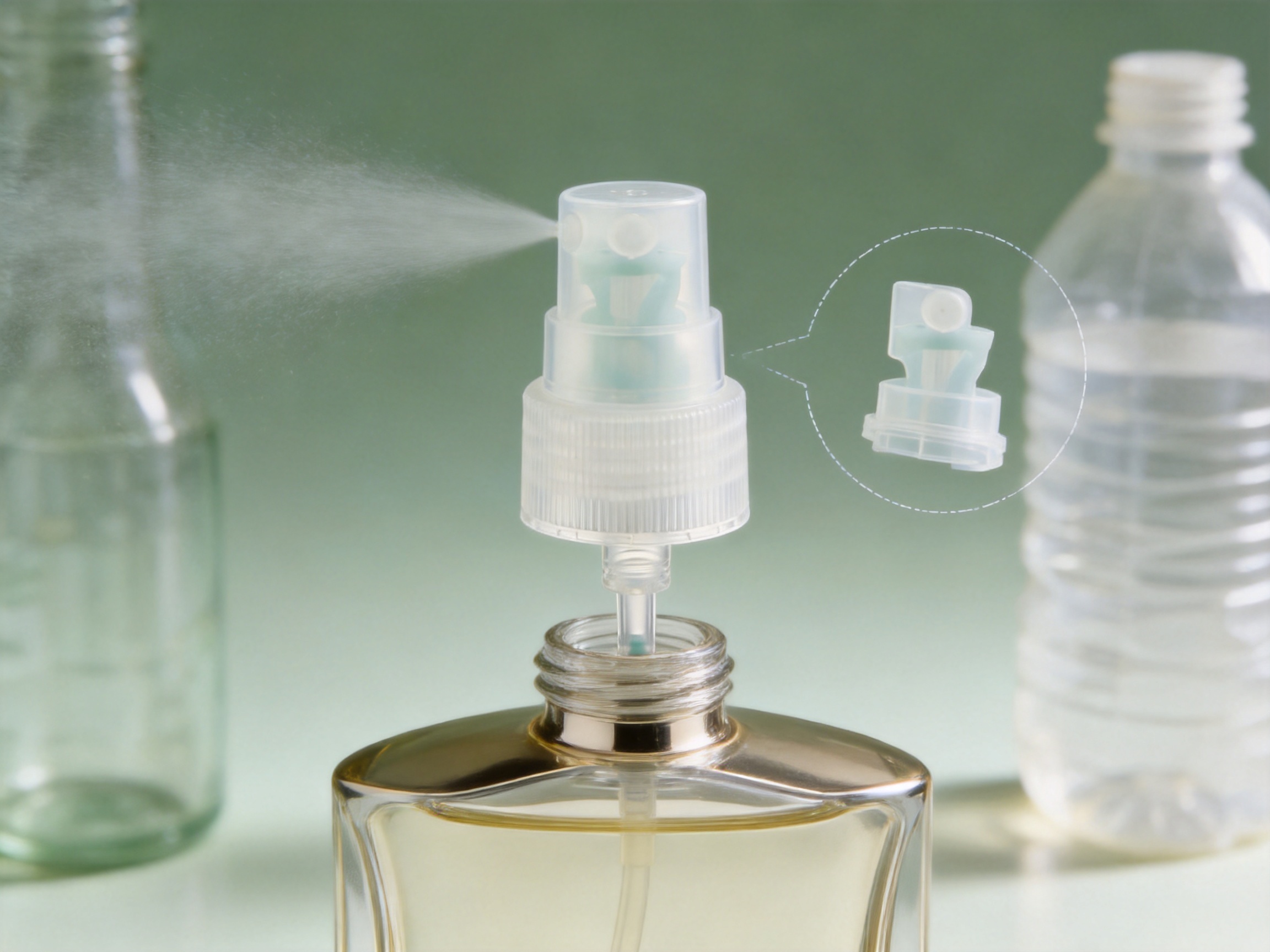
Packaging projects often use different bottle suppliers, filling lines, and container geometries. A sprayer that is available in only one neck finish can limit design options or require a bottle redesign. The GY-608A is listed with multiple neck-finish choices, including 15/410, 18/410, 18-415, 18-420, 20/410, 20/415, 22/415, 24/410, 24-415, 28-410, and 28-400.
These options cover a range of common closure dimensions and thread configurations. The selected finish must match the bottle neck accurately to achieve proper fit, sealing, torque, and appearance. Brands should confirm the exact neck standard, thread profile, liner or sealing requirements, and filling-line compatibility before placing a production order.
Multiple size options also support different visual strategies. A narrow-neck sprayer may suit a compact perfume bottle or a travel-size product, while a larger neck finish may be preferred for a wider bottle or a package requiring a more substantial closure appearance. The same basic sprayer platform can therefore be evaluated across several product formats.
For contract manufacturers and packaging distributors, a broad finish range can make the product more useful across multiple customer programs. It supports customization without requiring an entirely different development path for every bottle size. This can shorten early-stage evaluation and help packaging teams compare alternatives more efficiently.
Customized Dip-Tube Length
The dip tube is a small component, but its dimensions have a direct effect on dispensing reliability. A tube that is too short may leave a considerable amount of product in the bottle. A tube that is too long may bend, obstruct the intake, or interfere with the bottle base. Customization helps the sprayer adapt to the actual internal dimensions of the selected container.
GreenYard provides customized tube length for the GY-608A. During development, the bottle height, shoulder shape, base structure, liquid level, formula characteristics, and expected filling volume should all be considered. The objective is to position the tube so that it can draw liquid effectively throughout normal use while supporting stable spray performance.
Customization is especially valuable when the bottle has a non-standard profile. Cosmetic and fragrance packaging frequently uses distinctive shoulders, curved bases, thick glass walls, or decorative shapes. A standard tube may not be optimal for these designs. A project-specific tube length can improve the relationship between the sprayer and the container without changing the external appearance of the package.
Tube customization can also help with filling and assembly planning. The correct length reduces the risk of tube folding during component insertion and supports more consistent assembly. For automated production, dimensional control is essential because even small variations can affect how the tube sits inside the bottle.
Before mass production, the complete package should be tested in an upright position and under practical usage conditions. Testing may include spray output, priming behavior, residual product, leakage, storage orientation, transport vibration, temperature exposure, and repeated actuation. These evaluations confirm that the customized tube works correctly with the selected formula and bottle.
Application Areas
Perfume and Fragrance
Fragrance packaging requires a sprayer that produces a refined mist and supports accurate application. The 0.12 ml dosage is suitable for a light spray experience, while the fine nozzle output can help distribute fragrance more evenly. The all-plastic design also provides an option for fragrance brands that want to explore simpler material structures.
The sprayer can be paired with glass or plastic perfume bottles, subject to neck compatibility and formula testing. The external finish, actuator design, and collar appearance can be coordinated with the bottle and secondary packaging to create a consistent visual identity. For premium fragrance products, component quality, dimensional accuracy, and surface appearance should be evaluated together.
Body Mist
Body mist products are typically applied over a relatively broad area and benefit from a soft spray pattern. A 0.12 ml output can help users apply the product gradually, allowing repeated sprays without releasing an unnecessarily heavy amount at one time. The sprayer is suitable for body mist bottles in different sizes when the bottle neck and dip-tube length are correctly matched.
The formula may contain alcohol, water, fragrance oils, or other ingredients. Compatibility testing is necessary to confirm that the liquid does not cause swelling, stress cracking, discoloration, odor transfer, or loss of spray performance. The complete package should be tested for both short-term use and long-term storage.
Pharmacy Packaging
The GY-608A may be considered for certain pharmacy and healthcare liquid applications that require spray delivery. A fine mist can help distribute a product over a defined area, but the suitability of the component depends on the specific formula, dosage requirements, regulatory classification, sterilization needs, and market regulations.
Pharmacy applications usually demand more extensive validation than general personal care products. Testing may include chemical compatibility, extractables and leachables assessment, microbial considerations, dose uniformity, aging, transport, and interaction with the product. The sprayer should be selected only after the complete dispensing system has been evaluated against the intended regulatory and quality requirements.
Personal Care Products
Personal care products such as refreshing sprays, facial mists, hair products, and other low-viscosity liquids may benefit from a fine mist sprayer. The 0.12 ml output provides a controlled delivery option, while customized tube length allows the sprayer to fit a variety of bottle designs.
For personal care brands, the sustainability profile can be an important part of product development. A metal-free sprayer may support broader packaging goals, especially when combined with a recyclable bottle and clear disposal instructions. Brands should ensure that all claims are supported by relevant technical evidence and local recycling guidance.
Application | Potential packaging benefit | Important validation focus |
Perfume | Fine, soft mist for controlled fragrance application | Formula compatibility, spray appearance, bottle fit, premium finish |
Body mist | Light distribution across a larger application area | Spray coverage, repeated actuation, leakage, alcohol compatibility |
Pharmacy | Controlled liquid delivery for selected products | Dose uniformity, regulatory requirements, stability, hygiene, compatibility |
Personal care | Convenient dispensing with a recyclable component concept | Formula interaction, user experience, durability, recycling communication |
Manufacturing Capabilities Behind the Product
The performance of a fine mist sprayer depends on more than the visible actuator and closure. It requires accurate tooling, stable plastic injection molding, controlled component assembly, and systematic quality inspection. GreenYard Tools Co., Ltd. has specialized in spray product manufacturing for 16 years and has developed capabilities covering mold design, injection molding, automated assembly, and quality control.
These capabilities are important because fine mist sprayers contain multiple small components that must work together within controlled dimensional tolerances. A slight variation in a sealing surface, valve interface, or actuator passage can influence leakage, priming, spray pattern, or dosage. An integrated manufacturing structure helps coordinate the development and production of these parts.
Mold Design
Mold design is the starting point for consistent plastic components. Engineers must consider part geometry, wall thickness, ejection, shrinkage, gate location, cooling, and cycle time. For a sprayer, the mold must support repeatable dimensions across small functional parts as well as visible external components.
Good mold design can reduce defects such as warpage, short shots, sink marks, flash, and uneven surfaces. It can also improve production efficiency by supporting stable cycle times and predictable maintenance. When a customer requires a different neck finish, color, or external configuration, mold engineering becomes essential to adapting the product while protecting core performance.
Injection Molding
Injection molding creates the plastic parts used in the sprayer assembly. Consistent control of material drying, melt temperature, injection speed, pressure, cooling, and ejection helps produce parts with stable dimensions. This is particularly important for components that control liquid flow or create seals.
Production parameters must be monitored and adjusted according to the material, part design, and mold condition. A disciplined molding process reduces variation between batches and supports reliable assembly. It also helps control cosmetic quality for visible parts such as the actuator, overcap, and closure.
Automated Assembly
Automated assembly can improve consistency when a product includes numerous small parts. It supports accurate feeding, orientation, insertion, and engagement of components. Automation can also reduce manual handling and improve production efficiency for high-volume orders.
For a sprayer, assembly quality affects the relationship between the actuator, pump chamber, valves, spring-free internal structure, tube, and closure. An automated or semi-automated process can help maintain repeatable assembly force and positioning. Process sensors and inspection points may be used to identify missing, misaligned, or incorrectly assembled components.
Quality Inspection
Quality inspection should cover both appearance and function. Visual inspection may identify scratches, color variation, contamination, molding defects, or assembly irregularities. Functional inspection may evaluate actuation, spray output, leakage, priming, dosage, and closure engagement.
For projects involving a customized tube or special neck finish, inspection should confirm the dimensions most directly related to bottle compatibility. Sampling plans, control standards, and acceptance criteria should be established with the customer before mass production. Clear specifications help prevent misunderstandings and make quality decisions more objective.
Production Capacity and Supply Reliability
GreenYard reports a daily production capacity of one million units. This capacity is significant for customers that require stable supply across multiple markets or need to support a successful product launch. High capacity alone does not guarantee quality, but when combined with mold control, automated assembly, and inspection systems, it can support dependable large-volume production.
Supply reliability depends on several factors, including raw material availability, mold readiness, production scheduling, component inventory, assembly efficiency, inspection procedures, and shipment coordination. A manufacturer with experience in these areas can help customers plan more effectively, particularly when a packaging project includes multiple neck finishes or customized tube lengths.
For international customers, communication is also important. Technical drawings, approved samples, material information, packaging specifications, and testing requirements should be confirmed before the order moves into mass production. A structured approval process reduces the risk of producing a large quantity of components that do not match the bottle or formula.
GreenYard's experience in spray product manufacturing provides a foundation for supporting different packaging programs. Its product range includes perfume sprayers, pump heads, caps, bottles, and daily chemical packaging solutions. This broader product knowledge can be useful when the customer is evaluating not only the sprayer but also the relationship between the closure and the bottle.
Design and Development Support
Packaging development often involves a series of practical decisions. The brand may begin with a target dosage and visual concept, then evaluate bottle geometry, neck finish, formula behavior, tube length, decoration, filling equipment, and sustainability requirements. A manufacturer with design and mold capabilities can contribute to this process by identifying component options and potential technical risks early.
GreenYard maintains a dedicated design team and promotes product innovation in spray packaging. This support can be valuable when customers need a customized component rather than a standard catalog item. Design work may include adapting the outer appearance, preparing a new mold, modifying a closure size, adjusting the dip tube, or developing a package around a particular bottle.
Early collaboration is recommended for projects that involve unusual formulas, special bottle shapes, or strict environmental requirements. The customer should provide information about liquid viscosity, alcohol content, essential oils, surfactants, pH, filling temperature, storage conditions, target markets, and expected product life. The more complete the information, the more effectively the sprayer can be evaluated.
Prototype testing should be performed before final tooling approval. Samples can be used to examine the spray pattern, actuator feel, leakage, bottle fit, and overall appearance. Formula-filled testing is especially important because water-only tests may not represent the behavior of a fragrance, alcohol-based product, oil-containing formula, or pharmaceutical liquid.
Quality and Compatibility Considerations
A fine mist sprayer should never be selected solely by appearance or nominal dosage. The complete package must be evaluated under realistic conditions. Several factors can influence performance, including liquid viscosity, surface tension, particulate content, temperature, storage duration, bottle material, bottle neck tolerances, and the interaction between the formula and the plastic.
Compatibility testing should examine whether the formula causes swelling, embrittlement, discoloration, stress cracking, odor changes, or loss of mechanical strength. The testing period should reflect the expected shelf life and distribution environment. Elevated-temperature and low-temperature tests may be useful for identifying potential issues more quickly, although accelerated results must be interpreted carefully.
Leakage testing is another key consideration. The bottle and sprayer should be evaluated together under upright, inverted, horizontal, vibration, pressure, and temperature conditions as appropriate. Closure torque and sealing performance should be controlled during filling and assembly. A component that fits correctly in a laboratory sample may behave differently on a high-speed production line if the process is not properly adjusted.
Spray testing should measure the output over multiple actuations and across multiple samples. Important observations can include the first spray after storage, the spray after repeated use, output consistency, spray angle, mist fineness, wetness, and any tendency toward dripping or spitting. Testing should be performed using the intended formula whenever possible.
For pharmacy and regulated products, additional requirements may apply. These can include dose uniformity, clean manufacturing conditions, material documentation, traceability, packaging integrity, and market-specific regulatory standards. The GY-608A may be suitable for evaluation in selected applications, but the final decision must be based on the requirements of the specific product.
How the Product Supports Brand Differentiation
Packaging is one of the most visible points of contact between a product and its user. A fine mist sprayer influences how the product feels, how much liquid is delivered, and how easily it can be applied. The 0.12 ml output and soft mist can contribute to a controlled and refined experience, particularly in fragrance and personal care categories.
The all-plastic construction adds another point of differentiation. Brands can develop a packaging story around material simplicity and direct recyclability, provided that claims are supported by technical documentation and local recycling guidance. This can be especially relevant for products targeting consumers who pay attention to packaging materials and disposal instructions.
Customization also supports visual differentiation. The selection of neck finish, bottle shape, actuator style, color, and external decoration allows the package to be adapted to different brand positions. A compact travel product may require a different proportion and closure appearance from a premium fragrance or a pharmacy spray.
Because the sprayer is available in several neck sizes and with a customized tube, brands can consider more bottle options during development. This flexibility can help designers explore distinctive packaging without losing access to a standardized dispensing concept.
Recommended Development Process
Step One: Define the Product Requirements
Begin by identifying the intended application, liquid formula, target dosage, bottle capacity, bottle material, neck finish, expected shelf life, and sales markets. Clarify whether the product requires a fine mist, a stronger spray, or a particular coverage pattern.
Step Two: Select the Bottle and Neck Finish
Choose a bottle that matches the desired appearance and filling requirements. Confirm the neck finish using technical drawings or physical samples. The sprayer size should be selected according to the bottle neck rather than estimated only from the outside appearance.
Step Three: Confirm the Dip-Tube Length
Provide the manufacturer with the bottle height, internal base profile, filling volume, and liquid level. A customized tube can then be prepared for evaluation. Check that the tube remains correctly positioned and does not bend or interfere with the bottle base.
Step Four: Test with the Actual Formula
Fill sample bottles with the intended product and evaluate spray performance. Observe priming, dosage, mist quality, leakage, actuator feel, and performance after storage. If the formula is changed later, repeat compatibility and dispensing tests.
Step Five: Approve Appearance and Function
Approve the color, surface finish, logo or decoration, actuator design, closure appearance, and bottle combination. Functional approval should include defined criteria for spray output, leakage, assembly, and dimensional fit.
Step Six: Validate Production
Before mass production, conduct a production trial using the intended molds, materials, assembly process, and inspection standards. Confirm that the sprayer performs consistently at the planned manufacturing speed and that packaging components are protected during shipment.
Frequently Asked Questions
What is the dosage of the GY-608A sprayer?
The nominal dosage is 0.12 ml per spray. Actual output can vary according to the formula, bottle, component tolerances, storage conditions, and testing method. Final dosage should be confirmed using the complete package and intended liquid.
Is the sprayer made with metal components?
The product is designed as an all-plastic sprayer without metal components. This mono-material structure allows it to be recycled directly without the disassembly normally required for a mixed-material sprayer.
Can the sprayer be used for perfume?
Yes. Perfume is one of the stated application areas. The sprayer is designed to produce a fine, soft mist suitable for fragrance application. Formula compatibility, bottle fit, and long-term storage testing should be completed before commercialization.
Is it suitable for body mist products?
Yes. The controlled 0.12 ml output and fine mist pattern make it suitable for body mist applications. The formula should be tested to confirm compatibility, especially when it contains alcohol, fragrance oils, or other ingredients that may affect plastic components.
Can it be used for pharmacy products?
It may be evaluated for selected pharmacy applications. However, suitability depends on the formula, required dosage, regulatory status, hygiene requirements, and market standards. Pharmaceutical or healthcare products require complete system validation and appropriate regulatory review.
What neck sizes are available?
Listed options include 15/410, 18/410, 18-415, 18-420, 20/410, 20/415, 22/415, 24/410, 24-415, 28-410, and 28-400. The exact choice must match the bottle neck and thread specification.
Can the dip tube be customized?
Yes. The tube length can be customized according to the bottle height and internal design. This helps support stable liquid uptake and effective dispensing across different bottle shapes and sizes.
Does direct recyclability apply in every country?
The sprayer is designed for direct recycling without disassembly, but acceptance depends on local recycling infrastructure, material requirements, and collection rules. Brands should verify local conditions before making regional recycling claims.
What manufacturing capabilities support the product?
The manufacturer has experience in mold design, injection molding, automated assembly, and quality inspection. It also reports a daily production capacity of one million units and provides design support for customized spray packaging solutions.
What should be tested before placing a large order?
Customers should test the sprayer with the actual formula and bottle. Recommended evaluations include dosage, spray pattern, priming, leakage, closure fit, dip-tube positioning, repeated actuation, storage stability, transport conditions, and compatibility with the intended filling process.
Conclusion
The 0.12CC All-Plastic Recyclable Mist Sprayer offers a practical combination of dispensing performance, packaging flexibility, and material simplification. Its 0.12 ml dosage supports controlled application, while the fine and soft mist is suitable for perfume, body mist, personal care, and selected pharmacy products.
Its primary advantage over traditional mixed-material sprayers is the absence of metal components. By using an all-plastic structure, the sprayer is designed to be recycled directly without disassembly. This can improve consumer convenience and support packaging strategies focused on simplified material structures, although local recycling conditions must always be considered.
The broad range of neck-finish options and customized tube lengths makes the product adaptable to different bottles and packaging concepts. These features are supported by manufacturing capabilities in mold design, injection molding, automated assembly, and quality inspection. With 16 years of spray product manufacturing experience and a reported daily capacity of one million units, GreenYard is positioned to support both standard and customized packaging programs.
For the best result, the sprayer should be developed as part of a complete packaging system. Formula compatibility, bottle geometry, closure fit, dosage, spray quality, leakage, storage, transportation, and recycling requirements should all be verified before commercialization. When these factors are addressed systematically, the GY-608A can provide a reliable and environmentally focused solution for modern liquid product packaging.
References
1. Product technical information for the GY-608A 0.12CC All-Plastic Recyclable Mist Sprayer, including dosage, neck-finish options, closure type, tube customization, and application details.
2. Manufacturer company information concerning mold design, injection molding, automated assembly, quality inspection, product development, and production capacity.
3. General packaging development principles for fine mist sprayers, including dosage verification, formula compatibility, leakage testing, spray-pattern evaluation, and bottle-closure matching.
4. General guidance on mono-material packaging design, material simplification, consumer disposal instructions, and the importance of regional recycling infrastructure.
5. General quality-control practices for plastic packaging components, including dimensional inspection, visual inspection, functional testing, assembly verification, and production-trial approval.
Product: 0.12CC All Plastic Recyclable Mist Sprayer

-
Amber Plastic Bottles: Lightweight, Protective, Customizable Packaging for Cosmetics
You have spent months stabilizing a vitamin C serum, only to watch a pallet of amber glass bottles ...
-
Misting Spray Bottle Guide: How a Fine Mist Sprayer Works
Quick Answer: What Makes a Misting Spray Bottle Work Well A misting spray bottle performs well when...
-
Spray Bottles Explained: Choosing the Right Fine Mist Sprayer
What Makes a Good Spray Bottle A good spray bottle depends almost entirely on the quality of its pu...
-
What Is a Fine Mist Sprayer?
A fine mist sprayer is a cosmetic packaging component designed to atomize liquid formulas into ultr...
Copyright © GreenYard Tools Co.,ltd. All Rights Reserved.
Personal Care Packaging Manufacturer Custom Perfume Sprayers Factory