
-
About Us
Why Choose Us?The company possesses advanced capabilities in mold design, injection molding, and automated assembly, supported by a professional quality inspection team to ensure product reliability. A dedicated design team continuously drives product innovation, providing customers with high-quality spray solutions.
 Coming From China, Marketing To The World.
-
Products
-
News
 English
 Français
 русский
 Español
Plastic Airless Serum Pump Bottle: Hygienic, Efficient Packaging for Modern Skincare
Content
- 1 Understanding the Plastic Airless Serum Pump Bottle
- 2 Why Airless Packaging Is Important for Skincare
- 3 Product Advantages Over Conventional Packaging Formats
- 4 Applications for Cosmetics and Personal Care Products
- 5 Manufacturing Capabilities Supporting Product Reliability
- 6 How the Product Can Strengthen a Brand’s Packaging Strategy
- 7 Technical and Commercial Evaluation Before Ordering
- 8 Comparison with Other Common Packaging Options
- 9 Advantages of Working with an Experienced Packaging Manufacturer
- 10 Designing a Successful Product Launch with the Bottle
- 11 Quality and Sustainability Considerations
- 12 Recommended Development Workflow
- 13 Frequently Asked Questions
- 13.1 What is the GY-3801A?
- 13.2 What capacities are available?
- 13.3 What products can be packaged in the bottle?
- 13.4 What is the benefit of airless dispensing?
- 13.5 Does the bottle eliminate the need for preservation testing?
- 13.6 What is the closure type?
- 13.7 Is the bottle suitable for thick creams?
- 13.8 Can the bottle be used for a product line with multiple sizes?
- 13.9 What manufacturing processes support the product?
- 13.10 What should be tested before placing a large order?
- 13.11 Can the bottle help reduce product waste?
- 13.12 Where is the manufacturer located?
- 13.13 How can a customer discuss product requirements?
- 14 Conclusion
- 15 References
- 16 Product: Plastic Airless Serum Pump Bottle
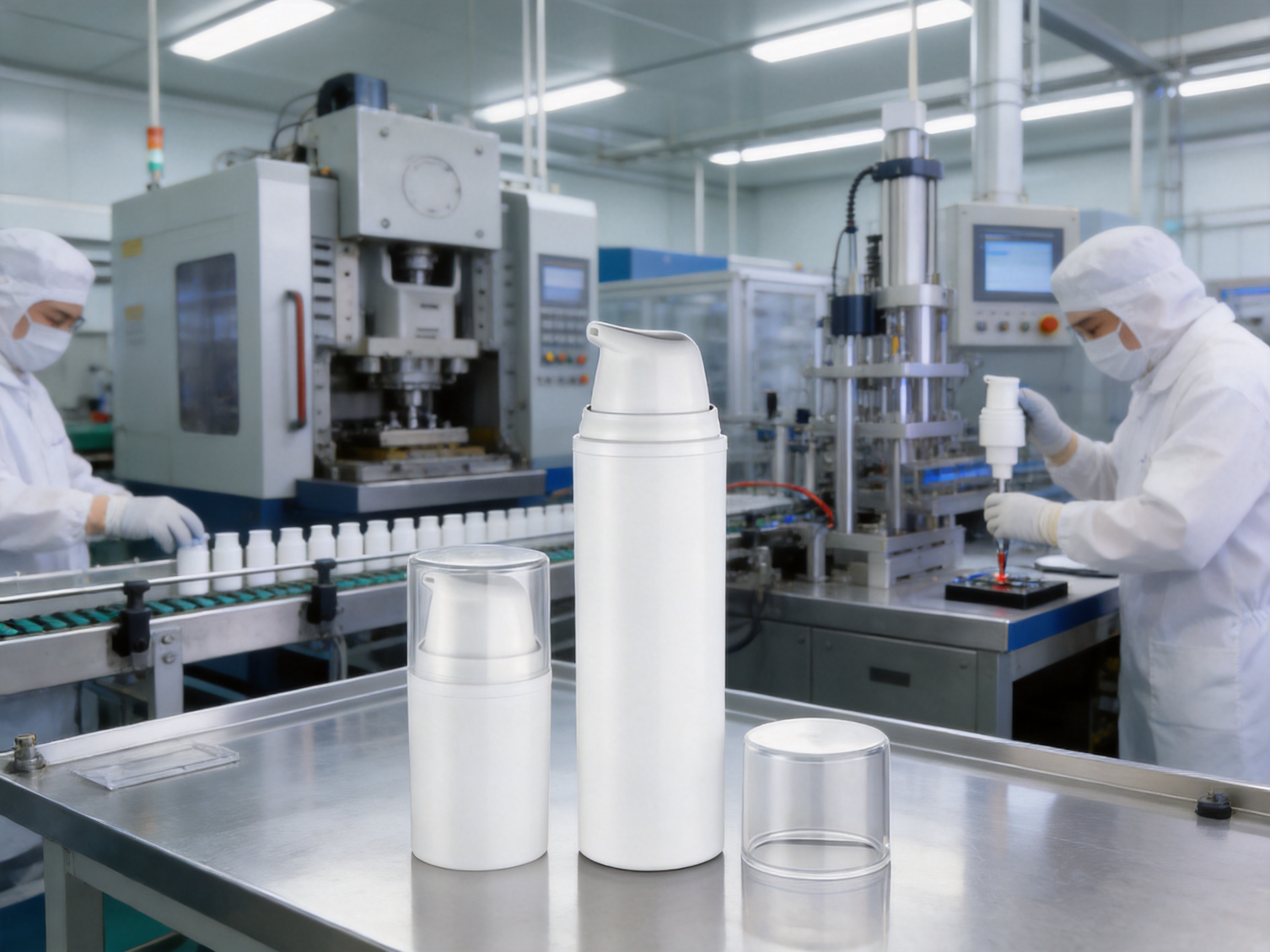
Packaging plays a decisive role in the performance, safety, usability, and market presentation of skincare and personal care products. A well-designed package does more than contain a formulation. It protects the product from contamination, supports accurate dispensing, communicates quality, and helps consumers use every portion conveniently. For creams, facial care products, serums, moisturizers, and treatment formulas, an airless packaging system can provide a practical alternative to conventional jars and standard pump bottles.
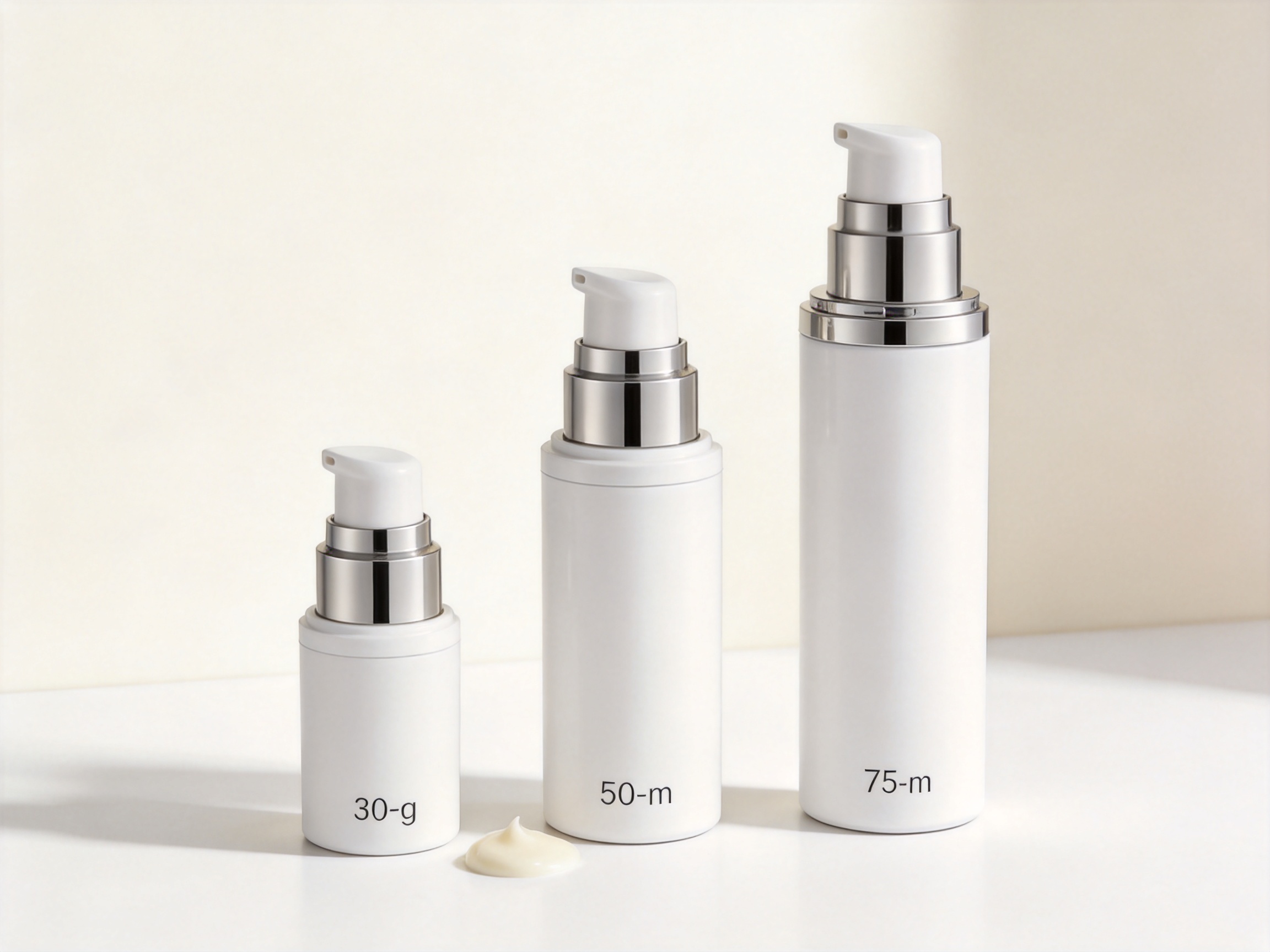
The GY-3801A Plastic Airless Serum Pump Bottle is designed for brands seeking an efficient and hygienic packaging solution for cosmetic and personal care applications. Available in 30-gram, 50-gram, and 75-gram capacities, this airless bottle combines compact product presentation with controlled dispensing and a secure snap-on closure. Its structure is suitable for a wide variety of skincare formulations, including creams, facial care products, moisturizers, serums, and treatment products.
Manufactured by GreenYard Tools Co., Ltd., the bottle benefits from the company’s extensive experience in spray product and personal care packaging manufacturing. With capabilities covering mold design, injection molding, automated assembly, and quality inspection, the manufacturer is positioned to support customers that require dependable components, consistent production, and flexible packaging solutions for global markets.
This article examines the bottle’s design, application advantages, available capacities, manufacturing strengths, customization potential, and practical considerations for brands evaluating airless packaging.

Plastic Airless Serum Pump Bottle
Understanding the Plastic Airless Serum Pump Bottle
An airless bottle is a dispensing container designed to reduce the amount of air entering the product chamber during use. Unlike a traditional bottle that relies on a dip tube, an airless system generally uses an internal piston or similar mechanism to move the product upward toward the dispensing outlet. When the user presses the pump, the internal mechanism advances and delivers a measured amount of formulation.
The GY-3801A is described as a plastic airless serum pump bottle with a snap-on closure. It is available in three stated volume options: 30 grams, 50 grams, and 75 grams. These sizes allow brands to select a format that matches the product’s positioning, retail price, usage cycle, and target customer.
The 30-gram option can be suitable for concentrated serums, premium treatments, travel-friendly products, trial sizes, and limited-use formulas. The 50-gram version offers a balanced format for everyday skincare products and standard retail presentation. The 75-gram option provides additional capacity for products intended for longer-term use, larger treatment programs, or consumers who prefer value-oriented packaging.
The bottle is intended for cream and facial care products, but the same packaging concept may also serve other compatible cosmetic and personal care formulations. Final suitability should always be confirmed through product compatibility testing, stability testing, filling trials, and dispensing evaluation.
Core Product Specifications
Product model |
GY-3801A |
Product type |
Plastic airless serum pump bottle |
Category |
Airless Bottle |
Available capacities |
30 grams, 50 grams, and 75 grams |
Closure type |
Snap-on |
Primary usage |
Cream and facial care products |
Potential applications |
Serums, moisturizers, treatments, skincare, cosmetics, and personal care products |
Dispensing concept |
Airless pump dispensing |
The compact specification profile makes the bottle suitable for businesses that need a practical container without unnecessary complexity. It provides several capacity choices while maintaining the core benefits expected from an airless format: convenient dispensing, improved hygiene, and reduced exposure to environmental air during normal use.
Why Airless Packaging Is Important for Skincare
Many skincare products contain ingredients that can be sensitive to air, contamination, repeated handling, or inconsistent dosing. Although packaging cannot replace proper formulation preservation or regulatory compliance, an airless dispensing system can support a more controlled usage environment.
Conventional open-mouth jars require users to remove the lid and access the product directly. This may expose the remaining contents to fingers, airborne particles, moisture, and repeated contact. A standard bottle with a dip tube can also draw air into the container as the product is dispensed. An airless system is designed to reduce these concerns by moving the product toward the outlet without depending on a conventional tube-based intake process.
For brands developing facial treatments, anti-aging creams, moisturizers, brightening products, and other performance-focused skincare items, packaging hygiene can contribute to the overall product experience. Consumers often associate controlled dispensing with cleanliness, precision, and premium quality.
Reduced Exposure During Daily Use
The airless concept helps limit the amount of air that reaches the product during ordinary dispensing. This may be valuable for formulations that benefit from reduced exposure, particularly products containing sensitive cosmetic ingredients. The exact protective performance depends on the complete package design, formula characteristics, filling conditions, storage environment, and closure performance.
Compared with an open jar, the user does not need to insert a finger or spatula into the product. The dispensing outlet can help keep the main product mass separated from direct handling. This makes the format attractive for face creams and treatments that are applied regularly and often used in bathrooms, bedrooms, salons, clinics, or travel environments.
More Controlled Product Delivery
A pump format allows users to dispense the product through a simple press. This can make application easier and help consumers avoid taking excessive quantities from the package. Controlled dispensing is especially useful for high-value serums, concentrated treatments, and premium facial care formulas where the amount used per application affects both product longevity and consumer satisfaction.
Although the actual dose depends on the pump structure, viscosity, filling level, and actuation behavior, an airless pump generally gives brands a more controlled dispensing experience than an open-mouth container. It can also support cleaner use because the product is delivered directly onto a fingertip, cosmetic tool, cotton pad, or other application surface.
Improved Product Utilization
The internal dispensing mechanism is designed to move product toward the pump outlet as the container is used. This can help reduce the residual product that commonly remains at the bottom or along the inner walls of conventional packaging. Complete evacuation depends on formula viscosity, package orientation, internal geometry, and the consumer’s usage habits, but the airless concept is intended to improve accessibility to the product throughout its life cycle.
Better product utilization can provide benefits for both consumers and brands. Consumers may feel that they receive more value from the package, while brands can present the bottle as an efficient solution for premium formulations. Reduced residual product may also support cleaner package disposal, although recycling outcomes depend on the material structure and local waste-management systems.
Product Advantages Over Conventional Packaging Formats
The GY-3801A offers several functional advantages when compared with basic jars, ordinary plastic bottles, or standard dip-tube pump containers. The most important benefits relate to hygiene, dispensing convenience, capacity flexibility, and suitability for modern cosmetic positioning.
Hygienic Operation
Hygiene is one of the strongest reasons to consider an airless bottle. A conventional cream jar exposes the product whenever the lid is removed. Users may touch the formulation directly, and repeated access can introduce contaminants or moisture. The GY-3801A uses pump dispensing, allowing the user to access the product without opening the primary product chamber during every application.
This design can make the daily routine more convenient and visually cleaner. It is particularly relevant for facial products, which are applied to sensitive areas and are often marketed around purity, freshness, and careful formulation protection.
Convenient One-Handed Use
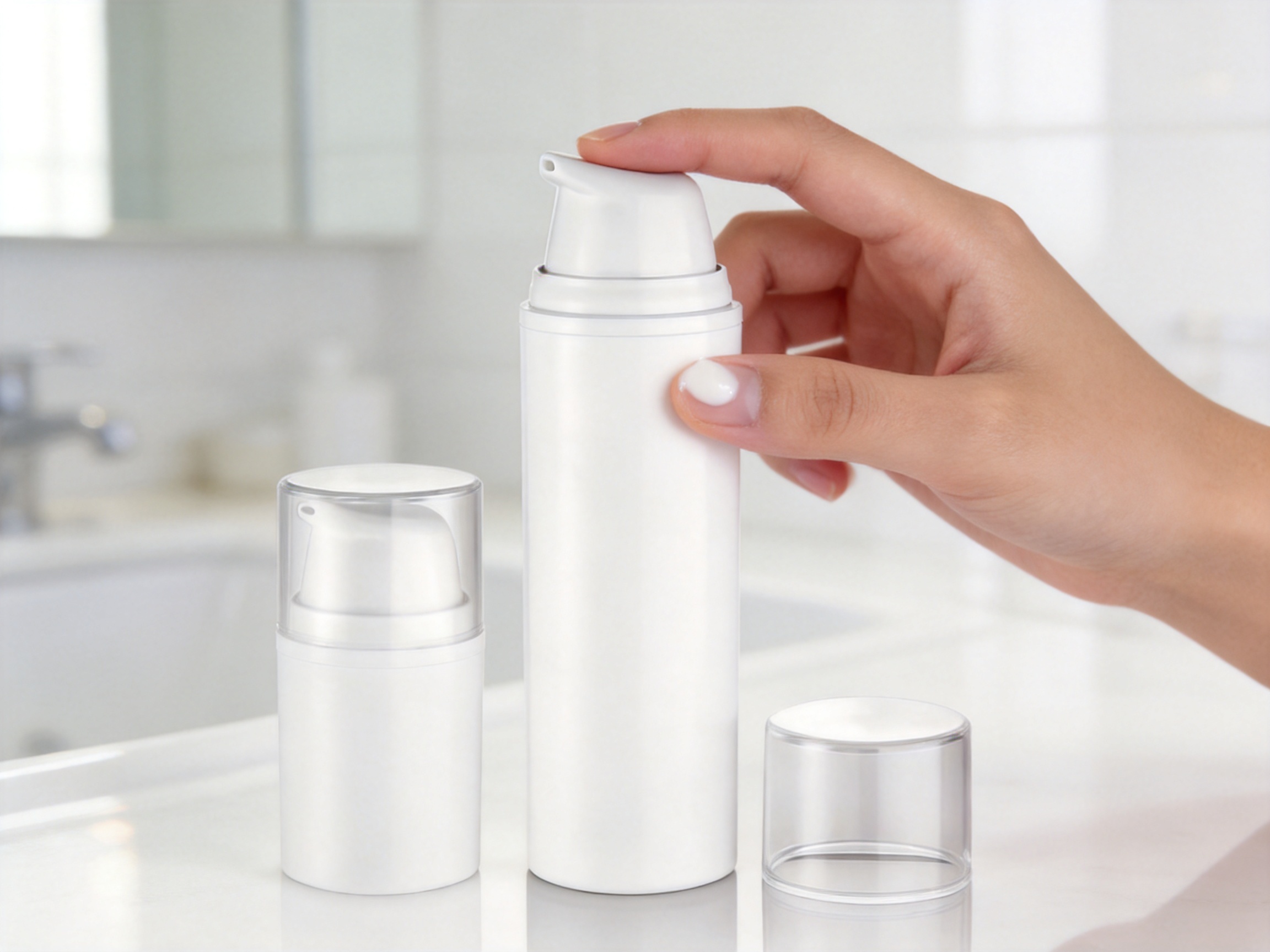
A pump bottle can be operated with one hand, leaving the other hand free to hold a mirror, applicator, cotton pad, or cosmetic tool. This is a small but meaningful advantage in daily skincare routines. The snap-on closure also supports straightforward assembly and use, while helping keep the package securely closed when it is not being dispensed.
For professional environments such as salons, spas, cosmetic counters, and treatment rooms, ease of operation can help improve workflow. For home users, a simple pump action can make the product feel more intuitive and accessible.
Protection from Unnecessary Product Contact
Since the product is delivered through a pump outlet, the package can reduce direct contact between the formulation and the user’s hands. This does not eliminate the need to keep the outlet clean, but it can reduce the handling associated with jar packaging. The result is a more controlled interaction between the consumer and the product.
Flexible Capacity Selection
The availability of 30-gram, 50-gram, and 75-gram versions gives brands room to build product families or select a size based on the intended positioning. A single skincare line could potentially use the smaller format for a concentrated eye treatment, the middle size for a facial serum, and the larger format for a daily moisturizer or body treatment, subject to technical and commercial evaluation.
Multiple capacities also support different sales channels. Smaller packages may be useful for travel retail, sampling programs, subscription boxes, and introductory sets. Medium capacities can suit regular online and store-based retail. Larger capacities may serve professional users, family-oriented products, or extended treatment programs.
Modern Premium Presentation
Airless packaging is widely associated with advanced skincare and professional cosmetic products. The pump format can communicate precision, hygiene, and formulation care. When combined with suitable decoration, color, labeling, and secondary packaging, the bottle can support a premium visual identity without requiring an excessively complicated package structure.
For brands competing in crowded skincare categories, the package is often part of the product story. An airless bottle can help communicate that the product has been designed for controlled, thoughtful, and convenient use.
Applications for Cosmetics and Personal Care Products
The bottle is intended for cream and facial care products. Its airless dispensing format may be considered for many types of cosmetic and personal care formulations, provided the product is compatible with the packaging materials and dispensing system.
Facial Serums
Serums are often sold in relatively small quantities because they contain concentrated formulas and are applied in measured amounts. The 30-gram or 50-gram versions may be appropriate for a serum product, depending on the formulation density, application instructions, and market positioning.
An airless pump can help consumers dispense a small amount without opening a jar or handling the entire product. This may complement the positioning of formulas focused on hydration, radiance, skin comfort, firmness, or other cosmetic benefits.
Facial Creams and Moisturizers
Facial creams and moisturizers are frequently used once or twice daily. A 50-gram or 75-gram format may provide a practical balance between shelf presence and usage duration. The pump format can make repeated use convenient while helping minimize direct contact with the remaining formulation.
Targeted Treatment Products
Targeted treatments may include specialized creams for dry areas, cosmetic care products for particular application zones, or concentrated formulas used for a defined period. The airless package can support a clean and controlled routine, particularly when the formulation is positioned as a premium or professional treatment.
Professional and Salon Products
In professional skincare environments, packaging must be easy to handle, clean, and suitable for repeated use. The pump format may help practitioners dispense product efficiently during consultations, facials, or treatment services. Larger capacities may be considered where a product is used frequently, although filling volume and dispensing performance should be tested for the intended professional workflow.
Personal Care Products
Beyond facial skincare, compatible airless packaging may be considered for hand creams, body treatments, cosmetic lotions, and other personal care formulas. The final application depends on viscosity, formula chemistry, particle content, fragrance or solvent compatibility, and required dosage. Brands should perform a complete compatibility and performance assessment before commercial production.
Manufacturing Capabilities Supporting Product Reliability
A packaging product is only as dependable as the manufacturing system behind it. Consistent dimensions, reliable pump action, secure closures, clean assembly, and stable material quality are essential for a successful airless package. GreenYard Tools Co., Ltd. has developed its production capabilities around spray products, pump heads, bottles, caps, and daily chemical packaging solutions.
The company has 16 years of experience in spray product manufacturing and produces packaging components for global markets. Its stated daily production capacity reaches one million units. This scale can be important for customers that require stable supply, repeat orders, and the ability to expand production after successful market testing.
Mold Design
Mold design is a foundation of plastic packaging manufacturing. The mold influences the accuracy of the bottle body, closure interface, pump components, surface appearance, and assembly fit. An experienced mold design team can help address draft angles, wall thickness, shrinkage, parting lines, dimensional tolerances, and production efficiency before mass manufacturing begins.
For an airless bottle, mold precision is especially important because the package includes multiple components that must work together. The external bottle, internal dispensing mechanism, pump head, and snap-on closure must maintain suitable relationships during assembly and use. Careful mold development can reduce defects and support more consistent operation.
Injection Molding
Injection molding enables the production of plastic packaging components at high volume and with repeatable geometry. The process involves heating plastic material, injecting it into a mold, allowing it to cool, and removing the formed component. Process control can influence surface finish, dimensional consistency, strength, and appearance.
For cosmetic packaging, injection molding quality affects both functionality and brand presentation. A well-formed bottle should have a clean exterior, stable base, consistent wall structure, and accurate interfaces for its closure and pump components. Proper process management can also help reduce short shots, flash, warpage, sink marks, and other defects that may affect assembly or appearance.
Automated Assembly
Airless pump bottles are assembled from several components. Automated assembly can improve production speed and support consistent component positioning. It may also reduce variation associated with manual operations, particularly when the order volume is high.
Automation can help manufacturers control the installation of pump mechanisms, closures, internal parts, and other package elements. Proper assembly verification remains important because a cosmetic package must not only look correct but also dispense reliably, remain secure during transportation, and provide a satisfactory consumer experience.
Quality Inspection
Quality inspection supports the identification of dimensional, cosmetic, and functional issues before products are shipped. For packaging products, inspection may include appearance checks, component fit evaluation, closure verification, pump actuation testing, leakage assessment, and sampling-based performance checks.
The company’s stated quality inspection capabilities support a structured approach to production control. Customers can also define their own quality standards, inspection levels, test methods, and acceptance criteria during the development and order process.
How the Product Can Strengthen a Brand’s Packaging Strategy
Choosing packaging is a strategic decision rather than a purely technical one. The selected package must support the product formula, target audience, retail channel, price level, brand identity, and anticipated production volume. The GY-3801A offers a combination of practical capacity options and airless dispensing that can help brands develop a coherent packaging strategy.
Supporting Product Line Architecture
Brands often launch several products within a single skincare collection. Using related bottle formats in different capacities can create a unified shelf appearance while distinguishing products through labels, colors, or other decoration. The 30-gram, 50-gram, and 75-gram options provide a basis for organizing products according to formulation type, usage frequency, or treatment duration.
A consistent package family can simplify brand recognition. Consumers may quickly identify the same product line across online product pages, retail displays, travel sets, and professional channels.
Serving Different Consumer Preferences
Some consumers prefer compact packages that are easy to carry. Others value larger quantities that reduce the need for frequent repurchase. Offering different sizes can allow brands to address both preferences without changing the fundamental dispensing concept.
Smaller formats can also reduce the perceived commitment for first-time buyers. A consumer may be more willing to try a new treatment in a 30-gram package than to purchase a larger size immediately. Once the product earns trust, the consumer may choose a larger format for regular use.
Enhancing E-Commerce Presentation
For online sales, packaging images and product descriptions must communicate value before the customer can physically handle the product. An airless pump bottle offers visible functional cues: a pump, a closed product chamber, and a format associated with controlled dispensing. These characteristics can be explained clearly in product listings, product education, and marketing content.
The package can also provide a strong visual foundation for photography and digital advertising. Clean lines, a compact silhouette, and suitable surface decoration may help the product appear organized and professional in online presentation.
Supporting Premium Product Positioning
Premium positioning depends on more than a high price. It involves formulation quality, consumer experience, design consistency, service, and credible product benefits. An airless bottle can support this positioning by providing a more refined dispensing method than a simple open jar or basic container.
The packaging should be integrated with the overall product concept. A premium package cannot compensate for an unsuitable formula or poor quality control, but it can reinforce a product experience built around precision, hygiene, and convenience.
Technical and Commercial Evaluation Before Ordering
Before selecting the bottle for a commercial product, brands should conduct a structured evaluation. Packaging performance depends on the interaction between the bottle, pump, closure, formula, filling line, labeling process, transportation conditions, and consumer use pattern.
Formula Compatibility
The formulation should be tested against all materials that may contact the product. Factors to evaluate may include ingredient migration, discoloration, swelling, cracking, odor transfer, changes in viscosity, and changes in product appearance. Formulas containing oils, solvents, acids, alcohols, fragrances, pigments, active ingredients, or abrasive particles may require additional assessment.
Compatibility testing should be carried out under realistic and accelerated conditions where appropriate. A package that performs correctly with one formula may not behave in the same way with another formulation, even if the products appear similar.
Viscosity and Dispensing Performance
Airless pumps are often suitable for creams, serums, and other personal care formulas, but viscosity can influence priming, dose consistency, recovery, and the amount of product left in the container. Brands should test the exact formulation at different temperatures and after storage periods.
Testing should include initial pump activation, repeated actuation, end-of-life dispensing, and storage in different orientations. The objective is to confirm that consumers can obtain product consistently throughout the package life cycle.
Filling and Assembly Trials
Filling trials help determine whether the bottle is compatible with the customer’s production line. Important factors can include filling speed, filling accuracy, air entrapment, product temperature, closure installation, pump placement, and line handling.
A pilot production run can reveal practical issues that may not appear during visual inspection. It can also help establish operating procedures, inspection standards, and packaging line settings before full-scale production.
Leakage and Transportation Testing
Finished packages should be evaluated under conditions that reflect storage and distribution. Depending on the sales channel, tests may include vibration, compression, drop, temperature cycling, pressure variation, and leakage observation. Shipping configuration, secondary packaging, and palletization can also influence package performance.
The snap-on closure should remain secure during ordinary transportation and handling. The pump should be protected against accidental actuation where necessary, especially when products are shipped individually through parcel networks or sold in travel-oriented channels.
Decoration and Labeling
Brands should confirm that the chosen labeling or decoration process is compatible with the bottle surface. Evaluation may include adhesion, scuff resistance, ink durability, color consistency, and resistance to oils or water commonly found in bathroom and skincare environments.
Decoration requirements should be discussed early because they may affect mold design, surface finish, production scheduling, minimum order quantities, and cost. A clean and durable decoration system can significantly improve the package’s retail presentation.
Comparison with Other Common Packaging Options
Packaging format |
Typical strengths |
Potential considerations |
Airless pump bottle |
Controlled dispensing, reduced direct contact, modern presentation, suitable for many creams and serums |
Requires compatibility and pump-performance testing; may involve more components than a basic jar |
Open-mouth cream jar |
Simple structure, broad filling flexibility, easy access to thick products |
Greater direct exposure during use and less controlled dispensing |
Dip-tube pump bottle |
Familiar operation, convenient pump format, suitable for many lotions and liquid products |
May be less suitable for very thick formulas and draws product through a tube |
Dropper bottle |
Useful for liquid serums and measured application |
Requires user handling of the dropper and may not suit creams or high-viscosity formulas |
Squeeze tube |
Lightweight, portable, and often economical |
May provide less premium presentation and less precise dispensing for certain products |
The airless bottle is not universally superior for every formulation or market. Its value depends on the product’s technical requirements and the brand’s commercial objectives. However, for skincare brands that prioritize hygienic operation, convenient dispensing, and premium presentation, the format provides a compelling balance of features.
Advantages of Working with an Experienced Packaging Manufacturer
Working with an experienced manufacturer can reduce development risk and support more reliable commercialization. GreenYard Tools Co., Ltd. focuses on spray products and personal care packaging, including perfume sprayers, pump heads, caps, bottles, and related packaging solutions.
The company’s production background covers a broad range of packaging components. This can be valuable for customers that are developing complete packaging systems rather than purchasing a single bottle. A supplier familiar with pumps, caps, bottles, and assembly processes may be better positioned to understand how different components interact.
Integrated Development Knowledge
Experience in mold design, injection molding, assembly, and inspection allows a manufacturer to view the package as a complete system. This integrated perspective may help identify potential issues earlier, such as interference between parts, closure fit, dimensional variation, or production bottlenecks.
Production Capacity
A stated daily capacity of one million units indicates that the company has developed production resources for large-volume packaging requirements. Capacity alone does not guarantee suitability, but it can be important for brands planning national or international launches, repeat purchasing programs, or multiple product lines.
Customers should still confirm available capacity, lead times, production scheduling, minimum order quantities, packaging requirements, and quality documentation for each specific project.
Support for Global Customers
GreenYard Tools Co., Ltd. serves global markets and provides personal care packaging solutions from its manufacturing base in Yuyao, Zhejiang Province, China. International customers may benefit from clear communication regarding specifications, samples, production approvals, inspection requirements, export packaging, and documentation.
Effective cooperation is usually built through written specifications, approved samples, documented quality standards, and regular production communication. These practices are important regardless of the supplier’s location.
Designing a Successful Product Launch with the Bottle
A successful launch should treat the package as part of the product development process from the beginning. The bottle’s capacity, dispensing experience, visual design, and retail communication should be aligned with the product formula and target customer.
Selecting the Appropriate Capacity
Brands should estimate the recommended dosage, frequency of use, expected product life, retail price, and customer expectations before selecting 30 grams, 50 grams, or 75 grams. A concentrated serum used in small amounts may be well suited to the smaller option. A daily moisturizer may require a larger format to provide an appropriate usage period.
The selected size should also fit the product’s secondary packaging, shipping carton, retail display, and online fulfillment process. Small differences in dimensions can influence packing efficiency and transportation cost.
Building Clear Consumer Instructions
Consumers should understand how to use the pump, how much product to apply, how to keep the outlet clean, and how to store the package. If the bottle requires initial priming, this should be explained in the instructions. Clear directions can reduce confusion and improve the perceived quality of the product.
Balancing Function and Appearance
The package should look attractive while preserving its practical function. Excessive decoration, heavy coatings, or unsuitable labels may interfere with handling, recycling, or the pump area. A balanced design can communicate quality without compromising usability.
Color, typography, surface finish, and closure appearance should be considered as part of the complete brand system. The bottle can be used for minimalist, clinical, natural, luxury, professional, or mass-market product identities depending on the selected decoration and presentation.
Quality and Sustainability Considerations
Modern packaging development increasingly considers environmental impact alongside performance and appearance. Plastic packaging can offer advantages such as low weight, durability, efficient transportation, and resistance to breakage. At the same time, brands should evaluate material selection, component count, decoration, recyclability, and end-of-life communication.
The GY-3801A is a plastic airless bottle, and its environmental profile depends on the specific materials and structure used in production. Customers should request the relevant material information and assess whether the package fits their sustainability goals and the recycling infrastructure of their target markets.
Reducing Product Waste
Efficient dispensing may help consumers use more of the formulation and leave less product unused. Product waste is an important sustainability consideration because the environmental impact of a cosmetic item includes not only the container but also the ingredients, processing, filling, and transportation associated with the product itself.
Optimizing Package Weight
Lightweight packaging can reduce material consumption and transportation weight, provided it retains the required strength and performance. Mold design and injection molding expertise can support the development of packaging that balances structural integrity with efficient material use.
Evaluating Component Separation
Airless bottles may contain multiple plastic components or combinations of different materials. Brands should evaluate whether components can be separated by consumers or recycling facilities in their target markets. Clear disposal instructions can help prevent confusion, although local recycling rules differ significantly.
Sustainability claims should be based on documented information and should accurately describe the complete package rather than a single component. Customers should work with the manufacturer to understand available material options and any limitations.
Recommended Development Workflow
A structured development workflow can help brands move from initial concept to commercial production with fewer delays.
Stage One: Product and Market Definition
Define the formulation type, target consumer, recommended dosage, sales channel, expected annual volume, retail price, and desired visual identity. This information helps determine whether the airless bottle and its available capacities are appropriate.
Stage Two: Sample Review
Request samples for visual inspection, dimensional review, pump operation, closure testing, and compatibility screening. Review the bottle with the actual product formula whenever possible rather than evaluating the empty package alone.
Stage Three: Laboratory and Stability Testing
Conduct formula-package compatibility tests, accelerated storage tests, temperature cycling, and dispensing evaluations. Record changes in color, odor, viscosity, appearance, package condition, and pump function.
Stage Four: Filling-Line Trial
Run a pilot filling trial to verify that the package works with the intended filling and assembly equipment. Confirm fill accuracy, line speed, closure installation, labeling, and finished-package inspection.
Stage Five: Transportation and Consumer Simulation
Evaluate the package under realistic shipping conditions and simulate repeated consumer use. The test should include initial opening, pumping, storage, handling, and end-of-use behavior.
Stage Six: Production Approval
Approve the final specification, color, decoration, materials, inspection standards, carton configuration, and quality requirements. A written approval sample can serve as a reference for future production batches.
Frequently Asked Questions
What is the GY-3801A?
The GY-3801A is a plastic airless serum pump bottle designed for cosmetic, skincare, and personal care applications. It uses airless pump dispensing and a snap-on closure.
What capacities are available?
The stated available capacities are 30 grams, 50 grams, and 75 grams. Brands can select a size based on product dosage, usage frequency, market positioning, and packaging requirements.
What products can be packaged in the bottle?
The listed uses include creams and facial care products. It may also be considered for compatible serums, moisturizers, treatment products, and other cosmetic or personal care formulas after appropriate compatibility and dispensing tests.
What is the benefit of airless dispensing?
Airless dispensing is designed to reduce unnecessary air exposure and direct product contact during use. It can provide controlled application, improved hygiene, and convenient access to the product throughout the package life cycle.
Does the bottle eliminate the need for preservation testing?
No. Airless packaging does not replace formula preservation, microbiological testing, stability testing, or regulatory evaluation. Brands must assess the complete formulation and package system according to the requirements of their target markets.
What is the closure type?
The bottle uses a snap-on closure. This closure is designed to provide a secure and easy-to-use seal while helping reduce the risk of leakage and contamination during normal handling.
Is the bottle suitable for thick creams?
The bottle is intended for cream and facial care products, but suitability depends on the exact viscosity, composition, particle content, and dispensing requirements. A sample test using the final formula is recommended before production approval.
Can the bottle be used for a product line with multiple sizes?
Yes. The three available capacities can support a product family with different usage formats. Brands should confirm whether the selected sizes share compatible decoration, filling, closure, and logistics requirements.
What manufacturing processes support the product?
The manufacturer has capabilities in mold design, injection molding, automated assembly, and quality inspection. These processes support the production of plastic bottles, pump components, closures, and related personal care packaging products.
What should be tested before placing a large order?
Brands should evaluate formula compatibility, pump performance, priming, dose consistency, leakage resistance, closure security, filling-line performance, decoration durability, transportation resistance, and storage stability.
Can the bottle help reduce product waste?
The airless dispensing structure is intended to move product toward the outlet and support efficient use. Actual product recovery depends on the formula, package design, orientation, pump performance, and consumer handling.
Where is the manufacturer located?
GreenYard Tools Co., Ltd. is located at No. 97-1 Fengyi Road, Lanjiang Street, Yuyao City, Zhejiang Province, China.
How can a customer discuss product requirements?
Customers can communicate their required capacity, formulation type, decoration, order volume, quality standards, and delivery expectations with the manufacturer’s sales team. Technical samples and written specifications should be reviewed before production.
Conclusion
The Plastic Airless Serum Pump Bottle provides a practical packaging option for brands that need hygienic, controlled, and convenient dispensing for skincare and personal care products. With 30-gram, 50-gram, and 75-gram capacities, the GY-3801A can support different product types, usage cycles, market positions, and consumer preferences.
Its main advantages include reduced direct product contact, convenient pump operation, efficient dispensing, modern cosmetic presentation, and suitability for creams, facial care products, serums, moisturizers, and treatment formulas. Compared with conventional open jars, the airless format can support a cleaner daily experience. Compared with basic containers, it can provide a more refined combination of function and presentation.
The product is also supported by the manufacturing capabilities of GreenYard Tools Co., Ltd., including mold design, injection molding, automated assembly, and quality inspection. With 16 years of experience in spray product manufacturing and a stated daily production capacity of one million units, the company is equipped to serve customers seeking reliable personal care packaging for domestic and international markets.
As with any cosmetic package, final selection should be based on testing with the actual formulation and filling process. When properly evaluated and integrated into a complete product strategy, the GY-3801A can help brands deliver a cleaner, more convenient, and more professional skincare experience.
References
1. GreenYard Tools Co., Ltd. Product information for GY-3801A Plastic Airless Serum Pump Bottle.
2. GreenYard Tools Co., Ltd. Company information and manufacturing capability statement.
3. General principles of cosmetic packaging compatibility, stability evaluation, and dispensing performance testing.
4. General practices for injection molding, automated assembly, and quality inspection of plastic packaging components.
5. General packaging development principles for skincare, cosmetics, and personal care products.
Product: Plastic Airless Serum Pump Bottle

-
Airless Bottles Uncovered: How to Protect Your Skincare and Perfect Every Pump
If you have ever opened a pump bottle of serum and found the last quarter of the product impossible ...
-
Best Skincare Packaging: How to Choose Bottles, Pumps & Jars That Last
The last time a skincare brand sent us a bottle to test, the cap looked premium but the pump leaked...
-
Airless Pump Makeup Packaging: How It Works and What Brands Should Specify
Open a foundation that has been sitting in a warehouse for eighteen months and the first thing a pa...
-
Amber Plastic Bottles: Lightweight, Protective, Customizable Packaging for Cosmetics
You have spent months stabilizing a vitamin C serum, only to watch a pallet of amber glass bottles ...
Copyright © GreenYard Tools Co.,ltd. All Rights Reserved.
Personal Care Packaging Manufacturer Custom Perfume Sprayers Factory