
-
About Us
Why Choose Us?The company possesses advanced capabilities in mold design, injection molding, and automated assembly, supported by a professional quality inspection team to ensure product reliability. A dedicated design team continuously drives product innovation, providing customers with high-quality spray solutions.
 Coming From China, Marketing To The World.
 -
Products
-
News
 English
 Français
 русский
 Español
18-410 0.12CC Step Collar Fine Mist Sprayer for Glass Bottles
Content
- 1 Product Overview
- 2 Why the 18-410 Neck Finish Matters
- 3 Controlled 0.12CC Fine Mist Dispensing
- 4 The Stepped Collar Advantage
- 5 Closure and Finish Options
- 6 Applications Across Personal Care and Fragrance
- 7 Manufacturing Strengths
- 8 Quality and Reliability Considerations
- 9 Advantages Over Conventional Sprayers
- 10 Customization and Project Support
- 11 Packaging Design and Brand Presentation
- 12 Operational Benefits for Packaging Manufacturers
- 13 Recommended Product Development Process
- 14 Environmental and Material Efficiency Considerations
- 15 Company Manufacturing Profile
- 16 Technical Questions Buyers Should Ask
- 17 Q&A
- 17.1 What is the GY-608A-FD2 sprayer used for?
- 17.2 What does 18-410 mean?
- 17.3 What is the dosage per spray?
- 17.4 What problem does the stepped collar solve?
- 17.5 Can the dip tube be customized?
- 17.6 Are different closure finishes available?
- 17.7 Is the sprayer suitable for alcohol-based perfume?
- 17.8 Can the sprayer be used on any glass bottle?
- 17.9 How should dosage and spray quality be tested?
- 17.10 How does the product compare with a conventional sprayer?
- 17.11 Can the product support large-volume orders?
- 17.12 What manufacturing processes support the product?
- 17.13 Should samples be approved before mass production?
- 18 Conclusion
- 19 References
- 20 Product: 18-410 0.12CC Step Collar Plastic Sprayer For Glass Bottle
In premium personal care and fragrance packaging, the sprayer is more than a functional closure. It is part of the product’s appearance, user experience, dispensing accuracy, and protection system. A well-designed sprayer must create a consistent mist, fit securely on the bottle, prevent leakage, complement the visual identity of the package, and remain reliable throughout the product’s service life. These requirements become especially important when the sprayer is installed on a glass bottle equipped with an anti-burst ring.
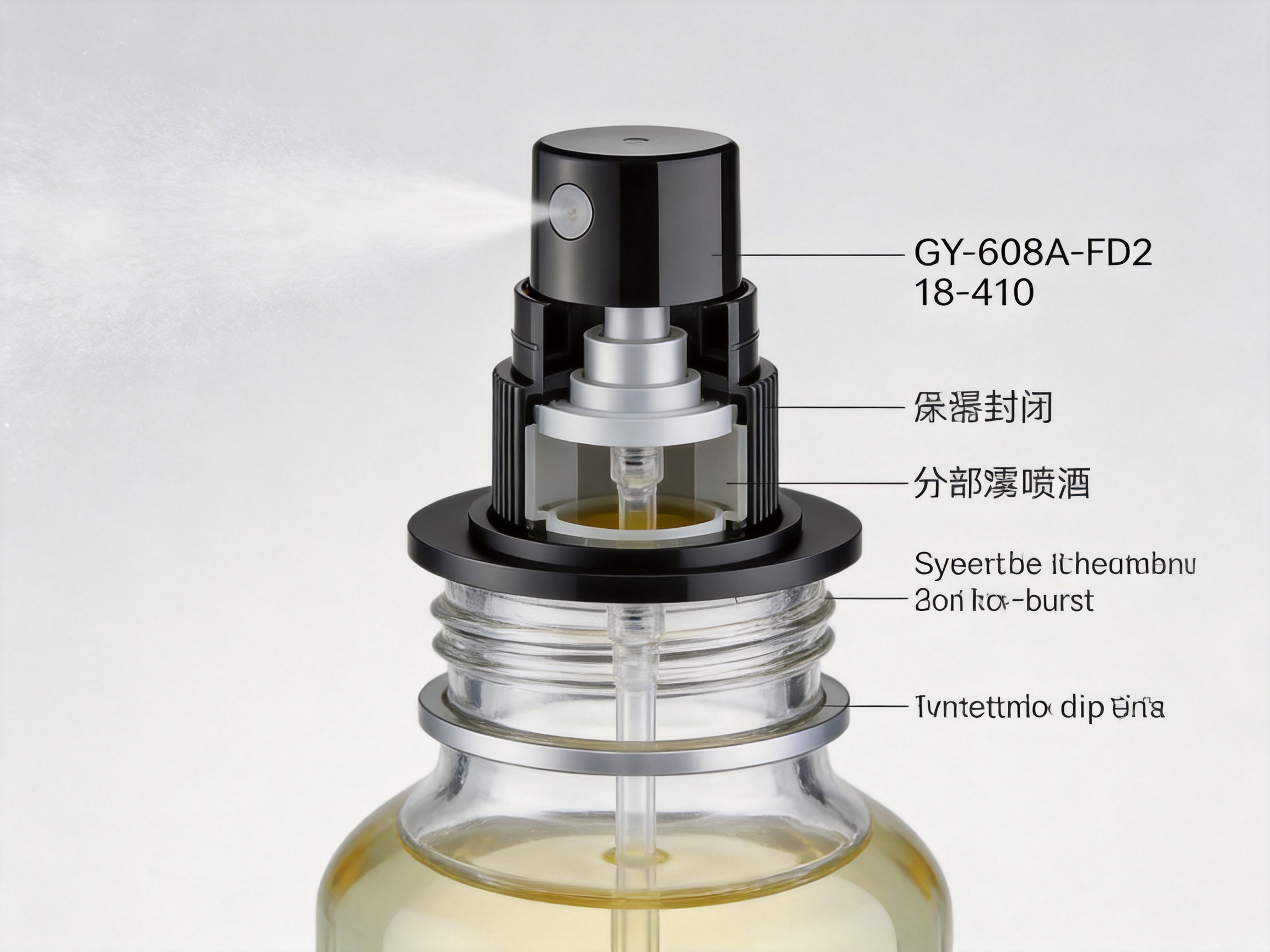
The GY-608A-FD2 18-410 0.12CC Step Collar Plastic Sprayer for Glass Bottle is developed specifically for this application. It combines a standard 18-410 neck finish, a controlled 0.12 milliliter dosage, a fine mist output, and an integrated stepped collar that covers the anti-burst ring of compatible glass bottles. This construction addresses a common packaging problem: a conventional sprayer may interfere with the raised safety ring, leave an unattractive gap, or create an incomplete seal around the bottle neck.
By extending the collar in a stepped configuration, this sprayer provides a cleaner transition between the actuator, closure, and glass bottle. The result is a more unified appearance and a better-fitted packaging assembly. The design is suitable for perfume, air freshener, facial mist, body mist, personal care products, and other liquid formulations that require a controlled fine spray.
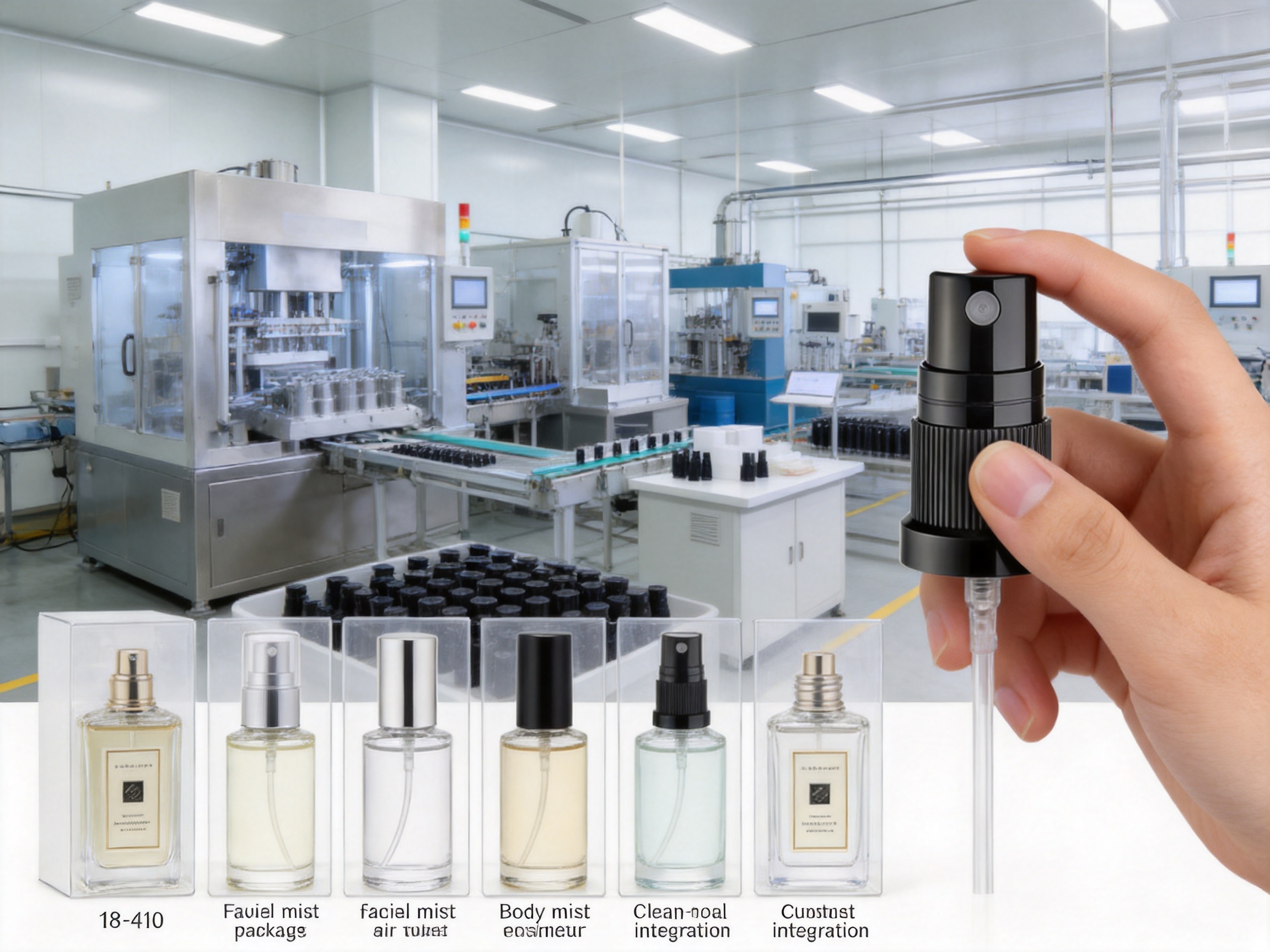
Manufactured by GreenYard Tools Co., Ltd., the sprayer benefits from an integrated production system covering mold design, injection molding, automated assembly, and quality inspection. With 16 years of experience in spray product manufacturing and a reported daily production capacity of one million units, the company is positioned to support both standard packaging programs and customized projects for global customers.
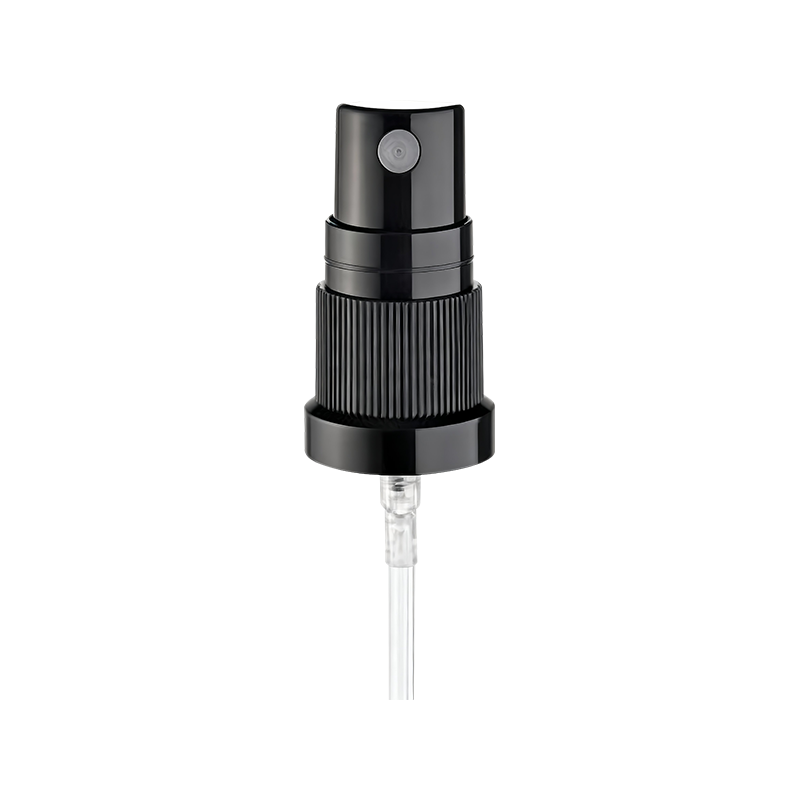
18-410 0.12CC Step Collar Plastic Sprayer For Glass Bottle
Product Overview
The GY-608A-FD2 is a fine mist sprayer designed for glass bottle packaging. Its 18-410 size is a widely used neck specification in fragrance, air care, facial mist, and personal care packaging. The 0.12CC dosage provides a measured output with every actuation, helping brands deliver a controlled amount of product while limiting unnecessary waste.
The sprayer is particularly valuable for glass bottles with an anti-burst ring. This ring is used as part of the bottle’s safety and closure structure, but it can present a visual and mechanical challenge when paired with an ordinary pump or sprayer. The shoulder of a standard sprayer may stop above the ring, creating a visible gap or an uneven transition. In some cases, an unsuitable closure can also compromise the sealing area and increase the risk of leakage during handling or transportation.
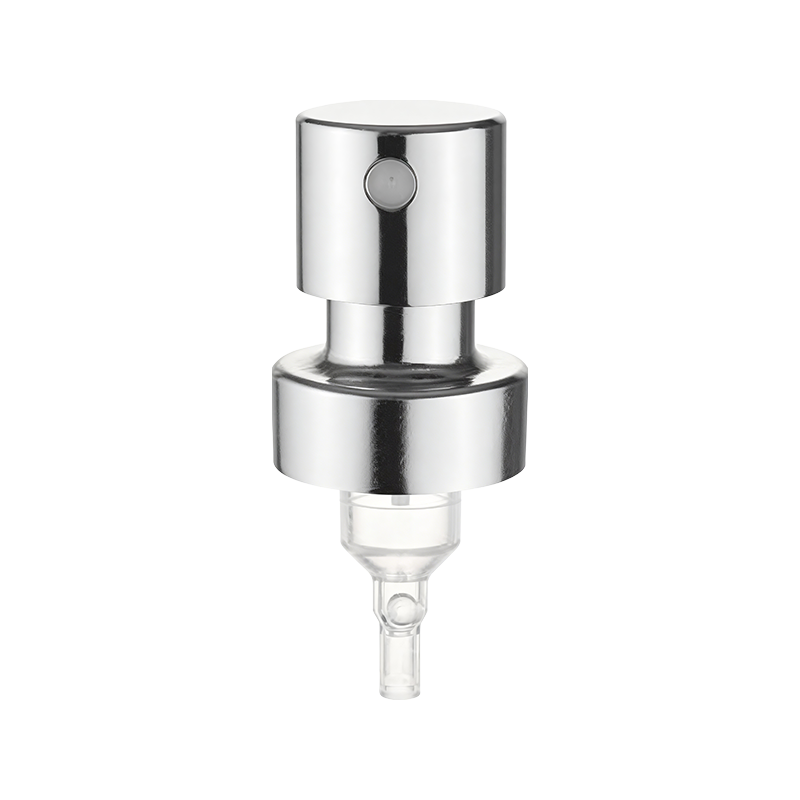
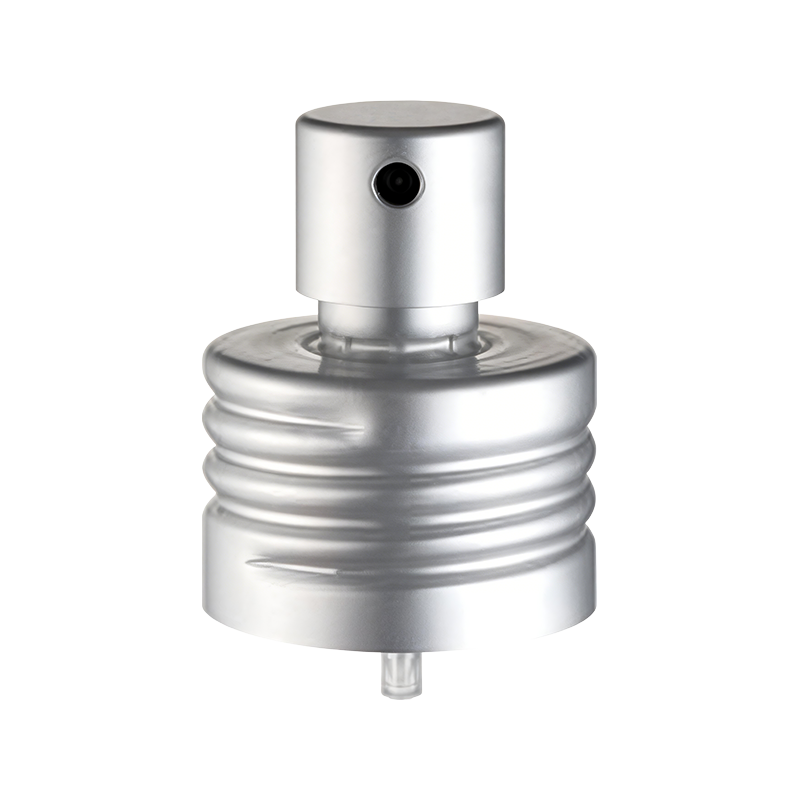
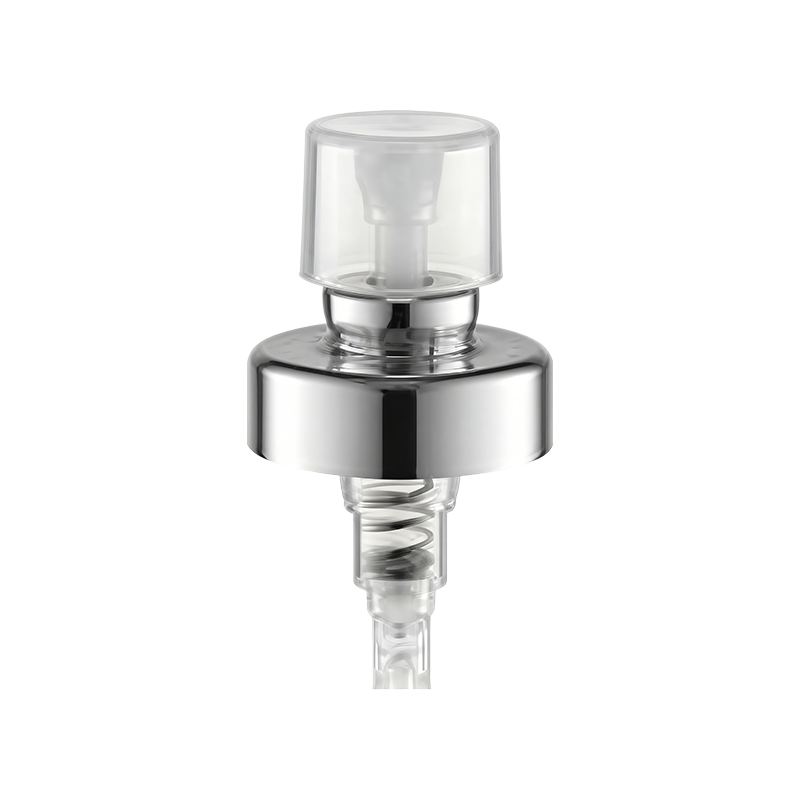
The stepped collar is the defining feature of this model. It is shaped to extend over the bottle’s anti-burst ring, helping conceal the ring and creating a smoother external profile. In addition to its visual function, the collar supports more effective coverage of the neck area. This makes the package appear more deliberate, refined, and professionally engineered.
Product model |
GY-608A-FD2 |
Product type |
Fine mist sprayer |
Neck size |
18-410 |
Nominal dosage |
0.12 milliliter per actuation |
Primary application |
Glass bottles |
Closure options |
Ribbed plastic or aluminum finish |
Dip tube |
Customized length available |
Typical uses |
Perfume, air freshener, facial mist, body mist, and personal care liquids |
Core design feature |
Stepped collar for anti-burst ring coverage |
Why the 18-410 Neck Finish Matters
Packaging compatibility begins with the neck finish. The 18-410 specification defines the relationship between the bottle opening, thread profile, closure, and dispensing component. When these dimensions are properly matched, the sprayer can be installed efficiently and maintain a secure connection during filling, capping, transportation, retail display, and consumer use.
For manufacturers, a recognized neck finish can simplify bottle sourcing and reduce the need for completely unique components. The 18-410 format is suitable for many glass packaging designs used in fragrance and personal care. This makes the GY-608A-FD2 a practical option for brands that want to develop a refined glass bottle without commissioning an entirely proprietary sprayer system.
The 18-410 configuration also supports packaging flexibility. It can be paired with different bottle shapes, including cylindrical, rectangular, rounded, and sculpted glass designs, provided the bottle neck and anti-burst ring dimensions are compatible. The external collar can help create a continuous visual line between the sprayer and the bottle, making the dispensing assembly appear integrated rather than added as a separate component.
Correct neck compatibility remains essential. Bottle manufacturers and filling operations should verify neck dimensions, thread engagement, sealing surfaces, anti-burst ring geometry, and collar clearance before mass production. GreenYard can support this evaluation through customized tube lengths, component selection, and packaging coordination.
Controlled 0.12CC Fine Mist Dispensing
The nominal dosage of 0.12 milliliter per spray is designed for products that require a light, controlled, and evenly distributed application. Fine mist dispensing is widely used in fragrance and personal care because it spreads liquid over a broader area without producing a heavy stream or large droplets.
For perfume, a 0.12 milliliter output can provide a measured fragrance application while helping the user control the intensity through repeated actuations. For facial mist and body mist, the fine spray can support a comfortable application across the skin. For air freshener products, the controlled output can help deliver a repeatable quantity with each press.
Dosage consistency is important for both consumer satisfaction and brand performance. If one actuation produces too little liquid, the user may need to press repeatedly. If it produces too much, the product may be consumed faster than expected or leave an overly wet surface. A well-calibrated sprayer provides a more predictable experience and supports more accurate usage expectations.
The 0.12CC specification also helps packaging developers estimate product consumption. By combining the nominal dosage with the bottle volume, brands can estimate the approximate number of actuations available to the consumer. This information can support product positioning, usage instructions, production planning, and consumer communication.
Actual spray performance may be influenced by formulation viscosity, liquid surface tension, fragrance composition, temperature, dip tube length, and filling conditions. For this reason, product compatibility testing should be performed with the final formula and the intended glass bottle. Such testing helps confirm spray pattern, output, priming behavior, leakage resistance, and long-term performance.
The Stepped Collar Advantage
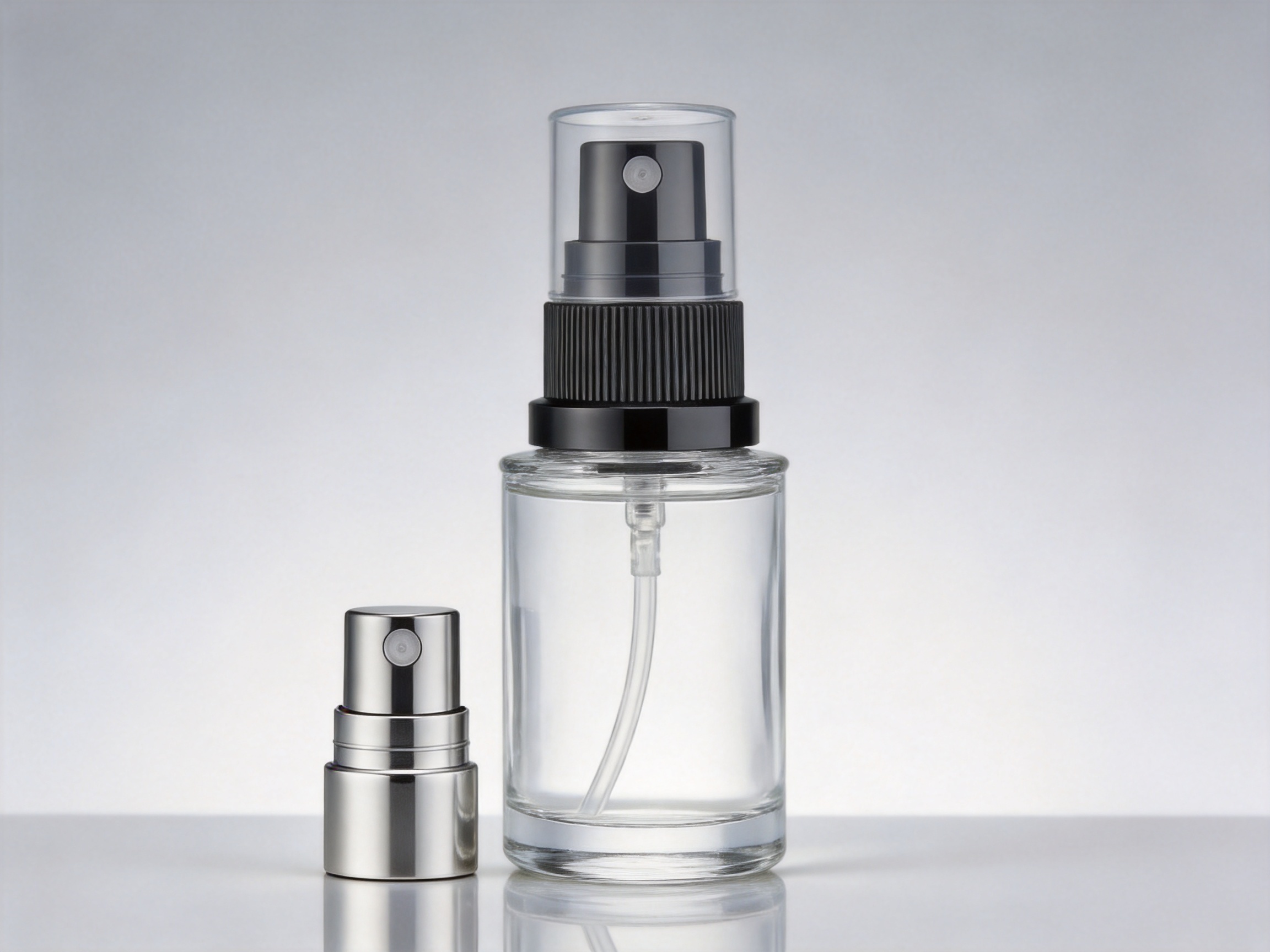
The most important competitive advantage of the GY-608A-FD2 is its stepped collar. Conventional fine mist sprayers are often designed for bottles with a simple neck profile. When they are installed on glass bottles featuring an anti-burst ring, the sprayer may not fully cover the raised area. The result can be a visible gap, an uneven transition, or an appearance that does not match the premium positioning of the product.
The stepped collar is designed to solve this problem at the component level. Instead of treating the anti-burst ring as an external obstacle, the sprayer incorporates additional geometry to accommodate and cover it. This creates a more complete visual enclosure around the bottle neck and helps the sprayer sit more naturally on the bottle.
For premium fragrance packaging, small details can strongly influence perceived quality. A visible ring, exposed gap, or mismatched shoulder can make the package look unfinished. By covering the anti-burst ring, the stepped collar provides a cleaner silhouette that can improve the relationship between the glass bottle, closure, and actuator.
The design may also contribute to leakage prevention by improving coverage around the neck area. A proper fit helps reduce the possibility of liquid escaping through an exposed or poorly aligned interface. While final leakage resistance depends on the bottle, gasket, crimping or closing process, and formulation, the stepped collar provides an important structural advantage over a closure that does not account for the ring.
Improved Appearance
The collar helps conceal structural features that may otherwise interrupt the package design. This is particularly useful for transparent or colored glass bottles where every component is visible. A coordinated collar can make the closure appear more substantial and can support a premium appearance without requiring a complex bottle shoulder.
Better Bottle Integration
Because the stepped section follows the neck area more effectively, the sprayer can appear integrated with the glass bottle rather than simply mounted on top of it. This is valuable for brands that depend on a strong visual connection between the bottle and the dispensing system.
Reduced Fit-Related Problems
When a sprayer is not designed for an anti-burst ring, the closure may not seat as expected. The stepped collar reduces this design conflict by providing additional clearance and coverage. It can therefore simplify packaging development and reduce the need for improvised decorative rings or secondary components.
Closure and Finish Options
The GY-608A-FD2 can be supplied with ribbed plastic or aluminum closure options. These alternatives allow brands to select a finish that matches the bottle style, target market, and product positioning.
A ribbed plastic closure can provide a practical and cost-efficient solution. Ribbing improves visual texture and can support hand grip during installation or consumer use. It is suitable for brands seeking a clean, functional appearance with a broad range of color possibilities. Plastic also offers flexibility in molding and can be adapted to different packaging programs.
An aluminum closure can create a more premium and refined appearance. Aluminum is often selected for fragrance and prestige personal care packaging because its metallic surface communicates quality and durability. It can be coordinated with the bottle decoration, label, actuator, and secondary packaging.
Option |
Appearance |
Potential advantages |
Suitable positioning |
Ribbed plastic |
Textured, practical, and versatile |
Efficient molding, color flexibility, reliable grip |
Mass personal care, air care, and everyday fragrance |
Aluminum |
Metallic and premium |
Enhanced luxury appearance and material distinction |
Fine fragrance, prestige beauty, and premium gift packaging |
The choice of closure should be evaluated together with the bottle neck, filling equipment, assembly method, and target price. A coordinated packaging system is more effective than selecting the sprayer and bottle independently. GreenYard’s experience with spray packaging allows customers to discuss these factors during product development.
Applications Across Personal Care and Fragrance
The sprayer is suitable for a wide range of liquid products. Its fine mist output and glass bottle compatibility make it particularly appropriate for fragrance and personal care packaging where appearance, controlled dispensing, and user comfort are important.
Perfume and Eau de Parfum
Perfume is one of the most natural applications for this sprayer. Glass bottles are widely used in fragrance because they protect the product, support premium decoration, and provide a substantial hand feel. The 18-410 closure format and aluminum finish option can help create a refined fragrance presentation.
The 0.12 milliliter dosage supports controlled application to the skin or clothing. The fine mist can distribute fragrance evenly, while the stepped collar helps preserve a clean appearance around the bottle neck. This combination is useful for both established fragrance brands and emerging labels developing distinctive glass packaging.
Air Fresheners
Glass air freshener bottles often require a closure that balances attractive appearance with dependable dispensing. The GY-608A-FD2 can be used for compact home fragrance products, car fragrance sprays, and other air care formats. The controlled output can help users refresh a space without releasing an excessive amount of liquid in a single press.
Facial and Body Mists
Facial mist and body mist products benefit from a soft, even spray. A fine mist can improve user comfort and reduce the likelihood of concentrated wet spots. The sprayer can be paired with glass bottles for skincare, botanical, hydrating, or refreshing products, subject to formula compatibility and performance testing.
Other Personal Care Liquids
Additional applications may include hair fragrance, light body fragrance, refreshing sprays, and selected treatment products. The final application should be confirmed through compatibility testing because different formulas can interact differently with pump materials, seals, and internal components.
Manufacturing Strengths
The product’s performance depends not only on its design but also on the manufacturing system used to produce it. GreenYard Tools Co., Ltd. has specialized in spray product manufacturing for 16 years. Its product range includes perfume sprayers, pump heads, caps, bottles, and daily chemical packaging solutions.
This specialization provides an important advantage over suppliers that treat sprayers as a secondary product category. A manufacturer focused on spray packaging understands the relationship between actuator geometry, pump chamber design, dip tube performance, closure structure, bottle compatibility, and filling-line requirements.
GreenYard’s reported daily production capacity of one million units supports both high-volume supply and scalable project development. Capacity is particularly important for fragrance and personal care brands that may require synchronized deliveries for multiple markets, seasonal promotions, or large retail launches.
Mold Design and Development
Precise mold design is essential for a stepped collar sprayer because the collar geometry must be formed consistently. Small dimensional variations can affect the appearance of the bottle interface, the fit over the anti-burst ring, and the relationship between the closure and the bottle shoulder.
GreenYard has dedicated capabilities in mold design. This allows the company to evaluate component geometry before production and make adjustments for specific bottle requirements. For customized projects, mold development can address tube length, closure appearance, dimensional compatibility, and other packaging details.
Well-designed molds also support stable cycle times and repeatable component quality. A mold that is optimized for the material, part geometry, cooling behavior, and ejection process can reduce defects and improve production efficiency.
Injection Molding
Injection molding is used to produce many of the plastic components in a fine mist sprayer. The process involves melting suitable plastic material, injecting it into a shaped mold cavity, allowing it to cool, and ejecting the finished component for inspection and assembly.
For a product with a stepped collar, injection molding control is important. The collar must maintain its intended shape, the external surface should remain consistent, and the connection points must meet the required dimensional tolerances. Proper process parameters help reduce issues such as short shots, sink marks, warping, flash, and inconsistent wall thickness.
GreenYard’s injection molding capability supports the production of high-volume packaging components with repeatable form and function. Consistent molding is necessary for automated assembly and reliable installation on compatible bottles.
Automated Assembly
Sprayers contain several functional elements that must be assembled in the correct sequence and orientation. Automated assembly can improve throughput, reduce manual handling, and promote consistent component placement. It can also support more stable production quality across large orders.
Automation is especially valuable when the product must meet repeatable dosage and leakage requirements. Correct placement of internal parts, actuator components, seals, and dip tubes influences the final performance of the sprayer. Automated systems can help control these operations and reduce the risk of assembly variation.
Quality Inspection
Quality inspection is an essential part of the manufacturing process. It may include visual checks, dimensional verification, component fit testing, spray testing, dosage evaluation, and leakage inspection. Inspection procedures help identify defects before products are packed and shipped.
For the GY-608A-FD2, quality attention should focus on the 18-410 neck interface, stepped collar profile, closure finish, actuator operation, dosage consistency, dip tube installation, and sealing performance. These characteristics directly affect both the appearance and functionality of the completed package.
Quality and Reliability Considerations
A fine mist sprayer must perform consistently under realistic conditions. Product developers should evaluate the complete package rather than judging the sprayer in isolation. The bottle, formula, closure, dip tube, filling process, storage environment, and transportation conditions all contribute to final performance.
Spray testing can confirm whether the sprayer produces a fine and evenly distributed mist. Dosage testing can determine whether output remains close to the nominal 0.12 milliliter specification over repeated actuations. Priming tests can evaluate how quickly the sprayer begins dispensing after storage or filling.
Leakage testing is also important. The package may be tested in upright and inverted positions, under vibration, after temperature changes, and following simulated transportation. These evaluations can help identify weaknesses in the closure interface or bottle compatibility.
The stepped collar is designed to address a known fit issue involving glass bottle anti-burst rings. However, the exact dimensions of the ring vary by bottle design. Sample testing should therefore be completed before a commercial order is finalized. This approach confirms that the collar fully covers the ring and that the closure seats correctly without excessive force or interference.
Evaluation area |
Purpose |
Recommended focus |
Neck compatibility |
Confirm mechanical fit |
18-410 thread, neck height, ring diameter, and clearance |
Spray output |
Assess consumer experience |
Fine mist quality, spray angle, coverage, and droplet feel |
Dosage |
Verify controlled delivery |
Nominal 0.12 milliliter output over repeated actuations |
Leakage |
Protect product and package |
Seal integrity during storage, handling, and transport |
Formula compatibility |
Confirm long-term suitability |
Material resistance, odor interaction, and component stability |
Appearance |
Protect brand presentation |
Collar coverage, finish consistency, color, and surface quality |
Advantages Over Conventional Sprayers
Many standard fine mist sprayers can provide acceptable dispensing performance but may not be optimized for glass bottles with anti-burst rings. The difference is not always visible in a basic product specification. It becomes clear when the components are assembled together and the bottle neck is examined closely.
A conventional sprayer may leave the safety ring partially exposed. It may also create a gap between the closure and the glass shoulder, making the package look less refined. If the closure does not align correctly, the package may be more vulnerable to leakage or movement during transportation.
The GY-608A-FD2 addresses these concerns through dedicated geometry rather than through an additional decorative cover. This integrated approach can reduce the number of separate packaging components and simplify the external appearance.
The product also offers a practical balance between standardized compatibility and specialized functionality. The 18-410 neck size supports broader bottle sourcing, while the stepped collar provides a feature tailored to glass packaging. This can help brands achieve a premium appearance without abandoning a commonly used neck specification.
Another advantage is the choice of closure materials. Brands can select ribbed plastic for efficiency and versatility or aluminum for a more luxurious appearance. The ability to offer both options supports multiple market segments and packaging budgets.
Customized dip tube length is an additional benefit. Bottle heights vary considerably, even when the neck finish remains the same. A tube that is too short may fail to reach the liquid effectively, while an excessively long tube may bend or interfere with the bottle base. Custom tube length helps adapt the sprayer to the selected bottle.
Customization and Project Support
Packaging development rarely ends with selecting a catalog component. Brands often need to coordinate bottle height, liquid volume, closure finish, color, decoration, tube length, actuator style, and production schedule. A manufacturer with design and production capabilities can help reduce communication gaps between these stages.
For the GY-608A-FD2, tube length can be customized according to the bottle dimensions. Customers should provide bottle drawings or physical samples whenever possible. Important information includes neck finish, anti-burst ring dimensions, bottle height, internal liquid depth, shoulder shape, and intended filling volume.
Closure selection can also be coordinated with the bottle design. Ribbed plastic may be matched to a brand color or used with a contrasting actuator. Aluminum may be selected for a metallic appearance that complements printing, labeling, or decorative coating on the glass bottle.
Sample approval is recommended before mass production. During this phase, the brand can evaluate visual proportion, collar coverage, spray feel, actuator comfort, and leakage performance. It can also confirm that the sprayer works correctly with the final formula rather than with water or a substitute liquid alone.
For larger projects, production planning may include mold review, pilot samples, performance testing, packaging confirmation, batch inspection, and shipment scheduling. GreenYard’s experience in mold design, injection molding, automated assembly, and quality inspection provides a foundation for this type of coordinated support.
Packaging Design and Brand Presentation
The closure is one of the first areas consumers notice when they handle a fragrance or personal care product. The actuator, collar, and bottle shoulder form a visual focal point. A well-matched sprayer can improve the perceived value of the entire package, even when the bottle design itself remains simple.
The stepped collar is particularly useful for designs that emphasize clean lines. It can cover the anti-burst ring and reduce visual interruption around the bottle neck. This makes it suitable for minimalist packaging, premium fragrance collections, modern facial mist products, and coordinated product families.
Brands can also use the closure finish to communicate product positioning. A ribbed plastic closure may suggest practicality, freshness, and accessibility. An aluminum closure may convey luxury, craftsmanship, and exclusivity. The same core dispensing platform can therefore support different market identities.
Color and surface coordination should be considered during development. A closure that matches the bottle label, cap, carton, or liquid color can create a unified package. Alternatively, a contrasting closure can provide a deliberate accent. The final selection should account for the visual effect under retail lighting and during consumer handling.
For transparent glass bottles, the internal dip tube may be visible. A suitable tube length and neat assembly can help preserve the appearance of the product. The collar can then complete the external presentation by covering the anti-burst ring and creating a more finished connection at the neck.
Operational Benefits for Packaging Manufacturers
In addition to consumer-facing advantages, a purpose-designed sprayer can offer practical benefits to filling and packaging operations. A compatible 18-410 component can help simplify sourcing and reduce the need to manage multiple neck standards for related products.
The integrated stepped collar can reduce the need for separate decorative rings or external covers. Fewer components can simplify inventory management, assembly coordination, and packaging cost calculations. It may also reduce the number of visual interfaces that require inspection.
Customized tube length can support more efficient assembly. When the tube is prepared for the selected bottle height, the filling operation may avoid unnecessary trimming or manual adjustment. This is especially useful for repeat production programs where consistency and throughput are important.
Automated assembly capability at the manufacturing source can also support stable supply. Consistent component placement helps reduce the variation that may otherwise create difficulties during filling, capping, or final inspection. For high-volume products, process stability can be as important as the nominal component price.
GreenYard’s daily production capacity of one million units provides the scale required by large personal care, fragrance, and daily chemical packaging programs. At the same time, the company’s design and mold capabilities can support customers that are still refining their bottle and closure configuration.
Recommended Product Development Process
Step One: Define the Bottle and Formula
The development process should begin with the glass bottle and liquid formula. Confirm the bottle volume, neck finish, anti-burst ring dimensions, shoulder profile, and internal liquid level. At the same time, identify the formula’s viscosity, alcohol content, fragrance oils, preservatives, or other ingredients that may affect component compatibility.
Step Two: Confirm the 18-410 Interface
Provide bottle drawings or samples for review. The supplier should confirm that the bottle’s 18-410 neck matches the sprayer and that the stepped collar can cover the anti-burst ring without interference. Any differences in ring height or diameter should be addressed before tooling or mass ordering.
Step Three: Select the Closure Finish
Choose ribbed plastic or aluminum according to the intended appearance, cost structure, and production requirements. Consider the relationship between the closure, actuator, label, bottle color, and secondary packaging.
Step Four: Determine the Dip Tube Length
Measure the effective liquid depth rather than relying only on total bottle height. The tube should reach the product efficiently while allowing sufficient clearance from the bottle base. A customized length can help improve liquid uptake and reduce residual product.
Step Five: Conduct Performance Testing
Test spray pattern, dosage, priming, actuation force, leakage resistance, and formula compatibility. Perform testing with production-intent components and the final liquid wherever possible.
Step Six: Approve Samples and Plan Production
Once the package meets functional and visual requirements, approve the sample specification. Confirm quantities, inspection standards, packaging method, delivery schedule, and any color or finish requirements before mass production.
Environmental and Material Efficiency Considerations
Packaging sustainability involves the complete system, including the bottle, sprayer, closure, formula, filling process, transport, and end-of-life handling. A component that delivers a controlled dose can help reduce product waste during consumer use. Accurate dispensing may also allow brands to optimize the relationship between product volume and package size.
The 0.12 milliliter output provides a defined dispensing reference for product developers. By understanding the number of actuations available from a bottle, brands can select a suitable liquid fill volume and communicate usage more clearly. Controlled output can also reduce excessive application and unnecessary consumption.
Material selection should be considered together with manufacturing efficiency and regional recycling systems. Plastic and aluminum components may have different recovery pathways depending on the market. Packaging developers should review local requirements and design the complete package with appropriate separation, labeling, or recycling guidance where applicable.
Durable components can support longer product life and reduce the need for replacement packaging. Reliable spray performance, secure closure fit, and leakage resistance help protect the formula from loss and reduce the risk of damaged goods during distribution.
Company Manufacturing Profile
GreenYard Tools Co., Ltd. is a China-based manufacturer specializing in spray product manufacturing and personal care packaging. The company has 16 years of industry experience and produces perfume sprayers, pump heads, caps, bottles, and daily chemical packaging solutions.
Its manufacturing capabilities include mold design, injection molding, automated assembly, and quality inspection. This combination allows the company to manage multiple stages of the product lifecycle within one coordinated supply system. It also provides a basis for developing packaging components that must meet both functional and visual requirements.
The company’s dedicated design team supports continued product innovation. This is reflected in the development of specialized solutions such as the stepped collar sprayer, which responds to a specific compatibility and appearance challenge in glass bottle packaging.
A daily production capacity of one million units supports customers with substantial volume requirements. Production scale can help brands manage launches, seasonal demand, regional distribution, and repeat orders. At the same time, manufacturing experience in multiple packaging categories can help customers coordinate sprayers, caps, bottles, and related components.
For international buyers, a specialized factory can provide advantages in communication and supply coordination. Rather than purchasing the sprayer, bottle, and closure from unrelated sources, customers may be able to discuss a broader packaging solution with one experienced manufacturer.
Technical Questions Buyers Should Ask
Before placing an order, buyers should ask how the sprayer will be matched to the bottle’s anti-burst ring. The supplier should be able to explain the collar design, request bottle dimensions or samples, and recommend compatibility testing.
Buyers should also confirm whether the 0.12 milliliter dosage is a nominal specification or a tested range under defined conditions. Dosage can vary with formula properties and test methods, so the final product should be evaluated using the intended liquid.
Other important questions include the available closure finishes, color capabilities, tube length tolerances, sample process, quality inspection procedures, packaging method, minimum order requirements, and production lead time. Clear technical communication at the beginning of the project helps prevent costly changes later.
Q&A
What is the GY-608A-FD2 sprayer used for?
It is a fine mist sprayer designed primarily for glass bottles used with perfume, air freshener, facial mist, body mist, and selected personal care liquids.
What does 18-410 mean?
18-410 identifies the compatible bottle neck finish and thread configuration. The bottle and sprayer should both be verified to ensure that their dimensions and sealing surfaces match correctly.
What is the dosage per spray?
The nominal dosage is 0.12 milliliter per actuation. Actual performance should be verified with the final formula, bottle, and testing conditions.
What problem does the stepped collar solve?
It is designed to cover the anti-burst ring on compatible glass bottles. This helps reduce visible gaps, improve the package appearance, and support a better-fitting closure interface.
Can the dip tube be customized?
Yes. The dip tube length can be customized to suit different bottle heights and liquid depths. Bottle drawings or physical samples are recommended for accurate selection.
Are different closure finishes available?
Yes. The product can be supplied with a ribbed plastic closure or an aluminum finish, depending on the desired appearance and packaging positioning.
Is the sprayer suitable for alcohol-based perfume?
It can be considered for perfume applications, including alcohol-based fragrance products, but formula compatibility testing is recommended before mass production. The final liquid should be tested with production-intent components.
Can the sprayer be used on any glass bottle?
No. The bottle must have a compatible 18-410 neck and an anti-burst ring geometry that works with the stepped collar. Samples and dimensional drawings should be reviewed before ordering.
How should dosage and spray quality be tested?
Testing should examine repeated actuations, spray pattern, mist fineness, output weight or volume, priming behavior, actuation force, and performance after storage. Testing with the final formula provides the most meaningful results.
How does the product compare with a conventional sprayer?
Its main distinction is the stepped collar designed for glass bottle anti-burst ring coverage. A conventional sprayer may not conceal the ring or fit the neck area as effectively, which can affect appearance and leakage resistance.
Can the product support large-volume orders?
GreenYard reports a daily production capacity of one million units. Actual capacity allocation, lead time, and order scheduling should be confirmed for each project.
What manufacturing processes support the product?
The company has capabilities in mold design, injection molding, automated assembly, and quality inspection. These processes support dimensional consistency, component assembly, and high-volume production.
Should samples be approved before mass production?
Yes. Sample approval is strongly recommended to confirm the fit over the bottle’s anti-burst ring, spray performance, appearance, leakage resistance, and compatibility with the final formula.
Conclusion
The GY-608A-FD2 18-410 0.12CC Step Collar Plastic Sprayer for Glass Bottle is designed to address a specific weakness of conventional fine mist sprayers: the difficulty of achieving a clean, secure, and attractive fit on glass bottles with anti-burst rings.
Its 18-410 neck finish supports broad packaging compatibility, while the 0.12 milliliter dosage provides controlled fine mist dispensing for fragrance, air care, facial mist, and personal care products. The stepped collar covers the anti-burst ring, improves visual continuity, and can help reduce fit-related leakage concerns when used with a compatible bottle.
Ribbed plastic and aluminum closure options allow brands to adapt the product to different market positions. Customized dip tube lengths support a range of bottle heights and liquid volumes. Together, these features provide a flexible solution for packaging developers seeking both reliable performance and a refined appearance.
The product is further supported by GreenYard Tools Co., Ltd.’s specialized manufacturing experience, mold design capability, injection molding, automated assembly, quality inspection, dedicated design team, and high production capacity. For brands developing glass fragrance or personal care packaging, this combination of specialized geometry and integrated manufacturing support can provide a practical alternative to ordinary sprayers that do not fully accommodate the bottle neck structure.
References
1. GreenYard Tools Co., Ltd. Product information for the GY-608A-FD2 18-410 0.12CC Step Collar Plastic Sprayer for Glass Bottle.
2. GreenYard Tools Co., Ltd. Manufacturing profile and capabilities in perfume sprayers, pump heads, caps, bottles, injection molding, automated assembly, and quality inspection.
3. General packaging engineering principles for threaded bottle neck finishes, dispensing closures, dip tube selection, and leakage evaluation.
4. General cosmetic and personal care packaging development practices for dosage testing, formula compatibility, spray pattern evaluation, and package qualification.
5. General fragrance packaging design considerations concerning glass bottles, fine mist dispensing, closure finishes, and premium product presentation.
Product: 18-410 0.12CC Step Collar Plastic Sprayer For Glass Bottle

-
Spray Bottles Explained: Choosing the Right Fine Mist Sprayer
What Makes a Good Spray Bottle A good spray bottle depends almost entirely on the quality of its pu...
-
What Is a Fine Mist Sprayer?
A fine mist sprayer is a cosmetic packaging component designed to atomize liquid formulas into ultr...
-
Misting Spray Bottle Guide: How a Fine Mist Sprayer Works
Quick Answer: What Makes a Misting Spray Bottle Work Well A misting spray bottle performs well when...
-
Amber Plastic Bottles: Lightweight, Protective, Customizable Packaging for Cosmetics
You have spent months stabilizing a vitamin C serum, only to watch a pallet of amber glass bottles ...
Copyright © GreenYard Tools Co.,ltd. All Rights Reserved.
Personal Care Packaging Manufacturer Custom Perfume Sprayers Factory