
-
About Us
Why Choose Us?The company possesses advanced capabilities in mold design, injection molding, and automated assembly, supported by a professional quality inspection team to ensure product reliability. A dedicated design team continuously drives product innovation, providing customers with high-quality spray solutions.
 Coming From China, Marketing To The World.
-
Products
-
News
 English
 Français
 русский
 Español
20 Gram Plastic Deodorant Stick Container with Built-In Brush
Content
- 1 Product Overview
- 2 Functional Design for Even Application
- 3 Advantages Over Conventional Packaging Formats
- 4 Recommended Product Applications
- 5 Construction and User Experience
- 6 Packaging Development Considerations
- 7 Manufacturing Capabilities Behind the Product
- 8 Why Work with an Experienced Packaging Manufacturer?
- 9 Branding and Customization Opportunities
- 10 Quality, Reliability, and Supply Considerations
- 11 How the Product Can Strengthen a Personal Care Brand
- 12 Recommended Evaluation Process for Buyers
- 13 Sustainability and Responsible Packaging Planning
- 14 Summary of Key Benefits
- 15 Frequently Asked Questions
- 15.1 What is the capacity of the plastic deodorant stick container with brush?
- 15.2 What products are suitable for this container?
- 15.3 Does the package include a built-in brush?
- 15.4 How is this different from a standard deodorant stick bottle?
- 15.5 Can the package be used for body makeup?
- 15.6 Is the package suitable for travel?
- 15.7 Can the container be customized?
- 15.8 What manufacturing processes support this product?
- 15.9 What should be tested before mass production?
- 15.10 Who manufactures the GY-DS08 container?
- 15.11 How can buyers request more information?
- 16 Conclusion
- 17 References
- 18 Product: Plastic Deodorant Stick Container with Brush
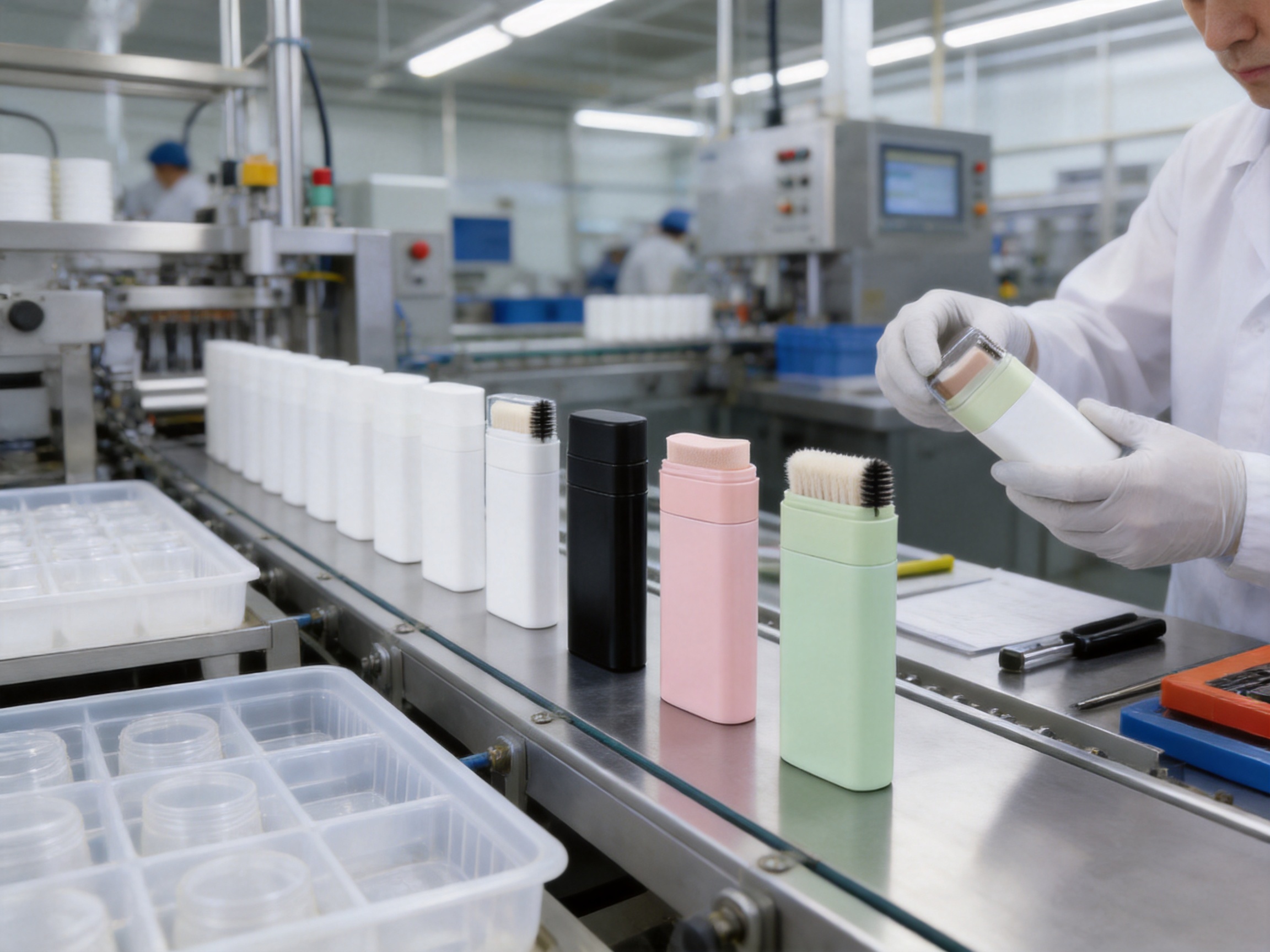
Packaging plays a decisive role in the performance, appearance, and usability of personal care products. For balms, body highlighters, concealing products, solid skincare formulas, and other targeted treatments, the container must do more than simply hold the product. It must support controlled dispensing, convenient application, hygienic handling, attractive presentation, and reliable protection during storage and transportation.
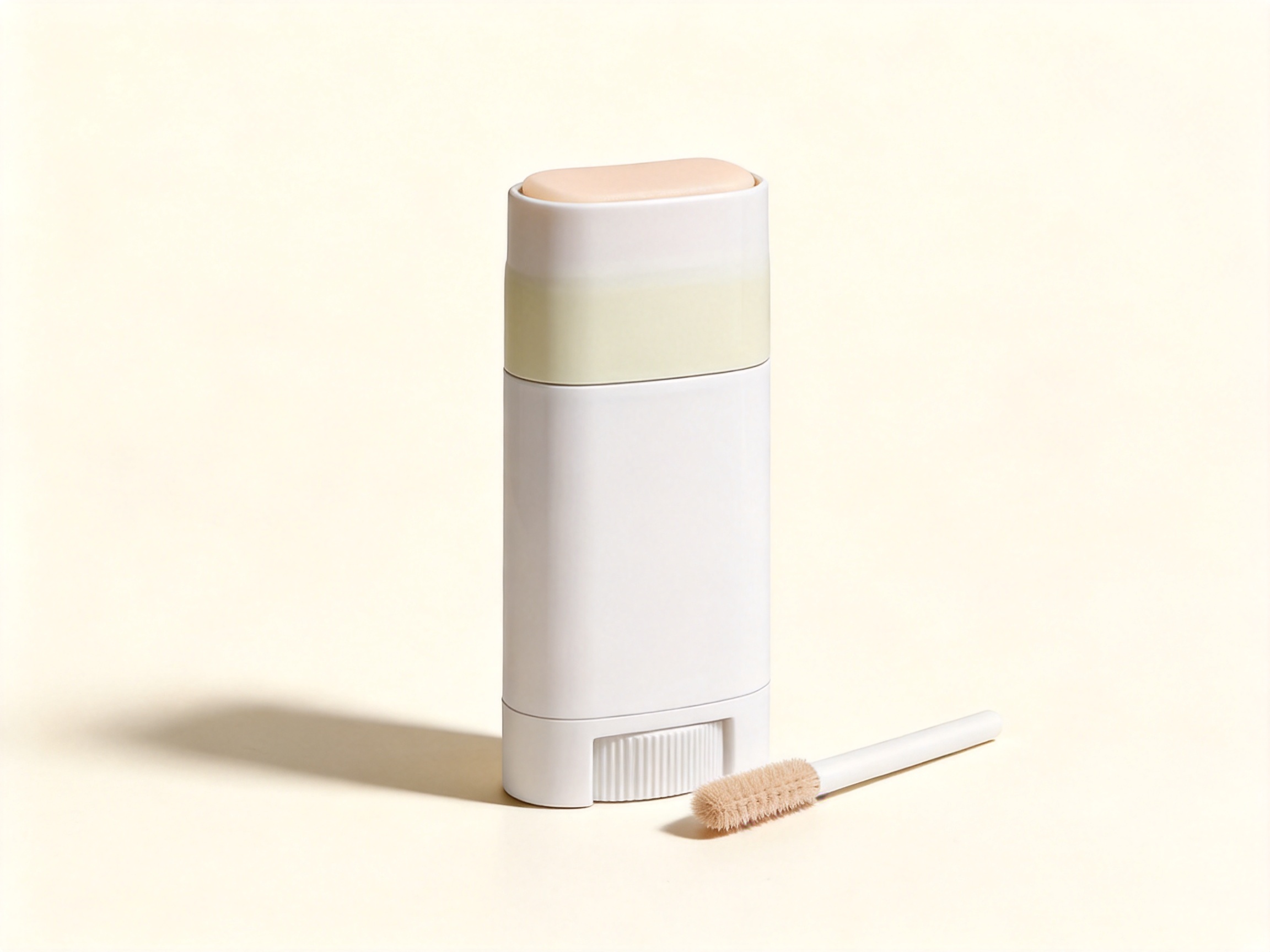
The 20 gram Plastic Deodorant Stick Container with Brush, identified as model GY-DS08, is designed to meet these requirements in one compact package. Combining a solid-stick container with a built-in brush, this packaging format offers a practical way to apply products evenly to the skin. It is particularly suitable for body glow sticks, body highlighters, concealing balms, and similar formulas that benefit from smooth, controlled, and uniform distribution.
Unlike a conventional deodorant stick package, which generally requires direct contact between the product and the skin, this design integrates an application brush into the container. The brush helps spread the formula across the desired area while supporting a more even finish. This functional combination can improve the consumer experience and give brands a distinctive alternative to ordinary stick packaging, jars, tubes, and separate applicators.
Product Overview
The GY-DS08 is a plastic deodorant stick container with an integrated brush and a nominal available volume of 20 grams. Its format is intended for solid or semi-solid products that require localized application and an even surface finish. The compact package can be used for personal care, cosmetics, body makeup, and selected treatment-oriented formulations.
Product Model |
GY-DS08 |
Product Type |
Plastic deodorant stick container with brush |
Available Volume |
20 gram |
Primary Usage |
Body glow sticks, body highlighters, concealing balms, and related products |
Application Feature |
Built-in brush for more even product application |
Packaging Category |
Deodorant stick bottle |
Material Format |
Plastic packaging construction |
The 20 gram size offers a useful balance between portability and product capacity. It is large enough for regular use while remaining suitable for handbags, cosmetic organizers, travel kits, and retail display. A compact format can also help brands develop convenient on-the-go products without requiring customers to carry a separate brush or applicator.
Functional Design for Even Application
The most important feature of this package is the built-in brush. A separate applicator is often needed when a balm, cream stick, or highlighter must be distributed evenly. When the applicator is not included with the product, consumers may use their fingers, cotton pads, or unrelated tools. These alternatives can be inconvenient, less precise, and potentially less hygienic.
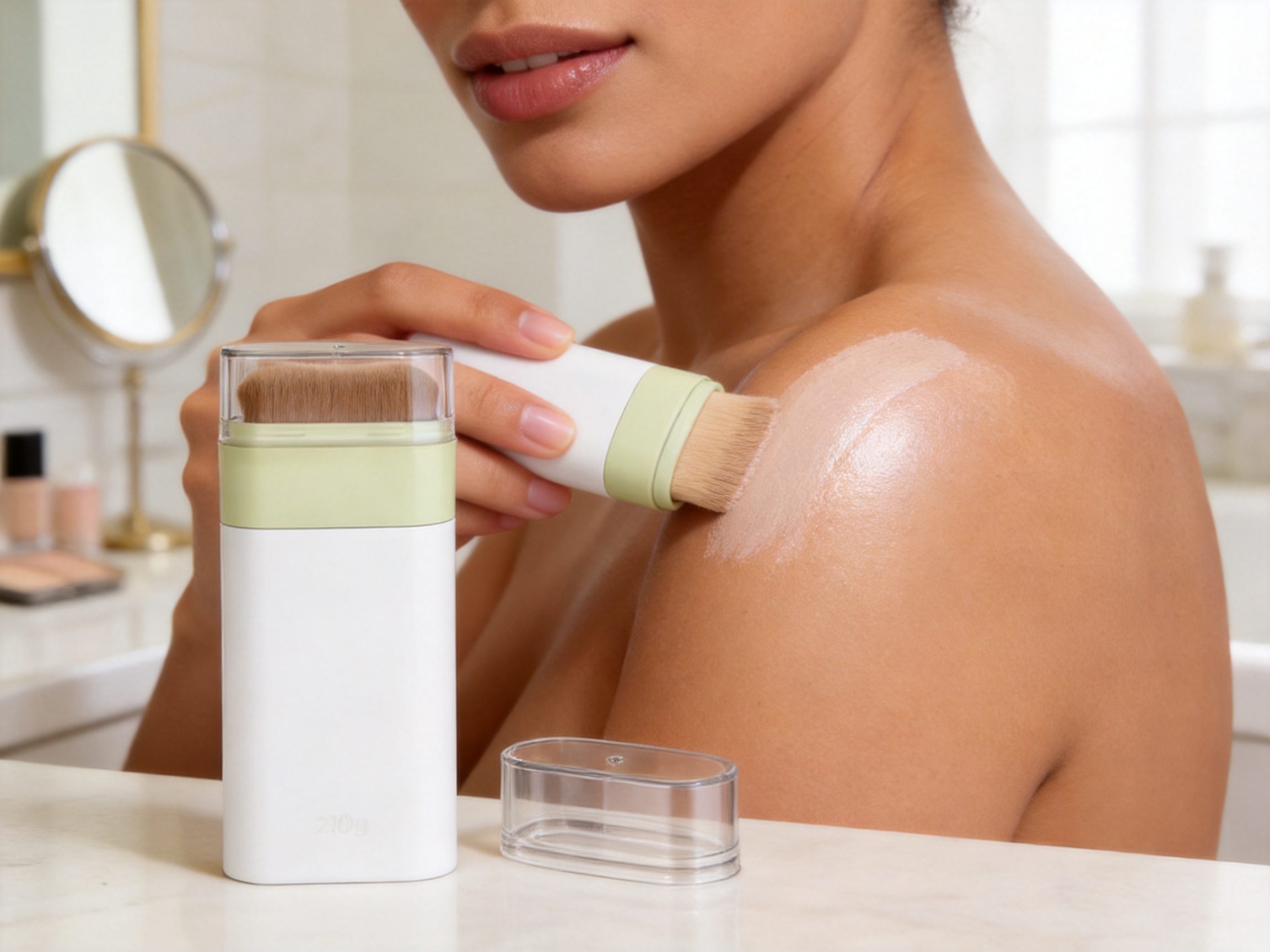
The integrated brush gives the package a more complete application system. The product can be dispensed from the stick format, and the brush can then help smooth or blend the material across the skin. This is valuable for body glow products and concealing formulas because uneven distribution may create visible lines, concentrated patches, or inconsistent coverage.
A brush can also help users control the amount of product placed on a particular area. Rather than applying a large quantity directly, the user can work gradually and build the desired result. This gradual application method is suitable for cosmetic products that require blending, layering, or targeted coverage.
For body highlighters, the brush may help distribute shimmer or reflective ingredients more consistently. For concealing balms, it can support the blending of color and texture. For other solid personal care products, the brush may help spread the formula over a defined region without requiring extensive rubbing by hand.
The combination of stick packaging and brush application creates a distinct user experience. The stick format keeps the product organized inside a familiar and portable container, while the brush adds a functional advantage that standard deodorant packaging does not normally provide. This makes the design suitable for brands seeking an application-oriented package rather than a simple storage container.
Advantages Over Conventional Packaging Formats
Integrated Application Convenience
One of the clearest advantages of the GY-DS08 is that the brush is built into the package. Consumers do not need to purchase or carry a separate brush. This can reduce the number of items required for a daily routine and make the product easier to use outside the home.
For brands, an integrated applicator can also make the product concept easier to communicate. The package itself demonstrates how the product is intended to be applied. This visual and functional clarity can be valuable on retail shelves, in product photography, and in promotional materials.
More Uniform Coverage
Traditional stick packaging usually focuses on delivering the formula directly to the skin. While this can be effective for deodorants and some solid skincare products, direct application may not be ideal for products that need blending. The brush in this package provides an additional step for spreading and smoothing the formula.
Uniform coverage is especially important for body glow sticks, concealers, and color-enhancing balms. A consistent layer can help the finished appearance look more natural and polished. The brush may also reduce the need for repeated rubbing, which can be useful when working with delicate areas or formulas containing visual effects such as shimmer.
Compact and Portable Format
The 20 gram capacity supports a compact product profile. The package is appropriate for travel, personal handbags, gym bags, and daily cosmetic storage. A smaller container can also help brands position the product as a convenient touch-up or targeted-use item.
Compared with a jar and a separate brush, the integrated format can occupy less space in a cosmetic bag. It also keeps the main product and applicator together, reducing the risk of losing the brush or forgetting it during travel.
Cleaner Product Handling
Direct finger application can introduce oils, moisture, and external particles into a formula. Although the appropriate hygiene approach depends on the product and usage instructions, an integrated brush can reduce the need for repeated finger contact with the product. This can support a cleaner and more controlled user routine.
The design is therefore useful for formulations that are applied in small quantities or to specific areas. When the brush is properly maintained and used according to the brand’s instructions, it can offer a more organized alternative to open jars and manual application.
Distinctive Shelf Appeal
Many personal care products use familiar packaging formats such as tubes, jars, and standard sticks. A built-in brush gives this container a more specialized appearance. It communicates that the package is designed not only to store the formula but also to assist with application.
This differentiation may help brands create a stronger product identity. It can be especially useful for new cosmetic concepts, body makeup products, festival makeup, glow products, treatment balms, and other items where application technique is part of the product value.
Suitable for Multiple Product Concepts
The package is not limited to conventional deodorant use. Its stated usage includes body glow sticks and similar products, and the built-in brush makes it appropriate for products that need an even application. Depending on formula compatibility and filling requirements, brands may consider it for selected balms, highlighting products, concealing products, and other solid or semi-solid personal care concepts.
This versatility can give product developers more freedom when planning a new line. A single packaging platform may support multiple shades, fragrances, textures, or functional variations, allowing the brand to create a coherent series with a consistent package architecture.

Plastic Deodorant Stick Container with Brush
Recommended Product Applications
Body Glow Sticks
Body glow sticks are designed to add radiance, luminosity, or a reflective finish to selected areas of the body. These products often need to be applied to the shoulders, collarbones, arms, legs, or other visible areas. An integrated brush can help blend the formula and distribute reflective particles more evenly.
The compact 20 gram package is suitable for touch-ups before events, photography, performances, travel, and everyday use. The brush can assist users in controlling the intensity of the finish, from a subtle glow to a more noticeable highlighting effect.
Body Highlighters
Body highlighters may be formulated as balms, creams, solid sticks, or other semi-solid textures. Their visual result depends heavily on smooth distribution. If the material is applied too heavily in one area, the result may appear uneven. The brush provides a tool for softening edges and creating a more consistent appearance.
For product developers, the package can support a premium application story. The product is not simply a highlighter in a container; it is a portable application system designed to help the user achieve a more polished finish.
Concealing Balms
Concealing balms may be used to cover or visually reduce the appearance of small areas of discoloration or uneven tone. These products commonly require careful placement and blending. The brush may help users work with smaller amounts and distribute the formula around the edges of the targeted area.
Because coverage requirements vary from person to person, the ability to build the product gradually can be useful. The package supports a controlled process in which the user applies, blends, evaluates, and adds more product if necessary.
Targeted Personal Care Products
Some personal care products are designed for localized application rather than full-body use. A compact stick format can help deliver the formula to a specific region while the brush provides a convenient finishing tool. Product suitability should always be confirmed through formula compatibility testing, stability evaluation, and application trials.
Cosmetic and Special-Effect Balms
The container may also be considered for creative cosmetic products, including tinted balms, shimmer products, stage makeup accessories, and special-effect formulas. The integrated brush can help blend colors, soften transitions, or distribute the formula across larger areas than a narrow stick surface alone.
For private-label and custom cosmetic projects, this format can provide a way to create a recognizable package style without requiring a separate brush component in the retail box. That may simplify the customer’s routine and strengthen the product’s functional positioning.
Construction and User Experience
A successful cosmetic package must combine visual appeal with practical handling. The GY-DS08 format is based on a compact plastic container with a stick mechanism and a built-in brush. This arrangement is intended to provide a straightforward user sequence: open the package, apply or expose the solid product, and use the brush to spread or blend as required.
Plastic is widely used in personal care packaging because it can support complex shapes, integrated components, consistent production, and efficient transportation. It also allows designers to create a lightweight package that is easier to handle than many glass alternatives. For products intended for travel or frequent use, reduced weight can be an important consideration.
The container’s compact structure may also provide an efficient surface for branding, product labeling, instructions, and decorative treatment. Depending on the final specification, brands may evaluate suitable decoration methods, color options, surface finishes, and labeling solutions during the packaging development process.
The built-in brush should be considered as part of the complete user experience. Its shape, softness, density, attachment, and protection method can influence how the product feels in use. For that reason, filling trials and application tests are important when matching the container with a particular balm or cosmetic formula.
Packaging Development Considerations
Formula Compatibility
Before mass production, the formula should be evaluated with the packaging components. Testing may include contact compatibility, odor transfer, color change, leakage, deformation, and long-term storage performance. Solid and semi-solid formulations can vary considerably in hardness, oil content, wax content, pigment load, fragrance level, and melting behavior.
A suitable filling process must be selected according to the formula’s physical properties. The package should be tested under normal and accelerated conditions to confirm that the product remains stable and that the brush and stick mechanism continue to function as expected.
Filling Requirements
The nominal available volume is 20 grams, but the final fill weight may depend on the density and structure of the formula. Product developers should confirm the actual filling target through pilot production. Filling temperature, cooling rate, solidification, and surface finish can all affect the appearance and performance of a stick product.
For balms containing pigments, shimmer, or suspended particles, the filling method should help maintain a consistent distribution of ingredients. A controlled process can reduce visual variation between units and support a more uniform consumer experience.
Brush Testing
The brush should be evaluated with the intended formula rather than tested separately. A formula that performs well with one brush structure may not provide the same result with another. Application testing should consider coverage, blending, drag, softness, residue, and ease of cleaning or replacement where applicable.
Testing can include both laboratory evaluation and user trials. Feedback from actual users may reveal whether the brush feels intuitive, whether the amount of product is easy to control, and whether the package is comfortable to hold.
Closure and Protection
Protection of the brush and product is important during transport and storage. The completed package should be evaluated for closure security, accidental opening, abrasion, compression, vibration, and drop resistance. The precise testing program will depend on the final design and distribution channel.
A secure closure can help protect the product from contamination and reduce the possibility of damage to the brush. It can also help preserve the appearance of the package during shipping from the factory to distributors, retailers, and end users.
Labeling and Consumer Instructions
Because the package combines a stick product with a brush, the label or accompanying instructions should explain the intended application method. Brands may include guidance on how to apply the formula, how to blend it, how to store the package, and how to keep the brush clean when appropriate.
Clear instructions can improve the customer experience and reduce misuse. They may also help explain the package’s advantage over standard deodorant containers, especially when the product is marketed for body makeup or specialized cosmetic application.
Manufacturing Capabilities Behind the Product
GreenYard Tools Co., Ltd. is a China-based personal care packaging manufacturer with 16 years of experience in spray product manufacturing and related packaging solutions. Its product range includes perfume sprayers, pump heads, caps, bottles, and daily chemical packaging components. The company’s experience across several packaging categories provides a broad technical foundation for developing plastic personal care containers and application systems.
The company reports a daily production capacity of one million units. This capacity is supported by capabilities in mold design, injection molding, automated assembly, and quality inspection. These stages are important for a product such as the GY-DS08 because the package depends on dimensional consistency between the container, stick mechanism, brush component, and closure.
Mold Design
Mold design is the first major technical stage in producing a consistent plastic package. The mold must be developed around the required dimensions, wall structure, component interfaces, appearance, and production cycle. For a container with an integrated brush, mold planning must account for the shape of the main body and the areas needed for assembly.
Accurate mold design can help reduce flash, dimensional variation, incomplete filling, and other defects. It can also support smoother transitions between surfaces, improved visual quality, and more reliable fit between parts. A dedicated design team can review the product structure and make adjustments before large-scale production begins.
Strong mold engineering is particularly valuable for custom packaging projects. Brands may require specific dimensions, colors, finishes, or component arrangements. A manufacturer with in-house or closely coordinated mold design capabilities can help move a concept from drawing to prototype and then to production more efficiently.
Injection Molding
Injection molding is a key process for producing plastic packaging components at scale. In this process, plastic material is heated and injected into a mold cavity, where it takes the required shape before being cooled and released. Process control affects the appearance, strength, dimensional accuracy, and repeatability of the finished components.
For a compact stick container, stable injection molding can help maintain consistent wall thickness and reliable component fit. It can also support the production of detailed surfaces and precise shapes that are difficult to achieve through less controlled methods.
Production parameters may include material temperature, mold temperature, injection pressure, holding pressure, cooling time, and cycle time. These settings must be managed according to the selected material and component design. Consistency across these variables can contribute to a more stable production result.
Automated Assembly
Automated assembly can improve production efficiency and help maintain repeatable component placement. A package containing a brush and stick mechanism may require multiple assembly steps. Automation can reduce manual variation and support higher output for large orders.
Automation may also assist with component feeding, positioning, pressing, fitting, and preliminary function checks. The specific equipment depends on the design and production requirements, but the general objective is to assemble each unit in a controlled and repeatable manner.
For customers ordering packaging for a product launch, stable assembly capacity can be an important advantage. It helps the manufacturer manage larger quantities while maintaining consistent presentation from one unit to the next.
Quality Inspection
Quality inspection is essential for personal care packaging because even small defects can affect filling, appearance, usability, or customer perception. Inspection procedures may address dimensional accuracy, surface condition, component fit, brush attachment, closure performance, and general assembly quality.
Quality control can be applied at several stages, including incoming material inspection, in-process monitoring, assembly checks, and finished-product sampling. A structured inspection system helps identify potential issues earlier and reduces the risk of producing large quantities with the same defect.
The company’s stated capabilities in quality inspection support its wider manufacturing process. For brands, this can provide greater confidence when developing packaging for domestic or international markets.
Why Work with an Experienced Packaging Manufacturer?
Developing a personal care package involves more than choosing a shape from a catalog. The package must be considered alongside the formula, filling equipment, application method, visual identity, shipping conditions, and target market. An experienced manufacturer can contribute practical knowledge at each stage.
GreenYard Tools Co., Ltd. combines packaging manufacturing experience with mold design, injection molding, automated assembly, and inspection capabilities. This combination may help reduce communication gaps between design and production. It can also support a more coordinated approach to customization, sampling, testing, and mass manufacturing.
The company’s product portfolio covers multiple personal care packaging formats, including perfume sprayers, perfume pump heads, lotion pumps, caps, bottles, and related components. This broader experience can be useful for brands that need several types of packaging for a complete product line.
A dedicated design team can also help customers adapt an existing package concept to a particular formula or market position. For example, a brand may want to use the GY-DS08 for several shades of body highlighter, each with a different color-coded package. Another brand may require a consistent family appearance across stick containers, lotion pumps, and spray packages.
As a manufacturer serving global markets, GreenYard can support customers seeking personal care packaging from China. Its location in Yuyao City, Zhejiang Province, places the company within an established manufacturing region known for plastic products, molds, and packaging components.
Branding and Customization Opportunities
The GY-DS08 can serve as a functional foundation for different brand identities. Although the package has a defined structure, the visual presentation may be adapted through color, decoration, labeling, and coordinated secondary packaging, subject to technical evaluation and order requirements.
Color selection can help separate product variants. For example, a collection of body glow products may use different colors for different shades or finishes. A neutral container may communicate clinical simplicity, while a vivid color may support a youthful or fashion-oriented product line.
Surface appearance is another important consideration. A glossy finish may emphasize brightness and cosmetic appeal, while a matte finish may create a softer and more understated impression. The appropriate treatment depends on the brand’s identity, target audience, formula category, and retail environment.
Labels and printed information should be planned around the available decoration area. Product name, shade, net content, directions, warnings, batch information, and other required details must remain legible. Packaging artwork should be checked against the actual container dimensions before final approval.
Brands may also consider secondary packaging to reinforce the product story. A carton can explain the integrated brush, present usage instructions, and provide space for ingredient and regulatory information. However, the built-in brush already provides a compact solution that may reduce the need for additional accessories inside the package.
Quality, Reliability, and Supply Considerations
For a packaging buyer, product quality includes more than visual appearance. The container must be compatible with filling operations, remain functional throughout its intended shelf life, and arrive in acceptable condition after transportation. A reliable supplier should be evaluated according to its production capability, process controls, communication, and ability to support required quantities.
The daily production capacity reported by GreenYard indicates that the company is equipped to handle substantial packaging demand. Capacity alone does not replace quality management, but combined with automated assembly and inspection, it can support consistent supply for growing brands and established businesses.
Before placing a large order, buyers should request samples and conduct their own evaluation. Sample assessment can include filling trials, application tests, closure checks, packaging line compatibility, drop testing, transport simulation, and storage evaluation. These steps help confirm that the package performs correctly with the final formula and distribution plan.
Clear communication is also important. Buyers should provide the intended formula type, target fill weight, required colors, decoration expectations, estimated order quantity, destination market, and desired delivery schedule. Detailed information allows the manufacturer to recommend an appropriate production plan and identify potential technical issues earlier.
For international orders, logistics planning should include carton dimensions, pallet arrangements, shipping protection, documentation, and lead time. The final packaging configuration may influence freight volume and handling requirements, so these details should be considered during the quotation and sampling stages.
How the Product Can Strengthen a Personal Care Brand
A package can become part of a product’s competitive positioning. The built-in brush gives the GY-DS08 a clear functional message: the package is designed to help consumers apply the product evenly. This message can support marketing for body makeup, glow products, concealing balms, and other application-sensitive formulas.
The package may also encourage repeat use because it simplifies the routine. When the product and applicator are stored together, users are less likely to search for a separate tool. A convenient routine can contribute to positive product perception, particularly for products used during travel, at events, or for quick touch-ups.
For emerging brands, a specialized package can help a new product appear more distinctive. The difference between a standard stick and a stick with a brush may be immediately visible to shoppers. This can make the package easier to demonstrate in retail content, online videos, social media posts, and instructional materials.
For established brands, the package can expand an existing product range. A company that already offers deodorants, balms, or cosmetic sticks may use the format to introduce a body highlighter or targeted cosmetic product with a different application experience.
The container can also support a premium perception when paired with suitable formula quality, decoration, and secondary packaging. Premium positioning depends on the complete product, but functional design is an important part of perceived value.
Recommended Evaluation Process for Buyers
Step One: Define the Formula
Begin by identifying the product’s texture, hardness, oil content, wax content, pigment level, fragrance, and intended application area. Explain whether the product is a balm, highlighter, concealer, deodorant, or another solid or semi-solid formula.
Step Two: Confirm the Fill Target
The available capacity is 20 grams, but the exact fill weight should be confirmed with the formula density and filling process. Conduct a pilot filling test to verify the visual fill level, surface appearance, and stick movement.
Step Three: Test the Brush
Apply the actual formula using the built-in brush. Evaluate spreadability, blending, coverage, softness, residue, and user comfort. Consider whether the brush supports the intended application area and whether consumers can control the amount of product easily.
Step Four: Review the Package Appearance
Assess color, surface finish, label placement, closure appearance, and overall proportions. Compare the sample with the brand’s visual identity and confirm that important product information remains clear.
Step Five: Conduct Stability and Compatibility Testing
Store filled samples under relevant conditions and observe changes over time. Check for leakage, deformation, odor changes, discoloration, brush damage, component loosening, and changes in product performance.
Step Six: Confirm Production and Logistics
After the sample is approved, confirm order quantities, production schedule, quality requirements, packaging method, shipping terms, and documentation. A clear specification can help ensure that mass production matches the approved sample.
Sustainability and Responsible Packaging Planning
Plastic packaging decisions should be made with attention to material use, product protection, durability, and end-of-life considerations. A compact package can help limit unnecessary size and may reduce the amount of secondary material required. However, responsible packaging planning should evaluate the complete product life cycle rather than focusing on one characteristic alone.
Durability is relevant because a package that protects the formula and remains functional may reduce product waste caused by leakage, breakage, or contamination. The integrated brush may also reduce the need for an additional individually packaged applicator.
Brands should discuss material selection, component design, decoration, and recycling considerations with the packaging manufacturer. The feasibility of recycling depends on the specific materials, component combination, local collection systems, and regional regulations. Any sustainability claim should be supported by appropriate technical information.
Summary of Key Benefits
Benefit |
Value to the Brand |
Value to the Consumer |
Built-in brush |
Creates a differentiated product concept |
Provides a convenient application tool |
20 gram format |
Supports compact personal care products |
Easy to carry and suitable for touch-ups |
Stick container design |
Offers a familiar and efficient package format |
Allows controlled product handling |
Even application potential |
Supports body makeup and balm concepts |
Helps create a smoother, more consistent finish |
Plastic construction |
Supports scalable production and design flexibility |
Offers a lightweight format for daily use |
Manufacturing support |
Provides access to mold design, molding, assembly, and inspection |
Contributes to reliable product quality |
Frequently Asked Questions
What is the capacity of the plastic deodorant stick container with brush?
The available volume is 20 grams. The exact filling weight should be confirmed through testing because different formulas have different densities and filling characteristics.
What products are suitable for this container?
The package is suitable for body glow sticks, body highlighters, concealing balms, and other solid or semi-solid products that benefit from even application. Final compatibility must be confirmed through formula and stability testing.
Does the package include a built-in brush?
Yes. The design includes a built-in brush intended to help users spread or blend the product more evenly.
How is this different from a standard deodorant stick bottle?
A standard deodorant stick package generally focuses on direct application from the product surface. This design adds an integrated brush, making it more suitable for formulas that require blending, smoothing, or controlled distribution.
Can the package be used for body makeup?
Yes. Body glow sticks, body highlighters, and concealing products are among the intended applications. Brands should conduct application tests to confirm that the brush and formula produce the desired finish.
Is the package suitable for travel?
The 20 gram format is compact and portable, making it suitable for handbags, travel kits, and on-the-go use. Closure security and transport performance should be evaluated before commercial distribution.
Can the container be customized?
Customization possibilities may include color, decoration, labeling, and coordinated packaging, depending on the final design and production requirements. Buyers should discuss their specifications with the manufacturer during the sampling stage.
What manufacturing processes support this product?
The manufacturer reports capabilities in mold design, injection molding, automated assembly, and quality inspection. These processes help produce consistent plastic components and assemble the packaging system at scale.
What should be tested before mass production?
Buyers should test formula compatibility, filling performance, stick movement, brush application, closure security, storage stability, drop resistance, transport conditions, and visual quality. Packaging line trials are also recommended when the product will be filled using automated equipment.
Who manufactures the GY-DS08 container?
The product is manufactured by GreenYard Tools Co., Ltd., a China-based personal care packaging manufacturer located in Yuyao City, Zhejiang Province. The company specializes in spray products and related personal care packaging solutions.
How can buyers request more information?
Buyers can contact GreenYard Tools Co., Ltd. through the company’s sales channels to discuss samples, specifications, customization, production capacity, and order requirements. The listed contact details include the telephone numbers +86-0574-62493001 and +86-13116696325, as well as the email address [email protected].
Conclusion
The 20 gram Plastic Deodorant Stick Container with Brush provides a practical packaging solution for products that require controlled and even application. Its integrated brush sets it apart from conventional deodorant stick packaging by combining storage and application in one compact format. This design is especially relevant to body glow sticks, body highlighters, concealing balms, and other solid or semi-solid personal care products.
For consumers, the package offers portability, convenience, and a more organized application routine. For brands, it creates opportunities for product differentiation, line extension, and application-focused marketing. The compact plastic structure supports efficient handling, while the 20 gram capacity is suitable for regular use and touch-up products.
GreenYard Tools Co., Ltd. supports the product with reported capabilities in mold design, injection molding, automated assembly, and quality inspection. Its 16 years of experience in spray product manufacturing and its wider portfolio of pumps, sprayers, caps, bottles, and daily chemical packaging provide a broad manufacturing foundation for personal care projects.
As with any cosmetic or personal care container, final approval should be based on testing with the intended formula. When the package, formula, brush, filling method, and branding are developed as one coordinated system, the GY-DS08 can offer a distinctive and functional solution for modern body care and cosmetic applications.
References
1. GreenYard Tools Co., Ltd. Product information for model GY-DS08, Plastic Deodorant Stick Container with Brush.
2. GreenYard Tools Co., Ltd. Company information and manufacturing capability statement.
3. General principles of plastic injection molding for personal care packaging components.
4. General packaging development practices for cosmetic formulas, solid balms, and body care products.
5. General quality control considerations for personal care packaging, including dimensional inspection, component assembly, compatibility testing, and transport evaluation.
Product: Plastic Deodorant Stick Container with Brush

-
Deodorant Containers Eco Friendly: Sustainable Bottle Guide
Deodorant Containers Eco Friendly: The Direct Answer The most eco-friendly deodorant containers are...
-
Inside a Dropper: Every Component Explained and Why It Matters
What's Actually Inside a Dropper A standard dropper is not a single part — it is an assembly of fou...
-
What Makes a Good Deodorant Stick Bottle for Brands?
A deodorant stick bottle is a twist-up or push-up dispensing container designed to hold and advance...
-
Can You Recycle Deodorant Containers? A Complete Guide to Proper Disposal
Can You Recycle Deodorant Containers? The Short Answer You just finished your last stick of deodora...
Copyright © GreenYard Tools Co.,ltd. All Rights Reserved.
Personal Care Packaging Manufacturer Custom Perfume Sprayers Factory