
-
About Us
Why Choose Us?The company possesses advanced capabilities in mold design, injection molding, and automated assembly, supported by a professional quality inspection team to ensure product reliability. A dedicated design team continuously drives product innovation, providing customers with high-quality spray solutions.
 Coming From China, Marketing To The World.
-
Products
-
News
 English
 Français
 русский
 Español
4g Sponge Tip Cosmetic Makeup Stick Container: A Practical Guide to Integrated Cosmetic Packaging
Content
- 1 Product Overview
- 2 Why an Integrated Sponge Applicator Matters
- 3 Potential Cosmetic Applications
- 4 Advantages Compared with Conventional Cosmetic Packaging
- 5 Design and User Experience Benefits
- 6 Manufacturing Strengths and Production Capabilities
- 7 Material and Formula Compatibility Considerations
- 8 Customization and Brand Development Opportunities
- 9 Quality, Safety, and Responsible Use
- 10 Commercial Benefits for Cosmetic Brands
- 11 Recommended Product Development Process
- 12 Q&A: Common Questions About the GY-DS25
- 12.1 What is the capacity of the GY-DS25 container?
- 12.2 What type of applicator does it include?
- 12.3 Which products can be used with this package?
- 12.4 Is the container only suitable for deodorant?
- 12.5 What is the main advantage over a standard cosmetic tube?
- 12.6 Why is a 4-gram size useful?
- 12.7 Can the package be used with liquid foundation?
- 12.8 Does the integrated applicator eliminate hygiene concerns?
- 12.9 What manufacturing capabilities does GreenYard offer?
- 12.10 Can brands customize the package?
- 12.11 What should be tested before mass production?
- 13 Conclusion
- 14 References
- 15 Product: GY-DS25 Sponge Tip Cosmetic Makeup Stick Container

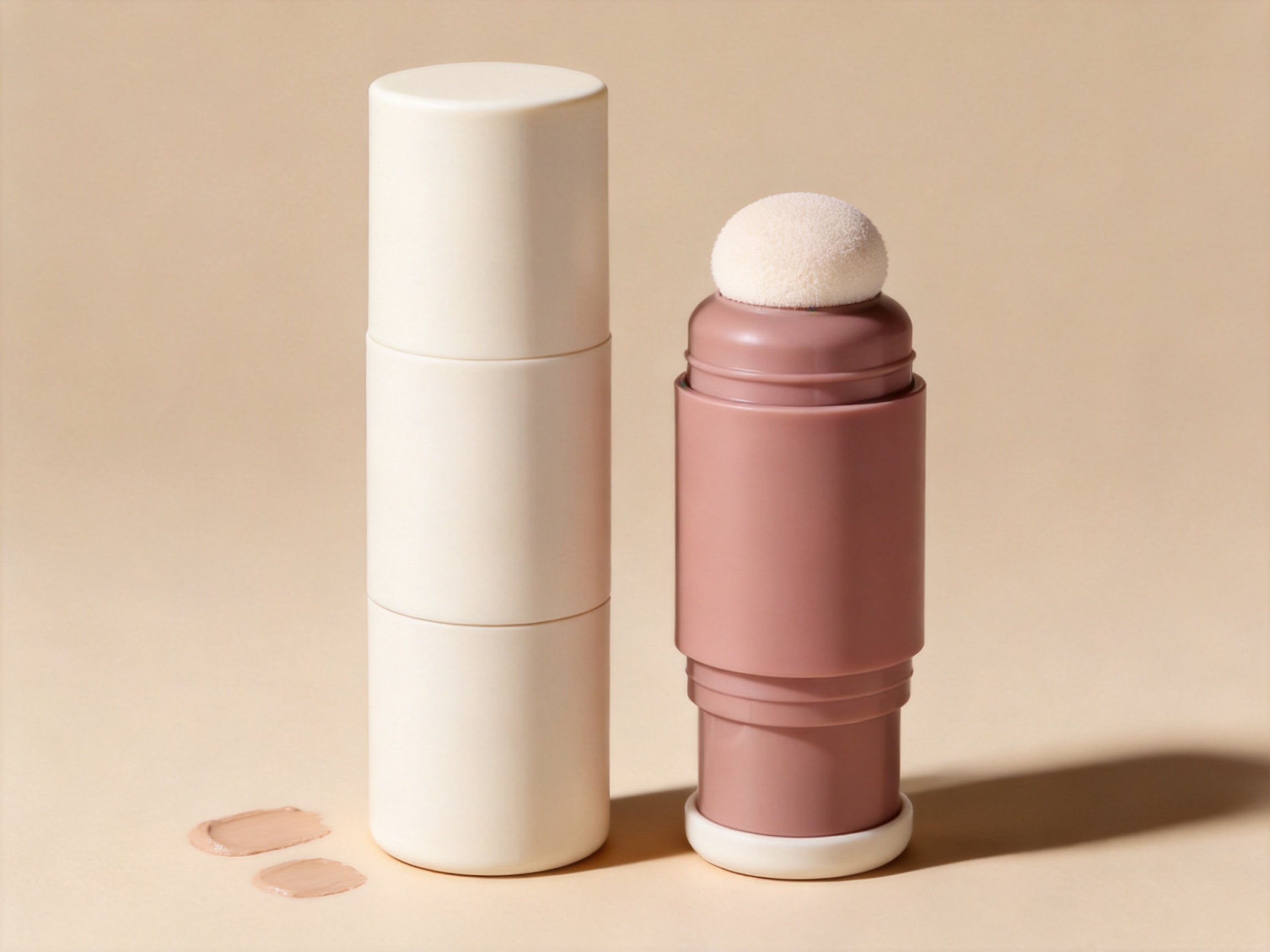
The GY-DS25 Sponge Tip Cosmetic Makeup Stick Container is a compact packaging solution designed for modern color cosmetics, balm products, and portable beauty applications. With a 4-gram capacity and an integrated foam applicator mounted on the exterior of the tube, it combines product storage and direct application in a single package. This design responds to several important trends in the cosmetics market: smaller formats, convenient touch-up products, reduced dependence on separate tools, and packaging that supports a cleaner, more controlled user experience.
Unlike a conventional cosmetic jar or plain stick tube, the GY-DS25 is designed around the way consumers use makeup. A product such as blush, foundation balm, or another cream-based formulation can be carried in a compact container and applied with the built-in sponge tip. The user does not necessarily need to carry a brush, puff, or separate applicator. This creates a practical advantage for handbags, travel kits, professional makeup cases, and daily personal-care routines.
The container belongs to the deodorant stick bottle category, but its application potential extends beyond deodorant. Its 4-gram format and integrated foam applicator make it suitable for cosmetic brands developing small-volume makeup sticks, balm applicators, trial-size products, travel products, and targeted touch-up solutions. As brands increasingly seek packaging that performs more than one function, this type of container offers a flexible platform for product development.
Product Overview
The GY-DS25 has a stated available volume of 4 grams and is intended for cosmetic use. Its compact structure is designed to hold a suitable beauty formulation while providing an exterior foam application surface. The applicator supports the spreading of balm-like or cream-based products across the skin, helping users distribute makeup more evenly than they might with a fingertip alone.
The key product concept is integration. A normal cosmetic package generally stores the formula, while application depends on an additional tool. The GY-DS25 combines these two stages. The package stores the formula in a small tube and provides a foam tip for application. This can make the product easier to use, easier to carry, and more suitable for quick application away from home.
The packaging is especially relevant for formulas that benefit from controlled, soft distribution. Cream blush, foundation balm, highlighting balm, contour balm, tinted moisturizer, and other semi-solid cosmetic products may be developed around this type of package, provided that the formula is compatible with the container materials and dispensing structure.
Because the container is compact, it may also be used for promotional products, seasonal makeup collections, limited-edition color launches, sampling programs, and travel-size product ranges. A 4-gram package can help brands offer a lower-commitment product format while still presenting a complete and functional application experience.
Product Attribute | Specification or Function | Packaging Benefit |
Product model | GY-DS25 | Identifies the sponge tip cosmetic makeup stick container platform |
Available volume | 4 grams | Compact format for portable and targeted cosmetic use |
Primary usage | Cosmetic packaging | Suitable for selected makeup and balm-based formulations |
Applicator | Integrated exterior foam applicator | Supports direct and smooth product spreading |
Potential applications | Blush, foundation, balm, and similar products | Allows brands to develop multifunctional portable products |
Packaging category | Deodorant stick bottle and cosmetic stick packaging | Extends a familiar stick format into color cosmetics |
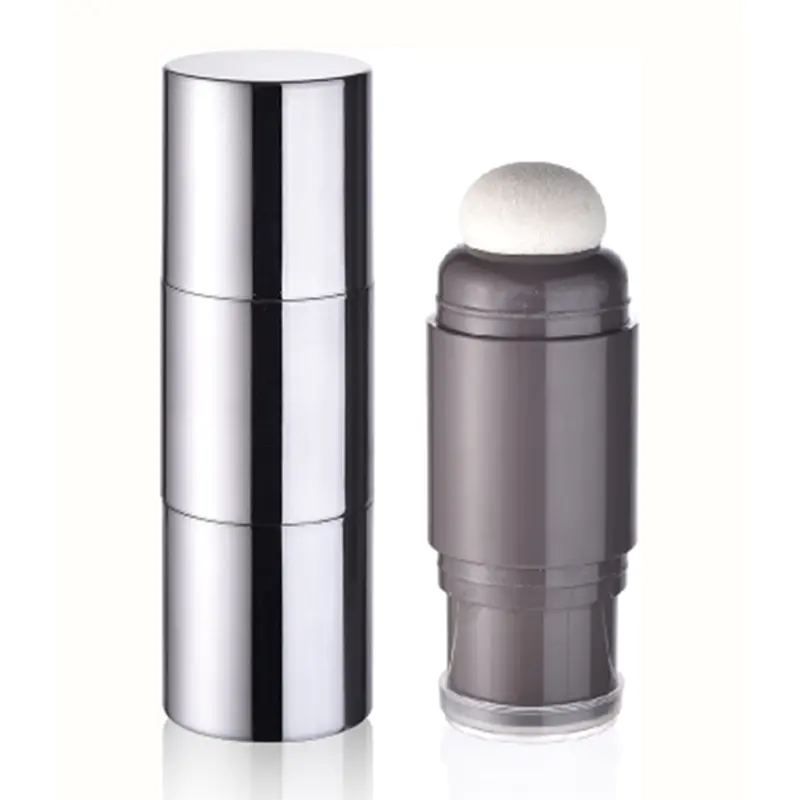
GY-DS25 Sponge Tip Cosmetic Makeup Stick Container
Why an Integrated Sponge Applicator Matters
Many cosmetic packages require users to combine several separate items. A jar may need a brush or sponge. A liquid foundation bottle may require a makeup sponge. A balm in a standard tube may need fingers for blending. Although these methods can work, they add steps to the routine and may be less convenient when the user is traveling or making a quick correction during the day.
The integrated sponge applicator addresses this issue by placing an application surface directly on the container. The design helps reduce the number of accessories required for use. This is particularly valuable for products positioned as portable, fast, or convenient. A consumer can take the container from a makeup bag and apply the product without searching for another tool.
The foam tip may also contribute to a softer application experience. Compared with a hard plastic edge or direct fingertip application, a foam surface can provide a gentle contact point for the skin. It can support light tapping, spreading, blending, or targeted placement, depending on the formula and the shape of the applicator. The result is a package that participates in the product experience rather than functioning only as a storage vessel.
For cosmetic brands, integrated application may create a clearer product identity. A standard tube can look similar to many competing packages, while a tube with a visible applicator communicates a specific benefit at the point of sale. The package itself demonstrates how the product is used. This can support consumer understanding, product differentiation, and more intuitive shelf presentation.
Improved Portability
The 4-gram capacity makes the GY-DS25 suitable for consumers who value compact products. Small makeup packages are easy to place in purses, pockets, cosmetic pouches, airline travel bags, and emergency touch-up kits. They can also be useful for consumers who prefer carrying only the amount of product needed for a particular activity.
Portability is not limited to personal consumers. Makeup artists may use small-format containers when organizing multiple shades or products. Beauty retailers may select compact packaging for gift sets and discovery collections. Hotels, spas, and promotional programs may use small cosmetic formats when space and convenience are important.
Less Dependence on Separate Tools
A separate brush or sponge can be misplaced, contaminated, or forgotten. The integrated applicator remains associated with the product container, which simplifies storage and transportation. This does not eliminate the need for proper cleaning or hygienic product management, but it can make the routine more organized.
From a product-development perspective, a package with a built-in applicator can support a stronger use proposition. A brand can position the product as a direct-application balm, a portable touch-up stick, or a quick makeup solution. The packaging format provides a physical foundation for these claims without requiring an additional accessory in every unit.
More Controlled Product Placement
When the formulation and applicator are designed together, the package can support targeted application. The user may apply a small amount to a cheek, forehead, under-eye area, or other intended location and then blend it with the foam surface. This can be more controlled than pouring or dispensing a larger amount of liquid product from a conventional bottle.
The appropriate level of control depends on the formula, filling method, internal structure, and user technique. Nevertheless, the integrated format provides a platform for brands that want to develop products around measured, localized application rather than broad dispensing.
Potential Cosmetic Applications
The GY-DS25 is described as compatible with blush, foundation, and similar cosmetic products. Its application range may include products with a balm, cream, soft-solid, or semi-solid texture, subject to formulation testing and compatibility evaluation. Brands should confirm fill behavior, product release, stability, and applicator performance before commercial production.
Blush Balm and Cream Blush
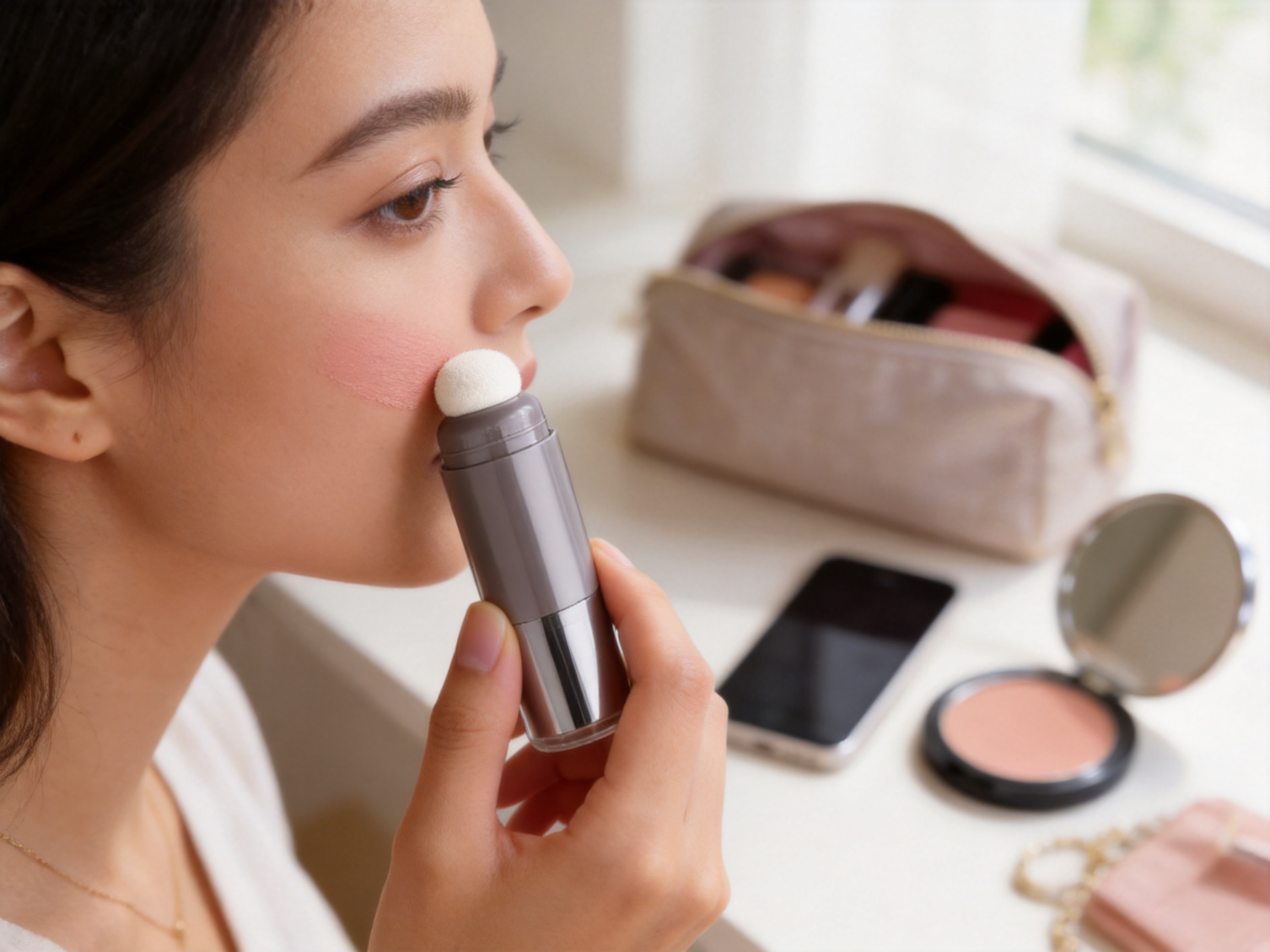
Cream blush products often benefit from controlled application and gradual blending. A sponge tip can help distribute color across the cheek while softening visible edges. A compact 4-gram size can also support a focused product concept, such as a single-shade blush stick or a small collection of seasonal colors.
For this application, product developers may evaluate how the formula transfers to the foam, how much product is released during use, and whether the color remains consistent after repeated application. The relationship between formula viscosity and sponge absorption is important. A formula that is too fluid may spread beyond the intended area, while a formula that is too firm may not transfer smoothly.
Foundation Balm
A foundation balm can be positioned as a portable complexion product. The integrated sponge may assist with spreading the formula over targeted areas or blending it after direct placement. The small container format may be particularly useful for touch-up products, travel products, or complexion products intended for specific areas rather than full-face coverage.
Foundation formulas can vary significantly in pigment load, oil content, wax content, and emollient structure. These characteristics may influence compatibility with the package and applicator. Testing should consider product migration, residue, color staining, cleaning requirements, and long-term contact between the formula and packaging components.
Highlighter and Contour Balm
Highlighter and contour products are often applied to defined areas of the face. A small package with an integrated applicator may support precise placement and soft blending. The foam surface can help create a diffused finish when used with an appropriate cream or balm formulation.
The package may also be suitable for brands seeking coordinated collections. Blush, contour, and highlighter products can use a common container platform while being differentiated by color, decoration, labeling, or formula identity. This can simplify the visual organization of a product line and create a consistent packaging architecture.
Trial, Travel, and Promotional Products
The 4-gram size can serve as a useful format for sampling and trial programs. A consumer may be more willing to test a new shade or texture in a smaller package. Brands can also include compact products in gift sets, event kits, subscription boxes, or promotional campaigns.
Although a smaller package contains less material than a full-size product, it still needs to communicate quality. The integrated applicator helps the format feel complete rather than simply reduced. The consumer receives both the formula container and the application feature in one unit.
Advantages Compared with Conventional Cosmetic Packaging
The GY-DS25 should be compared with conventional packaging according to the needs of the product, formula, and target user. No single package is ideal for every cosmetic formulation. However, the sponge tip container offers several functional advantages over plain tubes, open jars, and packages that require separate application tools.
Compared with Plain Cosmetic Stick Tubes
A plain stick tube can store a solid or semi-solid formula effectively, but it may not provide an integrated blending solution. The consumer may need to use fingers or another tool after dispensing the product. The GY-DS25 adds a foam applicator to the package, allowing the container to support both product storage and application.
This distinction can be valuable for formulas that require blending. A plain tube may be ideal for direct application when the user wants a strong, defined line or concentrated deposit. A sponge tip format is more appropriate when the brand wants to encourage soft spreading, controlled diffusion, or a smoother finish.
Compared with Cosmetic Jars
Jars generally offer a wide opening that allows easy access to creams and balms, but they require the user to touch the formula directly or use a separate tool. They can also occupy more space and may be less suitable for quick application outside the home. A compact stick container creates a more enclosed and portable format.
The GY-DS25 may therefore offer a cleaner and more organized user experience for products intended for repeated touch-ups. The user can hold the container and apply the formula without opening a wide jar or carrying a separate brush. Product developers should still establish appropriate use and hygiene guidance, particularly for products used around the eyes or on sensitive skin.
Compared with Dropper and Liquid Pump Bottles
Dropper bottles and liquid pumps are useful for fluid formulas, serums, and lotions, but they are not always the most suitable choice for balm or cream products. They may release more liquid than needed for a small targeted application, and they generally require a separate blending method.
The GY-DS25 is more closely aligned with solid, semi-solid, or viscous cosmetic products. Its format can help a brand create a distinctive tactile experience based on direct application and blending. It may also be more convenient for consumers who want to carry a product without worrying about liquid leakage caused by loose caps or pressure changes.
Compared with Separate Applicator Systems
A separate applicator can offer flexibility, but it adds another component to the product system. The brush or sponge must be packaged, stored, cleaned, and transported independently. For a portable makeup product, this may create inconvenience and increase the chance that the user will lose or forget the tool.
An integrated applicator simplifies the basic product architecture. It can reduce the number of separate pieces in a consumer’s routine and support a more direct connection between the container and the application method. For brands, this may also create an opportunity to communicate convenience as a central product benefit.
Design and User Experience Benefits
Packaging is an important part of how consumers understand a cosmetic product. Shape, size, opening method, applicator design, and tactile response all influence the user’s first impression. The GY-DS25 has a product concept that is easy to demonstrate: the package contains a cosmetic formula and includes a foam tip for applying it.
The compact shape can support one-handed handling during quick applications. A user may be able to remove the cap, position the product, apply a controlled amount, and blend the product without placing several tools on a table. This workflow is particularly relevant in bathrooms, cars, offices, dressing rooms, and travel environments where space may be limited.
The integrated design may also help reduce visual clutter in a makeup bag. Instead of carrying a tube and a separate sponge, the user carries one coordinated package. While the actual convenience depends on the final configuration and formula, the basic concept supports a streamlined routine.
Direct Communication at Retail
Packaging with a visible applicator can make the product’s function easier to understand. Consumers can see that the product is designed for direct application and blending. This may reduce the amount of explanation required on the front label or product display, although clear instructions remain important.
The package may be customized through color matching, surface decoration, printing, labeling, and cap design. A brand can use these elements to create a premium, playful, minimalist, clinical, or professional appearance. The same basic container platform can therefore support multiple market positions.
Suitable for Modern Beauty Routines
Many consumers now expect beauty products to be convenient, portable, and multifunctional. A product that combines storage and application responds to this expectation. It may be suitable for consumers who want fast routines, limited belongings, or practical products that can be used without a vanity table.
The format can also support social and digital product demonstrations. A short video can show the package, the integrated tip, and the application process. This is not only a marketing advantage; it also helps consumers understand the intended use before purchase.
Manufacturing Strengths and Production Capabilities
GreenYard Tools Co., Ltd. is identified as a China-based manufacturer specializing in spray products and personal-care packaging. The company has operated in this field for 16 years and produces perfume sprayers, pump heads, caps, bottles, and daily chemical packaging solutions. Its capabilities are relevant to the GY-DS25 because cosmetic packaging performance depends on more than the visible outer shape. It requires coordinated engineering, molding, component production, assembly, and quality inspection.
The company reports a daily production capacity of one million units. A production capacity at this scale can be important for brands planning large launches, repeat orders, regional distribution, or multiple product variations. Capacity alone does not guarantee suitability for a particular project, but it indicates that the manufacturer has developed an industrial production system rather than relying only on small-batch manual assembly.
Mold Design
Mold design is one of the foundations of consistent packaging production. For a compact cosmetic container, the mold must support the required shape, wall structure, fit, surface quality, and component alignment. The exterior foam applicator and tube body must be designed to work together as a functional system.
Accurate mold development can help manage dimensional consistency across production batches. This is important for cap fit, component engagement, visual appearance, and assembly performance. A well-designed mold may also help improve material distribution, reduce visible defects, and support repeatable production of customized parts.
GreenYard’s stated mold design capability allows the company to participate in packaging development from an earlier stage. Instead of treating the manufacturer only as a final assembly supplier, a brand may be able to work with the company on structure, component interaction, and production feasibility.
Injection Molding
Injection molding is widely used for producing plastic packaging components because it can create repeatable shapes at industrial volumes. The process involves feeding selected plastic material into a heated barrel, injecting it into a mold cavity, allowing it to cool, and removing the formed component for further processing.
For a package such as the GY-DS25, injection molding may be used for the body, cap, internal components, or other plastic parts, depending on the final construction. Process control can influence dimensions, surface appearance, strength, and fit. Important variables may include material selection, melt temperature, injection pressure, cooling time, mold temperature, and cycle consistency.
GreenYard’s injection molding capability supports the production of packaging components with a focus on repeatability. Consistent molding is especially important when components must connect accurately or when the package is expected to maintain a refined appearance throughout a large order.
Automated Assembly
Automated assembly can improve production consistency by controlling the sequence and positioning of components. In packaging manufacturing, assembly may involve inserting internal parts, fitting caps, mounting applicators, checking component presence, and preparing units for inspection or packing.
Automation can reduce dependence on manual handling for repetitive operations. It can also support higher throughput and more consistent assembly force. For cosmetic packaging, this may help ensure that the foam applicator is positioned correctly, that the cap engages properly, and that the completed package meets the intended functional standard.
Automation does not replace engineering judgment or quality management. It must be supported by suitable fixtures, process settings, maintenance routines, and inspection procedures. When these elements are managed effectively, automated assembly can help a manufacturer serve customers requiring stable output across large quantities.
Quality Inspection
Quality inspection is necessary because cosmetic packaging must satisfy both appearance and function requirements. A package may look acceptable but fail in use if the cap is loose, the applicator is misaligned, the component fit is inconsistent, or the container does not interact properly with the formula.
Inspection may include visual checks, dimensional verification, component presence checks, assembly checks, and functional testing. Depending on the customer’s requirements, additional evaluations may address leakage, closure performance, compatibility, surface decoration, and transport resistance.
GreenYard states that it has quality inspection capabilities supporting its packaging production. For brands, a structured quality process can provide greater confidence when developing a new product format or moving from samples to mass production. Quality requirements should be agreed upon before production, with clear acceptance criteria for appearance, dimensions, function, and packing.
Material and Formula Compatibility Considerations
A packaging component should not be selected only because it has an attractive shape. The product formula, container materials, applicator structure, and expected shelf life must be considered together. For the GY-DS25, compatibility evaluation is particularly important because the formulation may interact with both the storage area and the foam applicator.
Cosmetic formulas can contain oils, waxes, pigments, alcohols, fragrances, preservatives, film-forming agents, and other ingredients. These ingredients may affect plastic components, elastomeric parts, adhesives, printed surfaces, or foam materials. The final formulation should therefore be tested in the actual packaging system rather than evaluated only in a laboratory container.
Stability Testing
Stability testing can help determine whether the formula maintains its color, odor, texture, and performance during storage. The packaging should be observed for swelling, distortion, cracking, discoloration, leakage, component separation, and changes in applicator condition.
Testing may be performed under different temperature and humidity conditions to simulate transportation and storage environments. The exact test program depends on the product category, market requirements, formula characteristics, and intended shelf life. Brands should establish a documented testing plan with their technical and regulatory teams.
Applicator Performance
The foam applicator should be assessed for softness, resilience, product pickup, transfer efficiency, and ease of cleaning or replacement where applicable. A suitable applicator should provide a consistent user experience throughout the expected product life.
Important questions include whether the foam absorbs too much formula, whether it releases enough product during application, whether pigments stain the surface, and whether the applicator maintains its shape after repeated use. The answers may vary depending on the cosmetic formula and the desired finish.
Filling and Production Trials
Before mass production, filling trials can help confirm that the formula can be introduced into the container efficiently and consistently. Trial production may identify issues involving air entrapment, fill weight, surface appearance, product settling, or interaction with internal parts.
Production trials can also help establish filling speed, equipment settings, curing or cooling requirements, and assembly sequence. These steps are important for reducing surprises when the product moves from laboratory development to commercial manufacturing.
Customization and Brand Development Opportunities
Although the GY-DS25 has a defined structure, cosmetic brands may be able to develop a distinctive appearance through selected customization options. These may include color, surface finish, printing, labeling, cap design, packaging artwork, and coordinated secondary packaging. Availability depends on the manufacturer’s tooling and production requirements.
A consistent container platform can support a family of products. For example, a brand may use different colors for blush shades, complexion products, highlighters, and contour products while retaining a common shape. This can make the product line easier to recognize and may simplify portfolio management.
Customization should be considered alongside production volume and cost. A new mold or special component may require additional investment and a longer development period. For some launches, standard components with customized decoration may offer a more efficient balance between differentiation and speed. For larger strategic projects, a dedicated mold may provide greater control over the final design.
Visual Identity
Small cosmetic packaging needs strong visual communication because limited surface area restricts the amount of information that can be displayed. A brand may use contrasting color combinations, concise product names, shade coding, or tactile finishes to help consumers identify the product quickly.
The integrated sponge tip can become part of the visual identity. A contrasting applicator color may highlight the package’s direct-application function, while a coordinated color can create a refined and unified appearance. The cap and body can also be designed to communicate whether the product is premium, professional, youthful, natural, or minimalist.
Product Line Expansion
Once a brand validates the package with one formula, the same platform may support additional products. A company could develop a range of blush balms, highlighters, complexion correctors, and other portable products using related packaging. This may reduce the need to educate consumers about a completely new package for every product.
However, each new formula should still undergo compatibility and performance testing. Similar appearance does not mean that all formulations will behave identically inside the package or on the foam applicator.
Quality, Safety, and Responsible Use
Cosmetic packaging should be developed with attention to consumer safety, product integrity, and applicable market requirements. The package must protect the formula from expected handling and storage conditions while supporting the intended application method.
Brands should provide clear instructions for use, storage, and cleaning where relevant. They should also define appropriate claims based on actual testing. For example, an integrated applicator may support convenient application, but claims about hygiene, contamination resistance, or extended product preservation should not be made without suitable evidence.
The package should be evaluated for closure security, component durability, and resistance to ordinary handling. Transport testing may be appropriate to assess the risk of damage during distribution. The finished product should also be inspected after filling and assembly to confirm that the package remains functional and visually acceptable.
Consumer Hygiene
Because the foam applicator contacts the skin, brands should consider how consumers will use and store it. Product instructions may recommend avoiding contact with contaminated surfaces, keeping the cap closed when not in use, and discontinuing use if the applicator becomes damaged or the product changes unexpectedly.
Applicator hygiene depends on the formula, frequency of use, storage conditions, and consumer behavior. The packaging design can support convenient use, but it does not remove the need for responsible handling. Clear communication can help consumers understand how to maintain the product during its intended life.
Packaging Integrity
Packaging integrity includes more than preventing visible leakage. It also involves maintaining the intended product amount, preventing unwanted exposure, preserving the formula’s condition, and ensuring that the applicator remains securely positioned.
Quality standards should identify acceptable limits for cap fit, component alignment, cosmetic defects, and functional performance. A documented inspection system can help manufacturers and brand owners communicate consistently about these requirements.
Commercial Benefits for Cosmetic Brands
The GY-DS25 can support brands seeking to combine convenience, portability, and application functionality. Its compact size may help create products suitable for impulse purchases, travel collections, gift sets, and targeted makeup categories. The integrated sponge also gives the product a clear point of difference from ordinary storage-only containers.
A multifunctional package may help brands communicate value without adding a separate applicator accessory. It can make the product concept easier to demonstrate and may encourage consumers to try new product formats. For digital marketing, the application process can be shown visually in a concise and understandable way.
From a supply perspective, GreenYard’s experience in personal-care packaging, mold development, injection molding, automated assembly, and inspection can support project coordination. A brand may benefit from working with a manufacturer that understands multiple packaging components rather than coordinating every component with a separate supplier.
The company’s reported daily production capacity of one million units may also be relevant for customers planning scalable programs. Large production capability can help support continuity between initial orders and later replenishment, provided that specifications, quality standards, and production planning are managed carefully.
Recommended Product Development Process
A successful project should begin by defining the intended formula, market, user experience, capacity, decoration, and order expectations. The brand should identify whether the product is a blush, foundation balm, highlighter, contour product, or another cosmetic application. This information can guide compatibility testing and package customization.
The next step is sample evaluation. Samples should be checked for appearance, size, cap fit, applicator feel, handling comfort, and general usability. Formula samples should be applied through the package to assess product pickup, transfer, blending, and residue.
After initial approval, technical teams should conduct compatibility and stability testing. The package should be observed with the actual formula under appropriate conditions. Any changes to the formula, applicator, or component material may require additional testing.
Production trials can then be used to confirm filling, assembly, inspection, and packing procedures. Brands should review samples from the trial batch rather than approving only a single laboratory prototype. Batch-level evaluation provides a better indication of commercial consistency.
Before mass production, both parties should confirm technical drawings, color standards, decoration requirements, packaging specifications, inspection criteria, order quantities, delivery expectations, and documentation. Clear specifications help reduce misunderstandings and create a measurable basis for quality control.
Q&A: Common Questions About the GY-DS25
What is the capacity of the GY-DS25 container?
The stated available capacity is 4 grams. This makes the container suitable for compact cosmetic products, travel formats, targeted touch-up products, promotional items, and small-volume beauty applications.
What type of applicator does it include?
The container includes an integrated foam applicator located on the exterior of the tube. The foam tip is designed to help spread balm-like and similar cosmetic products smoothly and evenly.
Which products can be used with this package?
The listed applications include blush, foundation, and similar cosmetic products. It may also be considered for highlighter balm, contour balm, tinted cream, or other compatible semi-solid formulas after appropriate testing.
Is the container only suitable for deodorant?
No. Although it is categorized as a deodorant stick bottle, the described product is intended for cosmetic use and includes an applicator suited to makeup application. Its final suitability depends on the formula, filling process, and compatibility results.
What is the main advantage over a standard cosmetic tube?
The primary advantage is the integrated foam applicator. A standard tube generally stores and dispenses the product but may require a separate tool or the user’s fingers for blending. The GY-DS25 combines storage with a direct application feature.
Why is a 4-gram size useful?
A 4-gram size is compact and portable. It can be suitable for handbags, makeup bags, travel kits, trial products, gift sets, and quick touch-up applications. It also allows brands to create products for consumers who prefer smaller and lighter formats.
Can the package be used with liquid foundation?
The described applications focus on blush, foundation, and similar products, especially balm-like or cream-based products. A highly fluid formula may require a different package structure. Compatibility, leakage, filling, and application testing should be completed before using a liquid formula.
Does the integrated applicator eliminate hygiene concerns?
No. The integrated applicator improves convenience but does not eliminate the need for responsible use and storage. Brands should provide suitable instructions and evaluate the formula and applicator for the intended usage conditions.
What manufacturing capabilities does GreenYard offer?
GreenYard Tools Co., Ltd. reports capabilities in mold design, injection molding, automated assembly, and quality inspection. The company specializes in spray products and personal-care packaging and reports a daily production capacity of one million units.
Can brands customize the package?
Customization may be possible through component color, decoration, labeling, surface finish, cap design, or tooling changes. The available options depend on project requirements, order volume, technical feasibility, and development arrangements.
What should be tested before mass production?
Brands should evaluate formula compatibility, stability, applicator performance, fill weight, leakage resistance, cap fit, assembly consistency, visual quality, transport durability, and user experience. The actual production package should be tested with the final formula whenever possible.
Conclusion
The GY-DS25 Sponge Tip Cosmetic Makeup Stick Container offers a compact and functional approach to cosmetic packaging. Its 4-gram capacity supports portable product concepts, while the integrated foam applicator combines storage and application in one package. This can provide advantages over plain tubes, open jars, and packaging systems that depend on separate brushes or sponges.
The format is particularly relevant for blush, foundation balm, highlighter, contour, and similar cosmetic products that benefit from controlled spreading and convenient touch-ups. Its compact dimensions can support travel, sampling, gift sets, and everyday use. The package also gives brands an opportunity to create a more distinctive product experience by making the application method part of the container itself.
GreenYard Tools Co., Ltd. supports this type of packaging through reported capabilities in mold design, injection molding, automated assembly, and quality inspection. Its experience in personal-care packaging and stated high-volume production capacity may help brands move from concept development to scalable manufacturing.
As with any cosmetic package, successful commercialization depends on matching the formula, materials, applicator, filling process, and quality standards. With appropriate compatibility testing, production trials, and specification control, the GY-DS25 can serve as a practical platform for brands developing compact, convenient, and application-focused cosmetic products.
References
GreenYard Tools Co., Ltd. Product Information: GY-DS25 Sponge Tip Cosmetic Makeup Stick Container.
GreenYard Tools Co., Ltd. Company Information: Personal-Care Packaging Manufacturing Capabilities and Production Overview.
Cosmetic Packaging Development Principles: Formula Compatibility, Stability Testing, and Container-Closure Evaluation.
Injection Molding and Automated Assembly Practices for Plastic Personal-Care Packaging.
Cosmetic Product Design Considerations: Portable Formats, Integrated Applicators, and Consumer Use Experience.
Product: GY-DS25 Sponge Tip Cosmetic Makeup Stick Container

-
Amber Plastic Bottles: Lightweight, Protective, Customizable Packaging for Cosmetics
You have spent months stabilizing a vitamin C serum, only to watch a pallet of amber glass bottles ...
-
Aluminum Cosmetic Packaging: Benefits, Types & Supplier Selection Guide
Aluminum cosmetic packaging has moved out of the prestige-only aisle. Independent skincare labels a...
-
Aerosol vs Spray: Key Differences, Packaging Choices, and Practical Buying Tips
Two quotations land on a packaging buyer's desk. One is a pressurized aerosol can; the other is a m...
-
Airless Pump Makeup Packaging: How It Works and What Brands Should Specify
Open a foundation that has been sitting in a warehouse for eighteen months and the first thing a pa...
Copyright © GreenYard Tools Co.,ltd. All Rights Reserved.
Personal Care Packaging Manufacturer Custom Perfume Sprayers Factory