
-
About Us
Why Choose Us?The company possesses advanced capabilities in mold design, injection molding, and automated assembly, supported by a professional quality inspection team to ensure product reliability. A dedicated design team continuously drives product innovation, providing customers with high-quality spray solutions.
 Coming From China, Marketing To The World.
 -
Products
-
News

 English
 Français
 русский
 Español
7 Gram Herbal Balm Plastic Stick Container: Compact Packaging for Modern Personal Care Products
Content
- 1 Product Overview
- 2 Why a Small Stick Container Is Valuable for Personal Care Products
- 3 Application Areas
- 4 Functional Advantages of the Stick Format
- 5 Advantages Compared with Alternative Packaging Formats
- 6 Material and Structural Considerations
- 7 Filling and Formula Compatibility
- 8 Quality Expectations for a Reliable Container
- 9 Manufacturing Strengths of GreenYard Tools Co., Ltd.
- 10 Why Manufacturing Process Matters to Buyers
- 11 Customization Opportunities
- 12 Packaging Development Process
- 13 Logistics and Commercial Benefits
- 14 Storage and Handling Recommendations
- 15 Sustainability Considerations
- 16 Competitive Positioning
- 17 Recommended Buyer Checklist
- 18 Q&A
- 18.1 What is the main use of the 7 Gram Herbal Balm Plastic Stick Container?
- 18.2 Is the product capacity 7 grams or 8 grams?
- 18.3 Why use a stick container instead of a jar?
- 18.4 Can the container be used for sunscreen?
- 18.5 Can it be used for lip balm?
- 18.6 Is the container suitable for liquid products?
- 18.7 What manufacturing capabilities does GreenYard Tools Co., Ltd. provide?
- 18.8 Can the container be customized?
- 18.9 How should the capacity be confirmed?
- 18.10 What quality checks are important?
- 18.11 Is plastic packaging lightweight?
- 18.12 Can the package support a product line?
- 18.13 What should be tested before mass production?
- 19 Conclusion
- 20 References
- 21 Product: 7Gram Herbal Balm Plastic Stick Container
Packaging plays an important role in the protection, usability, presentation, and commercial success of personal care products. For products such as herbal balms, lip balms, blush, sunscreen, solid treatments, and other semi-solid formulations, the container must do more than simply hold the contents. It must provide controlled application, reduce unnecessary handling, protect the formula from contamination, and offer a convenient experience for consumers. The 7 Gram Herbal Balm Plastic Stick Container, identified by product code GY-DS05B, is designed to meet these practical requirements in a compact deodorant-stick-style format.
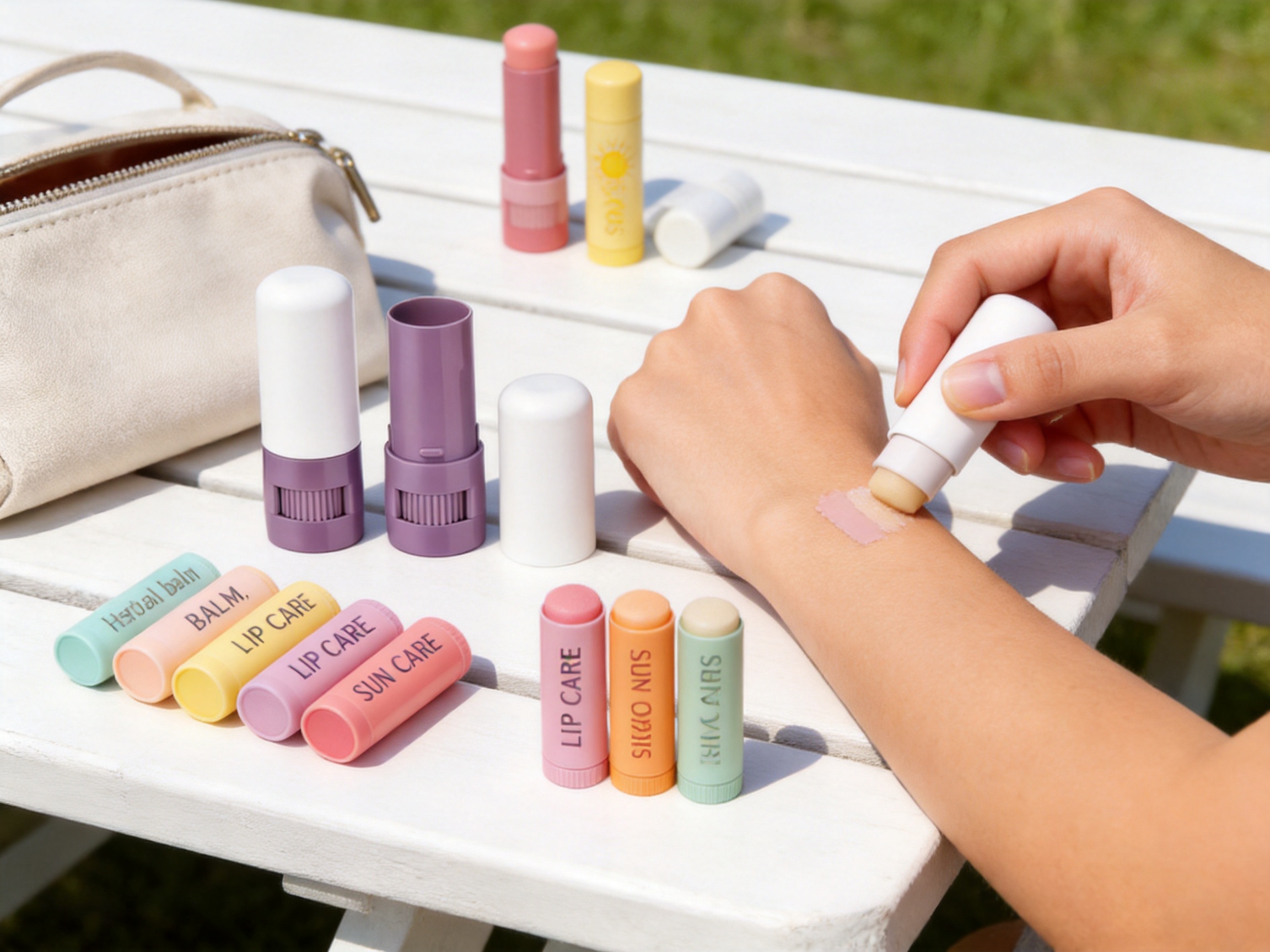
This plastic stick container provides a portable and hygienic solution for daily care and beauty products. Its twist-up presentation allows the product to be applied directly to the skin or lips, reducing the need for fingers, spatulas, or separate applicators. Its compact size also makes it suitable for travel, handbags, cosmetic kits, first-aid cases, and retail product samples. At the same time, the container can support commercial brands looking for a simple, adaptable, and cost-conscious package for small-volume products.
The product is listed as a 7-gram herbal balm plastic stick container, while some technical content associated with the item refers to an 8-gram available volume. This difference may reflect a filling variation, a nominal capacity range, or a catalog data inconsistency. Buyers should confirm the final net fill, internal dimensions, and filling standard before mass production. Regardless of whether the selected specification is 7 grams or 8 grams, the packaging concept is centered on a small, portable, twist-up container for solid or semi-solid personal care applications.
Product Overview
The GY-DS05B is categorized as a deodorant stick bottle, although its application range extends beyond deodorant products. The format is suitable for herbal balms, lip care products, blush, sunscreen sticks, ointments, solid cosmetic treatments, and other products that benefit from direct application. The container is designed to offer a practical balance between product protection and ease of use.
Unlike an open jar, the stick container does not require the user to place fingers into the product. Unlike a conventional squeeze tube, it is intended for formulations that can maintain a stable solid or semi-solid shape. Unlike a large deodorant package, its smaller capacity makes it more appropriate for targeted treatments, portable cosmetics, promotional products, and compact daily-care items.
The main product characteristics include:
• Compact capacity for approximately 7 grams, with an associated catalog reference to 8 grams.
• Stick-style construction for direct and controlled application.
• Suitability for herbal balms, lip balm, blush, sunscreen, and related products.
• Portable dimensions appropriate for travel and everyday carrying.
• Plastic construction designed for lightweight handling and commercial packaging.
• Hygienic product dispensing with reduced direct contact.
• Compatibility with personal care, cosmetic, and small treatment product concepts.
• Potential for use in both personal and commercial product lines.
The package is especially useful when a product developer wants to create a compact item that looks familiar to consumers and does not require complicated instructions. The twist-up stick format is widely understood, so consumers can generally use it without learning a new dispensing method.
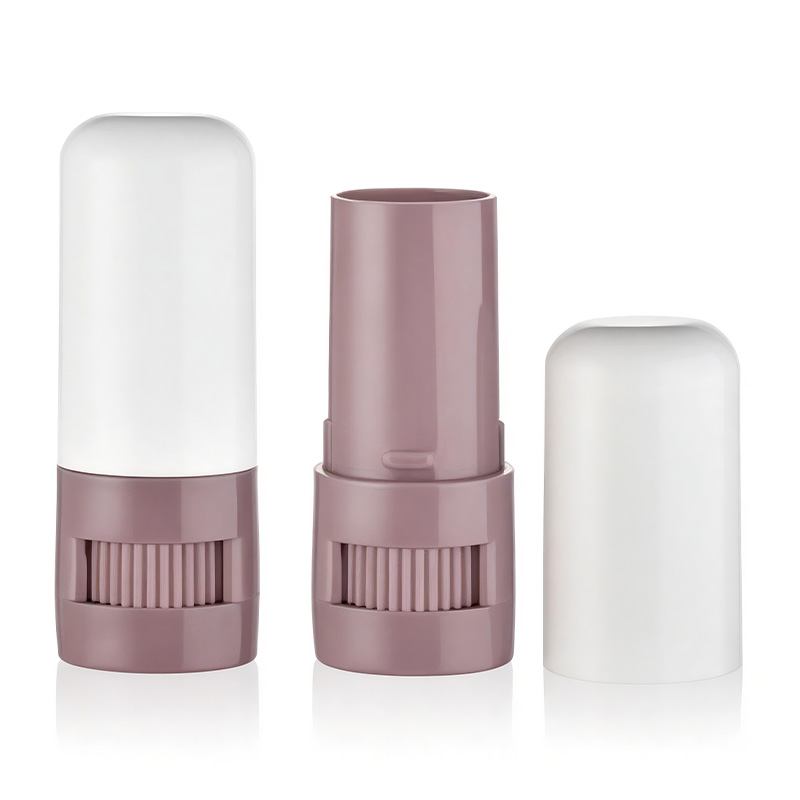
7Gram Herbal Balm Plastic Stick Container
Why a Small Stick Container Is Valuable for Personal Care Products
Small-volume packaging is increasingly important in the personal care market. Consumers often prefer products that are easy to carry, easy to store, and simple to apply. A 7-gram stick package responds directly to these expectations. It can be used for products intended for short-term use, touch-up application, trial sizes, travel collections, gift sets, or specialized treatments.
For a herbal balm, the stick can help the user apply the product to a focused area without scooping a portion from a jar. For a lip balm, it offers a familiar method of application. For a solid blush or sunscreen, it can provide a controlled deposit of formula on the desired area. This versatility makes the container useful to product developers who want to launch more than one product under a single packaging platform.
The small size also supports product portability. A large package may be inconvenient for a handbag, pocket, travel pouch, or cosmetic case. A compact stick can be carried throughout the day and used when needed. For consumers who regularly reapply lip care, sunscreen, or topical balm, this convenience can improve product engagement and encourage repeat use.
Another advantage is product separation. When a manufacturer creates several small products with different formulas, colors, or fragrances, each formula can be assigned to an individual stick package. This arrangement is helpful for multi-product collections, seasonal releases, targeted skincare, and sample programs.
Application Areas
Herbal Balms and Ointments
Herbal balms and topical ointments often require packaging that supports clean, controlled application. A stick container can be filled with a solid or semi-solid balm that is applied directly to the intended area. This may reduce the need for users to touch the formula and can help make the product more convenient in outdoor, workplace, travel, or household settings.
For herbal product brands, the container can also communicate practicality. The format is compact and functional, which may suit products positioned around convenience, portability, and everyday care. Before filling, the formula must be evaluated for hardness, melting behavior, surface adhesion, and compatibility with the container material.
Lip Balm
Lip balm is one of the most natural applications for a small twist-up stick. The package allows the product to be raised for use and retracted after application. This helps protect the remaining product from unnecessary exposure and keeps the item relatively clean during normal use.
The compact format can support basic lip balm, tinted lip balm, moisturizing balm, sun-protection lip care, and specialty treatment products. A manufacturer may also use the same packaging platform for several flavors, fragrances, or color variations. Product filling levels and formula hardness should be carefully controlled to ensure that the balm advances smoothly without breaking or becoming difficult to apply.
Solid Blush and Color Cosmetics
Solid blush products can benefit from direct application. A stick container may allow the consumer to apply color to the cheeks or other intended areas, after which the product can be blended with fingers, a sponge, or a brush. The small package is appropriate for portable makeup lines, sample products, and compact cosmetic collections.
Color cosmetics require careful attention to staining, pigment dispersion, formula transfer, and visual presentation. The internal surface of the container should be compatible with the formula, and the finished package should be tested for leakage, deformation, and color migration under expected storage conditions.
Sunscreen and Sun-Care Products
Solid sunscreen products can be packaged in a stick format for targeted and convenient reapplication. The small container may be useful for facial sunscreen, nose and cheek protection, travel products, or outdoor activity products. Because sunscreen formulas may contain oils, waxes, powders, or active ingredients, compatibility testing is essential before commercial use.
Manufacturers should evaluate the package under elevated temperatures, because sunscreen and other solid care products may be used in warm climates or carried outdoors. The formula should remain stable, and the stick mechanism should continue to function properly after exposure to anticipated temperature and humidity conditions.
Other Daily Care Applications
The container may also be considered for solid fragrance balms, cuticle care products, massage balms, anti-friction products, moisturizing treatments, and other compact personal care formulations. Its use should be determined by the physical characteristics of the formula and by the relevant regulatory requirements for the target market.
Functional Advantages of the Stick Format
Direct Application
The most visible advantage of this package is direct application. A user can raise the product and apply it to the intended area without transferring it to the hand. This can make the process faster and less messy, particularly when the product is used outside the home.
Direct application may also help reduce unnecessary product waste. When a balm is removed from a jar by hand, more product may be collected than is needed. A stick format can provide a more controlled surface area, allowing the user to apply a thin layer and add more only when required.
Improved Hygiene During Normal Use
A closed stick container can reduce repeated finger contact with the product. This is an important consideration for personal care items used on the lips, face, or targeted body areas. Although packaging alone cannot replace good manufacturing practice or consumer hygiene, the format can support a cleaner everyday experience.
The package should remain closed when not in use. Users should also avoid sharing products intended for direct application, especially products used around the lips, eyes, or areas of damaged skin.
Portability
The small-volume design supports portability. A 7-gram product can fit easily into a cosmetic pouch, pocket, travel kit, or small retail package. This feature is valuable for products intended for frequent reapplication or for consumers who prefer to carry only essential personal care items.
Portability can also influence product positioning. A brand may present the container as a travel-size item, a daily carry product, a trial unit, a gift-set component, or a compact professional-care product. The same basic container can therefore support several sales strategies.
Simple Operation
The twist-up mechanism is familiar to consumers because it is commonly associated with lip balm, deodorant, and solid cosmetic products. A familiar package can reduce the need for extensive usage instructions. The consumer generally understands that the base is rotated to raise the product and rotated in the opposite direction to lower it.
Easy operation is particularly important for products used quickly, such as sunscreen during outdoor activities or balm applied while traveling. The user can open, apply, close, and store the product with minimal effort.
Efficient Use of Secondary Packaging
The compact shape may simplify the design of cartons, labels, display trays, and multipack arrangements. Smaller containers can reduce the volume of secondary packaging, although the final packaging design must still provide sufficient protection, product information, batch coding, and regulatory labeling.
Advantages Compared with Alternative Packaging Formats
Packaging format |
Typical strengths |
Potential limitations compared with a small stick container |
Small plastic stick container |
Portable, direct application, compact, suitable for solid and semi-solid formulas |
Requires a formula with suitable hardness and stability |
Open jar |
Easy filling, broad opening, suitable for many balm textures |
Requires finger or applicator contact and may be less convenient for travel |
Squeeze tube |
Useful for creams, gels, and fluid products; familiar dispensing method |
May not provide the same solid-stick application experience |
Large deodorant stick |
Good for larger product volumes and broad application areas |
May be too large for targeted treatments, samples, or compact cosmetic products |
Roll-on package |
Convenient for liquid or gel products and controlled rolling application |
Not normally suitable for firm solid balms or stick-format cosmetics |
Single-use sachet |
Suitable for samples and one-time use |
Offers less reusability and may produce more small-format packaging waste |
Compared with an open jar, the stick format offers a more contained and portable user experience. A jar may be easier to fill with a wide variety of textures, but the user must normally touch the contents or use a separate tool. For products applied repeatedly during the day, a stick may be more convenient.
Compared with a squeeze tube, the stick provides a different dispensing principle. A tube is generally better for liquid, gel, or soft cream formulas, while the stick is designed for products that can maintain their shape. A tube may also require the user to spread the product with fingers, whereas the stick can place the product directly on the target area.
Compared with a larger deodorant container, the 7-gram format is more suitable for niche products and portable personal care. It can help manufacturers create a small, focused product without using a package that appears oversized for the fill volume.
These advantages do not mean that the stick container is suitable for every formula. Product developers should select packaging based on viscosity, melting point, application area, chemical composition, storage conditions, filling method, and regulatory requirements. The competitive value of this container is strongest when the product formula and the packaging format are properly matched.
Material and Structural Considerations
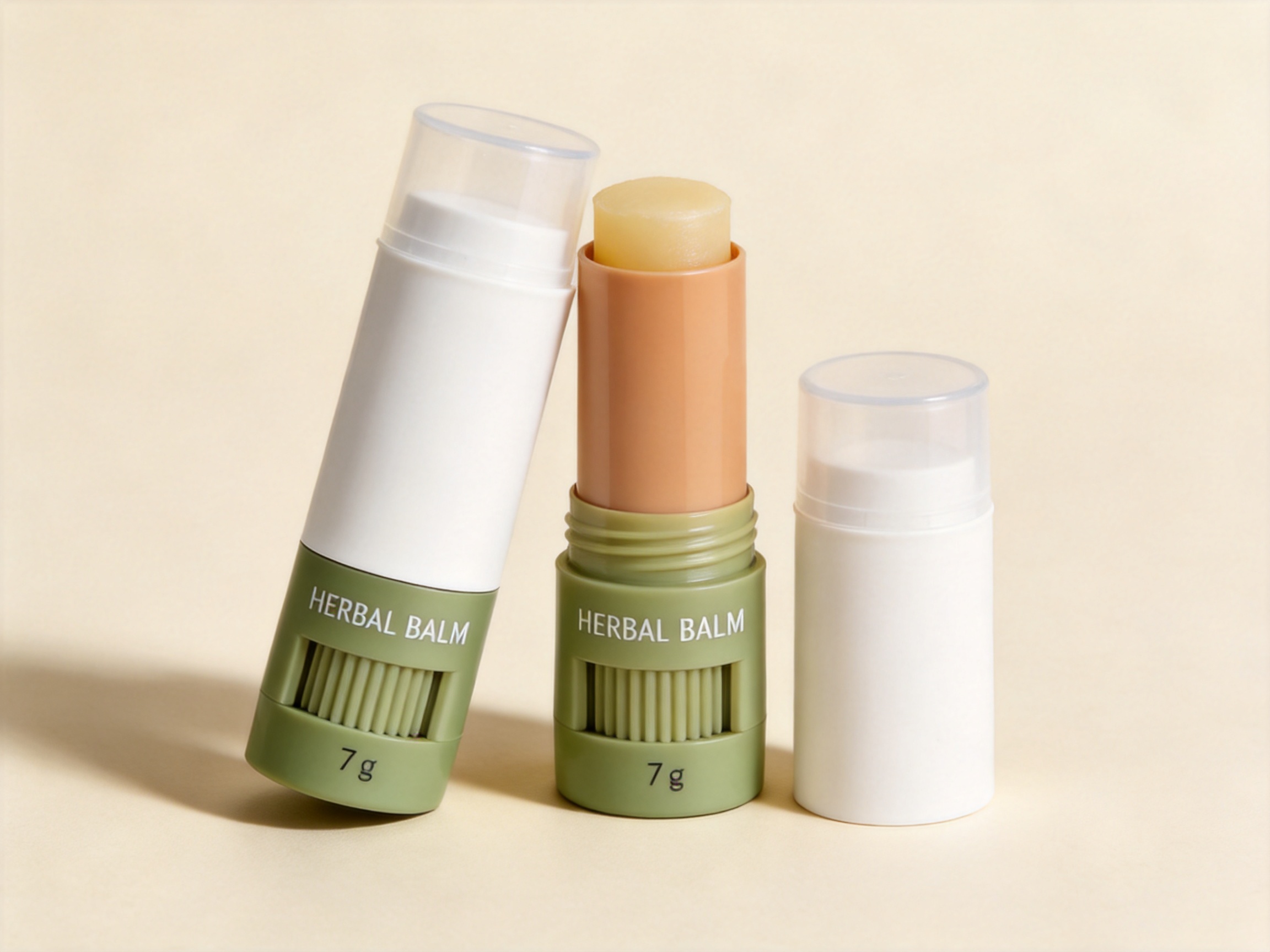
The GY-DS05B is described as a plastic stick container. Plastic packaging is widely used in cosmetic and personal care applications because it can provide a useful combination of light weight, design flexibility, impact resistance, and manufacturing efficiency. Plastic components can be formed into smooth surfaces and integrated with mechanical parts such as a twist-up base.
For a small stick package, the main structural elements generally include the outer body, internal product holder, elevating mechanism, base, and cap. The body protects the product and provides the main surface for decoration or labeling. The product holder supports the balm or solid formula as it moves upward. The base allows the user to control the movement. The cap helps protect the top of the product during transport and storage.
Actual material selection should be confirmed with the manufacturer for each order. Different plastic resins can offer different levels of rigidity, chemical resistance, clarity, colorability, stress resistance, and temperature performance. A formula containing essential oils, fragrances, pigments, or active ingredients may interact differently with different materials.
Product developers should request material information and conduct compatibility tests before approving a package for production. Relevant evaluation may include visual inspection, odor transfer testing, weight change, leakage assessment, dimensional stability, stress cracking observation, and accelerated storage testing.
Filling and Formula Compatibility
The success of a stick package depends substantially on the relationship between the formula and the container. A balm that is too soft may deform, smear, or remain on the internal wall. A balm that is too hard may be difficult to apply or may place excessive stress on the mechanism. A formula that expands under heat may create leakage or cap-fitting problems.
Before mass production, the filling partner should confirm:
• The intended net fill, such as 7 grams or 8 grams.
• The temperature required for filling.
• The cooling or setting procedure.
• The formula’s shrinkage behavior during cooling.
• The final surface height inside the package.
• The required clearance between the product and cap.
• The compatibility of oils, waxes, pigments, fragrances, and active ingredients with the package.
• The performance of the twist-up mechanism after filling.
• The product’s stability during transport and storage.
Some formulas are filled while warm and allowed to solidify inside the package. In such cases, the filling temperature must be controlled to prevent deformation of the container or deterioration of heat-sensitive ingredients. Cooling must be sufficiently consistent to create a stable product surface and minimize cracks, sinkholes, or separation.
Other formulas may be molded separately and inserted into the container. This method can offer different production advantages, but the dimensions of the molded stick must match the internal holder. The final package should be tested for secure retention and smooth movement.
Quality Expectations for a Reliable Container
A high-quality small stick container should provide consistent dimensions, smooth operation, secure closure, and adequate resistance to normal handling. Quality problems can affect both the consumer experience and the manufacturer’s production efficiency. A loose cap may expose the product, while a stiff or uneven mechanism may make the package difficult to use.
Important quality checkpoints may include:
• Visual appearance of the body, cap, and base.
• Color consistency between production batches.
• Absence of flash, cracks, sink marks, contamination, or deformation.
• Correct assembly of the internal mechanism.
• Smooth raising and lowering of the product holder.
• Adequate cap retention without excessive force.
• Stable standing position where applicable.
• Correct dimensions and weight.
• Compatibility with filling and labeling equipment.
• Resistance to leakage and product migration during testing.
• Protection of the formula during routine transportation.
Inspection standards should be agreed before production. A buyer may define acceptable quality limits for cosmetic defects, dimensional tolerances, assembly faults, and functional failures. Clear standards help both parties evaluate production results consistently.
Manufacturing Strengths of GreenYard Tools Co., Ltd.
GreenYard Tools Co., Ltd. is a China-based personal care packaging manufacturer with approximately 16 years of experience in spray product manufacturing and related packaging solutions. Its product range includes perfume sprayers, pump heads, caps, bottles, and daily chemical packaging components. The company also offers packaging categories such as crimp pumps, fine mist sprayers, lotion pumps, treatment pumps, foam pumps, droppers, cosmetic plastic bottle caps, airless bottles, deodorant stick bottles, cream jars, nail polish pumps, trigger sprayers, PE and PET bottles, and roll-on bottles.
This broad product coverage is relevant to buyers of the GY-DS05B because packaging projects often require more than one component. A brand may need a stick container for a balm, a pump for a lotion, a sprayer for a fragrance, and a bottle or cap for another product in the same collection. Working with a manufacturer that understands multiple packaging categories can simplify communication and support more consistent sourcing.
Mold Design Capability
GreenYard reports advanced capabilities in mold design. Mold engineering is fundamental to plastic packaging because the mold influences dimensions, surface quality, assembly accuracy, production speed, and long-term repeatability. For a stick container, precise mold design is important for the body, cap, base, and mechanical components to fit correctly.
A well-designed mold can help control wall thickness, reduce unnecessary material use, improve appearance, and support stable production. It can also allow the manufacturer to develop variations in size, shape, surface texture, or decoration while retaining a common packaging concept. For customers seeking customized packaging, mold design capability can be an important competitive advantage over suppliers that only offer standard stock products.
Injection Molding
Injection molding enables the production of plastic components in repeatable shapes and quantities. Molten plastic is injected into a mold cavity, cooled, and ejected as a finished component. The process is suitable for high-volume packaging production when the mold, material, machine settings, and inspection procedures are properly controlled.
For the GY-DS05B, injection molding can support consistent production of the outer container and other structural components. Consistency is especially important for a twist-up package because small dimensional differences can affect the interaction between moving and stationary parts. Accurate molding may help reduce assembly problems and improve the consumer’s perception of quality.
Injection molding also allows the use of different colors and surface effects. Depending on the selected material and production process, components may be produced in opaque colors, translucent colors, or other visual finishes. Final decoration options should be reviewed according to the product’s target market and required order volume.
Automated Assembly
GreenYard also identifies automated assembly as one of its manufacturing capabilities. Automation can help improve production consistency, reduce manual handling, and support higher output. For packaging that contains several interconnected parts, controlled assembly is valuable because it can help ensure that components are inserted in the correct order and position.
Automated assembly may also improve process efficiency for large orders. When the same product is manufactured repeatedly, automated equipment can support stable cycle times and reduce variation between units. However, automation should be combined with inspection rather than treated as a substitute for quality control.
Quality Inspection
Quality inspection is an essential part of packaging manufacturing. GreenYard describes quality inspection as part of its production capabilities. Inspection may take place at several stages, including incoming material checks, in-process inspection, assembly verification, functional testing, and final shipment inspection.
For a plastic stick container, functional inspection can include operating the twist mechanism, checking cap fit, examining the package for cosmetic defects, measuring critical dimensions, and confirming the overall assembly. Consistent inspection helps identify problems before products are shipped to filling companies or brand owners.
Large Production Capacity
The company reports a daily production capacity of one million units. A high production capacity can be advantageous for customers that require large quantities, repeated replenishment, or coordinated packaging launches. It may also help support shorter production cycles when capacity is available and specifications are finalized.
Capacity alone does not determine product quality. Buyers should still confirm lead times, minimum order quantities, production scheduling, inspection standards, packaging methods, and sample approval procedures. Nevertheless, a high-capacity manufacturing base can provide useful supply-chain support for growing brands and established distributors.
Why Manufacturing Process Matters to Buyers
When purchasing packaging, buyers often compare unit price first. However, the total value of a package depends on much more than its quoted price. A low-cost package may create hidden expenses if it has inconsistent dimensions, high defect rates, poor assembly, difficult filling performance, or frequent delivery problems.
A manufacturer with mold design, injection molding, automated assembly, and inspection capabilities can potentially control more stages of the production process. This may improve communication between engineering and manufacturing teams. It may also reduce the need to coordinate separate suppliers for molds, molded parts, assembly, and quality checks.
Integrated production can be particularly useful for a customized project. The buyer may need a special color, logo treatment, surface finish, component modification, or capacity adjustment. When design and manufacturing teams communicate directly, it can be easier to evaluate the effect of a requested change on tooling, cost, production timing, and performance.
Buyers should still use a structured approval process. A recommended procedure includes reviewing drawings, approving material information, checking pre-production samples, testing filled samples, confirming decoration, approving a golden sample, and defining inspection criteria for mass production.
Customization Opportunities
The supplied information identifies GreenYard as a custom factory for personal care packaging. Customization may be considered in several areas, subject to tooling requirements, order quantity, and technical feasibility.
Color Customization
Color is one of the simplest ways to align a package with a product identity. A balm container can be produced in a brand-specific color or in a color family corresponding to different formulas. Color matching should be evaluated using approved physical samples because digital images and screens may not represent the final result accurately.
Surface Decoration
Possible decorative treatments may include labeling, printing, metallic effects, or other surface applications. The selected method should be compatible with the plastic material and the package geometry. Decoration must also withstand normal handling, rubbing, contact with oils, and storage conditions.
Shape and Component Adjustments
Some projects may require changes to the outer shape, cap profile, base design, or internal capacity. These changes may require mold modification or new tooling. The effect on the twist mechanism, filling process, assembly line, packaging dimensions, and shipping carton should be assessed before approval.
Capacity Confirmation
The product title identifies the item as a 7-gram container, while the provided information repeatedly mentions 8 grams. This should be resolved during the technical quotation and sample stage. Buyers should distinguish between nominal product fill, maximum internal capacity, and recommended fill volume. A package described as 8 grams may not deliver exactly 8 grams for every formula because density and filling behavior differ.
For accurate product claims, the final net quantity must be determined by the filled formula and approved production specification. Marketing materials should not state a capacity that has not been verified through testing and filling trials.
Packaging Development Process
A successful packaging project usually begins with a clear product brief. The buyer should provide the formula type, target fill weight, product dimensions, application area, expected market, annual volume, preferred appearance, and required delivery date. This information allows the supplier to judge whether the stick container is appropriate.
The next stage is sample evaluation. Empty samples can be checked for appearance, dimensions, mechanism operation, cap fit, and general handling. Filled samples are even more important because the formula may affect the package’s performance. The buyer should test the filled product under normal and challenging conditions.
Testing may include:
• Room-temperature storage.
• Elevated-temperature storage.
• Low-temperature storage where relevant.
• Repeated opening and closing.
• Repeated twist-up and twist-down operation.
• Transport simulation.
• Drop or impact evaluation appropriate to the package.
• Compatibility observation between the formula and container.
• Decoration adhesion and appearance checks.
• Consumer-use trials.
After testing, the buyer and manufacturer can finalize the specification. This should include the approved sample, material requirements, color reference, fill weight, component list, packaging method, quality standard, and shipping configuration.
Logistics and Commercial Benefits
The lightweight nature of plastic packaging may help reduce transportation weight compared with heavier materials. The compact form can also support efficient packing into cartons, although the actual logistics benefit depends on the package dimensions, protective materials, quantity per carton, and shipping method.
A small container may be suitable for direct-to-consumer fulfillment, retail display, subscription boxes, travel kits, and promotional campaigns. Its size can help brands create multi-unit bundles without making the package excessively large. For contract manufacturers, the container may offer a useful standard component for several formulas and customer projects.
The company’s reported large daily production capacity may support larger purchase programs. Buyers should request detailed information about stock availability, production lead time, order quantity, mold ownership, shipping marks, carton configuration, and export documentation.
Storage and Handling Recommendations
Empty plastic containers should be stored in a clean, dry environment protected from direct sunlight, excessive heat, moisture, dust, and chemical exposure. Containers should remain in their original protective packaging until they are ready for filling or assembly. Uncontrolled storage can cause surface contamination or affect the appearance of decoration.
Filled products should be evaluated according to the formula’s storage requirements. Products containing waxes, oils, fragrances, natural extracts, or active ingredients may respond differently to heat and light. The package should not be described as protecting a formula indefinitely unless suitable stability testing has been completed.
During transportation, cartons should be arranged to prevent crushing, excessive vibration, and exposure to extreme temperatures. The cap should remain securely fitted, and the product should be protected from contact with materials that may scratch or mark the surface.
Sustainability Considerations
Plastic packaging decisions increasingly involve questions of material efficiency, product life, recyclability, and responsible manufacturing. A small plastic stick container uses a relatively limited amount of material compared with larger packages, but its sustainability profile depends on the specific resin, component complexity, decoration, filling method, and local recycling infrastructure.
Manufacturers and brands can consider several approaches to improve packaging responsibility. These may include reducing unnecessary secondary packaging, optimizing wall thickness without compromising performance, selecting materials that are accepted by the target market’s recycling systems, and avoiding decorative treatments that make recycling more difficult where appropriate.
Product protection should also be considered part of sustainability. If a package prevents product contamination, leakage, or premature spoilage, it may help reduce the environmental impact associated with wasted formula. The best solution is therefore not simply the lightest package; it is a package that uses materials efficiently while providing reliable performance throughout the product’s intended life.
Before making environmental claims, brands should verify the material composition and local regulatory expectations. Claims such as recyclable, recycled-content, or environmentally friendly should be supported by appropriate evidence and should reflect the complete package rather than only one component.
Competitive Positioning
The GY-DS05B can compete effectively in applications where compactness, direct application, and portability are important. Its strongest competitive advantages are its small size, broad application potential, familiar twist-up format, and suitability for targeted personal care products.
Many packaging alternatives are optimized for one specific type of product. A large deodorant stick is designed for broad-area deodorant application. A dropper is intended for liquids. A lotion pump is designed for fluid or emulsion products. An open jar is suitable for products that require a wide opening but involves more direct contact. The small stick container occupies a flexible position between these formats by supporting a variety of firm or semi-solid formulations.
The product can also help brands create a differentiated user experience without requiring a highly complicated package. A herbal balm in a direct-application stick may appear more modern and convenient than the same formula in a basic jar. A compact sunscreen stick may be easier to carry than a large tube. A solid blush stick may provide more immediate application than a traditional powder compact.
Its competitiveness is strengthened when supported by a manufacturer capable of mold development, injection molding, automated assembly, and quality inspection. These capabilities can help customers move from concept to stable production and can provide more dependable support for repeat orders.
Recommended Buyer Checklist
Before ordering the container, buyers should confirm the following technical and commercial details:
1. What is the verified net fill: 7 grams, 8 grams, or another target weight?
2. What is the maximum internal capacity and recommended filling range?
3. Which plastic materials are used for each component?
4. Is the package suitable for the intended balm, cosmetic, sunscreen, or treatment formula?
5. What filling temperature and cooling process are recommended?
6. Does the twist mechanism operate smoothly after filling?
7. Does the cap remain secure during transportation and routine use?
8. What decoration options are available?
9. What are the minimum order quantity and production lead time?
10. Are custom colors, molds, or dimensions available?
11. What inspection standards are applied before shipment?
12. How are samples, approved standards, and production deviations managed?
13. How are products packed for export and long-distance transportation?
14. What technical documents can be provided for the selected materials?
15. What is the recommended storage condition for empty and filled packages?
Resolving these questions early can reduce delays and help ensure that the final package performs as expected. It also gives the buyer a clearer basis for comparing the product with competing containers.

Q&A
What is the main use of the 7 Gram Herbal Balm Plastic Stick Container?
The container is intended for small personal care and cosmetic products, including herbal balms, lip balm, blush, sunscreen, ointments, and other solid or semi-solid daily-care formulations.
Is the product capacity 7 grams or 8 grams?
The product title and primary description identify it as a 7-gram container, while other supplied product information refers to an 8-gram volume. Buyers should confirm the final net fill, internal dimensions, and recommended filling quantity with the manufacturer before placing a production order.
Why use a stick container instead of a jar?
A stick container supports direct application, reduces the need for finger contact, and is generally easier to carry. A jar may be more flexible for very soft formulas, but it can be less convenient for travel and repeated application outside the home.
Can the container be used for sunscreen?
It may be suitable for solid sunscreen products, provided that the formula is compatible with the package and remains stable under expected temperatures. Filled-package testing should be completed before commercial launch.
Can it be used for lip balm?
Yes. The compact twist-up format is suitable for many lip balm products. The formula should have the appropriate hardness and adhesion characteristics so that it advances smoothly and does not break during application.
Is the container suitable for liquid products?
The package is primarily intended for solid or semi-solid products. Liquid, very soft, or highly mobile formulas may not be suitable unless the package has been specifically engineered and tested for that purpose.
What manufacturing capabilities does GreenYard Tools Co., Ltd. provide?
The company reports capabilities in mold design, injection molding, automated assembly, and quality inspection. It also manufactures a broad range of personal care packaging, including sprayers, pumps, caps, bottles, jars, droppers, and stick containers.
Can the container be customized?
Customization may be possible for color, decoration, dimensions, capacity, or other design details, depending on tooling, order quantity, and technical feasibility. The buyer should discuss requirements with the manufacturer before finalizing the project.
How should the capacity be confirmed?
The capacity should be confirmed through technical drawings, an empty-package measurement, and filled samples using the actual formula or a representative test formula. Net weight depends on formula density and should not be assumed from the container’s nominal volume alone.
What quality checks are important?
Important checks include appearance, dimensions, assembly, cap retention, twist-up and twist-down operation, filling compatibility, leakage resistance, color consistency, decoration adhesion, and performance after transport or temperature testing.
Is plastic packaging lightweight?
Plastic packaging is generally lightweight and can offer useful impact resistance and design flexibility. The exact weight and performance depend on the selected materials, wall thickness, component design, and manufacturing specifications.
Can the package support a product line?
Yes. The same small stick format may be used for several related products, such as herbal balm, lip balm, sunscreen, and solid blush. Different colors, labels, or surface treatments can help distinguish formulas within one product family.
What should be tested before mass production?
Buyers should test empty and filled samples for mechanism operation, formula compatibility, temperature stability, cap security, leakage, transport resistance, decoration durability, and consumer usability. A final approved sample should be retained as the production reference.
Conclusion
The 7 Gram Herbal Balm Plastic Stick Container is a compact and adaptable packaging option for modern personal care and cosmetic products. Its twist-up design supports direct application, portability, and reduced routine contact with the formula. These qualities make it suitable for herbal balms, lip balms, blush, sunscreen, ointments, and other solid or semi-solid products that benefit from a convenient stick format.
The package offers meaningful advantages over jars, tubes, large deodorant containers, and other formats when the product requires targeted application and easy carrying. Its small size can support travel products, sample programs, gift sets, daily-care products, and specialized cosmetic collections.
GreenYard Tools Co., Ltd. adds value through its reported experience in personal care packaging, broad product range, mold design capability, injection molding, automated assembly, quality inspection, and high production capacity. These manufacturing strengths can help buyers develop, customize, and scale packaging projects more efficiently.
For the best result, the container should be matched carefully with the formula. The discrepancy between the listed 7-gram title and the 8-gram references should be clarified before ordering. Once the fill specification, material details, decoration, quality criteria, and testing requirements are confirmed, this small plastic stick container can provide a practical, professional, and commercially versatile solution for personal care packaging.
References
1. GreenYard Tools Co., Ltd. Product information for GY-DS05B 7 Gram Herbal Balm Plastic Stick Container.
2. GreenYard Tools Co., Ltd. Manufacturing profile and personal care packaging capability statement.
3. General principles of plastic injection molding for cosmetic and personal care packaging.
4. General packaging development practices for solid and semi-solid cosmetic formulations.
5. General quality-control considerations for plastic containers, closures, and mechanical dispensing components.
6. General guidance on packaging compatibility testing for oils, waxes, fragrances, pigments, botanical extracts, and active personal care ingredients.
Product: 7Gram Herbal Balm Plastic Stick Container

-
Amber Plastic Bottles: Lightweight, Protective, Customizable Packaging for Cosmetics
You have spent months stabilizing a vitamin C serum, only to watch a pallet of amber glass bottles ...
-
What Makes a Good Deodorant Stick Bottle for Brands?
A deodorant stick bottle is a twist-up or push-up dispensing container designed to hold and advance...
-
Crimp Pumps Demystified: Choosing the Right Type and Material for Every Cosmetic Formula
Walk into any cosmetic filling facility and you will find crimp pumps on everything from a delicate ...
-
How Glass Airless Bottle Packaging Prevents Contamination and Boosts Shelf Life?
Glass airless bottle packaging prevents contamination and extends shelf life by completely eliminat...
Copyright © GreenYard Tools Co.,ltd. All Rights Reserved.
Personal Care Packaging Manufacturer Custom Perfume Sprayers Factory