
-
About Us
Why Choose Us?The company possesses advanced capabilities in mold design, injection molding, and automated assembly, supported by a professional quality inspection team to ensure product reliability. A dedicated design team continuously drives product innovation, providing customers with high-quality spray solutions.
 Coming From China, Marketing To The World.
 -
Products
-
News
 English
 Français
 русский
 Español
Replaceable Airless Bottle Packaging for Modern Cream and Facial Care Products
Content
- 1 Product Overview
- 2 Key Specifications
- 3 How an Airless Dispensing System Works
- 4 Advantages of the Replaceable Inner Cartridge
- 5 Advantages Over Conventional Cream Jars
- 6 Advantages Over Conventional Pump Bottles
- 7 Advantages Over Single-Use Airless Packaging
- 8 Design and User Experience
- 9 Applications in Facial Care and Personal Care
- 10 Formula Compatibility and Testing
- 11 Manufacturing Strengths
- 12 Quality and Reliability Considerations
- 13 Customization and Brand Development
- 14 Refill Program Planning
- 15 Supply and Production Advantages
- 16 Purchasing and Development Process
- 17 Environmental and Lifecycle Perspective
- 18 Retail and Marketing Benefits
- 19 Operational Benefits for Brands
- 20 Limitations and Points to Confirm
- 21 Why Choose This Packaging Solution?
- 22 Q&A
- 22.1 What is the Plastic Replaceable Airless Bottle?
- 22.2 Which volumes are available?
- 22.3 What is the closure type?
- 22.4 How does the airless mechanism work?
- 22.5 Can the bottle be refilled?
- 22.6 Is the package suitable for thick creams?
- 22.7 What types of products can use this bottle?
- 22.8 Does airless packaging preserve a formula automatically?
- 22.9 What are the advantages over an open-mouth cream jar?
- 22.10 What are the advantages over a standard pump bottle?
- 22.11 How can a brand promote the refill feature?
- 22.12 What manufacturing capabilities support this product?
- 22.13 Can the package be customized?
- 22.14 What testing should buyers conduct?
- 22.15 Is the bottle recyclable?
- 22.16 What information should be provided when requesting a quotation?
- 23 Conclusion
- 24 References
- 25 Product: Plastic Replacable Airless Bottle
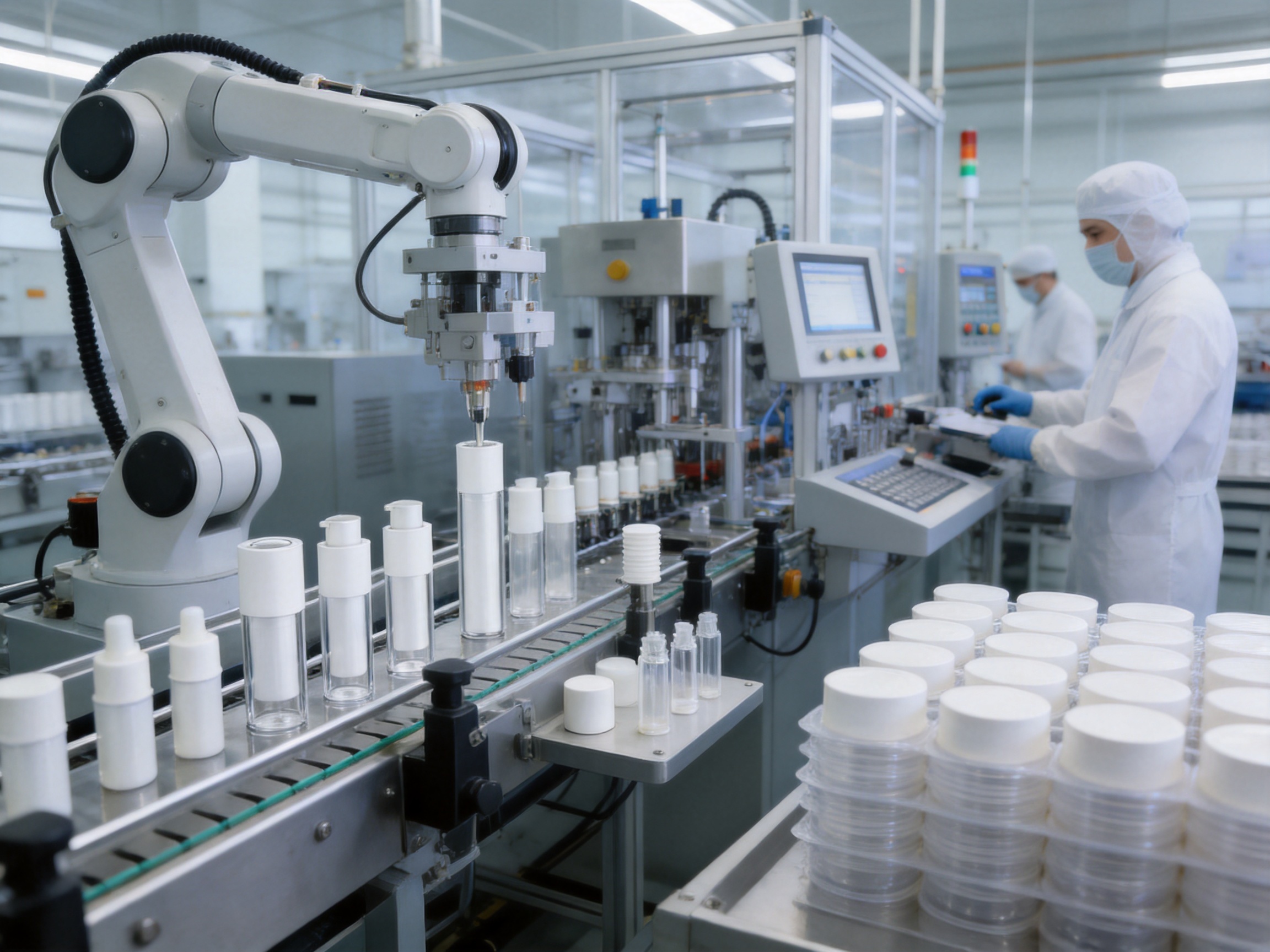
Packaging plays an important role in the performance, appearance, and environmental profile of modern skincare products. Creams, moisturizers, serums, facial treatments, and other personal care formulas require containers that protect the contents while also giving consumers a clean, convenient, and reliable dispensing experience. The Plastic Replaceable Airless Bottle, model GY-3602A, is designed to address these needs through a compact airless structure, a secure snap-on closure, and a replaceable inner cartridge system.
Available in 15-gram, 30-gram, and 50-gram formats, this airless bottle provides flexible packaging options for different product volumes and market positions. Its design is particularly suitable for facial care products, creams, moisturizers, serums, and skincare treatments that benefit from hygienic dispensing and controlled product protection.
Unlike conventional jars that require users to repeatedly place their fingers into the product, an airless bottle dispenses the formula through a pump mechanism. The consumer can obtain an appropriate amount without directly touching the remaining contents. This helps create a cleaner user experience and supports the premium positioning of skincare brands.
The replaceable inner cartridge further distinguishes this packaging solution from many standard single-use containers. After the original cartridge has been emptied, the pump head and outer structure can be used with a replacement cartridge. This approach can reduce the amount of packaging discarded during product replenishment and may support more sustainable personal care programs when the replacement system is properly implemented.
Product Overview
The Plastic Replaceable Airless Bottle GY-3602A is a personal care packaging component developed for creams and facial care products. It combines an external bottle structure with a pump head and replaceable inner cartridge. The airless dispensing principle helps move the product upward as it is dispensed, allowing the formula to be used efficiently without relying on a traditional dip tube.
The bottle is available in three nominal volumes: 15 grams, 30 grams, and 50 grams. These sizes make it possible to create coordinated packaging for trial products, travel products, standard skincare items, and larger treatment formulations. A brand can use one design family across several product capacities while maintaining a consistent visual identity.
The closure type is snap-on. This construction is intended to provide a secure fit between the bottle components while supporting efficient assembly. A properly designed snap-on closure can help maintain the integrity of the package, simplify production handling, and offer convenient use for consumers.
The primary application is cream and facial care packaging. Typical contents may include facial moisturizers, night creams, eye creams, sleeping masks, treatment creams, emulsions, and selected serum-like formulations. Final compatibility should always be confirmed through testing because the performance of a package depends on the formula, viscosity, active ingredients, storage conditions, and dispensing requirements.
The product is made for businesses seeking a practical combination of functionality, presentation, and refill potential. Its compact appearance can suit premium skincare collections, while its replaceable cartridge concept can support product lines that want to communicate resource-conscious design.
Key Specifications
| Product model | GY-3602A |
| Product type | Plastic replaceable airless bottle |
| Available volumes | 15 grams, 30 grams, and 50 grams |
| Closure type | Snap-on |
| Recommended usage | Creams, facial care products, moisturizers, serums, and skincare treatments |
| Dispensing structure | Airless pump system with replaceable inner cartridge |
| Refill function | Inner cartridges can be replaced after use, subject to compatible cartridge specifications |
| Packaging material category | Plastic personal care packaging |
| Production capabilities | Mold design, injection molding, automated assembly, and quality inspection |
Specifications may be adjusted according to the final packaging program, including formula compatibility, decoration requirements, filling method, component tolerances, and order specifications. Buyers should request technical confirmation before mass production.
How an Airless Dispensing System Works
A conventional lotion bottle often uses a dip tube that extends into the formula. When the pump is pressed, the dip tube draws the product upward. An airless package uses a different operating principle. The product is stored in an inner chamber or cartridge, and a movable piston or equivalent mechanism advances as the product is dispensed.
Because the internal space is designed to minimize the return of air, the formula can be exposed to less air during normal use than it would be in an open jar. This feature is valuable for products that are sensitive to oxidation, contamination, or repeated handling. It does not eliminate the need for proper formulation stability testing, but it can provide a useful protective packaging environment.
The consumer activates the pump by pressing the dispensing head. A measured portion of cream or facial care product is delivered through the outlet. Repeated pumping gradually moves the internal product platform or cartridge mechanism upward. The design aims to make the contents accessible without requiring the user to tilt the bottle or scrape the sides of a jar.
Airless packaging can also support more complete product evacuation. Traditional containers may leave residual product at the bottom or along the walls, especially when the formula is thick. An airless mechanism is designed to push the formula toward the dispensing area, potentially improving practical usage and reducing avoidable residue.
The exact dispensing performance depends on the pump specification and the formula. Viscosity, oil content, waxes, powders, particles, and temperature can all affect priming, dosage, and reset performance. For this reason, packaging trials should use the intended formulation rather than water or an unrelated substitute.
Advantages of the Replaceable Inner Cartridge
Reduced Packaging Replacement
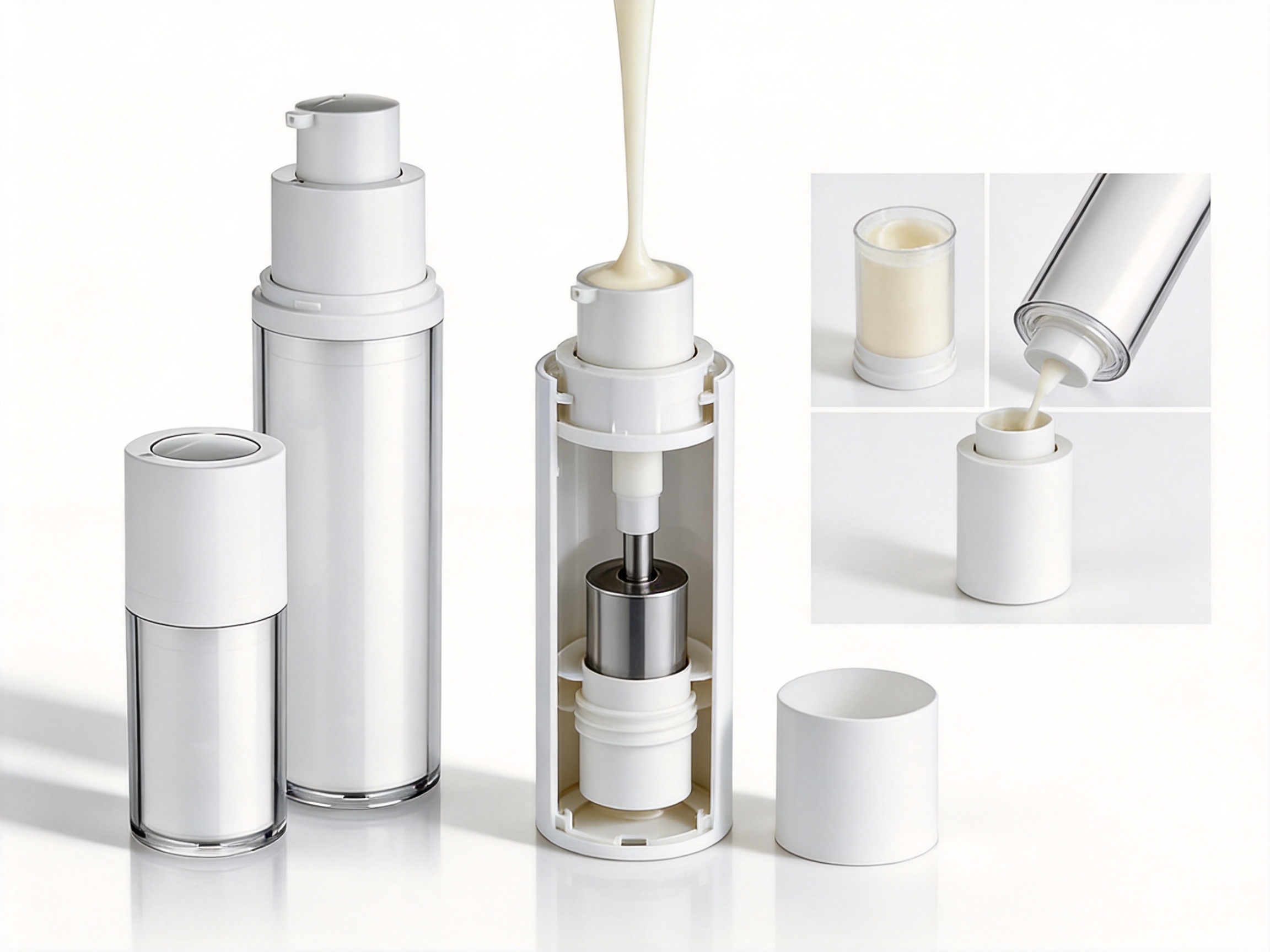
The central benefit of the GY-3602A design is that the pump head can be refilled with a replaceable inner cartridge after the original product has been used. In a conventional package, the complete bottle and pump assembly may be discarded when the contents are finished. A replaceable system separates the long-use outer structure from the consumable inner component.
This design can reduce the amount of material replaced during repeat purchases. The actual environmental benefit depends on the weight and composition of every component, the number of refills used, the logistics of cartridge distribution, and the recycling systems available in the target market. Nevertheless, a well-managed replacement model offers a practical way to explore lower-waste packaging.
More Convenient Replenishment
Consumers can purchase a replacement cartridge rather than replacing the entire package. This may make replenishment more convenient for customers who already have the outer bottle and are familiar with the dispensing system. It can also help brands develop recurring purchase programs based on cartridge sales.
For skincare companies, the refill format may create opportunities for starter kits, subscription programs, seasonal treatment launches, and professional-use packages. A customer may receive the complete bottle during the first purchase and select the appropriate replacement cartridge during subsequent purchases.
Support for Sustainable Brand Communication
Environmental communication is increasingly important in personal care packaging. A replaceable cartridge system gives brands a tangible design feature to discuss when explaining packaging efficiency and responsible consumption. It provides a more specific sustainability story than general claims based only on appearance or marketing language.
Responsible communication remains essential. Brands should explain how the replacement process works, which parts are reused, how the cartridges should be disposed of, and whether the components are recyclable in local systems. Clear instructions help consumers understand the system and prevent confusion about sorting or reuse.
Maintained Premium Appearance
A refillable structure does not need to look utilitarian. The outer bottle can be designed as a durable and attractive part of the product presentation. When the visible structure remains consistent, replacement cartridges can preserve the appearance of a skincare collection across multiple purchase cycles.
The compact airless format is suitable for products positioned around quality, cleanliness, and modern skincare rituals. A pump-operated package often communicates greater hygiene and precision than an open-mouth jar, particularly for products used around the eyes or on the face.
Advantages Over Conventional Cream Jars
Cream jars remain popular because they are familiar, easy to fill, and often economical. However, they require users to remove a lid and access the product directly. This repeated contact can introduce residue from fingers, water, dust, or other environmental sources. It can also make the use experience less convenient when the consumer is traveling or applying the product outside the home.
The airless bottle offers a more controlled dispensing method. The formula remains inside a closed package, and the user receives product through a pump outlet. This can improve the perception of hygiene and help users dispense a consistent quantity.
Airless packaging may also protect the product from repeated exposure to open air. This is especially relevant for formulas containing sensitive botanical extracts, antioxidants, certain vitamins, or other ingredients that require careful protection. Packaging alone cannot guarantee formula stability, but reducing routine exposure can support the overall product protection strategy.
Another difference is the potential for improved product evacuation. In a jar, consumers may need to scoop out the final amount manually. With an airless system, the internal mechanism is intended to move the product toward the pump, making the last portion easier to access.
The replaceable cartridge provides an additional advantage. A conventional jar usually becomes a complete waste item after use. The airless bottle can be designed for continued use through compatible cartridge replacements. This creates a distinction in both user experience and packaging lifecycle.
Advantages Over Conventional Pump Bottles
Many standard pump bottles use a dip tube and depend on the pump drawing product from the bottom. This design can work effectively for liquid lotions and many medium-viscosity products, but it may be less suitable for thick creams or formulas that do not flow easily toward the tube.
The airless structure is designed to move the product upward as the package is used. This can be helpful for thicker facial care products, although each formula must be tested individually. The absence of a conventional dip tube can also simplify the internal visual impression and support a more compact package profile.
Standard pump bottles may also require replacement of the entire pump and bottle assembly. The replaceable cartridge concept provides a route toward retaining the outer structure while changing only the inner product-holding component. This can reduce the frequency with which the complete package must be manufactured, filled, shipped, and discarded.
The GY-3602A also provides several size options in one product family. A standard pump bottle program may require separate packaging designs for each volume. With 15-gram, 30-gram, and 50-gram versions, a skincare brand can create a more unified product range while selecting capacities appropriate to different formulas or customer groups.
Advantages Over Single-Use Airless Packaging
Single-use airless bottles offer many of the same dispensing advantages as the GY-3602A, including closed storage and controlled product delivery. However, their outer structures are generally replaced each time the product is repurchased. The replaceable cartridge model is designed to extend the useful life of the visible bottle and pump structure.
This distinction can influence the total packaging strategy of a product line. The initial package may function as a durable presentation component, while subsequent sales focus on standardized replacement cartridges. Such a model can support customer retention because users become familiar with the product system and can reorder the consumable portion.
For manufacturers and brands, a cartridge-based approach may also encourage more efficient product planning. The outer bottle, pump head, and cartridge can be evaluated as separate components. This allows the development team to focus on barrier performance, filling, and formula contact for the inner cartridge, while optimizing the outer package for appearance, durability, and user comfort.
As with any refill concept, the system must be carefully engineered. The replacement cartridge must fit securely, the pump must prime consistently, the closure must resist leakage, and the replacement procedure must be simple enough for ordinary consumers. These factors are central to the success of a refillable airless package.
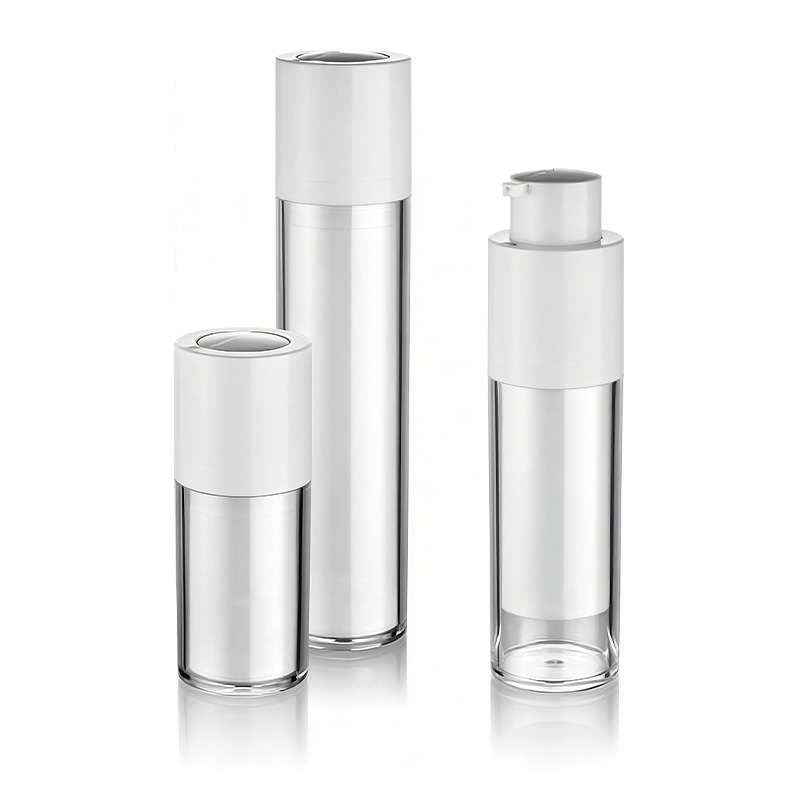
Plastic Replacable Airless Bottle
Design and User Experience
A personal care package is not only a container. It is part of the daily ritual through which consumers interact with a product. The GY-3602A is designed around a pump-based experience that can make facial care application clean, direct, and repeatable.
The snap-on closure supports an uncomplicated assembly concept. For consumers, a secure closure helps provide confidence during storage and transportation. For filling operations, snap-on components can support efficient automated or semi-automated assembly when the component dimensions and equipment are properly matched.
The pump head should be evaluated for comfortable actuation. A good pump experience requires reasonable pressing force, sufficient return action, consistent output, and an outlet that does not create unnecessary mess. The final experience will depend on the pump configuration and the formula, but the airless platform provides a suitable foundation for controlled dispensing.
The 15-gram size can be used for samples, travel formats, concentrated treatment products, and introductory sets. It may also suit eye creams or targeted skincare formulas used in small quantities.
The 30-gram size can serve as a practical middle option for facial treatments, premium creams, and products intended for regular daily use. It balances portability with sufficient capacity for a longer product cycle.
The 50-gram size offers additional capacity for moisturizers, night creams, richer facial formulas, and products intended for frequent use. Offering this size alongside the smaller options allows brands to serve different usage patterns without abandoning a coordinated package design.
Size selection should consider more than nominal volume. Brands should review the expected dosage per pump, recommended daily application, product shelf life after opening, shipping requirements, retail shelf space, and consumer preferences. The right package size is the one that matches the product’s actual usage behavior.
Applications in Facial Care and Personal Care
Moisturizers
Moisturizers are among the most natural applications for a replaceable airless bottle. Daily facial creams are frequently used and benefit from a dispensing system that can deliver a repeatable amount. A pump can help prevent excessive application and reduce the need for consumers to touch the remaining formula.
Serums and Treatment Products
Some serums and treatment products contain concentrated active ingredients and are used in small quantities. The 15-gram or 30-gram formats may be appropriate, depending on the formula and dosage. The closed airless structure can support a packaging strategy focused on controlled exposure and premium presentation.
Eye Creams
Eye creams are typically applied around a sensitive area and are often sold in smaller quantities. A compact airless package may provide a hygienic alternative to an open jar. The actual pump dosage should be tested to ensure it is appropriate for the small amount commonly required for each application.
Night Creams and Sleeping Masks
Rich nighttime formulas can be difficult to dispense from narrow-neck bottles or conventional dip-tube pumps. The airless mechanism may offer a more suitable format for thicker compositions. Testing remains important because waxes, oils, powders, and high-viscosity ingredients can affect pump behavior.
Professional and Travel Products
The smaller format can be useful for hotel amenities, dermatology programs, facial treatment kits, travel collections, and promotional packages. A replaceable system may also be suitable for professional environments where hygienic dispensing and organized product storage are important.
Formula Compatibility and Testing
Packaging selection must be coordinated with formulation development. A container that performs well with one cream may not perform identically with another. The GY-3602A should therefore be tested with the intended product before commercial approval.
Viscosity is one of the most important factors. A thin lotion may prime quickly and dispense smoothly, while a dense cream may require a different pump configuration or additional development work. The formula should be tested at different temperatures because cold conditions can increase viscosity and affect pump actuation.
Particle content must also be reviewed. Formulas containing exfoliating particles, botanical fragments, pigments, salts, or suspended materials may create a risk of outlet blockage or inconsistent dosage. The size and concentration of any particles should be evaluated against the pump pathway.
Chemical compatibility testing helps determine whether the formula interacts with the cartridge, pump components, seals, or other product-contact surfaces. Testing should consider discoloration, swelling, brittleness, odor transfer, leakage, and changes in formula appearance.
Priming tests establish how many pump actuations are required before the product reaches the outlet. A consumer-friendly package should have predictable priming behavior. Dose consistency testing evaluates whether the amount delivered remains stable from the first use through the end of the package.
Leakage and transport tests are equally important. Finished packages may be exposed to vibration, pressure changes, temperature variation, stacking, and rough handling during transportation. Testing should simulate realistic distribution conditions and include both upright and non-upright storage positions where appropriate.
Brands should also conduct usability testing. Participants can be asked to open, operate, refill, and store the package. This helps identify problems that may not be visible in laboratory tests, such as difficulty removing the cartridge, confusion about the refill process, or insufficient grip during pump operation.
Manufacturing Strengths
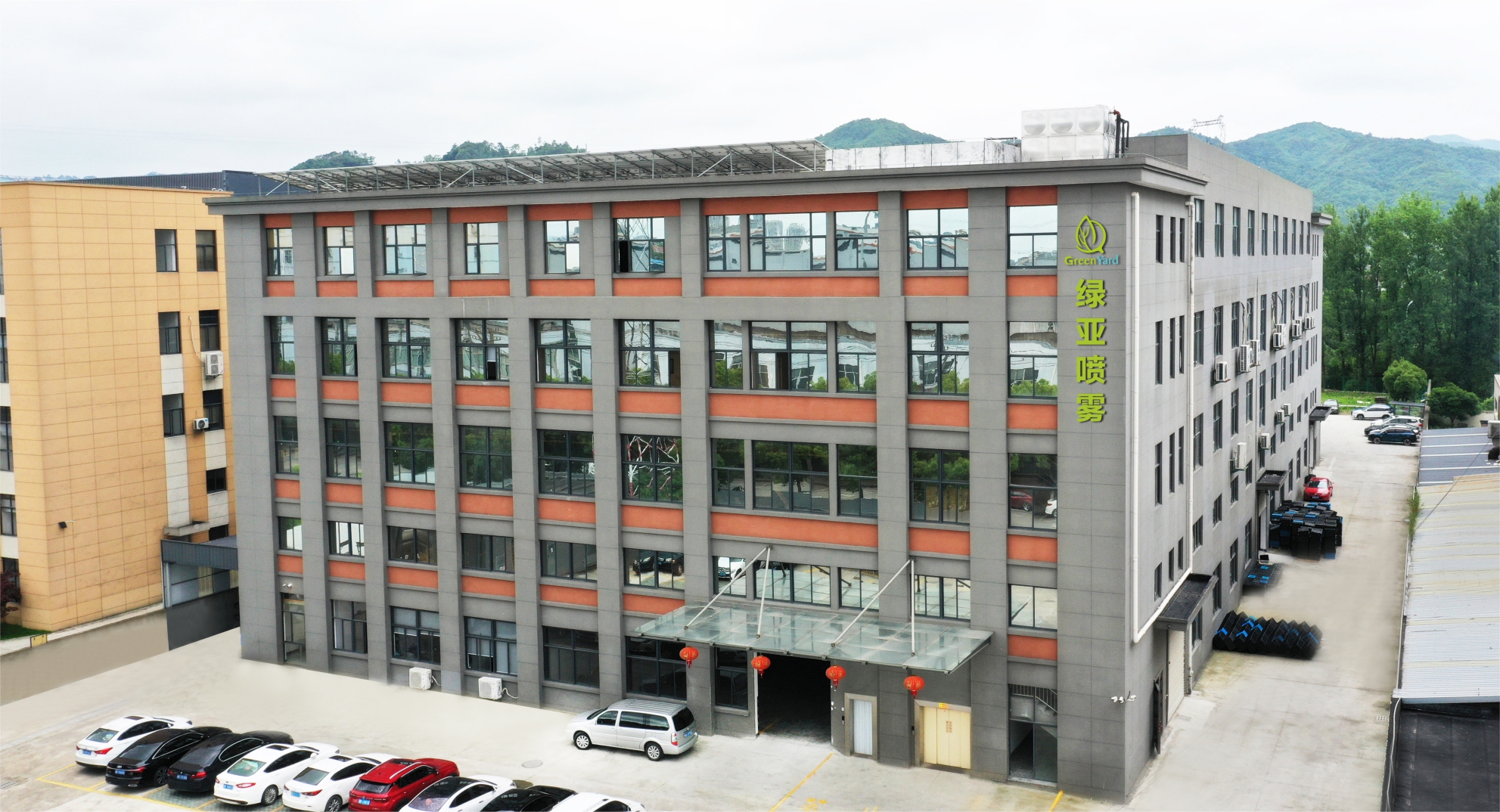
GreenYard Tools Co., Ltd. is a China-based packaging manufacturer specializing in spray products and personal care packaging. The company has 16 years of experience in spray product manufacturing and supplies perfume sprayers, pump heads, caps, bottles, and daily chemical packaging solutions.
The company’s manufacturing capabilities include mold design, injection molding, automated assembly, and quality inspection. These connected capabilities are important for airless packaging because dimensional accuracy must be maintained across multiple components. The bottle, cartridge, pump head, and closure must work together as a coordinated system.
Mold Design
Mold design influences the dimensional stability, surface quality, wall structure, and assembly performance of injection-molded components. An experienced mold design team can review the geometry of the bottle and closure, identify potential molding challenges, and develop tooling that supports repeatable production.
For a replaceable airless bottle, mold precision is especially important around connection points and sealing areas. The cartridge must fit correctly within the outer structure, while the snap-on closure must achieve a secure engagement without excessive force. Proper mold development helps reduce variation and supports smoother downstream assembly.
Injection Molding
Injection molding enables efficient production of plastic packaging components in consistent shapes and quantities. Process control may include monitoring material preparation, injection pressure, temperature, cooling, cycle time, and part ejection. Stable molding conditions help improve the consistency of the bottle body, cartridge, pump-related components, and caps.
Surface quality is also relevant to personal care packaging. Consumers often associate smooth surfaces, clean edges, and uniform appearance with product quality. Injection molding expertise helps manufacturers produce components that are suitable for further decoration, labeling, printing, or direct presentation.
Automated Assembly
Airless packaging contains several components that must be assembled in the correct sequence. Automated assembly can improve production efficiency and help maintain consistent insertion, fitting, and closure operations. It may also reduce manual handling and support more stable output during high-volume orders.
Automation is particularly valuable when the package requires repeated placement of pump heads, cartridges, seals, or closures. Equipment can be configured to check component presence, orientation, and engagement. These checks can help identify assembly defects before products proceed to packing or filling.
Quality Inspection
Quality inspection is essential for dispensing packaging because small defects can affect leakage, pump operation, or consumer satisfaction. Inspection may include visual checks, dimensional verification, closure engagement tests, pump actuation tests, and leakage evaluation.
The manufacturer reports a daily production capacity of one million units. High capacity can help support large personal care programs, while a dedicated design and engineering team can assist with product development and packaging customization. Capacity alone does not guarantee a suitable result, so customers should still confirm quality standards, inspection plans, samples, and production controls for each project.
Integrated Product Development
Combining mold design, injection molding, automated assembly, and quality inspection under one manufacturing organization can simplify communication. Instead of coordinating each stage with unrelated suppliers, a customer may work with one technical partner for a broader portion of the packaging process.
This integrated approach can be useful when a project requires adjustments to the closure, cartridge fit, pump performance, surface finish, or assembly method. Feedback from production trials can be returned to the design and tooling teams more efficiently when the functions are connected.
Quality and Reliability Considerations
Reliable airless packaging must perform throughout the product lifecycle. The bottle should remain structurally stable during filling, transportation, storage, consumer use, and replacement. Each phase creates different requirements.
During filling, the cartridge must accept the intended product without deformation or leakage. The filling process should be compatible with the package opening and assembly sequence. The pump and closure must then be installed without damaging seals or creating excessive stress.
During transportation, the package may experience vibration, impact, compression, and temperature changes. A secure snap-on closure helps protect the package, but finished-product transport tests should confirm the actual performance of the complete unit.
During use, the pump should dispense consistently and return to its original position after actuation. The outlet should remain reasonably clean, and the bottle should not require unusual handling to reach the final product. The replacement process should also be clear and repeatable.
Reliability includes appearance as well as function. Scratches, uneven color, flash, sink marks, poor fit, or misaligned components can weaken the perception of quality even when the package still operates. Personal care products often compete in visually demanding retail environments, so cosmetic inspection is important.
Brands should establish acceptance criteria before mass production. These criteria may cover dimensions, weight, color difference, surface defects, pump dosage, actuation force, leakage, closure retention, cartridge insertion, and packaging cleanliness. A documented standard helps suppliers and buyers evaluate production consistently.
Customization and Brand Development
The supplied GY-3602A product provides a defined packaging platform, but many brands require customization before launch. Possible development areas may include color, surface finish, decoration, labeling, printing, external graphics, and secondary packaging.
Color selection can communicate product category and positioning. Soft neutral tones may suit sensitive skincare, while metallic or deep colors may support a premium treatment collection. The chosen color should be tested under production conditions because the final result can vary according to resin, masterbatch, wall thickness, and surface texture.
Surface finishing can influence both appearance and grip. Matte finishes often communicate a soft, understated character, while glossy finishes can create a brighter and more reflective appearance. Textured surfaces may improve handling but should be reviewed for cleanability and decoration compatibility.
Labeling and printing should provide the necessary product information without interfering with the package’s functional areas. The dispensing outlet, snap-on closure, and cartridge access points must remain unobstructed. Decoration adhesion should be tested against oils, creams, alcohol-based cleaners, temperature variation, and normal consumer handling.
For brands with multiple product lines, the 15-gram, 30-gram, and 50-gram options can support a family packaging strategy. Shared visual elements can improve recognition, while different colors or labels distinguish product functions. This approach may reduce the need to create an entirely new bottle design for every skincare item.
Refill Program Planning
A replaceable cartridge package requires more planning than a conventional container because the refill process becomes part of the product experience. The first step is to define which components are reused and which components are replaced. The refill instructions should be simple enough for consumers to follow without specialized tools.
The cartridge must be protected during shipping and storage. Individual cartridges may require caps, protective sleeves, cartons, or other secondary packaging to keep the product contact area clean before installation. Packaging engineers should consider the balance between protection and material reduction.
Refill availability is another important factor. Customers are more likely to adopt a replacement system when compatible cartridges remain available after the initial purchase. Brands should plan inventory, product forecasting, and distribution channels before promoting a refillable package.
Clear communication can prevent incorrect use. Instructions may explain how to remove the empty cartridge, how to insert a new one, whether the pump needs priming, and how to dispose of the used component. Visual instructions can be placed on the outer carton or included in the product information.
The business model should also be evaluated. A refill system may lower packaging usage, but it can create additional requirements for cartridge manufacturing, quality control, logistics, and customer education. The overall benefit should be assessed across the complete lifecycle rather than based on the outer bottle alone.
Supply and Production Advantages
GreenYard’s product portfolio includes crimp pumps, fine mist sprayers, lotion pumps, treatment pumps, foam pumps, droppers, cosmetic plastic caps, airless bottles, deodorant stick bottles, cream jars, nail polish pumps, trigger sprayers, mini triggers, PE and PET bottles, and roll-on bottles. This broad product range can be useful for customers developing several categories within personal care and daily chemical packaging.
A supplier with experience across pumps, bottles, caps, sprayers, and dispensing systems may be able to help brands coordinate packaging components more efficiently. This can reduce the need to source every package element from a separate supplier and may simplify communication about compatibility and appearance.
The company’s reported daily capacity of one million units supports high-volume production requirements. Large-scale capacity can be especially relevant for established skincare brands, contract manufacturers, promotional campaigns, and international product launches. Buyers should confirm available capacity, lead time, tooling status, material requirements, and quality documentation for the intended order.
Product innovation is supported by a dedicated design team. For customers, this may provide access to technical discussions about package structure, user experience, pump selection, and refill concepts. A design team can also help identify whether a standard product is appropriate or whether modifications are needed for a specific formula or market.
The company is located in Yuyao City, Zhejiang Province, an area associated with plastic molding and packaging manufacturing. Its production address is No. 97-1 Fengyi Road, Lanjiang Street, Yuyao City, Zhejiang Province, China. The business serves global markets and provides personal care packaging solutions for international customers.
Purchasing and Development Process
Customers considering the Plastic Replaceable Airless Bottle should begin by defining the product formula and target application. Important information includes the product type, viscosity, density, active ingredients, filling temperature, expected dosage, shelf life, and intended sales region.
The next step is to select the nominal capacity. The 15-gram version may suit compact or concentrated products, the 30-gram version may support regular facial treatments, and the 50-gram version may be suitable for daily moisturizers or larger creams. Capacity should be confirmed using the actual filling weight and formula density.
Samples should be requested for compatibility testing. The intended formula should be filled into the package and evaluated over time. Testing may include pump priming, output consistency, leakage, storage orientation, temperature cycling, transportation simulation, and consumer handling.
After sample approval, the customer and manufacturer can confirm decoration, color, cartridge requirements, filling equipment, assembly sequence, inspection criteria, and production schedule. Technical drawings or approved reference samples should be used to control later production batches.
Before mass production, a pilot run can help verify that the filling and assembly operations work as expected. Pilot production may reveal issues involving product viscosity, air entrapment, pump installation, closure force, label placement, or cartridge fit. Resolving these issues before full production can reduce delays and waste.
For international orders, buyers should also discuss export cartons, palletization, shipment protection, documentation, and regulatory expectations in the destination market. Packaging regulations vary by region, and the brand remains responsible for confirming compliance with the requirements applicable to its product.
Environmental and Lifecycle Perspective
The replaceable airless bottle is designed to support a more resource-conscious packaging model, but environmental performance should be evaluated comprehensively. The most meaningful comparison is between the complete lifecycle of the replaceable system and the lifecycle of the alternative package it replaces.
Potential benefits may include a longer service life for the outer bottle, reduced replacement of the pump head, lower material consumption per refill cycle, and more efficient use of the product. The actual result depends on how many times the bottle is reused and how efficiently the replacement cartridge is produced and distributed.
Material selection is also important. Plastic packaging can provide low weight, impact resistance, design flexibility, and efficient manufacturing. At the same time, brands should understand the material composition of each component and communicate disposal guidance accurately. If components are made from different plastics or include metal springs and other materials, separation may be necessary for recycling.
A refill system can reduce packaging waste only if consumers actually purchase and use replacement cartridges. The package should therefore be convenient, reliable, attractive, and easy to understand. A difficult refill procedure can discourage repeat use and reduce the expected environmental advantage.
Brands should avoid making unsupported claims such as “zero waste” or “fully sustainable” unless they have evidence to support those statements. More precise communication may explain that the packaging is designed with a replaceable inner cartridge to help reduce the need to discard the complete outer bottle after each use.
Lifecycle assessments, material declarations, recycled-content evaluations, and local recycling guidance can help brands make more informed claims. These tools are particularly useful when the product is sold in several countries with different collection and processing systems.
Retail and Marketing Benefits
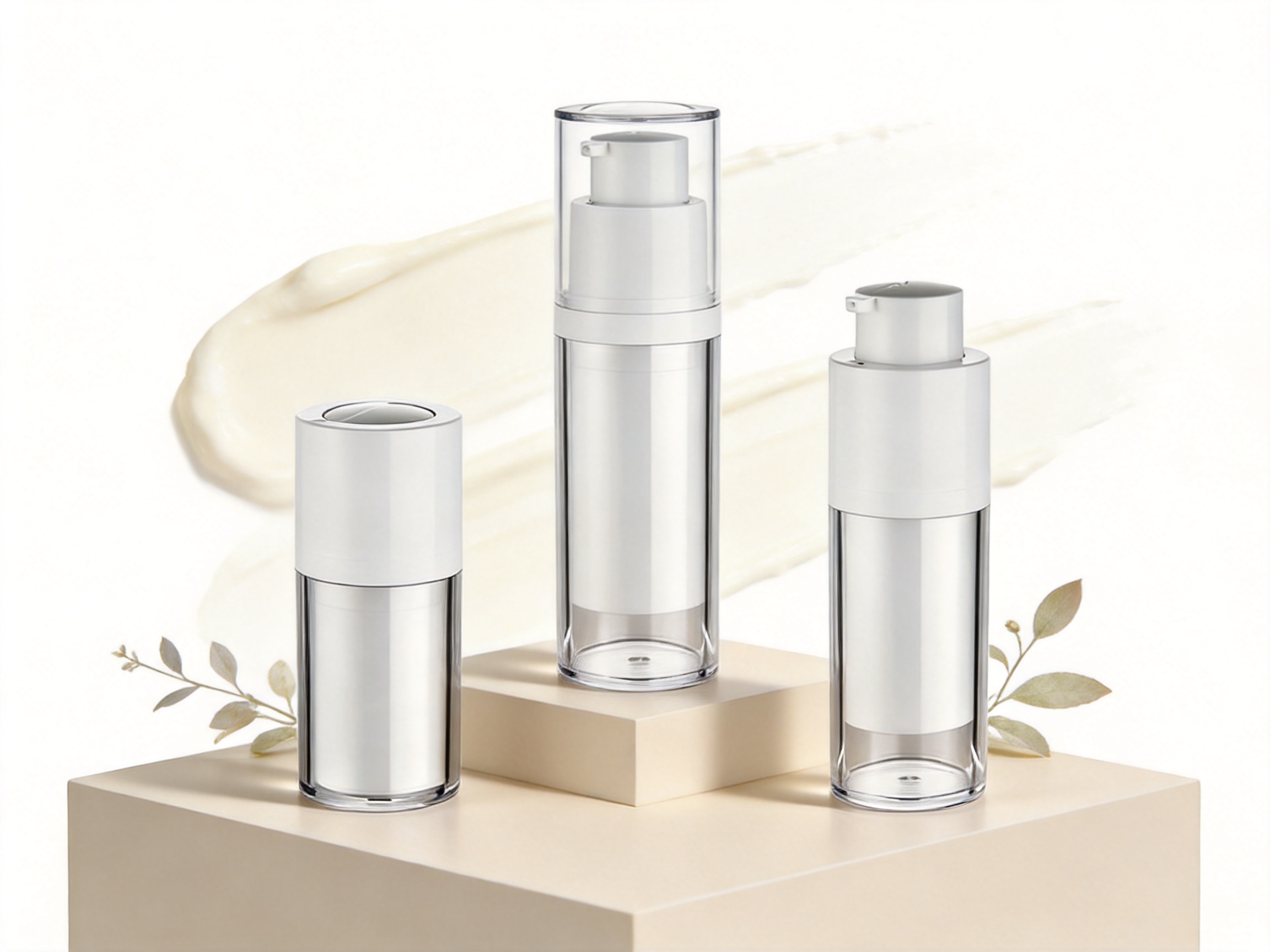
Packaging can help a skincare product stand out in a competitive market. The GY-3602A combines an airless pump appearance with a refill-oriented structure, giving brands several functional points to communicate. The package can be positioned around hygiene, controlled dispensing, convenient use, product protection, and replacement efficiency.
The compact shape may work well on retail shelves, in online product photography, and in gift sets. The three available capacities allow brands to build size-based product families. A consistent package architecture can make a range appear organized and professional.
The pump format can also support dosage education. Brands may recommend one or two pumps for a specific application, depending on the formula. Consistent dispensing can make these instructions easier for consumers to follow than instructions based on an undefined amount taken from a jar.
The refill message can encourage repeat engagement. Instead of presenting repurchase as buying the same disposable container again, the brand can explain that customers are replenishing the product through a compatible cartridge. This can support customer retention and create opportunities for direct-to-consumer sales.
Online retailers can explain the package through diagrams, product videos, and step-by-step instructions. Clear visual communication is valuable because consumers may not immediately understand how the inner cartridge is replaced. The packaging should be supported by simple, accurate, and consistent information across the product page, carton, and customer service channels.
Operational Benefits for Brands
Using a common bottle platform across several capacities can simplify product portfolio management. Instead of developing unrelated packaging for every product, a brand can use one recognizable system for creams, facial treatments, and other compatible products.
A shared platform may also simplify artwork development, testing protocols, and supplier communication. Once the basic package has been approved, later products can begin with an established structure. Each new formula must still undergo compatibility and performance testing, but the overall development process may become more organized.
The replaceable cartridge concept can support differentiated product tiers. For example, a brand may offer a complete starter package for new customers and a cartridge-only replenishment option for returning customers. This creates flexibility in merchandising and may help reduce unnecessary duplication of outer packaging.
For contract manufacturers and filling companies, compatibility with efficient assembly and filling operations is essential. GreenYard’s experience in injection molding and automated assembly can support discussions about production line requirements. The customer should provide complete technical information so that the package can be matched with existing equipment or a suitable filling process.
Limitations and Points to Confirm
No packaging format is suitable for every product. The replaceable airless bottle may not be appropriate for formulas containing large particles, aggressive solvents, highly volatile ingredients, or unusual dispensing requirements unless the system has been specifically tested and approved.
The refill concept can also require more consumer education than a conventional bottle. The replacement process must be intuitive, and compatible cartridges must be clearly identified. If customers insert the wrong component or attempt to reuse a cartridge beyond its intended life, performance may be affected.
Airless pumps commonly require priming, especially during the first use. The expected number of priming actuations should be explained where necessary. Brands should also define storage instructions, such as whether the bottle should remain upright or whether it can be transported in a bag without leakage.
The stated volumes are nominal packaging options and should not automatically be interpreted as exact fill weights for every formula. Density and filling conditions can affect the relationship between grams and milliliters. The final fill specification should be confirmed with the manufacturer and the filling facility.
Buyers should request samples, drawings, material information, inspection standards, and production details before placing a large order. A complete technical review helps confirm that the package is suitable for the formula, market, filling line, and intended refill program.
Why Choose This Packaging Solution?
The Plastic Replaceable Airless Bottle offers a balanced approach to modern facial care packaging. It combines the familiar convenience of a pump with the product protection associated with an airless structure. Its 15-gram, 30-gram, and 50-gram sizes provide flexibility for different product categories and consumer usage patterns.
Its most notable distinction is the replaceable inner cartridge. This feature can extend the useful life of the outer package and create a practical foundation for a refill-oriented business model. Compared with conventional jars and single-use bottles, it offers a different approach to hygiene, product access, and packaging replacement.
GreenYard Tools Co., Ltd. supports the product with experience in personal care packaging, mold design, injection molding, automated assembly, and quality inspection. The company’s broad product portfolio and reported high production capacity may benefit customers looking for a packaging partner capable of supporting multiple dispensing formats.
For skincare brands, contract manufacturers, and distributors, the GY-3602A can be considered for moisturizers, creams, facial treatments, serums, eye creams, night products, and other compatible formulations. The best results will come from early formula testing, clear refill instructions, reliable cartridge supply, and a documented quality program.
Q&A
What is the Plastic Replaceable Airless Bottle?
It is a plastic airless packaging bottle with a pump head and a replaceable inner cartridge. It is designed for creams, facial care products, and compatible skincare treatments.
Which volumes are available?
The product is available in 15-gram, 30-gram, and 50-gram formats. The appropriate size depends on the formula, dosage, product positioning, and expected usage period.
What is the closure type?
The closure type is snap-on. It is designed to provide a secure fit and support convenient assembly and use.
How does the airless mechanism work?
The product is stored in an inner chamber or cartridge, and an internal mechanism moves the product toward the pump as the consumer dispenses it. This reduces the need for a conventional dip tube and helps limit routine exposure to air.
Can the bottle be refilled?
The pump head can be used with compatible replaceable inner cartridges after the original cartridge has been used. The replacement cartridge must match the approved package design and should be installed according to the manufacturer’s instructions.
Is the package suitable for thick creams?
It may be suitable for many cream products, but compatibility cannot be guaranteed without testing. Viscosity, waxes, oils, particles, temperature, and formula structure can influence pump performance.
What types of products can use this bottle?
Potential applications include moisturizers, facial creams, serums, eye creams, night creams, sleeping masks, and skincare treatments. The formula should be tested for chemical compatibility and dispensing performance.
Does airless packaging preserve a formula automatically?
No. Airless packaging can help reduce repeated exposure to air and handling, but it does not replace proper formulation stability testing, preservatives, compatibility studies, or suitable storage conditions.
What are the advantages over an open-mouth cream jar?
The pump helps users dispense the product without repeatedly touching the remaining contents. It can provide a cleaner application experience, support more consistent dosing, and potentially improve access to the final portion of the formula.
What are the advantages over a standard pump bottle?
The airless structure is designed to move the product upward without relying on a traditional dip tube. It may be better suited to certain thicker formulas and offers the additional possibility of replacing the inner cartridge rather than the complete package.
How can a brand promote the refill feature?
The brand can explain that the outer bottle and pump structure are designed for continued use with compatible replacement cartridges. Communication should include clear instructions, disposal guidance, refill availability, and specific claims supported by evidence.
What manufacturing capabilities support this product?
GreenYard Tools Co., Ltd. reports capabilities in mold design, injection molding, automated assembly, and quality inspection. These processes help coordinate the dimensional accuracy and assembly performance of the bottle, cartridge, pump head, and closure.
Can the package be customized?
Customers can discuss customization requirements such as color, finish, decoration, labeling, printing, and related packaging details. The available options should be confirmed during the product development process.
What testing should buyers conduct?
Recommended evaluations may include formula compatibility, pump priming, dosage consistency, actuation force, leakage, temperature cycling, transportation simulation, closure retention, cartridge replacement, and consumer usability.
Is the bottle recyclable?
Recyclability depends on the materials used in each component and the collection facilities available in the destination market. Brands should obtain material information and provide disposal instructions that reflect local conditions.
What information should be provided when requesting a quotation?
Customers should provide the desired volume, formula type, viscosity, expected order quantity, decoration requirements, cartridge plan, filling method, delivery destination, and any applicable quality or regulatory requirements.
Conclusion
The Plastic Replaceable Airless Bottle GY-3602A is designed for personal care brands that need practical, hygienic, and adaptable packaging for creams and facial care products. Its airless dispensing structure supports controlled product delivery, while the snap-on closure provides a secure and user-friendly package format.
The availability of 15-gram, 30-gram, and 50-gram sizes makes the product suitable for a broad range of skincare applications. More importantly, the replaceable inner cartridge creates an opportunity to reduce complete-package replacement and develop a convenient refill system.
GreenYard Tools Co., Ltd. complements the product with 16 years of spray product manufacturing experience, a broad personal care packaging portfolio, mold design expertise, injection molding, automated assembly, and quality inspection capabilities. With a reported daily production capacity of one million units, the company is positioned to support both developing and established packaging programs.
Successful implementation depends on appropriate formula testing, reliable pump performance, accurate assembly, consistent quality control, and clear consumer instructions. When these factors are addressed, the replaceable airless bottle can provide a strong combination of product protection, premium presentation, dispensing convenience, and refill-oriented packaging design.
References
1. GreenYard Tools Co., Ltd. Product information for Plastic Replaceable Airless Bottle, model GY-3602A.
2. GreenYard Tools Co., Ltd. Company information covering mold design, injection molding, automated assembly, quality inspection, and production capacity.
3. General packaging engineering principles for airless dispensing systems and personal care product compatibility testing.
4. General sustainable packaging principles concerning refill systems, material selection, lifecycle evaluation, and responsible environmental communication.
5. General quality-control practices for plastic bottles, pump heads, snap-on closures, cartridge systems, and personal care packaging assemblies.
Product: Plastic Replacable Airless Bottle

-
How Glass Airless Bottle Packaging Prevents Contamination and Boosts Shelf Life?
Glass airless bottle packaging prevents contamination and extends shelf life by completely eliminat...
-
Airless Bottles Uncovered: How to Protect Your Skincare and Perfect Every Pump
If you have ever opened a pump bottle of serum and found the last quarter of the product impossible ...
-
What Makes a Good Deodorant Stick Bottle for Brands?
A deodorant stick bottle is a twist-up or push-up dispensing container designed to hold and advance...
-
Amber Plastic Bottles: Lightweight, Protective, Customizable Packaging for Cosmetics
You have spent months stabilizing a vitamin C serum, only to watch a pallet of amber glass bottles ...
Copyright © GreenYard Tools Co.,ltd. All Rights Reserved.
Personal Care Packaging Manufacturer Custom Perfume Sprayers Factory