
-
About Us
Why Choose Us?The company possesses advanced capabilities in mold design, injection molding, and automated assembly, supported by a professional quality inspection team to ensure product reliability. A dedicated design team continuously drives product innovation, providing customers with high-quality spray solutions.
 Coming From China, Marketing To The World.
 -
Products
-
News
 English
 Français
 русский
 Español
Aluminium Customized Thread Perfume Mist Sprayer: Precision Packaging for Modern Fragrance and Personal Care Products
Content
- 1 Introduction
- 2 Product Overview
- 3 Controlled 0.06 Milliliter Dosage
- 4 Fine Mist Performance for Multiple Applications
- 5 Customized Screw Thread Compatibility
- 6 Custom Tube Length for Better Bottle Utilization
- 7 Aluminium Construction and Product Appearance
- 8 Advantages Compared with Conventional Alternatives
- 9 Manufacturing Strengths and Technical Capabilities
- 10 Quality Control Considerations
- 11 Packaging Development and Customization Process
- 12 Applications Across Fragrance and Personal Care
- 13 Sustainability and Practical Packaging Efficiency
- 14 Ordering and Commercial Considerations
- 15 Why Partner with an Experienced Packaging Manufacturer?
- 16 Frequently Asked Questions
- 16.1 What is the dosage of the GY-401C1 perfume mist sprayer?
- 16.2 Which thread sizes are available?
- 16.3 Can the sprayer be used with glass bottles?
- 16.4 Can the sprayer be used with aluminium bottles?
- 16.5 Is the tube length customizable?
- 16.6 What products are suitable for this sprayer?
- 16.7 Is the sprayer suitable for thick creams or lotions?
- 16.8 What should be tested before mass production?
- 16.9 What are the main advantages of the aluminium exterior?
- 16.10 Can the sprayer be decorated or customized in appearance?
- 16.11 What manufacturing capabilities does GreenYard provide?
- 16.12 What is the company’s production capacity?
- 16.13 How can customers begin a customized project?
- 17 Conclusion
- 18 References
- 19 Product: Aluminium Customized Thread Perfume Mist Sprayer
Introduction
Packaging is one of the most important factors in the performance, appearance, and commercial success of a perfume or personal care product. A well-designed package must protect the formula, deliver the correct quantity, support convenient use, and create a positive impression in the hands of the consumer. The Aluminium Customized Thread Perfume Mist Sprayer, model GY-401C1, is designed to meet these requirements through a combination of precise dosing, flexible compatibility, durable construction, and customizable assembly options.
Developed for perfume, pillow mist, facial mist, and similar liquid applications, this sprayer delivers an approximate dosage of 0.06 milliliters per actuation. Its fine mist output helps distribute a product evenly while limiting unnecessary consumption. The sprayer is available in 20-410, 24-410, and 28-410 thread options, allowing packaging developers to select an appropriate neck finish for different bottle designs.
The product uses a screw thread structure rather than relying only on a permanently fixed crimp connection. This makes it suitable for a broad range of packaging concepts and allows the thread to be customized for different bottle neck sizes. It can be used with glass bottles and aluminium bottles, making it a practical choice for fragrance brands, private-label manufacturers, contract fillers, and personal care packaging developers.
In addition to its technical qualities, the sprayer benefits from GreenYard Tools Co., Ltd.’s specialized experience in spray packaging manufacturing. The company combines mold design, injection molding, automated assembly, quality inspection, and product development to produce packaging components for global markets. With a stated daily production capacity of one million units, the manufacturer is positioned to support both development projects and larger-scale commercial orders.
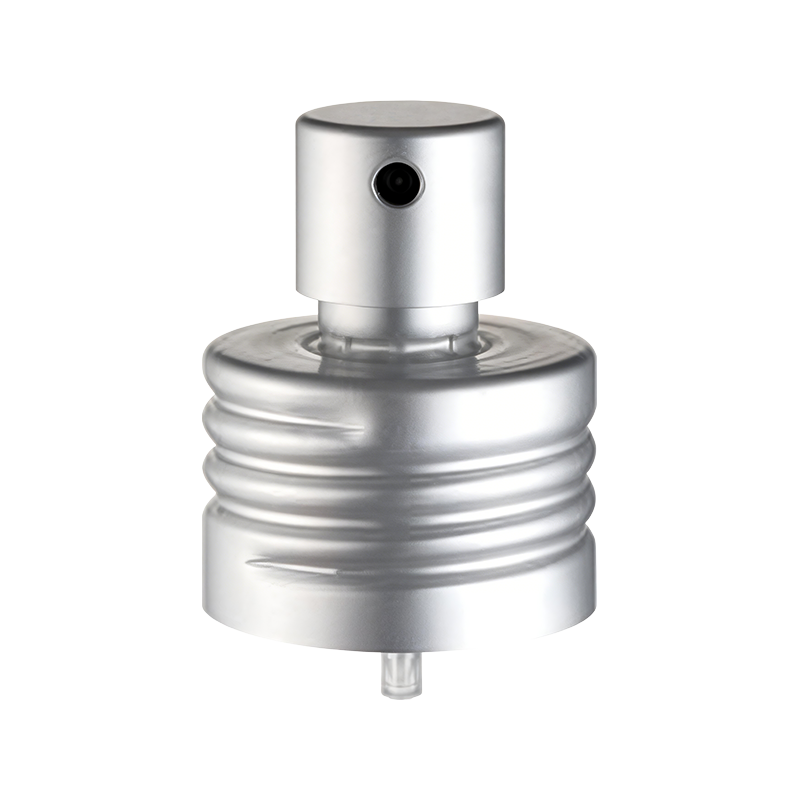
Aluminium Customized Thread Perfume Mist Sprayer
Product Overview
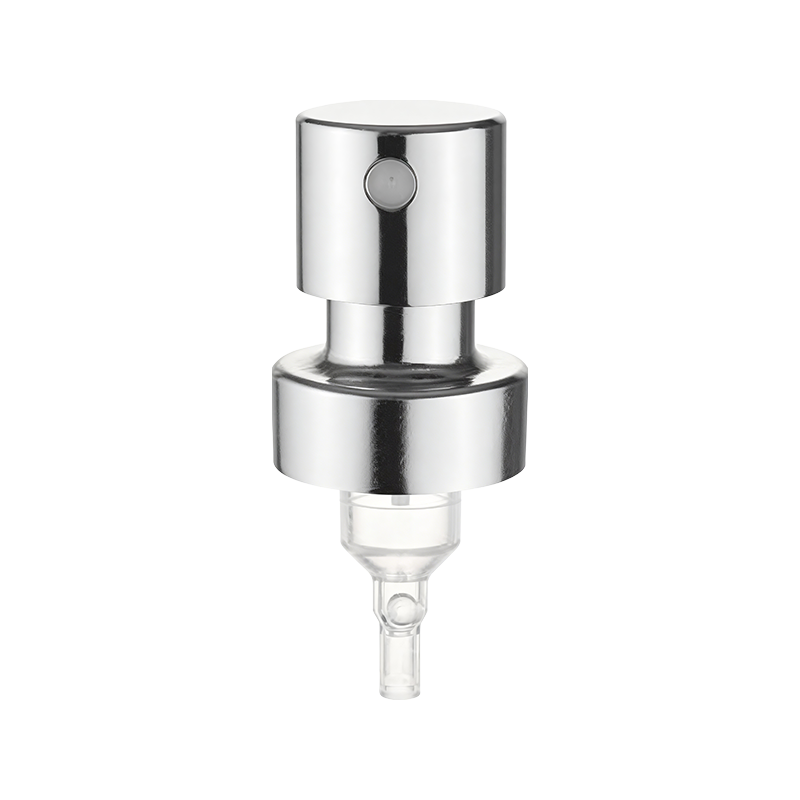
The GY-401C1 is an aluminium perfume mist sprayer designed for applications where appearance, function, and compatibility must work together. It is categorized as a crimp pump product, while its structure incorporates a customized screw thread design. This combination gives the packaging developer more control over installation and bottle matching than a standard fixed-format sprayer.
The main product specifications include three standard thread options: 20-410, 24-410, and 28-410. The 410 designation is commonly used in packaging to identify a particular thread profile and neck-finish format. Selecting the correct size helps ensure that the pump fits the bottle securely and operates with the intended seal. Because packaging dimensions may vary between suppliers and bottle designs, testing the complete bottle-and-pump combination before mass production remains essential.
The sprayer provides a nominal dosage of 0.06 milliliters per spray. This dosage is appropriate for many fragrance and mist products where a controlled, lightweight application is preferred. The tube length is customized according to the bottle dimensions. A customized tube can help the dip tube reach an appropriate position within the container, improving product evacuation and reducing the amount of liquid left unused.
Product item | Specification |
Model | GY-401C1 |
Product type | Aluminium perfume mist sprayer |
Thread options | 20-410, 24-410, and 28-410 |
Nominal dosage | 0.06 milliliters per spray |
Tube length | Customized |
Recommended applications | Perfume, pillow mist, facial mist, and related liquid products |
Compatible containers | Glass bottles and aluminium bottles |
Closure style | Customized screw thread design |
Controlled 0.06 Milliliter Dosage
One of the most important advantages of a perfume sprayer is its ability to deliver a repeatable amount of liquid. The GY-401C1 is designed for a dosage of approximately 0.06 milliliters per actuation. This controlled output provides several benefits for both the product manufacturer and the end user.
For consumers, a consistent spray creates a predictable experience. Each press of the actuator releases a similar quantity, helping users understand how much product is being applied. This is especially important for perfume and facial mist products, where an excessively large dose can feel wasteful or uncomfortable, while an insufficient dose may not provide the expected effect.
For brands, consistent dosage supports product positioning and usage guidance. A fragrance company can estimate the approximate number of applications in a bottle and develop instructions based on the intended spray volume. Although actual output may vary according to formula viscosity, actuator pressure, temperature, and test conditions, a defined nominal dosage provides an important reference during product development and quality control.
The 0.06 milliliter output also supports economical product use. Fine mist packaging can reduce the tendency to dispense too much liquid at one time. This may help extend the consumer’s usage period and improve the perceived value of the package. For premium fragrance products, controlled delivery can complement a high-quality brand experience by making every spray feel deliberate and refined.
Dosage consistency is also valuable in production. Filling operations, package testing, and performance inspections can be organized around a known target. Manufacturers can evaluate the pump’s spray output, priming behavior, discharge consistency, and compatibility with the liquid formula. This creates a more systematic approach to product validation than selecting a sprayer based only on appearance.
Fine Mist Performance for Multiple Applications
The GY-401C1 is suitable for perfume, pillow mist, facial mist, and related applications. These products often require a spray pattern that spreads the liquid across an area rather than releasing it as a concentrated stream. The sprayer’s fine mist delivery is intended to support a light and even application when the formula and package are properly matched.
In perfume packaging, a fine mist can help distribute fragrance over the skin or clothing. It can also support the familiar sensory experience associated with fragrance products: a soft spray, a controlled release, and an even dispersion. For pillow mist, the sprayer can apply a light layer across bedding or nearby fabric. For facial mist, it can provide a convenient method of applying a water-based or appropriately formulated liquid to the face.
Formula compatibility is a critical part of mist performance. The pump should be tested with the final product rather than with water alone. Alcohol-based fragrances, water-based facial mists, botanical products, and formulas containing oils or suspended materials may behave differently. Viscosity, surface tension, volatile ingredients, and particulate content can affect spray quality. The GY-401C1 offers a strong packaging platform, but final performance should always be confirmed through application-specific testing.
Compared with a basic dispensing cap or a wide-opening bottle, a fine mist sprayer provides more controlled application and less direct contact between the user and the product. This can improve convenience and support a cleaner consumer experience. The closed pump structure also helps reduce the chance of accidental spills during ordinary use.
Customized Screw Thread Compatibility
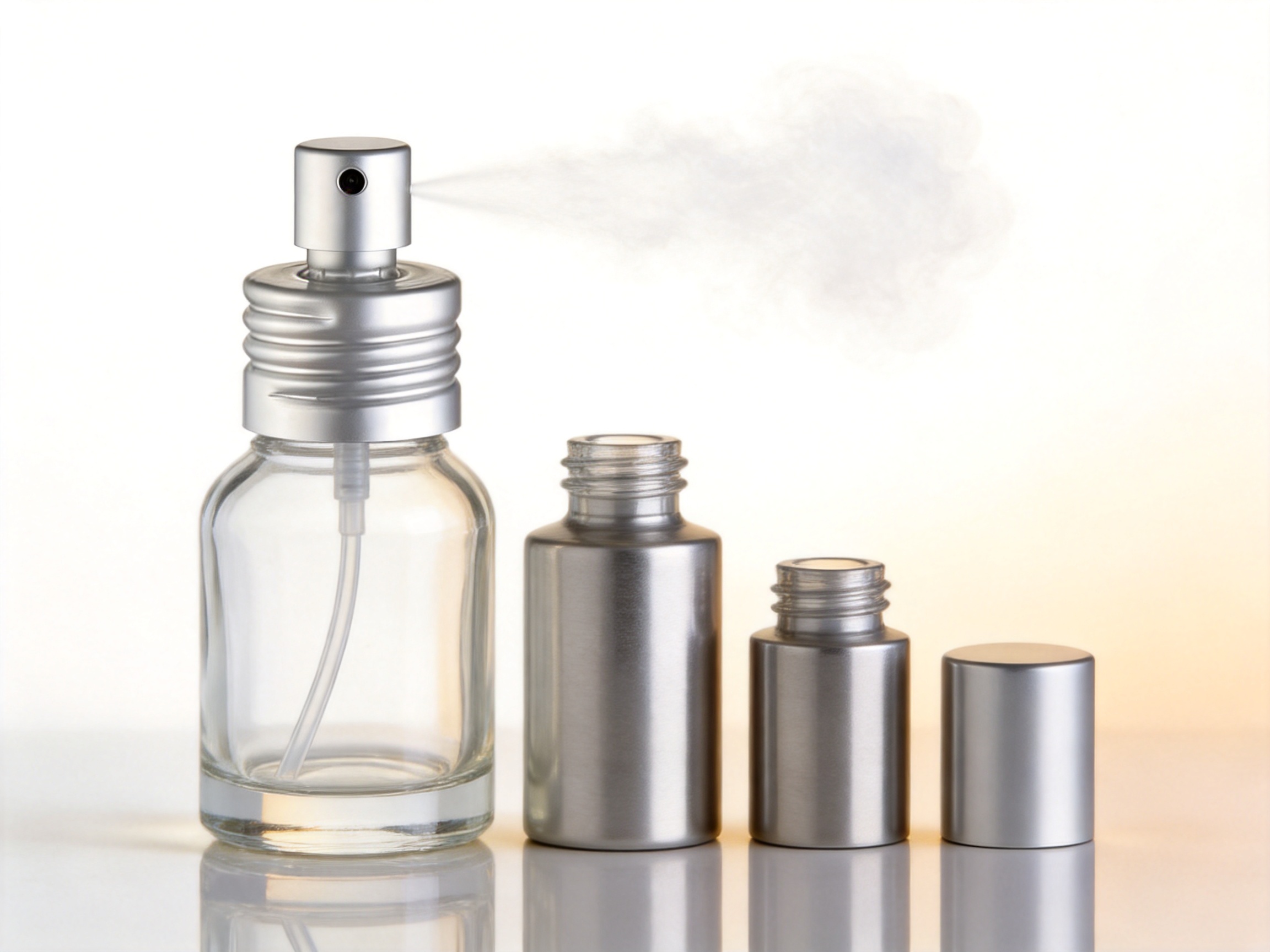
The customized screw thread is a central feature of this sprayer. Instead of forcing every project into a single fixed neck format, the design can be selected or adjusted to suit different bottle requirements. Standard options include 20-410, 24-410, and 28-410, while additional customization may be discussed for specific projects.
A screw thread closure offers practical advantages during packaging development and handling. The sprayer can be installed by threading it onto the bottle neck, creating a secure connection when the dimensions, gasket, and torque are correctly matched. This installation method is familiar to packaging manufacturers and can be integrated into suitable filling and assembly processes.
The threaded design can also make the package more flexible for certain product concepts. It is compatible with glass bottles and aluminium bottles, both of which are widely used in fragrance and personal care packaging. Glass can provide a premium appearance and strong chemical resistance for many fragrance applications, while aluminium can offer a lightweight, contemporary, and durable packaging option.
Compatibility depends on more than the nominal thread number. The bottle neck finish, thread profile, sealing surface, closure height, inner diameter, and shoulder design should all be evaluated. The sprayer and bottle should be tested together for fit, leakage, torque, spray performance, and long-term stability. This is particularly important when a brand combines components from different suppliers.
When properly matched, the threaded connection can help create a secure and dependable seal. This is beneficial during transportation, storage, retail handling, and daily consumer use. A well-fitted sprayer reduces the risk of leakage and helps protect the product from unnecessary exposure to the external environment.
Custom Tube Length for Better Bottle Utilization
The dip tube transfers liquid from the container to the pump mechanism. The GY-401C1 offers a customized tube length, allowing the component to be adapted to bottles with different heights and shapes. This feature is especially useful when a product line includes several bottle sizes or when a unique container design is part of the brand identity.
A tube that is too short may leave a significant quantity of product below its reach. A tube that is too long may bend excessively, press against the bottom of the container, or interfere with the pump’s operation. Customizing the tube length helps the tube reach an effective position while maintaining appropriate movement and liquid intake.
Tube customization also supports more efficient packaging development. The same sprayer platform can potentially be adapted to travel-size bottles, standard perfume bottles, larger home-fragrance containers, and other mist packages. This can simplify component selection for a product family and reduce the need to source a completely different pump for every container format.
Before production, the tube should be checked inside the actual bottle. The inspection should consider the bottle’s internal height, base shape, shoulder angle, liquid level, and filling volume. A complete performance test can confirm whether the pump primes properly, sprays consistently, and continues to operate as the liquid level decreases.
Aluminium Construction and Product Appearance
The aluminium construction gives the sprayer a combination of visual and practical benefits. Aluminium is recognized for being lightweight while providing a durable exterior. In fragrance packaging, the material can contribute to a premium appearance and a refined tactile experience. It can also complement glass bottles, metallic labels, decorative collars, and other upscale packaging components.
Weight is an important consideration in logistics and consumer convenience. A lightweight sprayer can help limit the total weight of the finished package without sacrificing the visual impression of a metal component. Reduced package weight may also support more efficient handling and transportation, although the full package weight should be evaluated together with the bottle, liquid, actuator, and decorative parts.
The aluminium exterior can be incorporated into a wide range of design directions. Depending on the project requirements, packaging developers may consider natural metallic finishes, colored surfaces, brushed effects, polished appearances, or other decorative treatments. The exact finish, color, and surface process should be confirmed with the manufacturer during project development.
Durability is another benefit. A metal outer component can provide resistance to ordinary handling and contribute to a solid feel when the user presses the sprayer. The packaging should still be protected against severe impact, abrasion, corrosive environments, and improper storage. Product testing should evaluate the finished component under realistic conditions, including transport simulation and repeated actuation.
Compared with an entirely standard plastic sprayer, an aluminium design may provide stronger differentiation on the retail shelf. It can help a product appear more premium without requiring a complex bottle shape. For brands seeking a balance between elegance and functional simplicity, the aluminium GY-401C1 can be used as an important visual element in the overall packaging system.
Advantages Compared with Conventional Alternatives
Perfume and mist packaging is available in many forms, including standard plastic sprayers, fixed crimp pumps, lotion pumps, dropper closures, and simple screw caps. Each closure type has an appropriate application. The GY-401C1 distinguishes itself by combining fine mist delivery, aluminium construction, multiple thread options, and customizable tube length in one packaging component.
Compared with a simple screw cap, the sprayer offers a more convenient and controlled application method. The user does not need to pour the product onto the hand or touch the formula directly. This can improve the usability of perfume, pillow mist, and facial mist products.
Compared with a lotion pump, the fine mist sprayer is better suited to low-viscosity liquids that should be dispersed across a surface. A lotion pump generally releases a larger and more concentrated dose, while a mist sprayer is designed for lighter application and wider distribution.
Compared with a dropper, the sprayer creates a different user experience and can be more suitable for products intended to cover a larger area. Droppers are useful for concentrated serums and precision application, but they do not normally provide the same atmospheric, lightweight dispersion associated with perfume or facial mist.
Compared with a fixed crimp-only design, a customized thread format may provide more flexibility during bottle selection and packaging assembly. The threaded structure can be adapted to compatible neck finishes and is suitable for both glass and aluminium containers. This can be valuable for brands that want to explore multiple bottle materials or refresh their packaging design in the future.
Compared with a basic plastic exterior, aluminium can provide a more premium visual identity and a stronger tactile impression. The final advantage will depend on decoration quality, assembly precision, and the design of the complete package, but the material offers a strong starting point for upscale positioning.
Comparison factor | GY-401C1 aluminium mist sprayer | Simple screw cap | Lotion pump | Dropper closure |
Application style | Fine mist dispersion | Pouring or direct access | Concentrated pump dispensing | Drop-by-drop application |
Nominal dosage | 0.06 milliliters | Not controlled by the closure | Usually larger than a mist dose | Controlled by dropper design and user action |
Thread flexibility | 20-410, 24-410, 28-410, with customization options | Depends on the selected cap | Usually limited to compatible neck formats | Depends on the bottle and pipette assembly |
Tube customization | Available | Not applicable | May vary by model | Usually based on pipette length |
Visual material advantage | Aluminium exterior for a premium appearance | Usually focused on basic closure function | Often plastic or mixed construction | Often glass, plastic, or mixed construction |
Manufacturing Strengths and Technical Capabilities
Product quality is strongly influenced by the manufacturing system behind the component. GreenYard Tools Co., Ltd. specializes in spray product manufacturing and has 16 years of experience in the field. Its product range includes perfume sprayers, pump heads, caps, bottles, and daily chemical packaging solutions.
The company’s production capabilities include mold design, injection molding, automated assembly, and quality inspection. These processes support the development of consistent components and help connect product engineering with commercial manufacturing. A manufacturer that can manage multiple stages internally may be able to respond more efficiently to packaging adjustments, tooling requirements, and assembly questions.
Mold design is the first foundation of dimensional accuracy. The mold influences the shape, fit, surface quality, and repeatability of the molded parts used in the pump assembly. Careful mold development can help reduce variation and support more reliable interaction between the actuator, housing, internal components, tube, and bottle neck.
Injection molding allows the production of precise polymer components in a repeatable format. The material selection, mold temperature, injection pressure, cooling time, and process control can all influence the final part. Stable injection molding is important for pump performance because small dimensional differences can affect sealing, movement, and assembly alignment.
Automated assembly can improve production efficiency and reduce dependence on inconsistent manual operations. In a high-volume packaging component, many parts must be assembled in the correct order and orientation. Automation can help control these steps and support stable output when the equipment is properly maintained and monitored.
Quality inspection is essential for a product that must deliver a repeatable dosage and maintain a dependable seal. Inspection may include dimensional checks, visual examination, assembly verification, spray testing, leakage evaluation, and performance sampling. The exact inspection plan can be established according to the customer’s requirements, product type, and quality standards.
The company reports a daily production capacity of one million units. This capacity can be important for customers planning a large product launch, seasonal promotion, or international distribution program. High capacity must be combined with appropriate process control, but it provides the manufacturing foundation needed to support substantial demand.
A dedicated design team further strengthens the company’s ability to develop packaging solutions. Packaging requirements vary widely between fragrance, personal care, household, and daily chemical products. A design team can support the adaptation of thread sizes, tube lengths, decorative components, and product structures to better match a customer’s container and market positioning.

Quality Control Considerations
A reliable perfume sprayer must perform consistently from the first use to the final applications in the bottle. Quality control for the GY-401C1 should therefore address both component quality and complete-package performance. Important checkpoints include thread fit, seal integrity, spray output, actuation behavior, tube position, visual appearance, and compatibility with the formula.
Thread fit should be checked using the intended bottle. The sprayer must install smoothly without excessive force, cross-threading, or visible gaps. The selected closure torque should be appropriate for the bottle material and neck design. Excessive torque may damage a glass or aluminium neck, while insufficient torque may increase the risk of leakage or loosening.
Leakage testing can be carried out in different orientations and under conditions that represent distribution and consumer use. Packages may be stored upright, inverted, or on their side depending on the logistics environment. Testing may also include temperature changes, vibration, and repeated opening or closing when the product concept allows removal of the sprayer.
Spray testing should examine the initial priming action, output consistency, spray pattern, and continued performance. Some pumps require one or more actuations before liquid reaches the nozzle. The number of priming strokes and the stability of the output should be assessed using the final formula and a representative bottle.
Visual inspection is also significant for a premium aluminium component. The surface should be evaluated for scratches, dents, discoloration, uneven finishes, contamination, and assembly defects. If the sprayer is decorated, color consistency and adhesion should be included in the inspection plan.
Formula compatibility testing should be performed over an appropriate period. The liquid may interact with internal seals, tubes, gaskets, or other pump components. Testing can help identify swelling, brittleness, discoloration, odor transfer, blocked nozzles, or changes in spray performance before the package reaches the market.
Packaging Development and Customization Process
Successful customization begins with a clear understanding of the product and bottle. The customer should provide the bottle drawing or sample, neck dimensions, filling volume, formula information, expected dosage, tube length, decoration requirements, and target production quantity. This information helps the manufacturer recommend a suitable sprayer configuration.
The first stage is usually the selection of the thread size. The 20-410, 24-410, and 28-410 options cover several common packaging requirements. The correct selection depends on the bottle neck rather than on the desired external appearance alone. If the bottle is already available, a physical fitting test can confirm the preliminary choice.
The next stage is tube customization. The tube length should be measured against the inside of the bottle, taking into account the bottom profile and expected fill level. The objective is to provide reliable product intake without obstructing the bottle or causing excessive bending.
Formula testing follows component selection. A water-based facial mist may have different spray behavior from an alcohol-based perfume or a pillow mist containing fragrance oils. The pump should be evaluated with the intended formula to confirm priming, output, mist quality, and long-term compatibility.
Sample approval is an important milestone before mass production. Customers should inspect the assembled package, confirm the appearance, test the application experience, and review the packaging line requirements. Any changes to the bottle, thread, tube, actuator, or formula after approval should be communicated because they may influence performance.
For larger projects, a production plan can include incoming material inspection, in-process controls, finished-product sampling, packing specifications, and batch traceability. Clear standards help both the manufacturer and the customer evaluate whether the product meets the agreed requirements.
Applications Across Fragrance and Personal Care
Perfume and Eau de Parfum Packaging
The most direct application for the GY-401C1 is perfume packaging. Fragrance products depend heavily on the spray experience because the application moment is part of the product’s identity. A fine mist can support even distribution, while the aluminium exterior can contribute to a premium presentation.
The sprayer can be paired with glass bottles for classic or luxury fragrance designs. Glass provides a solid, elegant appearance and can be shaped in many ways. The customized thread and tube length allow the pump to be selected around the bottle rather than treating the pump as an isolated component.
Pillow Mist
Pillow mist products are commonly designed for application to bedding, pillows, or surrounding fabric. A fine mist can help spread the fragrance across a wider area without releasing an unnecessarily heavy dose. The 0.06 milliliter nominal output offers a useful reference for creating a controlled and comfortable application.
For pillow mist, the brand should evaluate the spray pattern, fragrance intensity, and compatibility of the formula with the chosen bottle and pump. The package may be used near fabrics, furniture, and other household surfaces, so the formula’s instructions and testing requirements should be considered carefully.
Facial Mist
Facial mist packaging requires attention to spray softness, formula compatibility, and user comfort. The GY-401C1 can support facial mist concepts when the product has been formulated for spraying and the complete package has passed appropriate testing. A controlled fine mist can help users apply the product evenly to the face without pouring or rubbing the liquid manually.
Manufacturers should evaluate the nozzle, spray pattern, and formula together. Particles, oils, high viscosity, or certain botanical materials may affect the pump. Thorough testing helps determine whether the product provides the desired mist quality throughout its intended shelf life.
Other Low-Viscosity Mist Products
The sprayer may also be considered for other low-viscosity personal care or daily chemical products that require a fine mist. Potential applications should be reviewed individually because chemical compatibility, regulatory requirements, dosage expectations, and spray pattern requirements can vary significantly between formulas.
Sustainability and Practical Packaging Efficiency
Packaging sustainability involves more than selecting one material. It includes product protection, efficient use of the formula, material quantity, manufacturing efficiency, transportation weight, and the ability to maintain product quality throughout the expected shelf life. The GY-401C1 contributes to this discussion through controlled dosage, lightweight aluminium construction, and compatibility with different bottle formats.
A controlled spray can help reduce over-application. When users receive a predictable amount, the product may be used more efficiently. This does not eliminate the need for responsible material selection, but it can support a more measured consumption pattern.
The aluminium exterior is lightweight compared with many heavy decorative alternatives. The total environmental profile depends on the complete package and the local recycling infrastructure. Brands should evaluate the bottle, pump, actuator, coatings, adhesives, and other materials together when making sustainability claims.
Customization may also reduce unnecessary packaging mismatch. A tube length designed for the actual bottle can support better product evacuation, helping reduce residual product left in the container. A correctly fitted thread can reduce leakage during distribution and protect the product from loss.
Manufacturing efficiency is another consideration. GreenYard’s automated assembly and high production capacity may help support consistent output and efficient production planning. Customers should request project-specific information when evaluating material composition, recycling guidance, environmental certifications, or sustainability documentation.

Ordering and Commercial Considerations
When preparing an order for the GY-401C1, customers should define the required thread size, tube length, dosage target, finish, color, decoration, actuator style, bottle material, and estimated quantity. Providing complete information at the beginning can make sampling and quotation more efficient.
Customers should also clarify whether they require the sprayer alone or a complete packaging solution that includes the bottle, cap, actuator, tube, and other components. GreenYard produces several categories of packaging, including perfume sprayers, pump heads, caps, bottles, lotion pumps, trigger sprayers, airless bottles, cosmetic jars, roll-on bottles, and other packaging products. This broader product range may help customers coordinate multiple components through one manufacturing partner.
Lead time depends on the product configuration, customization requirements, tooling status, order quantity, decoration process, and production schedule. A project involving a standard thread and existing tooling may follow a different schedule from a project requiring a new mold or special finish. Customers should confirm the timeline before approving a launch plan.
Packaging line compatibility should also be discussed. The installation method, closure torque, bottle orientation, and handling requirements may influence filling and capping equipment. Early communication between the packaging supplier, bottle supplier, filler, and brand owner can help prevent delays during production testing.
For international customers, shipping cartons, pallet arrangements, export documentation, product protection, and delivery terms should be confirmed in advance. The manufacturer’s experience with global markets can support communication, but every project should still establish clear commercial and technical specifications in writing.
Why Partner with an Experienced Packaging Manufacturer?
A sprayer is a relatively small component, but its performance can influence the entire consumer experience. Working with an experienced manufacturer can provide benefits during design, testing, production, and quality control. GreenYard Tools Co., Ltd. has focused on spray product manufacturing for 16 years, giving it a specialized foundation in pumps, sprayers, caps, bottles, and related packaging systems.
The company’s capabilities extend from mold design to injection molding, automated assembly, and inspection. This integrated structure can make it easier to coordinate technical changes and manage product consistency. It also supports the development of customized solutions rather than limiting customers to a small range of off-the-shelf products.
The reported capacity of one million units per day is valuable for customers that need scalable supply. High-volume fragrance launches, promotional programs, and multinational distribution plans require a supplier that can support demand while maintaining quality standards. Production capacity should always be verified against the specific product and schedule, but it provides a strong indication of manufacturing readiness.
The company’s design team can help customers adapt a sprayer to different bottle sizes, materials, and aesthetic requirements. This is particularly useful for brands that want a consistent packaging language across several products. A customized tube, compatible thread, and coordinated aluminium finish can help create a cohesive product family.
GreenYard’s location in Yuyao City, Zhejiang Province, places the company within a major Chinese manufacturing region with access to industrial supply chains, engineering resources, and export logistics. The company serves global markets and provides packaging solutions for personal care, fragrance, and daily chemical products.
Frequently Asked Questions
What is the dosage of the GY-401C1 perfume mist sprayer?
The nominal dosage is 0.06 milliliters per spray. Actual output can vary according to the formula, bottle, temperature, actuator pressure, and testing conditions, so the complete package should be evaluated before production.
Which thread sizes are available?
The standard size options are 20-410, 24-410, and 28-410. Customized thread requirements may be discussed according to the bottle neck and project specifications.
Can the sprayer be used with glass bottles?
Yes. The screw thread design is suitable for compatible glass bottles. The bottle neck finish and sprayer dimensions should be checked together to confirm fit and sealing performance.
Can the sprayer be used with aluminium bottles?
Yes. The product is also designed for compatibility with aluminium bottles when the neck dimensions, thread, and sealing components are properly matched.
Is the tube length customizable?
Yes. The tube length can be customized according to the height, internal shape, and filling requirements of the bottle.
What products are suitable for this sprayer?
The recommended applications include perfume, pillow mist, facial mist, and similar low-viscosity liquid products that require fine mist delivery.
Is the sprayer suitable for thick creams or lotions?
No. A fine mist sprayer is generally intended for low-viscosity liquids. Thick creams and lotions normally require a lotion pump, treatment pump, or another dispensing system designed for higher-viscosity formulas.
What should be tested before mass production?
Customers should test thread fit, leakage, dosage, spray pattern, priming, repeated actuation, tube position, visual quality, formula compatibility, and performance under expected storage and transport conditions.
What are the main advantages of the aluminium exterior?
The aluminium exterior is lightweight, durable, and suitable for premium packaging designs. It can provide a refined metallic appearance and a solid tactile experience while supporting differentiation from basic plastic sprayers.
Can the sprayer be decorated or customized in appearance?
Appearance customization should be discussed according to the desired color, finish, logo, surface treatment, and quantity. The final decoration method should be confirmed through samples and production testing.
What manufacturing capabilities does GreenYard provide?
GreenYard specializes in spray packaging and provides mold design, injection molding, automated assembly, quality inspection, and product development support. Its product range includes sprayers, pump heads, caps, bottles, and other daily chemical packaging products.
What is the company’s production capacity?
The company reports a daily production capacity of one million units. Actual capacity for a specific project depends on the product model, customization, order quantity, and production schedule.
How can customers begin a customized project?
Customers can prepare the bottle drawing or sample, thread size, tube length, formula information, dosage target, surface finish, estimated order quantity, and delivery requirements. These details allow the manufacturer to recommend a suitable configuration and prepare samples.
Conclusion
The Aluminium Customized Thread Perfume Mist Sprayer is a flexible packaging solution for fragrance and personal care products that require controlled, fine mist application. Its 0.06 milliliter dosage supports measured dispensing, while the 20-410, 24-410, and 28-410 thread options provide compatibility with different bottle formats. The customized tube length improves adaptability to bottles of various heights and shapes.
Its aluminium construction adds durability, lightweight performance, and a premium visual character. The screw thread design supports use with compatible glass and aluminium bottles and provides packaging developers with more flexibility than a single fixed closure format. When correctly matched with the bottle and formula, the sprayer can help deliver a consistent, convenient, and refined consumer experience.
The product is supported by GreenYard Tools Co., Ltd.’s specialized manufacturing capabilities, including mold design, injection molding, automated assembly, quality inspection, and product innovation. Sixteen years of experience in spray packaging, a broad packaging product range, a dedicated design team, and a reported production capacity of one million units per day give the company a strong foundation for customized and large-scale supply.
For brands developing perfume, pillow mist, facial mist, or similar products, the GY-401C1 offers a practical balance of function, appearance, compatibility, and customization. Its strongest value comes from the complete solution: accurate dosage, flexible threading, adjustable tube length, durable aluminium construction, and manufacturing support from an experienced packaging partner.
References
1. GreenYard Tools Co., Ltd. Product information for Aluminium Customized Thread Perfume Mist Sprayer, model GY-401C1.
2. GreenYard Tools Co., Ltd. Manufacturing profile and company capability information for spray packaging products.
3. Packaging machinery and closure engineering principles relating to threaded bottle necks, pump assemblies, and dosage control.
4. General quality control practices for perfume, cosmetic, personal care, and daily chemical packaging components.
5. General product development guidance for evaluating formula compatibility, leakage resistance, spray performance, and tube length.
6. General packaging design principles for aluminium components, glass containers, mist dispensing systems, and premium fragrance packaging.
Product: Aluminium Customized Thread Perfume Mist Sprayer

-
What Is Perfume Spray? How Atomizers Work, Mist Types and Packaging Basics
Press the actuator on a fragrance bottle once and a metered dose of liquid, usually between 0.05 an...
-
Crimp Pumps Demystified: Choosing the Right Type and Material for Every Cosmetic Formula
Walk into any cosmetic filling facility and you will find crimp pumps on everything from a delicate ...
-
Amber Plastic Bottles: Lightweight, Protective, Customizable Packaging for Cosmetics
You have spent months stabilizing a vitamin C serum, only to watch a pallet of amber glass bottles ...
-
Spray Bottles Explained: Choosing the Right Fine Mist Sprayer
What Makes a Good Spray Bottle A good spray bottle depends almost entirely on the quality of its pu...
Copyright © GreenYard Tools Co.,ltd. All Rights Reserved.
Personal Care Packaging Manufacturer Custom Perfume Sprayers Factory