
-
About Us
Why Choose Us?The company possesses advanced capabilities in mold design, injection molding, and automated assembly, supported by a professional quality inspection team to ensure product reliability. A dedicated design team continuously drives product innovation, providing customers with high-quality spray solutions.
 Coming From China, Marketing To The World.
 -
Products
-
News
 English
 Français
 русский
 Español
Aluminium Collar Glass Bottle Treatment Pump: Precision Dispensing for Premium Liquid Formulations
Content
- 1 1. Product Overview
- 2 2. Why a Treatment Pump Is Suitable for Premium Liquid Products
- 3 3. The Advantage of the Anodized Aluminum Collar
- 4 4. Neck Finish Options and Bottle Compatibility
- 5 5. Customizable Dip Tube Length
- 6 6. Product Applications
- 7 7. Performance Advantages over Basic Alternative Closures
- 8 8. Manufacturing Capabilities Behind the Product
- 9 9. Quality and Reliability Considerations
- 10 10. Design Flexibility for Brand and Packaging Developers
- 11 11. Efficient Sourcing from an Experienced Packaging Manufacturer
- 12 12. Sustainability and Material Efficiency Considerations
- 13 13. How to Select the Correct Configuration
- 14 14. Recommended Testing Before Commercial Launch
- 15 15. Frequently Asked Questions
- 15.1 Q1: What is the dosage of the GY-801A3 treatment pump?
- 15.2 Q2: Which bottle neck sizes are available?
- 15.3 Q3: Is the collar made from aluminum?
- 15.4 Q4: Can the pump fit different glass bottles?
- 15.5 Q5: Can the dip tube length be customized?
- 15.6 Q6: What products are suitable for this pump?
- 15.7 Q7: Is this pump suitable for thick creams?
- 15.8 Q8: What is the advantage of using this pump with a glass bottle?
- 15.9 Q9: How does this pump compare with a dropper?
- 15.10 Q10: Can the pump be used for pharmaceutical products?
- 15.11 Q11: Does the pump require a customized bottle?
- 15.12 Q12: What manufacturing capabilities does the supplier provide?
- 15.13 Q13: Can the pump be ordered in large quantities?
- 15.14 Q14: What information should be provided when requesting a quotation?
- 15.15 Q15: Should samples be tested before mass production?
- 16 16. Why This Treatment Pump Is a Strong Packaging Option
- 17 17. Conclusion
- 18 References
- 19 Product: Aluminium Collar Glass Bottle Treatment Pump
Packaging is an essential part of product performance, user experience, and brand presentation. For facial essences, pharmaceutical liquids, concentrated treatments, and other premium formulations, the dispensing closure must do more than seal a bottle. It must deliver a consistent dose, protect the contents, fit securely on the container, and communicate quality through its appearance and operation.
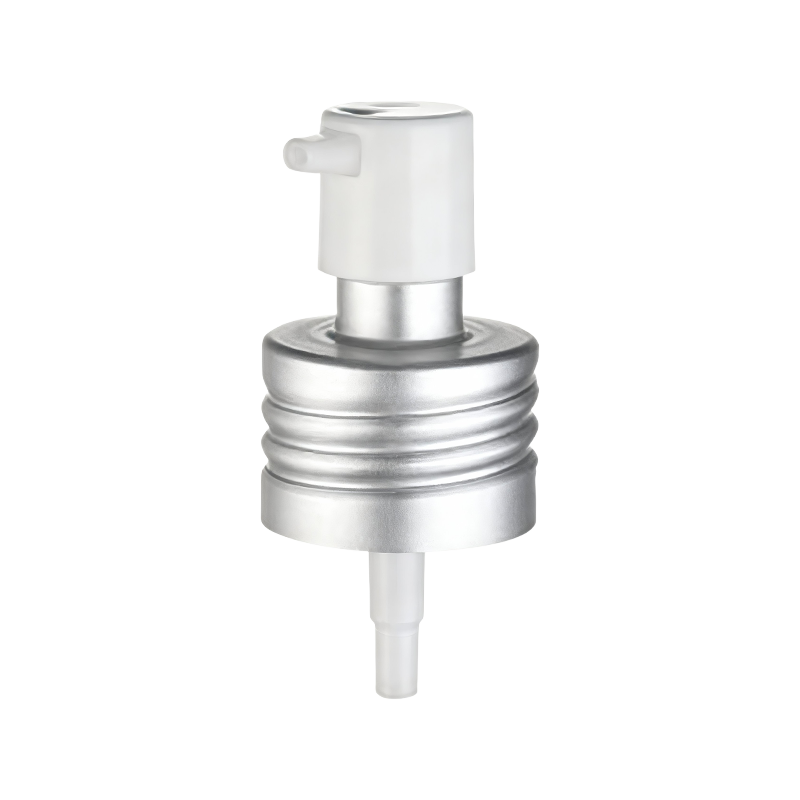
The Aluminium Collar Glass Bottle Treatment Pump, model GY-801A3, is designed to meet these requirements. Developed for glass bottles and compatible with several standard neck finishes, this treatment pump combines a controlled 0.12 ml dosage with an anodized aluminum collar, a customizable dip tube, and thread options suitable for different bottle neck sizes. The result is a refined dispensing solution for personal care, cosmetic, pharmaceutical, and other liquid applications.
Unlike a basic plastic pump that may be selected only for its low unit cost, this treatment pump is intended for applications where precision, compatibility, durability, and appearance all matter. Its aluminum collar creates a more premium visual impression, while the pump mechanism supports hygienic and controlled dispensing. Customizable components also help packaging developers adapt the closure to different bottle dimensions and filling requirements.
This article examines the product’s construction, performance advantages, application suitability, customization options, and the manufacturing capabilities behind it. It also explains how GreenYard Tools Co., Ltd. supports the production of spray and pump packaging through mold design, injection molding, automated assembly, quality inspection, and high-volume manufacturing.
Aluminium Collar Glass Bottle Treatment Pump
1. Product Overview
The GY-801A3 is an aluminium collar glass bottle treatment pump intended for liquid products that require measured dispensing. Its primary dosage is 0.12 ml per actuation, making it suitable for formulations where users need a small and repeatable amount rather than a large flow of liquid.
The pump is available in 18-410, 20-410, 24-410, and 28-410 size options. These sizes refer to the neck finish and thread configuration used to connect the pump to a compatible bottle. By providing multiple options, the product can be matched with a broad range of glass containers instead of being limited to one bottle format.
The collar is made from anodized aluminum. Anodizing provides a treated surface with a clean appearance and improved resistance to everyday wear and corrosion. In a premium cosmetic or pharmaceutical package, the collar can create a stronger visual connection between the bottle and the dispensing system than a conventional all-plastic closure.
The dip tube length is customizable. This is important because bottles with different capacities and shoulder shapes require different tube dimensions. A properly selected tube should reach the usable portion of the formulation without being unnecessarily long or creating problems during assembly.
The pump is designed for facial essence, pharmacy-related liquids, and similar formulations. Depending on compatibility testing, it may also be considered for serums, skin treatments, liquid concentrates, scalp products, and other low-to-medium viscosity products that benefit from controlled application.
Key Specifications
Product model |
GY-801A3 |
Product type |
Aluminium collar glass bottle treatment pump |
Size options |
18-410, 20-410, 24-410, and 28-410 |
Nominal dosage |
0.12 ml per actuation |
Closure material |
Anodized aluminum collar with pump components |
Dip tube |
Customizable length |
Recommended applications |
Facial essence, pharmacy-related liquids, cosmetic treatments, and similar liquid formulations |
Bottle compatibility |
Glass bottles with a matching neck finish and thread |
Specification matching is a key part of packaging development. The pump should be evaluated together with the selected bottle, formulation, filling line, and closing equipment. The listed specifications provide a starting point for selection, while final compatibility should be confirmed through samples and practical testing.
2. Why a Treatment Pump Is Suitable for Premium Liquid Products
Liquid treatments are often used in small quantities. A facial essence, pharmaceutical solution, or concentrated cosmetic product may require only a fraction of a milliliter per application. A treatment pump makes it easier for the consumer to dispense a repeatable amount without pouring, touching the product directly, or relying on an imprecise drop from an open bottle.
The 0.12 ml dosage of the GY-801A3 supports measured application. With a consistent stroke and a properly matched formulation, each actuation is intended to release a controlled quantity. This helps users develop a predictable application routine and can make product consumption easier to understand.
Controlled dispensing can also help reduce unnecessary exposure of the product to the surrounding environment. When the bottle is opened only through the pump mechanism, the contents are less likely to be spilled or contacted directly by the user. This is particularly useful for products packaged in glass bottles and marketed as premium or hygienic treatments.
The pump format also supports a clean user experience. Instead of removing a cap and pouring liquid into the hand, the user can press the actuator and apply the product directly to the palm, a cosmetic tool, or another intended surface. This simple action contributes to convenience while maintaining the refined feel expected from higher-value packaging.
Consistent Application
A measured pump is especially helpful when the formula is concentrated or when the product instructions recommend a specific quantity. Although the exact quantity delivered can be influenced by the formula, temperature, pump condition, and operating method, a correctly developed pump gives the product developer a practical way to establish a repeatable dispensing system.
Reduced Product Handling
Open-mouth bottles and removable caps can increase the number of times the contents are exposed during use. A pump creates a more controlled interface between the formula and the consumer. It can also reduce the likelihood of users pouring more product than needed, which may improve the perceived value of the formulation.
Premium Presentation
Glass bottles are frequently selected for premium skincare, treatment, fragrance, and pharmaceutical-style packaging because they provide weight, clarity, and a stable visual platform for decoration. The anodized aluminum collar complements these qualities. It can make the closure look more substantial than a standard plastic collar and can support a coordinated package design.
3. The Advantage of the Anodized Aluminum Collar
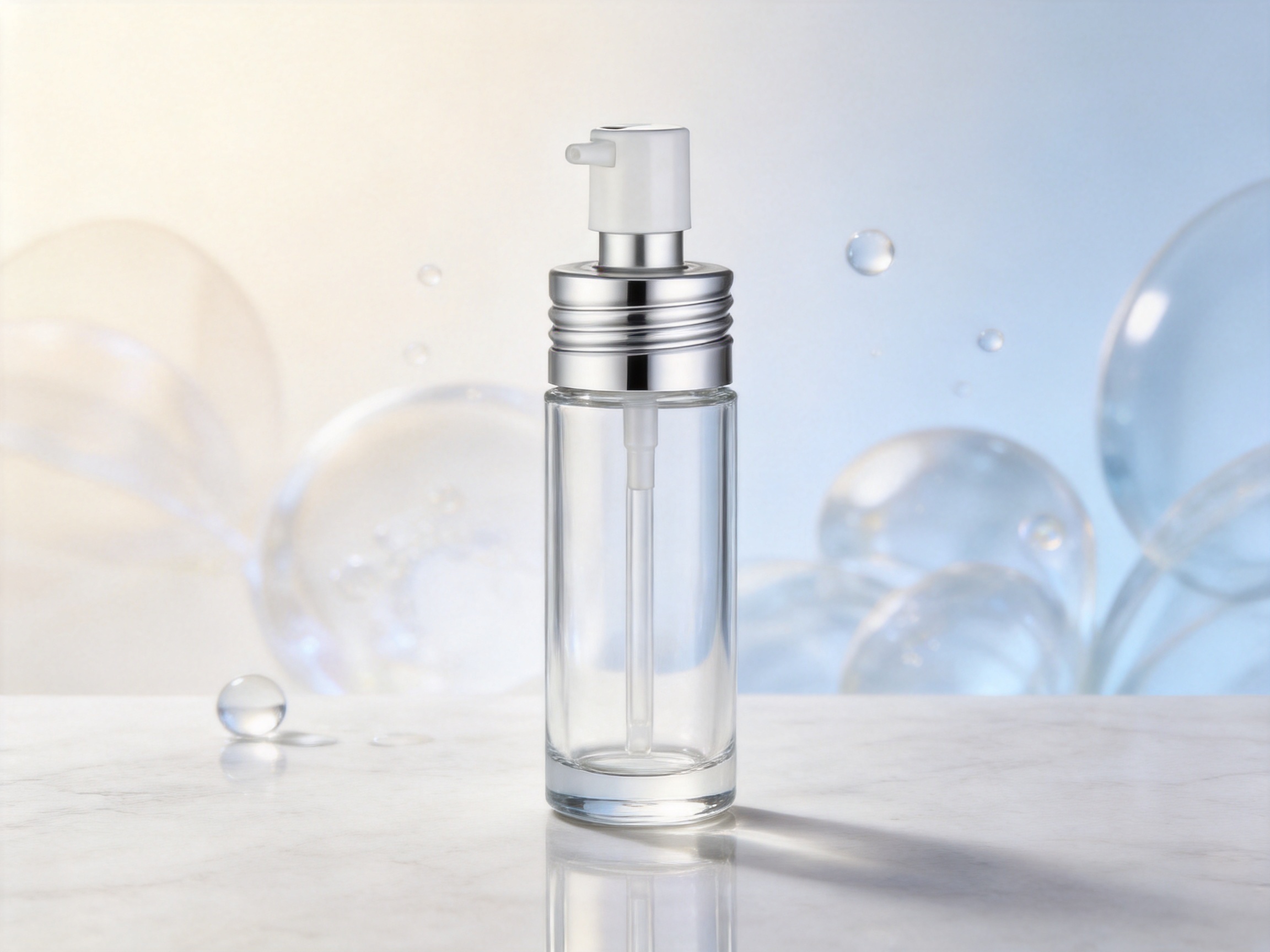
The collar is the visible component that surrounds the pump assembly where it meets the bottle. In the GY-801A3, this collar is made from anodized aluminum rather than being presented as a basic unmodified plastic component. That material choice offers both aesthetic and functional benefits.
Anodized aluminum has a refined metallic appearance that is well suited to skincare, cosmetic, and pharmaceutical-style packaging. It can be incorporated into a minimalist package, a premium clinical design, or a contemporary glass bottle presentation. Depending on the selected finish and decoration process, the collar can support a variety of visual directions.
The anodized surface is also designed to offer improved resistance to everyday surface wear and corrosion compared with untreated aluminum. This contributes to a more durable appearance during storage, distribution, retail display, and regular consumer use. The collar remains an important visible part of the package, so maintaining its appearance can influence perceived product quality.
Compared with a conventional plastic collar, aluminum can provide a stronger sense of structure and material value. This is a useful advantage when the bottle and formulation are positioned above the mass-market segment. The collar can help communicate that the dispensing system has been selected as part of the complete package rather than added as a purely functional afterthought.
Material selection should always consider the product formula, filling process, storage conditions, and intended decoration. The anodized aluminum collar is a strong option for premium applications, but package developers should perform compatibility and appearance testing before commercial production.
Visual Coordination with Glass
Glass and aluminum create a balanced combination of transparency, weight, and metallic detail. The glass bottle provides a clear view of the product or a solid premium body, while the aluminum collar adds a defined transition between the container and the pump. This combination is particularly suitable for facial essence and treatment products that rely on a sophisticated shelf presence.
Perceived Quality at the Point of Use
Consumers notice the parts of a package that they touch repeatedly. The collar, actuator, and bottle together form the daily dispensing experience. A carefully finished aluminum collar can reinforce the impression that the product is reliable, thoughtfully designed, and appropriate for a specialized routine.
4. Neck Finish Options and Bottle Compatibility
The GY-801A3 is offered in 18-410, 20-410, 24-410, and 28-410 configurations. These options enable packaging teams to select a pump that corresponds to the neck finish of the chosen glass bottle. Selecting the correct finish is essential for secure attachment, proper sealing, efficient assembly, and consistent appearance.
A thread is not merely a dimensional detail. It determines how the closure engages with the bottle and how the pump remains secured during use. If the thread is not correctly matched, the package may be difficult to assemble, may not seal properly, or may create an uneven visual relationship between the collar and the bottle.
The product information indicates that the thread can be customized to match different bottle neck sizes. This gives developers greater flexibility when working with existing bottle designs or creating a new package. Instead of changing the entire container to fit a fixed pump, the closure can potentially be adapted to the selected bottle specification.
Customization does not eliminate the need for engineering validation. The bottle neck dimensions, thread profile, sealing surface, gasket arrangement, torque requirements, and filling line settings should all be reviewed. Sample testing can confirm whether the assembled package performs correctly under expected transportation and usage conditions.
18-410 Size
The 18-410 option is suitable for smaller-neck packaging concepts where a compact closure is preferred. It may be considered for slim glass bottles, travel-oriented designs, or products where a narrow visual proportion is important.
20-410 Size
The 20-410 option provides another compact format for treatment and personal care bottles. It can support a balance between a relatively narrow bottle opening and the need for a practical pump assembly.
24-410 Size
The 24-410 option is a versatile choice for many medium-format liquid packages. It may be useful when the package requires a slightly broader closure for structural, visual, or filling considerations.
28-410 Size
The 28-410 option is appropriate when a larger neck finish is required. A larger opening may be selected for particular bottle designs, filling requirements, formula handling considerations, or a more substantial package appearance.
The suitability of each size depends on the bottle and product system. Packaging buyers should provide the bottle neck drawing or physical sample when requesting a final pump recommendation. This allows the closure supplier to verify the connection rather than relying only on a nominal size description.
5. Customizable Dip Tube Length
The dip tube connects the pump mechanism to the liquid inside the bottle. Its length affects how effectively the pump can access the formula throughout the product’s usable life. Because bottle heights and internal shapes vary, a standard tube length may not be ideal for every project.
The GY-801A3 offers a customized tube length. This is a practical advantage for brands using multiple bottle capacities or non-standard glass designs. The tube can be specified according to the bottle height, shoulder geometry, bottom profile, and filling level.
A tube that is too short may leave a significant amount of product in the bottle. A tube that is too long may bend excessively, press against the bottom, or interfere with efficient liquid intake. Customization helps packaging engineers select a dimension that supports better evacuation and a more reliable user experience.
Tube selection should also account for the viscosity and flow behavior of the formulation. A thin essence may behave differently from a thicker treatment liquid. The complete pump system should be tested with the actual formula, including priming, actuation force, dosage consistency, recovery, and end-of-pack performance.
Benefits for Different Bottle Shapes
Some glass bottles have flat internal bases, while others have curved or contoured bottoms. A customized tube helps accommodate these differences. It can be adjusted to approach the lowest practical point without becoming trapped or obstructed.
Support for Multiple Capacities
Brands often develop a product family with several sizes, such as a standard retail bottle and a smaller trial or travel bottle. The same pump design may be used across these formats while the tube length is adapted to each container. This can create a consistent family appearance without forcing every bottle to use identical internal dimensions.
Improved Development Efficiency
When the closure supplier can customize the tube, the packaging development process may involve fewer compromises. The bottle, pump, and formula can be evaluated as a coordinated system. This approach is more effective than selecting a closure first and attempting to redesign the bottle around an unsuitable tube.
6. Product Applications
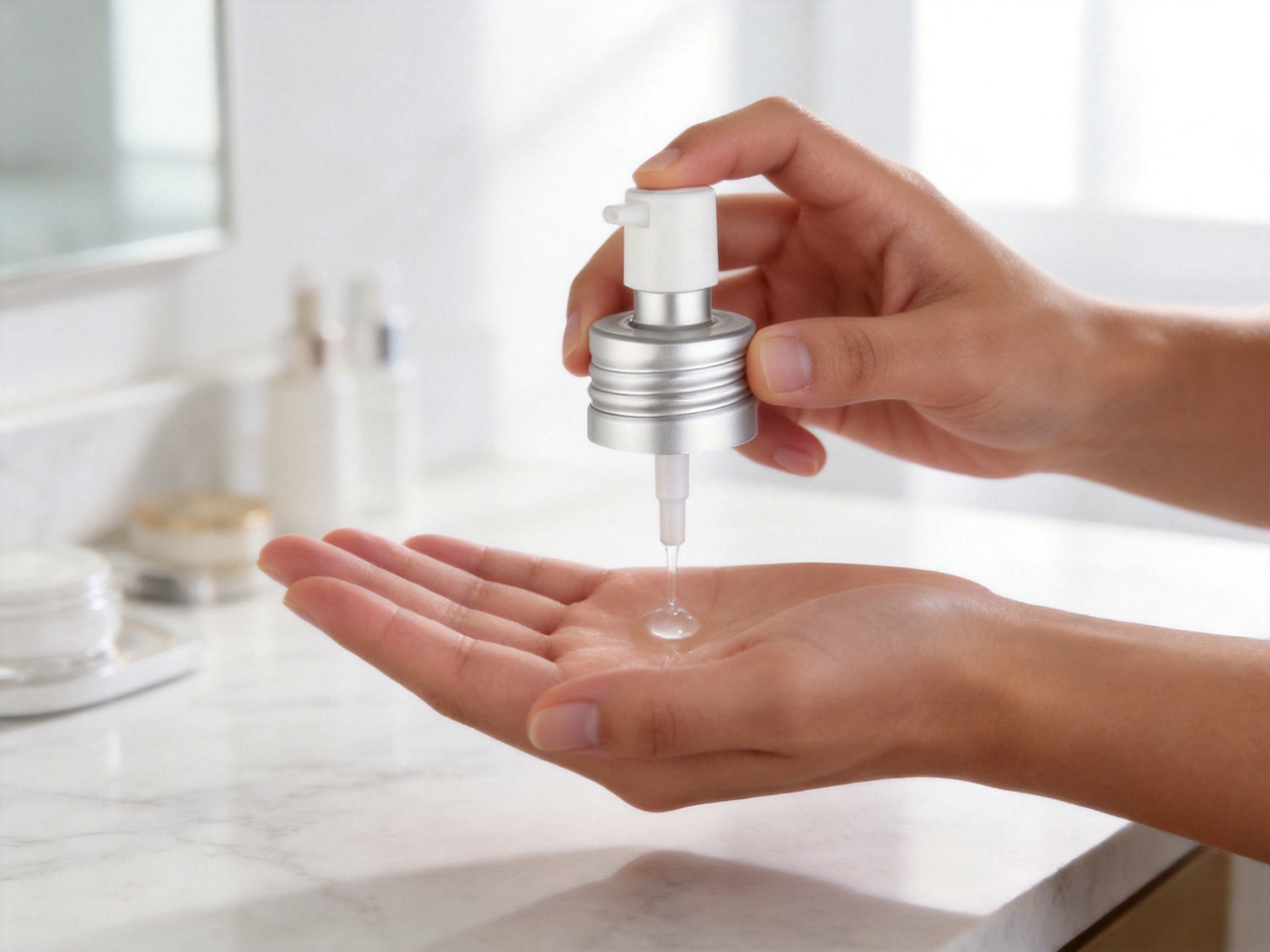
The GY-801A3 is described for facial essence, pharmacy-related products, and other liquid formulations. Its controlled dosage and premium collar make it particularly relevant to products that require careful presentation and repeatable application.
Facial Essences
Facial essences are often applied in small quantities after cleansing and before other skincare products. A 0.12 ml treatment pump can help users dispense a measured amount without tipping the bottle or placing fingers near the formula. The combination of a glass container and aluminum collar can support a high-end skincare appearance.
Serums and Concentrated Treatments
Some serums and treatment liquids are designed to be used sparingly. A pump can help control application and reduce waste associated with over-pouring. Formula compatibility must be verified, particularly for products containing solvents, oils, active ingredients, or materials that may interact with packaging components.
Pharmacy and Health-Related Liquids
The product information identifies pharmacy as one possible usage area. In such applications, dose consistency, secure closure, clean handling, and material suitability are especially important. The final package should be evaluated according to the applicable product classification, regulatory requirements, stability expectations, and filling standards.
Professional and Salon Treatments
Professional treatment products may benefit from a pump because operators can dispense the product without repeatedly opening a wide container. The measured output can support consistent service routines and reduce handling during busy working conditions.
Premium Liquid Cosmetic Packaging
The anodized aluminum collar provides a visual upgrade for liquid cosmetics that need a more elevated appearance. It can be paired with clear, frosted, colored, or opaque glass bottles, depending on the product’s light-protection and branding requirements.
Not every formulation is automatically suitable for this pump. Very thick creams, particles, highly volatile liquids, or formulas with unusual chemical properties may require another pump design. A product test using the final formula is the most reliable way to establish suitability.
7. Performance Advantages over Basic Alternative Closures
Packaging decisions are often made by comparing a treatment pump with a screw cap, dropper, or standard plastic lotion pump. Each format has a place, but the GY-801A3 offers specific advantages when the project calls for measured dispensing and a premium glass-bottle presentation.
Compared with a Screw Cap
A screw cap requires the user to remove the closure and pour or manually apply the product. This can create more opportunities for spills and over-dispensing. A treatment pump provides a direct dispensing action and can remain attached to the bottle throughout use.
The pump also creates a more convenient routine for products used daily. Users can press the actuator with one hand, while a screw-cap package generally requires an additional opening and closing step.
Compared with a Dropper
A dropper can provide visual control over the amount of liquid, but the dose may vary with squeeze pressure, drop size, liquid viscosity, and the angle of application. The 0.12 ml pump format offers a more structured dispensing method for products where a repeatable stroke is preferred.
Dropper bulbs and pipettes can also require direct movement between the bottle and the user’s hand or face. A pump can provide a more contained dispensing interface, although the exact hygiene performance depends on the product design and consumer behavior.
Compared with an All-Plastic Pump
An all-plastic pump may provide an economical and lightweight solution. However, the aluminum collar of the GY-801A3 can give the package a more substantial and premium appearance. This may be valuable for luxury skincare, clinical beauty, boutique cosmetic, and high-value treatment products.
Compared with a Large-Dosage Lotion Pump
Many lotion pumps are designed to dispense a larger volume for body lotions, cleansers, and liquid soaps. A 0.12 ml treatment pump is better aligned with concentrated facial products and small-dose liquid treatments. The lower output helps avoid dispensing an excessive quantity when only a small application is needed.
Compared with a Trigger Sprayer
Trigger sprayers are designed for broader surfaces, household products, haircare applications, and products requiring a larger spray or stream. They are not generally the preferred format for a refined glass bottle containing a concentrated facial essence. The treatment pump offers a more controlled and targeted experience.
These advantages should be understood as application-specific rather than universal. The best closure depends on viscosity, dosage, package size, user expectations, formula chemistry, and production requirements. The GY-801A3 is strongest where precision, premium presentation, glass-bottle compatibility, and customization are priorities.
8. Manufacturing Capabilities Behind the Product
Reliable packaging depends on more than the visible design. A treatment pump contains multiple components that must be produced, assembled, and inspected with appropriate accuracy. GreenYard Tools Co., Ltd. is a China-based packaging manufacturer specializing in spray products and related packaging solutions.
The company has operated in this field for 16 years and produces perfume sprayers, pump heads, caps, bottles, and daily chemical packaging products. Its stated daily production capacity is one million units. This scale can be important for buyers that require stable supply, repeat orders, and coordinated production planning.
Mold Design
Mold design is a foundational capability for pump and packaging production. The mold influences dimensional stability, surface quality, component fit, cycle efficiency, and long-term production consistency. A dedicated design team can evaluate component geometry and develop tooling intended for the requirements of the selected packaging product.
For a treatment pump, mold design may involve the actuator, housing, internal plastic parts, and other components that must fit together accurately. Proper tooling helps support smooth assembly and reduces the risk of dimensional variation that could affect operation.
Injection Molding
Injection molding is widely used for producing the plastic components found in pump assemblies. The process requires suitable material selection, mold temperature control, injection parameters, cooling management, and part inspection. Consistent molding helps ensure that components have the intended shape and can be assembled into a functional mechanism.
Production control is particularly important for small pump components. Minor variation in a seal, housing, spring interface, or actuator connection may influence priming, actuation force, or leakage performance. Manufacturing experience allows the supplier to manage these details at scale.
Automated Assembly
Automated assembly can improve production consistency and output efficiency. Pump assemblies often involve multiple steps, including component feeding, insertion, fitting, crimping or closure preparation, and functional checks. Automation can help standardize these steps and reduce variation caused by manual handling.
Automation does not replace engineering judgment. The assembly system must be set up for the specific pump design, and operators and technicians must monitor the equipment. However, a well-developed automated process can support repeatable assembly across large production quantities.
Quality Inspection
Quality inspection is necessary to identify dimensional, cosmetic, and functional issues before shipment. Inspection may include visual checks, component measurements, assembly verification, leakage evaluation, and pump operation testing. The appropriate inspection plan should reflect the product’s intended application and customer requirements.
For premium treatment pumps, appearance is also significant. The aluminum collar should be examined for finish consistency, surface damage, color variation, and assembly alignment. A package can be mechanically functional yet unsuitable for a premium product if the visible finish does not meet expectations.

9. Quality and Reliability Considerations
A treatment pump should be evaluated as a complete packaging system rather than as an isolated component. The pump, bottle, formula, closure torque, filling process, storage conditions, and distribution environment all influence final performance.
Dosage Consistency
The nominal dosage is 0.12 ml per actuation. During development, the actual output should be measured over multiple actuations and across multiple samples. Testing should consider first-use priming, normal operation, repeated pumping, and the final portion of the product in the bottle.
Dosage may be influenced by formulation viscosity, temperature, internal component variation, pump speed, and the user’s pressing method. Testing with the actual formula under realistic conditions provides more meaningful data than testing with water alone.
Leakage Resistance
The closure must remain secure during storage, handling, transportation, and consumer use. Leakage testing can include upright and inverted storage, vibration, pressure changes, temperature exposure, and transportation simulation where appropriate. The test protocol should be based on the product’s distribution route and package configuration.
Priming and Recovery
Some pump systems require several actuations before liquid is delivered, particularly after filling or extended storage. Development teams should assess how quickly the pump primes and whether it recovers correctly after each actuation. A smooth and predictable experience is important for premium products.
Formula Compatibility
Cosmetic and pharmaceutical formulations can contain alcohols, oils, surfactants, acids, active ingredients, fragrances, or other substances that interact differently with packaging materials. Compatibility testing should examine changes in color, odor, viscosity, leakage, component deformation, and pump performance over time.
Closure Security
The selected thread and closure interface should be checked for engagement, torque, sealing, and resistance to loosening. The exact requirements depend on the bottle and assembly process. Custom thread development may be used when a standard fit does not provide the necessary connection to a particular glass bottle.
Appearance Retention
The anodized aluminum collar should be evaluated after handling and environmental exposure. Tests may include rubbing, contact with formula residue, humidity, temperature changes, and packaging interaction. These evaluations help confirm that the visible closure remains consistent during the expected product life.
10. Design Flexibility for Brand and Packaging Developers
Packaging development frequently involves more than selecting a stock component. A brand may have a specific glass bottle, a target shelf image, a defined dosage, or a family of related products. The GY-801A3 provides several points of flexibility that can support these requirements.
The range of neck finish options allows the pump to be considered for different bottle openings. The customizable thread can support projects that require a closer match to a particular glass bottle neck. The adjustable tube length can accommodate multiple bottle heights and internal shapes.
This flexibility can help reduce the need for unnecessary package compromises. For example, a designer may prefer a certain bottle silhouette for visual reasons, while the production team needs a particular filling capacity and the product team requires a small dose. A customizable pump can help bring these requirements together during development.
The aluminum collar also provides a clear design element. It can be coordinated with the color, decoration, and material choices used elsewhere in the package. A silver-toned metallic appearance may support a clinical concept, while a colored or specially finished collar may contribute to a more distinctive cosmetic identity if the selected production process allows it.
Customization should be discussed early. Buyers should communicate bottle drawings, target dosage, formula information, expected order quantity, decoration needs, tube length, and intended market. Early technical communication helps reduce later changes and supports more efficient sampling.
Packaging Family Development
A product line may include a facial essence, serum, treatment concentrate, and pharmacy-style liquid. Using a related pump design across the range can create visual consistency. Different size options and tube lengths may allow the same basic closure concept to work with several bottles.
Premium and Clinical Positioning
The glass-and-aluminum combination can be adapted to different market positions. It may appear luxurious when paired with decorative glass and refined labeling, or precise and professional when paired with a simple clinical bottle. The pump’s measured dosage reinforces both directions by emphasizing controlled use.
11. Efficient Sourcing from an Experienced Packaging Manufacturer
Choosing a supplier for treatment pumps involves evaluating more than a product photograph. Buyers should consider manufacturing experience, tooling capabilities, quality systems, customization support, production capacity, communication, and the supplier’s ability to provide matching packaging components.
GreenYard Tools Co., Ltd. specializes in spray product manufacturing and produces a broader range of packaging components, including perfume sprayers, pump heads, caps, and bottles. This product range can be useful for customers that want to coordinate multiple components through one packaging partner.
The company’s capabilities in mold design, injection molding, automated assembly, and quality inspection provide a production foundation for pump packaging. Its reported capacity of one million units per day indicates the ability to support substantial volume requirements, subject to product specifications, scheduling, tooling availability, and quality approval.
An experienced manufacturer can also help identify practical issues during product development. These may include bottle neck matching, dip tube selection, pump priming, assembly settings, material compatibility, and packaging protection during shipment. Early collaboration is particularly valuable when a project uses customized threads or non-standard bottle dimensions.
Development Process
A typical development process begins with a review of the product requirements. The buyer provides information about the formula, bottle, dosage, closure size, tube length, surface finish, and expected quantity. The supplier then recommends a suitable configuration or confirms the requested design.
Samples are evaluated with the selected bottle and, when possible, with the actual formula. Testing can include operation, dosage, leakage, appearance, and compatibility. Any necessary adjustments are made before the final specification is approved.
After approval, production tooling and assembly parameters are prepared. Quality requirements are documented, and production samples may be checked before full-scale manufacturing. This staged process helps reduce the possibility of discovering fit or performance problems after mass production begins.
12. Sustainability and Material Efficiency Considerations
Packaging sustainability depends on the complete package, including the bottle, pump, collar, tube, label, decoration, shipping materials, and end-of-life conditions. The GY-801A3 should therefore be evaluated as part of a broader packaging strategy.
Glass is valued in many markets for its premium appearance and material characteristics. Aluminum is also a widely used packaging material with established recycling pathways in many regions. However, the actual environmental performance of a package depends on local collection systems, material separation, transport distance, manufacturing energy, and consumer behavior.
Controlled dispensing may help reduce product waste by allowing users to apply a smaller and more repeatable quantity. This is particularly relevant for concentrated treatments where excessive application can lead to unnecessary consumption. Better product utilization can be considered alongside material and logistics decisions.
Packaging teams should also evaluate the number of materials in the complete closure and whether components can be separated at the end of use. Design decisions should balance recyclability goals with the need for safe sealing, formula protection, reliable operation, and an attractive user experience.
13. How to Select the Correct Configuration
Selecting the correct version of the treatment pump should begin with the bottle rather than the pump alone. Confirm the glass bottle neck finish, thread dimensions, sealing surface, bottle height, internal shape, and intended filling volume.
Next, review the formula. Important factors include viscosity, density, surface tension, solvent content, oil content, active ingredients, fragrance, pH, and sensitivity to oxygen or light. These properties can affect pump output and material compatibility.
The desired dosage should also be confirmed. The GY-801A3 is specified at 0.12 ml, but the product developer should verify whether this quantity suits the application instructions and product concentration. If the intended dose differs substantially, another pump model or a customized development may be more appropriate.
Tube length should be selected based on the bottle’s internal dimensions. Buyers should avoid estimating this measurement only from the external bottle height. The shoulder, base, bottom thickness, and filling level all influence the appropriate tube specification.
Finally, decide on appearance and decoration requirements. The aluminum collar should be reviewed alongside the bottle color, label, actuator design, and secondary packaging. Sample approval should include both functional and visual evaluation.
Selection factor |
What to confirm |
Why it matters |
Neck finish |
18-410, 20-410, 24-410, or 28-410 |
Ensures proper thread engagement and closure fit |
Dosage |
Target output and application instructions |
Supports controlled and repeatable use |
Tube length |
Bottle height, shoulder, base, and fill level |
Improves liquid access and product evacuation |
Formula |
Viscosity, ingredients, pH, and solvent content |
Supports compatibility and reliable operation |
Appearance |
Aluminum finish, bottle design, and decoration |
Maintains a cohesive premium package image |
Production needs |
Quantity, filling equipment, and delivery schedule |
Supports efficient manufacturing and supply planning |
14. Recommended Testing Before Commercial Launch
Before approving the treatment pump for production, packaging teams should conduct a structured evaluation. Testing should be based on the product’s intended use, market requirements, and expected distribution conditions.
Dimensional Verification
Measure the bottle neck, closure, thread, dip tube, and key assembly points. Confirm that the components match the approved drawings or physical standards. Dimensional checks can identify problems before they become filling-line or consumer-use issues.
Functional Pump Testing
Operate multiple samples repeatedly to evaluate actuation force, priming, output, recovery, and general smoothness. Testing should include both the first pump and repeated pumps during normal use.
Formula Compatibility Testing
Fill the actual formulation into the intended bottle and store the assembled packages under representative conditions. Monitor the formula and pump for changes over time. Accelerated testing may be used as part of a broader stability program, but it should not replace appropriate real-time evaluation.
Transport Simulation
Evaluate the assembled package after vibration, impact, compression, temperature variation, and other conditions relevant to the supply chain. The aim is to confirm that the collar, pump, and bottle remain properly assembled and visually acceptable.
User Experience Review
Have representative users operate the package. Observe whether the pump is easy to press, whether the dosage is understandable, whether the bottle feels stable, and whether the closure creates a convenient and clean routine. Practical user feedback can reveal issues that laboratory measurements do not show.
15. Frequently Asked Questions
Q1: What is the dosage of the GY-801A3 treatment pump?
The specified dosage is 0.12 ml per actuation. The actual result should be confirmed with the final formulation, bottle, and operating conditions because viscosity, temperature, and user technique can affect performance.
Q2: Which bottle neck sizes are available?
The listed size options are 18-410, 20-410, 24-410, and 28-410. The correct option must match the neck finish of the selected glass bottle.
Q3: Is the collar made from aluminum?
Yes. The collar is made from anodized aluminum. This gives the closure a refined metallic appearance and supports resistance to everyday surface wear and corrosion.
Q4: Can the pump fit different glass bottles?
The pump is designed for compatibility with glass bottles using matching neck finishes. The thread can be customized for different bottle neck requirements, but the final fit should be confirmed using bottle drawings or samples.
Q5: Can the dip tube length be customized?
Yes. The tube length is customizable. It should be specified according to the bottle’s internal height, shoulder shape, base, and filling level.
Q6: What products are suitable for this pump?
The stated applications include facial essence and pharmacy-related liquids. It may also suit serums, concentrated treatments, and similar formulations after formula compatibility and performance testing.
Q7: Is this pump suitable for thick creams?
The product is intended for liquid formulations. Very thick creams, highly viscous products, or formulas containing particles may require a different pump design. Testing with the actual product is necessary before approval.
Q8: What is the advantage of using this pump with a glass bottle?
The pump provides measured dispensing while the glass bottle offers a premium, stable container platform. The anodized aluminum collar creates a refined transition between the bottle and the pump.
Q9: How does this pump compare with a dropper?
A dropper depends on squeeze pressure and drop formation, while the treatment pump is designed around a specified 0.12 ml output. The pump may provide a more repeatable dispensing routine for products that require controlled application.
Q10: Can the pump be used for pharmaceutical products?
The product information includes pharmacy as a possible usage area. Pharmaceutical applications require additional review of regulatory requirements, formulation compatibility, dose accuracy, stability, and manufacturing controls for the specific product.
Q11: Does the pump require a customized bottle?
Not necessarily. The available 18-410, 20-410, 24-410, and 28-410 options can match many standard bottle neck finishes. If the selected bottle has a special neck design, thread customization may be discussed.
Q12: What manufacturing capabilities does the supplier provide?
GreenYard Tools Co., Ltd. states that it has capabilities in mold design, injection molding, automated assembly, and quality inspection. The company produces spray and pump packaging and reports a daily production capacity of one million units.
Q13: Can the pump be ordered in large quantities?
The manufacturer’s reported production capacity indicates support for high-volume requirements. Buyers should confirm the specific model’s production schedule, minimum order quantity, tooling needs, quality requirements, and delivery plan.
Q14: What information should be provided when requesting a quotation?
Useful information includes the bottle neck finish, bottle drawing, target dosage, formula type, tube length, desired collar finish, estimated order quantity, decoration requirements, packaging method, and delivery destination.
Q15: Should samples be tested before mass production?
Yes. Samples should be tested with the actual bottle and, preferably, the actual formula. Functional, dimensional, appearance, leakage, compatibility, and transportation evaluations can help confirm that the final package is suitable.
16. Why This Treatment Pump Is a Strong Packaging Option
The GY-801A3 combines several features that are valuable for premium liquid packaging. Its 0.12 ml output supports measured use, while the four listed neck finish options provide practical compatibility choices. The anodized aluminum collar improves the visual and tactile character of the closure, and the customizable tube length supports different glass bottle dimensions.
Its strongest competitive advantage is the balance between precision and presentation. Some low-cost closures focus mainly on basic sealing, while some premium closures may provide appearance without sufficient configuration flexibility. This treatment pump is designed to address both sides of the package: it supports controlled dispensing and offers a material finish suited to high-value products.
The product is also supported by a manufacturer with experience in pump and spray packaging. GreenYard Tools Co., Ltd. combines mold design, injection molding, automated assembly, and quality inspection within its production capabilities. Its broad packaging range and stated high-volume capacity can support customers seeking a long-term packaging supply partner rather than a one-time component source.
For brands developing facial essences, pharmaceutical-style liquids, concentrated treatments, and other premium formulations, the pump can provide a practical foundation for a complete package. The final result depends on correct bottle matching, formula testing, tube specification, closure assembly, and quality approval, but the product offers the flexibility required to complete these steps effectively.
17. Conclusion
The Aluminium Collar Glass Bottle Treatment Pump is designed for liquid products that require more than a simple closure. With a nominal 0.12 ml dosage, multiple 410-series size options, a customizable thread, an anodized aluminum collar, and a customizable dip tube, the GY-801A3 is suitable for a wide range of premium glass-bottle applications.
Its measured dispensing action can support controlled facial essence and treatment application. Its aluminum collar can enhance the package’s perceived quality. Its compatibility options can simplify bottle selection, while tube customization can improve performance across different container sizes and shapes.
Manufacturing capability is equally important. GreenYard Tools Co., Ltd. brings experience in spray product manufacturing, mold design, injection molding, automated assembly, and quality inspection. With a reported daily production capacity of one million units and a product range covering pumps, sprayers, caps, and bottles, the company is positioned to support both customized development and volume production.
For the best results, buyers should evaluate the pump together with the actual glass bottle and formulation. Confirming thread fit, dosage, tube length, leakage resistance, formula compatibility, appearance retention, and transportation performance will help ensure a successful commercial package. When these factors are properly coordinated, the treatment pump can provide a reliable, refined, and user-friendly dispensing solution for modern personal care and pharmaceutical packaging.
References
1. Product specification sheet for Aluminium Collar Glass Bottle Treatment Pump, model GY-801A3.
2. Packaging development principles for liquid cosmetic and personal care products.
3. General engineering guidance for bottle neck finishes, threaded closures, and dip tube selection.
4. General quality-control practices for injection-molded packaging components and pump assemblies.
5. General formulation compatibility considerations for cosmetic and pharmaceutical packaging materials.
6. Manufacturer information supplied for GreenYard Tools Co., Ltd., including production capabilities and packaging product categories.
Product: Aluminium Collar Glass Bottle Treatment Pump

-
Crimp Pumps Demystified: Choosing the Right Type and Material for Every Cosmetic Formula
Walk into any cosmetic filling facility and you will find crimp pumps on everything from a delicate ...
-
Airless Bottles Uncovered: How to Protect Your Skincare and Perfect Every Pump
If you have ever opened a pump bottle of serum and found the last quarter of the product impossible ...
-
How the Treatment Cream Pump Enhances the Consumer Skincare Experience ?
A treatment cream pump does more than dispense product — it fundamentally shapes how consumers inte...
-
How Glass Airless Bottle Packaging Prevents Contamination and Boosts Shelf Life?
Glass airless bottle packaging prevents contamination and extends shelf life by completely eliminat...
Copyright © GreenYard Tools Co.,ltd. All Rights Reserved.
Personal Care Packaging Manufacturer Custom Perfume Sprayers Factory