
-
About Us
Why Choose Us?The company possesses advanced capabilities in mold design, injection molding, and automated assembly, supported by a professional quality inspection team to ensure product reliability. A dedicated design team continuously drives product innovation, providing customers with high-quality spray solutions.
 Coming From China, Marketing To The World.
 -
Products
-
News

 English
 Français
 русский
 Español
Press-and-Twist Child-Resistant Dropper for Pharmaceutical Packaging
Content
- 1 Product Overview
- 2 Controlled Dispensing for Liquid Products
- 3 Child-Resistant Press-and-Turn Design
- 4 Advantages Compared with Conventional Droppers
- 5 18-410 and 20-410 Compatibility
- 6 Bamboo Closure Appearance and Product Positioning
- 7 Pharmaceutical Packaging Applications
- 8 Engineering and Manufacturing Strengths
- 9 Benefits of Working with an Experienced Packaging Manufacturer
- 10 Packaging Development Considerations
- 11 Why the Product Is Suitable for Premium and Specialized Products
- 12 Quality, Reliability, and Supply Considerations
- 13 Environmental and Design Perspectives
- 14 Customization Possibilities
- 15 Frequently Asked Questions
- 15.1 What is the GY-901Y1 dropper designed for?
- 15.2 What sizes are available?
- 15.3 How does the child-resistant cap work?
- 15.4 Is the package completely childproof?
- 15.5 What is the closure material or appearance?
- 15.6 Can the dropper be used for accurate medical dosing?
- 15.7 Can it be used with any bottle?
- 15.8 What should be tested before mass production?
- 15.9 Does the manufacturer provide custom packaging solutions?
- 15.10 What manufacturing capabilities does the company have?
- 15.11 Is the product suitable for personal-care products?
- 15.12 How should buyers begin a project?
- 16 Conclusion
- 17 References
- 18 Product: Press Twist Open Plastic Dropper
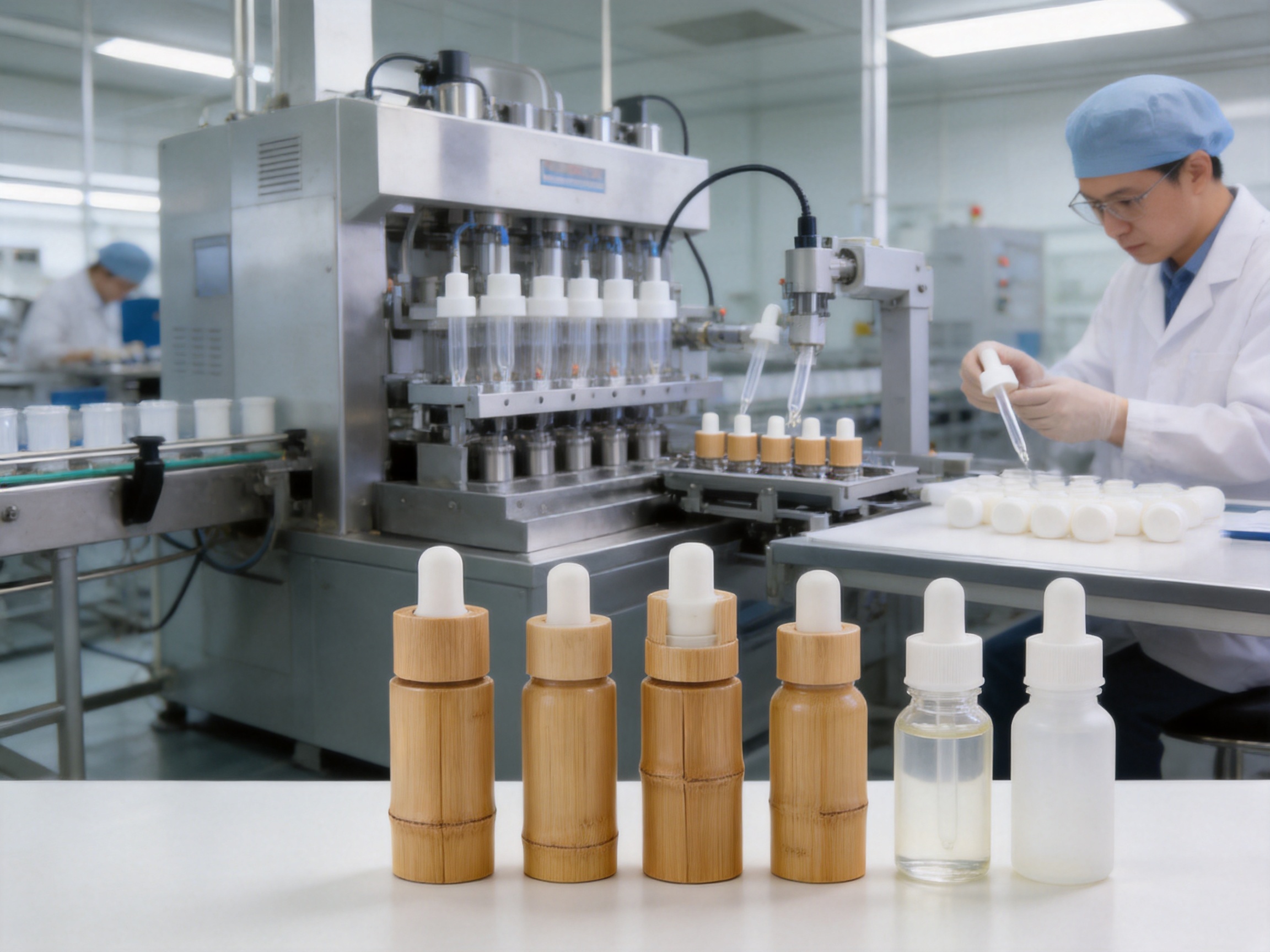
Reliable liquid dispensing is an essential requirement in pharmaceutical, healthcare, essential-oil, and specialty personal-care packaging. A bottle may contain a carefully formulated product, but the overall user experience and safety of that product depend heavily on the closure and dispensing system. The Press Twist Open Plastic Dropper, model GY-901Y1, is designed to provide controlled dispensing while adding an important layer of protection against accidental opening by children.
With available neck finishes of 18-410 and 20-410, the dropper can be matched with a range of compatible bottles used for pharmaceutical and liquid product packaging. Its press-and-turn child-resistant mechanism helps prevent young children from opening the package unintentionally, while its dropper format supports accurate application of liquid medications, treatments, essential oils, and other solutions.
The product combines practical functionality, a secure closure concept, flexible sizing, and an attractive bamboo closure design. These features make it a useful option for manufacturers seeking packaging that balances safety, dispensing precision, appearance, and production reliability.
Product Overview
The GY-901Y1 is a press-and-twist open plastic dropper developed primarily for pharmaceutical packaging. Unlike a conventional screw cap that can often be opened with a simple turning motion, this design requires the user to press down and turn the cap at the same time. This two-step opening action is intended to make accidental access more difficult for children while remaining manageable for responsible adult users.
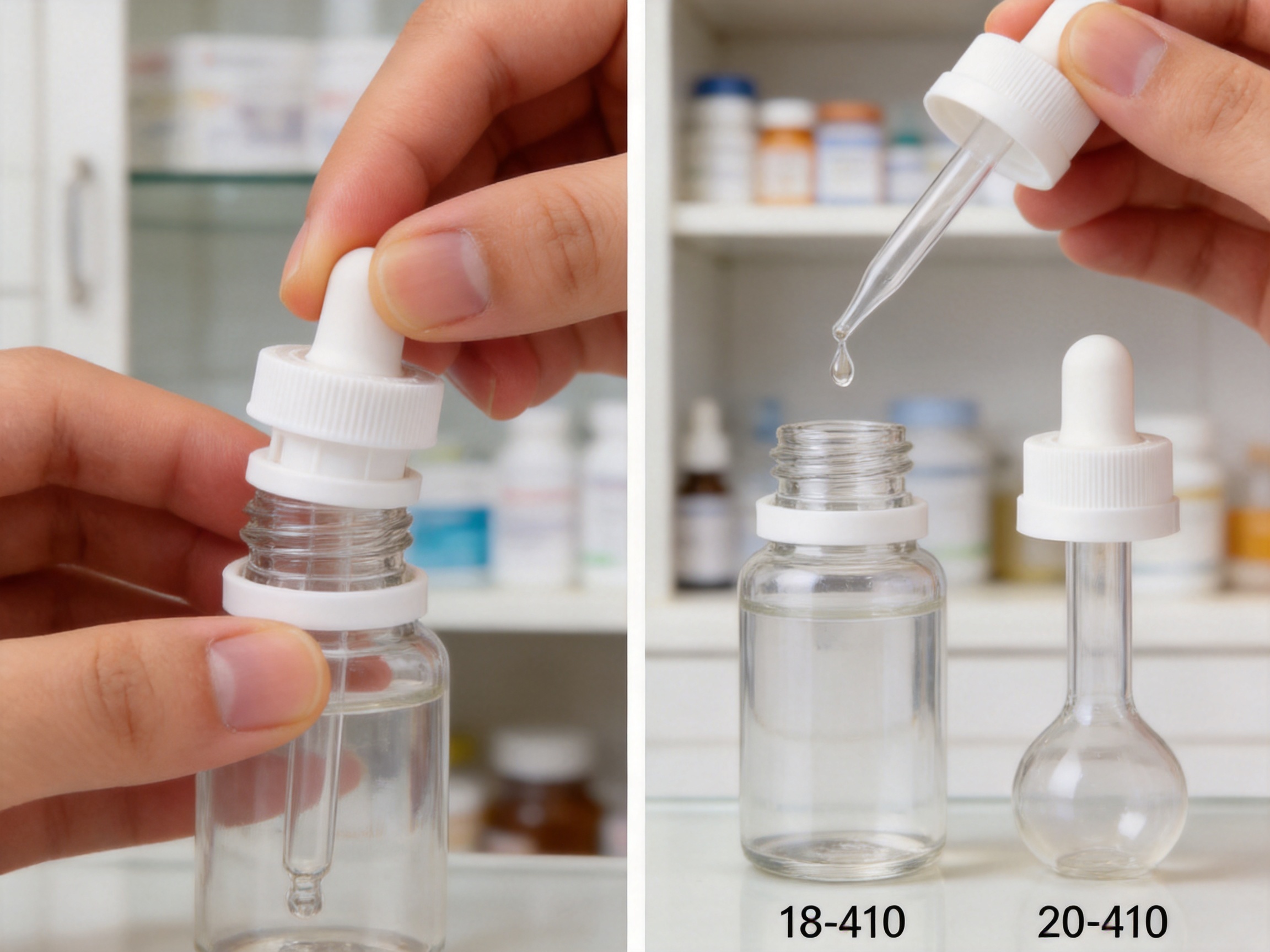
The dropper is available in two size options: 18-410 and 20-410. These designations refer to the bottle neck finish and help packaging developers select a suitable bottle and closure combination. Offering two neck sizes gives product manufacturers additional flexibility when developing packaging for different fill volumes, bottle shapes, and market requirements.
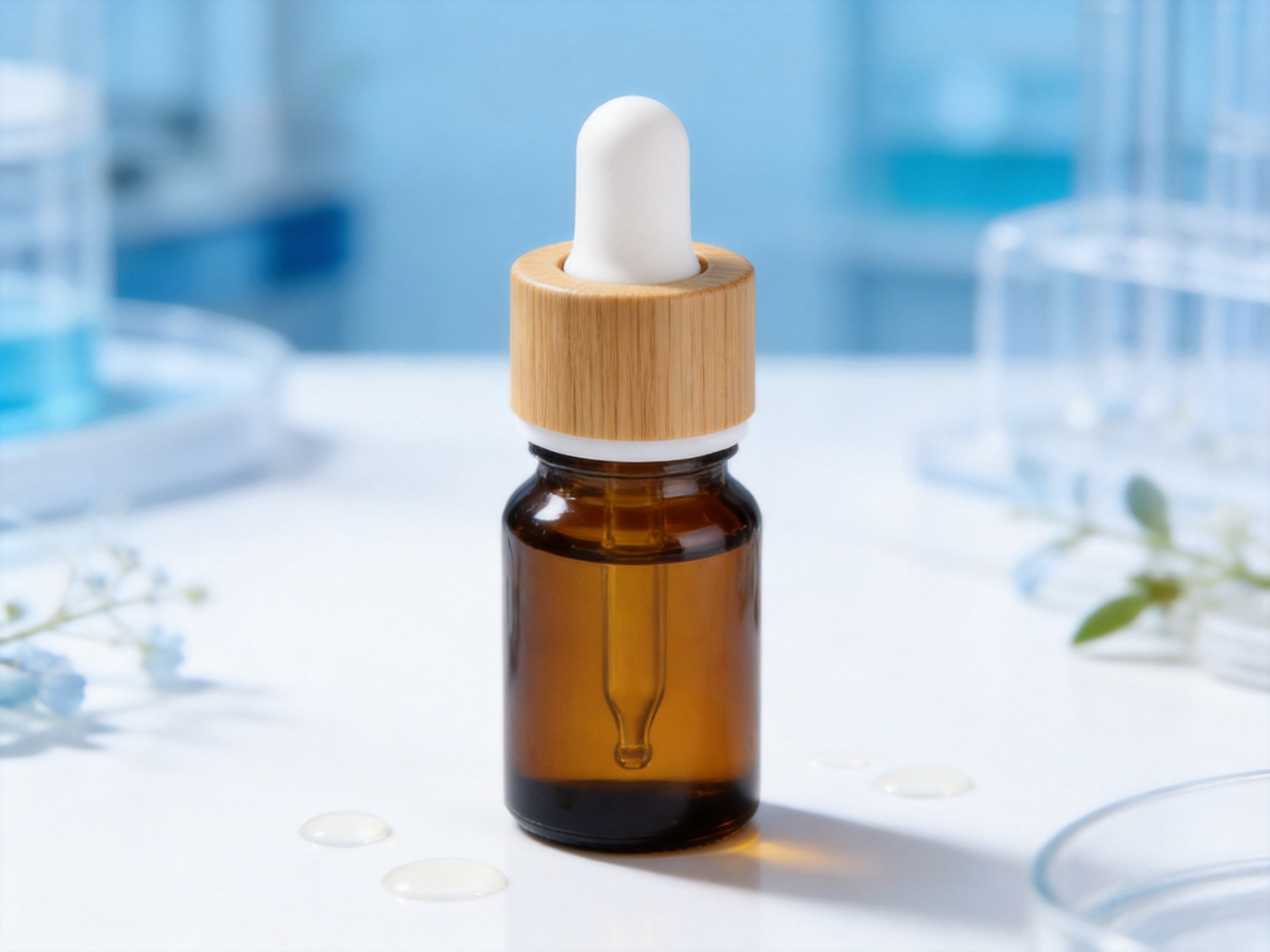
The closure is identified as bamboo in the product information. This natural material appearance can create a warmer, more environmentally conscious visual impression than a standard all-plastic closure. It can be particularly suitable for products positioned around natural ingredients, botanical formulations, wellness, premium pharmacy products, or sustainable design.
At the same time, the product remains a practical plastic dropper solution. The dropper format is intended to support controlled delivery of liquids, helping users dispense a product in small quantities rather than pouring an uncontrolled stream. This is valuable when the product must be applied carefully or measured in approximate drops.
The main product characteristics include:
• Product model: GY-901Y1.
• Product type: Press-and-twist open plastic dropper.
• Available neck finishes: 18-410 and 20-410.
• Closure style: Bamboo closure.
• Main application: Pharmaceutical packaging.
• Safety feature: Child-resistant press-and-turn cap.
• Dispensing purpose: Controlled delivery of liquid medications, treatments, essential oils, and similar liquid products.
Because the product combines a dropper with a child-resistant closure, it serves two important functions in one packaging component. It provides a way to dispense liquid and also helps reduce the possibility of accidental access. This combination may simplify packaging development compared with using a standard bottle cap together with a separate dispensing accessory.
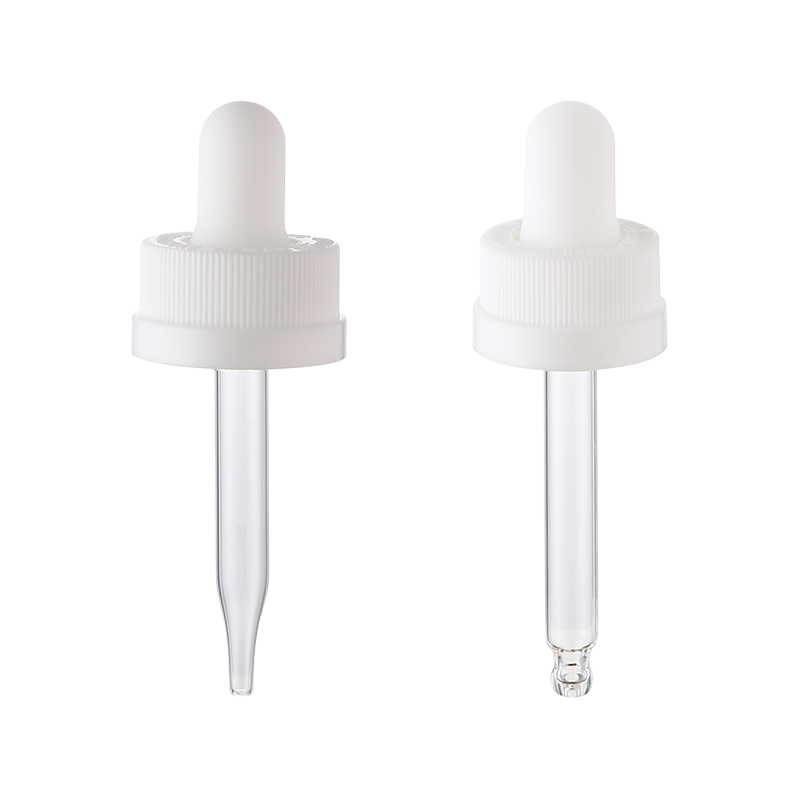
Press Twist Open Plastic Dropper
Controlled Dispensing for Liquid Products
Liquid pharmaceutical products often require more controlled handling than creams, tablets, or large-volume household liquids. Users may need to apply a small amount to the skin, administer a liquid treatment, measure a limited quantity, or dispense a formulation without contaminating the remaining contents. A dropper is well suited to these situations because it allows the user to transfer liquid in a more deliberate and gradual manner.
The GY-901Y1 dropper is designed for applications in which precise and convenient dispensing is important. The user can operate the dropper and release the liquid in small quantities according to the product instructions. This helps reduce unnecessary spills and supports a cleaner user experience.
In pharmaceutical packaging, the dispensing system should be easy to understand. A dropper gives the package a clear functional identity: it communicates that the liquid is intended to be dispensed gradually rather than poured freely. This can be useful for liquid treatments, topical preparations, concentrated solutions, botanical extracts, and other products that require careful application.
Controlled dispensing also supports product presentation. When a package delivers a small amount of liquid in a predictable way, consumers may perceive the product as more refined and easier to use. For premium or specialized formulations, this dispensing experience can become an important part of the product’s value.
However, a dropper should not be treated as a substitute for formal dosing validation. Actual dosage accuracy depends on the liquid’s viscosity, surface tension, temperature, bottle design, dropper geometry, filling level, user technique, and regulatory requirements. Manufacturers should conduct product-specific testing before making dosage claims. The GY-901Y1 is best understood as a controlled dispensing component that can support convenient liquid delivery when properly matched with the formulation and bottle.
Child-Resistant Press-and-Turn Design
One of the most important advantages of the GY-901Y1 is its child-resistant press-and-turn opening mechanism. The cap is designed to require two coordinated actions: downward pressure and rotation. This is more difficult for a young child to perform unintentionally than a simple pull-off or turn-only closure.
Child-resistant packaging is especially relevant for pharmaceutical products and household liquids that may present a safety risk if accessed without supervision. A bottle containing medication, concentrated treatment, or another active liquid should be designed with reasonable precautions against accidental opening. The press-and-turn function provides an additional barrier while preserving access for adults who understand how the closure operates.
The mechanism also offers a clear distinction from ordinary droppers. A conventional dropper may provide useful dispensing control but may not include a dedicated child-resistant opening feature. By integrating the safety function into the cap, this product can offer a more complete packaging solution for manufacturers that want dispensing and access control in the same component.
Child-resistant performance must always be evaluated according to the requirements of the destination market and the specific product package. The complete system includes the closure, bottle, thread finish, liner or sealing elements where applicable, and the instructions supplied to consumers. Packaging developers should arrange appropriate testing and certification before commercial release.
Even when a package includes a child-resistant feature, it should not be described as childproof. No closure can guarantee that a child will never open it. Safe storage, correct labeling, and responsible handling remain essential. The role of the GY-901Y1 is to make accidental opening more difficult and to provide an additional safety measure within the overall packaging system.
Advantages Compared with Conventional Droppers
Many standard droppers are designed primarily for dispensing and may use a simple screw-on cap. While such closures can be economical and familiar, they may not provide the same level of resistance to accidental opening. The GY-901Y1 is differentiated by its press-and-turn structure, which adds an intentional opening step.
Another advantage is the combination of functional safety and visual appeal. Some child-resistant closures have a strongly technical appearance that may not suit premium, natural, or wellness-oriented product positioning. The bamboo closure of this model offers a more distinctive appearance and may help manufacturers create packaging with a natural or refined visual identity.
The two available neck finishes also provide an advantage during package development. Instead of being limited to a single bottle opening, manufacturers can evaluate both 18-410 and 20-410 options according to bottle availability, fill volume, product presentation, and supply-chain requirements.
The dropper format can also be more user-friendly than a wide-mouth opening for low-volume liquid products. A standard cap may require users to pour the product onto a spoon, hand, cotton pad, or another surface. A dropper can direct the liquid more carefully and reduce the likelihood of excessive pouring.
Compared with a separate bottle cap and dispensing insert, an integrated dropper closure may help simplify assembly and improve the consistency of the final package. It can reduce the number of loose components that need to be handled during packaging production, although the exact assembly process will depend on the customer’s bottle, filling line, and packaging configuration.
The product’s main competitive advantages can therefore be summarized as follows:
• An integrated press-and-turn child-resistant opening function.
• Controlled liquid dispensing in a familiar dropper format.
• Two neck-finish options for greater bottle compatibility.
• A bamboo closure appearance suitable for natural and premium product concepts.
• Applicability to pharmaceutical and other liquid treatment products.
• Potentially simplified package development compared with separate dispensing and closure components.
• A balance between safety, appearance, and daily usability.
18-410 and 20-410 Compatibility
Neck-finish compatibility is a critical consideration when selecting a dropper. A closure is not suitable simply because its outside diameter appears similar to the bottle opening. The thread profile, neck dimensions, sealing interface, and closure height must all correspond correctly. The GY-901Y1 is offered in 18-410 and 20-410 configurations to support different compatible bottle designs.
The 18-410 option may be considered for smaller bottle formats and compact liquid packages, while the 20-410 option can support a somewhat larger neck presentation. Actual suitability depends on the bottle supplier’s specifications and the complete package design. Manufacturers should confirm technical drawings, thread details, sealing requirements, and sample fit before placing a production order.
Using the correct neck finish helps ensure that the dropper seats properly on the bottle and that the closure can be opened and closed as intended. It also supports a more consistent appearance around the bottle shoulder. A mismatch can lead to loose engagement, difficult operation, leakage, or damage to the threads.
For packaging engineers, the two size options make the product easier to evaluate across several bottle formats. A development team may test different bottle capacities, materials, shoulder shapes, and label areas while maintaining a related closure concept. This can support the creation of a product family with a consistent visual identity.
Before mass production, compatibility testing should include repeated opening and closing, torque evaluation, leakage checks, drop or transport testing where appropriate, and storage under relevant temperature conditions. If the bottle contains a sensitive pharmaceutical formulation, compatibility between the liquid, bottle, dropper, closure, and sealing components should also be assessed.
Bamboo Closure Appearance and Product Positioning
The bamboo closure is an important visual feature of the product. Natural-looking materials can help packaging communicate simplicity, wellness, craftsmanship, and environmental awareness. This can be especially useful for pharmaceutical products that contain botanical ingredients, herbal extracts, essential oils, or wellness-oriented treatments.
A bamboo closure may also create differentiation on a retail shelf or in an online product image. Many droppers use uniform white, black, or transparent plastic components. A natural closure can add texture and visual warmth, helping the product appear more distinctive without changing the basic dispensing function.
For premium packaging, the closure is often one of the first components consumers notice. A well-designed closure can make the bottle feel more complete and intentional. It can reinforce a brand’s desired positioning while retaining the practical benefits of a child-resistant dropper.
Material appearance should be considered alongside technical performance. Manufacturers should confirm the exact bamboo construction, surface treatment, color consistency, moisture resistance, and dimensional stability required for their application. If the packaging will be exposed to high humidity, frequent handling, or demanding transport conditions, appropriate testing should be performed.
The bamboo appearance does not automatically establish a product’s environmental credentials. A complete sustainability evaluation should consider material sourcing, manufacturing, coatings, component separability, transportation, and end-of-life handling. Nevertheless, the closure can contribute to a more natural design language and may support packaging concepts that aim to reduce an overly industrial visual impression.
Pharmaceutical Packaging Applications
The primary intended use of the GY-901Y1 is pharmaceutical packaging. Potential applications include liquid medications, topical treatments, concentrated solutions, herbal preparations, and other healthcare products that require controlled dispensing and additional access resistance.
The dropper can also be considered for selected personal-care and wellness products. Essential oils, facial treatments, scalp treatments, serum-like liquids, and concentrated botanical products may benefit from a dropper format. However, application suitability must be confirmed through product compatibility and performance testing.
For pharmaceutical applications, packaging decisions should address more than appearance. The closure must be compatible with the formulation, maintain its function throughout the product’s shelf life, and support the required sealing and protection performance. The bottle and closure should also be evaluated for interaction with the liquid, including potential absorption, permeation, odor transfer, discoloration, or changes in mechanical performance.
The user instructions should explain the press-and-turn operation clearly. A child-resistant cap is valuable only when consumers understand how to use it correctly. Instructions may be included on the label, carton, package insert, or other approved communication materials. The final wording should be developed according to the regulatory requirements of the market where the product will be sold.
For products intended for children, older adults, or users with limited hand strength, usability should be evaluated carefully. A closure must provide an appropriate balance between resistance to unintended opening and accessibility for the intended adult user. Testing with representative users may help identify whether the operating instructions and required force are suitable.
Engineering and Manufacturing Strengths
The performance of a packaging component depends greatly on the consistency of its manufacturing process. GreenYard Tools Co., Ltd. is described as a China-based packaging material manufacturer with 16 years of experience in spray and packaging product manufacturing. Its production capabilities include mold design, injection molding, automated assembly, and quality inspection.
These capabilities are relevant to the production of a press-and-twist dropper because the product requires coordinated dimensional accuracy across several functional areas. The cap, threads, dispensing component, and closure interface must work together. Small dimensional variations can affect opening force, thread engagement, fit, sealing, or the overall user experience.
Mold Design
Mold design is the foundation of repeatable plastic component production. A well-designed mold helps define the product’s external appearance and internal geometry while supporting efficient cycle times and stable part quality. For a child-resistant dropper, mold development must take into account the cap profile, thread structure, press mechanism, gripping surfaces, and assembly relationships.
Advanced mold design can also support smoother transitions, more consistent wall thickness, and reduced cosmetic defects. These details matter because a closure may be evaluated both as a technical component and as a visible part of the final package. A clean surface, consistent shape, and stable color can contribute to a more premium appearance.
The ability to manage mold design internally or through a dedicated technical team can shorten development communication and make it easier to modify a component for different bottle finishes or customer requirements. It also supports the development of packaging solutions that are not limited to standard catalog dimensions.
Injection Molding
Injection molding enables the efficient production of plastic packaging components in large quantities. The process involves melting a suitable polymer, injecting it into a mold cavity, allowing it to cool, and removing the formed part. Process control is important because temperature, pressure, cooling time, material drying, and cycle settings can influence the final dimensions and appearance.
For the GY-901Y1, injection-molded parts must maintain sufficient consistency to support repeated closure operation. The neck finish must engage correctly, and the press-and-turn mechanism must function smoothly across production batches. Consistency also helps reduce filling-line interruptions and minimizes the risk of rejected components during package assembly.
GreenYard’s stated production capacity of one million units per day indicates an infrastructure designed for high-volume packaging production. High output must be supported by appropriate process controls, material management, production scheduling, and inspection systems. For customers, this capacity may be valuable when planning larger orders or seeking a supplier able to support growth from initial sampling to commercial production.
Automated Assembly
Automated assembly can improve repeatability when a product contains multiple components that must be joined in a consistent orientation. It may help control insertion depth, alignment, closure placement, and operating consistency. Automation can also reduce variation associated with manual handling and improve production efficiency.
For a press-and-twist dropper, assembly quality is particularly important because the dispensing element and cap must work together. An incorrectly assembled component may cause poor dispensing, loose fit, difficult opening, or inconsistent appearance. Automated or semi-automated processes can help create a more stable production environment, especially when combined with in-line checks.
Automation does not eliminate the need for human expertise. Experienced technicians and quality personnel remain important for equipment setup, process verification, troubleshooting, sampling, and continuous improvement. The strongest manufacturing systems combine automated equipment with disciplined technical management.
Quality Inspection
Quality inspection helps ensure that products meet defined requirements before shipment. Inspection may include visual checks, dimensional measurement, thread-fit evaluation, closure operation, component presence, and packaging appearance. The exact inspection plan should be matched to the customer’s specifications and the intended application.
For pharmaceutical packaging, quality expectations are typically demanding because the package supports product safety, usability, and market compliance. A consistent inspection system can help identify defects such as flash, short shots, deformation, scratches, color variation, contamination, incomplete assembly, or damaged threads.
Functional testing is also important. The press-and-turn feature should be checked for correct operation, and the dropper should be evaluated for appropriate fit and dispensing behavior. Where required, customers should request relevant test reports, specifications, samples, and quality documentation during the qualification process.
Benefits of Working with an Experienced Packaging Manufacturer
Choosing a packaging supplier involves more than selecting a component from a catalog. The supplier’s engineering capability, production resources, communication process, and quality system can affect the success of the final product. An experienced manufacturer can help customers identify suitable sizes, coordinate bottle compatibility, and resolve technical issues during development.
GreenYard Tools Co., Ltd. has a stated focus on perfume sprayers, pump heads, caps, bottles, and daily chemical packaging solutions. This product knowledge across multiple packaging categories may provide useful insight when a customer needs a complete package rather than a single closure.
The company’s dedicated design team is described as supporting product innovation and packaging development. Design support can be valuable when customers need a custom appearance, a modified closure, a coordinated bottle-and-cap system, or packaging adapted to a particular market segment.
A supplier with mold, injection molding, assembly, and inspection capabilities can also provide more direct control over the development process. When these activities are coordinated within one manufacturing organization, communication between design, production, and quality teams may be more efficient.
For international customers, production capacity is another consideration. The reported daily capacity of one million units may help support regular supply for global markets. Customers should still confirm lead times, minimum order quantities, material availability, packaging methods, export documentation, and production scheduling before entering a commercial agreement.
Packaging Development Considerations
When developing a package around the GY-901Y1, manufacturers should begin by defining the liquid product and its use conditions. Important information includes viscosity, chemical composition, filling temperature, storage temperature, expected shelf life, dispensing volume, intended user group, and regulatory classification.
The bottle should be selected to match the chosen 18-410 or 20-410 neck finish. The bottle material may be glass, PET, or another compatible substrate, depending on the product requirements. The bottle shoulder and neck should provide adequate support for the closure and should be evaluated for stress, leakage, and repeated opening.
Filling-line compatibility is also important. The dropper and closure may need to be supplied in a particular orientation or packaging format for automatic assembly. Customers should discuss filling equipment, capping equipment, application torque, line speed, and inspection procedures with the supplier at an early stage.
Label and carton design should not interfere with closure operation. Users need enough space to grip the cap and apply the press-and-turn movement. Product instructions should be visible and understandable while remaining consistent with regulatory requirements.
Samples should be tested under realistic conditions. This may include storage at different temperatures, repeated opening and closing, transport simulation, leakage testing, compatibility testing with the formulation, and evaluation after exposure to oils, alcohols, or other relevant substances. If the package is intended for a sensitive pharmaceutical product, testing should be planned with the support of qualified technical and regulatory personnel.
Manufacturers should also consider the complete consumer journey. The user may open the package many times, handle it with wet or oily hands, store it in a bathroom or medicine cabinet, carry it during travel, or use it under low-light conditions. The closure should remain recognizable and functional throughout normal use.
Why the Product Is Suitable for Premium and Specialized Products
Specialized products often need packaging that communicates trust and provides a convenient application method. A press-and-twist dropper can support this objective by combining a purposeful safety feature with a controlled dispensing experience.
The bamboo closure contributes a distinctive visual element. It may be suitable for products positioned as natural, botanical, professional, or premium. When paired with an appropriately designed bottle, label, and carton, the closure can help create a coherent package identity.
The product also supports product differentiation through function. A standard bottle may look similar to many competing packages, while a child-resistant dropper demonstrates that the manufacturer has considered both user convenience and safety. This can be important in crowded pharmaceutical, wellness, and personal-care markets.
Premium packaging does not necessarily mean complicated packaging. The most effective designs often provide a clear benefit without creating unnecessary operating steps. The GY-901Y1 has a recognizable opening principle and a practical dispensing purpose. With clear instructions, it can offer a useful balance between sophistication and usability.
Quality, Reliability, and Supply Considerations
Reliability begins with a clear product specification. Buyers should identify the required neck finish, closure appearance, color, material expectations, dispensing performance, packaging format, and inspection criteria. The more specific the requirements, the easier it is for the manufacturer to prepare suitable samples and production controls.
Sample approval should be completed before mass production. Approved samples provide a physical reference for appearance, fit, assembly, and operation. Customers may also establish acceptable quality limits for cosmetic defects and define the testing frequency for critical dimensions.
Supply continuity depends on raw-material planning, mold maintenance, production scheduling, and logistics coordination. A high-capacity supplier can support larger demand, but customers should still forecast orders and communicate changes in advance. This is particularly important for product launches, seasonal promotions, and regulated pharmaceutical programs.
Packaging should be protected during storage and transport. Closures should be packed in a way that minimizes dust, deformation, abrasion, and contamination. The final packing method should be selected according to the component’s surface finish and the customer’s filling environment.
For export orders, buyers should confirm carton dimensions, palletization, shipping marks, documentation, and delivery terms. These practical details can affect the total cost and the ease of receiving goods at the destination facility.
Environmental and Design Perspectives
Packaging sustainability is increasingly evaluated across the entire life cycle rather than by a single material choice. The bamboo closure appearance may support a natural design direction, but environmental performance depends on sourcing, processing, durability, transport, and disposal.
A durable closure can contribute to better packaging performance by remaining functional throughout the product’s intended use period. Avoiding premature breakage and reducing leakage can help prevent product waste. The most sustainable component is often one that performs reliably and protects the contents effectively.
Manufacturers may also evaluate whether the closure can be separated from the bottle during disposal or recycling. The answer will depend on the exact materials and local recycling infrastructure. Packaging developers should review local requirements and communicate disposal guidance where appropriate.
Material reduction should never compromise child-resistant performance, sealing, or user safety. Any lightweighting or design modification should be validated through functional and stability testing. The GY-901Y1 can serve as a starting point for a packaging concept that combines natural visual cues with practical safety and dispensing functionality.
Customization Possibilities
Different markets and product categories may require variations in color, finish, labeling, bottle size, and external appearance. Customers can discuss their requirements with the manufacturer to determine which elements may be customized and which must remain standardized for reliable production.
Potential areas for discussion may include closure color, surface finish, logo treatment, bottle coordination, packaging presentation, and component assembly. Customization should be evaluated against order volume, tooling requirements, development time, and quality-control needs.
A customized package should preserve the essential functions of the product. The press-and-turn action must remain clear and reliable, the chosen neck finish must remain compatible with the bottle, and the dropper must continue to deliver liquid as intended.
Customization is most effective when initiated early. Providing product information, bottle drawings, target markets, expected order quantities, and desired appearance can help the supplier prepare a more accurate proposal. Prototype evaluation can then identify any changes needed before production tooling or final approval.
Frequently Asked Questions
What is the GY-901Y1 dropper designed for?
The GY-901Y1 is designed primarily for pharmaceutical packaging. It can be considered for liquid medications, treatments, essential oils, botanical preparations, and similar products that benefit from controlled dispensing and a child-resistant closure.
What sizes are available?
The available neck-finish options are 18-410 and 20-410. The correct option should be selected according to the compatible bottle neck and the complete package design.
How does the child-resistant cap work?
The cap uses a press-and-turn opening action. The user must press down while turning the cap, creating a two-step operation intended to make accidental opening by children more difficult than opening a conventional screw cap.
Is the package completely childproof?
No packaging should be described as completely childproof. The press-and-turn design is intended to provide child-resistant functionality, but safe storage, supervision, labeling, and responsible handling remain necessary.
What is the closure material or appearance?
The product information identifies the closure as bamboo. Buyers should confirm the exact construction, finish, color, coating, and technical specifications with the manufacturer for their intended application.
Can the dropper be used for accurate medical dosing?
The dropper supports controlled liquid dispensing, but actual dosage accuracy depends on the formulation, dropper design, bottle position, temperature, and user technique. Any formal dosage claim should be confirmed through product-specific testing and regulatory review.
Can it be used with any bottle?
No. The dropper must be matched with a compatible bottle neck finish. The available options are 18-410 and 20-410, but the bottle, thread, sealing interface, and closure dimensions should be checked before approval.
What should be tested before mass production?
Recommended evaluation may include fit, thread engagement, opening and closing operation, leakage, dispensing behavior, formulation compatibility, storage stability, transport durability, and child-resistant performance where required by the destination market.
Does the manufacturer provide custom packaging solutions?
GreenYard Tools Co., Ltd. is described as providing packaging solutions involving sprayers, pump heads, caps, bottles, and other daily chemical packaging products. Customers can discuss custom requirements such as appearance, bottle coordination, and component development with the company.
What manufacturing capabilities does the company have?
The company’s stated capabilities include mold design, injection molding, automated assembly, and quality inspection. It also reports a daily production capacity of one million units and a dedicated design team supporting product innovation.
Is the product suitable for personal-care products?
Its primary stated use is pharmaceutical packaging, but the dropper format may also suit selected personal-care, wellness, essential-oil, and botanical products. Compatibility testing should be completed for each formulation and use condition.
How should buyers begin a project?
Buyers should provide the intended application, bottle neck size, formulation characteristics, target quantity, appearance requirements, destination market, and testing expectations. The manufacturer can then help determine sample and production requirements.
Conclusion
The Press Twist Open Plastic Dropper GY-901Y1 offers a practical combination of controlled dispensing, child-resistant access protection, flexible neck-finish options, and a distinctive bamboo closure appearance. Its 18-410 and 20-410 configurations allow packaging developers to consider multiple compatible bottle formats, while the press-and-turn mechanism provides an additional safety feature for pharmaceutical and liquid treatment products.
Compared with a conventional dropper, the product can provide greater functional differentiation by integrating a child-resistant opening system. Compared with a purely technical-looking closure, its bamboo appearance may help support natural, premium, wellness, and botanical product positioning. These advantages make it a versatile component for manufacturers seeking packaging that is both useful and visually distinctive.
The product is supported by the manufacturing strengths described for GreenYard Tools Co., Ltd., including mold design, injection molding, automated assembly, quality inspection, product development, and high-volume production. These capabilities can help customers progress from sample evaluation to commercial supply while maintaining attention to fit, appearance, function, and consistency.
As with any pharmaceutical packaging component, final suitability should be verified through technical testing, formulation compatibility studies, bottle-and-closure evaluation, and applicable regulatory assessment. When properly matched with the bottle and product, the GY-901Y1 can provide a reliable and attractive solution for controlled liquid dispensing and safer household access.
References
1. Product specification information for Press Twist Open Plastic Dropper, model GY-901Y1.
2. Manufacturer-provided information regarding 18-410 and 20-410 neck-finish options.
3. Manufacturer-provided information regarding bamboo closure construction and pharmaceutical use.
4. Manufacturer-provided information regarding mold design, injection molding, automated assembly, and quality inspection capabilities.
5. General packaging engineering principles for bottle-and-closure compatibility, leakage evaluation, and dispensing-system testing.
6. General pharmaceutical packaging principles concerning child-resistant closures, user instructions, storage, and product-specific validation.
Product: Press Twist Open Plastic Dropper

-
Crimp Pumps Demystified: Choosing the Right Type and Material for Every Cosmetic Formula
Walk into any cosmetic filling facility and you will find crimp pumps on everything from a delicate ...
-
How Glass Airless Bottle Packaging Prevents Contamination and Boosts Shelf Life?
Glass airless bottle packaging prevents contamination and extends shelf life by completely eliminat...
-
What Makes a Good Deodorant Stick Bottle for Brands?
A deodorant stick bottle is a twist-up or push-up dispensing container designed to hold and advance...
-
Inside a Dropper: Every Component Explained and Why It Matters
What's Actually Inside a Dropper A standard dropper is not a single part — it is an assembly of fou...
Copyright © GreenYard Tools Co.,ltd. All Rights Reserved.
Personal Care Packaging Manufacturer Custom Perfume Sprayers Factory