
-
About Us
Why Choose Us?The company possesses advanced capabilities in mold design, injection molding, and automated assembly, supported by a professional quality inspection team to ensure product reliability. A dedicated design team continuously drives product innovation, providing customers with high-quality spray solutions.
 Coming From China, Marketing To The World.
-
Products
-
News

 English
 Français
 русский
 Español
Plastic Deodorant Stick Bottle: Compact Packaging for Lip Balm, Blush, and Personal Care Products
Content
- 1 1. Product Overview
- 2 2. Why Stick Packaging Is Valuable for Cosmetics and Personal Care
- 3 3. Capacity Options for Different Product Strategies
- 4 4. Advantages Compared with Common Alternative Packages
- 5 5. Product Advantages for Lip Balm
- 6 6. Product Advantages for Blush and Color Cosmetics
- 7 7. Compact Design and Consumer Convenience
- 8 8. Manufacturing Capabilities Supporting Product Quality
- 9 9. Integrated Production and Supply Advantages
- 10 10. Material and Formula Compatibility Considerations
- 11 11. Customization Opportunities
- 12 12. Packaging Performance in Distribution and Retail
- 13 13. Sustainability and Responsible Packaging Planning
- 14 14. Quality Control Priorities for Stick Bottles
- 15 15. Development Process for New Customers
- 16 16. Suitable Brand and Product Applications
- 17 17. Operational Benefits for Consumers
- 18 18. Commercial Advantages for Product Owners
- 19 19. Ordering and Specification Checklist
- 20 20. Frequently Asked Questions
- 20.1 Q1: What is the GY-DS03 Plastic Deodorant Stick Bottle used for?
- 20.2 Q2: What capacities are available?
- 20.3 Q3: Is the container limited to deodorant products?
- 20.4 Q4: What are the advantages over a cosmetic jar?
- 20.5 Q5: Is the 4.5-gram size suitable for product samples?
- 20.6 Q6: What is the benefit of the 15-gram size?
- 20.7 Q7: Can the packaging be customized?
- 20.8 Q8: How does the manufacturer support quality?
- 20.9 Q9: Should formula compatibility be tested?
- 20.10 Q10: Is plastic packaging suitable for travel?
- 20.11 Q11: Can the two sizes be used for one product line?
- 20.12 Q12: What information should customers provide when requesting a quotation?
- 21 21. Why Choose an Experienced Packaging Manufacturer
- 22 22. Conclusion
- 23 References
- 24 Product: Plastic Deodorant Stick Bottle
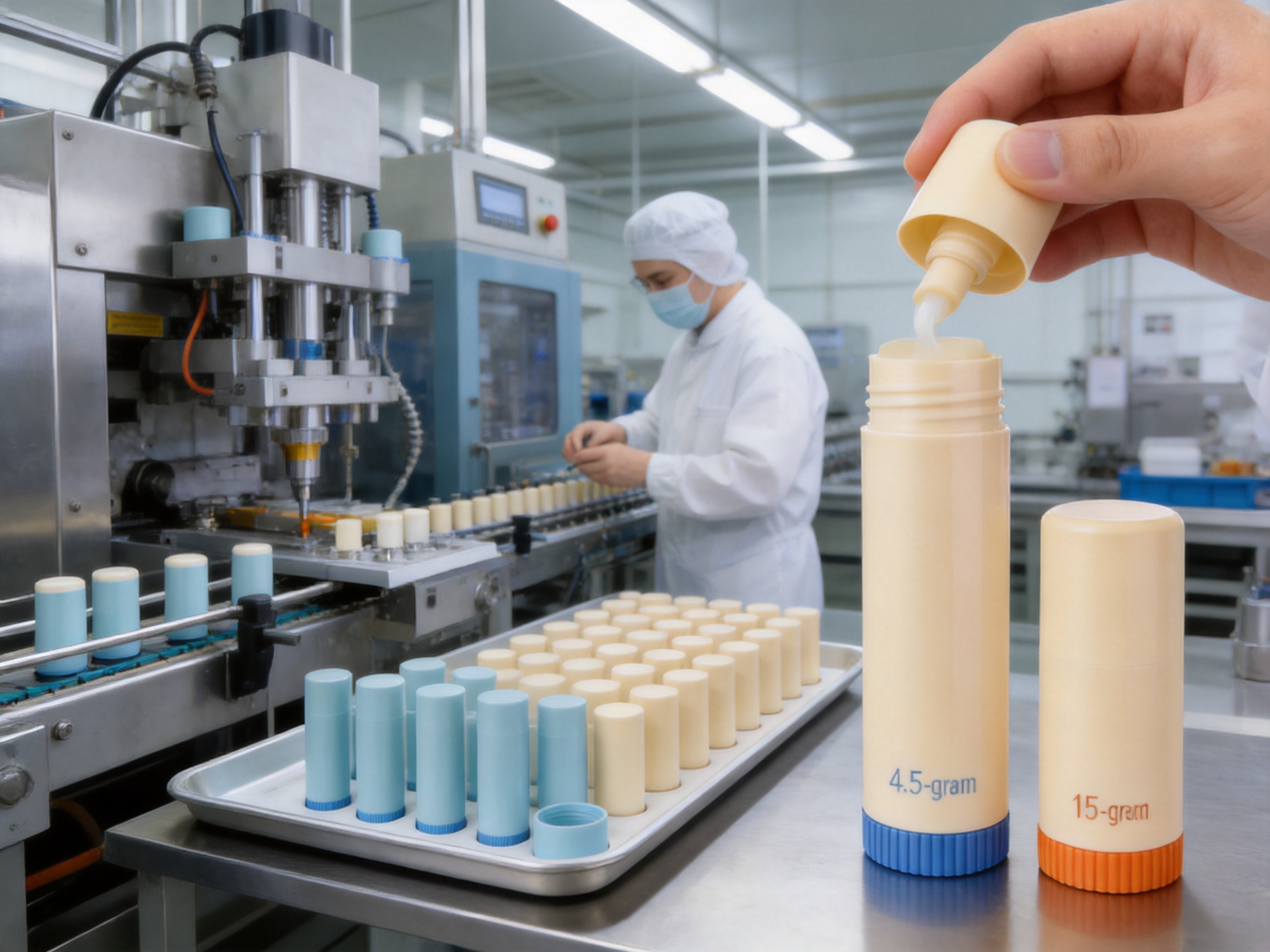
Packaging plays a central role in the performance, convenience, and market appeal of personal care and cosmetic products. A well-designed package must protect its contents, support clean application, communicate quality, and remain practical throughout daily use. The Plastic Deodorant Stick Bottle, model GY-DS03, is a compact packaging solution developed for products such as lip balm and blush. Available in 4.5-gram and 15-gram capacities, it provides flexible options for brands that need small, portable, and user-friendly packaging.
Although the product is classified as a deodorant stick bottle, its structure and dispensing format make it suitable for a broader range of solid or semi-solid personal care formulas. It can be used for lip balm, blush, solid cosmetic treatments, and other products that benefit from direct, controlled application. Its small footprint, simple operation, and adaptable capacity make it a practical alternative to jars, tubes, and more complex dispensing systems.
This article examines the product’s design value, application range, packaging advantages, manufacturing process, customization potential, quality considerations, and suitability for different cosmetic and personal care brands. It also explains how the manufacturing capabilities of GreenYard Tools Co., Ltd. support reliable production through mold design, injection molding, automated assembly, and quality inspection.

Plastic Deodorant Stick Bottle
1. Product Overview
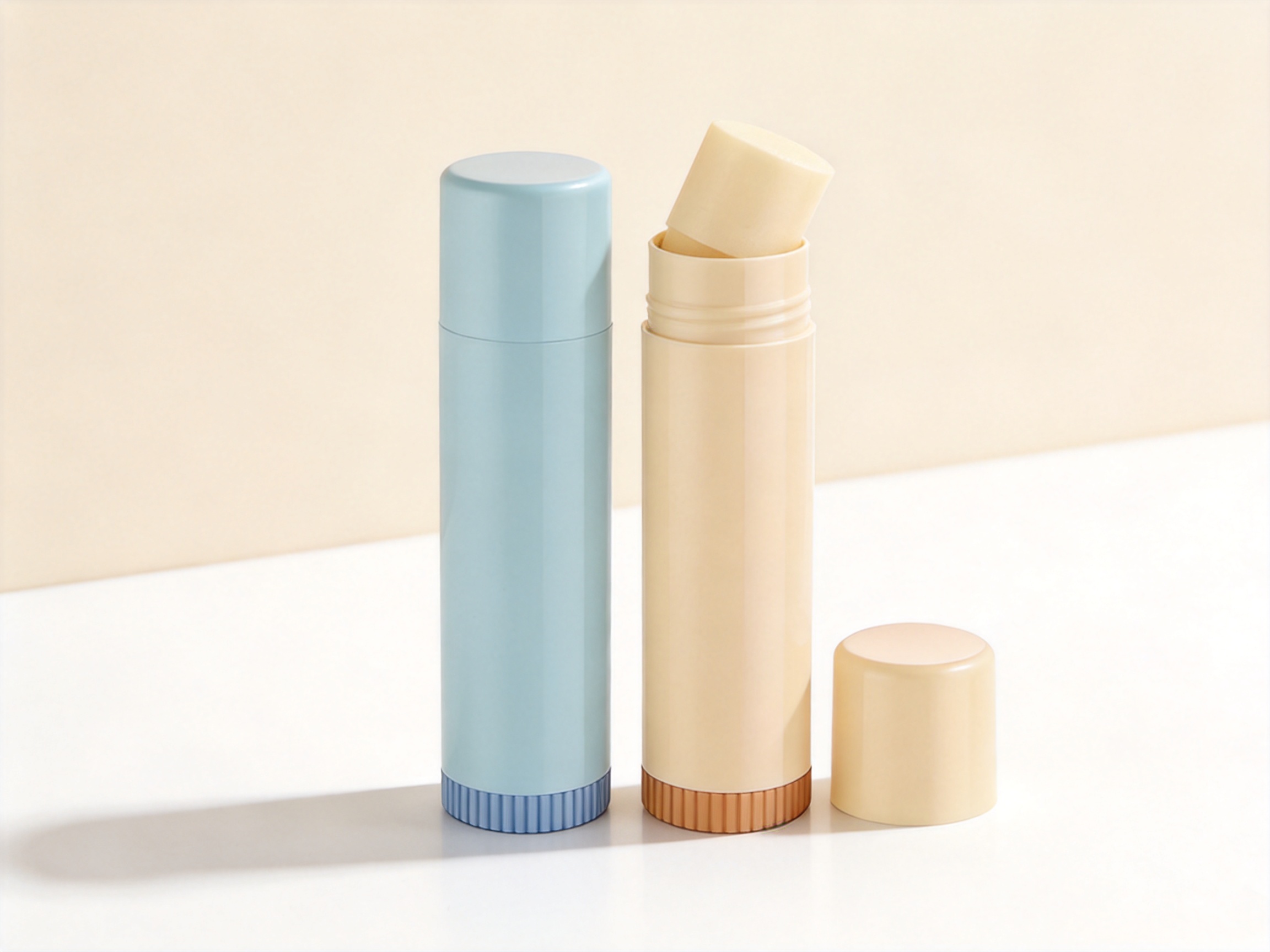
The GY-DS03 Plastic Deodorant Stick Bottle is a compact container designed for stick-format personal care and cosmetic products. It is offered in two primary volume options: 4.5 grams and 15 grams. The smaller size is suitable for travel, sampling, trial products, and highly portable applications. The larger size is more appropriate for regular daily use and products that require a greater amount of formula.
The bottle format generally consists of a plastic outer body and an internal mechanism that supports the upward movement of the product. When the base is turned or adjusted, the product rises through the opening for application. After use, the product can be lowered again and protected with a cap. This format avoids direct contact between the user’s fingers and the product, supporting a cleaner and more convenient experience than many open-mouth jars.
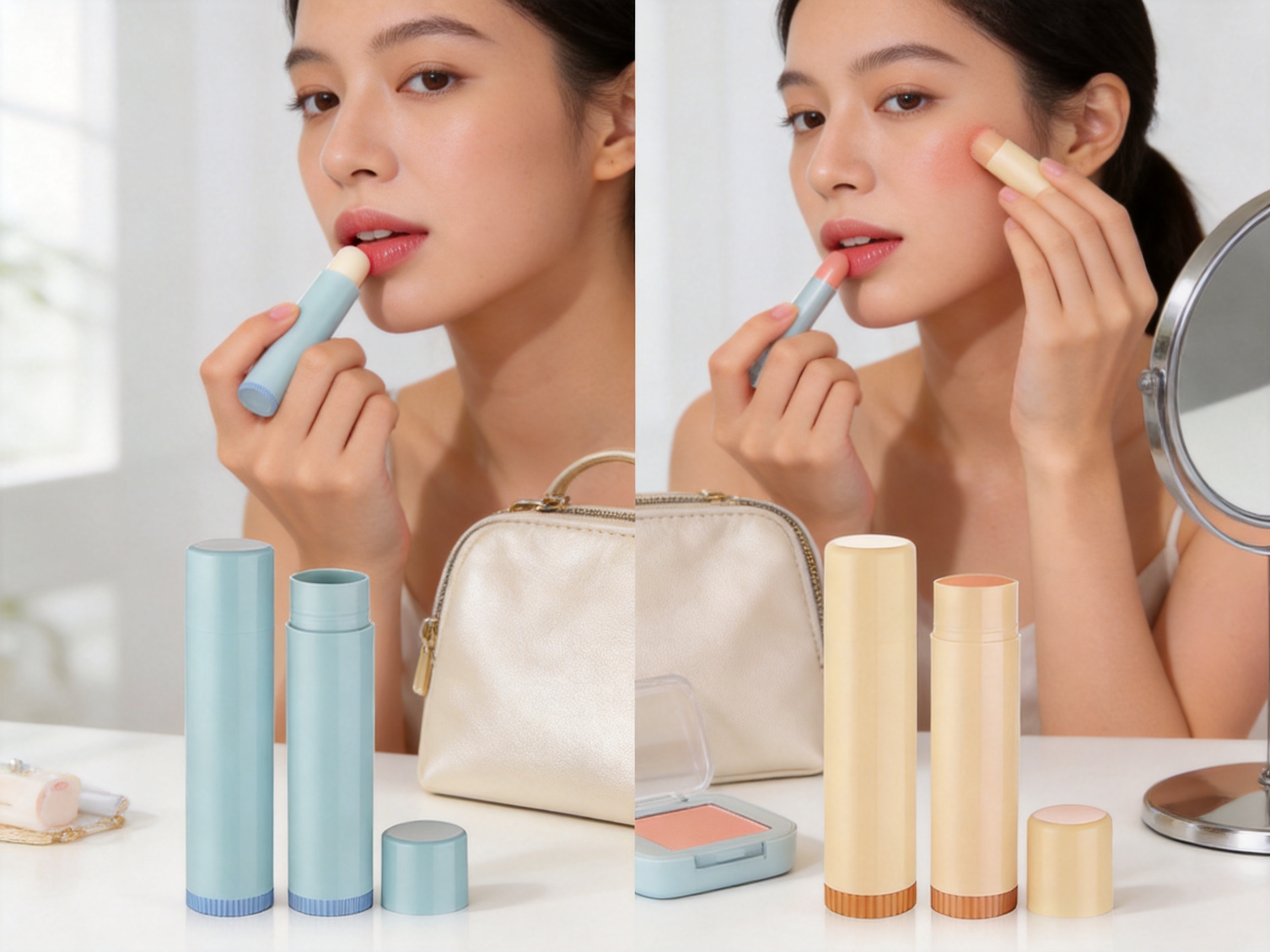
The product is especially suitable for lip balm and blush. Lip balm formulas can be filled into a solid or semi-solid stick and applied directly to the lips. Blush formulas may also be developed in a cream, balm, or solid-stick format, allowing users to apply color to the cheeks without needing a separate brush or sponge.
The product’s compact design also supports convenient storage in handbags, cosmetic pouches, travel kits, bathroom cabinets, and retail display areas. Its cylindrical or similarly compact structure can be handled easily and may be positioned vertically or horizontally depending on the packaging design and retail presentation.
Product Attribute |
Specification or Application |
Product model |
GY-DS03 |
Product type |
Plastic deodorant stick bottle |
Available capacities |
4.5 grams and 15 grams |
Primary applications |
Lip balm and blush |
Format |
Portable stick-style container |
Typical advantages |
Compact storage, direct application, controlled dispensing, and reduced finger contact |
2. Why Stick Packaging Is Valuable for Cosmetics and Personal Care
Stick packaging has become increasingly useful across the beauty and personal care industries because it combines portability with direct application. Consumers often prefer products that are easy to carry, quick to use, and simple to close after application. A stick container can answer these needs without requiring additional tools or complicated preparation.
For lip balm, a stick package enables the consumer to apply the formula directly to the lips. This can be more convenient than opening a jar and using a fingertip. It may also help reduce the transfer of dust, oils, and other contaminants into the remaining product. The closed container further supports product protection between uses.
For blush, a stick package creates opportunities for cream blush, balm blush, and other color cosmetics that are intended to be blended with the fingers or a cosmetic sponge. The user can apply the product directly to the cheek and then blend it as desired. This supports a fast makeup routine and makes the product suitable for both beginners and experienced users.
Stick packaging can also enhance product differentiation. Many cosmetic products compete in crowded retail and online environments. A convenient package can help a product communicate portability, simplicity, and modern daily-use functionality. The package is not merely a container; it becomes part of the user experience and contributes to how the product is remembered.
The GY-DS03 format is particularly useful for product concepts that emphasize convenience. Its relatively small capacities allow brands to create products for handbags, travel, gifting, promotional kits, subscription boxes, and trial programs. The availability of two sizes also allows a brand to organize a product line around multiple usage scenarios.
3. Capacity Options for Different Product Strategies
4.5-Gram Capacity
The 4.5-gram option is designed for maximum portability and controlled product quantity. It may be suitable for lip balm samples, mini cosmetic products, travel editions, promotional packages, or products intended for occasional use. Smaller packaging can be convenient for consumers who prefer to carry only essential items in a compact purse or pocket.
A smaller container may also help brands reduce the initial purchase barrier for new products. Trial-size products can allow consumers to test a formula, shade, fragrance, or performance before purchasing a larger size. For marketing campaigns, the 4.5-gram size can be incorporated into gift sets, event packages, influencer kits, and seasonal collections.
For blush, the 4.5-gram capacity may be useful for highly pigmented formulas where only a small quantity is needed for each application. It can also serve as a portable touch-up product for consumers who want a small cosmetic item that fits easily into a personal bag.
15-Gram Capacity
The 15-gram option provides more product for regular or frequent use. It is suitable for everyday lip balm, larger blush formats, and other personal care products that consumers may apply repeatedly. The larger size can reduce the frequency of replacement and may be more appropriate for a core retail product rather than a sample.
For brands, the 15-gram version can function as the standard size in a product range, while the 4.5-gram version can be used as a miniature, travel, or promotional alternative. This size architecture allows the same general packaging concept to serve different price points and consumer needs.
Capacity |
Best-Suited Use |
Commercial Role |
4.5 grams |
Travel, sampling, trial products, promotional kits, and compact daily carry |
Mini size, entry-level option, or marketing format |
15 grams |
Regular lip balm, blush, and frequent personal care use |
Standard retail size or core product format |
4. Advantages Compared with Common Alternative Packages
Compared with Open-Mouth Jars
Open-mouth jars are widely used for balms, creams, and cosmetic products, but they require the user to touch the formula directly or use a separate applicator. This can be less convenient when the consumer is away from home. It may also introduce more opportunities for contact with the product during repeated use.
A stick container provides a more direct dispensing method. The product can be raised when needed and lowered after use. The cap helps protect the exposed area, while the user can apply the product without inserting a finger into the package. For lip balm and blush, this format can make the application process faster and less messy.
Compared with Soft Tubes
Soft tubes can be effective for creams and gels, but they may require squeezing and can sometimes dispense more product than necessary. A stick format provides a more controlled physical application surface. It is particularly appropriate for solid or semi-solid formulas that can maintain their shape during use.
The rigid plastic structure of a stick bottle may also offer a more defined appearance on retail shelves. A cylindrical or compact body can be decorated with a label, printed graphics, or other branding elements, depending on the final customization plan.
Compared with Traditional Deodorant Containers
Traditional deodorant stick packaging is generally designed for larger volumes and broad underarm application. The GY-DS03 is available in much smaller capacities, making it better suited to lip balm, blush, and other compact cosmetic formats. Its application range is therefore more flexible than a container developed only for full-size deodorant products.
The smaller capacity also allows brands to create products with a more portable and beauty-oriented positioning. The container can support personal care, cosmetics, skincare-inspired balm products, and promotional applications without requiring the brand to invest in an entirely different packaging concept for each product.
Compared with Glass Containers
Glass can provide a premium appearance, but it is heavier and more vulnerable to breakage than many plastic alternatives. A plastic stick bottle is easier to carry and may be better suited for travel, outdoor use, handbags, and shipment through standard distribution channels.
Plastic also supports efficient injection molding and can be produced in a wide range of colors and surface finishes. This gives manufacturers more flexibility when developing coordinated packaging systems for different shades, fragrances, or product lines.
5. Product Advantages for Lip Balm
Lip balm is one of the most natural applications for the GY-DS03 container. The stick format supports direct application, allowing the user to apply a consistent layer across the lips. The package can be opened quickly, used without a separate tool, and closed immediately after application.
Portability is another major benefit. Lip balm is often used throughout the day and may be carried in a pocket, purse, cosmetic bag, or travel case. The compact 4.5-gram option is particularly suitable for consumers who prefer minimal packaging, while the 15-gram option provides a more substantial quantity for regular use.
The container may support a variety of lip balm concepts, including moisturizing balms, tinted balms, protective balms, seasonal formulas, and promotional products. Formula compatibility must be evaluated by the brand and filling facility, but the package concept itself is well aligned with solid and semi-solid lip care products.
The package can also support hygienic positioning. While no package can replace appropriate formula preservation and good consumer practices, a direct-application stick reduces the need to repeatedly insert fingers into the product. This can be an important functional message for consumers who value clean and convenient routines.
6. Product Advantages for Blush and Color Cosmetics
Blush products are increasingly available in cream, balm, and stick formats. These formulas can create a natural, blendable finish and may be applied with fingers, a sponge, or a brush. A stick package gives the product a suitable physical form for direct placement on the cheek.
The GY-DS03 container can support compact color cosmetics that are easy to use during travel or throughout the day. A consumer may apply the product directly to the cheeks and blend it immediately. This reduces the number of separate tools needed in a cosmetic bag and supports a quick makeup routine.
Different colors can be presented through package decoration, cap colors, labels, or printed graphics. If multiple shades are offered, a consistent container can create a unified product family while allowing each shade to have a distinct visual identity.
The smaller capacity is appropriate for highly pigmented blush formulas, limited-edition colors, or trial products. The 15-gram capacity can serve consumers who use blush frequently and want a larger amount for everyday application. This flexibility allows brands to test new shades, develop seasonal launches, and serve multiple market segments.
7. Compact Design and Consumer Convenience
Compact packaging is valuable because consumers increasingly expect personal care and cosmetic products to fit into active lifestyles. Products may be carried to work, school, gyms, hotels, airports, and social events. A small stick bottle can be stored with minimal space and accessed quickly when needed.
The closed structure also supports orderly storage. Unlike products that require a separate brush, palette, or mixing tool, the stick bottle keeps the formula and primary application format together. This integrated design can reduce the number of components consumers must carry.
A practical package should also be simple to understand. The user can generally recognize the function of a twist-up or push-up stick format without extensive instructions. This intuitive operation can improve the first-use experience, especially for products sold through online channels where customers may not physically examine the package before purchase.
From a retail perspective, compact products can be displayed in counters, drawers, gift boxes, travel sections, and cosmetic collections. Their relatively small size can make them suitable for bundled promotions and multi-product sets.
8. Manufacturing Capabilities Supporting Product Quality
GreenYard Tools Co., Ltd. is a China-based personal care packaging manufacturer with 16 years of experience in spray product manufacturing and packaging production. Its product range includes perfume sprayers, pump heads, caps, bottles, and daily chemical packaging solutions. This experience provides a foundation for understanding the dimensional accuracy, component coordination, appearance quality, and production consistency required in modern packaging.
The company reports a daily production capacity of one million units. High production capacity can be valuable for customers that require stable supply, repeat orders, or coordinated launches across several markets. It also indicates that the manufacturer has developed production systems capable of managing large quantities and consistent output.
While the GY-DS03 is a plastic stick bottle rather than a perfume sprayer, many of the same manufacturing principles apply. Packaging components must be formed accurately, assembled correctly, inspected systematically, and packed in a way that protects them during shipment. Experience with pumps, caps, bottles, and other packaging products can support a broader understanding of component engineering and customer requirements.
Mold Design
Mold design is one of the most important stages in plastic packaging production. The mold determines the external shape, wall structure, parting lines, dimensional relationships, and many aspects of surface quality. A well-designed mold supports efficient production and helps reduce defects such as flash, uneven walls, incomplete filling, and inconsistent appearance.
For a stick bottle, mold accuracy is important because the outer body must coordinate with the internal mechanism, base, and cap. If dimensions vary excessively, components may fit too tightly or too loosely. A reliable mold design helps maintain the relationships required for smooth assembly and user operation.
GreenYard’s dedicated design team supports mold development and product innovation. This capability can help customers evaluate packaging concepts before mass production, identify potential production issues, and develop components that balance appearance, functionality, and manufacturing efficiency.
Injection Molding
Injection molding is widely used to produce plastic packaging because it can create repeatable shapes at high volume. During the process, plastic material is heated, injected into a mold, cooled, and removed as a formed component. Process control influences the component’s appearance, strength, dimensions, and consistency.
For a plastic deodorant stick bottle, injection molding may be used for the body, base, cap, and other plastic components. Each part must be produced with suitable dimensions and surface characteristics. Consistency across large production runs is essential when components need to be assembled together or sold as a coordinated product line.
Injection molding can also support different color options and design treatments. Depending on the customer’s requirements, the package may be produced in opaque, translucent, or colored plastic. Surface decoration and labeling can then be considered as part of the complete packaging program.
Automated Assembly
Automated assembly can improve production efficiency and support more consistent component placement. In packaging production, assembly may involve inserting internal parts, fitting bases, installing caps, and checking whether components are correctly positioned.
For high-volume orders, automation can help reduce variation caused by manual handling. It can also support faster production and more predictable delivery planning. The appropriate balance between automation and manual inspection depends on product structure, order volume, customer specifications, and quality requirements.
Automated assembly is especially valuable when a packaging item contains multiple components that must operate together. The mechanism must move properly, the cap must fit securely, and the assembled package must present a clean and consistent appearance.
Quality Inspection
Quality inspection is necessary throughout the manufacturing process, not only at the final packing stage. Inspection may include visual checks, dimensional checks, component matching, assembly verification, and functional testing. For packaging used with cosmetics and personal care formulas, cleanliness and appearance are also important considerations.
Typical inspection points for a stick bottle may include surface defects, color consistency, deformation, cap fit, base alignment, mechanism operation, and overall assembly quality. Customers may also specify additional tests based on their formulas, filling process, transport conditions, and target market requirements.
GreenYard’s quality inspection capabilities are part of its broader manufacturing system. By combining design, molding, assembly, and inspection, the company can manage more stages of production internally and coordinate packaging development with production requirements.
9. Integrated Production and Supply Advantages
An integrated packaging manufacturer can offer advantages during product development because the design and production teams can communicate directly about feasibility. When a customer requests a particular shape, capacity, color, or surface finish, internal engineering knowledge can help identify suitable production methods.
Integrated manufacturing may also simplify project coordination. Instead of managing separate suppliers for molds, molded parts, assembly, and inspection, a customer may work with one packaging partner that coordinates multiple stages. This can make development discussions more efficient and may reduce the risk of inconsistent specifications between suppliers.
GreenYard’s capabilities include mold design, injection molding, automated assembly, and quality inspection. These areas cover key stages in the development of plastic personal care packaging. The company’s reported daily capacity of one million units also supports customers that need larger production quantities or repeat supply.
For international customers, production consistency is particularly important. A packaging supplier must understand that cosmetic and personal care brands often require repeat orders with similar dimensions, colors, and assembly performance. Stable production systems can help brands maintain continuity across product replenishment cycles.
10. Material and Formula Compatibility Considerations
Packaging selection should always be evaluated together with the formula. A container that performs well with one product may require additional testing with another because ingredients can differ in viscosity, oil content, fragrance composition, colorant concentration, and softening behavior.
For lip balm and blush applications, brands should assess whether the formula maintains the desired shape in the package, moves smoothly during dispensing, and remains stable under expected storage conditions. The filling process should also be reviewed to ensure that the product is inserted efficiently without damaging the container or internal mechanism.
Compatibility testing may include heat and cold exposure, storage tests, repeated opening and closing, application cycles, transport simulation, and visual evaluation. These tests can help identify changes in color, odor, texture, package integrity, or dispensing performance.
The final suitability of the GY-DS03 container should therefore be confirmed through a product-specific evaluation. GreenYard can support packaging discussions, while the cosmetic brand and filling facility remain responsible for confirming that the selected container is appropriate for the final formula and regulatory requirements.
11. Customization Opportunities
Packaging customization allows brands to adapt a standard container to a particular market position. The GY-DS03 format may be considered for customization in areas such as color, labeling, printing, surface finish, cap appearance, and product presentation. The exact options depend on order quantity, production feasibility, decoration method, and customer specifications.
Color Coordination
Color can help distinguish different product variants. A lip balm range may use soft, natural colors, while a blush collection may use shades coordinated with the cosmetic formula. Consistent body colors combined with varied caps or labels can create a unified product family.
Labeling and Printing
Labels or printed graphics may be used to display product names, shade information, directions, ingredients, batch details, and brand identity. The available decoration area should be considered early in the design process so that required information can be presented clearly and legibly.
Surface Finish
Surface finish influences how the package feels and appears. Glossy, matte, smooth, or textured finishes may create different visual impressions. A matte finish may support a minimalist or premium appearance, while a glossy finish can emphasize color and visual brightness.
Product Line Architecture
Using the same bottle format in multiple sizes can simplify product line architecture. The 4.5-gram and 15-gram options can be assigned to travel and standard products, respectively. A coordinated system may help consumers understand the relationship between product variants while allowing brands to serve different use cases.
12. Packaging Performance in Distribution and Retail
Packaging must remain functional from production through final consumer use. During distribution, containers may experience vibration, compression, temperature changes, and handling impacts. A compact plastic bottle can be advantageous because it is lightweight and less fragile than glass packaging, although appropriate transport testing and secondary packaging remain necessary.
For retail presentation, the product should maintain a clean and consistent appearance. Caps should remain properly fitted, surfaces should be free from visible defects, and printed information should remain legible. Consistency is especially important when multiple units are displayed together.
The size options also support different retail strategies. A small 4.5-gram product can be placed in travel collections, checkout displays, beauty kits, and promotional bundles. The 15-gram product may be presented as a standard item in a lip care or color cosmetics range.
Online retailers can also benefit from compact packaging because smaller packages may be easier to include in multipacks and subscription shipments. Product images and descriptions should clearly communicate the capacity and intended use so customers understand the scale of the item before purchase.
13. Sustainability and Responsible Packaging Planning
Responsible packaging planning involves considering material use, product protection, durability, manufacturing efficiency, and end-of-life handling. A small package can reduce unnecessary bulk when the product quantity is intentionally limited. Lightweight plastic may also reduce transport weight compared with heavier materials, although the environmental impact depends on material selection, production methods, logistics, consumer behavior, and waste management systems.
Brands should evaluate the complete packaging system rather than focusing on one feature in isolation. The product body, cap, internal mechanism, labels, secondary packaging, and shipping materials all contribute to the total environmental profile. Efficient design should aim to provide sufficient protection and functionality without adding unnecessary components.
Material identification and local recycling conditions may also be considered during product development. The availability of recycling infrastructure differs by market, so brands should review local requirements and communicate appropriate disposal information when necessary.
Durability is another part of responsible packaging. If a container protects the formula effectively and performs reliably throughout use, it may help prevent product waste caused by leakage, damage, or poor dispensing. Packaging optimization should therefore balance resource considerations with the need to preserve the product.
14. Quality Control Priorities for Stick Bottles
A reliable stick bottle should be checked for both cosmetic appearance and functional performance. A visually attractive package that does not operate smoothly can create consumer dissatisfaction, while a functional package with poor surface quality may weaken the product’s market positioning.
Important quality checkpoints may include:
1. Dimensional accuracy: The body, cap, base, and internal components should remain within agreed specifications.
2. Surface appearance: The package should be checked for scratches, sink marks, flash, discoloration, contamination, and other visible defects.
3. Component fit: The cap should fit the body securely, and the base should remain properly connected to the internal mechanism.
4. Mechanical movement: The product should rise and lower in a controlled manner when the mechanism is operated.
5. Closure performance: The cap should protect the product and remain attached during normal handling.
6. Filling suitability: The container should be compatible with the selected filling equipment and formula texture.
7. Packaging cleanliness: Components should be handled and packed in a manner appropriate for cosmetic and personal care applications.
8. Order consistency: Units within the same production batch should have consistent color, shape, decoration, and assembly quality.
Testing criteria should be agreed between the manufacturer, brand owner, and filling partner before mass production. Clear specifications help reduce misunderstandings and establish an objective basis for acceptance.
15. Development Process for New Customers
A successful packaging project usually begins with a clear product brief. The customer should identify the formula type, target capacity, intended application, preferred appearance, expected order quantity, market destination, and desired delivery schedule.
The manufacturer can then help assess whether the selected bottle is appropriate for the product concept. Samples may be reviewed for dimensions, handling, appearance, cap fit, and dispensing performance. If the formula is already available, filling trials can help determine whether the container operates effectively under practical conditions.
After sample approval, the customer may confirm decoration, color, material details, packing configuration, and inspection standards. A production order can then proceed according to the approved specifications.
For brands developing several products, it is useful to establish a packaging system rather than evaluating each item separately. The same base format may be used for multiple capacities, shades, or product categories. This can create visual consistency and simplify future product expansion.
Development Stage |
Primary Focus |
Product briefing |
Formula, capacity, application, market, and quantity requirements |
Sample evaluation |
Appearance, size, handling, cap fit, and operating performance |
Compatibility testing |
Formula interaction, stability, filling, storage, and transport conditions |
Decoration confirmation |
Color, labeling, printing, surface finish, and product information |
Mass production |
Molding, assembly, inspection, packing, and delivery |
16. Suitable Brand and Product Applications
The GY-DS03 container can support a variety of business models and product categories. Independent cosmetic brands may use it for a small-batch lip balm or cream blush launch. Established personal care companies may use the two available capacities for standard and travel versions of an existing product.
Private-label manufacturers can also use the container as part of a ready packaging platform. By selecting different formulas, shades, fragrances, and decorations, they can create multiple finished products without redesigning the entire package structure.
Promotional agencies and beauty gift-set developers may find the 4.5-gram size useful for event distribution, seasonal campaigns, hotel amenities, and customer appreciation packages. The compact format is easy to incorporate into a wider collection of personal care items.
Specialty skincare companies may consider the package for solid treatment products, provided the formula and application requirements are compatible. Products such as protective balms, targeted treatment sticks, and solid cosmetic care products may benefit from the same direct-application format.
17. Operational Benefits for Consumers
From the consumer’s perspective, the main value of a stick bottle is ease of use. The package can be opened, applied, and closed in a short sequence. The user does not need to carry a separate applicator, and the product can be used in locations where washing hands or preparing tools is inconvenient.
The compact body is also easy to hold. This is important for products applied to the lips or cheeks because precise handling can contribute to a more controlled application. The user can apply a small amount, assess the result, and repeat if additional coverage is needed.
The cap provides a basic protective barrier after use. Proper closure can help keep the product surface cleaner and protect it from contact with items stored nearby. Consumers should still avoid exposing the container to excessive heat and should follow the product’s storage and use instructions.
The two capacities provide choice. Some customers prefer a small package that can be replaced frequently, while others want a larger quantity for routine use. Offering both sizes can help brands respond to these different preferences.
18. Commercial Advantages for Product Owners
For product owners, packaging affects manufacturing cost, logistics, product positioning, and customer perception. A compact plastic container can be incorporated into a range of price levels depending on formula value, decoration, order quantity, and retail strategy.
The product’s versatility also supports portfolio development. A brand can use one container concept for lip balm, blush, and selected solid personal care applications. This may simplify visual identity and help consumers recognize products within the same range.
The ability to offer two capacities creates opportunities for tiered product architecture. A smaller package can attract first-time buyers or support travel use, while the larger package can serve loyal customers who use the product frequently. This approach can help brands address different purchase occasions without introducing a completely unrelated package.
Manufacturing support is another advantage. GreenYard combines mold design, injection molding, automated assembly, and quality inspection. This broad capability can be useful for customers seeking a packaging supplier with experience across multiple personal care formats, including sprayers, pump heads, caps, and bottles.
19. Ordering and Specification Checklist
Before placing an order, customers should prepare a clear specification sheet. The sheet should identify the required capacity, application, desired color, decoration method, packaging quantity, and delivery destination.
Customers should also clarify whether the bottle will be filled with a wax-based lip balm, cream blush, treatment balm, or another product. Formula details can affect compatibility testing, filling temperature, cooling conditions, and dispensing performance.
Additional questions may include whether the product requires a custom color, whether the cap must meet a particular closure standard, whether the package will be sold in a gift set, and whether the product will be shipped through hot or cold climates.
It is also advisable to confirm sample approval procedures, production lead times, quality standards, carton configurations, and acceptable tolerances. Clear communication at the beginning of a project can help reduce delays later in development.
20. Frequently Asked Questions
Q1: What is the GY-DS03 Plastic Deodorant Stick Bottle used for?
The container is primarily suitable for lip balm and blush. It may also be considered for other solid or semi-solid cosmetic and personal care products when formula compatibility and filling performance have been confirmed.
Q2: What capacities are available?
The available capacities are 4.5 grams and 15 grams. The 4.5-gram size is suitable for travel, samples, promotional products, and compact daily use. The 15-gram size is more appropriate for regular-use products and larger product quantities.
Q3: Is the container limited to deodorant products?
No. Although it belongs to the deodorant stick bottle category, its compact stick structure is also suitable for lip balm, blush, and selected solid or semi-solid personal care products. The final application depends on the formula, filling process, and compatibility test results.
Q4: What are the advantages over a cosmetic jar?
The stick format supports direct application and reduces the need for users to touch the product with their fingers. It is also easier to carry and use without a separate applicator. A jar may still be preferable for certain soft formulas, so the best choice depends on the product’s texture and intended experience.
Q5: Is the 4.5-gram size suitable for product samples?
Yes. Its small capacity makes it suitable for trial products, travel editions, promotional kits, gift sets, and introductory product formats. Brands should confirm the desired amount of formula and expected consumer usage before selecting the size.
Q6: What is the benefit of the 15-gram size?
The 15-gram option provides more product for regular use. It may be suitable for everyday lip balm, blush, or other products that consumers apply repeatedly and prefer not to replace frequently.
Q7: Can the packaging be customized?
Customization may be possible in areas such as color, labeling, printing, surface finish, and product presentation. Specific options depend on production feasibility, order quantity, decoration requirements, and the customer’s approved specifications.
Q8: How does the manufacturer support quality?
GreenYard supports packaging production through mold design, injection molding, automated assembly, and quality inspection. These capabilities help manage important stages from component development to finished-product evaluation.
Q9: Should formula compatibility be tested?
Yes. Compatibility testing is recommended for every formula because ingredients, viscosity, fragrance, pigments, and storage conditions can affect packaging performance. Testing should include filling, storage, application, closure, and transport considerations where appropriate.
Q10: Is plastic packaging suitable for travel?
The compact plastic format is generally suitable for travel because it is lightweight and less vulnerable to breakage than glass. However, the finished product should still be tested under the expected transport and temperature conditions, and the cap should remain securely closed during handling.
Q11: Can the two sizes be used for one product line?
Yes. A brand can use the 4.5-gram size as a travel or trial format and the 15-gram size as the standard retail version. Using related sizes can help maintain visual consistency across the product range.
Q12: What information should customers provide when requesting a quotation?
Customers should provide the intended application, required capacity, estimated order quantity, preferred color, decoration requirements, formula type, delivery destination, and desired schedule. Providing this information allows the manufacturer to evaluate the project more accurately.
21. Why Choose an Experienced Packaging Manufacturer
Packaging development involves more than selecting an attractive container. The supplier must understand material behavior, mold construction, component fit, production capacity, inspection standards, and supply coordination. An experienced manufacturer can help customers identify practical solutions and reduce avoidable development problems.
GreenYard Tools Co., Ltd. has specialized in spray product manufacturing and personal care packaging for 16 years. Its broader product portfolio includes perfume sprayers, perfume pump heads, lotion pumps, caps, bottles, and daily chemical packaging solutions. This background reflects familiarity with the requirements of international personal care and cosmetics markets.
The company’s reported daily production capacity of one million units supports high-volume manufacturing needs. Its capabilities in mold design, injection molding, automated assembly, and quality inspection provide an integrated foundation for packaging projects. A dedicated design team also supports ongoing product innovation and customer development requirements.
For customers searching for a reliable packaging partner, these capabilities can be valuable when launching a new lip balm, blush, or compact personal care product. The manufacturer can contribute not only the container itself but also production knowledge that supports consistency, scalability, and project execution.
22. Conclusion
The GY-DS03 Plastic Deodorant Stick Bottle is a practical and versatile packaging solution for lip balm, blush, and selected solid or semi-solid personal care products. Its 4.5-gram and 15-gram capacity options allow brands to create compact travel products, sampling formats, promotional packages, and regular-use retail products.
Compared with jars, soft tubes, and heavier glass containers, the stick format offers direct application, convenient portability, reduced finger contact, and an integrated user experience. Its simple structure can support efficient daily use while giving brands opportunities to develop coordinated product lines with different colors, decorations, and capacities.
The product is supported by GreenYard Tools Co., Ltd., a China-based personal care packaging manufacturer with 16 years of industry experience. Through mold design, injection molding, automated assembly, and quality inspection, the company provides a manufacturing foundation for consistent packaging production. Its reported daily capacity of one million units also supports customers requiring stable supply and repeat orders.
As with any cosmetic package, the final selection should be confirmed through formula compatibility testing, filling trials, storage evaluation, and transport assessment. When correctly matched with the product formula and brand strategy, this compact stick bottle can provide a reliable combination of convenience, presentation, and manufacturing practicality.
References
1. GreenYard Tools Co., Ltd. Product information for Plastic Deodorant Stick Bottle, model GY-DS03.
2. GreenYard Tools Co., Ltd. Company information concerning personal care packaging manufacturing, mold design, injection molding, automated assembly, and quality inspection.
3. Cosmetic Packaging Development Principles: Container Selection, Compatibility Testing, and Product Protection.
4. Personal Care Product Manufacturing Practices: Filling, Assembly, Inspection, and Supply Chain Coordination.
5. Packaging Design Considerations for Lip Balm, Cream Blush, and Solid Personal Care Formulas.
Product: Plastic Deodorant Stick Bottle

-
What Makes a Good Deodorant Stick Bottle for Brands?
A deodorant stick bottle is a twist-up or push-up dispensing container designed to hold and advance...
-
Roll On Bottles: Types, Refill Guide, and Packaging Buying Tips for Your Brand
The first sample rolled smoothly, the second clicked, and the third leaked after ten presses. Three...
-
Amber Plastic Bottles: Lightweight, Protective, Customizable Packaging for Cosmetics
You have spent months stabilizing a vitamin C serum, only to watch a pallet of amber glass bottles ...
-
How Glass Airless Bottle Packaging Prevents Contamination and Boosts Shelf Life?
Glass airless bottle packaging prevents contamination and extends shelf life by completely eliminat...
Copyright © GreenYard Tools Co.,ltd. All Rights Reserved.
Personal Care Packaging Manufacturer Custom Perfume Sprayers Factory