
-
About Us
Why Choose Us?The company possesses advanced capabilities in mold design, injection molding, and automated assembly, supported by a professional quality inspection team to ensure product reliability. A dedicated design team continuously drives product innovation, providing customers with high-quality spray solutions.
 Coming From China, Marketing To The World.
-
Products
-
News
 English
 Français
 русский
 Español
Aluminium Glass Bottle Dropper: Precision Packaging for Serums, Oils, and Concentrated Liquids
Content
- 1 Product Overview
- 2 Why Dropper Packaging Matters for Liquid Products
- 3 Advantages of the Aluminium and Glass Combination
- 4 Applications in Personal Care and Cosmetic Packaging
- 5 Comparison with Alternative Closure Formats
- 6 Design Flexibility and Customization Potential
- 7 Manufacturing Capabilities Supporting Product Quality
- 8 Importance of Formula and Package Compatibility
- 9 Hygienic and User-Friendly Dispensing
- 10 How the Dropper Supports Product Positioning
- 11 Operational Benefits for Brands and Manufacturers
- 12 Quality and Production Process Considerations
- 13 Practical Selection Guide
- 14 Environmental and Material Considerations
- 15 Brand and Consumer Experience
- 16 Why Choose an Experienced Packaging Manufacturer
- 17 Ordering and Project Development Process
- 18 Frequently Asked Questions
- 18.1 What is the aluminium glass bottle dropper used for?
- 18.2 What sizes are available?
- 18.3 What closure finishes can be selected?
- 18.4 Is the dropper suitable for both oil-based and water-based products?
- 18.5 Why use a dropper instead of a standard screw cap?
- 18.6 What is the advantage of the aluminium exterior?
- 18.7 What is the difference between ribbed, smooth, and matte closures?
- 18.8 Can the same dropper concept be used for different bottle sizes?
- 18.9 Does the dropper prevent product waste?
- 18.10 Is the dropper suitable for professional products?
- 18.11 What manufacturing processes support this product?
- 18.12 How should compatibility be tested?
- 18.13 Can the closure be customized for a brand?
- 18.14 What should buyers confirm before placing an order?
- 19 Conclusion
- 20 References
- 21 Product: Aluminium Glass Bottle Dropper

Packaging is an essential part of any personal care, skincare, beauty, wellness, or cosmetic product. It protects the formula, communicates quality, supports controlled application, and influences how consumers experience the product from the first opening. For concentrated liquids such as facial serums, essential oils, treatment oils, and other high-value formulations, the closure is especially important. A package must not only look attractive but also dispense the correct amount cleanly and consistently.
The aluminium glass bottle dropper is designed to meet these requirements. Combining the refined appearance of aluminium, the product compatibility of glass, and the accuracy of dropper dispensing, this packaging solution is suitable for a broad range of liquid formulations. The GY-901A1-AL model is available in a full range of sizes and can be configured with ribbed, smooth, or matte closure finishes. Its adaptable design allows it to fit both mini bottles and full-size bottles, giving brands greater flexibility when developing product ranges.
This article examines the structure, performance, application value, customization potential, and manufacturing strengths associated with the aluminium glass bottle dropper. It also explains why this format can provide advantages over conventional caps, ordinary screw closures, and less specialized dispensing systems.
Product Overview
The aluminium glass bottle dropper is a precision dispensing closure developed for liquid products that require measured and hygienic application. It is particularly suitable for serum, oil, concentrated treatment, essential oil, and similar formulations. The dropper allows the user to draw liquid into an internal pipette and release it in a controlled manner, helping reduce over-application and unnecessary product waste.
The product is identified as model GY-901A1-AL. Its design combines an aluminium exterior with a glass bottle application, creating a packaging appearance that is both modern and premium. Aluminium provides a refined surface and a strong visual identity, while glass offers a familiar and suitable container material for many skincare, cosmetic, and wellness formulations.
One of the principal benefits of this dropper is its broad size availability. Rather than being restricted to one standard bottle format, the product can be supplied in all sizes according to the requirements of the packaging project. This makes it appropriate for travel-size products, sample packaging, introductory kits, professional-use formulations, and full-size retail bottles.
The closure may be produced with a ribbed, smooth, or matte appearance. Each option creates a different tactile and visual impression. Ribbed surfaces can make the closure easier to grip and can add a technical or functional appearance. Smooth surfaces offer a clean and minimal look, while matte finishes can provide a softer, more understated premium effect. These alternatives help brands coordinate the dropper with their bottle, label, carton, and wider product identity.
Product feature |
Specification or benefit |
Product type |
Aluminium glass bottle dropper |
Model |
GY-901A1-AL |
Size availability |
All size options, including mini and full-size applications |
Closure finishes |
Ribbed, smooth, or matte |
Typical product applications |
Serum, oil, essential oil, treatment liquid, and other concentrated formulations |
Dispensing method |
Controlled dropper delivery |
Primary packaging value |
Accurate application, premium presentation, adaptable sizing, and hygienic handling |
Why Dropper Packaging Matters for Liquid Products
Many skincare and cosmetic products are highly concentrated. A consumer may need only a few drops of serum, facial oil, or treatment liquid for each application. If the package releases too much product at once, the user may experience waste, an unpleasant texture, or difficulty applying the formula evenly. A dropper solves this problem by providing a more controlled method of product delivery.
Compared with a wide-mouth jar, a dropper limits the amount of product exposed during use. This can help support a cleaner user experience and reduce direct contact between fingers and the remaining formula. Compared with a simple screw cap, a dropper provides greater dosing control. Compared with a pump designed for thicker products, a dropper is often more suitable for low-viscosity liquids that need to be applied in small quantities.
Dispensing control is also important for product positioning. When a brand markets a formulation as concentrated, professional, luxurious, or treatment-oriented, the package should reinforce those characteristics. The slow, deliberate action of a dropper can make the product feel more precise and specialized than a basic open-neck bottle.
The dropper format can also improve application versatility. Users may release a few drops directly onto the skin, place the liquid into the palm, mix it with another skincare product, or apply it to a targeted area. This flexibility is useful for facial serums, scalp treatments, cuticle oils, botanical blends, and other products where the quantity may vary by user preference.
Advantages of the Aluminium and Glass Combination
Premium Visual Presentation
Aluminium has a distinctive appearance that can elevate the perceived value of a package. Its metallic character gives the closure a refined and contemporary finish, making it suitable for premium skincare, professional cosmetic lines, boutique wellness products, and high-end treatment ranges. The material can be coordinated with a variety of glass bottle colors, labels, and secondary packaging styles.
Unlike a basic plastic cap with limited visual impact, an aluminium closure can provide a more substantial and carefully finished appearance. The cap becomes part of the overall product design rather than serving only as a functional component. This is particularly valuable in retail environments where consumers often compare products by appearance before examining their detailed specifications.
Compatibility with Glass Bottle Designs
Glass is widely used for serums, oils, and concentrated liquids because it offers a solid, premium container format and can be compatible with many product types. An aluminium dropper closure complements the weight and appearance of a glass bottle. Together, these components create a coordinated package that feels stable, durable, and appropriate for high-value formulations.
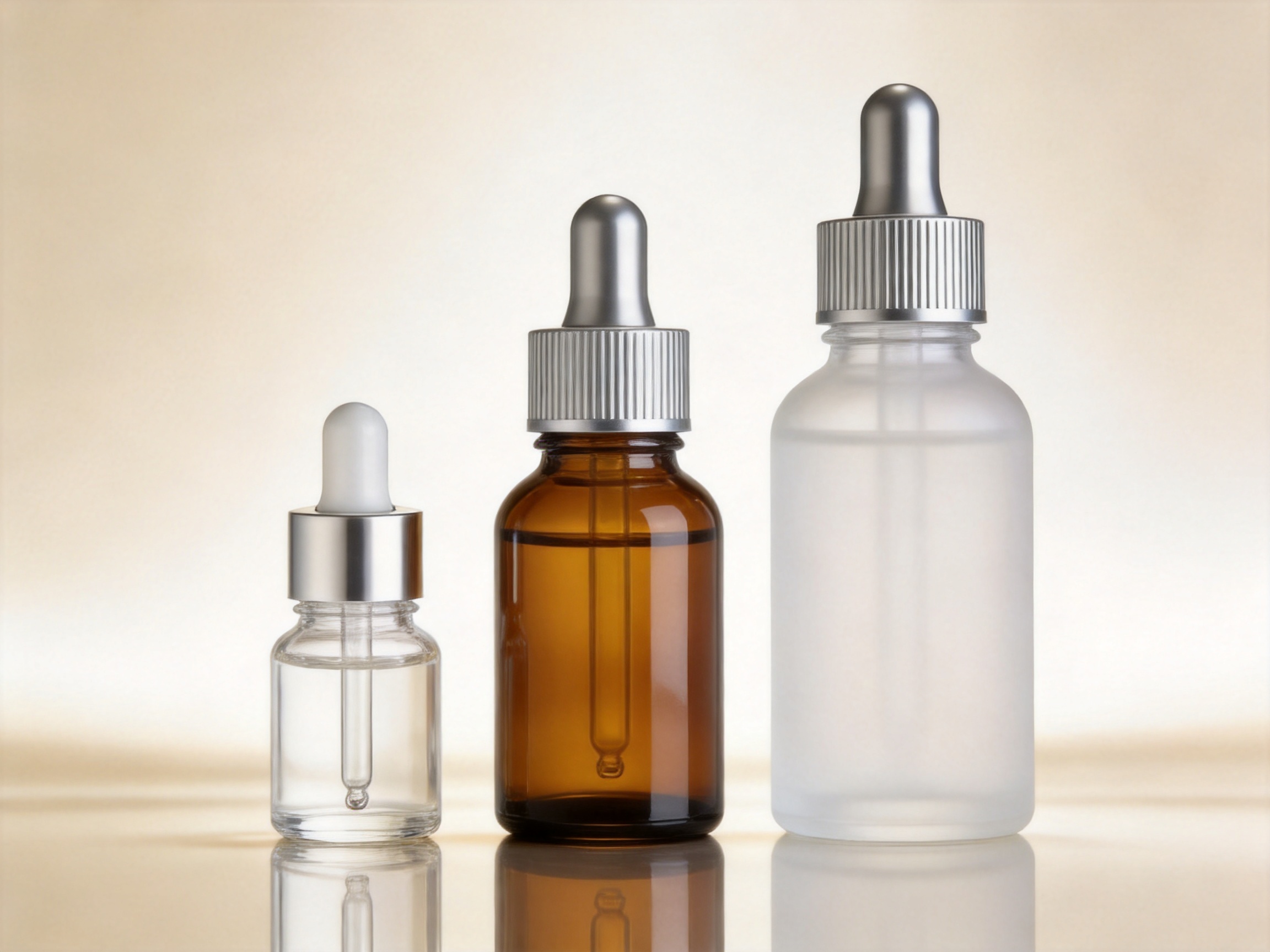
The combination also supports diverse design directions. A clear glass bottle can emphasize color and clarity, while amber or colored glass can create a more traditional apothecary appearance. Frosted glass can create a soft, luxurious impression, and a dark bottle can support a professional or treatment-focused identity. The aluminium dropper can be matched to each of these styles through its surface treatment and closure profile.
Controlled Dispensing
The dropper mechanism is intended to provide measured delivery for products that should be used in small quantities. By drawing liquid into the pipette and releasing it gradually, the user can better regulate the amount applied. This is more suitable for concentrated formulations than a fully open bottle neck that may pour too quickly.
Controlled dispensing can also support better product economics. When the user can release only the amount needed, the formulation is less likely to be spilled or overused. For premium products, reducing unnecessary waste is valuable because it helps consumers obtain more applications from each package.
Adaptability Across Product Sizes
The availability of all size options is a major advantage for brands with multiple product formats. A business may require a small bottle for a trial kit, a medium bottle for a standard retail product, and a larger bottle for professional or salon use. The same general dropper concept can be adapted across these formats, supporting a more consistent packaging family.
Size flexibility can simplify product line planning. Instead of selecting a completely different closure for every bottle capacity, a brand can maintain a recognizable dispensing format while adjusting the dimensions to suit the product. This can help create visual consistency across a product range and make related items easier for consumers to identify.
Multiple Surface Options
Ribbed, smooth, and matte closure options offer practical and aesthetic choices. A ribbed closure can provide additional grip, which may be useful when opening or closing the bottle. A smooth closure can create a clean silhouette and is suitable for minimalist designs. A matte finish can reduce the visual intensity of reflected light and create a more subtle, sophisticated impression.
These surface options also allow packaging designers to differentiate product lines. For example, a smooth finish may be selected for a daily serum, a matte finish for a premium treatment collection, and a ribbed finish for an essential oil or professional-use series. The closure texture can communicate a product's intended character without changing the basic dispensing function.
Aluminium Glass Bottle Dropper
Applications in Personal Care and Cosmetic Packaging
Facial Serums
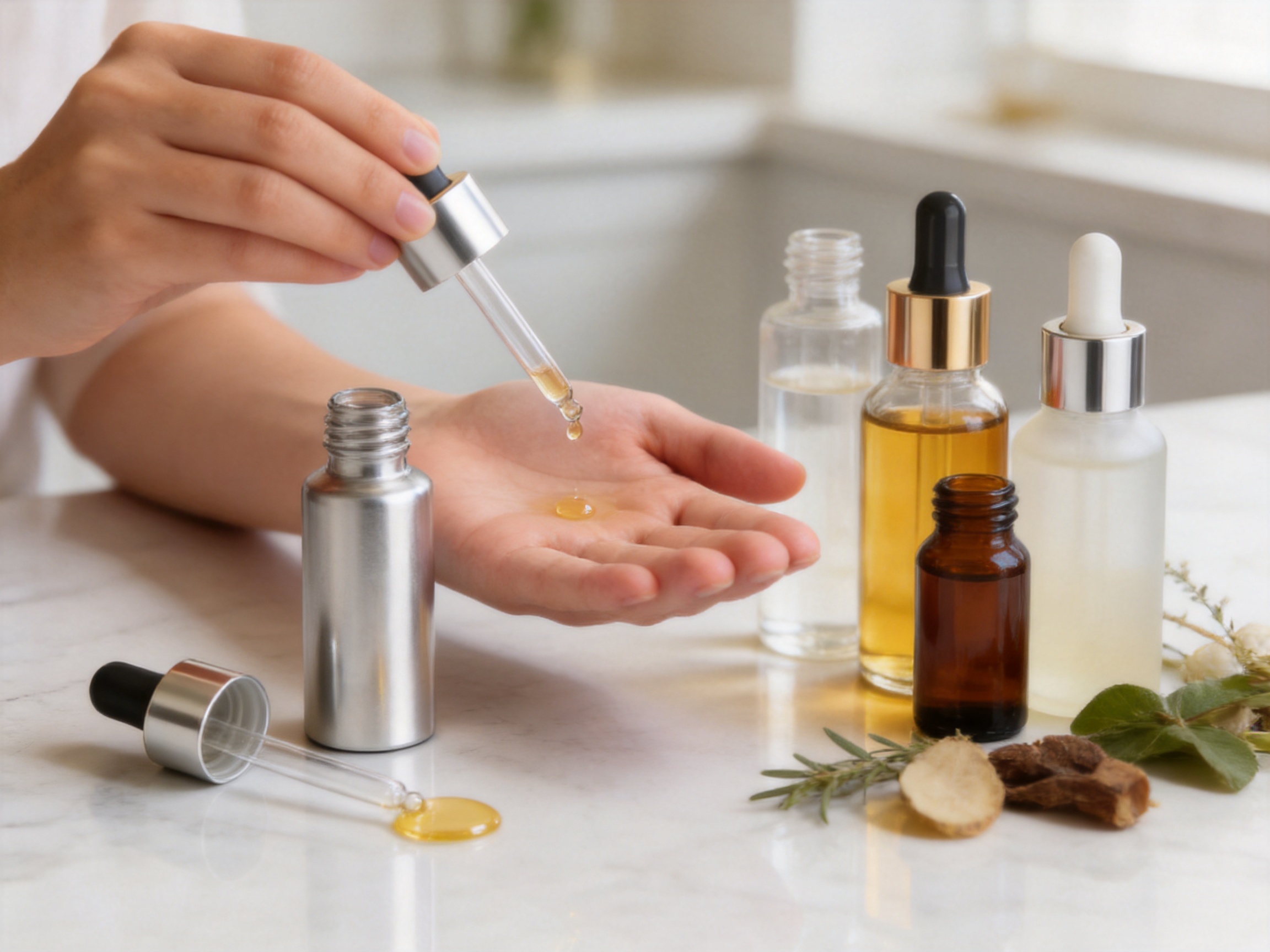
Facial serums are among the most common applications for dropper packaging. These products are often concentrated and intended for application in small amounts. A dropper allows the consumer to dispense several drops onto the fingertips or palm before spreading the serum across the face.
The aluminium glass bottle dropper is appropriate for water-based, oil-based, and mixed-phase serum concepts, subject to compatibility testing between the formula and all packaging components. Its premium appearance also fits the elevated positioning commonly associated with anti-aging, brightening, hydrating, firming, and repairing serums.
Facial and Body Oils
Oils can be difficult to dispense accurately from a conventional open bottle. A dropper offers improved control and can reduce the possibility of a large quantity being released at one time. This is helpful for facial oils, body oils, beard oils, massage oils, and targeted treatment oils.
Different oil formulations may have different flow characteristics. Low-viscosity oils may pass through the dropper quickly, while thicker oils may require a different pipette configuration or internal component design. For this reason, appropriate product testing should be completed before mass production. The broad size availability of the dropper provides a foundation for adjusting the package to the intended formulation and user experience.
Essential Oils and Botanical Blends
Essential oils and botanical blends are commonly sold in small bottles because only limited quantities may be needed for each use. A dropper closure suits this application by supporting targeted dispensing and reducing the likelihood of accidental pouring.
The aluminium exterior can also contribute to a distinct natural, professional, or apothecary-inspired appearance when combined with amber, clear, or frosted glass. A ribbed cap may be selected for grip, while a matte cap may be used to create a more understated botanical design.
Targeted Treatment Products
Products intended for localized application can benefit from dropper packaging. Examples include scalp treatments, nail and cuticle oils, blemish treatments, pigment concentrates, and other liquid products used on a specific area. The user can control the amount and place the product where it is needed without applying excessive formula to surrounding areas.
Travel and Sample Packaging
Small dropper bottles are suitable for trial sizes, promotional kits, hotel amenities, travel collections, and discovery sets. A compact package can provide the same controlled dispensing experience as a larger retail bottle while using less material and occupying less space.
For brands introducing a new formulation, a sample-size dropper can also support product testing and customer feedback. The packaging can communicate the quality of the full-size product while giving consumers an accessible way to evaluate the formula.
Comparison with Alternative Closure Formats
Every closure type has a suitable application. The aluminium glass bottle dropper is especially strong where controlled dispensing, premium presentation, and compatibility with concentrated liquid products are important. The following comparison highlights its position among common packaging alternatives.
Closure format |
Typical strengths |
Considerations compared with a dropper |
Simple screw cap |
Simple construction and easy opening |
Provides limited control over the amount poured and may be less suitable for concentrated liquids |
Wide-mouth jar |
Convenient access for creams and balms |
Less appropriate for runny liquids and involves greater direct contact during use |
Lotion pump |
Useful for lotions, creams, and medium-viscosity formulas |
May dispense more product than needed for a concentrated serum or treatment oil |
Fine mist sprayer |
Creates a spray for liquid and fragrance applications |
Not suitable when a product must be applied in drops or targeted quantities |
Plastic dropper |
Lightweight and economical |
May not provide the same metallic appearance or premium tactile impression as aluminium |
Aluminium glass bottle dropper |
Controlled dispensing, premium appearance, adaptable sizing, and suitability for serums and oils |
Requires formula, component, and package compatibility testing before production |
The comparison demonstrates that the best closure depends on the product formulation and intended user experience. A spray is suitable when broad distribution is desired, a pump is effective for creams and lotions, and a jar can work well for thick products. For concentrated liquids that need precise, low-volume dispensing, the dropper has a clear functional advantage.
Design Flexibility and Customization Potential
Packaging must balance function and visual identity. The aluminium glass bottle dropper provides a flexible base for customization because it can be supplied in different sizes and closure surface styles. This allows designers to adapt the package to a wide range of product concepts without abandoning the benefits of controlled dispensing.
Size Selection
Size should be selected according to the intended dosage, product shelf life, retail positioning, and consumer usage frequency. A small bottle may be appropriate for highly concentrated products, trial formats, or products used only occasionally. A larger bottle may be preferred for daily-use serums, professional products, or treatment oils applied over an extended period.
The bottle and dropper should be considered as a complete system. The pipette length should be appropriate for the bottle height, and the dropper capacity should match the expected amount of product required per application. A properly selected size helps ensure that the user can access the formula efficiently throughout the life of the package.
Closure Texture
Texture influences both appearance and handling. Ribbed closures are practical where grip is a priority. Smooth closures may be preferred for modern, clean, and understated packaging. Matte finishes can support a premium, soft-touch visual direction and may coordinate well with frosted glass, neutral labels, or muted color palettes.
Texture can also help distinguish different product categories within one brand family. A company may use one surface type for daily skincare and another for professional treatments while retaining a consistent bottle shape and dispensing system.
Coordination with Labels and Secondary Packaging
The dropper should be designed as part of the complete package rather than treated as an isolated component. Its finish can be coordinated with the label typography, bottle color, carton printing, and other visual elements. A metallic closure may be paired with a simple monochrome label for a modern design or combined with botanical graphics for a natural product line.
For premium products, the package can be supported by a rigid carton, molded insert, or carefully designed presentation box. For everyday products, a simple label and lightweight secondary package may provide a more efficient solution. The versatility of the dropper allows it to support both approaches.
Manufacturing Capabilities Supporting Product Quality
The performance of a dropper depends on more than the visible closure. The bottle interface, pipette, bulb or actuator components, seals, threads, and finishing processes must work together accurately. GreenYard Tools Co., Ltd. is described as a China-based packaging material manufacturer with 16 years of experience in spray product manufacturing and related packaging solutions.
The company's stated manufacturing capabilities include mold design, injection molding, automated assembly, and quality inspection. These capabilities are important because a reliable dropper requires consistent dimensional control across multiple components. If the closure thread, sealing surface, or pipette position is not produced accurately, the user experience may be affected.
Mold Design
Mold design is a foundational stage in the production of packaging components. A well-designed mold helps establish the intended shape, dimensions, surface details, and repeatability of the closure. For products with ribbed or textured surfaces, mold accuracy is especially important because the pattern must be reproduced consistently across production batches.
Experienced mold development can also support customization. When a customer requires a specific size, closure profile, or visual detail, the mold design process must translate those requirements into a manufacturable component. Proper design can help reduce defects, improve assembly performance, and support stable production efficiency.
Injection Molding
Injection molding is used to manufacture many precision packaging components. The process involves delivering material into a mold under controlled conditions, allowing the component to form with the desired geometry. Consistent temperature, pressure, cooling, and cycle control are important for maintaining quality.
For a dropper system, dimensional consistency supports proper fit between the closure and bottle. It also helps maintain the alignment of internal components and contributes to a secure seal. The company's injection molding capability provides an important manufacturing foundation for producing packaging products at commercial scale.
Automated Assembly
Dropper packaging contains several parts that must be assembled in the correct sequence and position. Automated assembly can improve repeatability and production speed while reducing variation caused by manual handling. It can also support consistent insertion of pipettes, placement of internal components, and installation of closures.
Automation is particularly valuable for large-volume production. The supplied company information states that the manufacturer has a daily production capacity of one million units. High capacity can help support large orders, product launches, and ongoing replenishment programs, subject to project specifications and production scheduling.
Quality Inspection
Quality inspection is necessary to verify that packaging components meet the required standards before shipment. Inspection may involve checking appearance, dimensions, fit, sealing performance, dispensing behavior, and assembly consistency. For a dropper, visual inspection alone is not enough. Functional testing is also important because the package must operate correctly when the consumer opens, fills, dispenses, and recloses it.
A systematic inspection process can help identify issues such as surface defects, incomplete molding, incorrect assembly, poor alignment, damaged threads, or inconsistent fit. Early detection reduces the risk of unsuitable components reaching the filling line or the final market.
Importance of Formula and Package Compatibility
Although the aluminium glass bottle dropper is designed for serums, oils, and similar liquids, every formula should be evaluated individually. Ingredients can differ substantially in viscosity, acidity, solvent content, fragrance composition, and sensitivity to air or light. These characteristics can influence the selection of the bottle, pipette, bulb, liner, and closure materials.
Compatibility testing should examine whether the formulation causes swelling, brittleness, discoloration, odor transfer, leakage, or changes in dispensing performance. The package should also be observed over time under appropriate storage conditions. This process helps confirm that the product remains stable and that the closure continues to function as intended.
Viscosity is an especially important factor. A very fluid liquid may dispense quickly, while a thicker oil or gel-like serum may require a different internal design. The amount released by each squeeze or activation can vary according to the formulation. Testing should therefore evaluate the real product rather than relying only on water or another simple laboratory liquid.
Filling conditions should also be considered. The bottle neck, closure dimensions, and production line equipment must be compatible. A package that performs well in a small laboratory batch may require process adjustments when used in high-volume filling. Early technical communication between the packaging supplier, formulation team, and filling facility can help prevent delays.
Hygienic and User-Friendly Dispensing
A dropper can support a cleaner application routine by reducing the need to pour a liquid from an open bottle. The pipette draws product from inside the container and releases it in a controlled manner. When used correctly, this can help limit unnecessary contact with the remaining formula.
The user experience also benefits from the clear sequence of operation. The consumer opens the cap, activates the dropper, lifts the liquid, and releases the desired amount. This process is intuitive for many skincare and cosmetic users, especially when the package includes simple instructions on the label or carton.
Closure texture contributes to usability. A ribbed exterior can provide additional grip for users who need greater control when opening or tightening the package. Smooth and matte finishes can also be comfortable to handle when the bottle is correctly sized and the closure profile is well balanced.
Proper closure behavior is essential. The cap should close securely after each use, and the internal components should remain correctly positioned. Consumers should also be advised not to touch the pipette directly to the skin or another surface unless the product instructions specifically permit it. Good packaging design and clear instructions work together to support a hygienic experience.
How the Dropper Supports Product Positioning
Packaging communicates product value before the consumer reads the full label. A sophisticated closure can support a premium position, while precise dispensing suggests that the formula is concentrated and carefully developed. These signals are important in categories where consumers compare not only ingredients and claims but also the overall sensory experience of the product.
The aluminium glass bottle dropper can support several positioning strategies. For luxury skincare, the metallic closure and glass bottle can create an elegant presentation. For professional treatments, the controlled dispensing format can reinforce precision and technical performance. For natural oils and botanical products, the package can create an apothecary-inspired appearance. For travel or sample collections, smaller sizes can communicate convenience without sacrificing functionality.
The product can also help brands maintain consistency across a product family. When several formulations use related bottle and closure formats, consumers may recognize them as part of the same range. Size, surface texture, label color, and secondary packaging can then be adjusted to distinguish individual products.
Operational Benefits for Brands and Manufacturers
Packaging selection affects more than the end-user experience. It also influences purchasing, filling, inventory, quality management, and product development. A supplier with experience in multiple packaging categories can offer useful support when a brand is developing a new product range.
The manufacturer's product scope includes crimp pumps, fine mist sprayers, lotion pumps, treatment pumps, foam pumps, droppers, cosmetic plastic packaging bottle caps, airless bottles, deodorant stick bottles, cream jars, nail polish pumps, trigger sprayers, mini triggers, PE and PET bottles, and roll-on bottles. This broad portfolio indicates the ability to support different dispensing requirements within personal care and daily chemical packaging.
For a brand that sells several product types, access to a wider packaging range can simplify supplier management. The same manufacturer may be able to provide a dropper for a serum, a pump for a lotion, a sprayer for a fragrance mist, and a jar for a cream. This does not eliminate the need for product-specific testing, but it can make communication and sourcing more coordinated.
Manufacturing capacity is another consideration. A stated daily capacity of one million units can be valuable for customers planning high-volume launches or long-term supply. Production capacity should always be confirmed according to the specific product, customization level, order quantity, quality requirements, and delivery schedule.
Quality and Production Process Considerations
Component Consistency
A dropper works as a system, so each component must be produced consistently. The closure must fit the bottle, the pipette must reach the product effectively, and the sealing elements must help prevent leakage. Small differences in dimensions can become noticeable during filling or consumer use.
Appearance Control
Premium packaging requires careful attention to appearance. Surface scratches, uneven texture, color variation, molding marks, and incorrect assembly can reduce the perceived value of the finished product. Inspection procedures should therefore address both functional and cosmetic requirements.
Assembly Accuracy
Automated assembly can help place components consistently, but the finished product should still be checked to verify that the dropper operates correctly. Assembly inspection may include checking cap movement, pipette position, bulb response, closure fit, and overall appearance.
Order and Specification Management
Before production, the buyer and supplier should confirm the bottle size, neck specification, closure finish, internal components, color, decoration, packaging method, order quantity, and testing requirements. Clear documentation helps reduce misunderstandings and supports repeat orders with consistent results.
Practical Selection Guide
When selecting an aluminium glass bottle dropper, buyers should begin by identifying the product's physical characteristics. The formulation's viscosity, density, volatility, color, fragrance, and sensitivity should be reviewed. The intended dosage and application method should also be defined.
The next step is to select the bottle size. A mini bottle may be ideal for samples or concentrated treatments, while a larger size may be better for daily-use products. The relationship between the bottle height and pipette length should be verified so that the user can access the remaining product without difficulty.
Closure appearance should be selected according to brand identity and handling requirements. Ribbed, smooth, and matte options each offer different benefits. Buyers should request samples where possible so that the finish, grip, appearance, and dispensing performance can be assessed in real conditions.
Compatibility testing should be completed with the final formula. The test should include repeated opening and closing, dispensing consistency, leakage observation, storage conditions, and visual inspection over time. Where the formula is particularly sensitive or aggressive, additional testing may be needed.
Finally, the customer should confirm production details with the supplier. Important topics include mold requirements, sample approval, lead time, minimum order quantity, inspection standards, packing configuration, shipping protection, and quality documentation.
Environmental and Material Considerations
Material selection is an increasingly important part of packaging development. Aluminium and glass are often selected for their appearance, strength, and established role in premium packaging. Their suitability for a particular sustainability strategy depends on the complete package design, local recycling systems, transportation requirements, and the way consumers dispose of the product.
Reducing unnecessary material is one practical consideration. Selecting an appropriate bottle size can help avoid excess packaging and improve product-to-package efficiency. A durable package that protects the formula and supports complete use may also help reduce product waste.
Packaging designers should consider the complete system rather than evaluating one material in isolation. The bottle, dropper, label, carton, protective insert, and shipping packaging all contribute to the overall environmental profile. Efficient production, reliable quality, and reduced defect rates can also help minimize waste during manufacturing.
Any environmental claim made on a finished product should be supported by appropriate evidence and should reflect the complete packaging system. Buyers should discuss material specifications, decoration methods, and disposal guidance with their packaging supplier before making specific public claims.
Brand and Consumer Experience
A good package should be easy to understand and pleasant to use. The aluminium glass bottle dropper offers a recognizable application method for consumers who are familiar with serum and oil packaging. Its visual weight and controlled dispensing action can make the product feel more deliberate and valuable.
The user should be able to identify where to hold the bottle, how to activate the dropper, and how much product to release. Clear instructions can explain whether the product should be applied directly to the skin, mixed with another product, or placed into the palm first. These details can help maximize the benefits of the formulation and reduce misuse.
Packaging also influences repeat purchase. If the closure leaks, releases too much product, or becomes difficult to operate, consumers may develop a negative impression even when the formulation itself is effective. A reliable dropper helps protect the relationship between the consumer and the product by making daily use more convenient and predictable.
Why Choose an Experienced Packaging Manufacturer
Packaging development often involves technical decisions that are not immediately visible. An experienced manufacturer can help buyers evaluate size, closure style, component compatibility, production methods, and quality control requirements. This support is especially useful for brands that are launching their first serum, oil, or treatment product.
GreenYard Tools Co., Ltd. has been identified as a high-end packaging material manufacturer from China specializing in spray product manufacturing for 16 years. Its stated capabilities include mold design, injection molding, automated assembly, and quality inspection. These areas cover important stages of the packaging development and production process.
The company is also described as having a dedicated design team that promotes product innovation and provides packaging solutions for global markets. A design team can help translate a brand's functional and visual requirements into a practical package concept. This may include selecting an appropriate closure style, refining the appearance, and adapting the format to different product sizes.
A broad product portfolio and high production capacity can further support customers with multiple packaging needs. The manufacturer's location in Yuyao City, Zhejiang Province, places it within an established manufacturing region known for plastic, pump, sprayer, and packaging production. Buyers should still evaluate each project through samples, technical specifications, testing, and quality approval.
Ordering and Project Development Process
A successful packaging project generally begins with a clear product brief. The buyer should provide information about the formula, target market, bottle size, expected quantity, desired finish, dispensing requirements, and intended use. The more complete the brief, the easier it is to identify a suitable dropper configuration.
Sample evaluation should follow the initial discussion. Samples allow the buyer to review the cap appearance, bottle fit, grip, dropper response, dispensing amount, and general presentation. The sample should ideally be tested with the final or representative formulation rather than with water alone.
After sample approval, the parties should confirm the production specification. This may include the closure finish, color, decoration, bottle capacity, pipette configuration, packing method, inspection criteria, and delivery requirements. Any custom mold or tooling information should be documented before mass production begins.
During production, quality checks should be performed according to the agreed standard. The finished packaging should be protected during packing and transportation to reduce the risk of scratches, breakage, deformation, or contamination. On receipt, the buyer should conduct incoming inspection before filling a large production batch.
Frequently Asked Questions
What is the aluminium glass bottle dropper used for?
The dropper is designed for liquid products such as facial serums, treatment oils, essential oils, botanical blends, and other concentrated formulations that benefit from controlled dispensing.
What sizes are available?
The product is available in all size options according to the packaging requirement. It can be configured for mini bottles, sample bottles, standard retail containers, and larger full-size bottles, subject to technical confirmation.
What closure finishes can be selected?
The available closure styles include ribbed, smooth, and matte options. The choice can be based on grip, appearance, product positioning, and coordination with the bottle and label design.
Is the dropper suitable for both oil-based and water-based products?
It can be suitable for many oil-based and water-based products, including serums and oils. However, compatibility must be tested with the exact formulation because viscosity and ingredients can affect dispensing and material performance.
Why use a dropper instead of a standard screw cap?
A dropper provides more controlled dispensing and is better suited to products that are used in small quantities. A standard screw cap may allow the product to pour too quickly or may provide less control for concentrated liquids.
What is the advantage of the aluminium exterior?
The aluminium exterior creates a refined, premium appearance and can provide a distinctive tactile experience. It can also complement the weight and appearance of a glass bottle more effectively than a basic closure.
What is the difference between ribbed, smooth, and matte closures?
Ribbed closures provide a textured surface that may improve grip. Smooth closures create a clean and simple appearance. Matte closures offer a softer, low-reflection finish that can support a premium or understated design.
Can the same dropper concept be used for different bottle sizes?
Yes. The product is designed with broad size adaptability. The appropriate closure dimensions, pipette length, and internal configuration should be selected for each bottle size and formulation.
Does the dropper prevent product waste?
It can help reduce waste by allowing the user to release a smaller and more controlled amount of product. Actual product usage depends on the formula, dropper design, user behavior, and application instructions.
Is the dropper suitable for professional products?
It can be suitable for professional skincare, treatment oils, salon products, and other concentrated liquids. The correct size and dispensing configuration should be selected according to professional usage requirements.
What manufacturing processes support this product?
The stated manufacturing capabilities include mold design, injection molding, automated assembly, and quality inspection. These processes help support component consistency, assembly accuracy, production efficiency, and finished-product reliability.
How should compatibility be tested?
The final formulation should be placed in the complete package and evaluated for leakage, dispensing behavior, material changes, odor transfer, discoloration, and long-term stability under suitable storage conditions. Repeated opening and closing should also be included.
Can the closure be customized for a brand?
Customization may be possible through size selection, surface finish, color, decoration, and other project-specific details. Requirements should be discussed with the manufacturer during the sample and specification stages.
What should buyers confirm before placing an order?
Buyers should confirm the bottle and neck dimensions, closure finish, capacity, pipette configuration, formula compatibility, color, decoration, quantity, packaging method, inspection standard, lead time, and delivery requirements.
Conclusion
The aluminium glass bottle dropper is a versatile packaging solution for serums, oils, essential oils, treatment liquids, and other concentrated formulations. Its controlled dispensing function helps users apply the right amount of product, while its aluminium closure and glass bottle combination provide a premium and adaptable presentation.
The product is available in all size options and can be supplied with ribbed, smooth, or matte closure finishes. This flexibility allows it to support mini bottles, full-size retail packages, professional products, sample sets, and coordinated product families. Compared with basic screw caps, wide-mouth jars, and less specialized closures, the dropper offers stronger control for low-volume liquid application.
Its success depends on accurate component design, reliable assembly, suitable materials, and careful compatibility testing. The manufacturer's stated experience in packaging production, mold design, injection molding, automated assembly, quality inspection, product innovation, and high-volume manufacturing provides a strong foundation for developing and producing this type of package.
For brands seeking a refined, functional, and adaptable package for liquid personal care products, the aluminium glass bottle dropper offers a practical balance of dispensing precision, visual value, user convenience, and manufacturing flexibility.
References
1. GreenYard Tools Co., Ltd. Product information for the GY-901A1-AL aluminium glass bottle dropper.
2. GreenYard Tools Co., Ltd. Company information covering mold design, injection molding, automated assembly, quality inspection, and packaging production capacity.
3. Personal care packaging development principles concerning dropper selection, product compatibility, dispensing control, and user experience.
4. Cosmetic and skincare packaging design practices for serums, oils, treatment liquids, and concentrated formulations.
5. General packaging quality-control practices for component inspection, assembly verification, leakage testing, and finished-product evaluation.
Product: Aluminium Glass Bottle Dropper

-
Roll On Bottles: Types, Refill Guide, and Packaging Buying Tips for Your Brand
The first sample rolled smoothly, the second clicked, and the third leaked after ten presses. Three...
-
How Glass Airless Bottle Packaging Prevents Contamination and Boosts Shelf Life?
Glass airless bottle packaging prevents contamination and extends shelf life by completely eliminat...
-
What Makes a Good Deodorant Stick Bottle for Brands?
A deodorant stick bottle is a twist-up or push-up dispensing container designed to hold and advance...
-
Amber Plastic Bottles: Lightweight, Protective, Customizable Packaging for Cosmetics
You have spent months stabilizing a vitamin C serum, only to watch a pallet of amber glass bottles ...
Copyright © GreenYard Tools Co.,ltd. All Rights Reserved.
Personal Care Packaging Manufacturer Custom Perfume Sprayers Factory