
-
About Us
Why Choose Us?The company possesses advanced capabilities in mold design, injection molding, and automated assembly, supported by a professional quality inspection team to ensure product reliability. A dedicated design team continuously drives product innovation, providing customers with high-quality spray solutions.
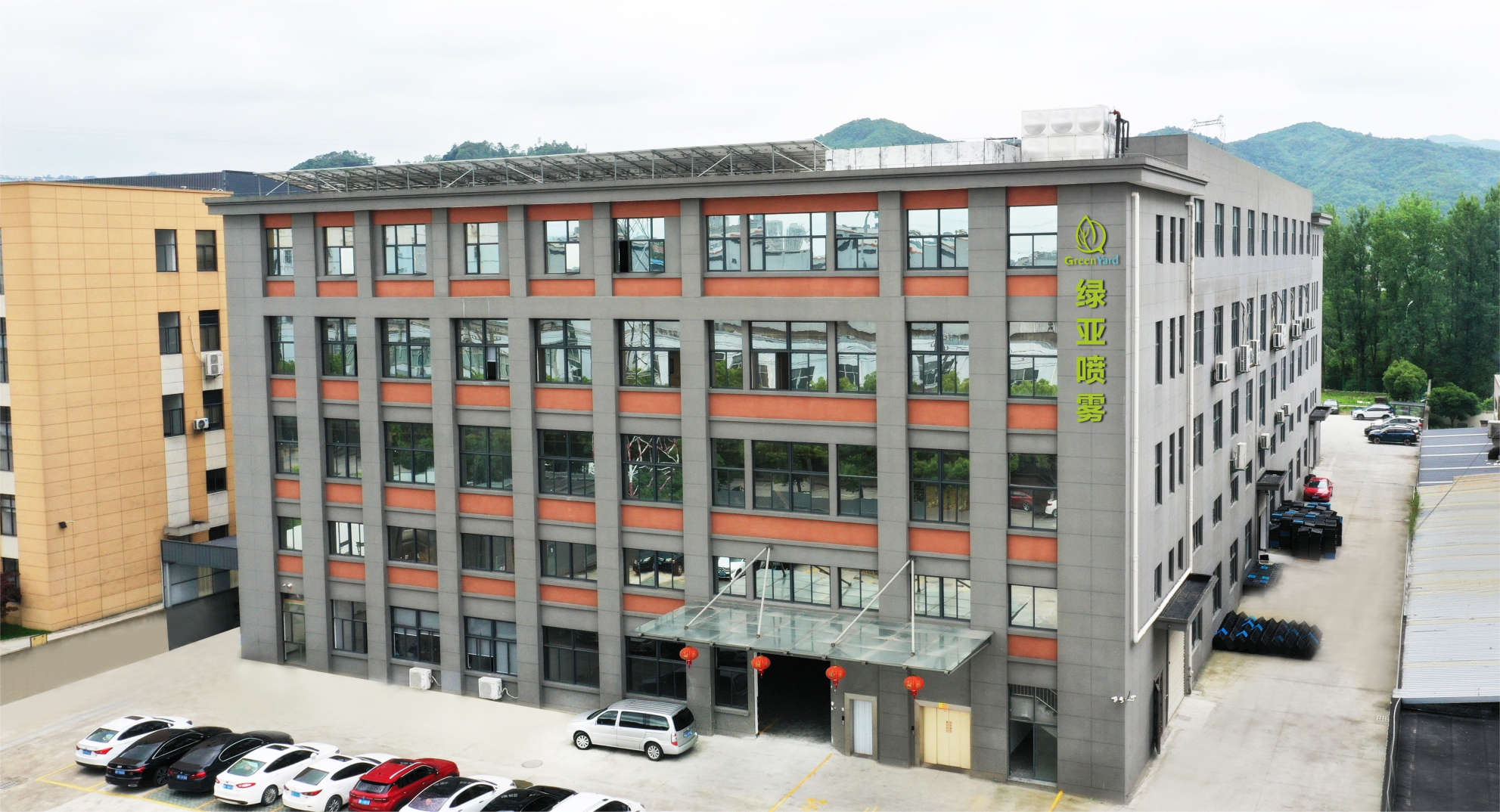 Coming From China, Marketing To The World.
-
Products
-
News
 English
 Français
 русский
 Español
Plastic Round Base PP Cream Jar: A Versatile Packaging Solution for Modern Skincare Products
Content
- 1 1. Product Overview and Main Design Concept
- 2 2. Why Polypropylene Is Suitable for Cream and Lotion Packaging
- 3 3. Capacity Options for Different Product Strategies
- 4 4. Advantages Compared with Alternative Packaging Formats
- 5 5. Product Applications in Beauty and Personal Care
- 6 6. Manufacturing Process and Quality-Oriented Production
- 7 7. Manufacturing Strengths of the Supplier
- 8 8. Product Advantages for Brands and Packaging Buyers
- 9 9. Packaging Development Considerations
- 10 10. Sustainability and Responsible Material Selection
- 11 11. Customization and Brand Presentation
- 12 12. Comparing Supplier Capabilities in the Packaging Market
- 13 13. Recommended Applications by Business Type
- 14 14. Ordering and Project Planning
- 15 15. Frequently Asked Questions
- 15.1 Q1: What material is used for the Plastic Round Base PP Cream Jar?
- 15.2 Q2: What capacities are available?
- 15.3 Q3: What products can be filled into the jar?
- 15.4 Q4: Is the jar suitable for thick creams?
- 15.5 Q5: What are the main advantages over glass jars?
- 15.6 Q6: Is PP an eco-friendly material?
- 15.7 Q7: Can the jar be customized?
- 15.8 Q8: What manufacturing capabilities support this product?
- 15.9 Q9: Can the jar be used for international distribution?
- 15.10 Q10: How should users maintain product hygiene when using a jar?
- 15.11 Q11: What should buyers test before mass production?
- 15.12 Q12: Why is supplier manufacturing capacity important?
- 16 16. Conclusion
- 17 References
- 18 Product: Plastic Round Base PP Cream Jar
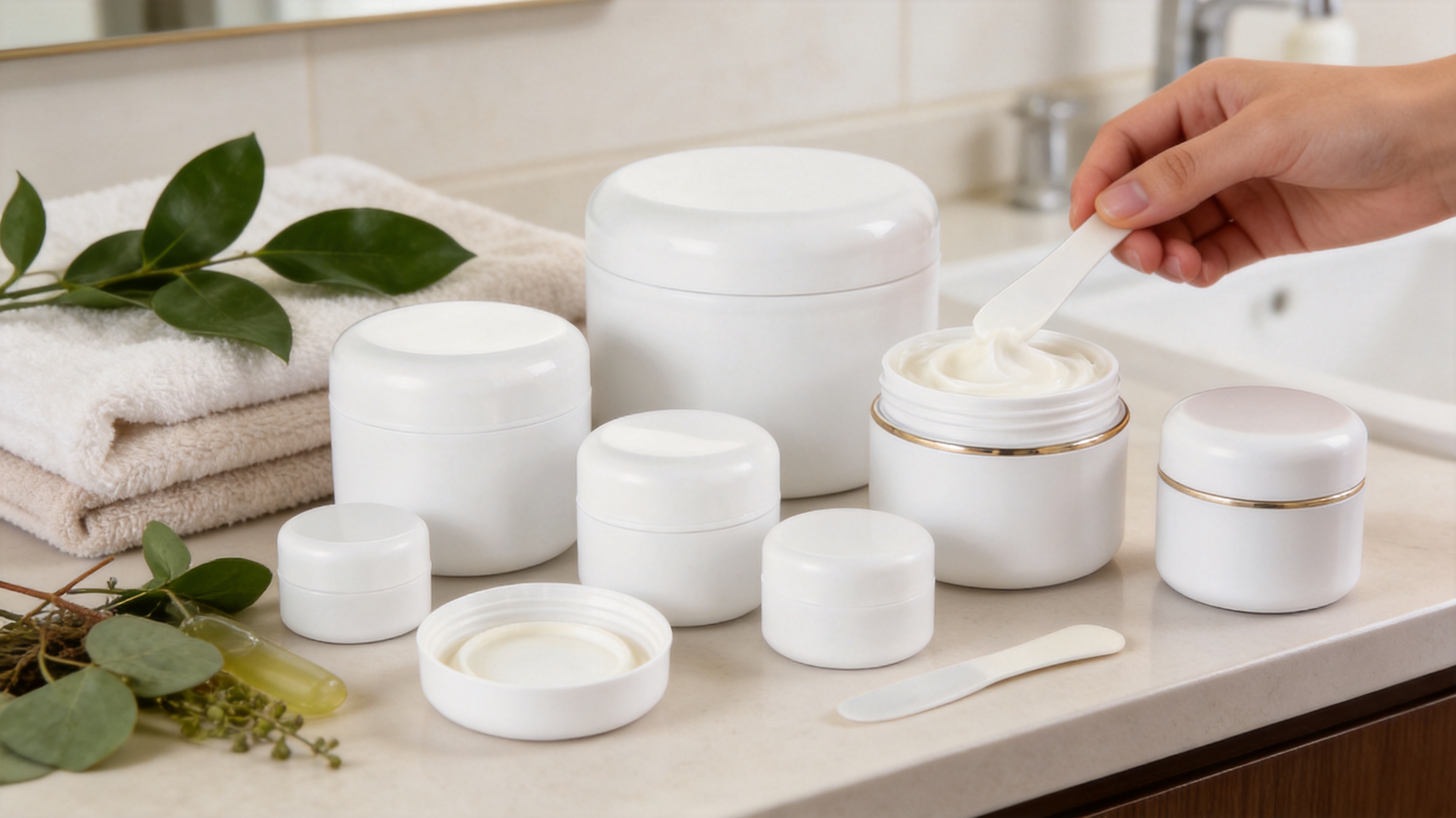
Packaging plays a central role in the success of skincare, beauty, personal care, and cosmetic products. A well-designed container must do more than hold a formulation. It should protect the contents, support convenient daily use, communicate product quality, and provide manufacturers with practical options for filling, labeling, storage, and distribution. For creams, lotions, balms, masks, scrubs, and other semi-solid formulations, the plastic jar remains one of the most reliable and adaptable packaging formats available.
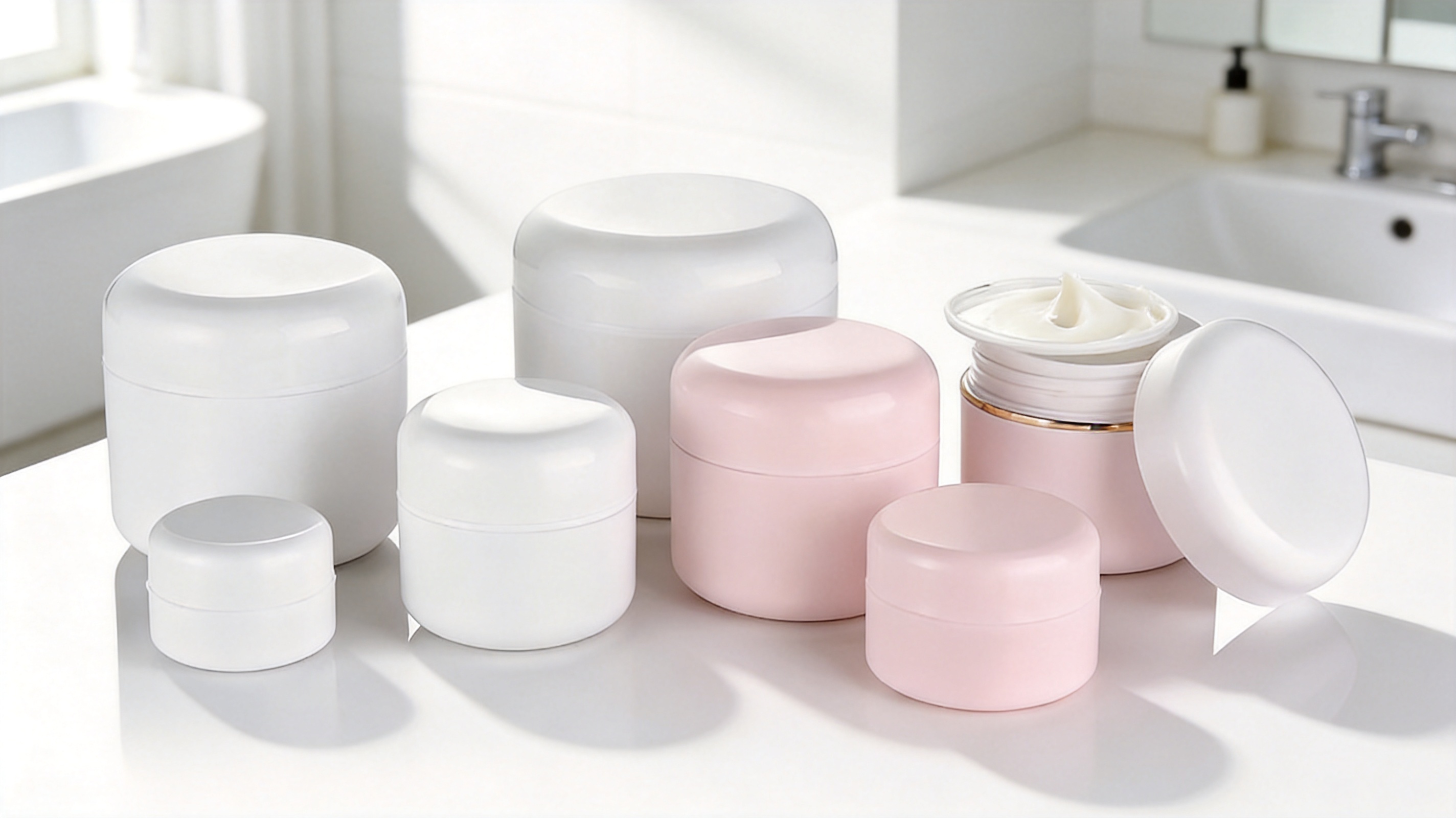
The Plastic Round Base PP Cream Jar is designed to meet these requirements through a simple, functional, and versatile structure. Manufactured from 100% polypropylene, commonly known as PP, the jar combines durable material performance with a broad range of capacity options. Available in 5-gram, 15-gram, 20-gram, 30-gram, 50-gram, 60-gram, and 100-gram sizes, it can accommodate small samples, travel products, professional-use formulations, and standard retail skincare products.
Its round base provides a balanced appearance and a stable platform for placement on shelves, counters, bathroom surfaces, treatment rooms, and cosmetic displays. The format is suitable for cream and lotion products, while its flexible design may also support many other personal care formulations, subject to compatibility testing. For brands seeking a practical alternative to glass, complex multi-material packaging, or rigidly standardized containers, this PP jar offers a strong combination of functionality, production efficiency, and presentation flexibility.
GreenYard Tools Co., Ltd. manufactures this type of personal care packaging as part of a broader portfolio that includes perfume sprayers, perfume pump heads, lotion pumps, caps, bottles, and daily chemical packaging solutions. With 16 years of experience in spray product manufacturing, the company has developed capabilities in mold design, injection molding, automated assembly, and quality inspection. These capabilities support consistent production and enable the company to provide packaging solutions for customers serving global personal care markets.

Plastic Round Base PP Cream Jar
1. Product Overview and Main Design Concept
The Plastic Round Base PP Cream Jar is a container developed for products that are commonly dispensed by opening the lid and removing the formulation directly from the jar. This format is particularly familiar in skincare and cosmetic applications because it provides a wide opening, allows users to access nearly all of the product, and works well with creams and other products that are too thick for conventional pumps.
The product is identified by three fundamental design features: a round jar body, a stable base, and a PP material construction. These features create a container that is easy to position, easy to fill, and straightforward to integrate into a wide variety of product concepts. The clean geometry also allows the jar to be used with different closure, decoration, labeling, and color strategies depending on the customer’s packaging requirements.
The round shape is especially suitable for products that are intended to appear approachable, functional, and easy to use. Unlike narrow-neck bottles, the jar provides a broad access area. This makes it suitable for rich creams, body butters, cleansing balms, overnight masks, hair treatments, and other products that require a user to scoop or spread the formulation.
The round base also contributes to stability. A container that sits securely on a flat surface is important in bathrooms, bedrooms, professional treatment environments, retail displays, and shipping cartons. Stable packaging can reduce the likelihood of accidental tipping during normal use and can improve the visual organization of multiple units placed together.
Product Feature |
Specification or Benefit |
Product type |
Plastic round base cream jar |
Primary material |
100% polypropylene, or PP |
Available capacities |
5g, 15g, 20g, 30g, 50g, 60g, and 100g |
Typical applications |
Cream, lotion, skincare, cosmetic, and other compatible semi-solid formulations |
Shape |
Round body with a stable base |
Packaging advantages |
Broad access opening, practical handling, flexible capacity selection, and efficient plastic construction |
2. Why Polypropylene Is Suitable for Cream and Lotion Packaging
Material selection directly influences packaging performance. Polypropylene is widely used in personal care packaging because it provides a useful balance of toughness, light weight, processability, and chemical resistance. In a cream jar, these characteristics help create a container that is practical for both manufacturers and end users.
One important advantage of PP is its relatively low weight compared with many glass packaging formats. Lightweight packaging can help reduce handling effort during filling, warehousing, order preparation, and transportation. It may also make the finished product easier for consumers to carry, especially when the jar is used for travel-size or daily personal care products.
PP also offers good resistance to impact in ordinary packaging applications. This is valuable during production and distribution, when containers may be moved through filling lines, cartons, pallets, warehouses, and delivery networks. While all packaging should be protected from excessive impact and unsuitable storage conditions, a durable plastic body can provide practical resilience for routine commercial handling.
The material is also suitable for injection molding, a manufacturing process that allows manufacturers to form consistent shapes at production scale. Injection molding supports repeatable dimensions, defined base geometry, and efficient production of multiple capacity formats. It also allows packaging designers to develop clean surfaces and functional details that support the overall jar structure.
From a sustainability perspective, the jar is made of 100% PP material. A single-material plastic construction can simplify material identification and may support more straightforward sorting and recycling practices where suitable collection and recycling systems exist. However, recycling availability varies by region, and responsible packaging decisions should consider local waste-management infrastructure, product contamination, decoration, and closure composition.
PP is also a familiar material in the personal care industry. This familiarity can help packaging buyers evaluate compatibility, filling behavior, and supply-chain requirements more efficiently. Even so, every formulation should be tested against the final container, particularly when it contains essential oils, strong solvents, active ingredients, fragrances, or other components that may affect packaging performance over time.
3. Capacity Options for Different Product Strategies
A major strength of this cream jar is its range of available capacities. The product can be supplied in 5-gram, 15-gram, 20-gram, 30-gram, 50-gram, 60-gram, and 100-gram formats. This range enables brands to use a consistent packaging concept across several product sizes rather than selecting unrelated containers for every product variation.
The 5-gram size can be suitable for samples, promotional units, trial products, professional testers, or highly concentrated formulations used in small quantities. Smaller containers can help brands introduce a product to new customers without requiring a full-size purchase. They may also be practical for gift sets, subscription boxes, hotel amenities, and event-based marketing programs.
The 15-gram and 20-gram sizes can support compact travel products, targeted treatment creams, eye-area products, overnight treatments, and other formulations intended for limited or occasional use. These sizes offer a useful balance between portability and product quantity.
The 30-gram size can serve as a medium-format option for specialty skincare products, facial creams, masks, and treatment products. It can be used for premium or concentrated formulas where the consumer applies a relatively small amount per use.
The 50-gram and 60-gram formats are widely practical for daily-use face creams, moisturizing products, hand creams, body treatments, and other standard retail applications. These capacities can offer enough product for regular use while keeping the package manageable and easy to store.
The 100-gram size provides greater capacity for body creams, larger skincare products, salon-use formulations, family-use products, and products designed for frequent application. It may also be suitable for refill-oriented concepts or value-size offerings, provided that the formulation and closure system are appropriate for repeated opening and closing.
Capacity |
Potential Product Positioning |
Typical Commercial Use |
5g |
Sample or concentrated treatment |
Trial units, testers, gifts, and travel kits |
15g |
Compact specialty product |
Targeted treatments and portable skincare |
20g |
Small personal care format |
Travel products, eye creams, and gift sets |
30g |
Medium specialty format |
Facial creams, masks, and concentrated formulas |
50g |
Standard daily-use format |
Moisturizers, facial creams, and cosmetic treatments |
60g |
Expanded daily-use format |
Skincare, hand care, and body care products |
100g |
Large or value-size format |
Body creams, frequent-use products, and salon applications |
Having multiple sizes can also support product-line consistency. A brand may use smaller capacities for introductory products and larger capacities for best-selling or family-use products while maintaining a recognizable package family. This can simplify visual merchandising and help consumers understand the relationship between different items in a collection.
4. Advantages Compared with Alternative Packaging Formats
The Plastic Round Base PP Cream Jar offers several practical advantages when compared with some common alternatives. Each packaging format has a suitable purpose, but the jar is particularly effective when direct access, wide-mouth filling, lightweight handling, and flexible sizing are important.
4.1 Compared with narrow-neck bottles
Narrow-neck bottles can work well for liquid products, but thick creams and dense lotions may be difficult to dispense through a small opening. A round cream jar provides a wider opening, allowing the formulation to be filled more easily and enabling the user to access thicker products without excessive squeezing or pumping.
The wide opening can also make it easier to remove the final portion of the product. With a bottle, consumers may need to shake, invert, or cut open the container when the product level becomes low. With a jar, the remaining formulation is generally visible and accessible, although the user should follow appropriate hygiene practices during repeated contact.
4.2 Compared with glass jars
Glass can provide a premium appearance and excellent rigidity, but it is heavier and more vulnerable to breakage than a plastic container. A PP jar can reduce the weight of the finished package and may offer greater convenience in transportation, storage, and everyday handling.
For products used in bathrooms or carried in travel bags, reduced breakage risk can be a meaningful practical benefit. The plastic format may also be better suited to promotional shipments, subscription boxes, and large-volume distribution where packaging weight and impact resistance influence logistics costs and handling requirements.
4.3 Compared with airless packaging
Airless containers can be valuable for formulas that require reduced air exposure or controlled dispensing. However, they are generally more complex in construction and may involve multiple components. A traditional jar can be a more straightforward option for formulations that do not require an airless mechanism and for brands that prioritize broad product access and a simple user experience.
The round PP jar may also be more accessible for customers who want a practical package without the additional components associated with airless systems. The correct choice depends on the formulation’s sensitivity, preservation system, application method, and desired product positioning.
4.4 Compared with flexible tubes
Tubes are convenient for portable products and controlled dispensing, but some consumers prefer the open access and visible product quantity offered by a jar. A jar can also be more suitable for dense masks, body butters, scrubs, and products that are difficult to squeeze through a tube opening.
The choice between a jar and a tube should consider viscosity, usage habits, hygiene expectations, filling requirements, and brand presentation. For products intended to be applied generously with fingers or a spatula, the jar remains a highly practical format.
5. Product Applications in Beauty and Personal Care
The primary application of the jar is for cream and lotion formulations. This includes facial moisturizers, night creams, hand creams, body creams, foot creams, massage products, and other semi-solid personal care products. The broad access opening allows users to remove the desired amount and apply it directly to the skin.
Skincare brands may use the jar for daily moisturizers, nourishing creams, anti-aging products, repair treatments, sleeping masks, and seasonal skincare products. The choice of capacity can reflect the recommended usage period, the concentration of active ingredients, and the desired retail price.
The format is also suitable for cosmetic products such as primer creams, color-correcting balms, body shimmer products, and makeup-removing balms. For these applications, the compatibility of the formulation with PP should be evaluated before mass production, especially where the product includes oils, pigments, fragrances, or other ingredients that could affect appearance or container performance.
Professional and salon products represent another potential application. The 60-gram and 100-gram formats may be useful for treatment creams, massage products, spa preparations, and other formulations used more frequently or in larger quantities. A stable round base can be convenient in treatment rooms and workspaces where the container needs to remain upright during repeated use.
Small capacities may be used for sample campaigns, hotel amenities, medical-aesthetic treatment kits, travel collections, and limited-edition product launches. A single jar design that is available in several sizes can help businesses develop different commercial programs without redesigning their entire packaging identity.
6. Manufacturing Process and Quality-Oriented Production
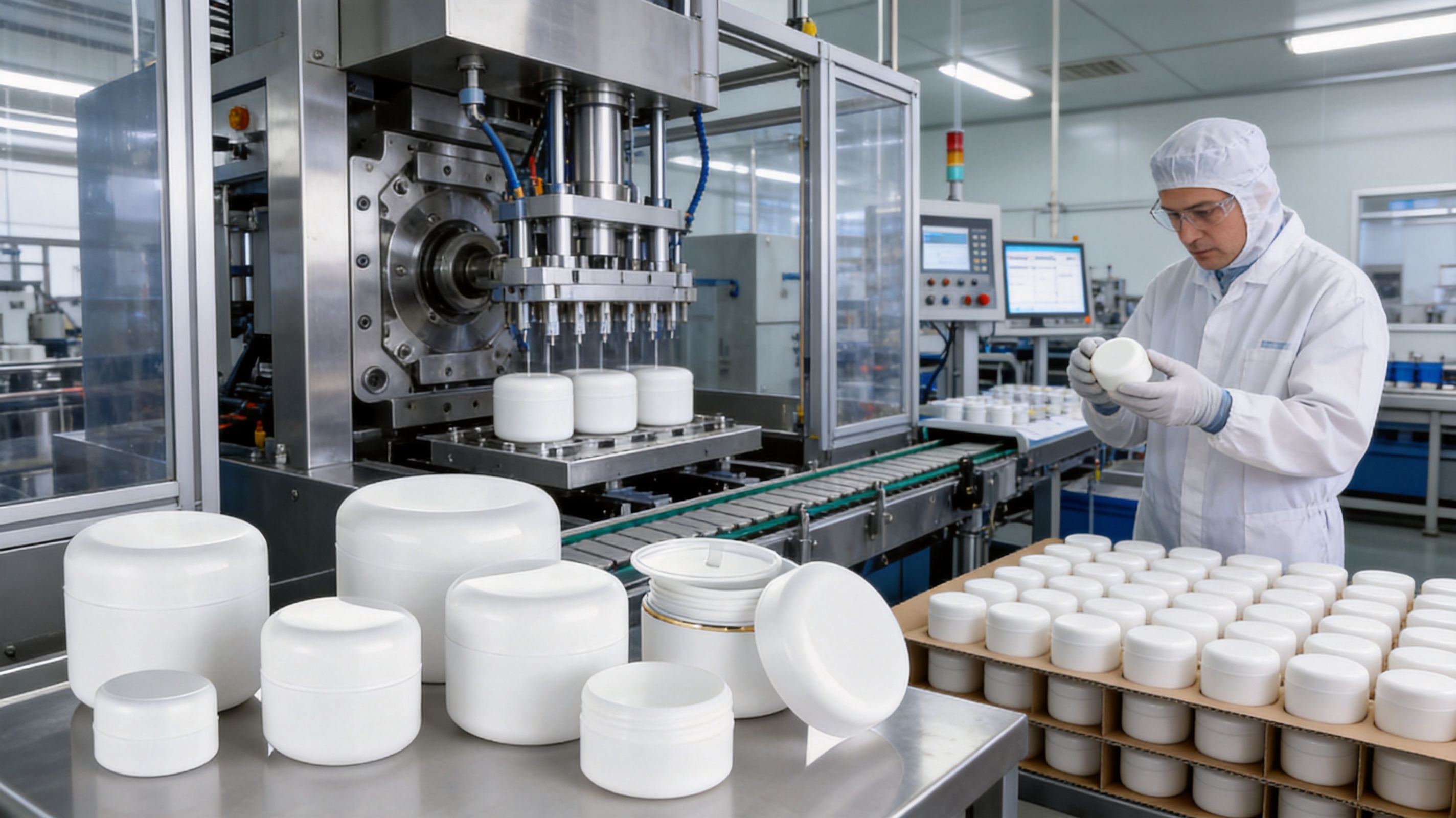
The performance of a plastic cream jar depends not only on its design but also on the consistency of its manufacturing process. Variations in dimensions, wall thickness, thread quality, base flatness, or surface appearance can affect filling, closure, labeling, and customer perception. GreenYard Tools Co., Ltd. supports production through a combination of mold design, injection molding, automated assembly, and quality inspection.
6.1 Mold design and engineering
Mold design is the first important stage in creating consistent injection-molded packaging. A well-engineered mold helps define the jar’s dimensions, opening, base, wall structure, and connection points. It also influences cycle efficiency, surface quality, and the ability to reproduce the same product across repeated production runs.
GreenYard’s mold design capability allows the company to develop and refine tooling for personal care packaging products. Engineering attention at this stage can help address practical requirements such as stable standing, even wall formation, clean edges, reliable closure engagement, and compatibility with filling and packaging equipment.
Good mold design also supports future product development. When a customer requires multiple capacities or related packaging components, a capable engineering team can evaluate how to maintain visual and functional consistency across the product family. This is valuable for brands that want a coordinated packaging range rather than a single isolated container.
6.2 Injection molding
Injection molding enables molten PP material to be shaped under controlled conditions. The material is introduced into the mold, formed into the required geometry, cooled, and released as a finished jar component. Control over processing conditions is important because temperature, pressure, cooling time, and material flow can influence the final appearance and dimensions.
For packaging production, repeatability is essential. A consistent injection-molding process helps ensure that containers are suitable for subsequent operations such as inspection, decoration, filling, capping, carton packing, and shipment. It also helps reduce avoidable variation between production batches.
Because PP is well suited to injection molding, it can support efficient manufacturing of large quantities. GreenYard reports a daily production capacity of one million units across its production activities. This capacity is important for customers that need reliable supply for regional distribution, international orders, seasonal launches, or high-volume daily chemical products.
6.3 Automated assembly
Automated assembly can improve speed and consistency when packaging components need to be combined or prepared for delivery. Automation may help reduce manual handling, support repeatable assembly sequences, and improve production efficiency. It is particularly useful for manufacturers serving customers that require stable output over long production runs.
Automation does not eliminate the need for human oversight. Instead, it works together with engineering, production management, and quality-control personnel. Operators and technicians remain important for equipment setup, process monitoring, troubleshooting, maintenance, and verification of production results.
6.4 Quality inspection
Quality inspection is necessary to verify that packaging meets defined requirements before shipment. For a cream jar, inspection may consider appearance, dimensions, base stability, opening quality, closure fit, surface defects, contamination, and packaging cleanliness. Specific tests should be selected according to the customer’s design and intended use.
A quality-oriented process can help identify problems before products reach filling facilities or end users. Early detection is especially valuable because packaging defects discovered after filling may lead to product loss, rework, delayed delivery, or customer dissatisfaction.
Inspection should also be connected to customer requirements. Different products may require different appearance standards, dimensional tolerances, closure tests, compatibility checks, or packaging configurations. A manufacturer with experience across spray products, pumps, caps, bottles, and jars can draw on broader packaging knowledge when evaluating a new project.
7. Manufacturing Strengths of the Supplier
GreenYard Tools Co., Ltd. has specialized in spray product manufacturing for 16 years. Although the company’s portfolio includes many spray-related products, its capabilities extend across a wider range of personal care packaging components and daily chemical packaging solutions. This broader experience is valuable for customers that need coordinated bottles, caps, pumps, sprayers, or jars for a complete product line.
The company’s main product areas include perfume sprayers, perfume pump heads, lotion pumps, caps, bottles, and related packaging components. This range allows customers to communicate with a supplier that understands different dispensing systems and packaging structures. For a skincare or beauty brand, the ability to source complementary components from one experienced manufacturer may simplify project coordination and reduce the number of supplier relationships that must be managed.
Daily production capacity of one million units indicates that the manufacturer is equipped to support high-volume orders. Production capacity alone does not determine quality, but it can be an important factor when a customer needs reliable delivery for a successful product launch or an established product with regular replenishment requirements.
The company also maintains a dedicated design team. Design capability can support product refinement, packaging customization, mold development, and the creation of solutions that better fit a customer’s application. For brands seeking more than an off-the-shelf container, technical design support can help translate packaging goals into manufacturable details.
Advanced manufacturing is most valuable when different capabilities work together. Mold design creates the tooling foundation. Injection molding produces the main components. Automated assembly improves production efficiency. Quality inspection verifies the results. Together, these stages form a production system that can support dependable packaging supply from concept through delivery.
8. Product Advantages for Brands and Packaging Buyers
8.1 Flexible product development
The seven available capacities give brands flexibility during product planning. A company can launch a small trial size, a standard retail size, and a larger value size using a related packaging platform. This can support market testing and product segmentation without requiring an entirely new container concept for every version.
8.2 Efficient logistics
The PP construction offers a lightweight alternative to heavier packaging materials. Lower package weight can make a difference when products are shipped in large quantities. It may also support more convenient handling during warehousing, packing, retail stocking, and order fulfillment.
8.3 Broad formulation suitability
The jar is intended for creams, lotions, and similar formulations. Its wide opening and direct-access design make it particularly suitable for products with medium to high viscosity. This can provide a better user experience than packaging formats designed primarily for thin liquids.
8.4 Straightforward filling concept
A jar format can be convenient for filling lines that are designed to deposit semi-solid products into open containers before the closure is applied. Its simple construction may reduce the mechanical complexity associated with specialized dispensing systems. Filling conditions must still be validated for the specific formulation and production line.
8.5 Strong shelf presentation potential
The round jar offers a broad surface area for labels, printing, decoration, or other brand communication methods. The final appearance can be developed in different directions, from clean and clinical to colorful, natural, premium, or minimalist. The container’s simple geometry provides a flexible base for visual identity.
8.6 Convenient consumer access
Consumers can see and reach the product directly. This is useful for thick formulas and products that are applied by hand or with a cosmetic spatula. The format also allows users to judge how much product remains, which can be helpful when planning a replacement purchase.
9. Packaging Development Considerations
Although the jar is versatile, successful packaging development requires attention to the complete product system. The container should be tested with the intended formulation, closure, label, filling process, secondary packaging, and distribution conditions.
Compatibility testing is particularly important for formulas containing oils, solvents, fragrances, active ingredients, acids, or other potentially reactive substances. Testing may include visual observation, weight change, odor transfer, color change, leakage evaluation, closure performance, and storage at different temperatures. The specific test program should be determined by the formulation and intended shelf life.
Preservation and hygiene should also be considered. Because a jar allows repeated direct access, the brand should provide suitable usage instructions and ensure that the formula’s preservation system is appropriate for the opening and application method. Consumers may be advised to use clean hands or a spatula and to close the container after each use.
Label design should account for the available surface area and the curvature of the jar. Labels should be selected for appropriate adhesion and resistance to contact with oils, water, creams, bathroom humidity, and normal handling. The brand may also need to reserve space for product information, ingredients, batch details, net content, directions, and regulatory markings.
Secondary packaging can provide additional protection during transport and create an opportunity for brand storytelling. Cartons, inserts, shrink bands, or tamper-evident solutions may be considered depending on the market, formulation, product positioning, and regulatory expectations.
10. Sustainability and Responsible Material Selection
The jar is made of 100% PP material, which provides a practical basis for a single-material packaging approach. Using one primary plastic material can make the package easier to identify than a highly complex combination of materials, although the actual recyclability of any package depends on local infrastructure and the construction of the complete container.
Responsible packaging decisions should consider the entire life cycle. Material quantity, manufacturing efficiency, transportation weight, product protection, shelf life, consumer use, and end-of-life collection all influence the environmental profile of packaging. A lightweight jar that protects the formulation and reduces product waste may offer practical benefits, even though no single material is suitable for every product or market.
Brands can support more responsible use by selecting the smallest suitable capacity, avoiding unnecessary secondary components, providing clear disposal information, and working with suppliers to minimize production waste. They may also evaluate recycled-content options or future material changes when these are technically and commercially appropriate.
It is important not to make broad environmental claims without verification. PP is commonly recognized as a recyclable plastic material, but recycling access differs between regions. Customers should confirm local requirements, closure compatibility, labeling effects, and relevant regulations before making recycling claims on the finished product.
11. Customization and Brand Presentation
A packaging container becomes part of a product’s identity once it reaches the market. The round PP jar can support different approaches to brand presentation through color selection, labeling, printing, surface treatment, and coordinated closures. The suitable method depends on order volume, design requirements, budget, and production schedule.
Color can help distinguish product categories or communicate a brand’s positioning. Soft colors may support a gentle skincare concept, while bold colors can create a more energetic cosmetic appearance. Neutral or opaque colors may be selected to protect light-sensitive formulations, although the final protection level should be verified through product testing.
Labels can provide a cost-effective way to apply brand graphics and variable product information. Printed or decorated surfaces may create a more integrated appearance for premium product lines. When selecting any decoration method, brands should evaluate abrasion resistance, moisture resistance, adhesion, color consistency, and compatibility with the filling and packing process.
Because the company also manufactures caps, bottles, pumps, and sprayers, customers may be able to coordinate multiple packaging components through one supplier. Coordinated sourcing can help brands maintain consistent colors, finishes, and quality expectations across a product family.
12. Comparing Supplier Capabilities in the Packaging Market
Packaging buyers often compare suppliers based on more than unit price. Important factors include material knowledge, tooling capability, production capacity, quality systems, communication, lead-time management, customization support, and experience with export markets. A low initial price may not provide value if the supplier cannot maintain consistent quality or deliver the required volume.
GreenYard’s combination of long-term industry experience, design support, injection molding, automated assembly, and quality inspection provides a structured basis for evaluating the supplier. Its specialization in spray products and broader daily chemical packaging portfolio may also be useful for customers developing complete personal care packaging systems.
The reported daily production capacity of one million units can be an advantage for businesses that need scalable supply. A supplier with substantial production resources may be better positioned to support growth from pilot quantities to larger commercial programs, although customers should still confirm minimum order quantities, tooling arrangements, lead times, inspection procedures, and shipping terms for each project.
Supplier comparison should also include technical communication. A capable packaging manufacturer should be able to discuss the formulation, filling process, closure requirements, decoration method, shipping environment, and intended market. This information helps determine whether the jar is suitable and what validation steps are needed before mass production.
13. Recommended Applications by Business Type
13.1 Emerging skincare brands
New skincare companies can use the capacity range to test different product sizes and price points. The 5-gram, 15-gram, or 20-gram formats may be useful during sampling and early market validation, while the 50-gram or 60-gram formats can support a standard retail launch.
13.2 Established cosmetic companies
Established brands may use the jar for line extensions, seasonal releases, limited editions, gift sets, and regional product formats. Its broad size selection can support portfolio expansion while maintaining a consistent packaging structure.
13.3 Contract manufacturers
Contract manufacturers often need packaging that can serve multiple customer formulas and filling programs. A practical PP jar available in several sizes can simplify sourcing and provide a familiar format for creams, lotions, masks, and treatment products.
13.4 Salons and professional treatment providers
Professional users may prefer larger capacities for products used repeatedly during treatments. The 60-gram and 100-gram formats can be considered for suitable salon, spa, and cosmetic treatment applications, subject to hygiene and formulation requirements.
13.5 Promotional and hospitality programs
The smaller capacities may be suitable for promotional campaigns, hotel amenities, sample boxes, customer gifts, and event distribution. Their compact size can help businesses introduce a product without committing to a full-size package.
14. Ordering and Project Planning
A successful packaging order begins with a clear product brief. The brief should state the desired capacity, formulation type, filling quantity, closure requirements, color, decoration, estimated order volume, target market, and expected delivery schedule. Providing this information early helps the manufacturer evaluate the correct production route.
Customers should request samples before approving a large order. Samples allow the brand to review the appearance, dimensions, base stability, opening, closure fit, label placement, and overall user experience. Samples should also be tested with the actual formulation whenever possible.
Production approval should be based on an agreed specification. This may include material requirements, acceptable appearance standards, dimensional tolerances, closure performance, packaging method, carton quantity, inspection criteria, and labeling or decoration details. A written specification helps reduce misunderstandings between the buyer and manufacturer.
Lead time should account for mold preparation, sample approval, material procurement, production, inspection, packing, and transportation. Custom colors, special decoration, or new tooling may require additional time. Customers planning a product launch should include a reasonable schedule for testing and possible adjustments.
After production, the buyer should inspect received goods according to an agreed sampling plan. Checking cartons, quantities, appearance, dimensions, closures, and packaging integrity can help identify transport or production issues promptly. Good communication between the buyer and supplier supports continuous improvement for future orders.
15. Frequently Asked Questions
Q1: What material is used for the Plastic Round Base PP Cream Jar?
The jar is made of 100% polypropylene, or PP. PP is a lightweight and durable plastic commonly used for personal care packaging. It is suitable for injection molding and offers practical resistance for ordinary handling and distribution conditions.
Q2: What capacities are available?
The available capacities are 5 grams, 15 grams, 20 grams, 30 grams, 50 grams, 60 grams, and 100 grams. This range supports samples, travel products, standard retail products, professional-use products, and larger value-size formats.
Q3: What products can be filled into the jar?
The jar is designed for cream, lotion, and similar formulations. Potential applications include facial creams, body creams, hand creams, masks, balms, treatment products, and other compatible semi-solid personal care formulas. Compatibility testing should be completed for each specific formulation.
Q4: Is the jar suitable for thick creams?
Yes. The wide-access jar format is particularly practical for thick creams and other semi-solid products that may not flow easily through narrow openings or conventional pumps. The user can access the product directly after removing the closure.
Q5: What are the main advantages over glass jars?
The PP jar is generally lighter and less vulnerable to breakage during ordinary handling than a glass jar. These characteristics may support easier transportation, storage, and consumer use. The best material depends on the product’s formulation, positioning, and performance requirements.
Q6: Is PP an eco-friendly material?
The jar is made from 100% PP, a material widely used in recyclable plastic packaging systems. However, actual recycling depends on local collection and processing infrastructure, package construction, contamination, and regional regulations. Environmental claims should be verified for the target market.
Q7: Can the jar be customized?
Customization may be possible through color, labeling, printing, decoration, closure selection, and coordinated packaging components. The available options depend on order volume, technical requirements, tooling, and production conditions. Customers should discuss their specifications with the manufacturer.
Q8: What manufacturing capabilities support this product?
The manufacturer has capabilities in mold design, injection molding, automated assembly, and quality inspection. These processes support consistent production and can help meet the requirements of personal care packaging projects at different volumes.
Q9: Can the jar be used for international distribution?
It can be considered for international distribution when the formulation, packaging system, shipping conditions, and destination-market requirements have been properly tested. Customers should confirm applicable regulations, labeling rules, packaging standards, and transportation conditions for each market.
Q10: How should users maintain product hygiene when using a jar?
Users should follow the brand’s instructions, keep the closure closed when the product is not in use, and avoid introducing water or contaminants into the formulation. Clean hands or a suitable cosmetic spatula may be recommended, depending on the product and preservation system.
Q11: What should buyers test before mass production?
Buyers should evaluate container and formulation compatibility, closure fit, leakage resistance, dimensional consistency, label adhesion, surface appearance, filling performance, storage stability, and transport durability. The exact testing program should reflect the product and intended market.
Q12: Why is supplier manufacturing capacity important?
Manufacturing capacity can affect the supplier’s ability to support large orders, repeat production, seasonal demand, and business growth. GreenYard reports a daily production capacity of one million units, which may be relevant to customers requiring scalable supply.
16. Conclusion
The Plastic Round Base PP Cream Jar is a practical packaging option for brands seeking a lightweight, durable, and versatile container for creams, lotions, and other compatible personal care formulations. Its 100% PP construction supports efficient injection molding and everyday handling, while the stable round base provides reliable placement and a clean appearance.
The range of 5-gram, 15-gram, 20-gram, 30-gram, 50-gram, 60-gram, and 100-gram capacities makes the jar adaptable to multiple commercial strategies. It can support samples, travel formats, specialty treatments, standard retail products, professional applications, and larger value-size offerings. Compared with narrow-neck bottles, glass jars, airless systems, and flexible tubes, it provides particular advantages for thick formulations, direct product access, lightweight logistics, and straightforward filling.
The product is also supported by the manufacturing strengths of GreenYard Tools Co., Ltd. With 16 years of experience in spray product manufacturing, the company provides mold design, injection molding, automated assembly, and quality inspection capabilities. Its broader portfolio of pumps, sprayers, caps, bottles, and daily chemical packaging solutions can help customers coordinate packaging requirements across an entire product line.
For the best result, buyers should define their formulation, capacity, closure, decoration, filling process, quality standards, and target market before placing an order. Samples and compatibility testing should be completed before mass production. When properly selected and validated, this round PP cream jar can provide a dependable foundation for modern skincare, cosmetic, and personal care packaging programs.
References
1. GreenYard Tools Co., Ltd. Product information for the Plastic Round Base PP Cream Jar, including capacities, material, and intended applications.
2. GreenYard Tools Co., Ltd. Company information describing mold design, injection molding, automated assembly, quality inspection, product portfolio, and production capacity.
3. General packaging engineering principles for polypropylene containers, injection molding, closure performance, and personal care product compatibility.
4. General guidance on cosmetic and personal care packaging development, including formulation compatibility, hygiene, labeling, storage, and transport evaluation.
5. General principles of responsible plastic packaging selection, recycling communication, material identification, and region-specific waste-management considerations.
Product: Plastic Round Base PP Cream Jar

-
Amber Plastic Bottles: Lightweight, Protective, Customizable Packaging for Cosmetics
You have spent months stabilizing a vitamin C serum, only to watch a pallet of amber glass bottles ...
-
Airless Bottles Uncovered: How to Protect Your Skincare and Perfect Every Pump
If you have ever opened a pump bottle of serum and found the last quarter of the product impossible ...
-
Aluminum Cosmetic Packaging: Benefits, Types & Supplier Selection Guide
Aluminum cosmetic packaging has moved out of the prestige-only aisle. Independent skincare labels a...
-
Best Skincare Packaging: How to Choose Bottles, Pumps & Jars That Last
The last time a skincare brand sent us a bottle to test, the cap looked premium but the pump leaked...
Copyright © GreenYard Tools Co.,ltd. All Rights Reserved.
Personal Care Packaging Manufacturer Custom Perfume Sprayers Factory