
-
About Us
Why Choose Us?The company possesses advanced capabilities in mold design, injection molding, and automated assembly, supported by a professional quality inspection team to ensure product reliability. A dedicated design team continuously drives product innovation, providing customers with high-quality spray solutions.
 Coming From China, Marketing To The World.
-
Products
-
News
 English
 Français
 русский
 Español
Compact Foam Pump for Precise, Hygienic Personal Care Dispensing
Content
- 1 Product Overview
- 2 How a Foam Pump Supports Better Product Use
- 3 Controlled 0.35±0.1 ml Dosage
- 4 Compact Format and Packaging Efficiency
- 5 Customizable Tube Length
- 6 Plastic Closure: Lightweight and Practical
- 7 Applications in Personal Care and Daily Chemical Products
- 8 Advantages Compared with Common Alternative Dispensers
- 9 Manufacturing Capabilities Behind the Product
- 10 Design and Branding Opportunities
- 11 Compatibility and Development Testing
- 12 Filling Line and Production Considerations
- 13 Supply Chain and Customization Support
- 14 Why the GY-721B1 Is a Practical Choice
- 15 Environmental and Material Efficiency Considerations
- 16 Quality, Reliability, and Customer Confidence
- 17 Recommended Product Development Workflow
- 18 Frequently Asked Questions
- 18.1 What is the nominal output of the GY-721B1 foam pump?
- 18.2 What bottle size does the pump fit?
- 18.3 Can the dip tube be customized?
- 18.4 Which products are suitable for this foam pump?
- 18.5 Is the pump suitable for thick cream?
- 18.6 What are the main benefits of foam dispensing?
- 18.7 Does the pump require priming?
- 18.8 Can the plastic closure be produced in different colors?
- 18.9 What manufacturing capabilities support this product?
- 18.10 How should the pump be tested before launch?
- 18.11 Can this pump be used for export products?
- 18.12 What information should be provided when requesting a quotation?
- 19 Conclusion
- 20 References
- 21 Product: Compact 28mm Foam Pump
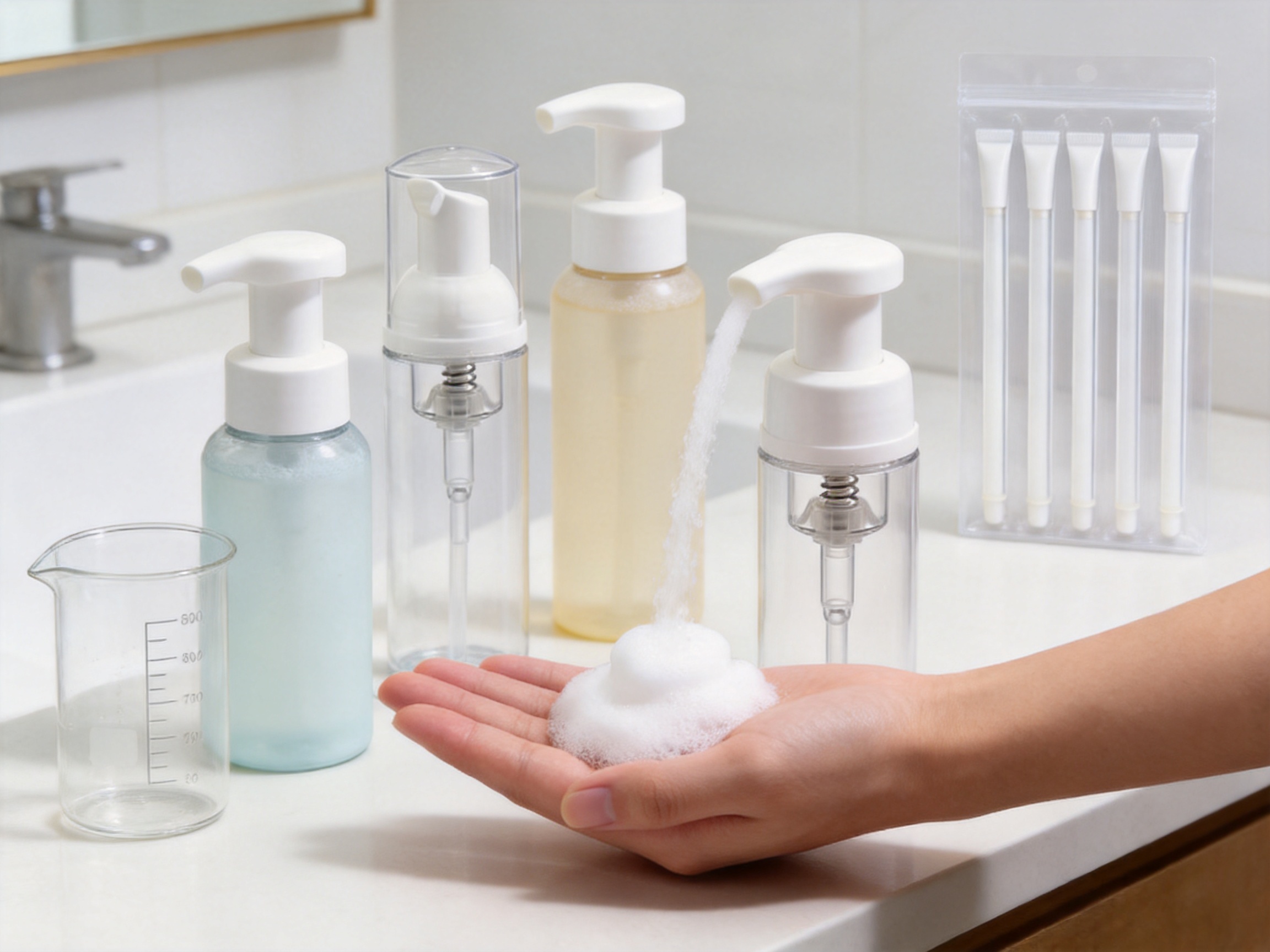
Foam packaging has become an important part of modern personal care, household hygiene, and liquid cleansing products. Consumers increasingly expect products to be easy to use, clean, economical, and attractive on the shelf. At the same time, manufacturers need packaging components that provide reliable performance, stable output, flexible compatibility, and efficient production. The Compact 28mm Foam Pump, identified as model GY-721B1, is designed to address these requirements through controlled dispensing, customizable tube length, lightweight plastic construction, and broad application potential.
With a nominal dosage of 0.35±0.1 ml per actuation and a 30-410 size option, this foam pump is suitable for a variety of liquid personal care formulations. It can be used with hand soap, sanitizer, body wash, serum, lotion, and similar products that benefit from aerated dispensing. The pump converts a measured quantity of liquid into a rich, easy-to-spread foam, helping users obtain convenient coverage while reducing mess and improving the overall product experience.
The design is especially suitable for brands and filling companies that require a compact dispensing component with practical customization options. Its plastic closure is lightweight and suitable for high-volume packaging programs, while the tube length can be adjusted according to the selected bottle. This combination of standardized performance and adaptable configuration makes the pump useful for both established product lines and newly developed formulations.
Product Overview
The GY-721B1 is a compact foam pump intended for personal care and daily chemical packaging. Its primary function is to dispense liquid in a foamed form. Rather than releasing a free-flowing stream of liquid, the pump mixes the product with air during actuation. The resulting foam is generally lighter, easier to distribute, and more comfortable to apply to the hands, face, or body, depending on the formulation and intended use.
The pump is supplied with a plastic closure and is listed with a 30-410 size option. The product title describes it as a compact 28mm foam pump, while the technical information identifies the available neck or closure specification as 30-410. Because packaging dimensions and thread standards can vary between projects, customers should confirm the bottle finish, thread profile, sealing requirements, and actual component dimensions before mass production.
A dosage of 0.35±0.1 ml provides a useful balance between economy and user convenience. The nominal output is sufficient for many hand-washing, cleansing, and light lotion applications, while the stated tolerance recognizes the normal variation associated with pump components, liquid viscosity, temperature, filling conditions, and repeated operation. For a new formulation, dosage testing should be performed with the final liquid and bottle combination rather than with water alone.
Tube length is customizable. This is an important feature because the pump must reach the bottom area of the selected container while maintaining suitable performance throughout the product’s service life. A properly selected dip tube improves product evacuation, reduces residual content, and supports a more consistent consumer experience.
Product model |
GY-721B1 |
Product type |
Compact foam pump |
Nominal size or described format |
Compact 28mm format; listed size option 30-410 |
Nominal dosage |
0.35±0.1 ml per actuation |
Closure type |
Plastic |
Tube length |
Customized according to bottle requirements |
Recommended applications |
Serum, lotion, hand soap, sanitizer, and body wash |
Primary dispensing benefit |
Controlled liquid-to-foam delivery |
How a Foam Pump Supports Better Product Use
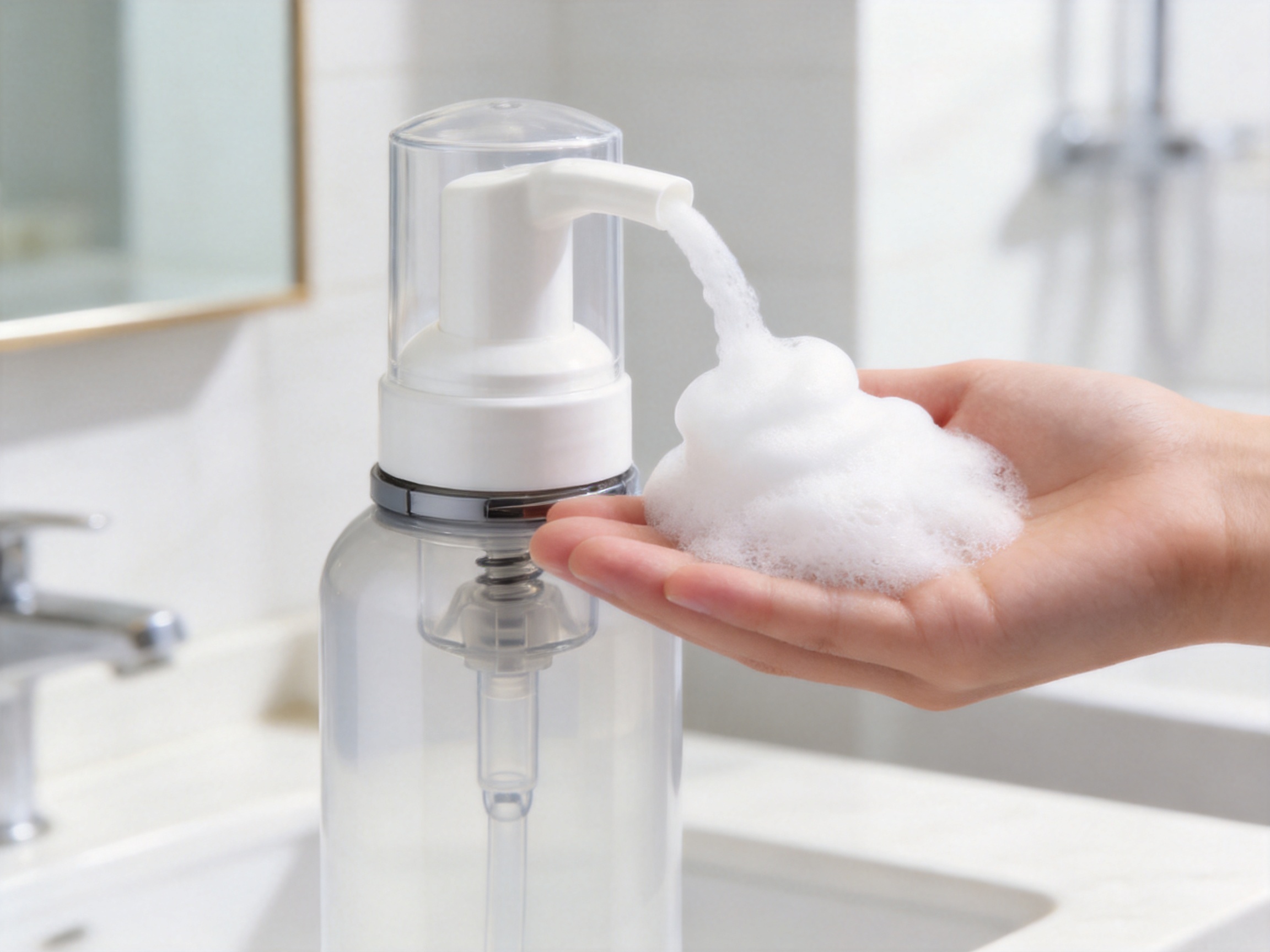
A foam pump changes the way a liquid product is presented to the consumer. A conventional lotion or liquid pump normally dispenses a relatively concentrated dose. A foam pump, by contrast, combines the liquid with air before the product exits the actuator. This creates a larger, lighter volume of foam from a measured quantity of liquid.
The expanded foam can spread rapidly across the hands or body. For hand soap and sanitizer products, this may improve coverage and make the product feel more pleasant during use. For body washes and selected cleansing products, foam can provide a familiar sensory experience while helping the user distribute the formulation evenly.
Foam delivery can also help consumers visually understand the amount dispensed. A clear volume of foam is easier to see than a small quantity of transparent liquid. This can support more controlled usage, particularly in public washrooms, hospitality facilities, schools, healthcare environments, and household applications where convenient dispensing is important.
Another benefit is reduced dripping. Because the dispensed product is aerated, it is often less likely to run immediately from the hand. This can make the package easier to operate with one hand and may reduce splashing around a sink or countertop. Actual performance depends on the formulation, but the pump format is well suited to products where clean and controlled delivery is a priority.
Controlled 0.35±0.1 ml Dosage
The stated dosage of 0.35±0.1 ml is one of the most important technical features of the pump. A controlled output helps manufacturers estimate the number of uses per container, calculate consumption rates, and design suitable package sizes. It also gives users a predictable amount with each actuation.
Dosage consistency is influenced by several factors. The internal pump structure, spring response, valve behavior, dip tube dimensions, liquid viscosity, product surface tension, and bottle pressure balance all contribute to the final output. For this reason, a pump should be evaluated with the actual formulation and final bottle rather than treated as an isolated component.
For manufacturers, the 0.35 ml nominal output can be useful in products that do not require a large dose. A smaller controlled delivery may support more uses per bottle and can help reduce unnecessary over-application. In hand soap, the dose may be suitable for routine washing. In a body wash, the user may make several actuations depending on the desired coverage. In a serum or lotion application, the output can support gradual dosing rather than releasing too much product at once.
The ±0.1 ml tolerance communicates that the pump is designed around a target output rather than an absolute volume under every condition. Professional packaging development should include start-up tests, repeated-actuation tests, upright storage tests, leakage checks, and compatibility evaluations. These procedures allow the customer to establish whether the dosage is appropriate for the product’s viscosity and intended market.
Compact Format and Packaging Efficiency
A compact pump can provide advantages in both product appearance and logistics. Smaller dispensing components may create a cleaner visual relationship between the pump and bottle, especially when used with slim containers or travel-oriented packaging. The compact format can also help designers create a modern, restrained appearance for personal care products.
Compared with larger or more elaborate dispensing heads, a compact plastic pump may reduce the amount of material used in the closure assembly. This can contribute to lower component weight and more efficient packing. Packaging efficiency is affected by the entire product system, including bottle shape, cap protection, carton dimensions, pallet configuration, and shipping method. Nevertheless, the closure is an important part of the overall design.
The compact format may also be helpful for products sold in multipacks or supplied through institutional channels. Hand soap and sanitizer packages frequently require transportation in large quantities. A practical pump that occupies limited space can support efficient case packing and warehouse handling.
Product developers should still consider actuator height, finger clearance, locking features, protective caps, and compatibility with secondary packaging. A compact pump is most effective when its dimensions are coordinated with the bottle, label, carton, and intended user environment.
Customizable Tube Length
One of the practical strengths of the GY-721B1 is its customizable tube length. Bottles may differ significantly in height, shoulder shape, base design, and internal capacity. A single standard tube length cannot provide ideal product access for every container. Customization allows the dip tube to be prepared for the specific bottle system.
A correctly selected tube should extend sufficiently toward the bottom of the bottle without being excessively long or sharply bent. If it is too short, product may remain in the container after the pump stops drawing effectively. If it is too long, the tube may bend, press against the base, or interfere with the bottle geometry. Proper tube selection therefore supports both product evacuation and consistent dispensing.
Tube customization is particularly useful when the foam pump is paired with a bottle manufactured in a special shape. A tall bottle for body wash may require a different tube from a short bottle for hand soap. A narrow bottle may also require attention to tube diameter and alignment. During development, customers can provide bottle drawings, samples, or dimensional specifications for evaluation.
The tube material and formulation compatibility should also be reviewed. Products may contain surfactants, alcohol, oils, botanical extracts, fragrances, or preservatives. Compatibility testing helps identify possible swelling, embrittlement, discoloration, stress cracking, odor transfer, or changes in pump performance over time.
Plastic Closure: Lightweight and Practical
The pump uses a plastic closure, a format widely used in personal care and daily chemical packaging. Plastic provides several practical benefits. It is lightweight, can be molded into precise shapes, and supports efficient large-scale production. It can also be combined with different surface finishes and color options to suit a product’s visual identity.
Compared with heavier closure materials, plastic can reduce shipping weight and simplify handling during filling and assembly. It is also suitable for automated production lines where components must be fed, oriented, assembled, and inspected at high speed.
The closure must create a reliable connection with the bottle finish. Thread engagement, sealing contact, torque requirements, and dimensional tolerances are important considerations. A well-matched closure helps prevent leakage during transport and storage. Customers should confirm the bottle neck specification before placing a production order, especially when the package is sourced from a different manufacturer.
Plastic components may also support color matching and decoration. Depending on the project, the closure can be coordinated with the bottle, label, actuator, or secondary package. Decoration methods should be selected according to the required appearance, order volume, surface geometry, and resistance to rubbing or chemical exposure.
Applications in Personal Care and Daily Chemical Products
Hand Soap
Foam pumps are widely associated with hand soap because they provide a ready-to-use foam that spreads quickly over the hands. The 0.35±0.1 ml dosage can support a measured delivery for routine washing, while the foam format offers a familiar and convenient user experience.
For hand soap packaging, manufacturers should evaluate the pump with the selected surfactant system. The formulation should generate stable foam without causing excessive clogging, slow recovery, or inconsistent output. The bottle should also be designed for easy placement near a sink, where repeated operation and exposure to water are common.
Sanitizer
Sanitizer packaging requires careful compatibility and safety evaluation. Alcohol-based products can behave differently from water-based products, and the final package must be tested with the actual formula. The pump can be considered for sanitizer products where controlled dispensing and reduced mess are desirable.
Because sanitizer formulations may contain volatile ingredients, customers should assess evaporation, seal performance, actuator recovery, and long-term material compatibility. The product should be tested under realistic storage and transportation conditions. The foam format may improve the user’s ability to distribute the product, but the formulation must remain suitable for the intended application and regulatory market.
Body Wash
Body wash products often benefit from packaging that combines convenient dosing with a pleasant sensory presentation. Foam can help spread the product across the skin and may create a rich user experience. A pump format is also easier to operate in a shower than a screw cap or open-mouth bottle.
When used in a shower environment, the package may be exposed to water, humidity, heat, and repeated handling. The closure, actuator, and bottle should be evaluated as a complete system. A stable base and suitable grip are also important for preventing the package from falling or being difficult to operate with wet hands.
Serum and Lotion
The product information identifies serum and lotion among the possible uses. Not every serum or lotion is suitable for a foam pump, so formulation testing is essential. Low-to-medium viscosity products may be more compatible with the pump’s dispensing pathway than highly viscous creams or products containing large particles.
For lightweight lotion or selected treatment products, controlled dispensing may help users apply small amounts gradually. The pump can also protect the product from repeated direct contact with fingers, which may support a more hygienic packaging concept. Product developers should confirm whether aeration changes the appearance, texture, or perceived application of the formulation.
Advantages Compared with Common Alternative Dispensers
The GY-721B1 offers several potential advantages compared with standard liquid pumps, flip-top closures, and open-mouth jars. These advantages should be evaluated according to the specific formula and package design, but they provide a useful basis for product selection.
Compared with Standard Liquid Pumps
A standard liquid pump generally delivers a stream or dose of liquid. The foam pump adds air to create an expanded output. This can make the product easier to spread and may provide a softer, lighter sensory impression. For cleansing products, the foam can also reduce the perception that a large amount of liquid is needed.
The foam pump may be preferable when the user wants quick coverage and a clean application. It may also support a more distinctive product presentation, particularly in categories where many packages use conventional liquid dispensers.
Compared with Flip-Top Closures
Flip-top closures require the user to open the lid, tilt or squeeze the bottle, and close the lid after dispensing. A pump can usually be operated with one hand and does not require the same repeated opening and closing action. This can be valuable near sinks, in showers, or in professional settings.
The pump also helps regulate the amount released. With a flip-top package, users may squeeze out more product than necessary. A measured pump action can support more predictable consumption, although actual savings depend on the product formula and user behavior.
Compared with Open-Mouth Jars
Jars are often chosen for thick creams, but they require users to place fingers or a tool into the container. A pump can reduce direct contact with the remaining product and may offer a cleaner dispensing process. For lightweight serums and lotions, a pump can also be more convenient than a jar.
The suitability of a foam pump depends on viscosity and formulation structure. It is not intended to replace every jar application, especially where a very thick texture is central to the product. However, for compatible products, the pump can provide a hygienic and controlled alternative.
Manufacturing Capabilities Behind the Product
GreenYard Tools Co., Ltd. is described as a China-based packaging manufacturer with 16 years of experience in spray product manufacturing. Its product range includes perfume sprayers, pump heads, caps, bottles, and daily chemical packaging solutions. This broad product focus is relevant because a foam pump is not an isolated item; it must function as part of a complete package system.
The company reports a daily production capacity of one million units. Such capacity can be valuable for customers that require stable supply, coordinated production schedules, and support for large-volume programs. Capacity alone does not guarantee suitability for every order, so customers should still confirm the specific production plan, inspection criteria, lead time, and sample approval process.
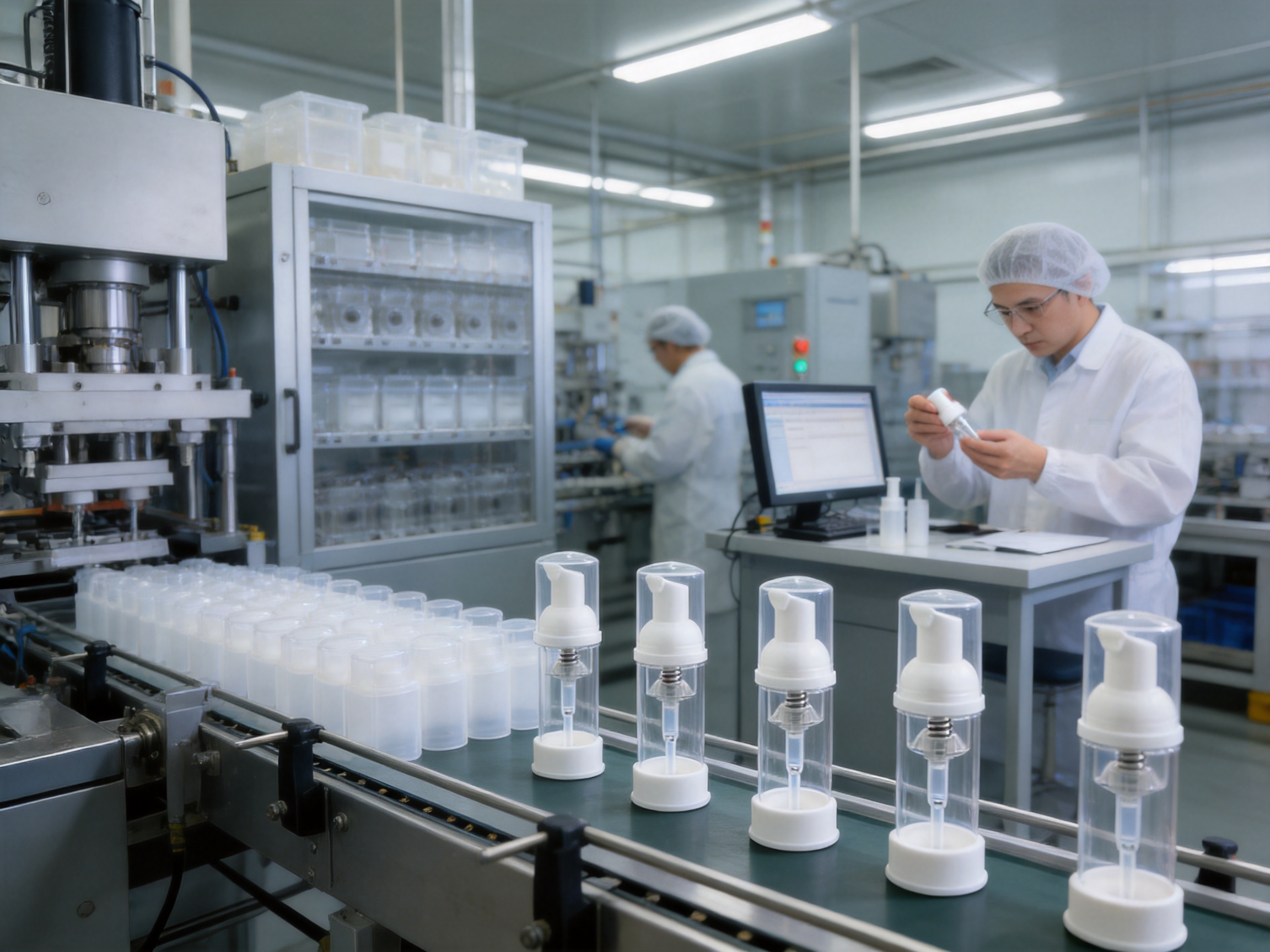
The manufacturing capabilities described include mold design, injection molding, automated assembly, and quality inspection. These four areas are closely connected in the production of precision plastic dispensing components.
Mold Design
Mold design establishes the geometry and dimensional accuracy of the plastic parts. A well-designed mold supports consistent wall thickness, stable part release, controlled shrinkage, and efficient cycle times. For pump components, mold accuracy can affect fit, appearance, assembly, and internal performance.
Design teams must consider material flow, gate locations, cooling, ejection, draft angles, parting lines, and likely production volume. The goal is not only to produce a visually acceptable part but also to create a component that can be assembled reliably and perform consistently after production.
In-house or closely coordinated mold design can shorten communication between product development and manufacturing. It may also make it easier to evaluate modifications for tube length, actuator geometry, closure dimensions, or appearance requirements.
Injection Molding
Injection molding enables the production of plastic pump components in repeatable shapes and high quantities. Molten plastic is injected into a prepared mold, cooled, and removed as a formed part. Process parameters such as temperature, pressure, injection speed, cooling time, and holding pressure influence the final result.
Stable injection molding is important for components that must fit together in a multi-part pump assembly. Variation in critical dimensions can affect valve contact, actuator movement, closure engagement, or sealing performance. Process control and regular inspection help reduce the risk of inconsistent parts.
Injection molding also supports a broad range of color and surface options. Manufacturers may select appropriate resins and additives according to the application, appearance, and compatibility requirements. Final material selection should be confirmed with the packaging supplier and evaluated against the customer’s formula.
Automated Assembly
Foam pumps include multiple functional elements that must be assembled in the correct orientation and sequence. Automated assembly can improve production speed and reduce dependence on manual handling. It may also provide more consistent insertion, fitting, and functional positioning of components.
Automation is especially valuable at high production volumes. It can support repeatable cycle times, controlled feeding, and integration with inspection stations. Automated equipment may also reduce the risk of contamination associated with unnecessary manual contact, although complete cleanliness depends on the entire factory environment and handling procedure.
For customers, automated assembly can support more predictable quality and delivery planning. It may also make it easier to establish process records and identify the source of a deviation if a quality issue occurs.
Quality Inspection
Quality inspection is essential for packaging components that must provide repeated mechanical operation. Relevant inspection areas may include appearance, dimensions, closure fit, actuator movement, dosage, leakage, recovery, and compatibility with the selected bottle.
Inspection standards should be agreed between the supplier and customer before mass production. A project may require visual standards for color and surface defects, dimensional limits for critical features, output testing, torque specifications, and packaging requirements for shipment.
The company’s stated quality inspection capability provides a foundation for these activities. Customers should request product specifications, sample approval procedures, test reports where applicable, and a clearly defined acceptance standard for the final order.
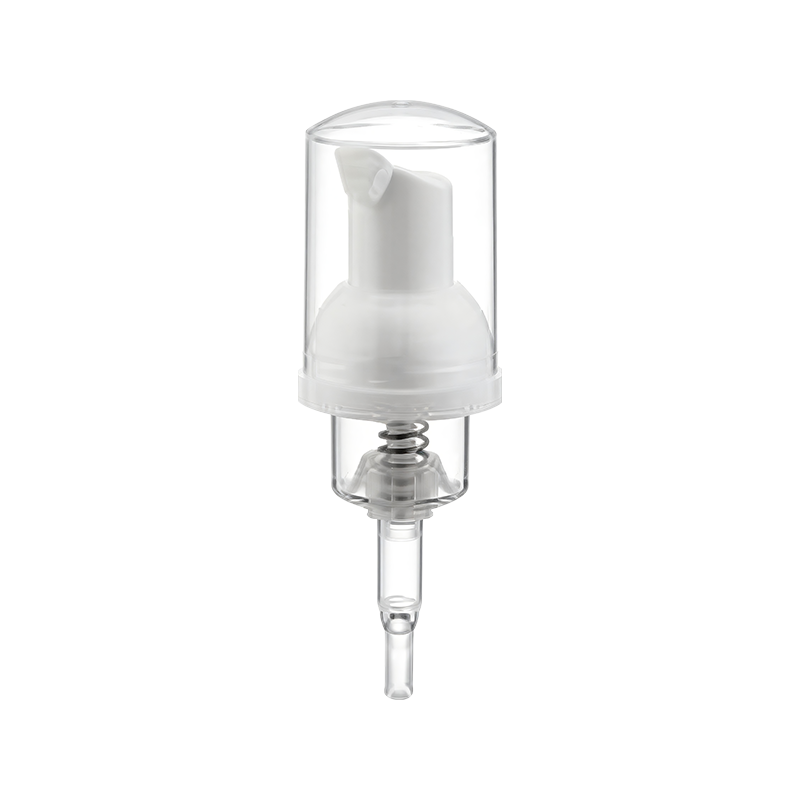
Compact 28mm Foam Pump
Design and Branding Opportunities
Although the GY-721B1 is a functional dispensing component, it also contributes to the visual identity of a product. The pump is located at the point where the consumer interacts directly with the package. Its shape, color, finish, and movement can influence the perception of quality and usability.
A clean plastic finish can suit minimalist personal care products. A colored actuator can coordinate with a brand’s product family or help distinguish different fragrances and formulas. Contrasting colors between the pump and bottle may create a clear focal point, while a matching color system can produce a more unified appearance.
Designers should balance appearance with performance. Decorative treatments must not interfere with actuator movement, sealing areas, thread engagement, or cleaning requirements. Colorants, coatings, and printing systems should also be assessed for resistance to the formulation and expected handling conditions.
The compact structure may be suitable for premium, pharmacy, hotel, travel, and everyday household products. A well-integrated pump can help a package look more purposeful while delivering a practical benefit that consumers immediately understand.
Compatibility and Development Testing
Every pump and bottle combination should be evaluated before commercial launch. The first step is dimensional compatibility. The customer should confirm that the pump closure matches the bottle neck, thread, sealing surface, and opening diameter. A nominal size description alone may not identify every detail required for a secure fit.
The next step is formula compatibility. The pump should be tested with the final product, including its fragrance, colorants, preservatives, alcohol content, oils, surfactants, and other functional ingredients. Testing with a substitute liquid may not reveal the same results as testing with the commercial formulation.
Basic performance testing can include:
1. Initial priming: determine how many actuations are required before the pump produces acceptable foam.
2. Dosage measurement: collect and weigh or measure the output over multiple actuations.
3. Foam evaluation: assess foam volume, density, stability, collapse time, and user perception.
4. Repeated operation: operate the pump through a planned number of cycles to evaluate consistency.
5. Leakage testing: store and transport the assembled package in suitable orientations and inspect for leakage.
6. Recovery testing: confirm that the actuator returns to its original position after use.
7. Storage testing: expose the package to relevant temperature and humidity conditions.
8. Compatibility testing: examine components for swelling, cracking, discoloration, odor transfer, or performance changes.
9. Tube evacuation: evaluate how much product remains in the bottle when the pump no longer draws effectively.
10. Closure torque testing: verify that the pump can be fitted securely without damaging the bottle or creating excessive assembly force.
These tests help identify problems before filling at commercial scale. They also provide data for selecting the correct bottle, formula viscosity, tube length, and filling process.
Filling Line and Production Considerations
The pump should be considered early in the filling-line design. Bottles may be filled first and capped afterward, or components may be supplied in partially assembled configurations. The selected assembly method affects equipment, labor, speed, cleanliness, and quality control.
Filling companies should evaluate whether the pump can be oriented and installed using existing equipment. If new tooling or change parts are required, those requirements should be included in the project schedule. Closure torque and insertion force should be controlled so that the bottle is not damaged and the pump is not distorted.
Foam pumps may require priming after installation. The production team should establish whether priming occurs during quality control, at the consumer’s first use, or through a specific filling-line procedure. Packaging instructions should account for the expected start-up behavior.
Secondary packaging should protect the actuator during transportation. Depending on the product, a protective cap, locking position, carton divider, or other shipping measure may be appropriate. The final configuration should be tested in the actual shipping case, including vibration, compression, and orientation conditions relevant to the distribution channel.
Supply Chain and Customization Support
A packaging supplier with capabilities across design, molding, assembly, and inspection can simplify communication. Instead of coordinating every component with separate vendors, customers may be able to discuss pump specifications, bottle matching, tube length, color, and delivery requirements through one packaging partner.
GreenYard Tools Co., Ltd. describes its business as serving global markets with spray packaging solutions. Its product categories include crimp pumps, fine mist sprayers, lotion pumps, treatment pumps, foam pumps, droppers, cosmetic plastic packaging caps, airless bottles, deodorant stick bottles, cream jars, nail polish pumps, trigger sprayers, polyethylene and PET bottles, and roll-on bottles.
This broad portfolio can be useful for companies developing multiple product categories. A brand may require foam pumps for hand soap, lotion pumps for body care, fine mist sprayers for fragrance, and airless packaging for sensitive formulas. Access to multiple component types may support consistent sourcing and coordinated package development.
Customers should communicate expected annual volume, target launch date, packaging drawings, formula information, color requirements, regulatory market, shipping destination, and inspection expectations. Clear technical information at the beginning of the project can reduce revisions and improve quotation accuracy.
Why the GY-721B1 Is a Practical Choice
The GY-721B1 combines several characteristics that are valuable in personal care packaging: compact format, controlled nominal dosage, plastic construction, customizable tube length, and suitability for multiple liquid applications. These characteristics make it a flexible option for brands that want a foam dispensing experience without adopting an overly complex package.
Its dosage is appropriate for products that require controlled delivery rather than large-volume dispensing. Its plastic closure supports lightweight packaging and high-volume production. Its customizable tube length helps adapt the pump to different bottle heights. Its application range includes hand soap, sanitizer, body wash, serum, and lotion, giving product developers several possible directions.
In comparison with basic closures, the pump provides a more convenient one-handed dispensing experience. In comparison with conventional liquid pumps, it can create a richer and more spreadable output. In comparison with open-mouth packaging, it can reduce direct contact with the remaining product. These advantages should be confirmed through product-specific tests, but they illustrate why foam pumps remain popular in personal care and hygiene packaging.
The manufacturing background of the supplier adds another advantage. Mold design, injection molding, automated assembly, and quality inspection are all relevant to consistent pump production. Combined with reported high daily capacity and long-term experience in spray packaging, these capabilities can support customers seeking a scalable supply solution.
Environmental and Material Efficiency Considerations
Packaging sustainability depends on the entire package system rather than on one component alone. A compact plastic pump may help reduce component weight, but responsible evaluation should also consider the bottle, labels, secondary packaging, transport distance, production scrap, product evacuation, and end-of-life treatment.
Efficient dosage can contribute to responsible product use by helping consumers dispense an amount closer to the intended application quantity. If a package delivers a consistent dose and allows good product evacuation, less product may remain unused. The actual environmental benefit depends on consumer behavior and the complete package design.
Manufacturers may also evaluate whether the pump can be used with a recyclable bottle system, whether different materials can be separated, and whether color or decoration affects recycling options in the target market. These decisions should be based on local recycling infrastructure and applicable regulations.
Material reduction must not compromise reliability. A closure that is too light or insufficiently robust may increase leakage, breakage, or product waste. The best approach is to balance material efficiency with the performance required for filling, transport, storage, and consumer use.
Quality, Reliability, and Customer Confidence
Packaging quality is closely connected to product quality in the consumer’s mind. A pump that sticks, leaks, produces inconsistent foam, or breaks during use can damage confidence in the entire product. Reliable mechanical performance is therefore a commercial requirement as well as a technical one.
The pump should operate smoothly and recover properly after each actuation. The closure should remain secure on the bottle. The dip tube should stay in position. The output should remain within an acceptable range over the expected service life. These requirements are achieved through appropriate design, controlled molding, correct assembly, inspection, and testing.
Customers can strengthen quality assurance by approving production samples, establishing a master sample, agreeing on critical dimensions, and defining acceptable appearance limits. They may also request batch identification, packing specifications, and inspection documentation appropriate to the project.
Long-term supplier communication is particularly important when the pump is used in a global product line. Changes in resin, mold condition, assembly equipment, or packaging method should be reviewed and communicated through an agreed change-control process.
Recommended Product Development Workflow
A practical development process begins with a clear product brief. The brief should identify the formula type, viscosity, bottle dimensions, desired dosage, application method, appearance, target market, expected order volume, and launch schedule.
The second stage is component matching. The customer provides bottle drawings or samples and confirms the required closure specification. The supplier evaluates tube length, pump fit, actuator clearance, and any dimensional concerns.
The third stage is sample testing. Samples should be filled with the intended formulation and evaluated under realistic conditions. The customer should review appearance, feel, foam quality, dosage, priming, leakage, and compatibility.
The fourth stage is pilot production. A pilot run can confirm that the pump performs correctly with the selected bottle, filling equipment, assembly process, and secondary packaging. It can also identify issues that are not visible during small-scale sample testing.
The final stage is mass production and ongoing quality monitoring. Approved specifications should be used for each batch, and any changes should be evaluated before implementation. This workflow reduces risk and creates a clear path from concept to commercial supply.
Frequently Asked Questions
What is the nominal output of the GY-721B1 foam pump?
The nominal dosage is 0.35±0.1 ml per actuation. Actual output may vary according to the formula, temperature, bottle, pump assembly, and operating conditions, so testing with the final product is recommended.
What bottle size does the pump fit?
The listed size option is 30-410, while the product is described as a compact 28mm foam pump. Customers should confirm the exact bottle neck finish, thread details, sealing surface, and component dimensions before production.
Can the dip tube be customized?
Yes. The tube length is identified as customizable. The required length should be selected according to the bottle height, shoulder design, base geometry, and intended product evacuation performance.
Which products are suitable for this foam pump?
Potential applications include hand soap, sanitizer, body wash, serum, lotion, and other compatible liquid personal care products. Suitability depends on viscosity, ingredients, surface tension, particles, and the desired foam characteristics.
Is the pump suitable for thick cream?
The pump is intended for liquid or relatively flowable formulations. Highly viscous creams may not pass through the pump efficiently or may produce inconsistent output. A compatibility test should be completed before selecting the pump for a thick formula.
What are the main benefits of foam dispensing?
Foam dispensing can provide controlled output, quick spreading, convenient one-handed use, reduced dripping, and a pleasant sensory experience. The actual benefits depend on the formulation and the consumer application.
Does the pump require priming?
Like many pumps, it may require several actuations before product reaches the outlet, particularly during first use. The number of priming strokes should be determined during product testing and communicated through packaging instructions if necessary.
Can the plastic closure be produced in different colors?
Plastic components can generally be produced in different colors, subject to material availability, order quantity, appearance requirements, and the supplier’s production process. Color samples should be approved before mass production.
What manufacturing capabilities support this product?
The supplier identifies mold design, injection molding, automated assembly, and quality inspection as key capabilities. It also reports 16 years of spray product manufacturing experience and a daily production capacity of one million units.
How should the pump be tested before launch?
Testing should include dimensional fit, priming, dosage, foam quality, repeated operation, leakage, storage, transport, tube evacuation, and formula compatibility. The final bottle, pump, and formulation should be tested together.
Can this pump be used for export products?
The product is presented as part of a packaging supply business serving global markets. Export customers should confirm destination-market requirements, material documentation, packaging regulations, labeling obligations, and any customer-specific quality standards.
What information should be provided when requesting a quotation?
Useful information includes the product formula, bottle drawing or sample, required closure size, tube length, target dosage, color, annual volume, delivery location, intended application, packaging requirements, and desired launch schedule.
Conclusion
The Compact 28mm Foam Pump, model GY-721B1, is a versatile dispensing solution for personal care and daily chemical products. Its 0.35±0.1 ml nominal dosage supports controlled use, while the foam format can improve spreading, convenience, and sensory appeal. The plastic closure provides a lightweight and practical construction, and the customizable tube length allows the pump to be adapted to different bottle designs.
The pump is especially relevant to hand soap, sanitizer, body wash, serum, and lotion applications. Its compact profile can support efficient package design, while its dispensing performance offers clear advantages over basic caps and selected conventional liquid pumps. As with any packaging component, final suitability must be confirmed through formula compatibility, dosage, leakage, storage, and repeated-use testing.
GreenYard Tools Co., Ltd. supports the product with reported experience in spray packaging, mold design, injection molding, automated assembly, and quality inspection. Its broad packaging portfolio and stated high production capacity may provide useful support for companies seeking a scalable and customizable packaging partner.
For a successful project, the pump should be treated as part of a complete package system. Correct bottle matching, tube selection, formula testing, filling-line evaluation, quality standards, and shipping validation are all important. When these elements are coordinated, the GY-721B1 can provide a practical, hygienic, and consumer-friendly foam dispensing experience.
References
1. GreenYard Tools Co., Ltd., GY-721B1 Compact Foam Pump Product Information.
2. GreenYard Tools Co., Ltd., Personal Care and Daily Chemical Packaging Product Range.
3. General Principles of Plastic Injection Molding and Component Dimensional Control.
4. Packaging Development Practices for Pump, Foam, and Liquid Dispensing Systems.
5. General Guidelines for Cosmetic and Personal Care Packaging Compatibility Testing.
6. Standard Quality-Control Practices for Closure Fit, Dosage, Leakage, and Repeated Actuation Testing.
Product: Compact 28mm Foam Pump

-
Foam Pump vs Regular Pump: What's the Difference?
The core difference between a foam pump and a regular pump is how each one delivers product. A regu...
-
Crimp Pumps Demystified: Choosing the Right Type and Material for Every Cosmetic Formula
Walk into any cosmetic filling facility and you will find crimp pumps on everything from a delicate ...
-
Airless Bottles Uncovered: How to Protect Your Skincare and Perfect Every Pump
If you have ever opened a pump bottle of serum and found the last quarter of the product impossible ...
-
What's Inside a Lotion Pump and How Does It Work ?
A lotion pump is a precision dispensing closure that draws liquid product from a bottle and delivers...
Copyright © GreenYard Tools Co.,ltd. All Rights Reserved.
Personal Care Packaging Manufacturer Custom Perfume Sprayers Factory