
-
About Us
Why Choose Us?The company possesses advanced capabilities in mold design, injection molding, and automated assembly, supported by a professional quality inspection team to ensure product reliability. A dedicated design team continuously drives product innovation, providing customers with high-quality spray solutions.
 Coming From China, Marketing To The World.
 -
Products
-
News
 English
 Français
 русский
 Español
Plastic Full-Range Roll-On Bottles for Perfume and Personal Care Liquids
Content
- 1 Product Overview
- 2 Why Roll-On Packaging Is Suitable for Perfume
- 3 Advantages of the Plastic Construction
- 4 A Full Capacity Range for Different Product Strategies
- 5 Controlled and Targeted Application
- 6 Portability and Everyday Convenience
- 7 Advantages Compared with Conventional Packaging Options
- 8 Suitable Applications Beyond Perfume
- 9 Manufacturing Strengths Behind the Product
- 10 Production Capacity and Supply Reliability
- 11 Customization and Product Development Potential
- 12 Quality Considerations for Buyers
- 13 Packaging Efficiency and Logistics
- 14 Brand and Consumer Positioning
- 15 Why the Product Can Compete Effectively
- 16 Recommended Development Workflow
- 17 Environmental and Responsible Packaging Considerations
- 18 Company Manufacturing Capabilities
- 19 Frequently Asked Questions
- 19.1 What capacities are available for this roll-on bottle?
- 19.2 What products can be packaged in the bottle?
- 19.3 What is the main benefit of the roll-on application system?
- 19.4 Is the bottle suitable for travel?
- 19.5 Why choose plastic instead of glass?
- 19.6 Can one product family use several capacities?
- 19.7 How does the bottle compare with a spray package?
- 19.8 What manufacturing processes support this product?
- 19.9 What types of customization may be discussed?
- 19.10 What should be tested before mass production?
- 19.11 Is the bottle suitable for large-volume orders?
- 19.12 Where can buyers obtain more information?
- 20 Conclusion
- 21 References
- 22 Product: Plastic Full Range Roll on Bottle for Perfume

Packaging plays an essential role in the performance, safety, portability, and market appeal of personal care products. For perfumes, insect repellents, essential-oil blends, skin-care liquids, and other targeted-use formulations, a roll-on bottle offers an especially practical solution. It combines controlled application with a compact format, helping users apply liquid products accurately while keeping the package convenient to carry.
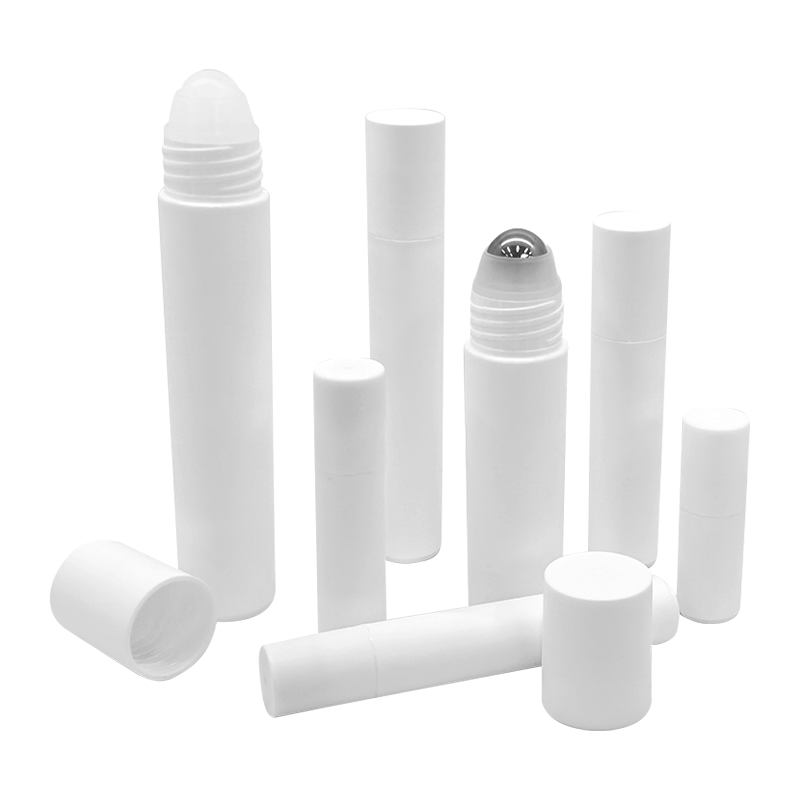
The plastic full-range roll-on bottle for perfume, identified by product codes GY-ROB-01A and GY-ROB-01A-1, is designed to meet the requirements of brands seeking flexible, portable, and efficient personal care packaging. With available capacities from 3 ml to 30 ml, the bottle can support a variety of product concepts, from small sample-size perfumes and travel products to larger everyday-use formats. Its broad size selection allows manufacturers to develop coordinated product families without changing to an entirely different packaging style.
In addition to its compact dimensions, the product provides the functional advantages of a roll-on application system. The rolling ball transfers liquid to the skin in a controlled manner, making the bottle suitable for targeted application. This is valuable for perfume, insect repellent, spot-use skin-care products, and other liquid formulations that do not need to be sprayed over a wide area.
Manufactured by an experienced Chinese personal care packaging supplier, this roll-on bottle benefits from integrated mold design, injection molding, automated assembly, and quality inspection capabilities. These manufacturing strengths support consistent production, efficient customization, and dependable supply for global customers.
Product Overview
A roll-on bottle is a compact container equipped with a rolling applicator. Instead of releasing the product as a mist or dispensing it through a pump, the bottle applies liquid directly to the intended surface. The rolling mechanism is simple to use: the user turns or moves the bottle across the skin, allowing the ball to pick up liquid from the bottle and distribute it in a smooth line or small area.
The plastic full-range roll-on bottle is intended primarily for skin-care and personal-care applications. Its recommended uses include portable mini perfumes, insect repellents, and other liquid products requiring controlled delivery. The design is also adaptable to different product concepts, making it suitable for private-label packaging, travel collections, promotional products, sample sets, and daily-use personal care lines.
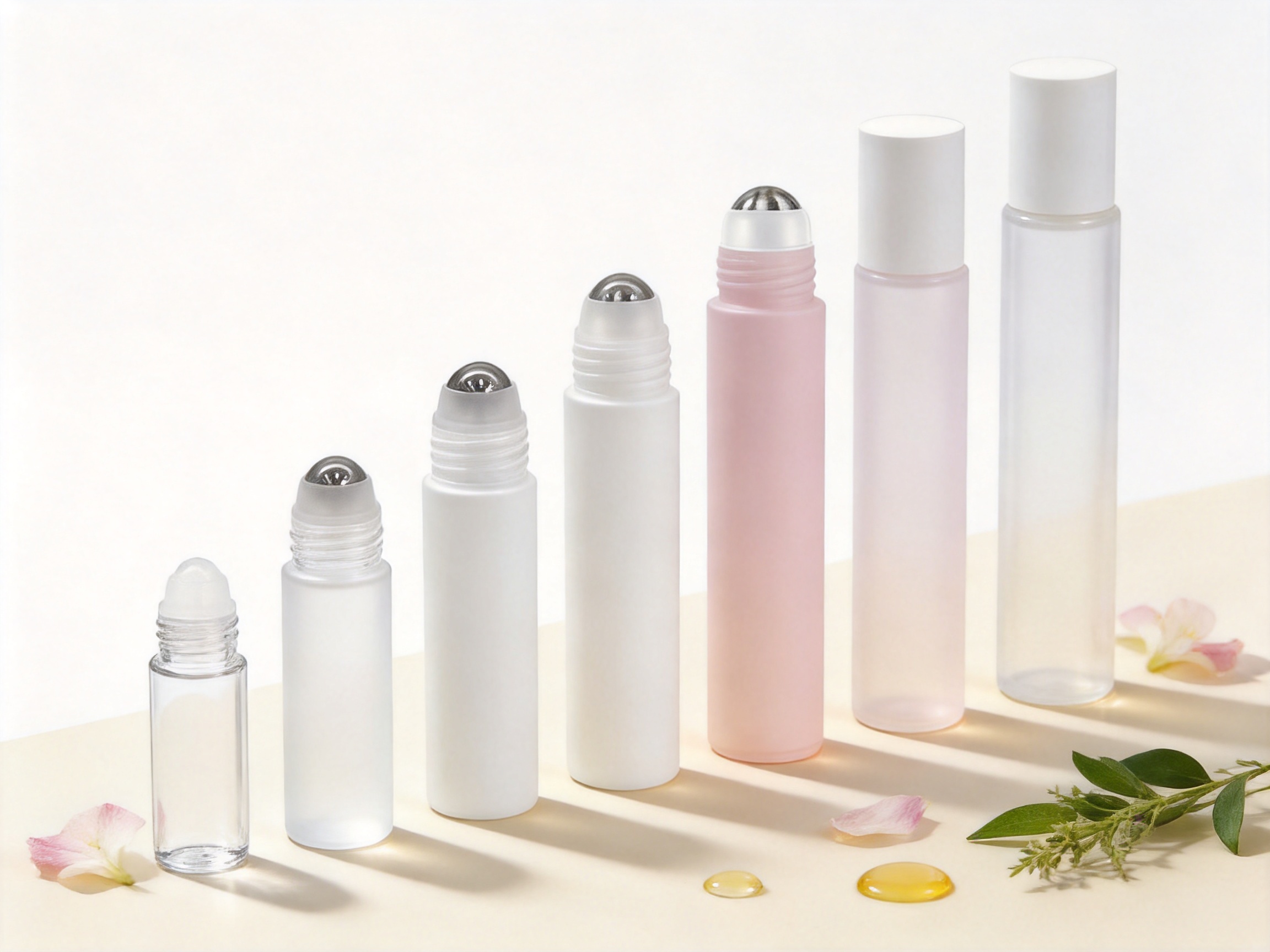
Unlike a single-size package designed for only one market segment, this range includes seven listed capacities: 3 ml, 5 ml, 8 ml, 10 ml, 15 ml, 20 ml, and 30 ml. This gives product developers the ability to match the container size to the intended user experience. A 3 ml or 5 ml bottle may be used for sampling or handbag storage, while a 20 ml or 30 ml version may provide a more substantial quantity for regular use.
Product Attribute | Details |
Product Type | Plastic roll-on bottle |
Product Codes | GY-ROB-01A and GY-ROB-01A-1 |
Available Capacities | 3 ml, 5 ml, 8 ml, 10 ml, 15 ml, 20 ml, and 30 ml |
Primary Usage | Skin care and personal care liquids |
Typical Applications | Mini perfumes, insect repellent, and other liquid formulations |
Application Method | Direct roll-on application |
Packaging Advantage | Compact, portable, controlled, and convenient |
Why Roll-On Packaging Is Suitable for Perfume
Perfume packaging must do more than contain a fragrance. It should support convenient use, preserve a clean appearance, complement the product positioning, and make the fragrance easy to carry. Traditional spray bottles are effective for broad application, but they are not always the best option for consumers who want a small, discreet, and targeted format.
A roll-on bottle allows the user to apply perfume directly to pulse points such as the wrists, neck, or behind the ears. Because the liquid is deposited on a specific area, the application can feel more controlled than a broad spray. This can appeal to consumers who prefer a subtle fragrance experience, want to refresh their perfume during the day, or need a format that can be used in close quarters without producing an airborne mist.
The compact format is also well suited to modern lifestyles. Consumers frequently carry personal-care products in handbags, pockets, travel kits, desk drawers, and toiletry bags. A small roll-on bottle takes up limited space and can make fragrance more accessible during commuting, travel, work, or outdoor activities.
For fragrance brands, the format creates opportunities for product extensions. A primary perfume line may be supported by travel-size roll-ons, discovery sets, seasonal collections, gift bundles, or promotional samples. The multiple capacity options allow brands to choose a size that corresponds to the commercial purpose of each product while maintaining a consistent application concept.
Roll-on packaging may also help brands differentiate products in a crowded personal-care market. Many fragrances are presented in standard glass spray bottles. A plastic roll-on alternative can provide a more casual, portable, and practical identity. It may be particularly suitable for youth-oriented products, outdoor fragrance products, impulse purchases, and travel-focused collections.
Advantages of the Plastic Construction
The use of plastic provides several practical benefits when compared with heavier and more fragile packaging materials. For portable products, package weight has a direct effect on shipping, storage, and user convenience. A lightweight plastic bottle can be easier to carry and may help reduce the burden associated with travel-size products and multipack arrangements.
Plastic construction can also support safer handling during everyday use. Unlike glass, plastic is less likely to shatter if dropped on a bathroom floor, inside a travel bag, or during transportation. This feature is relevant for products intended for frequent handling, outdoor use, and distribution through retail or promotional channels.
Another advantage is design flexibility. Plastic packaging can be developed in a range of shapes, dimensions, finishes, and color treatments, depending on the specifications of the packaging program. This makes it easier for a brand to build a coordinated visual system across multiple capacities or product categories.
For manufacturers, plastic is compatible with high-volume injection-molding processes. This supports repeatable production of bottle bodies and related components while allowing tooling to be engineered for a specific product structure. When combined with automated assembly and inspection, injection molding can help maintain dimensional consistency and production efficiency.
The lightweight nature of plastic may also benefit logistics. A lower package weight can contribute to more efficient carton utilization and may reduce transport-related costs. These benefits are especially important for brands shipping personal-care products across national borders or distributing them through multiple warehouse locations.
Plastic does not automatically make a package superior in every situation. Product developers must still evaluate chemical compatibility, closure performance, filling requirements, appearance, and regulatory needs. However, for a compact roll-on format, plastic offers a strong combination of portability, impact resistance, design flexibility, and manufacturing practicality.
A Full Capacity Range for Different Product Strategies
3 ml and 5 ml Formats
The smallest listed capacities are appropriate for miniature products, samples, trial packages, and discovery collections. These sizes can allow consumers to test a fragrance or liquid formulation before purchasing a larger quantity. They may also be used in gift sets, subscription boxes, promotional campaigns, hotel amenities, and event giveaways.
A small roll-on bottle can communicate convenience and portability. It may fit into a small handbag compartment, cosmetic pouch, or pocket, making it suitable for consumers who want to carry a personal-care product with minimal bulk. For brands, these capacities can support lower-quantity product concepts and encourage trial-based marketing.
8 ml and 10 ml Formats
The 8 ml and 10 ml options provide a balance between portability and usable quantity. They are suitable for travel perfumes, daily refresh products, compact insect repellents, and personal-care liquids intended for repeated use over a period of time.
These capacities can be particularly useful for brands developing travel-size versions of established products. A 10 ml roll-on bottle is large enough to offer meaningful usage while remaining compact enough for a handbag, carry-on kit, or personal accessory pouch. The 8 ml format provides a slightly smaller alternative for brands that want a more compact appearance.
15 ml, 20 ml, and 30 ml Formats
The larger sizes are suitable for consumers who use roll-on products regularly and prefer not to replace them frequently. They can support everyday perfume, skin-care liquids, and insect-repellent products intended for extended use. These sizes may also create a stronger shelf presence while preserving the practical benefits of a roll-on applicator.
Offering multiple larger capacities can help brands create a tiered assortment. For example, a 15 ml bottle can serve as a handbag size, a 20 ml bottle can be positioned as a standard portable product, and a 30 ml version can be marketed as a value-oriented daily-use format. The exact commercial positioning depends on the formula, dosage, retail channel, and target market.
Controlled and Targeted Application
The roll-on mechanism is one of the product’s most important functional features. The rolling ball allows liquid to be applied directly to the skin without requiring a separate applicator. This reduces the number of actions needed during use and provides a straightforward experience for consumers.
For perfumes, direct application can be useful when the user wants to place fragrance on a particular pulse point. For insect repellent, the format can help users apply the product to selected exposed areas. For other skin-care liquids, the roll-on design may be suitable for focused application rather than full-body distribution.
Targeted application can also help reduce unnecessary product spread. A spray may disperse liquid into the surrounding air, while a roll-on deposits the liquid along the path of the applicator. This difference may appeal to users who prefer a more precise and discreet routine.
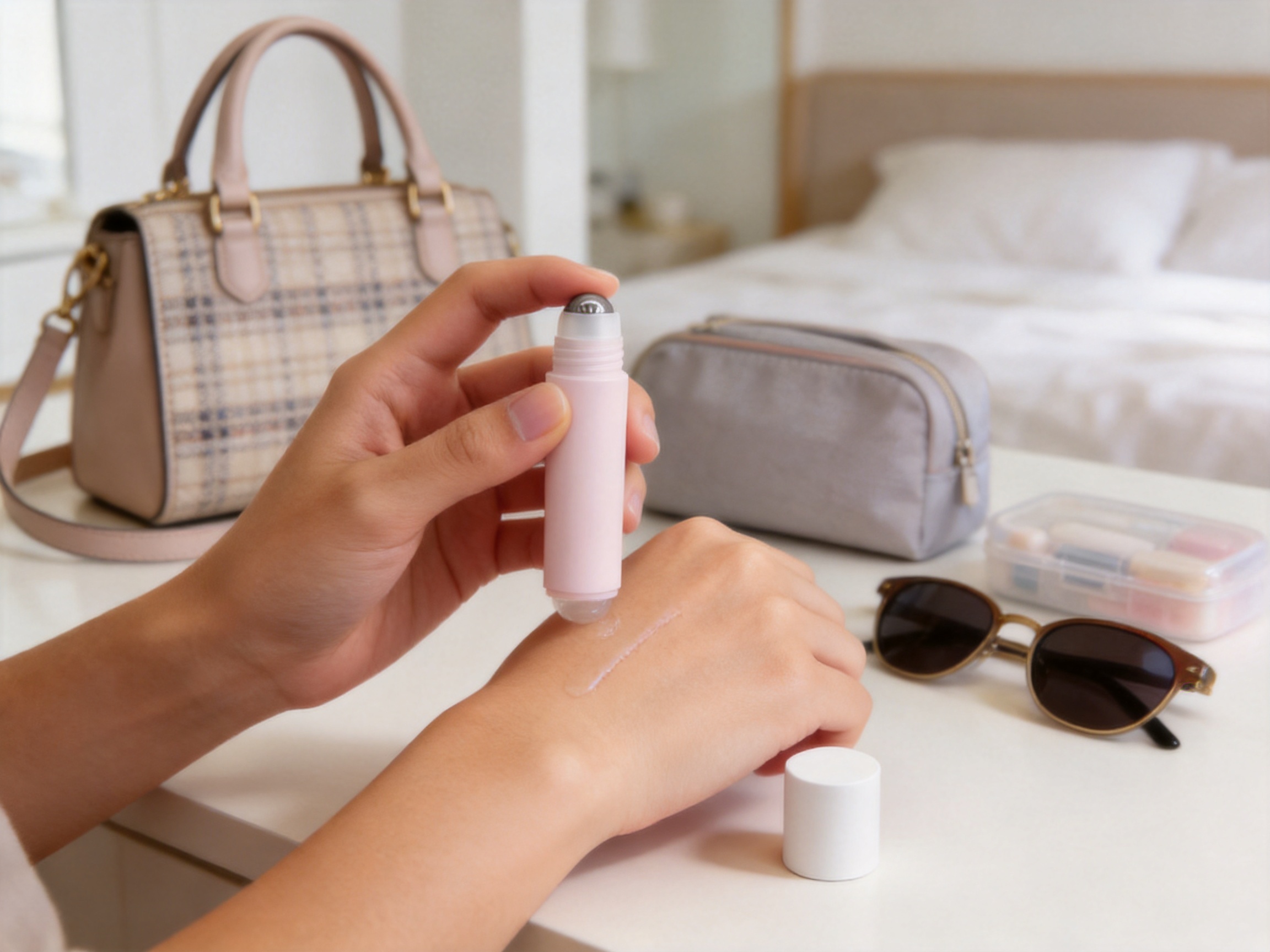
The application process is intuitive and does not require technical instruction. The user removes the cap, places the rolling ball against the skin, and moves the bottle across the desired area. After use, the cap can be replaced to protect the applicator and help maintain the package’s portable format.
As with any packaging system, the final application performance depends on the formula, filling level, component fit, and storage conditions. Brands should perform compatibility and functional testing with the selected liquid formulation before commercial launch. Nevertheless, the roll-on structure offers an efficient starting point for products that require controlled direct application.
Plastic Full Range Roll on Bottle for Perfume
Portability and Everyday Convenience
Portability is a central advantage of this product range. The available capacities are compact enough to support travel, daily commuting, outdoor activities, and personal storage. Consumers can place the bottle in a cosmetic bag, toiletry kit, desk drawer, or travel case without carrying a large container.
Small personal-care packages are increasingly relevant as consumers seek products that fit flexible routines. A portable perfume can be used before a meeting, after exercise, during a journey, or before an evening event. An insect repellent can be carried for outdoor activities without requiring a large spray container. A compact skin-care liquid can be kept available for quick application throughout the day.
The bottle’s portable design can also support multiple purchasing occasions. A consumer may buy one bottle for personal use, another for travel, or several small bottles for different fragrances. For brands, this can create opportunities for product bundles, seasonal promotions, and multi-fragrance collections.
Portable packaging should be designed with attention to closure security and handling. Although no package should be described as completely leak-proof without application-specific testing, a properly assembled roll-on package is intended to provide a practical container for carrying liquid products. Manufacturers and brands should verify sealing, cap fit, drop resistance, transport stability, and storage performance during quality evaluation.
Advantages Compared with Conventional Packaging Options
Compared with Standard Spray Bottles
Spray bottles are effective for distributing fragrance over a broader area, but the spray format may not suit every consumer or formulation. A roll-on bottle provides direct contact application and avoids the need for a spray cloud. This can be useful in confined spaces, during travel, or for consumers who prefer discreet application.
The roll-on format can also be simpler for targeted use. Rather than directing a spray nozzle and controlling the spray distance, the user applies the product by moving the rolling ball over the desired area. This straightforward action can improve usability for certain product concepts.
Compared with Glass Perfume Bottles
Glass bottles can provide a premium appearance, but they are generally heavier and more vulnerable to breakage. A plastic roll-on bottle may be more suitable for products positioned around portability, casual use, outdoor activity, or travel convenience. It may also reduce concerns about carrying a fragile container in a bag.
For brands, plastic packaging can provide a different balance between appearance and practical durability. It may be easier to create a lightweight travel line or a promotional product without the added mass associated with glass.
Compared with Open-Top Bottles
Open-top containers can require a separate applicator or may create a risk of excessive product transfer during use. The integrated rolling applicator of this bottle helps combine storage and application in one compact package. This simplifies the user experience and supports more controlled dispensing.
Compared with Single-Size Roll-On Packaging
A full range of capacities offers greater commercial flexibility than a roll-on bottle available in only one size. Brands can use the same general packaging concept for samples, travel products, standard retail products, and larger daily-use formats. This can simplify product-family planning and create visual consistency across different product volumes.
Comparison Factor | Plastic Roll-On Bottle | Traditional Spray Bottle | Glass Perfume Bottle |
Application | Targeted direct application | Broader mist distribution | Usually spray or splash application |
Portability | High, especially in smaller capacities | Moderate to high depending on size | Often limited by weight and fragility |
Impact Resistance | Suitable for practical everyday handling | Varies by construction | More vulnerable to breakage |
Size Flexibility | Seven listed capacities | Depends on available model range | Depends on bottle tooling and design |
Typical Positioning | Portable, practical, targeted | Convenient, familiar, broad application | Premium, decorative, substantial |
This comparison does not suggest that one package type is appropriate for every product. Instead, it shows how the plastic roll-on format can occupy a distinct position within the personal-care packaging market. Its main strengths are direct application, portability, flexible capacity selection, and practical handling.
Suitable Applications Beyond Perfume
Although the product title emphasizes perfume, its application potential extends to a wider range of liquid personal-care products. The listed usage is skin care, and the product description specifically identifies insect repellent and other liquid products as suitable applications. This versatility can help packaging buyers use one bottle platform across multiple product concepts.
Insect Repellent
A roll-on bottle can be useful for applying insect repellent to selected areas of exposed skin. The compact size makes it convenient for hiking, camping, travel, gardening, and outdoor events. Smaller capacities can be placed in an outdoor activity kit, while larger versions may be suitable for repeated household or family use, subject to formula and regulatory requirements.
Skin-Care Liquids
Some skin-care products are designed for precise application to a limited area. A roll-on bottle may support these routines by delivering liquid directly to the skin without requiring a cotton pad, dropper, or spray. Product developers must confirm that the formulation works correctly with the applicator and that the package meets all relevant compatibility standards.
Fragrance Oils and Portable Scent Products
Fragrance oils and concentrated scent products can be packaged in a roll-on format when the formula and market requirements permit. The direct application method supports pulse-point use and can create a more intimate fragrance experience than a broad spray.
Promotional and Sample Products
The 3 ml and 5 ml capacities are well suited to sampling programs. Brands can use these sizes for product launches, customer gifts, subscription boxes, hotel amenities, event promotions, and discovery kits. A small roll-on sample can introduce a product while maintaining the same core application method as the larger retail package.
Before selecting a final application, the product developer should assess the liquid’s viscosity, solvent system, fragrance load, color, active ingredients, and storage conditions. Packaging suitability should be confirmed through testing rather than assumed solely from the product category.
Manufacturing Strengths Behind the Product
The manufacturer supporting this product has specialized in spray and personal-care packaging for 16 years. Its product scope includes perfume sprayers, pump heads, caps, bottles, and daily chemical packaging solutions. This experience is relevant to roll-on bottle production because high-quality packaging depends on coordinated control of components, tooling, assembly, appearance, and performance.
The company operates as an integrated packaging manufacturer rather than relying only on external component sourcing. Its stated capabilities include mold design, injection molding, automated assembly, and quality inspection. These processes form an important manufacturing chain for plastic packaging.
Mold Design
Mold design is the foundation of repeatable plastic component production. A well-designed mold must account for the intended shape, wall structure, dimensional tolerance, material flow, cooling behavior, ejection, and production cycle. For a roll-on bottle, the mold design must support a stable bottle body and accurate component interfaces.
Experienced mold engineering can help reduce issues such as uneven surfaces, deformation, inconsistent dimensions, and difficult assembly. It also supports the development of product variations when different sizes or design requirements are needed. A dedicated design team can evaluate the relationship between the bottle body, applicator area, cap, and filling process before mass production begins.
Injection Molding
Injection molding is an efficient process for producing plastic packaging components in significant volumes. Plastic material is heated, injected into a mold cavity, cooled, and ejected as a formed component. When production parameters are properly controlled, the process can deliver consistent dimensions and repeatable appearance across large batches.
For a product offered in several capacities, process control is particularly important. Each size must maintain its intended shape and function while remaining consistent with the overall product family. Injection-molding expertise helps the manufacturer manage these requirements and establish repeatable operating conditions.
Automated Assembly
Automated assembly can improve production efficiency and reduce variation in repetitive operations. Roll-on packaging requires the coordination of multiple components, including the bottle body, rolling applicator elements, and cap or closure components. Automated equipment can support consistent positioning, insertion, and assembly pressure.
Automation also contributes to production scalability. The manufacturer reports a daily production capacity of one million units across its operations. This capacity is valuable for customers requiring stable supply, large-volume orders, or coordinated delivery schedules for product launches.
Quality Inspection
Quality inspection is necessary to confirm that finished packaging meets defined requirements. Inspection may include appearance checks, dimensional verification, component fit, assembly condition, and functional testing. For roll-on bottles, practical evaluations can include applicator movement, liquid transfer, cap engagement, and package integrity.
A structured inspection process helps identify defects before products leave the factory. It also gives brands greater confidence when ordering packaging for international markets, where inconsistent quality can create delays, customer complaints, or additional sorting costs.
Production Capacity and Supply Reliability
Packaging supply reliability affects every stage of a personal-care product launch. A brand may have a completed formula, label design, filling plan, and marketing campaign, but the launch can still be delayed if packaging production is inconsistent or late. A manufacturer with high daily capacity and integrated production resources can provide stronger support for planned volumes.
The reported daily production capacity of one million units indicates that the manufacturer is equipped to serve both standard and larger-scale packaging requirements. Capacity alone does not guarantee delivery performance, but it provides a foundation for handling repeat orders, seasonal demand, and multiple product programs.
Supply strength also depends on production planning, raw-material management, equipment maintenance, tooling control, and communication with customers. An experienced packaging factory can help coordinate these areas through a more organized manufacturing workflow.
For buyers, a full-range roll-on bottle can simplify purchasing when several sizes are needed. Instead of sourcing each capacity from a different supplier, the buyer may be able to coordinate a broader range through one manufacturing partner. This can reduce communication complexity and help maintain consistent quality and visual identity across the product family.
Customization and Product Development Potential
Personal-care brands often require packaging that reflects their market positioning. A basic container may need to be adapted through color, surface treatment, decoration, labeling, cap appearance, or capacity selection. The manufacturer’s mold-design and packaging experience can support discussions around these requirements.
Customization should begin with a clear product brief. The brief may define the formula, target capacity, desired application area, market, filling method, decoration requirements, expected order quantity, and delivery schedule. This information helps the factory assess whether the selected roll-on structure is suitable for the intended product.
Brands may also develop a packaging family using the listed capacities. A coordinated family can feature the same general roll-on concept in several sizes, supporting different consumer occasions while preserving a unified visual identity. For example, a fragrance collection could include a small discovery format, a handbag format, and a larger everyday format.
Customization must be evaluated alongside manufacturing practicality. A design that looks attractive may be difficult to mold, assemble, fill, label, or transport. An experienced manufacturer can help balance visual goals with production efficiency, component reliability, and cost considerations.
Quality Considerations for Buyers
Before placing a large order, buyers should establish clear quality criteria for the roll-on bottle. These criteria should address appearance, dimensions, component fit, application performance, closure security, and packaging cleanliness.
Appearance inspection may include checking for color consistency, visible flow marks, scratches, dents, contamination, flash, and other surface defects. Dimensional inspection can confirm that the bottle is compatible with filling equipment and related components. Fit testing can verify that the applicator and cap are properly assembled.
Functional testing is equally important. The rolling ball should move smoothly and transfer the liquid as intended. The package should be evaluated with the actual product formula whenever possible, because viscosity and chemical composition may affect application behavior. Storage and transport testing can provide additional information about package performance under realistic conditions.
Buyers should also confirm the expected filling volume and usable capacity. Nominal capacity and actual fill level may not be identical, especially when headspace is required. Clear technical communication between the packaging supplier, filling facility, and brand owner can reduce misunderstandings during production.
Packaging Efficiency and Logistics
Logistics is an important part of packaging selection. A compact plastic bottle can support efficient handling in warehouses, shipping cartons, retail displays, and consumer storage. Its smaller format may allow brands to create multipacks or combination sets without excessive package volume.
The lightweight construction can also be useful for e-commerce. Products shipped directly to consumers must withstand handling through multiple distribution stages. A practical plastic package may reduce concerns associated with fragile containers, although complete transport suitability must still be confirmed through packaging tests.
Carton design should protect the roll-on bottle from excessive movement, impact, and pressure. The final shipping configuration may vary depending on the capacity, cap structure, decoration, and order quantity. Buyers should work with the manufacturer and logistics provider to determine appropriate inner packaging, outer cartons, and pallet arrangements.
For global distribution, documentation and labeling requirements should be reviewed early. The bottle itself is only one part of a finished personal-care product system. The formula, label, claims, closure, filling process, and destination-market requirements must all be considered before launch.
Brand and Consumer Positioning
A roll-on bottle can support several different brand messages. It may communicate portability, simplicity, precision, convenience, or everyday practicality. The same core package can be positioned as a travel accessory, a discreet fragrance product, an outdoor-care item, or a compact skin-care solution.
For premium fragrance brands, the bottle can be used as a complementary format rather than a replacement for a decorative primary bottle. A matching roll-on may serve as a travel companion or gift-set component. For emerging brands, the format may provide a practical way to enter the market with a lower-weight and more portable package.
For mass-market personal-care products, the multiple capacities can support price segmentation and different retail channels. Smaller sizes may be sold through promotional displays or convenience channels, while larger sizes may be offered through online stores or standard personal-care shelves.
The product’s simple application method can also support clear consumer communication. Instructions can explain that the user should apply the product directly to clean, appropriate skin areas and replace the cap after use. Any safety guidance must be based on the specific formula and applicable regulations.
Why the Product Can Compete Effectively
The competitive value of this roll-on bottle comes from the combination of features rather than from one isolated attribute. It offers a broad capacity range, a portable plastic format, direct application, and manufacturing support from a supplier experienced in personal-care packaging.
Many competing packages may provide only one or two of these advantages. A single-size bottle may be functional but less flexible for product-line planning. A glass package may appear premium but be heavier and more fragile. A spray bottle may provide broad coverage but may not suit targeted application. A supplier without integrated mold and assembly capabilities may face greater difficulty maintaining consistency across large volumes.
This product is therefore well positioned for brands that value operational flexibility as much as visual presentation. The ability to select from 3 ml through 30 ml can simplify assortment planning. The plastic construction can support portability and practical handling. The roll-on applicator can create a differentiated use experience. The manufacturer’s production capabilities can support quality and volume requirements.
Competitive packaging decisions should always include testing, cost analysis, regulatory review, and market research. However, the product provides a strong foundation for companies seeking a reliable and adaptable roll-on platform.
Recommended Development Workflow
Define the Product Application
Begin by identifying the liquid formulation and intended application. Confirm whether the product is a perfume, insect repellent, skin-care liquid, fragrance oil, or another personal-care formula. The intended use will influence the preferred capacity, labeling, testing, and filling method.
Select the Capacity
Choose from the listed 3 ml, 5 ml, 8 ml, 10 ml, 15 ml, 20 ml, and 30 ml options. Consider the expected number of applications, target retail price, portability requirements, and distribution channel. Brands developing a range may select several sizes for different consumer occasions.
Evaluate Compatibility
Test the formula with the bottle and roll-on applicator. Observe liquid transfer, rolling movement, odor retention, color change, leakage behavior, and storage performance. Testing should cover realistic conditions, including temperature variation and transport handling where relevant.
Confirm Filling and Assembly Requirements
Coordinate with the filling facility to verify that the bottle can be efficiently filled and assembled. Confirm the required equipment, filling volume, headspace, closure sequence, and inspection procedures. Early coordination can prevent production problems after packaging arrives.
Approve Samples and Quality Standards
Review production samples for appearance, dimensions, application performance, and assembly quality. Establish acceptable quality limits and inspection methods before mass production. Written approval criteria can help align the brand, factory, and filling partner.
Plan Production and Delivery
Discuss order quantity, tooling, lead time, packaging configuration, shipment schedule, and repeat-order expectations. A manufacturer with high production capacity may be able to support larger programs, but the schedule should still be planned in advance to account for testing, production, inspection, and transportation.
Environmental and Responsible Packaging Considerations
Responsible packaging development requires attention to material selection, package weight, durability, manufacturing efficiency, and end-of-life considerations. The lightweight plastic format may reduce transport weight and help prevent breakage-related waste during normal handling. Its compact dimensions may also support efficient shipping and storage.
At the same time, brands should evaluate the complete packaging system rather than focusing on one material characteristic. The product formula, label, cap, applicator, secondary packaging, and shipping materials all contribute to the total environmental profile.
Manufacturing efficiency is another relevant consideration. Injection molding and automated assembly can support consistent production and reduce avoidable defects when properly managed. Quality control helps prevent rejected batches and unnecessary material consumption.
Brands should provide consumers with disposal guidance that reflects the materials and regulations of the target market. Any recyclability or sustainability claim must be supported by appropriate technical evidence and local infrastructure considerations.
Company Manufacturing Capabilities
The supplier behind this product is a China-based high-end packaging material manufacturer specializing in spray product manufacturing and personal-care packaging. With 16 years of industry experience, it produces perfume sprayers, pump heads, caps, bottles, and daily chemical packaging solutions.
Its integrated capabilities include mold design, injection molding, automated assembly, and quality inspection. This combination enables the company to manage important stages of the packaging process internally. Integrated manufacturing can improve communication between engineering, production, assembly, and inspection teams.
The company also maintains a dedicated design team focused on product innovation. Design support can be valuable when a customer needs to adapt an existing packaging format for a new product line, capacity, appearance, or application requirement. A design-oriented approach can help connect consumer needs with practical manufacturing solutions.
With a reported daily production capacity of one million units, the manufacturer is positioned to support substantial orders and international supply programs. Its product range also allows customers to source related components and packaging types through one experienced supplier, including sprayers, pumps, caps, bottles, and roll-on solutions.
The company’s production base is located in Yuyao City, Zhejiang Province, China, an area known for manufacturing and industrial supply networks. Its customer service contacts include telephone and email support for packaging inquiries, quotations, product development, and order coordination.
Frequently Asked Questions
What capacities are available for this roll-on bottle?
The listed capacities are 3 ml, 5 ml, 8 ml, 10 ml, 15 ml, 20 ml, and 30 ml. This range supports sample, travel, handbag, and everyday-use product formats.
What products can be packaged in the bottle?
The primary usage is skin care. The bottle is also described as suitable for portable mini perfumes, insect repellent, and other liquid products. Final suitability must be confirmed through formula compatibility and functional testing.
What is the main benefit of the roll-on application system?
The roll-on system provides controlled, targeted application. It allows users to apply liquid directly to a selected area without creating a broad spray mist or using a separate applicator.
Is the bottle suitable for travel?
Yes. Its compact capacities and plastic construction make it suitable for portable personal-care products, travel kits, handbags, and outdoor-use packages. Brands should still perform transport and closure testing for the final formula and configuration.
Why choose plastic instead of glass?
Plastic can offer lower weight, greater resistance to everyday impact, and more practical handling. It may be especially suitable for travel, promotional products, outdoor applications, and casual personal-care lines.
Can one product family use several capacities?
Yes. The available capacity range allows brands to create coordinated product families using different sizes for samples, travel products, standard retail items, and larger daily-use formats.
How does the bottle compare with a spray package?
A spray package distributes liquid as a mist, while the roll-on bottle applies liquid directly to the skin. The roll-on format may be preferable for targeted, discreet, and portable application.
What manufacturing processes support this product?
The manufacturer reports capabilities in mold design, injection molding, automated assembly, and quality inspection. These processes support repeatable component production, efficient assembly, and quality control.
What types of customization may be discussed?
Depending on the project, buyers may discuss capacity selection, color, decoration, labeling, cap appearance, product-family coordination, and other packaging specifications. Feasibility should be reviewed with the manufacturer before final approval.
What should be tested before mass production?
Brands should evaluate formula compatibility, roll-on movement, liquid transfer, closure fit, leakage resistance, appearance, dimensional consistency, storage stability, and transport performance. Testing should use the actual formula and final packaging configuration whenever possible.
Is the bottle suitable for large-volume orders?
The manufacturer reports a daily production capacity of one million units, indicating capability for substantial production programs. Order schedules should still be confirmed according to capacity, tooling, inspection, and delivery requirements.
Where can buyers obtain more information?
Buyers can contact the manufacturer through its listed sales telephone numbers or email address to request product details, quotations, samples, customization discussions, and order information.
Conclusion
The plastic full-range roll-on bottle for perfume provides a practical packaging platform for personal-care brands seeking portable, controlled, and versatile liquid application. Its available capacities from 3 ml to 30 ml allow the same general product concept to serve multiple commercial purposes, including samples, travel products, everyday perfumes, insect repellents, and other skin-care liquids.
Its main advantages include compact portability, direct application, practical plastic construction, flexible size selection, and suitability for coordinated product families. Compared with conventional glass or spray packaging, it offers a different balance of convenience, targeted use, impact resistance, and logistics efficiency.
The product is supported by a manufacturer with 16 years of specialized experience in spray and personal-care packaging. Mold design, injection molding, automated assembly, quality inspection, a dedicated design team, and a reported daily production capacity of one million units provide a strong manufacturing foundation for global packaging projects.
For brands evaluating this package, the most effective approach is to match the capacity and application method to the formula, consumer routine, retail channel, and market positioning. Careful compatibility testing and clear quality standards should be completed before mass production. When these steps are followed, the roll-on bottle can become a reliable and distinctive solution for portable perfume and personal-care liquid packaging.
References
1. Product specification materials for Plastic Full-Range Roll-On Bottle for Perfume, product codes GY-ROB-01A and GY-ROB-01A-1.
2. Manufacturer-provided information concerning available capacities, skin-care usage, portable mini perfumes, insect repellent, and other liquid applications.
3. Manufacturer-provided information concerning mold design, injection molding, automated assembly, quality inspection, product innovation, and production capacity.
4. General packaging development principles for personal-care liquids, including compatibility testing, filling evaluation, closure testing, and transport assessment.
5. General personal-care packaging considerations concerning portability, direct application, product positioning, quality control, and supply-chain planning.
Product: Plastic Full Range Roll on Bottle for Perfume

-
Amber Plastic Bottles: Lightweight, Protective, Customizable Packaging for Cosmetics
You have spent months stabilizing a vitamin C serum, only to watch a pallet of amber glass bottles ...
-
Crimp Pumps Demystified: Choosing the Right Type and Material for Every Cosmetic Formula
Walk into any cosmetic filling facility and you will find crimp pumps on everything from a delicate ...
-
Airless Bottles Uncovered: How to Protect Your Skincare and Perfect Every Pump
If you have ever opened a pump bottle of serum and found the last quarter of the product impossible ...
-
What Makes a Good Deodorant Stick Bottle for Brands?
A deodorant stick bottle is a twist-up or push-up dispensing container designed to hold and advance...
Copyright © GreenYard Tools Co.,ltd. All Rights Reserved.
Personal Care Packaging Manufacturer Custom Perfume Sprayers Factory