
-
About Us
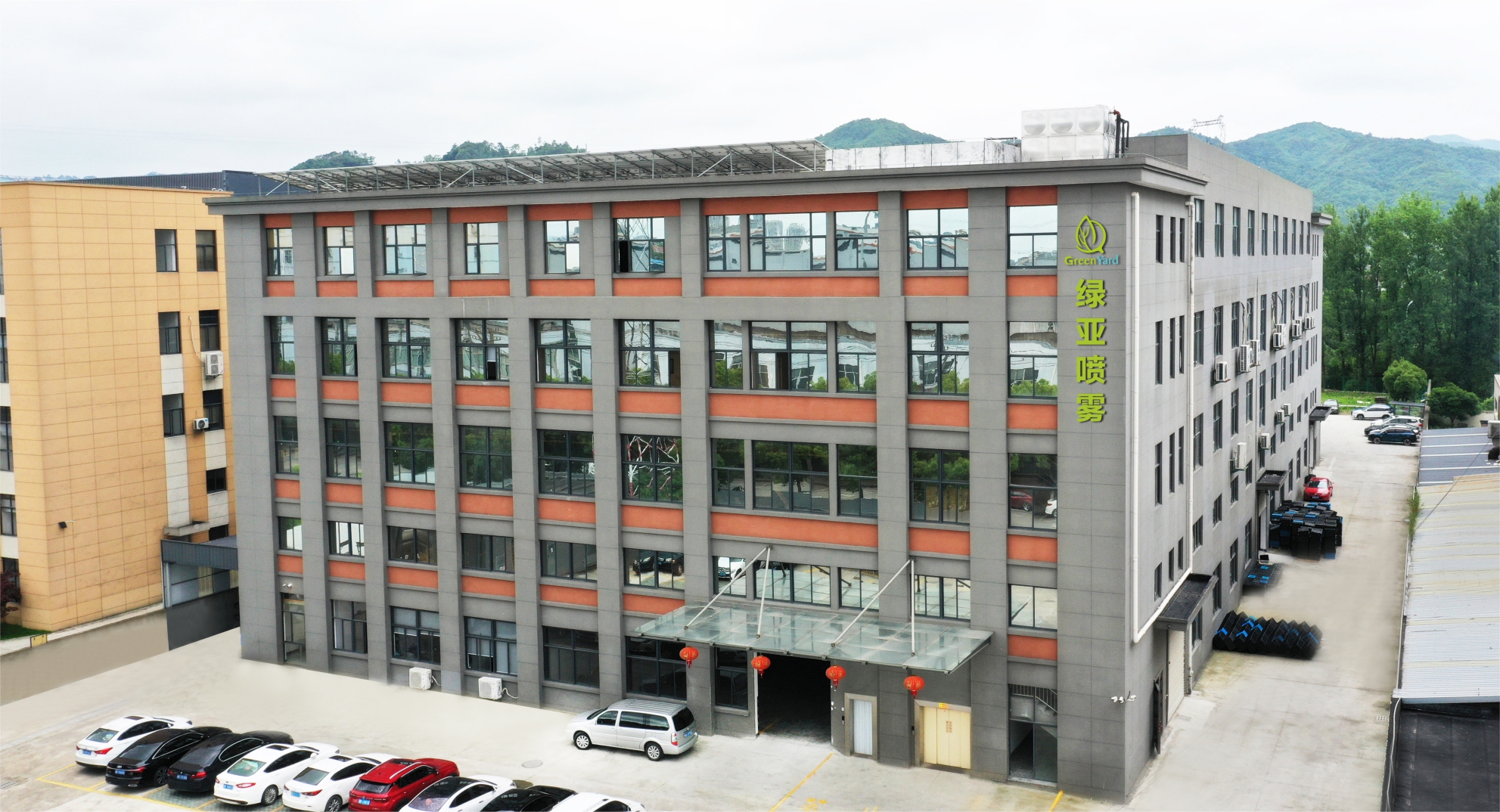
Why Choose Us?The company possesses advanced capabilities in mold design, injection molding, and automated assembly, supported by a professional quality inspection team to ensure product reliability. A dedicated design team continuously drives product innovation, providing customers with high-quality spray solutions.
 Coming From China, Marketing To The World.
 -
Products
-
News
 English
 Français
 русский
 Español
Flower Button Left Right Lock Polish Dispenser Pump: A Practical Solution for Controlled Liquid Skincare Packaging
Content
- 1 Product Overview
- 2 Design Features That Support Everyday Use
- 3 Applications in Personal-Care Packaging
- 4 Advantages Compared with Conventional Packaging Options
- 5 Manufacturing Strengths and Production Capabilities
- 6 Customization and Packaging Development Support
- 7 Formula Compatibility and Testing Considerations
- 8 Benefits for Brands and Manufacturers
- 9 Recommended Product Development Workflow
- 10 Why Manufacturing Process Matters in Cosmetic Packaging
- 11 Quality, Hygiene, and User Safety
- 12 Positioning the GY-705C1 in the Market
- 13 Frequently Asked Questions
- 13.1 What is the GY-705C1 Flower Button Left Right Lock Polish Dispenser Pump?
- 13.2 What sizes are available?
- 13.3 How does the left-right lock work?
- 13.4 Can the pump be used for makeup remover?
- 13.5 Is it suitable for facial toner?
- 13.6 Can it be used for every type of nail polish?
- 13.7 What are the main advantages over a standard bottle cap?
- 13.8 Can the pump be matched with a custom bottle?
- 13.9 Does the manufacturer support large-volume orders?
- 13.10 What manufacturing capabilities does GreenYard provide?
- 13.11 What tests should be completed before ordering?
- 13.12 How can customers request product information?
- 14 Conclusion
- 15 References
- 16 Product: Flower Button Left Right Lock Polish Dispenser Pump
The Flower Button Left Right Lock Polish Dispenser Pump, model GY-705C1, is a versatile dispensing closure designed for liquid personal-care products. Although categorized as a nail polish pump, its operating concept and available configurations make it suitable for a much wider range of formulations, including makeup removers, facial toners, cleansing liquids, cosmetic solutions, and other low-viscosity skincare products.
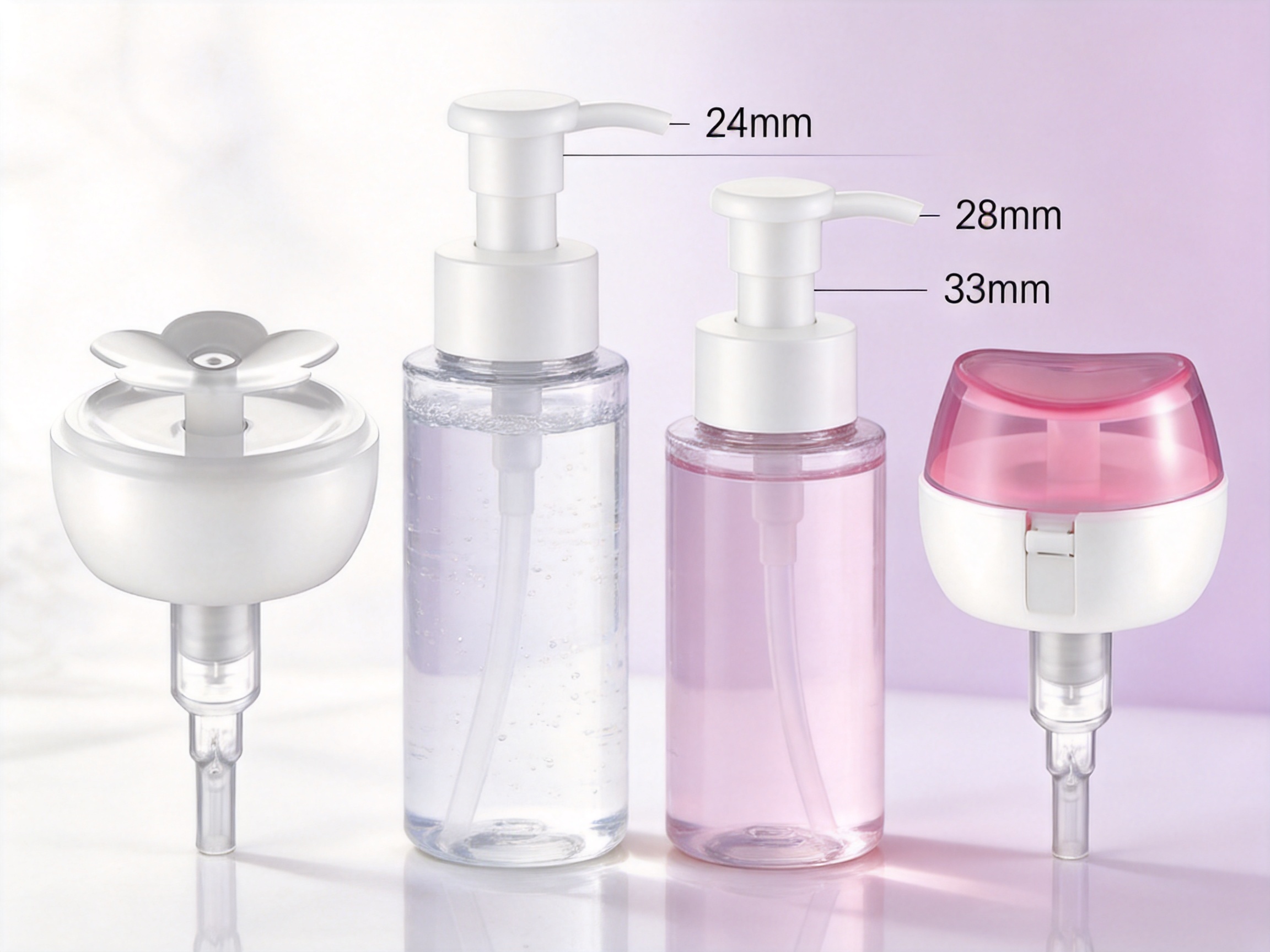
With available sizes of 24 mm, 28 mm, and 33 mm, the pump can be adapted to different bottle necks and packaging concepts. The 33 mm version is particularly suitable for retail and professional personal-care packaging, while the smaller options may support compact containers, travel formats, and specialized cosmetic applications. Its flower-style button gives the package a recognizable appearance, while the left-right locking mechanism helps improve safety during storage, transport, and daily use.
For brands searching for a packaging component that combines controlled dispensing, convenient operation, visual differentiation, and manufacturing flexibility, the GY-705C1 provides a practical option. It is manufactured by GreenYard Tools Co., Ltd., a China-based personal-care packaging manufacturer with capabilities covering mold design, injection molding, automated assembly, and quality inspection.
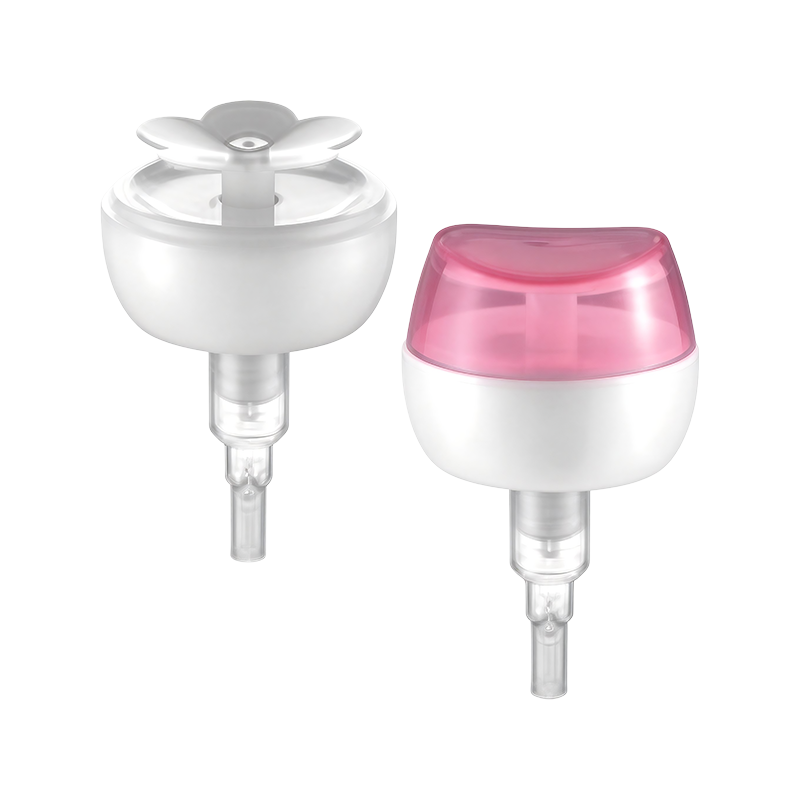
Flower Button Left Right Lock Polish Dispenser Pump
Product Overview
The GY-705C1 is a push-style dispenser pump designed to release liquid products in a controlled manner. Its distinctive flower button creates a decorative appearance that can help a finished package stand apart from conventional flat or standard cylindrical pump heads. The button is designed for convenient finger operation, allowing the user to press the dispenser with minimal effort.
The left-right lock is an important functional feature. Depending on the selected locking position, the pump can be placed in an open or closed state. When locked, the mechanism helps reduce accidental pressing and unintended product release. This is useful during shipping, warehouse handling, retail display, bathroom storage, and travel. When unlocked, the pump can provide quick access to the liquid product without requiring the user to remove a separate cap.
The product is associated with nail polish packaging, but the supplied application information identifies makeup remover and similar liquid skincare products as key uses. This broader application range is possible because the pump is intended for liquid formulations rather than thick creams or highly viscous gels. The final compatibility decision should always be confirmed through testing with the specific formula, bottle material, neck finish, and filling process.
Key Product Specifications
Product name |
Flower Button Left Right Lock Polish Dispenser Pump |
Model |
GY-705C1 |
Product category |
Nail Polish Pump |
Available sizes |
24 mm, 28 mm, and 33 mm |
Primary usage |
Makeup remover, facial toner, and other liquid skincare products |
Operating style |
Push-button dispensing |
Locking style |
Left-right locking mechanism |
Recommended packaging formats |
Personal-care bottles, cosmetic liquid containers, and selected nail-care packages |
Manufacturer |
GreenYard Tools Co., Ltd. |
The available size range gives packaging developers more options than a single-size closure. A 24 mm pump may be appropriate for a smaller bottle or compact cosmetic format. A 28 mm version can support a medium-sized package, while the 33 mm version offers a larger closure platform for bottles intended for frequent use or higher product capacity. Before production, the selected pump size should be matched with the bottle neck dimensions and tested for fit, sealing, appearance, and dispensing performance.
Design Features That Support Everyday Use
Flower-Style Actuator
The flower button is the most visible design feature of the GY-705C1. Packaging plays an important role in personal care because consumers often evaluate a product before they experience its formula. A decorative actuator can contribute to brand recognition, shelf appeal, and product differentiation. The floral form may be especially suitable for skincare, beauty, cleansing, and feminine-care product lines that require a softer or more decorative visual language.
Unlike a purely functional dispenser with no distinctive shape, the flower button can become part of the overall packaging identity. It may coordinate with transparent bottles, colored liquid formulas, metallic collars, printed labels, or custom caps. The appearance can be developed as part of a complete packaging system, allowing the pump, bottle, label, and secondary packaging to communicate a consistent product message.
Left-Right Locking Function
The left-right lock is designed to provide a simple way to control the pump state. A user can rotate or move the button to the appropriate side to open or close the dispenser. This approach is familiar, intuitive, and convenient for products used repeatedly throughout the day.
A locking feature can also support transport security. Without a lock, pressure on a pump during shipment may cause accidental discharge. Product leakage can damage cartons, labels, displays, and neighboring products. A properly designed lock helps reduce this risk by limiting actuator movement when the package is not in use. It is still important to complete transport simulation and leakage testing, because overall package security depends on the pump, bottle, dip tube, gasket, closure fit, and filling level.
Controlled Dispensing
Controlled dispensing is one of the main advantages of a pump package. Instead of pouring a liquid directly from a bottle, the user activates the pump with a measured press. This can help reduce excessive use and minimize waste, especially with products such as makeup remover, facial toner, cleansing liquid, and treatment solutions.
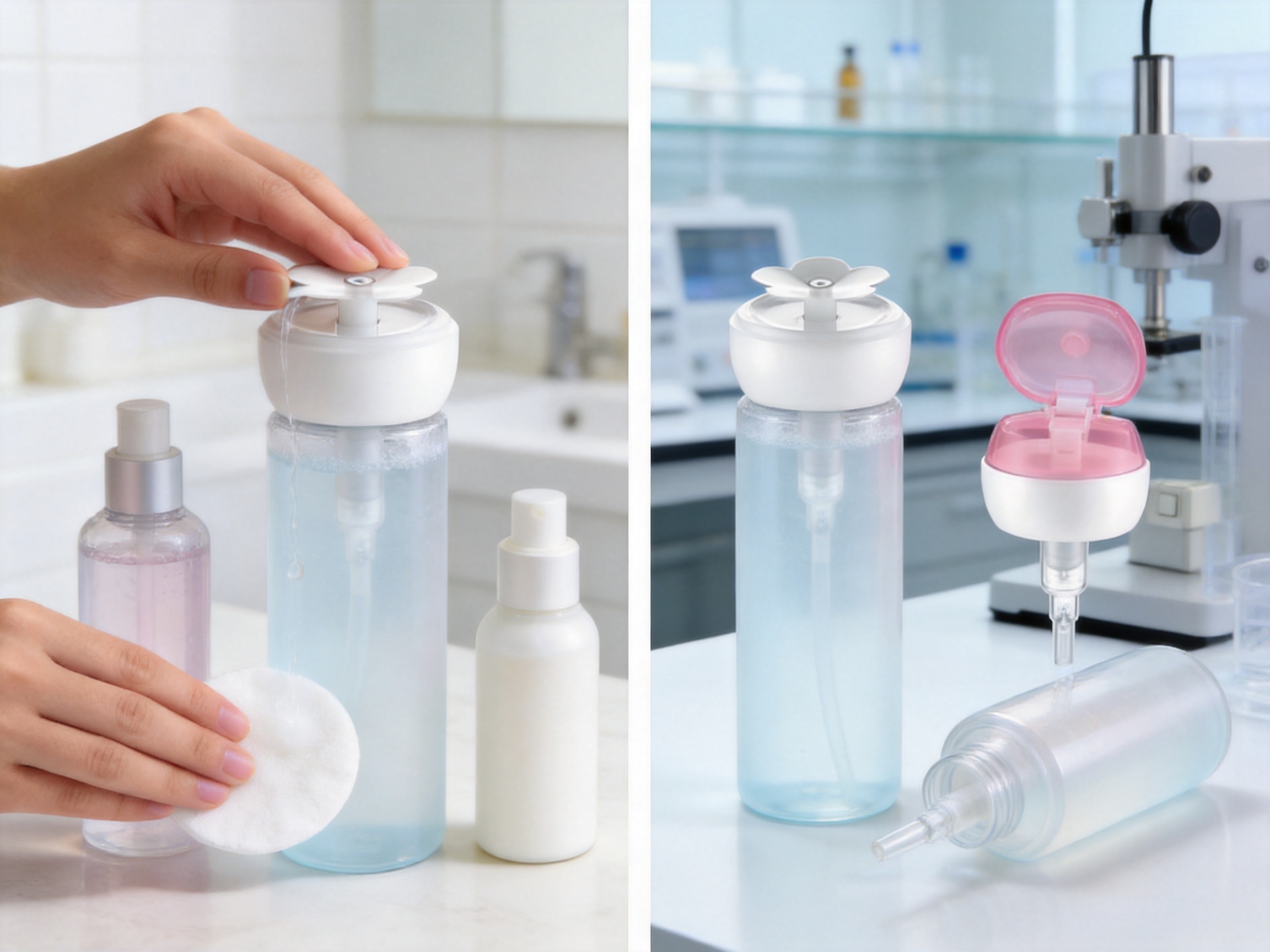
For cosmetic users, controlled dispensing also improves the application experience. A person can release the product onto cotton pads, facial sponges, hands, or other application tools. The pump allows the user to adjust the amount according to personal preference, product viscosity, and intended use. This flexibility is valuable for both home consumers and professional beauty environments.
Convenient One-Handed Operation
A push pump generally allows one-handed use. This is useful when the user is holding a cotton pad, applicator, towel, or other item in the other hand. It also supports a more convenient routine in bathrooms, salons, cosmetic counters, and treatment rooms.
The actuator should be evaluated for ease of pressing, return action, and stability during use. GreenYard’s manufacturing capabilities in automated assembly and quality inspection help support consistent component integration. Final performance will depend on the selected configuration and the formula used, but the pump concept is well suited to repeated daily operation.
Applications in Personal-Care Packaging
Makeup Remover
Makeup remover is one of the clearest applications for the GY-705C1. Many makeup removers are low-viscosity liquids that need to be dispensed onto cotton pads or directly into the hand. A pump can make this process more controlled than a simple open bottle. The user can press once or several times according to the amount required.
The lock is particularly useful for makeup remover products that are carried in cosmetic bags. The closed position may help reduce accidental activation while the product is being transported. A compact bottle fitted with a suitable version of the pump can provide an attractive travel product, provided the complete package passes leakage and durability testing.
Facial Toner
Facial toners are often used after cleansing and before moisturizing. Because toners are commonly liquid or lightly viscous, they can be compatible with pump dispensing. The GY-705C1 can help position a toner product as convenient, hygienic, and easy to control.
Consumers may dispense toner onto cotton pads, reusable facial pads, or their hands. A pump system can reduce the need to tilt and pour the bottle, which may help prevent spills around sinks and dressing tables. The pump also allows the package to remain upright during normal use, supporting a neat presentation.
Liquid Skincare Treatments
Many treatment products are formulated as light liquids, essences, cleansing waters, or specialized cosmetic solutions. The GY-705C1 may be considered for these applications when formula compatibility is confirmed. Its decorative shape can support premium skincare positioning, while its size options allow the package to be adapted to different bottle capacities.
For treatment products with active ingredients, packaging evaluation should include compatibility with the formula, exposure to light and air, chemical resistance, and long-term storage. The pump should be tested under the actual production conditions rather than selected solely on appearance.
Selected Nail-Care Products
The supplied product category identifies the GY-705C1 as a nail polish pump. In a nail-care product line, a decorative locking pump may be used for suitable liquid nail-care or polish-removal products. It may also support nail treatment solutions, cleansing liquids, or other low-viscosity products used in manicure settings.
Not every nail polish formula is suitable for a conventional pump. Some polishes contain solvents, pigments, resins, or high-viscosity ingredients that require specialized packaging. For this reason, brands should conduct formula compatibility testing before using the pump for a specific nail product. The pump is best considered a flexible packaging component for suitable liquid nail-care applications rather than a universal solution for every polish formulation.
Advantages Compared with Conventional Packaging Options
More Controlled Than Pour-Top Bottles
A conventional pour-top bottle releases product when the container is tilted. This can be simple and economical, but the flow may be difficult to control. Users may dispense more liquid than needed, particularly when the opening is large or the formula flows quickly.
The GY-705C1 provides a more deliberate dispensing action. The user activates the pump only when product is required. This can improve dosing control and reduce mess during daily use. It may also support a more premium user experience because the package feels purpose-built rather than generic.
More Convenient Than Separate-Cap Containers
Some cosmetic liquids are supplied in bottles with removable screw caps. These packages can provide effective closure, but the user must remove and replace the cap each time. The cap may also be misplaced or placed on a wet surface during use.
A locking pump combines access and closure in one integrated component. When unlocked, the user can dispense with a press. When locked, the pump remains attached to the bottle and does not require a separate loose cap. This can simplify the routine and make the package easier to use with one hand.
Stronger Visual Differentiation
Many standard pumps share similar shapes. A flower button offers a more distinctive visual element that may help a product gain attention on a retail shelf or in online product photography. Its decorative profile can be particularly appropriate for products associated with beauty, skincare, fragrance, and personal care.
Visual differentiation does not replace product performance, but it can support positioning. A well-designed pump can communicate softness, elegance, convenience, or premium quality before the package is opened. The final impression will depend on color, surface treatment, bottle design, labeling, and assembly quality.
Better Support for Portable Products
Portable cosmetic products require protection against unintended opening and accidental dispensing. The left-right lock can support this requirement by limiting movement of the actuator during transportation. This is potentially advantageous for travel-sized makeup removers, toner bottles, and professional kits.
Portability still requires full package validation. Drop testing, vibration testing, pressure testing, and leakage testing should be conducted according to the product’s distribution environment. The pump lock is an important feature, but the complete package must work as a system.
Manufacturing Strengths and Production Capabilities
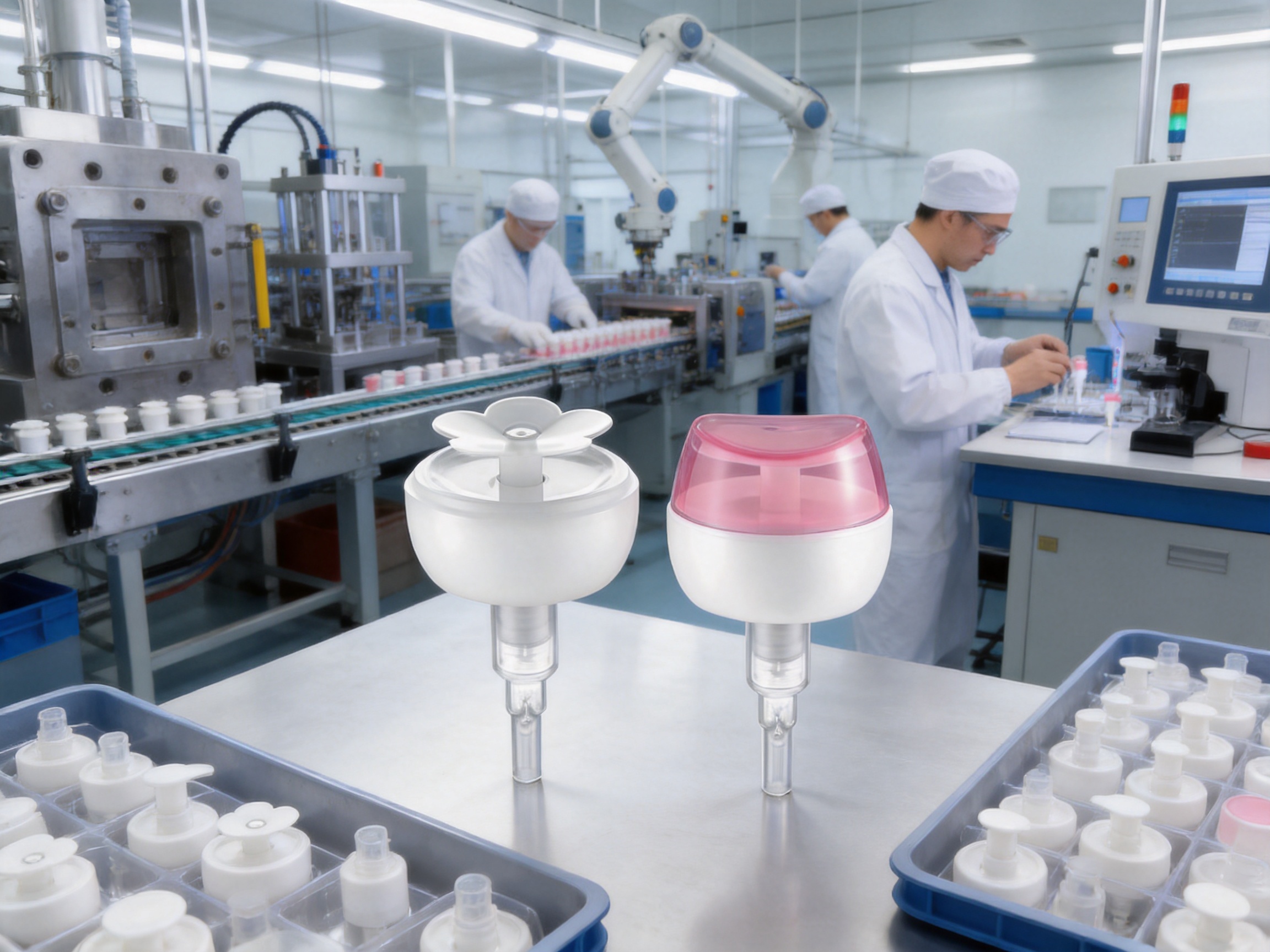
GreenYard Tools Co., Ltd. is a China-based manufacturer specializing in spray products and personal-care packaging. The company has operated in this field for 16 years and produces perfume sprayers, pump heads, caps, bottles, and daily chemical packaging solutions. Its manufacturing scope is relevant to the GY-705C1 because a dispenser pump requires coordinated control of plastic parts, functional components, assembly, and inspection.
Mold Design and Development
Mold quality has a direct influence on the appearance, dimensional accuracy, and assembly performance of injection-molded packaging components. The flower button includes shaped surfaces that must be formed consistently. The locking structure also requires accurate geometry so that the open and closed positions operate correctly.
GreenYard maintains mold design capabilities that support the development of packaging components. A capable mold-design process can help address draft angles, parting lines, wall thickness, gate locations, shrinkage, ejection, and surface appearance before mass production. Early attention to these details can reduce production problems and help maintain stable dimensions across large quantities.
For custom packaging projects, mold development may also allow adaptation of the actuator appearance, outer finish, closure dimensions, or decorative details. Any modification should be assessed for its effect on tooling cost, production cycle time, assembly, and long-term reliability.
Injection Molding
Injection molding is widely used for cosmetic packaging because it can produce precise plastic components at high volume. It is suitable for manufacturing pump buttons, housings, caps, collars, and other structural parts. Consistent injection molding helps ensure that components fit together correctly and present a uniform appearance.
Important production variables include material selection, melt temperature, injection pressure, cooling time, mold temperature, and cycle control. These factors influence dimensional stability, surface quality, strength, and part consistency. For a locking pump, dimensional consistency is especially important because excessive variation may affect the feel of the lock, the engagement of internal components, or the overall seal.
GreenYard’s injection-molding capability supports the production of personal-care packaging at scale. The company reports a daily production capacity of one million units, providing a strong foundation for large orders and recurring supply programs. Actual capacity for a specific product will depend on the number of machines, mold cavities, material selection, order mix, and required inspection standards.
Automated Assembly
A dispenser pump is made from multiple components that must be assembled in the correct sequence and orientation. Automated assembly can improve consistency by controlling placement, feeding, pressing, and inspection steps. It may also reduce variation caused by manual handling.
For the GY-705C1, assembly quality can influence actuator movement, lock performance, return action, dip-tube alignment, and sealing. Automation is especially valuable for high-volume orders because it helps maintain repeatability from one production batch to another.
Automated systems can also support production efficiency. When assembly operations are standardized, manufacturers may achieve more predictable cycle times, improved output, and better traceability. Human operators remain important for line supervision, material control, process adjustment, and quality verification, but automation provides a reliable foundation for repeat production.
Quality Inspection
Quality inspection is essential for cosmetic packaging because a component can look attractive while failing in practical use. Inspection should cover dimensions, appearance, assembly, locking action, dispensing behavior, leakage, and compatibility with the intended bottle.
Typical checks may include visual inspection for flash, sink marks, scratches, color variation, contamination, or deformation. Functional checks may examine whether the actuator moves smoothly, returns correctly, and locks in the intended positions. Dimensional checks can verify critical areas such as the closure diameter, connection points, and sealing surfaces.
GreenYard identifies quality inspection as one of its advanced production capabilities. A structured inspection system helps support reliable packaging performance and reduces the risk of inconsistent components entering the supply chain. Customers should define acceptance criteria and testing methods with the manufacturer before beginning mass production.
Customization and Packaging Development Support
Personal-care brands often require packaging that reflects a specific market position, formula, or product family. A standard pump may be suitable for some projects, while others may require adjustments to color, surface treatment, bottle matching, or closure dimensions. GreenYard’s design team supports product innovation and packaging development for global markets.
Size Selection
The GY-705C1 is available in 24 mm, 28 mm, and 33 mm sizes. Selecting the correct size begins with the bottle neck finish. The pump and bottle must be mechanically compatible, and the closure must sit evenly without cross-threading, excessive looseness, or interference with the bottle shoulder.
The 33 mm option is identified in the product information as a suitable size for makeup removers, facial toners, and other liquid skincare products. It may be appropriate for packages designed for regular consumer use or retail presentation. The 24 mm and 28 mm options offer additional flexibility for smaller or differently proportioned containers.
Color and Surface Appearance
The flower button and surrounding components may be considered for color matching according to the requirements of the product line. Color can support product segmentation, seasonal collections, or coordination with the bottle and label. Depending on the material and finish, brands may explore opaque, translucent, glossy, matte, metallic-effect, or other visual treatments.
Color consistency should be controlled through approved samples, standardized references, and batch inspection. Differences in resin, processing conditions, lighting, or surface texture can affect the perceived color. A pre-production sample approval process is recommended for projects where appearance is a major selling point.
Bottle and Pump Coordination
The pump should not be selected independently from the bottle. The bottle shoulder, neck height, opening diameter, dip-tube length, wall thickness, and overall proportions all influence the final package. A flower-style pump may look best when paired with a bottle whose shape provides enough visual balance and adequate support during pressing.
GreenYard produces bottles and other packaging components in addition to pump heads and caps. This broader product scope may simplify coordination for customers seeking a complete packaging solution. When pump and bottle development are managed together, the manufacturer can evaluate fit, appearance, filling, assembly, and shipping performance as a unified project.
Private-Label and OEM Projects
Packaging manufacturers frequently support private-label and original equipment manufacturing projects. For a brand using the GY-705C1, the development process may include product selection, sample review, bottle matching, color confirmation, compatibility testing, tooling discussion, pre-production approval, and mass-production inspection.
Clear communication is important at every stage. Customers should provide the intended formula type, bottle specifications, target market, filling method, expected annual volume, packaging appearance, and required testing conditions. The manufacturer can then assess whether the selected configuration is suitable and identify any technical adjustments before production begins.
Formula Compatibility and Testing Considerations
The GY-705C1 is intended for liquid personal-care products, but compatibility cannot be assumed solely from product category. Formulas vary in alcohol content, oils, surfactants, fragrances, acids, solvents, pigments, preservatives, and active ingredients. These substances may affect plastics, seals, springs, dip tubes, or internal pump components over time.
Basic Compatibility Testing
A compatibility program should place the pump and bottle in contact with the actual formula under expected storage conditions. Samples can be evaluated for changes in color, odor, swelling, cracking, brittleness, stress whitening, leakage, actuator movement, and dispensing performance.
Testing should include both filled and unfilled samples where appropriate. Filled packages may be stored upright, inverted, and on their sides to represent realistic handling conditions. Elevated-temperature testing can help identify potential long-term issues, although accelerated conditions must be interpreted carefully and should not be treated as an exact replacement for real-time storage.
Dispensing Performance
Dispensing tests should evaluate the amount released per actuation, the consistency between actuations, the time required for priming, and the behavior near the end of the package life. The formula’s viscosity and surface tension can affect pump performance. A pump that performs well with a watery toner may behave differently with an oil-rich remover or a more viscous treatment liquid.
The dip tube must reach an appropriate position inside the bottle without excessive bending or obstruction. The closure should also be assembled at the correct torque or pressure. Poor bottle fit can cause leakage or unstable dispensing even when the pump itself is functioning correctly.
Leakage and Transport Testing
Packaging should be evaluated under conditions that represent the distribution chain. Leakage testing may include pressure, vacuum, inversion, vibration, drop, and temperature-cycle testing. The left-right lock should be checked before and after these tests to confirm that it remains functional.
Transport validation is particularly important for liquid products. A small amount of leakage can create significant problems when many units are packed together. Carton strength, internal dividers, secondary bags, and filling levels may all influence the result. The pump is one part of the overall package-security system.
Benefits for Brands and Manufacturers
Improved Consumer Experience
A package is often the consumer’s first physical interaction with a cosmetic product. The flower button provides a decorative touch, while the push mechanism offers convenient access. The lock adds an element of control that can make the package feel more thoughtfully designed.
When the pump operates smoothly and consistently, it can reinforce perceptions of quality. Consumers may appreciate a package that is easy to hold, simple to activate, and less likely to spill. These practical benefits can contribute to repeat purchase and positive product reviews.
Support for Premium Positioning
Premium packaging does not necessarily require complex mechanisms. A recognizable actuator shape, coordinated finish, and reliable operation can create a high-value impression without making the package difficult to use. The GY-705C1 may help brands develop a more distinctive appearance for skincare, cleansing, or nail-care collections.
The pump can be paired with transparent, frosted, colored, or decorated bottles. It may also be used with different label styles and secondary packaging formats. This flexibility allows the same basic dispensing concept to support multiple product tiers or product families.
Production Scalability
Large personal-care brands require stable supply and consistent quality. GreenYard’s reported daily production capacity of one million units indicates that the company is equipped to support high-volume packaging programs. Its combination of mold design, injection molding, automated assembly, and inspection can help create a more integrated manufacturing workflow.
Scalability is also important for growing brands. A product may begin with a limited launch and later expand into additional regions, sizes, or product variations. Working with a manufacturer that has broad production resources can reduce the need to change suppliers when demand increases.
Integrated Packaging Resources
GreenYard manufactures perfume sprayers, pump heads, caps, bottles, and daily chemical packaging solutions. This product range gives customers access to a broader packaging resource base. Even if the initial project concerns only the GY-705C1, future product development may require related components such as bottles, caps, fine mist sprayers, lotion pumps, treatment pumps, foam pumps, trigger sprayers, roll-on bottles, airless bottles, cream jars, or deodorant stick bottles.
An integrated supplier can help brands compare packaging formats according to formula viscosity, usage habits, product positioning, and production requirements. This does not eliminate the need for independent testing, but it can simplify communication and support more coordinated development.
Recommended Product Development Workflow
Step One: Define the Formula and Application
The first step is to identify the exact product to be packaged. Makeup remover, facial toner, cleansing water, liquid treatment, and nail-care solution may all have different requirements. The brand should provide information about viscosity, alcohol level, oil content, fragrance, active ingredients, pH, and expected storage conditions.
Step Two: Select the Pump Size
The next step is to select among the 24 mm, 28 mm, and 33 mm options. This decision should be based on the bottle neck finish, desired package proportions, target fill volume, and visual concept. A technical drawing or physical sample should be used to confirm compatibility rather than relying only on nominal diameter.
Step Three: Evaluate Samples
Samples should be assembled with the intended bottle and filled with the actual formula. The evaluation should cover appearance, actuator feel, locking action, dispensing quantity, leakage, and overall convenience. Consumer or professional user feedback may also be collected when the package experience is central to the product concept.
Step Four: Confirm Materials and Appearance
After functional approval, the customer can confirm color, finish, decoration, label coordination, and other visual details. Approved color standards and reference samples should be retained for future production comparisons.
Step Five: Complete Validation Testing
Before mass production, the package should undergo compatibility, leakage, drop, vibration, and temperature testing appropriate to the product and distribution route. The results should be documented, and any necessary adjustments should be completed before final approval.
Step Six: Establish Mass-Production Controls
Production controls should identify critical dimensions, acceptable cosmetic limits, functional inspection frequency, sampling plans, packaging methods, and batch traceability. Clear standards help align the manufacturer and customer and support consistent quality across repeated orders.
Why Manufacturing Process Matters in Cosmetic Packaging
Cosmetic packaging is often judged by appearance, but functional reliability is equally important. A pump with an attractive design may still fail if the actuator sticks, the lock does not engage, the bottle leaks, or the pump releases inconsistent amounts. Manufacturing discipline is therefore a major factor in the final customer experience.
GreenYard’s reported capabilities address several stages that influence quality. Mold design affects the accuracy of the parts. Injection molding affects their consistency and appearance. Automated assembly affects the relationship between internal and external components. Quality inspection verifies whether the finished product meets defined requirements.
This process-based approach is particularly valuable for a product such as the GY-705C1, which combines decorative geometry with a moving locking mechanism. The flower button must maintain its appearance, while the left-right lock must provide reliable movement and secure positioning. Both visual and functional requirements must be managed during production.
The company’s dedicated design team also supports ongoing product innovation. Packaging trends change quickly, and brands increasingly seek components that offer convenience, visual personality, and more specialized dispensing experiences. A manufacturer capable of combining design development with mass production can respond more effectively to these requirements.
Quality, Hygiene, and User Safety
Personal-care packaging should help protect the product from contamination and unnecessary exposure during normal use. A pump can reduce the need to pour product through a wide opening or repeatedly insert fingers into a container. The enclosed dispensing path may support a cleaner user experience, although the actual hygiene performance depends on the complete pump design and formula.
Components should be manufactured, stored, and packed in a manner appropriate for cosmetic packaging. Clean handling, suitable material control, and effective inspection are important considerations. Brands should establish their own regulatory, safety, and hygiene requirements for the target market.
The locking mechanism can also support safe handling by helping prevent unintended activation. However, it should not be described as a child-resistant feature unless it has been specifically tested and certified for that purpose. Packaging claims must accurately reflect validated performance.
Positioning the GY-705C1 in the Market
The GY-705C1 is best positioned as a decorative, lockable, controlled-dispensing pump for liquid beauty and personal-care products. Its main strengths are its distinctive flower button, three available size options, convenient push operation, and left-right lock. These features make it more versatile than a basic open bottle closure while remaining easier to operate than packaging that requires a separate cap.
Compared with ordinary pump heads, the flower design can provide a stronger visual identity. Compared with pour-top containers, the pump can offer more controlled application. Compared with loose-cap bottles, the integrated lock can improve convenience and portability. Compared with highly specialized dispensing systems, the GY-705C1 may offer a simpler route to attractive everyday packaging for suitable liquid formulas.
Its suitability should be assessed according to each project’s technical needs. The pump is not automatically appropriate for every nail polish, treatment product, or cosmetic liquid. Formula compatibility, bottle matching, dispensing requirements, and distribution testing remain essential. When these factors are addressed properly, the product can offer a strong balance of design, usability, and production practicality.
Frequently Asked Questions
What is the GY-705C1 Flower Button Left Right Lock Polish Dispenser Pump?
The GY-705C1 is a push-style dispenser pump with a flower-shaped button and a left-right locking mechanism. It is listed under the nail polish pump category but is also suitable for consideration with makeup removers, facial toners, and other liquid skincare products.
What sizes are available?
The available sizes are 24 mm, 28 mm, and 33 mm. The correct size should be selected according to the bottle neck finish and the intended package design. The 33 mm version is identified in the supplied product information as a suitable option for makeup removers, facial toners, and similar liquid products.
How does the left-right lock work?
The actuator can be moved or rotated between positions to open or lock the pump. The locked position helps limit accidental pressing during storage and transport. The exact operating direction and movement should be confirmed with production samples and technical specifications.
Can the pump be used for makeup remover?
Yes. Makeup remover is one of the stated applications. The pump can help dispense liquid remover onto cotton pads or into the hand in a controlled manner. Compatibility testing with the specific remover formula is recommended before mass production.
Is it suitable for facial toner?
Yes. Facial toner is also listed as a suitable application. The pump can support convenient, controlled dispensing and may help reduce spills compared with a pour-top bottle.
Can it be used for every type of nail polish?
No universal compatibility should be assumed. Some nail polish formulas contain solvents, pigments, resins, or other ingredients that may require specialized packaging. The pump should be tested with the exact formula to verify material compatibility, dispensing performance, and long-term stability.
What are the main advantages over a standard bottle cap?
The GY-705C1 can provide controlled dispensing, one-handed operation, a distinctive decorative appearance, and an integrated locking function. A standard cap may be simpler, but it generally does not offer the same pump-based dosing experience.
Can the pump be matched with a custom bottle?
It may be matched with a suitable custom or standard bottle, provided that the neck finish, dimensions, sealing surfaces, and dip-tube requirements are compatible. GreenYard also manufactures bottles and other packaging components, which may support coordinated packaging development.
Does the manufacturer support large-volume orders?
GreenYard reports a daily production capacity of one million units. Actual production timing and capacity depend on the selected product, order quantity, tooling status, material requirements, inspection standards, and production schedule.
What manufacturing capabilities does GreenYard provide?
The company provides mold design, injection molding, automated assembly, and quality inspection. It also maintains a design team focused on packaging innovation and produces pumps, sprayers, caps, bottles, and other daily chemical packaging solutions.
What tests should be completed before ordering?
Brands should evaluate bottle fit, dispensing quantity, priming, lock operation, leakage, formula compatibility, drop resistance, vibration resistance, and temperature stability. The exact test plan should reflect the formula, package size, filling method, and distribution environment.
How can customers request product information?
Customers can contact GreenYard Tools Co., Ltd. through its sales team to discuss samples, sizes, bottle matching, customization, production requirements, and packaging applications. The company address is No. 97-1 Fengyi Road, Lanjiang Street, Yuyao City, Zhejiang Province, China. The listed telephone numbers are +86-0574-62493001 and +86-13116696325, and the listed email address is [email protected].
Conclusion
The Flower Button Left Right Lock Polish Dispenser Pump GY-705C1 offers a combination of decorative design and practical dispensing performance. Its flower button can provide visual differentiation, while the left-right lock supports safer handling and improved portability. Controlled push dispensing makes the pump suitable for makeup removers, facial toners, and other liquid skincare products, with potential applications in selected nail-care and cosmetic formats.
The availability of 24 mm, 28 mm, and 33 mm sizes gives packaging developers room to adapt the component to different bottle formats and product positions. Its advantages are strengthened by GreenYard Tools Co., Ltd.’s manufacturing capabilities, including mold design, injection molding, automated assembly, quality inspection, and large-scale production.
As with any cosmetic packaging component, successful implementation depends on proper bottle matching, formula compatibility testing, leakage validation, and production-quality controls. When these steps are completed, the GY-705C1 can serve as an attractive and functional packaging solution for brands seeking a more distinctive alternative to ordinary caps, pour-top bottles, and basic pump closures.
References
1. Product specification supplied for the GY-705C1 Flower Button Left Right Lock Polish Dispenser Pump, including available sizes and stated applications.
2. GreenYard Tools Co., Ltd. company information concerning personal-care packaging manufacturing, mold design, injection molding, automated assembly, and quality inspection.
3. General cosmetic packaging development practices for pump compatibility, leakage evaluation, dispensing testing, and transport validation.
4. General principles of injection-molded plastic component production and automated assembly for personal-care packaging.
5. General packaging design considerations for makeup removers, facial toners, liquid skincare products, and selected nail-care applications.
Product: Flower Button Left Right Lock Polish Dispenser Pump

-
Airless Bottles Uncovered: How to Protect Your Skincare and Perfect Every Pump
If you have ever opened a pump bottle of serum and found the last quarter of the product impossible ...
-
Amber Plastic Bottles: Lightweight, Protective, Customizable Packaging for Cosmetics
You have spent months stabilizing a vitamin C serum, only to watch a pallet of amber glass bottles ...
-
Crimp Pumps Demystified: Choosing the Right Type and Material for Every Cosmetic Formula
Walk into any cosmetic filling facility and you will find crimp pumps on everything from a delicate ...
-
What Is Perfume Spray? How Atomizers Work, Mist Types and Packaging Basics
Press the actuator on a fragrance bottle once and a metered dose of liquid, usually between 0.05 an...
Copyright © GreenYard Tools Co.,ltd. All Rights Reserved.
Personal Care Packaging Manufacturer Custom Perfume Sprayers Factory