
-
About Us
Why Choose Us?The company possesses advanced capabilities in mold design, injection molding, and automated assembly, supported by a professional quality inspection team to ensure product reliability. A dedicated design team continuously drives product innovation, providing customers with high-quality spray solutions.
 Coming From China, Marketing To The World.
 -
Products
-
News
 English
 Français
 русский
 Español
Tamper-Proof 18-415 Dropper Closure for Precise Liquid Packaging
Content
- 1 Product Overview
- 2 Key Specifications
- 3 Why the 18-415 Neck Finish Matters
- 4 Precision Dispensing for High-Value Formulas
- 5 Advantages Over Basic Caps and Open-Neck Bottles
- 6 Advantages Over Conventional Pump Packaging
- 7 Ribbed Closure Design and Handling Benefits
- 8 Tamper-Evident Packaging Considerations
- 9 Material and Formula Compatibility
- 10 Application in Skincare Packaging
- 11 Application in Oil and Aromatherapy Products
- 12 Application in Pharmaceutical and Treatment Products
- 13 Manufacturing Strengths
- 14 Quality and Performance Testing
- 15 Filling Line and Production Integration
- 16 Customization Possibilities
- 17 Packaging Sustainability and Material Efficiency
- 18 How to Select the Correct Bottle
- 19 Ordering and Development Process
- 20 Competitive Positioning
- 21 Recommended Use Cases
- 22 Storage, Handling, and Transportation
- 23 Frequently Asked Questions
- 23.1 What bottle does the GY-901Y2 dropper fit?
- 23.2 Is the product made entirely of plastic?
- 23.3 Can it be used for facial serum?
- 23.4 Can it be used for essential oils?
- 23.5 Does the ribbed closure improve grip?
- 23.6 Does the dropper provide an exact dosage?
- 23.7 Is the closure tamper-proof?
- 23.8 Can the dropper be customized?
- 23.9 Can it be used on an automated filling line?
- 23.10 What quality tests should be performed?
- 23.11 Why choose a manufacturer with mold and assembly capabilities?
- 24 Conclusion
- 25 References
- 26 Product: Tamper-Proof Plastic Bottle Dropper
Liquid packaging must do more than contain a product. It must protect the formula, support accurate dispensing, communicate quality, and provide a convenient experience for the end user. This is especially important for serums, facial oils, essential oils, pharmaceutical preparations, aromatherapy products, and other concentrated liquids that are typically used in small quantities. A well-designed dropper closure can address these requirements by combining controlled delivery with secure bottle attachment and a refined appearance.
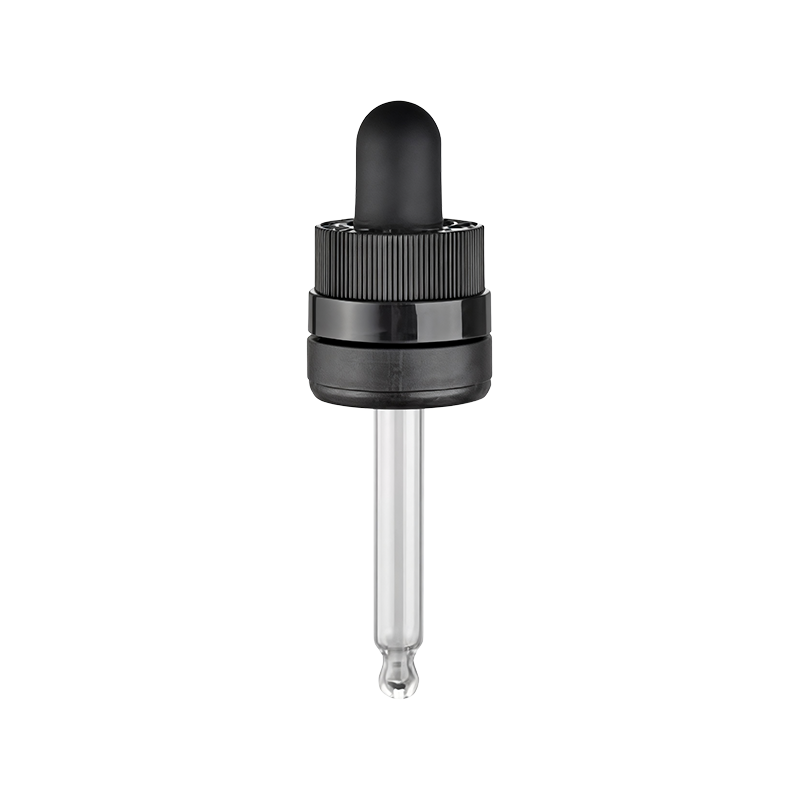
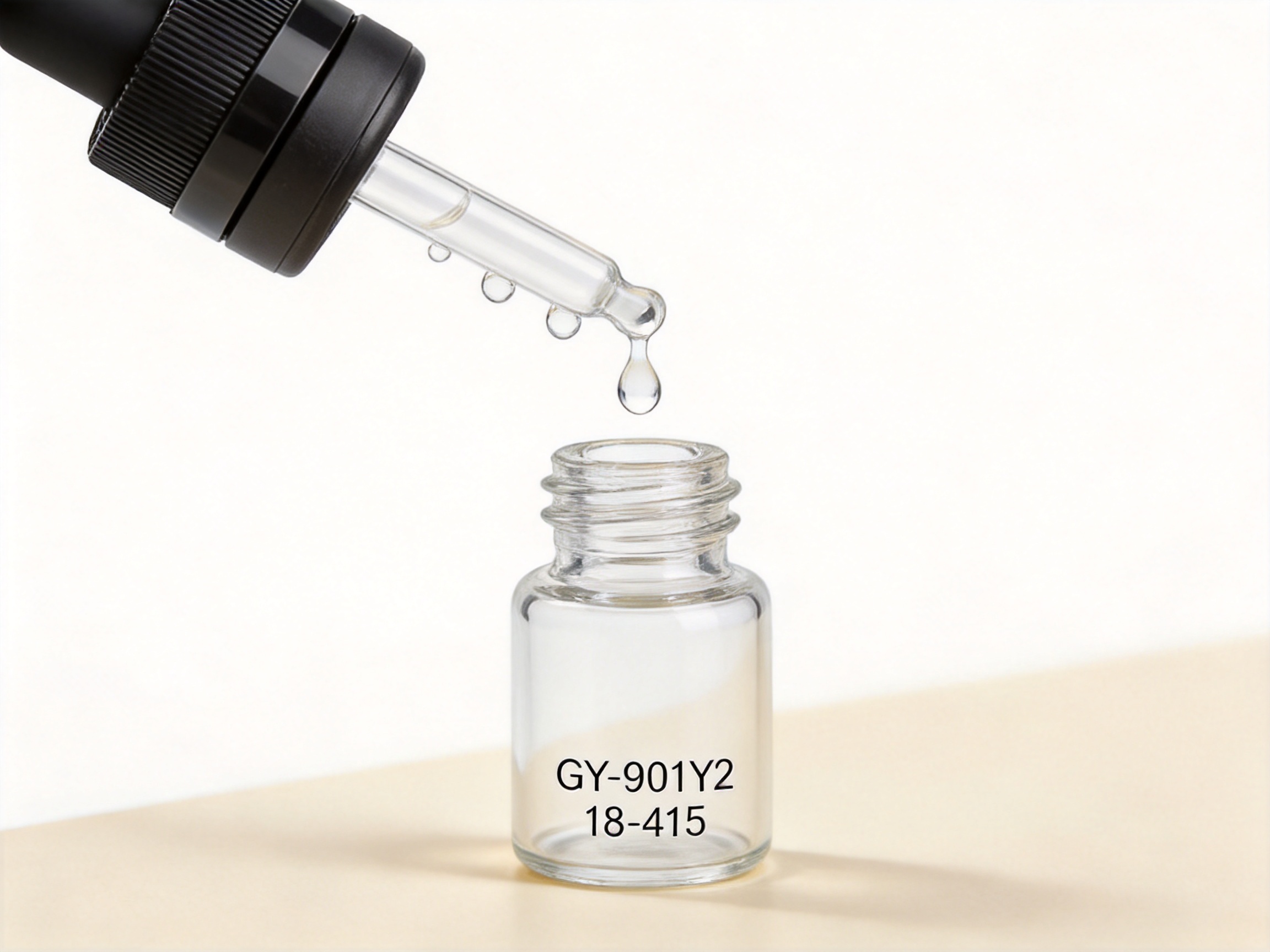
The GY-901Y2 tamper-proof plastic bottle dropper is a packaging solution developed for bottles using an 18-415 neck finish. It features a ribbed closure designed for secure fitting and practical handling. Its intended applications include serum, oil, and similar concentrated liquid products. Depending on the complete packaging configuration, the dropper system can be paired with a pipette assembly suitable for controlled liquid withdrawal and delivery.
With its standardized 18-415 size, ribbed exterior, precise dispensing concept, and suitability for personal care and specialty liquids, this dropper closure offers an effective alternative to ordinary screw caps, open-neck bottles, and less controlled dispensing systems. It is particularly useful for brands seeking a balance between product protection, dosage control, user convenience, and professional presentation.
Tamper-Proof Plastic Bottle Dropper
Product Overview
The GY-901Y2 dropper is designed as a bottle closure and liquid dispensing component for packaging applications that require measured, clean, and repeatable product delivery. The available size is 18-415, a commonly used neck-finish specification for small bottles and personal care containers. The closure is ribbed, giving users a textured surface that is easier to grip when opening or closing the package.
The product is identified as a tamper-proof plastic bottle dropper. In a complete packaging system, tamper-evident performance depends on the relationship between the closure, the bottle neck, the inner components, and the final assembly process. Buyers should therefore confirm the exact tamper-evident configuration, bottle compatibility, and testing requirements for their product before mass production.
Dropper packaging is often selected when a product must be dispensed gradually rather than released in a large stream. A dropper allows the user to draw a small amount of liquid into the pipette and apply it directly to the skin, into a formulation, or onto another surface. This operating principle is well suited to high-value products where even small quantities matter.
The dropper is suitable for products such as:
• Facial serums and concentrated skincare treatments.
• Facial, beard, and body oils.
• Essential oils and aromatherapy liquids.
• Pharmaceutical and topical preparations.
• Cosmetic actives and specialty treatment formulas.
• Other low- to medium-viscosity liquids requiring controlled dispensing.
The final suitability of the dropper should be evaluated against the formula’s viscosity, chemical composition, volatility, color, fragrance, and storage conditions. A compatibility evaluation is recommended for formulas containing strong essential oils, solvents, acids, alcohols, or other ingredients that may affect plastic, rubber, elastomer, adhesive, or glass components.
Key Specifications
Product model |
GY-901Y2 |
Product type |
Tamper-proof plastic bottle dropper |
Available size |
18-415 |
Closure style |
Ribbed |
Primary applications |
Serum, oil, aromatherapy, pharmaceutical, and concentrated liquid products |
Dispensing method |
Controlled liquid withdrawal and drop-by-drop application |
Packaging category |
Dropper closure and bottle dispensing system |
Recommended evaluation |
Neck-fit testing, formula compatibility testing, leakage testing, and tamper-evidence verification |
The 18-415 specification provides a clear starting point for packaging development. However, the neck finish alone does not guarantee compatibility across every bottle. The thread profile, sealing land, bottle dimensions, gasket or inner seal, pipette length, and closure torque must all be checked. A professional packaging supplier can assist in confirming the complete set of dimensional and functional requirements.
Why the 18-415 Neck Finish Matters
A bottle closure can only perform properly when it matches the bottle neck. The neck finish determines how the closure engages with the container, how the seal is formed, and how much force is needed for opening and closing. The 18-415 designation communicates the approximate neck size and thread style used by the packaging system, helping buyers identify an appropriate bottle and closure combination.
Using a recognized neck-finish specification can simplify sourcing and reduce unnecessary development work. Instead of creating a completely unique bottle and closure interface, a brand may be able to select from compatible container options already available in the market. This can support faster sampling, more efficient procurement, and easier replacement planning.
For production use, the closure and bottle should be tested together rather than separately. Important checks include cap engagement, thread smoothness, sealing performance, leakage under normal and inverted conditions, opening torque, closing torque, dropper function, and appearance after repeated use. The package should also be evaluated after exposure to temperature changes, transport vibration, and storage conditions expected in the target market.
The 18-415 size is particularly useful for compact bottles used in skincare, treatment, and specialty liquid packaging. It can support a clean proportion between the bottle body and the closure while leaving enough room for a practical gripping surface. The result is a packaging format that can look refined on a retail shelf and remain easy to operate in daily use.
Precision Dispensing for High-Value Formulas
One of the strongest advantages of a dropper system is control. A conventional open-neck bottle may release too much product if it is tilted too quickly. A pump may dispense a predetermined amount that is not always appropriate for every application. A dropper gives the user the ability to collect and apply a smaller quantity according to personal needs and product instructions.
Controlled dispensing helps reduce unnecessary product loss. This is important for concentrated serums, premium oils, active treatments, and pharmaceutical liquids, where the contents may have a relatively high value per milliliter. It can also make product use more intuitive. Users can see the amount drawn into the pipette and apply it in a deliberate manner.
Dropper packaging supports several application styles. A consumer may release individual drops onto the fingertips, dispense a measured amount into the palm, or apply the liquid directly to a targeted area. In professional or laboratory-related environments, the ability to transfer small quantities can also improve handling efficiency, although the complete package must be designed and validated for the intended application.
Dispensing performance depends on more than the outer closure. The pipette, bulb or actuator, internal seal, liquid viscosity, and air return behavior all contribute to the result. For this reason, the GY-901Y2 should be evaluated as part of a complete dispensing assembly. A sample trial can determine whether the delivered quantity, draw speed, release behavior, and residual liquid level meet the product’s requirements.
Advantages Over Basic Caps and Open-Neck Bottles
Improved User Control
A basic screw cap protects the bottle but does not necessarily provide precise dispensing. Users must pour or shake the bottle, which can result in inconsistent amounts. The dropper format provides a more controlled alternative and is better suited to formulas that should be applied gradually.
Better Support for Concentrated Products
Serums, oils, and active treatments are often formulated to be used in small quantities. A dropper reinforces this usage pattern by allowing the customer to dispense only what is required. This can help the product last longer and may improve the user’s perception of value.
More Professional Product Presentation
A dropper closure is widely associated with skincare treatments, premium oils, laboratory-inspired formulas, and specialized personal care products. Its appearance can communicate precision and care. The ribbed exterior also adds a functional texture that can support a clean, technical, and professional design language.
Reduced Risk of Uncontrolled Pouring
Open-neck containers can release liquid too quickly, particularly when the formula has low viscosity. A dropper reduces the likelihood of a sudden uncontrolled pour during normal use. This can be valuable when packaging oils, concentrated actives, and products that are difficult to remove from clothing or surfaces.
Potentially Better Product Protection
A properly assembled closure can provide a more secure barrier than a simple open dispensing neck. The tamper-evident concept can also help communicate whether the package has been opened before purchase, provided the final packaging system incorporates an appropriate and validated tamper-evident feature.
Advantages Over Conventional Pump Packaging
Pumps are effective for lotions, creams, and many liquid products, but they are not always the best choice for small-volume, concentrated formulas. A pump generally delivers product through a fixed stroke volume, whereas a dropper gives users more flexibility. This makes the dropper especially useful when different consumers require different application amounts.
A dropper can also occupy less visual space than a tall pump actuator. For compact serum bottles, the closure may create a more balanced package profile. This can be helpful for travel sizes, gift sets, treatment collections, and premium shelf presentations.
Another difference is the user’s relationship with the product. A pump is designed for rapid and convenient dispensing, while a dropper creates a more deliberate application ritual. For skincare and aromatherapy products, this ritual can be part of the brand experience. The user can observe the liquid, control the quantity, and apply the formula with greater attention.
At the same time, pumps may be preferable for high-viscosity lotions, large-volume products, or formulas requiring completely hands-free dispensing. The best closure depends on the product. The advantage of the GY-901Y2 is not that it replaces every pump, but that it is well matched to precise dispensing applications where a pump may be unnecessarily large or less flexible.
Ribbed Closure Design and Handling Benefits
The ribbed surface is a practical feature of the GY-901Y2 design. Smooth closures can become difficult to grip when the user’s hands are wet, oily, or covered with skincare residue. Ribbing creates additional contact points for the fingertips, supporting a more secure grip during opening and closing.
A textured closure can also improve the perceived quality of the package. When the user turns the cap, the ribs provide tactile feedback and make the component feel more purposeful. This is especially useful for products positioned in the premium personal care, treatment, and wellness categories.
Ribbing must be designed with appropriate proportions. Ribs that are too shallow may provide limited grip, while ribs that are too sharp may feel uncomfortable. Proper mold design and injection control help maintain consistent rib geometry around the full circumference of the closure. Consistency is important because uneven ribs can affect both appearance and handling.
The ribbed style also supports practical production and decoration options. Depending on the selected material, surface finish, and customer requirements, the closure may be considered for color matching, printing, labeling, metallization, or other decoration methods. Any decoration process should be tested for adhesion, abrasion resistance, chemical exposure, and compatibility with the final formula and distribution environment.
Tamper-Evident Packaging Considerations
Tamper-evident packaging gives the end user an indication that the product may have been opened or disturbed before purchase. This is particularly relevant for skincare, pharmaceutical, aromatherapy, and other products applied directly to the body. A tamper-proof or tamper-evident configuration can support consumer confidence and improve the overall security of the packaging system.
The exact tamper-evident mechanism should be confirmed for the selected GY-901Y2 configuration. Depending on the design, tamper evidence may involve a breakable band, a removable feature, an inner seal, or another component that visibly changes when the package is first opened. The closure itself should not be assumed to provide a specific mechanism unless it has been documented and tested for that purpose.
Testing should include visual inspection before and after opening, opening-force measurement, reclosure evaluation, and examination of the package after transport simulation. The goal is to ensure that the tamper-evident feature is noticeable to the user without creating unnecessary difficulty for legitimate opening.
For regulated products, buyers should also consider the requirements of the target market. Pharmaceutical, medical, and cosmetic regulations may differ by country and by product type. Packaging validation should be coordinated with the product owner’s quality, regulatory, and technical teams.
Material and Formula Compatibility
The product is described as a plastic bottle dropper, while dropper systems may include several different components, such as a plastic outer closure, a pipette, an elastomeric bulb, a gasket, and an inner seal. The material selection for each component should be matched to the formula. A complete compatibility assessment is essential because a formula can interact differently with each material.
Glass pipettes are often valued for their chemical resistance and non-reactive properties. They are commonly used with sensitive formulations, essential oils, and concentrated skincare liquids where material interaction is a concern. Plastic pipettes can provide advantages in weight, impact resistance, design flexibility, and manufacturing efficiency. The appropriate choice depends on the formula, performance requirements, cost target, and market positioning.
Compatibility testing may include visual inspection, weight change, dimensional change, color change, odor transfer, leakage, stress cracking, and functional testing after exposure to the formula. Samples should be stored under realistic and accelerated conditions when appropriate. Testing should also examine the closure, pipette, seal, and bottle as a complete system.
Formulas containing high levels of alcohol, fragrance, essential oils, solvents, acids, or active ingredients deserve particular attention. Even when a material appears stable in a short test, extended storage or temperature cycling may produce a different result. A structured test plan helps identify potential issues before filling large production quantities.
Application in Skincare Packaging
The skincare industry makes extensive use of droppers because many treatment products are concentrated and applied in small quantities. Facial serums, brightening treatments, anti-aging formulas, barrier-support products, and facial oils can all benefit from a dispensing method that encourages careful application.
The GY-901Y2 can support a compact and premium-looking skincare package when paired with a compatible bottle. The closure may be coordinated with the bottle color, label design, and secondary packaging to create a unified appearance. A ribbed surface can add subtle visual interest without requiring an overly complex external shape.
For skincare brands, the dropper can also support usage instructions. A brand may recommend one or two drops, a partial pipette, or a specific application sequence. The ability to communicate a measured routine can help consumers understand how to use concentrated products responsibly.
Hygiene should be considered during product development. The pipette should not normally contact the skin directly unless the package has been specifically designed and validated for that use. Instructions may advise dispensing onto clean hands or fingertips. Packaging design, product instructions, and consumer education should work together to reduce contamination risk during repeated use.
Application in Oil and Aromatherapy Products
Oils often require controlled dispensing because they spread quickly and may be difficult to remove from surfaces. A dropper allows the user to release a small amount at a time, making it suitable for facial oils, massage blends, beard oils, nail oils, and aromatherapy products.
Essential oils and concentrated fragrance materials can be chemically active. For these products, the complete dropper system should be tested for compatibility and long-term stability. The bottle material, pipette, bulb, seal, and closure should all be considered. The packaging should also be evaluated for evaporation control and leakage during storage and transportation.
The ribbed closure can be beneficial for oil products because oil residue may reduce grip. A textured exterior provides a more secure handling surface than a completely smooth cap. The package can therefore remain practical even when used in bathrooms, treatment rooms, or other environments where hands may not be completely dry.
Application instructions should clearly explain whether the oil is intended for direct topical use, dilution, diffusion, or another purpose. Packaging performance cannot replace appropriate product labeling, and the dropper should be selected according to the safety and dosage requirements of the formula.
Application in Pharmaceutical and Treatment Products
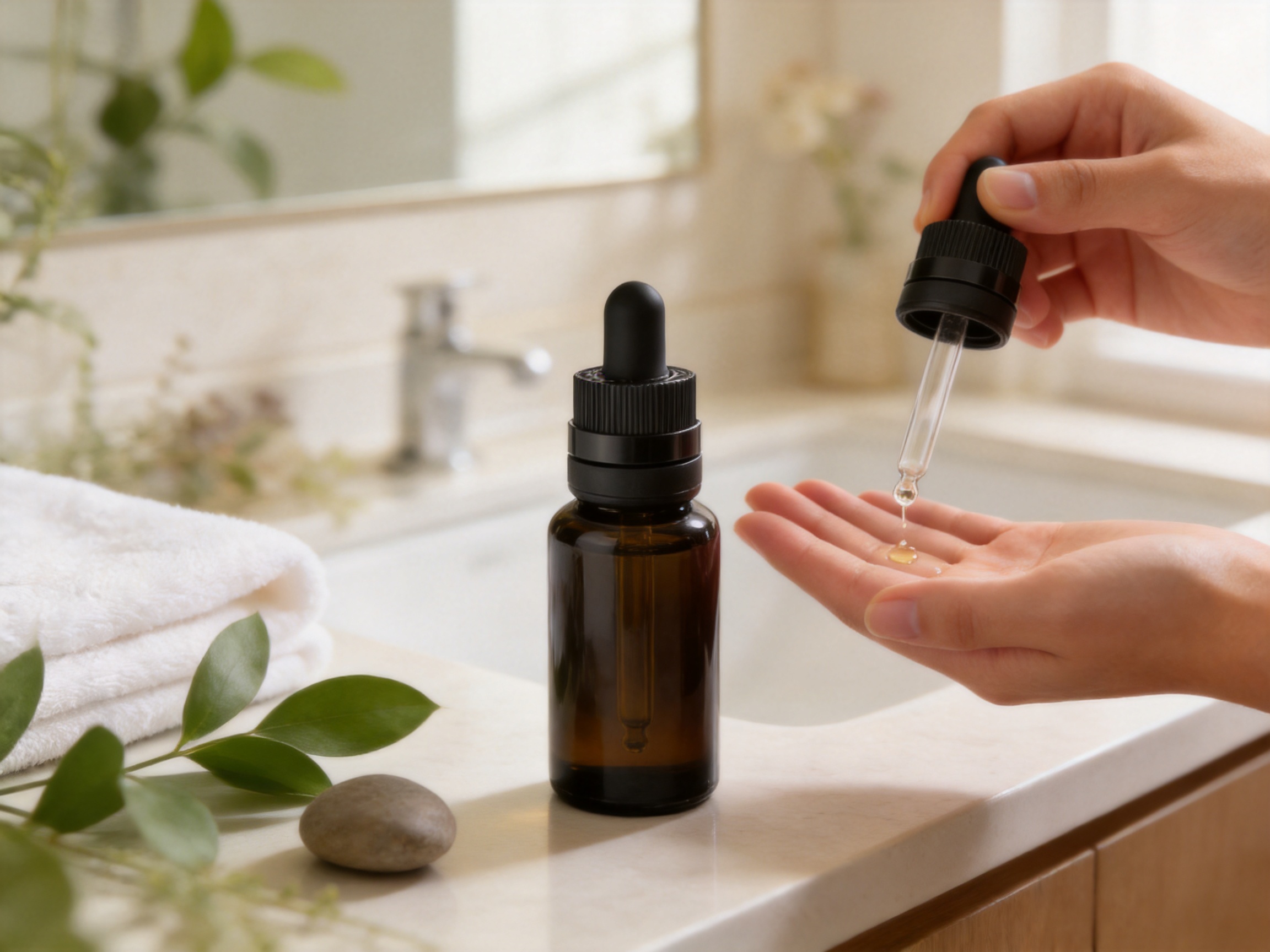
Some pharmaceutical and treatment liquids require careful dosing and controlled administration. A dropper format can support this requirement when the complete package has been designed and validated for the intended dosage. The user can withdraw a defined amount and administer the liquid according to professional instructions.
For pharmaceutical applications, accuracy requirements may be stricter than those for general cosmetics. Drop size can vary with liquid viscosity, surface tension, temperature, pipette geometry, and user technique. If the product requires a highly precise dose, the manufacturer should conduct formal dosage testing under defined conditions rather than relying only on nominal drop size.
Container-closure integrity is another important consideration. The package should be tested to confirm that it protects the formulation throughout filling, storage, shipping, and use. Testing may include vacuum or pressure checks, inversion tests, environmental conditioning, and transport simulation.
Regulated applications may require documentation regarding raw materials, production controls, cleanliness, traceability, and quality management. GreenYard’s manufacturing capabilities in mold design, injection molding, automated assembly, and quality inspection provide a foundation for developing packaging systems that can be reviewed against the customer’s technical and regulatory requirements.
Manufacturing Strengths
GreenYard Tools Co., Ltd. is a China-based packaging material manufacturer with 16 years of experience in spray and personal care packaging. Its product range includes perfume sprayers, pump heads, caps, bottles, and daily chemical packaging solutions. This broader product knowledge is valuable when developing a dropper because the closure is only one part of a complete packaging system.
The company reports a daily production capacity of one million units. High production capacity can support large-volume programs, provided that capacity is matched with appropriate quality controls, production scheduling, and batch traceability. For customers planning a regional launch or a global product rollout, scalable manufacturing can reduce the risk of supply interruptions.
GreenYard’s capabilities include mold design, injection molding, automated assembly, and quality inspection. These processes are directly relevant to dropper production. Mold design affects dimensions, thread quality, rib consistency, appearance, and part stability. Injection molding determines how effectively the plastic component is formed. Automated assembly supports repeatable component placement and can help reduce manual variation. Quality inspection verifies whether finished parts meet defined requirements.
The company also maintains a dedicated design team to support product innovation. Packaging buyers may benefit from this capability when they need assistance with closure selection, dimensional matching, appearance development, or adaptation to a specific bottle and formula. A supplier with in-house design knowledge can often identify potential assembly or compatibility issues earlier in the development process.
Mold Design and Engineering
Mold quality has a direct effect on the performance of a plastic closure. The threads must be formed accurately, the ribs should remain uniform, and the sealing surfaces must be consistent. Poor mold control can lead to flash, short shots, deformation, uneven wall thickness, or inconsistent fit.
Engineering review should consider draft angles, gate location, cooling balance, shrinkage, ejection, and parting-line visibility. These factors influence both the appearance and function of the finished closure. For high-volume products, mold durability and maintenance planning are also important because gradual wear can affect dimensions over time.
Injection Molding
Injection molding enables efficient production of plastic closure components in large quantities. A controlled process can maintain consistent dimensions while supporting a range of colors and finishes. Process parameters such as temperature, pressure, cooling time, and cycle time must be managed to minimize variation.
For a ribbed dropper closure, molding consistency is especially important around the gripping surface and thread profile. Dimensional changes that appear small may influence closure torque, bottle fit, leakage, or user experience. Regular inspections and process monitoring help keep the parts within the customer’s approved specification.
Automated Assembly
Dropper systems can contain multiple components that must be assembled in the correct sequence and orientation. Automated assembly can improve repeatability and production efficiency. It may also reduce the risk of inconsistent insertion, misplaced seals, or variable component positioning.
Automation should be supported by appropriate inspection points. A system may check component presence, assembly height, closure engagement, or other customer-defined characteristics. The specific inspection plan should be developed according to the product structure and the intended market.
Quality Inspection
Quality inspection provides assurance that production parts continue to meet the approved requirements. Typical areas of inspection may include appearance, color, dimensions, thread fit, closure torque, leakage performance, component assembly, and packaging cleanliness.
Inspection standards should be agreed before mass production. Reference samples, limit samples, drawings, material specifications, and approved color standards can help create a common basis for evaluation. Clear acceptance criteria reduce misunderstandings between the supplier and the customer.
Quality and Performance Testing
A dropper closure should be tested for both physical performance and user experience. The following tests may be considered during development and production approval:
• Dimensional inspection of the closure, thread, sealing area, and related components.
• Fit testing with the selected 18-415 bottle neck.
• Opening and closing torque measurement.
• Leakage testing in upright, inverted, and horizontal positions.
• Dropper draw and release testing using the actual formula or a qualified substitute.
• Repeated-use testing to evaluate closure durability.
• Tamper-evident feature verification, where applicable.
• Temperature and humidity conditioning.
• Transport simulation involving vibration, impact, and package movement.
• Compatibility testing with the filled product.
• Visual inspection for flash, deformation, contamination, color variation, or surface defects.
Testing results should be recorded and compared with previously approved samples. If the product is intended for a regulated market, additional testing and documentation may be required by the customer’s quality system or applicable legislation.
Filling Line and Production Integration
Packaging performance is influenced by the filling process. The bottle, formula, dropper, and capping equipment must work together. Before mass production, the customer should confirm that the 18-415 closure can be applied reliably on the intended filling line.
Important factors include bottle positioning, filling volume, product residue on the neck, cap feeding, insertion depth, capping speed, and torque control. If liquid remains on the sealing surface, the closure may not seat correctly. If the cap is applied with too much torque, the user may experience difficulty opening it. If torque is too low, leakage or tamper-evident failure may occur.
Line trials are therefore recommended. A production trial can reveal issues that may not appear during hand assembly. It can also help establish operating parameters for capping equipment and identify the most efficient sequence for installing the dropper assembly.
For large orders, customers should discuss batch planning, inspection frequency, packaging configuration, carton quantity, labeling, and shipment protection with the supplier. A clear production plan helps maintain consistency from the first batch to subsequent replenishment orders.
Customization Possibilities
Although the available specification is 18-415 with a ribbed closure, packaging projects often require additional customization. Potential areas for discussion may include color, surface finish, decoration, pipette length, bulb style, bottle selection, and secondary packaging.
Color matching can help coordinate the closure with the bottle, label, or brand identity. Different surface finishes may create a glossy, matte, frosted, or technical appearance. Decoration options should be evaluated according to the material and the expected use environment.
The pipette length should correspond to the bottle height and internal geometry. A pipette that is too short may leave excessive product at the bottom, while one that is too long may contact the base or interfere with assembly. The ideal length is determined through bottle and component testing.
Customization should not be treated only as a visual exercise. Every change can influence tooling, cost, lead time, filling-line performance, dosage behavior, and compatibility. GreenYard’s mold design and manufacturing experience can help customers evaluate these trade-offs before final approval.
Packaging Sustainability and Material Efficiency
Packaging development increasingly includes questions about material use, recyclability, transportation weight, and production efficiency. A dropper closure should be assessed as part of the entire package rather than in isolation. The bottle, closure, pipette, bulb, label, carton, and shipping materials all contribute to the product’s environmental profile.
Plastic components can offer advantages in weight reduction and impact resistance compared with heavier alternatives. Lower package weight may reduce transportation energy, while improved durability can reduce breakage during handling. However, the full package should be reviewed for material separation, recycling compatibility, and local waste-management conditions.
Where a dropper system combines multiple materials, designers should consider whether the components can be separated after use. Material identification, simplified construction, and appropriate labeling may support responsible end-of-life handling. These decisions should be balanced with the formula’s protection requirements and the dispensing performance expected by the user.
Manufacturing efficiency also contributes to resource management. High-volume injection molding, automated assembly, and process control can reduce production variation and minimize rejected parts. Effective mold maintenance and quality inspection help prevent waste caused by recurring defects.
How to Select the Correct Bottle
The dropper should be matched with a bottle that has the correct 18-415 neck finish and sufficient dimensional consistency. The bottle’s neck height, thread profile, sealing surface, shoulder shape, internal diameter, and body capacity should be reviewed before approval.
Glass bottles are often selected for premium serums, essential oils, and formulas requiring a strong barrier or a non-reactive container. Plastic bottles may provide lower weight and improved impact resistance. The right choice depends on the formula, positioning, distribution conditions, and regulatory needs.
Bottle shape also affects the user experience. A narrow, tall bottle may create a premium appearance but can be less stable on a countertop. A wider bottle may provide improved stability but require a different pipette length. The closure and bottle should be reviewed together for visual balance and practical use.
Sampling should include filled and assembled units. Empty components may fit correctly but behave differently after filling, particularly when the formula affects friction, sealing, or material flexibility. A realistic trial provides more reliable information than dimensional comparison alone.

Ordering and Development Process
Step One: Define the Product Requirements
The customer should provide the formula type, viscosity, bottle material, target fill volume, application method, expected dosage, market, decoration requirements, and estimated order quantity. This information helps determine whether the standard GY-901Y2 configuration is appropriate.
Step Two: Confirm the Neck Finish
The bottle should be confirmed as 18-415, and technical drawings or physical samples should be exchanged where necessary. Neck-finish confirmation is essential for avoiding fit and leakage problems.
Step Three: Request Samples
Samples should be tested with the intended bottle and, where possible, the actual product formula. The customer can review appearance, grip, opening, closure fit, dropper draw, dispensing behavior, and overall package balance.
Step Four: Complete Compatibility and Performance Tests
Testing should be conducted under realistic storage and use conditions. The customer should establish acceptance criteria for leakage, torque, dosage, appearance, and tamper evidence before production approval.
Step Five: Approve the Production Standard
Approved samples, drawings, color standards, packaging instructions, and inspection requirements should be documented. This information becomes the reference for mass production and future replenishment orders.
Step Six: Plan Mass Production
Production planning should cover quantities, lead time, packing method, shipment schedule, quality inspection, and communication procedures. Early planning is especially important for customized colors, decorations, or tooling modifications.
Competitive Positioning
The GY-901Y2 competes in a packaging segment where customers compare more than price. A closure must provide dependable fit, acceptable appearance, reliable dispensing, and consistent supply. The combination of a standard 18-415 format and a ribbed design gives this dropper a practical foundation for many personal care and specialty liquid applications.
Compared with generic caps, it offers a controlled dispensing function. Compared with larger pump systems, it can provide a more compact and deliberate application format. Compared with untextured closures, the ribbed surface can improve grip. Compared with suppliers that only distribute finished components, a manufacturer with mold, molding, assembly, and inspection capabilities can provide more direct control over product development and production.
The company’s broad packaging portfolio is another advantage. Experience with perfume sprayers, lotion pumps, treatment pumps, caps, and bottles gives the manufacturer an understanding of different closure mechanisms and packaging requirements. This can be useful when a customer needs a complete product family rather than a single component.
Supply capability also matters to international customers. A reported daily production capacity of one million units indicates the ability to support substantial order volumes. Capacity should always be confirmed against current schedules and product-specific requirements, but scalable manufacturing can be an important factor when selecting a long-term packaging partner.
Recommended Use Cases
Product category |
Why a dropper is suitable |
Important evaluation points |
Facial serum |
Supports controlled application of concentrated skincare formulas |
Viscosity, dosage, formula compatibility, pipette length |
Facial or body oil |
Helps reduce uncontrolled pouring and product waste |
Leakage, grip, oil resistance, evaporation control |
Essential oil |
Allows small-quantity dispensing for concentrated liquids |
Material compatibility, seal performance, labeling requirements |
Aromatherapy blend |
Supports measured use and convenient handling |
Fragrance compatibility, storage stability, closure integrity |
Topical treatment |
Can support targeted application with appropriate validation |
Dosage accuracy, hygiene, regulatory compliance |
Premium specialty liquid |
Provides a professional and technical packaging appearance |
Decoration, color, bottle matching, user experience |
Storage, Handling, and Transportation
Finished dropper components should be stored in clean, dry conditions and protected from excessive heat, moisture, dust, and direct sunlight. Packaging materials should remain in their original protective packaging until they are ready for use. Proper storage helps preserve appearance and reduces the risk of contamination before filling.
During transportation, cartons should be arranged to prevent excessive compression, impact, or movement. If the dropper includes delicate glass or elastomeric parts, additional protective measures may be required. The shipping configuration should be reviewed through practical transport testing, particularly for international distribution.
After delivery, the customer should inspect the shipment for carton damage, quantity discrepancies, visible contamination, and component deformation. Any issue should be documented promptly with batch information and photographs where appropriate. A defined communication process helps resolve problems efficiently.
Frequently Asked Questions
What bottle does the GY-901Y2 dropper fit?
The available specification is 18-415. The dropper should be paired with a bottle using a matching 18-415 neck finish. Physical samples and technical dimensions should be checked before mass production because bottle variation can affect fit and sealing.
Is the product made entirely of plastic?
The product is identified as a tamper-proof plastic bottle dropper. A complete dropper assembly may include additional components such as a pipette, bulb, gasket, or inner seal. The exact materials should be confirmed with the supplier according to the selected configuration and the customer’s formula requirements.
Can it be used for facial serum?
Yes. Serum is one of the listed applications. The formula’s viscosity and chemical composition should be tested with the complete dropper and bottle system to confirm suitable draw, release, sealing, and long-term compatibility.
Can it be used for essential oils?
It may be suitable for essential oils, but compatibility testing is strongly recommended. Essential oils can interact with certain plastics, elastomers, coatings, or seals. The bottle and all dropper components should be evaluated under realistic storage conditions.
Does the ribbed closure improve grip?
Yes. The ribbed exterior provides a textured surface that can make the closure easier to hold and turn, particularly when the user’s hands are wet or oily. Grip performance should still be assessed using the final package and intended surface finish.
Does the dropper provide an exact dosage?
A dropper supports controlled dispensing, but exact dosage depends on the pipette design, liquid properties, temperature, user technique, and assembly. If a highly precise dose is required, formal dosage testing should be completed with the actual formula.
Is the closure tamper-proof?
The product is described as tamper-proof or tamper-evident. The specific mechanism should be confirmed for the ordered configuration. The complete package must be tested to verify that the feature clearly indicates initial opening and remains compatible with filling-line requirements.
Can the dropper be customized?
Potential customization areas may include color, surface finish, decoration, pipette length, bulb style, bottle selection, and packaging configuration. Each change should be reviewed for tooling, compatibility, cost, lead time, and production performance.
Can it be used on an automated filling line?
It may be integrated into an automated line, but a line trial is recommended. The customer should confirm cap feeding, component insertion, capping torque, bottle positioning, and inspection requirements with the actual equipment.
What quality tests should be performed?
Recommended tests may include dimensional inspection, bottle fit, torque, leakage, dispensing performance, repeated opening and closing, tamper evidence, temperature conditioning, transport simulation, and formula compatibility. The exact test plan should reflect the product category and target market.
Why choose a manufacturer with mold and assembly capabilities?
In-house or closely coordinated capabilities can improve communication between design, tooling, molding, assembly, and inspection teams. This may reduce development delays, improve consistency, and make it easier to address technical issues involving fit, appearance, and dispensing performance.
Conclusion
The GY-901Y2 tamper-proof plastic bottle dropper is a practical solution for brands that need controlled dispensing in an 18-415 package format. Its ribbed closure supports secure handling, while the dropper concept is well suited to serums, oils, essential oils, aromatherapy products, treatments, and other concentrated liquids.
Its advantages over basic caps include improved application control, reduced risk of uncontrolled pouring, stronger support for premium product positioning, and the ability to create a more deliberate user experience. Compared with larger pump systems, it offers a compact format that can be better matched to small-volume treatment products.
The product’s performance depends on the complete container-closure system. Bottle matching, pipette selection, material compatibility, tamper-evident design, dosage behavior, filling-line integration, and quality testing should all be addressed before approval. These steps help ensure that the finished package protects the formula and performs consistently throughout its service life.
GreenYard Tools Co., Ltd. brings 16 years of packaging manufacturing experience, a broad portfolio of spray and personal care components, reported daily production capacity of one million units, mold design expertise, injection molding, automated assembly, and quality inspection. These capabilities position the company to support both standard and customized packaging programs for customers serving personal care, cosmetic, pharmaceutical, aromatherapy, and daily chemical markets.
For buyers seeking a reliable dropper solution, the most effective approach is to begin with the 18-415 specification, provide complete formula and bottle information, request samples, conduct compatibility and performance testing, and establish clear production standards. With proper validation, the GY-901Y2 can become a dependable part of a professional, precise, and user-friendly liquid packaging system.
References
1. GreenYard Tools Co., Ltd. Product information for GY-901Y2 18-415 dropper closure.
2. GreenYard Tools Co., Ltd. Company information concerning mold design, injection molding, automated assembly, and quality inspection.
3. General principles of container-closure compatibility testing for cosmetic, personal care, and specialty liquid formulations.
4. General packaging engineering practices for threaded bottle necks, closure torque, leakage evaluation, and dispensing-system validation.
5. General guidance on tamper-evident packaging design and consumer-opening verification.
Product: Tamper-Proof Plastic Bottle Dropper

-
Amber Plastic Bottles: Lightweight, Protective, Customizable Packaging for Cosmetics
You have spent months stabilizing a vitamin C serum, only to watch a pallet of amber glass bottles ...
-
Crimp Pumps Demystified: Choosing the Right Type and Material for Every Cosmetic Formula
Walk into any cosmetic filling facility and you will find crimp pumps on everything from a delicate ...
-
The Secret to Perfect Skincare Dosing: Choosing the Right Dropper Bottle
The dropper bottle is one of the most familiar formats in skincare — and one of the most underestima...
-
How Glass Airless Bottle Packaging Prevents Contamination and Boosts Shelf Life?
Glass airless bottle packaging prevents contamination and extends shelf life by completely eliminat...
Copyright © GreenYard Tools Co.,ltd. All Rights Reserved.
Personal Care Packaging Manufacturer Custom Perfume Sprayers Factory