
-
About Us
Why Choose Us?The company possesses advanced capabilities in mold design, injection molding, and automated assembly, supported by a professional quality inspection team to ensure product reliability. A dedicated design team continuously drives product innovation, providing customers with high-quality spray solutions.
 Coming From China, Marketing To The World.
-
Products
-
News
 English
 Français
 русский
 Español
0.12CC All-Plastic Recyclable Fine Mist Sprayer for Personal Care and Pharmaceutical Packaging
Content
- 1 Product Overview
- 2 Why a 0.12-Milliliter Fine Mist Matters
- 3 All-Plastic Construction and Direct Recycling Potential
- 4 Advantages Compared with Conventional Mixed-Material Sprayers
- 5 Applications in Personal Care and Fragrance Packaging
- 6 Technical Design Considerations
- 7 Manufacturing Capabilities and Quality Strengths
- 8 Production Workflow for a Recyclable Fine Mist Sprayer
- 9 Customization Possibilities
- 10 Testing Recommendations Before Commercial Production
- 11 Sustainability Benefits in Packaging Development
- 12 Why Choose an Experienced Packaging Manufacturer
- 13 Purchasing and Project-Planning Considerations
- 14 Quality, Performance, and Competitive Position
- 15 Conclusion
- 16 Questions and Answers
- 16.1 What is the dosage of the GY-608A fine mist sprayer?
- 16.2 Is the sprayer made entirely from plastic?
- 16.3 Can the sprayer be used for perfume?
- 16.4 Is it suitable for body mist products?
- 16.5 Can the sprayer be used for pharmaceutical packaging?
- 16.6 What closure type does the GY-608A use?
- 16.7 Which neck sizes are available?
- 16.8 Can the dip tube be customized?
- 16.9 Does the all-plastic design guarantee acceptance by every recycling system?
- 16.10 What should be tested before placing a mass-production order?
- 16.11 What manufacturing capabilities does GreenYard provide?
- 16.12 How can customers begin a customized project?
- 17 References
- 18 Product: 0.12CC All Plastic Recyclable Mist Sprayer

Packaging is no longer viewed only as a container or dispensing accessory. For personal care, fragrance, body mist, and pharmaceutical products, the sprayer has a direct influence on user experience, product positioning, manufacturing efficiency, and end-of-life recycling. A well-designed spray pump must deliver a consistent dosage, create an attractive mist pattern, fit securely onto the bottle, withstand routine handling, and support the packaging sustainability goals of the product brand.
The 0.12CC All-Plastic Recyclable Mist Sprayer, identified as model GY-608A, has been developed to address these requirements in one compact dispensing solution. It is a fine mist sprayer with a nominal dosage of 0.12 milliliters per actuation and a mono-material construction that eliminates metal components. Because the sprayer is made entirely from plastic, it can be recycled directly without requiring consumers or recycling operators to disassemble metal and plastic parts.
This design makes the sprayer especially suitable for perfume, body mist, personal care, pharmacy, and other liquid formulations that require a soft and evenly distributed spray. With multiple neck-finish options, a customizable dip tube, screw-on closure, and production support from an experienced packaging manufacturer, the GY-608A provides flexibility for brands seeking practical and more recyclable packaging.
Product Overview
The GY-608A is a fine mist sprayer designed for bottles used in fragrance, personal care, and selected pharmaceutical applications. Its primary function is to transform a liquid formulation into a controlled, fine spray that can be applied evenly to skin, hair, or other intended surfaces, depending on the formulation and product instructions.
The sprayer offers a nominal dosage of 0.12 milliliters per actuation. This dosage is suitable for applications where controlled delivery and a delicate mist are more important than a large-volume discharge. Fine dosage control can help create a refined consumer experience for perfume and body mist products, while also supporting more predictable usage per container.
The product is available with a variety of neck-finish options, including 15/410, 18/410, 18-415, 18-420, 20/410, 20/415, 22/415, 24/410, 24-415, 28-410, and 28-400. The listed size options allow the sprayer to be paired with different bottle designs, shoulder profiles, and packaging formats. Final compatibility should be confirmed through dimensional drawings, sample testing, and a complete bottle-and-closure fit evaluation.
Product model |
GY-608A |
Product type |
Fine mist sprayer |
Nominal dosage |
0.12 milliliters per actuation |
Construction |
All plastic, without metal components |
Closure type |
Screw-on |
Available size options |
15/410, 18/410, 18-415, 18-420, 20/410, 20/415, 22/415, 24/410, 24-415, 28-410, and 28-400 |
Dip tube |
Customized length |
Typical applications |
Perfume, body mist, personal care, and pharmacy packaging |
Recycling benefit |
Mono-material structure supports direct recycling without disassembly |
The product information identifies the GY-608A as a screw-on sprayer. Some packaging projects may use terminology such as snap-on systems when discussing one-inch or similar bottle formats, but closure style and bottle compatibility must always be confirmed for the specific configuration selected. This is particularly important because a screw-on neck finish and a snap-on attachment system have different dimensional and assembly requirements.
Why a 0.12-Milliliter Fine Mist Matters
Dosage is one of the most important performance characteristics of a spray pump. A sprayer that dispenses too much liquid can produce an unpleasantly wet application, shorten the product's service life, and make the package feel less refined. A sprayer that dispenses too little may require excessive actuations and create an inconsistent user experience.
The 0.12-milliliter dosage of the GY-608A is designed for controlled, repeatable dispensing. For fragrance and body mist, this dosage can support a light application that spreads across a suitable area without delivering an unnecessarily heavy liquid load in a single actuation. For selected pharmacy or personal care applications, measured output can also contribute to more predictable product consumption, although final suitability depends on the formulation, regulatory requirements, and intended method of use.
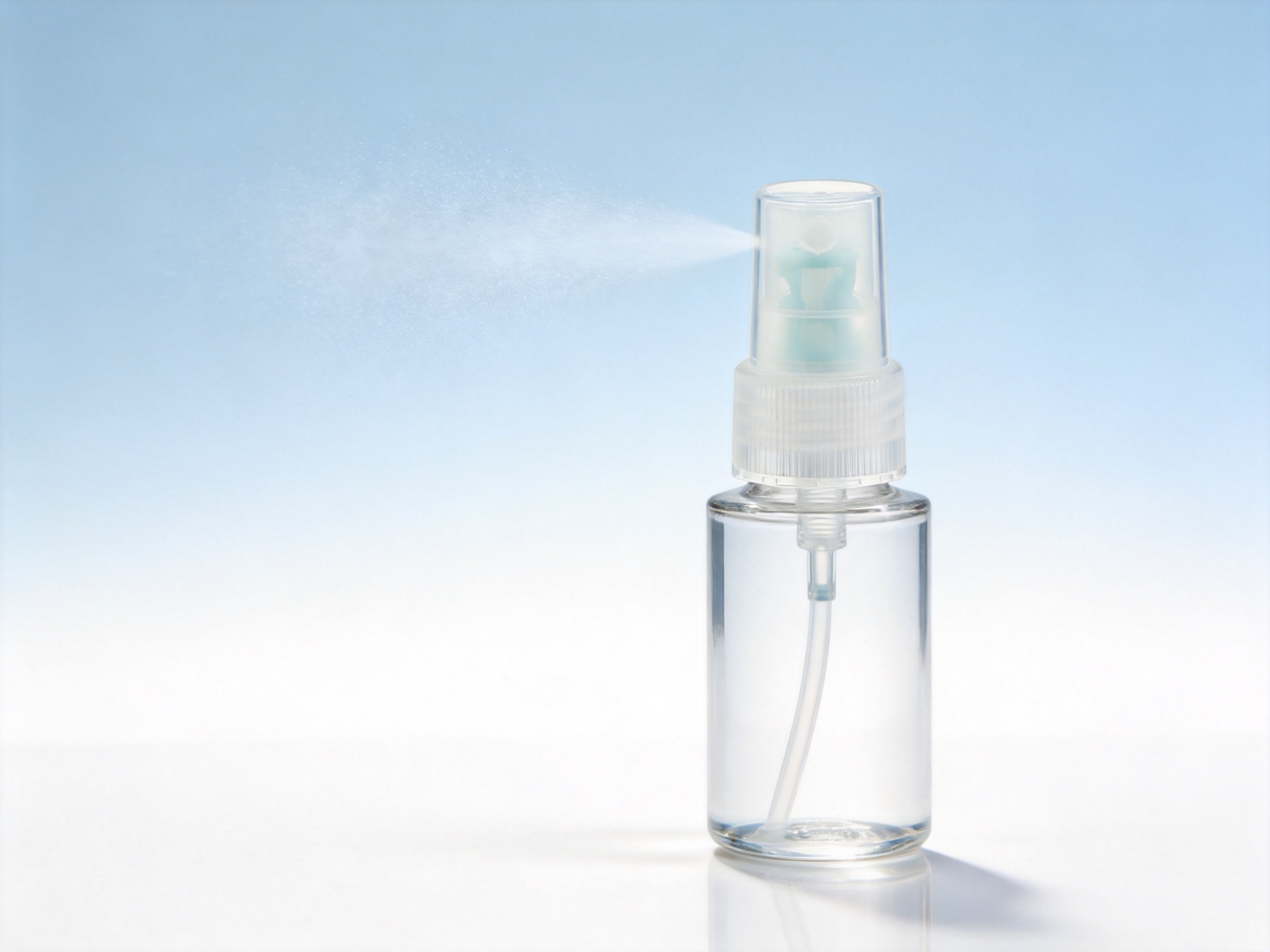
A fine mist is different from a coarse spray or a narrow liquid stream. The internal components of the pump are designed to divide the liquid into smaller droplets as it exits the actuator. The resulting spray can feel softer and more evenly distributed. This is valuable for products applied to the body, where a fine and comfortable mist is often associated with premium quality.
Dosage performance may be influenced by the viscosity, surface tension, density, and volatility of the liquid. Bottle orientation, dip tube length, actuator force, temperature, and filling conditions can also affect practical dispensing behavior. For this reason, the nominal 0.12-milliliter dosage should be verified with the customer's final formulation and bottle configuration during product development.
All-Plastic Construction and Direct Recycling Potential
The most distinctive feature of the GY-608A is its all-plastic construction. Traditional spray pumps may combine several material types, including plastic, metal springs, metal balls, and other components. Although these mixed-material assemblies can provide effective dispensing, they are more difficult to recycle because the different materials must be separated before processing.
The GY-608A is designed without metal components. Its mono-material structure can simplify recycling because the complete sprayer does not need to be disassembled to remove a metal spring or another incompatible part. This helps reduce the number of steps required before the packaging enters a suitable recycling stream.
Direct recyclability does not mean that every local recycling system will automatically accept every all-plastic pump. Acceptance depends on local collection rules, sorting technology, resin identification, component color, contamination level, and the capabilities of the recycling facility. Nevertheless, eliminating metal from the pump is a meaningful design improvement because it reduces material complexity and supports more straightforward recycling evaluation.
For packaging developers, mono-material construction can also simplify sustainability communication. Instead of asking consumers to separate a metal spring from a plastic housing, brands can provide clearer disposal guidance based on the complete component. The packaging may still require emptying and cleaning according to local instructions, but the absence of metal reduces one common barrier to recycling.
In addition to recycling advantages, all-plastic design may offer greater consistency during automated assembly. Metal and plastic components can behave differently during storage, feeding, and assembly. A carefully engineered single-material structure can reduce the number of material interfaces within the pump and create opportunities for streamlined production. Actual efficiency depends on the design of the assembly line and the quality-control process.
The use of all-plastic materials must be considered together with product performance. A sustainable sprayer is only valuable if it delivers dependable actuation, suitable sealing, stable liquid uptake, and satisfactory spray quality. The GY-608A is therefore positioned not simply as a plastic alternative, but as a fine mist dispensing solution that combines recyclability-oriented construction with practical packaging performance.

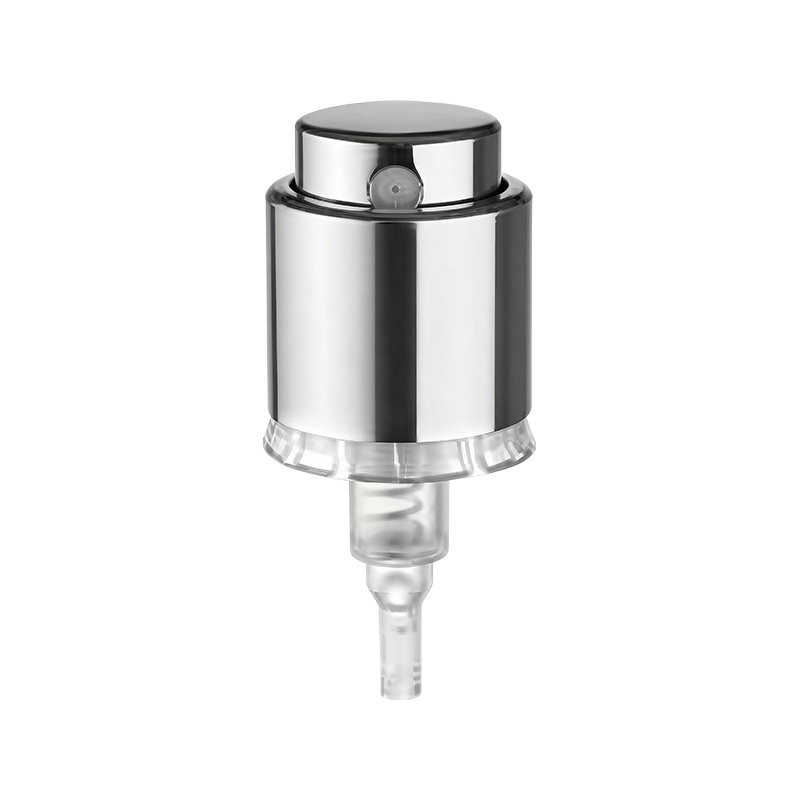
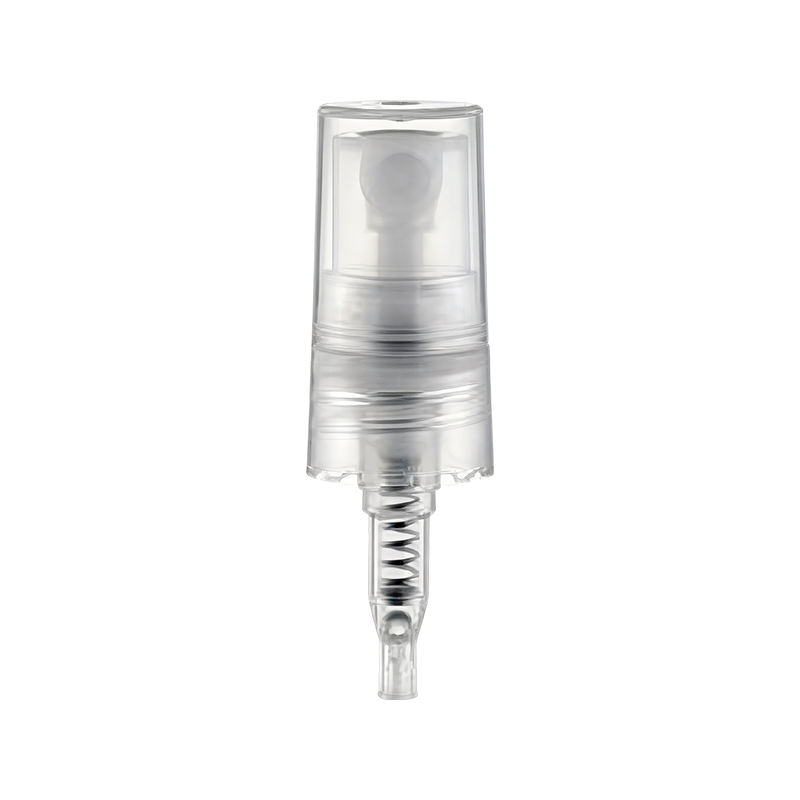
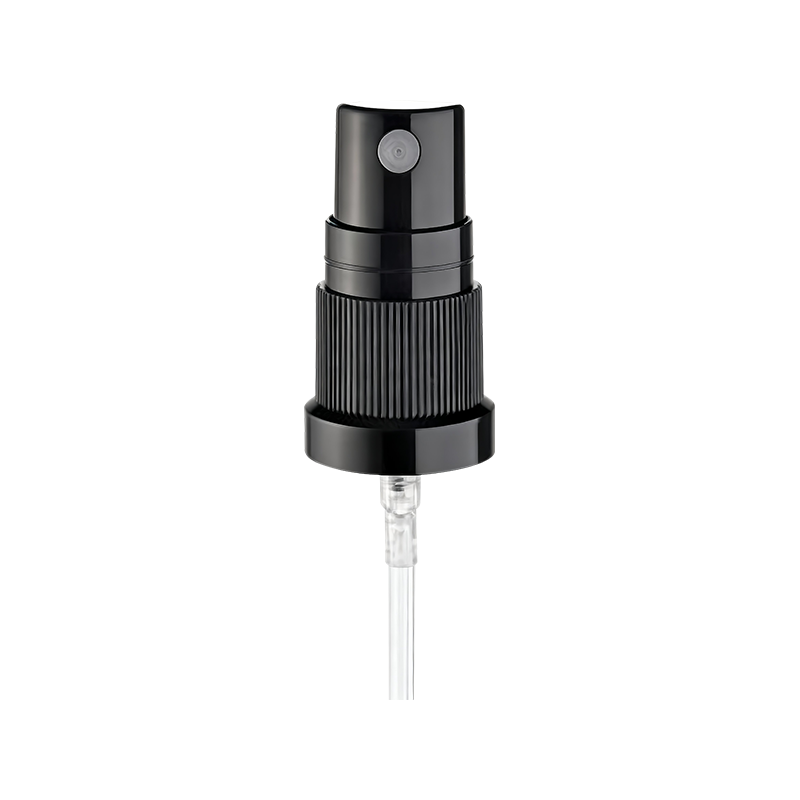
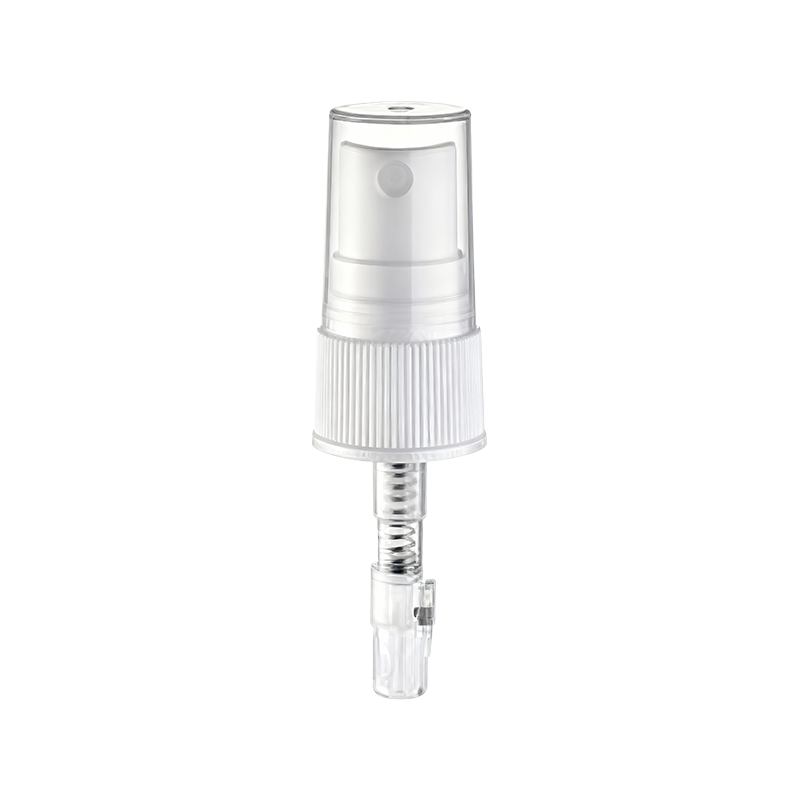
0.12CC All Plastic Recyclable Mist Sprayer
Advantages Compared with Conventional Mixed-Material Sprayers
Simplified Material Composition
A conventional sprayer may include a plastic housing, a metal spring, a metal ball, a gasket, and other components made from different materials. Each additional material can increase the difficulty of recycling and may create more complex quality-control requirements. The GY-608A reduces this complexity through an all-plastic configuration.
For brands working toward packaging simplification, the mono-material structure can support design strategies that prioritize fewer material types. It can also make component documentation easier because the primary sprayer assembly is not dependent on a combination of plastic and metal elements.
Improved Recycling Convenience
Mixed-material components often need to be separated before recycling. Consumers may not know how to remove a hidden spring, while recycling facilities may not have the equipment to separate small metal parts from plastic pump assemblies. The GY-608A is designed so that no disassembly is required to remove metal from the sprayer.
This feature can help improve the practical recycling potential of the finished package. It also gives packaging teams a clearer basis for comparing the environmental profile of different sprayer designs.
Controlled Fine-Mist Output
Some low-cost spray heads produce an uneven stream, excessive droplets, or a wet discharge that does not match the positioning of a fragrance or personal care product. The GY-608A is specified for a 0.12-milliliter fine mist, supporting a more refined application style. The final spray pattern must be tested with the intended formula, but the design objective is to provide soft and even distribution.
Broad Neck-Finish Compatibility
The availability of multiple size options gives the GY-608A an advantage over a sprayer limited to one bottle neck size. Packaging developers can select a configuration that corresponds to the chosen bottle finish rather than redesigning the entire bottle around one closure.
The listed options cover several commonly used neck-finish formats, including 410, 415, 420, and 400 series configurations. Because neck dimensions can vary in practical application, compatibility should be verified through samples and technical drawings. A correct match helps maintain sealing performance, visual alignment, and reliable assembly.
Customizable Dip Tube Length
A standard dip tube may be too short for a tall bottle or too long for a compact container. An improperly fitted tube can prevent the pump from drawing liquid efficiently, leaving excessive product in the bottle or causing intermittent spray performance.
The GY-608A supports customized tube lengths. This allows the sprayer to be adapted to different bottle heights and shapes. A properly selected tube can reach the lowest practical point inside the container while allowing the pump to operate without unnecessary bending or obstruction.
Suitability for Premium and Everyday Products
Fine mist sprayers are used in both premium and mass-market packaging. For fragrance, the soft spray can complement a refined brand experience. For body mist and personal care products, the controlled output can make application more comfortable. For pharmacy packaging, the sprayer may be considered for suitable liquid products that require a fine application, subject to formulation and regulatory evaluation.
This range of possible applications gives the GY-608A flexibility across multiple packaging programs. A single sprayer platform may be adapted for different bottle shapes, sizes, and product categories through the selection of neck finish, tube length, color, and external decoration.
Applications in Personal Care and Fragrance Packaging
Perfume and Fragrance
Perfume packaging places high demands on the spray experience. The actuator should be comfortable to press, the dosage should be controlled, and the mist should distribute the fragrance without producing a heavy liquid spot. The visual design of the pump must also complement the bottle, cap, and overall presentation.
The GY-608A provides a 0.12-milliliter dosage intended for fine-mist fragrance applications. Its range of neck finishes allows it to be integrated with different bottle designs, while the customized dip tube can be matched to the bottle's internal height. The all-plastic construction may also be attractive to fragrance brands seeking to reduce mixed-material content in their packaging.
Body Mist
Body mist products are commonly applied over a relatively broad area, so the quality of the spray pattern is particularly important. A soft mist can improve coverage and reduce the sensation of a concentrated liquid stream. A controlled dosage can also help the user build application gradually.
For body mist packaging, the sprayer should be evaluated with the final fragrance base, alcohol content, water content, oils, and other ingredients. Formula compatibility testing should examine spray pattern, output consistency, leakage, priming, actuator feel, and storage stability.
Hair and Personal Care Products
Some personal care products, such as refreshing sprays, light leave-in treatments, and selected scalp or hair products, may benefit from a fine mist. The suitability of the GY-608A depends on the product's viscosity and the required application pattern. Products containing suspended particles, high oil content, or unusually viscous ingredients may require a different dispensing solution.
When used with compatible formulas, the sprayer can provide a convenient application method that reduces the need for direct contact between the user's hands and the product. This can contribute to a clean and convenient packaging experience.
Pharmacy Packaging
The product information lists pharmacy as one of the intended usage areas. In pharmaceutical packaging, dispenser selection must be handled with particular care. The pump must be evaluated for dose accuracy, chemical compatibility, container closure integrity, microbiological considerations, and compliance with applicable regulations.
The 0.12-milliliter dosage may be suitable for certain topical or external-use products, but it should not be treated as a universal pharmaceutical dose. Any medicinal or regulated application requires product-specific testing and approval. The GY-608A can provide a packaging platform for evaluation, while the final responsibility for suitability rests with the product developer and relevant regulatory team.
Technical Design Considerations
Neck-Finish Selection
Selecting the correct neck finish is the first step in integrating the sprayer with a bottle. The finish must correspond to the closure dimensions, thread profile, sealing area, and bottle manufacturing tolerances. The available GY-608A options include several formats, giving packaging engineers flexibility when choosing a container.
The numbers in a neck-finish designation generally communicate the approximate neck diameter and thread or finish standard, but the exact technical interpretation depends on the applicable packaging specification. Buyers should request the relevant dimensional information and compare it with the bottle drawing before beginning mass production.
Visual alignment is also important. A sprayer that is technically compatible but poorly matched to the bottle shoulder can create an uneven appearance. Proper selection helps the actuator sit centrally and allows the bottle, pump, and decorative cap to function as a coordinated package.
Dip Tube Customization
The dip tube is responsible for carrying liquid from the bottle to the pump mechanism. Its length should be customized according to the bottle's internal geometry rather than simply its external height. The bottle base, shoulder, internal ribs, and liquid-fill level can all affect the correct tube length.
A dip tube that is too short may leave usable product in the bottom of the bottle. A tube that is too long may curl, press against the base, or interfere with liquid flow. GreenYard's customized tube-length capability allows the component to be prepared for different packaging designs and filling volumes.
Tube material, flexibility, cut angle, and insertion depth may also influence performance. These factors should be reviewed during sample testing, especially when the package is intended for low-viscosity formulas or products that require a high level of dose consistency.
Actuation and Spray Pattern
Users generally expect a fine mist sprayer to prime within a reasonable number of actuations and deliver a stable spray from one use to the next. Testing should measure initial priming, output weight, spray angle, droplet distribution, actuator force, and recovery after repeated use.
The 0.12-milliliter specification provides a target dosage, but actual results can vary with the liquid formula and operating conditions. A fragrance containing a high proportion of volatile ingredients may behave differently from a water-based body mist. Packaging developers should therefore assess the complete system rather than evaluating the sprayer with water alone.
Sealing and Leakage Control
A fine mist sprayer must prevent leakage during storage, transport, and normal consumer use. The closure interface, internal seals, bottle finish, and assembly torque all contribute to package integrity. Testing should include upright storage, inverted storage where relevant, vibration, pressure changes, temperature variation, and repeated actuation.
The screw-on closure allows the sprayer to be assembled by threading it onto a compatible bottle finish. Correct torque is essential. Insufficient torque may cause leakage or looseness, while excessive torque may damage the finish or make consumer removal difficult. The recommended assembly conditions should be established during production validation.
Manufacturing Capabilities and Quality Strengths
GreenYard Tools Co., Ltd. is a China-based packaging manufacturer specializing in spray products and related packaging components. According to the supplied company information, the business has 16 years of experience in spray product manufacturing and produces perfume sprayers, pump heads, caps, bottles, and daily chemical packaging solutions.
The company's stated daily production capacity is one million units. A capacity of this scale can support projects that require stable supply, planned production scheduling, and repeatable output. Capacity alone does not guarantee product quality, so customers should also review production controls, inspection standards, sample approval procedures, and traceability arrangements before placing an order.
Mold Design
Precision mold design is fundamental to pump manufacturing. Small dimensional variations in a housing, actuator, valve seat, or thread can affect assembly and dispensing performance. GreenYard's mold-design capability supports the development and refinement of components used in spray packaging.
In-house or closely coordinated mold development can shorten communication cycles between product design and manufacturing. It may also make it easier to adjust a component for a particular bottle finish, tube length, actuator shape, or visual requirement. For customized projects, mold-flow analysis, dimensional review, and trial sampling can help identify potential issues before full production.
Injection Molding
The all-plastic GY-608A depends on consistent injection-molded parts. Injection molding parameters such as material drying, melt temperature, injection speed, pressure, cooling time, and mold temperature can influence part dimensions and appearance.
Stable molding conditions help maintain repeatability across large production runs. Important inspection points may include thread accuracy, part weight, wall thickness, flash, short shots, sink marks, warpage, surface defects, and color consistency. These controls are especially important for a product with multiple size options and a compact internal structure.
Automated Assembly
Spray pumps contain multiple small parts that must be assembled in the correct sequence and orientation. Automated assembly can improve consistency, reduce manual handling, and support higher output. It can also provide opportunities for in-line detection of missing components, incorrect positioning, or abnormal assembly force.
For an all-plastic sprayer, automated assembly is particularly valuable because the production line must maintain precise control over the interaction of the plastic components. The pump must be assembled so that the actuator, valve elements, housing, and dip tube work together to create a reliable liquid path.
Quality Inspection
The company states that it has quality-inspection capabilities to support reliable products. A comprehensive inspection program for fine mist sprayers may include incoming material checks, first-piece approval, in-process dimensional inspection, visual inspection, assembly verification, dosage testing, leakage testing, and finished-goods sampling.
For customer projects, quality requirements should be documented in advance. The specification may identify acceptable dosage tolerance, appearance limits, color standards, thread dimensions, actuation force, leakage criteria, packaging requirements, and sampling levels. Clear agreement between the buyer and manufacturer reduces ambiguity and supports consistent production.
Design and Product Development
GreenYard also reports having a dedicated design team and a focus on product innovation. This is important in a packaging market where brands increasingly request recyclable structures, customized appearances, new dispensing experiences, and compatibility with different bottle formats.
Design support can be useful at several stages. Early consultation may help a buyer select the correct sprayer type. During development, the manufacturer can assist with neck-finish matching, dip tube selection, actuator design, and decoration options. Before mass production, technical review and sample approval can help confirm that the package performs as intended.

Production Workflow for a Recyclable Fine Mist Sprayer
A reliable sprayer is the result of a controlled production workflow rather than a single manufacturing step. The process begins with product requirements and continues through material preparation, molding, assembly, inspection, packaging, and shipment.
Requirement Confirmation
The manufacturer first confirms the intended application, dosage, bottle finish, tube length, color, decoration, order quantity, and packing method. For the GY-608A, the customer should specify which of the listed neck sizes is required and provide the bottle drawing or physical sample.
Formula information is also helpful. The manufacturer may need to understand whether the liquid is alcohol-based, water-based, oil-containing, acidic, alkaline, or otherwise chemically active. This supports a more appropriate evaluation of material compatibility and performance.
Material Preparation
Plastic materials must be prepared according to their processing requirements. Proper storage and drying can reduce moisture-related defects, while controlled material handling helps maintain consistent color and mechanical performance.
For an all-plastic product, material selection should consider strength, flexibility, chemical resistance, dimensional stability, and recycling objectives. The final material specification should be confirmed between the manufacturer and customer, especially if the buyer requires a particular resin family, colorant, recycled content, or regulatory profile.
Component Molding
Individual sprayer components are produced through injection molding. Each part must meet its dimensional and visual requirements before it moves to assembly. Mold maintenance is important because wear can affect threads, sealing surfaces, actuator fit, and other critical areas.
Production records can help identify trends such as gradual dimensional drift or changes in part weight. Early detection allows corrective action before a large quantity of nonconforming components is produced.
Assembly and Functional Testing
The molded components are assembled into a complete sprayer. Automated or semi-automated equipment may be used, depending on the component design and order requirements. Functional testing can verify whether the pump primes, sprays, returns to position, and maintains acceptable output.
Sampling plans should include tests that reflect real customer use. Repeated actuation, storage, bottle attachment, and liquid compatibility can reveal issues that are not visible during a simple appearance check.
Final Inspection and Packing
Finished sprayers are inspected before packing. Inspection may cover appearance, color, cleanliness, component completeness, closure integrity, and basic functional performance. Packaging should protect the sprayers from dust, deformation, impact, and excessive moisture during storage and transport.
For high-volume projects, lot identification and production-date records can support traceability. Customers may also request inspection reports or pre-shipment samples according to the agreed quality plan.
Customization Possibilities
The GY-608A is suitable for standard and customized packaging programs. The most direct customization is the dip tube length, which can be adapted to the customer's bottle. Neck-finish selection is another important option, with multiple sizes available for different bottle designs.
External appearance may also be customized depending on the project. Potential options may include color matching, surface finish, actuator shape, overcap coordination, and decorative treatment. Any decoration or color change should be assessed for compatibility with the plastic material, production process, and intended product positioning.
Brand owners may use the same pump structure across several product lines while varying the bottle, actuator color, cap, or label. This can create a consistent visual family without forcing every product to use an identical package. Conversely, a fully customized appearance may help a premium fragrance or personal care product establish a distinctive shelf presence.
Customization should be balanced with minimum order quantity, tooling cost, lead time, and quality requirements. A standard configuration may provide the fastest route to production, while a customized configuration can offer stronger differentiation. GreenYard's design and manufacturing capabilities can support discussion of these trade-offs during project planning.
Testing Recommendations Before Commercial Production
Before approving the GY-608A for a finished product, packaging teams should conduct system-level testing. The sprayer should be evaluated together with the intended bottle, formula, label, cap, and filling process.
Dosage testing should measure the average output over multiple actuations and multiple samples. The evaluation should identify initial priming behavior, output variation, and changes after repeated use. If the product claims a specific dose, the tolerance should be defined and verified using an agreed test method.
Spray-pattern testing should examine the shape, width, uniformity, and feel of the mist. The test should use the actual formula because viscosity and surface tension can significantly influence atomization. Different temperatures may also be considered if the product will be stored or used in varying climates.
Leakage testing should evaluate the bottle-and-pump assembly under normal and challenging conditions. Samples may be stored upright and inverted, subjected to vibration, exposed to temperature changes, and transported through representative distribution conditions. The purpose is to identify leakage risks at the closure, actuator, or internal pump structure.
Chemical compatibility testing should assess whether the formula affects the plastic components, seals, color, odor, or mechanical function. Testing duration should reflect the intended shelf life and may include accelerated conditions where appropriate. Pharmaceutical or regulated products require additional testing based on their specific requirements.
Consumer-use evaluation can provide information that laboratory testing may not capture. Users can assess actuator feel, spray comfort, ease of handling, visual quality, and perceived dosage. Feedback can help determine whether the pump matches the product's intended market positioning.
Sustainability Benefits in Packaging Development
The GY-608A supports a sustainability-oriented packaging strategy in several ways. Its most direct contribution is the elimination of metal components. This reduces material diversity and may make the sprayer easier to process in recycling systems that accept the relevant plastic material.
A customizable dip tube can also help reduce unnecessary material use. Rather than using an excessively long tube that must be cut or discarded, the tube can be prepared for the actual bottle dimensions. Efficient component sizing can support better resource utilization across large production volumes.
Long-term sustainability depends on more than one component. Brands should evaluate the bottle material, cap, label, adhesive, decoration, ink, filling process, transportation, and end-of-life instructions as part of the complete package. The all-plastic sprayer is a useful design element, but it should be integrated into a broader packaging strategy.
Clear consumer communication is also important. If the complete package can be recycled only after certain parts are removed, the instructions should explain the process. If the entire sprayer can remain assembled, the disposal guidance should be aligned with the capabilities of the target market's recycling system. Sustainability claims should be based on documented material information and applicable local standards.
Why Choose an Experienced Packaging Manufacturer
Sprayer production requires specialized knowledge because a small component must perform several functions at once. It must fit the bottle, seal the liquid, draw the formula, deliver a stable spray, withstand repeated actuation, and meet appearance expectations. An experienced manufacturer can help reduce development risk by understanding the interaction between these requirements.
GreenYard Tools Co., Ltd. combines stated experience in spray product manufacturing with mold design, injection molding, automated assembly, and quality inspection capabilities. Its product range includes perfume sprayers, pump heads, caps, bottles, and daily chemical packaging solutions. This broader product scope may help customers coordinate multiple packaging components through one manufacturing partner.
The company's reported daily capacity of one million units is relevant for customers planning medium- or large-scale packaging programs. Consistent supply is important for brands that must maintain product availability across several markets. Production planning, raw material preparation, inspection, and shipment coordination should still be confirmed for each specific order.
Technical communication is another important strength. A successful project depends on accurate information about bottle dimensions, liquid formulation, required dosage, closure type, tube length, color, packing, and delivery schedule. A manufacturer that can review these factors early can help identify compatibility problems before tooling or mass production.
Purchasing and Project-Planning Considerations
Buyers should begin by identifying the exact bottle finish required for the project. The available GY-608A options cover numerous sizes, but the correct selection must match the bottle drawing and closure specification. A physical fit test should be completed before final approval.
The buyer should also provide the target bottle height and internal shape so that the dip tube can be customized accurately. If the bottle has a special base, internal ridge, or unusually narrow opening, this information should be shared with the manufacturer during development.
Formula samples may be required for performance testing. Water-based testing can provide an initial indication of spray function, but the final formula should be used for confirmation. Alcohol, oils, fragrances, active ingredients, and other additives can influence the pump's performance and material compatibility.
Color and appearance requirements should be documented with physical standards or approved color references where possible. Customers should define acceptable limits for minor cosmetic variations, especially when large quantities will be produced in multiple lots.
Commercial discussions should cover minimum order quantity, tooling requirements, sampling procedures, production lead time, packaging method, inspection standards, shipping terms, and after-sales support. Clear documentation helps ensure that the delivered sprayer matches the approved sample and agreed specification.
Quality, Performance, and Competitive Position
The competitive value of the GY-608A comes from the combination of features rather than from one specification alone. A 0.12-milliliter dosage supports controlled fine mist delivery. The all-plastic structure reduces material complexity. Multiple neck finishes improve packaging flexibility. Customizable dip tube length supports different bottle designs. Manufacturing capabilities in tooling, molding, assembly, and inspection support scalable production.
Many conventional sprayers can provide basic liquid dispensing, but they may rely on mixed materials or offer limited compatibility options. The GY-608A is differentiated by its focus on mono-material construction and recycling convenience while retaining the functionality expected from a fine mist pump.
Compared with a generic sprayer, the GY-608A can offer a more structured development path for brands that need customization. The availability of technical support, bottle matching, tube adaptation, and production coordination can reduce the need to manage separate suppliers for closely related components.
Performance should always be judged through testing rather than marketing language alone. The most appropriate comparison should include dosage consistency, spray quality, actuator force, leakage resistance, chemical compatibility, recycling characteristics, assembly efficiency, purchase cost, and supply reliability. On these criteria, the GY-608A presents a balanced option for packaging teams seeking both dispensing performance and sustainability-oriented design.
Conclusion
The 0.12CC All-Plastic Recyclable Mist Sprayer is designed for modern personal care, fragrance, body mist, and selected pharmacy packaging applications. Its 0.12-milliliter dosage supports a controlled fine mist, while its all-plastic construction eliminates metal components and allows the sprayer to be recycled directly without disassembly for metal removal.
The product's multiple neck-finish options provide flexibility for different bottle formats, and its customized dip tube supports reliable liquid uptake across various bottle heights and shapes. These features make the GY-608A suitable for both standard packaging programs and projects requiring closer adaptation to a specific container.
Its competitive advantage is strengthened by the manufacturing capabilities of GreenYard Tools Co., Ltd. The company brings stated experience in spray product manufacturing, mold design, injection molding, automated assembly, quality inspection, and high-volume production. Together, the product design and manufacturing infrastructure create a practical solution for brands seeking dependable fine mist performance and a simpler material profile.
Before commercial adoption, buyers should confirm the neck finish, bottle compatibility, tube length, formula suitability, dosage tolerance, spray pattern, leakage performance, and recycling requirements. With appropriate system-level testing and clear technical communication, the GY-608A can serve as an efficient and sustainability-conscious dispensing component for a wide range of liquid packaging applications.
Questions and Answers
What is the dosage of the GY-608A fine mist sprayer?
The nominal dosage is 0.12 milliliters per actuation. Actual output should be confirmed with the final formula, bottle, and selected sprayer configuration.
Is the sprayer made entirely from plastic?
Yes. The product is designed as an all-plastic sprayer without metal components. This mono-material structure supports direct recycling without requiring disassembly to remove a metal spring or other metal part.
Can the sprayer be used for perfume?
Yes. Perfume is one of the listed applications. The 0.12-milliliter dosage and fine mist output are suitable for evaluation in fragrance packaging. The final formula should be tested for spray quality and material compatibility.
Is it suitable for body mist products?
Yes. Body mist is a stated usage area. The fine mist can support comfortable and relatively even application, subject to testing with the specific body mist formulation.
Can the sprayer be used for pharmaceutical packaging?
The product information lists pharmacy as an application. However, pharmaceutical use requires product-specific testing for dose accuracy, chemical compatibility, closure integrity, regulatory compliance, and other applicable requirements. The sprayer should not be approved for a pharmaceutical product without appropriate validation.
What closure type does the GY-608A use?
The supplied product information identifies the closure as screw-on. The precise bottle neck finish must be selected from the available options and confirmed against the customer's bottle specification.
Which neck sizes are available?
Available options include 15/410, 18/410, 18-415, 18-420, 20/410, 20/415, 22/415, 24/410, 24-415, 28-410, and 28-400. Availability for a particular order should be confirmed with the manufacturer.
Can the dip tube be customized?
Yes. The dip tube length can be customized according to the bottle's height and internal geometry. Providing a bottle drawing or sample will help determine the appropriate length.
Does the all-plastic design guarantee acceptance by every recycling system?
No. The absence of metal simplifies the material structure and supports direct recycling potential, but recycling acceptance depends on local collection rules, sorting equipment, plastic type, color, contamination, and the capabilities of the recycling facility.
What should be tested before placing a mass-production order?
Recommended evaluations include bottle fit, dosage, spray pattern, priming, actuator force, leakage, chemical compatibility, storage stability, transport resistance, repeated actuation, and recycling instructions for the target market.
What manufacturing capabilities does GreenYard provide?
According to the supplied company information, GreenYard provides mold design, injection molding, automated assembly, quality inspection, product design support, and high-volume spray packaging production. Its product range includes perfume sprayers, pump heads, caps, bottles, and daily chemical packaging solutions.
How can customers begin a customized project?
Customers should provide the intended application, bottle drawing or sample, neck-finish requirement, target dosage, dip tube length, formula information, color, order quantity, packaging requirements, and delivery expectations. These details allow the manufacturer to recommend and validate the appropriate configuration.
References
1. GreenYard Tools Co., Ltd. Product information for the GY-608A 0.12CC All-Plastic Recyclable Mist Sprayer.
2. GreenYard Tools Co., Ltd. Company information covering spray product manufacturing, mold design, injection molding, automated assembly, quality inspection, and production capacity.
3. Packaging development principles for fine mist sprayers, bottle neck finishes, dip tube selection, and closure compatibility.
4. General recycling and mono-material packaging design considerations for plastic dispensing components.
5. General quality-control practices for injection-molded packaging components and assembled dispensing systems.
Product: 0.12CC All Plastic Recyclable Mist Sprayer

-
Spray Bottles Explained: Choosing the Right Fine Mist Sprayer
What Makes a Good Spray Bottle A good spray bottle depends almost entirely on the quality of its pu...
-
Misting Spray Bottle Guide: How a Fine Mist Sprayer Works
Quick Answer: What Makes a Misting Spray Bottle Work Well A misting spray bottle performs well when...
-
What Is a Fine Mist Sprayer?
A fine mist sprayer is a cosmetic packaging component designed to atomize liquid formulas into ultr...
-
Roll On Bottles: Types, Refill Guide, and Packaging Buying Tips for Your Brand
The first sample rolled smoothly, the second clicked, and the third leaked after ten presses. Three...
Copyright © GreenYard Tools Co.,ltd. All Rights Reserved.
Personal Care Packaging Manufacturer Custom Perfume Sprayers Factory