
-
About Us
Why Choose Us?The company possesses advanced capabilities in mold design, injection molding, and automated assembly, supported by a professional quality inspection team to ensure product reliability. A dedicated design team continuously drives product innovation, providing customers with high-quality spray solutions.
 Coming From China, Marketing To The World.
 -
Products
-
News
 English
 Français
 русский
 Español
18-410 0.12CC Step Collar Plastic Sprayer for Glass Bottles
Content
- 1 Product Overview
- 2 Why Glass Bottle Sprayers Require Specialized Design
- 3 Controlled 0.12-Milliliter Dosage
- 4 Stepped Collar Advantages Over Conventional Sprayers
- 5 Closure Options for Different Packaging Styles
- 6 Customizable Dip Tube Length
- 7 Recommended Applications
- 8 Manufacturing Strengths Behind the Product
- 9 Quality and Performance Considerations
- 10 Packaging Design and Brand Presentation
- 11 Supply Chain and Production Benefits
- 12 Product Development Process
- 13 Environmental and Material Considerations
- 14 Advantages for Brand Owners and Packaging Distributors
- 15 Frequently Asked Questions
- 15.1 What does 18-410 mean?
- 15.2 What is the dosage of this sprayer?
- 15.3 What is the purpose of the stepped collar?
- 15.4 Can this sprayer be used with plastic bottles?
- 15.5 Can the dip tube be customized?
- 15.6 Which closure finishes are available?
- 15.7 What products are suitable for this fine mist sprayer?
- 15.8 Does the stepped collar guarantee that leakage will not occur?
- 15.9 Is this product suitable for premium fragrance packaging?
- 15.10 What manufacturing capabilities does the supplier provide?
- 15.11 What should be tested before mass production?
- 16 Conclusion
- 17 References
- 18 Product: 18-410 0.12CC Step Collar Plastic Sprayer For Glass Bottle
Glass packaging continues to play an important role in the perfume, air freshener, facial mist, and personal care industries. It offers a premium appearance, strong chemical resistance, excellent product protection, and a recyclable format that supports modern sustainability goals. However, glass bottles often include an anti-burst ring or other structural features around the neck. When a conventional fine mist sprayer is installed, the collar may fail to cover this ring completely. The result can be an unattractive visual gap, an uneven transition between the pump and bottle, or a potential sealing concern.
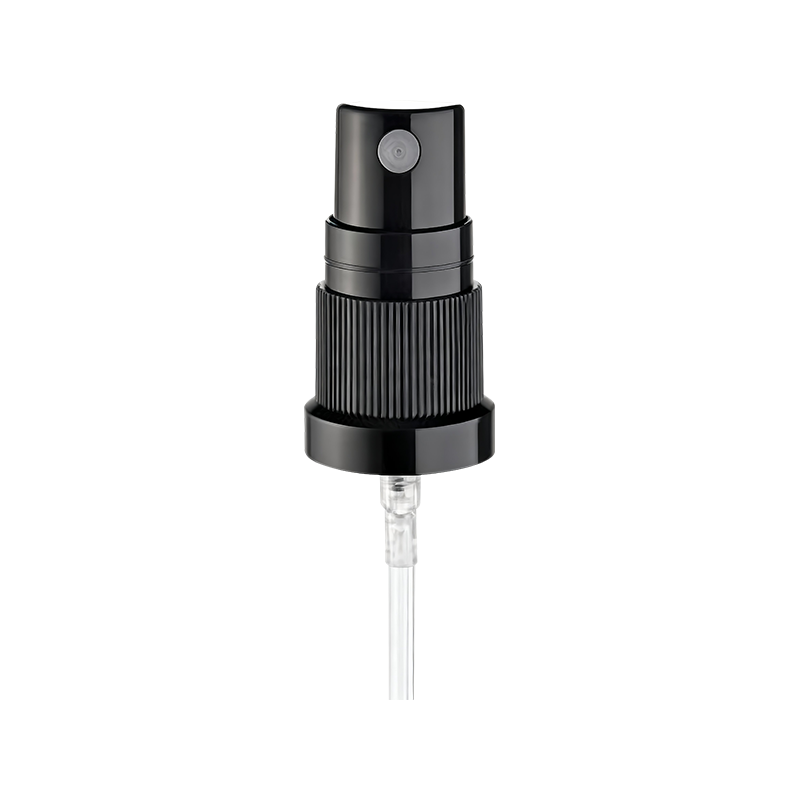
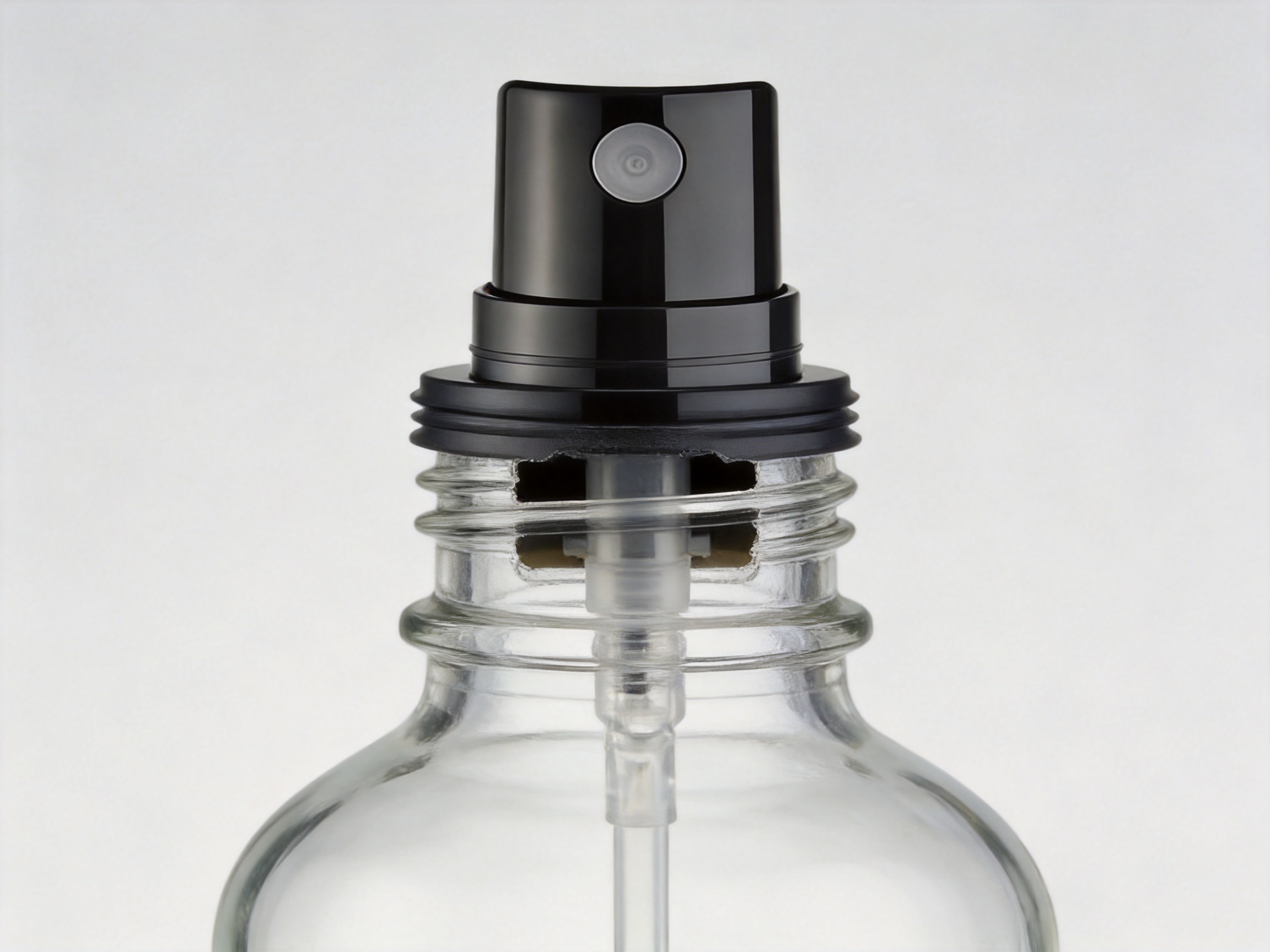
The GY-608A-FD2 18-410 0.12CC Step Collar Plastic Sprayer for Glass Bottle is designed to address this specific packaging challenge. It combines a standard 18-410 neck finish with a specially developed stepped collar that covers the bottle’s anti-burst ring. This creates a cleaner appearance while supporting a more secure fit between the sprayer and glass container.
With a controlled dosage of 0.12 milliliters per actuation, the sprayer produces a fine and consistent mist suitable for perfumes, air fresheners, facial mists, and similar liquid products. Its ribbed or aluminum closure options allow packaging designers to select a finish that matches the bottle, product positioning, and desired customer experience. In addition, the dip tube length can be customized for different bottle heights and filling capacities.
Manufactured by GreenYard Tools Co., Ltd., a Chinese packaging producer with 16 years of experience in spray product manufacturing, this model reflects a combination of application-focused design, precision molding, automated assembly, and quality inspection. It is intended for brands and packaging distributors that require reliable performance as well as a polished, coordinated appearance.
18-410 0.12CC Step Collar Plastic Sprayer For Glass Bottle
Product Overview
The 18-410 0.12CC Step Collar Plastic Sprayer is a fine mist sprayer developed for glass bottle packaging. The 18-410 specification identifies the neck finish and closure compatibility. This size is widely used for small and medium glass containers in fragrance, personal care, household scent, and cosmetic applications.
The term “0.12CC” refers to the nominal output per spray, equivalent to approximately 0.12 milliliters per actuation. A controlled output is particularly valuable for products that require measured application. In perfume packaging, it helps deliver a repeatable fragrance dose. In facial mist products, it supports an even distribution across the skin. In air fresheners, it helps users release a practical amount of liquid without excessive waste.
The defining feature of this sprayer is its stepped collar. Unlike a standard collar with a single continuous diameter, the stepped design provides an additional transition area around the bottle neck. This structure is intended to cover the glass bottle’s anti-burst ring, reducing the visual interruption that can occur when a conventional pump is used.
The result is a more integrated package. The sprayer does not appear to sit loosely above the bottle neck, and the transition between the closure and the glass becomes more visually complete. This is important for premium packaging, where small details around the neck can influence the perceived quality of the entire product.
Core Product Specifications
Product model |
GY-608A-FD2 |
Product type |
Fine mist sprayer |
Compatible neck size |
18-410 |
Nominal dosage |
0.12 milliliters per actuation |
Closure options |
Ribbed plastic or aluminum |
Dip tube |
Customized according to bottle height |
Recommended applications |
Perfume, air freshener, facial mist, and related liquid products |
Primary container compatibility |
Glass bottles with an anti-burst ring |
Why Glass Bottle Sprayers Require Specialized Design
A glass bottle is not simply a heavier version of a plastic bottle. Its neck geometry, wall thickness, shoulder shape, and safety features can differ significantly between manufacturers and applications. Many glass containers include an anti-burst ring or reinforced neck area designed to improve safety during production, filling, transportation, or use.
Although this ring may be beneficial for the bottle itself, it can create a fitting challenge for a standard sprayer. A conventional collar may stop above the ring or leave part of it exposed. In some cases, the exposed area appears as an unintended gap between the sprayer and the bottle. In other cases, the collar may press against the ring in a way that affects alignment or sealing.
These issues are especially noticeable in transparent or colored glass packaging. Because the bottle is often displayed in retail environments, the neck area is visible from multiple angles. A small mismatch can undermine the clean appearance that brands expect from premium perfume and cosmetic packaging.
The stepped collar of the GY-608A-FD2 is designed around this real-world challenge. Its additional collar structure extends over the anti-burst ring, creating a more complete visual transition. It also helps the sprayer sit more appropriately on the intended bottle neck, provided that the bottle is manufactured to the corresponding 18-410 specification and the complete package is properly tested.
Improved Visual Integration
Packaging appearance is a major part of product communication. Consumers often interpret a clean, symmetrical package as an indication of careful manufacturing and product quality. The neck area is a small component, but it is located at the center of the bottle and is frequently visible in product photography, retail displays, and online listings.
By covering the anti-burst ring, the stepped collar provides a smoother visual relationship between the glass bottle and the sprayer. The bottle can maintain its premium glass appearance without showing an exposed structural ring that was not part of the intended design. This is an advantage over ordinary sprayers that may be compatible with the thread but not fully compatible with the complete neck profile.
Support for Better Fit and Sealing
A sprayer must do more than look attractive. It must maintain a stable connection with the bottle and support reliable liquid containment during storage and transportation. An unsuitable collar design may contribute to misalignment, uneven compression, or an incomplete connection.
The stepped collar is intended to reduce the risk of interference caused by the anti-burst ring. By accommodating the bottle’s neck structure, it can support a more suitable fit and help prevent leakage issues associated with poor alignment. Final performance still depends on the bottle dimensions, gasket or sealing components, crimping or application method, product formula, and transportation conditions. For this reason, packaging validation remains essential.
Controlled 0.12-Milliliter Dosage
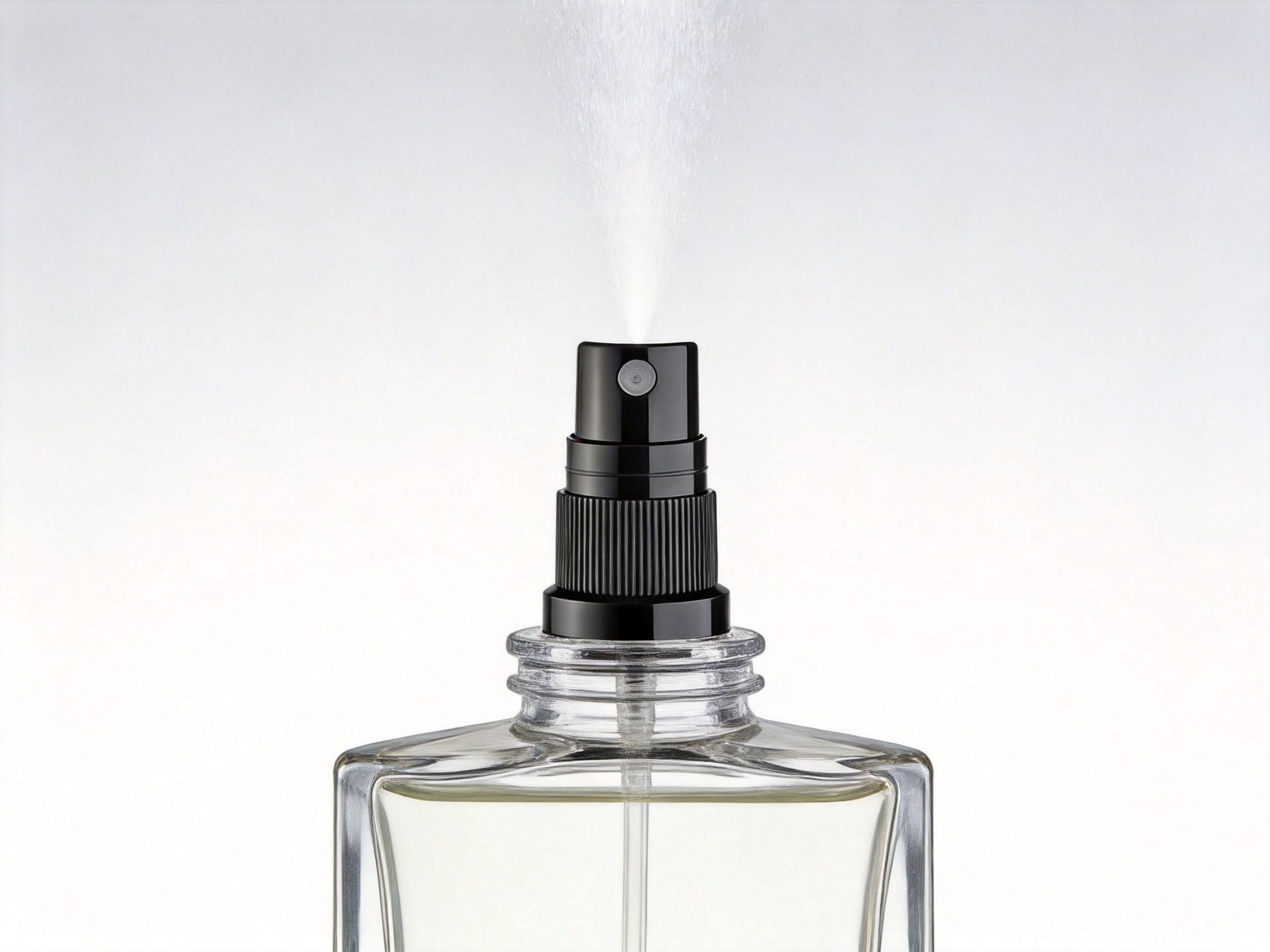
The nominal 0.12-milliliter output is one of the product’s key functional characteristics. A fine mist sprayer should provide a controlled amount of liquid with each actuation rather than releasing an excessive or inconsistent volume. This is important for both consumer experience and product economics.
For perfumes, a controlled dosage allows users to apply the fragrance gradually and evenly. It also helps brands estimate the approximate number of applications available from a bottle. For facial mists, a fine and consistent output can improve coverage without creating large droplets that run or concentrate in one area. For air fresheners, measured delivery helps users control the strength and duration of each application.
Dosage consistency is influenced by several factors, including the pump chamber, valve system, actuator design, liquid viscosity, formulation compatibility, and actuation speed. The stated 0.12-milliliter dosage represents the intended nominal output under suitable test conditions. Brands should conduct their own compatibility and performance testing with the final formula and bottle combination.
Fine Mist Performance
The sprayer is designed to create a fine, even mist rather than a coarse stream. This type of spray is appropriate for products that need broad distribution and a light application. It can help reduce the sensation of a heavy or wet deposit on the skin and can contribute to a more refined user experience.
The atomization result may vary according to the formula. Alcohol-based perfumes, water-based facial mists, and air freshener liquids can have different viscosities, surface tensions, and volatile components. A product that performs well with one formula may require additional testing with another. The pump head, actuator, dip tube, and formula should therefore be evaluated as one complete dispensing system.
In addition to spray quality, the actuator should return smoothly after use and provide a comfortable finger press. A reliable actuation experience encourages proper consumer use and reduces the likelihood of incomplete pumping or repeated unnecessary presses.
Stepped Collar Advantages Over Conventional Sprayers
The primary competitive advantage of the GY-608A-FD2 is not simply its 18-410 thread size. Many sprayers can be produced for a standard neck finish. The difference is the way this model addresses the complete glass bottle neck, including the anti-burst ring.
A standard sprayer may be technically threaded to an 18-410 bottle while still producing an unsatisfactory result. Compatibility based only on thread dimensions does not always guarantee visual or mechanical compatibility. The collar must also correspond to the bottle’s outer neck profile, ring height, shoulder shape, and sealing surface.
The stepped design provides a practical solution for bottles where a conventional collar leaves an exposed ring or does not create a smooth transition. This can reduce the need for additional decorative components, custom covers, or packaging modifications intended to conceal the neck area.
Comparison point |
Conventional sprayer |
18-410 stepped collar sprayer |
Thread compatibility |
May support the 18-410 neck finish |
Designed for an 18-410 glass bottle application |
Anti-burst ring coverage |
May leave part of the ring exposed |
Stepped collar is intended to cover the ring |
Visual transition |
Can show a gap or uneven profile |
Creates a more integrated neck appearance |
Leakage risk from poor fit |
May increase if the collar interferes with the bottle |
Designed to reduce interference when correctly matched |
Dip tube flexibility |
Depends on supplier configuration |
Tube length can be customized |
Finish selection |
May be limited to one standard style |
Ribbed plastic and aluminum options are available |
This comparison does not mean that every conventional sprayer will perform poorly. A standard design may be appropriate for bottles without a prominent anti-burst ring or for packages where the exposed neck area is not a concern. The stepped collar becomes especially valuable when the bottle geometry creates a known interference issue and the brand requires a neat, premium appearance.
Closure Options for Different Packaging Styles
The GY-608A-FD2 can be supplied with a ribbed plastic closure or an aluminum closure. This allows the same basic dispensing concept to support different product positions and visual identities.
Ribbed Plastic Closure
A ribbed plastic closure offers a practical balance of appearance, handling, and manufacturing efficiency. The ribs can improve grip during application and may provide a distinct texture around the neck. Plastic closures are also suitable for brands seeking coordinated colors, lightweight packaging, or a cost-conscious solution.
The ribbed structure can support visual differentiation without requiring complex decoration. Depending on the selected material and color, it may be matched with the actuator, bottle label, carton, or other package elements. Plastic is also compatible with a wide range of standard automated assembly processes.
Aluminum Closure
An aluminum closure can create a more premium and refined appearance. Metallic surfaces are commonly associated with perfume, luxury personal care, and high-end fragrance packaging. Aluminum may be supplied in different surface treatments or colors depending on the project requirements and production capability.
The aluminum option is useful when the package must communicate quality through material contrast. The combination of glass, metal, and a fine mist dispensing system can create a strong shelf presence. Brands should evaluate the closure finish for scratch resistance, color consistency, compatibility with assembly equipment, and long-term appearance under storage conditions.
Customizable Dip Tube Length
The dip tube transfers liquid from the bottle to the pump chamber. Its length is therefore critical to package usability. If the tube is too short, liquid may remain at the bottom of the bottle and become difficult to dispense. If it is too long, it may bend excessively, interfere with the bottle base, or affect liquid uptake.
The dip tube length of this sprayer can be customized according to the bottle height and internal geometry. This flexibility is useful because 18-410 bottles may have different capacities, shoulder designs, and base shapes. A customized tube allows the dispensing system to be adapted to the complete package rather than forcing every bottle to use an identical tube length.
During development, the bottle supplier and sprayer supplier should confirm the internal depth, bottom profile, liquid fill level, and expected residual volume. The tube should generally reach close enough to the bottom to support practical product evacuation while avoiding excessive contact that could restrict flow.
Customization also supports more efficient product development for brands with multiple bottle sizes. A single sprayer platform can potentially be adapted for different containers by modifying the dip tube length while retaining the same neck finish and collar concept.
Recommended Applications
Perfume and Fragrance
Perfume is one of the most suitable applications for this sprayer. Glass bottles are widely used in the fragrance industry because they protect the product, support premium decoration, and create a strong sensory impression. A fine mist sprayer complements this presentation by delivering fragrance in a light, controlled cloud.
The stepped collar is particularly useful for perfume bottles with reinforced necks or anti-burst rings. It helps maintain the visual continuity of the package, which is important when the bottle is displayed on a vanity, in a retail store, or in product photography.
The 0.12-milliliter nominal dosage can support controlled application and help reduce unnecessary product release. The exact spray pattern and formula compatibility should be validated with the final fragrance composition, especially when the formula contains alcohol, oils, or other ingredients that may interact with packaging materials.
Air Fresheners
Small glass air freshener bottles can benefit from a fine mist system that allows users to release a controlled amount of fragrance. The sprayer can be used for room sprays, personal scent products, and other household fragrance applications where a neat appearance and measured output are desired.
For air freshener formulas, brands should evaluate the interaction between the liquid and the pump components. Volatile ingredients, solvents, and fragrance oils may affect seals or internal materials over time. Accelerated aging and leakage testing can help confirm long-term suitability.
Facial Mists
Facial mist packaging requires a spray that feels light and distributes liquid evenly. The 0.12-milliliter output and fine mist design are appropriate for products intended to refresh or hydrate the skin. The bottle and sprayer combination should be tested for spray angle, droplet size, priming behavior, and residual liquid.
For cosmetic applications, product developers should also review regulatory requirements, material declarations, cleanliness standards, and compatibility with the intended formula. A visually attractive closure is valuable, but skin-contact-related packaging must also meet the applicable quality expectations of the target market.
Other Personal Care Products
The sprayer may also be considered for selected hair fragrance products, body mists, refreshing sprays, and other low-viscosity liquid personal care products. The product is most appropriate when the formula can be atomized effectively and when a 0.12-milliliter nominal dose fits the intended consumer experience.
Products with high viscosity, suspended particles, oils with unusual flow properties, or formulas that require a larger output may need a different pump configuration. Product testing should always determine whether the chosen sprayer meets the required performance level.
Manufacturing Strengths Behind the Product
The performance of a fine mist sprayer depends on precise coordination between many small components. The actuator, pump chamber, spring, valve, gasket, dip tube, collar, and closure must work together within controlled dimensional limits. Manufacturing capability is therefore a central consideration when selecting a packaging supplier.
GreenYard Tools Co., Ltd. has specialized in spray product manufacturing for 16 years. Its product range includes perfume sprayers, pump heads, caps, bottles, and daily chemical packaging solutions. This specialization provides experience across different dispensing structures and packaging applications.
The company reports a daily production capacity of one million units. A high production capacity can support large-volume orders, replenishment programs, and multi-market packaging projects. Capacity alone does not guarantee quality, but it becomes valuable when supported by mold control, process management, automated assembly, and inspection procedures.
Mold Design and Development
Injection-molded packaging components begin with accurate mold design. The mold determines critical features such as thread dimensions, collar steps, actuator details, rib patterns, sealing surfaces, and component alignment. For a stepped collar sprayer, mold precision is especially important because the collar must correspond to the intended glass bottle profile.
GreenYard’s mold design capability supports the development of application-specific packaging structures. The stepped collar is an example of a design created to solve a practical bottle compatibility issue rather than simply reproduce a conventional sprayer profile.
Well-designed molds can also improve repeatability, reduce flash, support stable cycle times, and help maintain consistent component dimensions across production batches. During a new project, mold trials and sample evaluations should be used to confirm the fit between the sprayer and the selected bottle.
Injection Molding
Injection molding is used to produce many of the plastic components in a sprayer. Consistent control of material drying, melt temperature, injection pressure, cooling, and cycle time helps maintain part quality. Variations in molding conditions can affect the dimensions of the closure, collar, actuator, or internal pump components.
For this product, stable molding is important for preserving the stepped profile and ensuring that the collar presents a consistent appearance around the glass neck. It also supports the dimensional accuracy required for threading, assembly, and sealing.
Material selection should be based on the product application, formula compatibility, appearance requirements, and applicable packaging standards. Different projects may require different plastic grades, colors, finishes, or transparency levels. The final material choice should be confirmed through technical evaluation and testing.
Automated Assembly
A sprayer contains several parts that must be assembled in the correct order and orientation. Automated assembly can improve production consistency by controlling component placement, insertion force, and assembly speed. It can also reduce variation caused by manual handling.
For high-volume fragrance and personal care packaging, automated assembly supports efficient throughput and repeatable product quality. It helps ensure that the actuator, pump mechanism, dip tube, and closure are correctly positioned before the finished sprayer is packed for shipment.
Automation is particularly useful when a supplier must produce large quantities while maintaining consistent actuation and appearance. It also supports traceability and process monitoring when integrated with appropriate production controls.
Quality Inspection
Quality inspection is essential for dispensing components because visual defects and functional defects can both affect the finished package. Inspection may include dimensional checks, appearance checks, thread evaluation, actuator operation, spray testing, leakage testing, and component verification.
For the stepped collar sprayer, inspection should pay attention to the collar profile, rib uniformity, aluminum finish where applicable, actuator alignment, dip tube attachment, and compatibility with the target bottle. Functional testing can help identify inconsistent dosage, poor priming, blocked spray paths, or leakage.
GreenYard’s stated manufacturing capabilities include quality inspection as part of its packaging production system. Buyers should work with the supplier to define the inspection plan, acceptance criteria, sampling level, product specifications, and documentation required for each project.
Quality and Performance Considerations
Choosing a sprayer should involve more than selecting a neck size and color. A reliable packaging project considers the formula, bottle, closure, storage environment, filling line, consumer usage pattern, and transportation conditions.
Bottle and Neck Compatibility
The bottle should be verified as an 18-410 neck finish according to the relevant dimensional specifications. The outer neck profile and anti-burst ring should also be reviewed because the stepped collar is designed to interact with these features. Small differences between bottle suppliers can influence the final fit.
Before mass production, the sprayer should be assembled onto production-intent bottles. Samples should be examined from different angles to confirm that the stepped collar covers the anti-burst ring as intended and that the closure sits evenly around the neck.
Leakage and Seal Testing
Leakage testing should be performed after the sprayer is applied to the bottle. Tests may include upright storage, inverted storage, side storage, vibration, temperature cycling, and transportation simulation. The appropriate test plan depends on the product, filling volume, distribution method, and target market.
The stepped collar is designed to help prevent leakage issues caused by poor fit, but it is not a substitute for a complete sealing system. The bottle finish, gasket, pump components, application torque or crimping force, and formula all contribute to package integrity.
Spray and Dosage Testing
Spray testing should measure the nominal output over repeated actuations. It should also examine the spray pattern, mist fineness, spray angle, priming strokes, residual liquid, and actuator recovery. Testing should be performed with the actual formula because water, alcohol-based fragrance, and cosmetic liquids can produce different results.
Repeated actuation testing can help determine whether the sprayer maintains stable performance over its expected life. Brands should establish their own acceptable dosage range based on the product requirements rather than relying only on a single initial spray measurement.
Formula Compatibility
Packaging components must be compatible with the liquid they contain. Fragrance oils, alcohol, solvents, preservatives, acids, and other ingredients may interact with plastics, elastomers, metals, or coatings. Potential effects include swelling, embrittlement, discoloration, odor transfer, corrosion, or loss of sealing performance.
Compatibility studies should be conducted using the final formula and final packaging components. Samples may be stored under room-temperature and accelerated conditions, followed by evaluations of appearance, odor, leakage, dosage, and spray performance.
Packaging Design and Brand Presentation
The sprayer is a functional component, but it also contributes to brand presentation. Consumers interact with the actuator and closure every time they use the product. The feel of the press, the visual alignment of the collar, and the finish of the closure can influence the perception of quality.
The stepped collar supports a clean neck design without requiring a separate decorative sleeve in many applications. It can help maintain the visual language of a glass bottle, especially when the bottle has a distinctive shape or premium surface treatment.
Ribbed plastic is suitable for a contemporary, practical, or color-coordinated appearance. Aluminum can support a luxury, minimalist, or metallic design direction. The choice should be considered together with the bottle color, label, overcap, carton, and dispensing actuator.
Packaging engineers should also consider how the sprayer will appear after filling and assembly. The closure should be centered, the collar should sit evenly, and the actuator should be aligned with any bottle decoration or label graphics. Consistency across production lots is important for products sold in sets or multiple fragrances.

Supply Chain and Production Benefits
Working with a manufacturer that provides multiple packaging components can simplify project coordination. GreenYard produces perfume sprayers, pump heads, caps, bottles, and other daily chemical packaging solutions. This broader product range may allow customers to source related components from one experienced supplier rather than coordinating every item separately.
A single-source or coordinated-source approach can improve communication about neck finishes, component colors, assembly requirements, packing methods, and quality standards. It may also reduce the risk of mismatched dimensions between the bottle and sprayer.
The reported daily capacity of one million units is relevant for brands that need stable supply at commercial scale. High-volume production can support product launches, seasonal fragrance programs, promotional packages, and ongoing replenishment. Buyers should still confirm lead times, minimum order quantities, mold requirements, production schedules, and shipment planning for each order.
GreenYard’s capabilities in mold design, injection molding, automated assembly, and quality inspection also support a more integrated development process. A supplier involved from the early design stage can identify potential fit problems before a bottle or sprayer enters mass production.
Product Development Process
A successful project begins with a clear technical brief. The brief should identify the bottle material, neck size, anti-burst ring dimensions, bottle height, fill volume, formula characteristics, desired dosage, closure finish, color requirements, and expected annual volume.
Step One: Confirm the Bottle
The glass bottle should be selected or designed first. Technical drawings should identify the 18-410 neck finish and show the anti-burst ring dimensions. Physical samples are recommended because drawings may not reflect every production detail.
Step Two: Select the Sprayer Configuration
The customer and supplier should confirm the GY-608A-FD2 model, 0.12-milliliter target dosage, closure type, actuator style, and dip tube length. If the bottle height or internal shape changes, the tube length should be reviewed again.
Step Three: Conduct Fit Trials
Samples should be assembled on the intended glass bottle. The trial should evaluate the collar coverage, thread engagement, sealing, visual alignment, and ease of application. If the bottle includes a prominent anti-burst ring, the stepped collar should be inspected carefully around the full circumference.
Step Four: Test the Formula
The final liquid should be used in spray, dosage, leakage, and compatibility testing. Testing with water alone can provide useful preliminary information, but it cannot fully represent the behavior of a fragrance, facial mist, or air freshener formula.
Step Five: Approve Production Standards
Before mass production, the customer and manufacturer should agree on approved samples, color standards, dimensional tolerances, packaging instructions, inspection criteria, and defect classifications. Clear standards reduce misunderstandings and support consistent quality during repeat orders.
Environmental and Material Considerations
Glass bottles are valued for their durability, premium appearance, and established recycling pathways. The sprayer is a more complex component because it may contain multiple materials, including plastic, metal, elastomers, and internal mechanical parts. Packaging designers should consider the complete package and the disposal practices available in the intended market.
Material reduction can be evaluated without compromising dispensing performance. A lightweight closure, efficient component design, optimized dip tube length, and suitable packaging carton may reduce total material use. However, the primary requirement remains reliable containment and controlled dispensing throughout the product’s expected life.
Brands may also review the use of aluminum finishes, plastic grades, recycled content options where available, and packaging configurations that make separation easier. Any sustainability claim should be supported by accurate material information and appropriate local requirements.
Advantages for Brand Owners and Packaging Distributors
The GY-608A-FD2 offers several practical advantages for companies developing glass bottle products.
First, its stepped collar addresses a specific compatibility problem that is not always solved by a conventional 18-410 sprayer. This can reduce visual gaps and support a more finished appearance.
Second, the 0.12-milliliter dosage provides a controlled dispensing target for fragrance, air freshener, and facial mist products. Controlled output can improve the user experience and support better product management.
Third, the customized dip tube option allows the sprayer to be adapted to different bottle heights. This is valuable for brands that use several bottle sizes or develop customized glass packaging.
Fourth, ribbed plastic and aluminum closure options support different design directions and price positions. The same functional platform can therefore be considered for practical personal care products as well as premium fragrance packaging.
Fifth, the manufacturer’s experience in mold design, injection molding, automated assembly, and inspection can support both prototype development and commercial production. This is particularly helpful for projects where the bottle neck and sprayer must be developed together.
Finally, the supplier’s broader packaging portfolio may simplify sourcing for customers that need sprayers, pump heads, caps, bottles, and related daily chemical packaging products.
Frequently Asked Questions
What does 18-410 mean?
18-410 is a standardized neck finish designation used to describe the bottle neck and compatible closure dimensions. The first number generally refers to the neck diameter, while the second number identifies the thread or finish configuration. Actual compatibility should always be confirmed through technical drawings and physical samples.
What is the dosage of this sprayer?
The nominal dosage is 0.12 milliliters per actuation. Actual output can vary according to the liquid formula, pump components, testing conditions, and actuation method. Final dosage should be verified with the intended product formula.
What is the purpose of the stepped collar?
The stepped collar is designed to cover the anti-burst ring commonly found on certain glass bottles. It helps create a cleaner visual transition between the sprayer and bottle and is intended to reduce interference that may cause poor fitting or leakage concerns with conventional collars.
Can this sprayer be used with plastic bottles?
The model is specifically designed for glass bottle applications, especially bottles with an anti-burst ring. It may be possible to use it on other containers if the neck dimensions and outer profile are suitable, but compatibility must be confirmed through testing.
Can the dip tube be customized?
Yes. The dip tube length can be customized according to the bottle height and internal geometry. The correct length should be determined using the actual bottle and expected liquid fill level.
Which closure finishes are available?
The listed options include a ribbed closure and an aluminum closure. The appropriate selection depends on the desired appearance, handling requirements, product positioning, and production specifications.
What products are suitable for this fine mist sprayer?
Recommended applications include perfume, air freshener, facial mist, and similar low-viscosity liquid products. Formula compatibility, spray quality, dosage, and storage performance should be tested before approval.
Does the stepped collar guarantee that leakage will not occur?
No packaging component can guarantee leak-free performance under every condition without complete system testing. The stepped collar is designed to improve fit around the anti-burst ring and help prevent leakage issues caused by interference or poor alignment. Bottle dimensions, seals, application force, formula, and transportation conditions also affect performance.
Yes. The glass bottle compatibility, fine mist output, stepped collar, and aluminum closure option make it suitable for many premium fragrance designs. The final appearance and performance should be evaluated using the actual bottle, decoration, and formula.
What manufacturing capabilities does the supplier provide?
GreenYard Tools Co., Ltd. reports capabilities in mold design, injection molding, automated assembly, and quality inspection. The company has specialized in spray product manufacturing for 16 years and reports a daily production capacity of one million units.
What should be tested before mass production?
Recommended evaluations include bottle fit, collar coverage, thread engagement, sealing, leakage, spray pattern, dosage, priming, repeated actuation, formula compatibility, temperature performance, and transportation simulation. The exact test plan should reflect the product and distribution environment.
Conclusion
The GY-608A-FD2 18-410 0.12CC Step Collar Plastic Sprayer for Glass Bottle is a specialized dispensing solution for brands that need both functional reliability and a refined package appearance. Its most important advantage is the stepped collar, which is designed to cover the glass bottle’s anti-burst ring and address the visual and fitting limitations of conventional sprayers.
The 0.12-milliliter nominal dosage provides controlled output for perfume, air freshener, facial mist, and related applications. Ribbed plastic and aluminum closure options support different design and market requirements, while the customizable dip tube allows the sprayer to accommodate different bottle heights.
Behind the product is a manufacturer with experience in spray packaging, including mold design, injection molding, automated assembly, and quality inspection. Its reported daily capacity of one million units and broader range of packaging products can support both customized development and high-volume supply.
For the best result, the sprayer should be evaluated as part of a complete packaging system. Bottle geometry, anti-burst ring dimensions, formula compatibility, application method, sealing, and transportation conditions must all be tested. When correctly matched with the intended glass bottle, this stepped collar sprayer can provide a clean, coordinated appearance and dependable fine mist dispensing for a wide range of personal care and fragrance products.
References
1. GreenYard Tools Co., Ltd. Product information for the GY-608A-FD2 18-410 0.12CC Step Collar Plastic Sprayer for Glass Bottle.
2. GreenYard Tools Co., Ltd. Manufacturing profile and company information concerning spray packaging production, mold design, injection molding, automated assembly, and quality inspection.
3. General packaging engineering principles for glass bottle neck finishes, closure compatibility, dispensing systems, and leak testing.
4. General cosmetic and fragrance packaging guidelines concerning formula compatibility, spray performance, material selection, and package integrity.
5. General quality control practices for injection-molded packaging components and assembled fine mist sprayers.
Product: 18-410 0.12CC Step Collar Plastic Sprayer For Glass Bottle

-
Amber Plastic Bottles: Lightweight, Protective, Customizable Packaging for Cosmetics
You have spent months stabilizing a vitamin C serum, only to watch a pallet of amber glass bottles ...
-
Spray Bottles Explained: Choosing the Right Fine Mist Sprayer
What Makes a Good Spray Bottle A good spray bottle depends almost entirely on the quality of its pu...
-
Crimp Pumps Demystified: Choosing the Right Type and Material for Every Cosmetic Formula
Walk into any cosmetic filling facility and you will find crimp pumps on everything from a delicate ...
-
Airless Bottles Uncovered: How to Protect Your Skincare and Perfect Every Pump
If you have ever opened a pump bottle of serum and found the last quarter of the product impossible ...
Copyright © GreenYard Tools Co.,ltd. All Rights Reserved.
Personal Care Packaging Manufacturer Custom Perfume Sprayers Factory