
-
About Us
Why Choose Us?The company possesses advanced capabilities in mold design, injection molding, and automated assembly, supported by a professional quality inspection team to ensure product reliability. A dedicated design team continuously drives product innovation, providing customers with high-quality spray solutions.
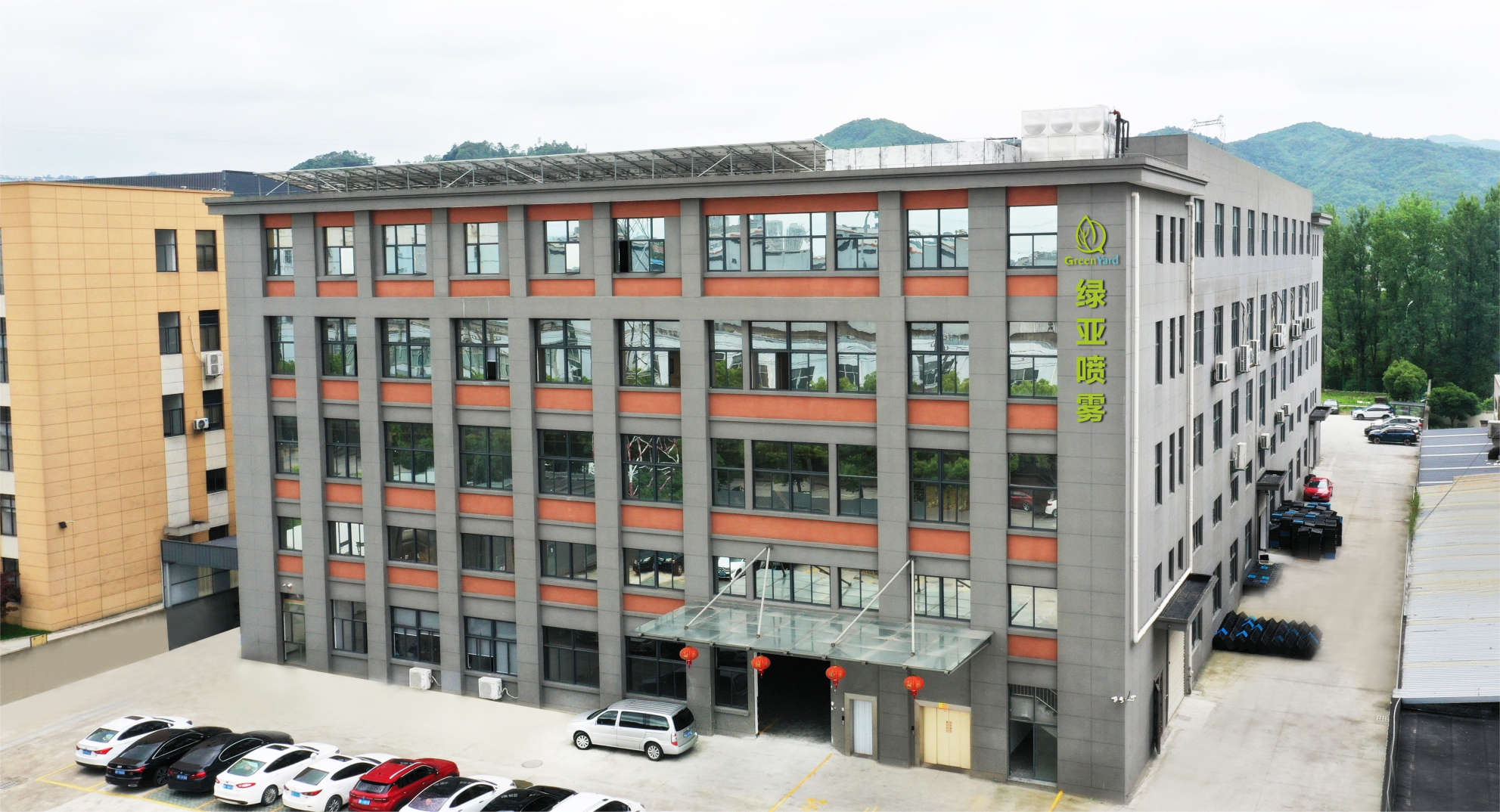 Coming From China, Marketing To The World.
-
Products
-
News
 English
 Français
 русский
 Español
High-Transparency PETG Jar for Modern Cream and Lotion Packaging
Content
- 1 Why PETG Is a Valuable Material for Cream Jars
- 2 Capacity Options for Different Product Concepts
- 3 Applications for Cream, Lotion, and Treatment Products
- 4 Advantages Compared with Other Packaging Approaches
- 5 Design and Presentation Opportunities
- 6 Manufacturing Capabilities Supporting Consistent Quality
- 7 Product Development from Concept to Production
- 8 Filling and Use Considerations
- 9 Supply Chain and Commercial Benefits
- 10 Environmental and Responsible Packaging Considerations
- 11 Quality and Compatibility Testing Checklist
- 12 How the PETG Jar Supports Brand Differentiation
- 13 Why Work with an Experienced Packaging Manufacturer
- 14 Ordering and Customization Discussion Points
- 15 Frequently Asked Questions
- 15.1 What is the PETG Jar made from?
- 15.2 What sizes are available?
- 15.3 What products can be packed in the jar?
- 15.4 What is the main visual advantage of PETG?
- 15.5 Is the PETG Jar suitable for thick creams?
- 15.6 How does the jar compare with glass packaging?
- 15.7 Can the jar be used for samples?
- 15.8 Can the PETG Jar be customized?
- 15.9 What testing should be completed before production?
- 15.10 Does transparency affect product development?
- 15.11 What manufacturing capabilities does GreenYard provide?
- 15.12 Where is the manufacturer located?
- 16 Conclusion
- 17 References
- 18 Product: PETG Jar
Packaging is one of the most important elements in the presentation, protection, and commercial success of skincare and personal care products. A well-designed container must do more than hold a formulation. It must preserve the product, communicate quality, support convenient use, withstand transportation, and create a visual connection with consumers. The PETG Jar is developed to meet these requirements through a combination of high transparency, durable material performance, flexible capacity options, and a practical jar format suitable for creams, lotions, and related formulations.
Made from PETG, or Polyethylene Terephthalate Glycol, this cream jar offers a clear and attractive appearance that allows users to see the color and texture of the product inside. This visual advantage is particularly valuable for colorful creams, naturally tinted skincare products, masks, balms, scrubs, and other formulations whose appearance contributes to their appeal. Instead of hiding the contents behind an opaque wall, the jar helps make the formulation part of the package design.
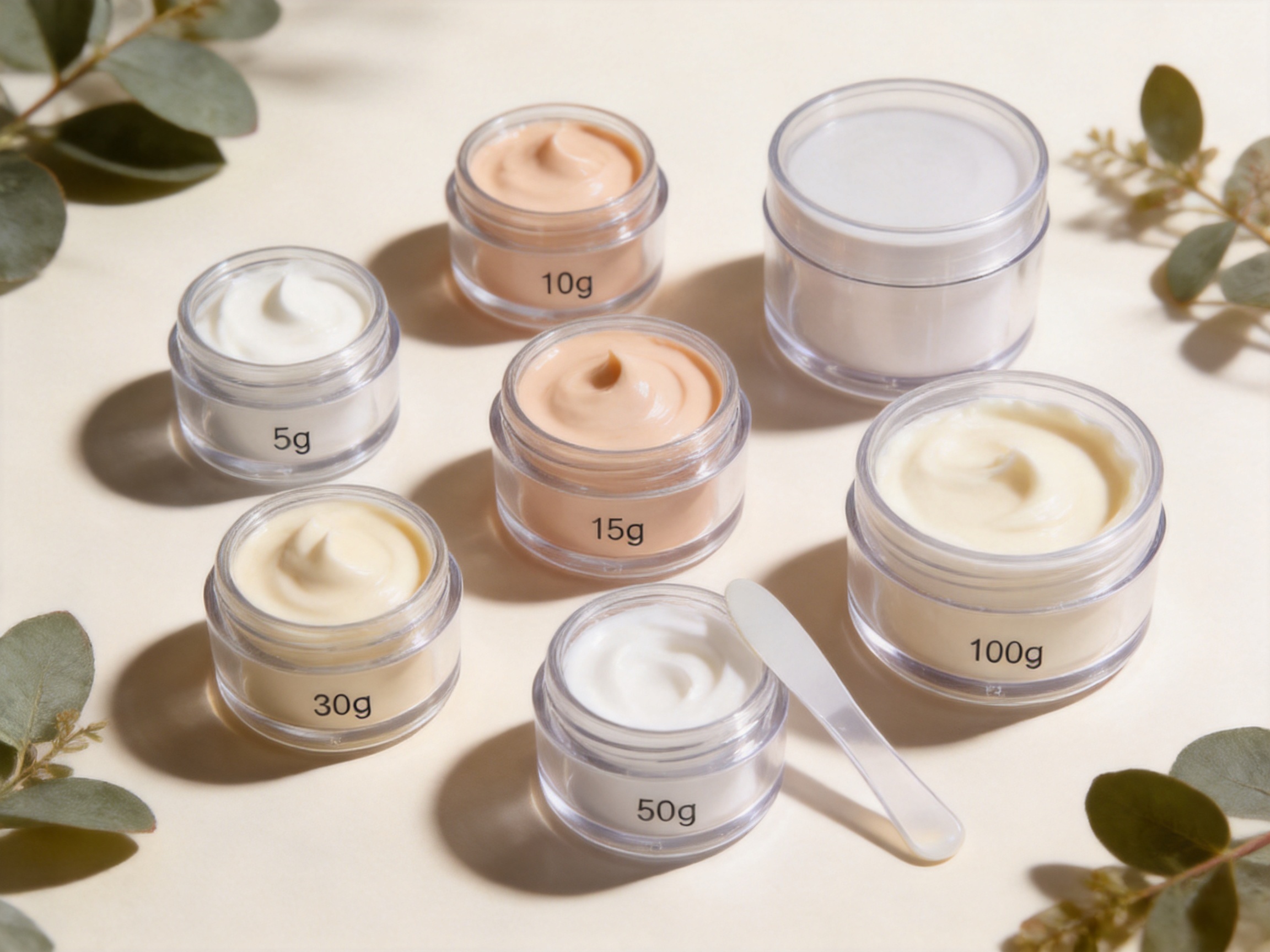
Available in 5g, 10g, 15g, 30g, 50g, and 100g sizes, the PETG Jar can support a broad range of product concepts. Small capacities are appropriate for samples, trial kits, travel products, professional treatments, and premium gift sets. Larger capacities are more suitable for daily-use creams, body products, salon treatments, and family-size skincare packaging. This range enables brands to maintain a consistent packaging style across multiple product lines while selecting a size that matches the intended use and retail position.
GreenYard Tools Co., Ltd. manufactures this jar as part of a wider portfolio of personal care packaging products, including perfume sprayers, pump heads, caps, bottles, lotion pumps, treatment pumps, foam pumps, dropper components, airless bottles, deodorant stick bottles, cream jars, nail polish pumps, trigger sprayers, PE and PET bottles, and roll-on bottles. Its experience in spray and daily chemical packaging supports a practical understanding of the performance requirements faced by cosmetic and personal care brands.

PETG Jar
Why PETG Is a Valuable Material for Cream Jars
PETG is widely valued in packaging applications because it combines clarity, strength, and processing flexibility. The material is a modified form of polyethylene terephthalate. The glycol modification helps improve certain processing and impact characteristics, making PETG suitable for transparent packaging applications that require an attractive appearance and dependable structural performance.
For a cream jar, material selection affects both the consumer experience and the efficiency of the supply chain. A container that looks clear but is easily damaged may create unacceptable losses during filling, storage, or transportation. A container that is strong but visually dull may reduce the product’s shelf appeal. PETG offers a balanced solution by providing a transparent wall with a solid, practical construction.
High Transparency and Product Visibility
The most immediately noticeable feature of the PETG Jar is its high transparency. Consumers can view the inner cream without opening the package. This allows the product’s color, consistency, and remaining quantity to contribute to the overall user experience.
Product visibility can be especially useful when a formulation has a distinctive appearance. A pale pink cream, botanical green mask, bright gel cream, pearlescent treatment, or naturally colored balm can become part of the visual identity of the product. Transparent packaging also allows brands to coordinate the container with colorful labels, printed decoration, metallic closures, or minimalist artwork.
Visibility can support consumer confidence as well. When users can see the formulation, they can understand the product’s condition and estimate how much remains. This is convenient for products used regularly at home, in hotels, in spas, or in professional treatment environments.
Strength for Everyday Handling
Packaging must withstand the practical conditions of daily use. A cream jar may be opened and closed repeatedly, carried in a cosmetic bag, stored in a bathroom, placed in a display cabinet, or packed into a shipping carton. The jar therefore needs adequate resistance to ordinary handling and transportation stresses.
PETG provides a durable packaging base for these conditions. Its strength helps the jar maintain its shape during normal use, while its clear appearance supports a premium visual impression. The material is suitable for brands that want the look of transparent packaging without relying exclusively on more fragile alternatives.
As with every packaging material, final performance depends on the complete design, wall thickness, closure system, filling conditions, formulation compatibility, and transportation environment. Product developers should conduct compatibility, stability, drop, torque, and sealing tests before commercial production. Nevertheless, PETG offers a strong starting point for a practical and visually engaging cream jar.
Balanced Appearance and Functionality
Some packaging formats are chosen mainly for appearance, while others are chosen primarily for utility. The PETG Jar is designed to provide both. Its transparent construction gives the package a clean and modern appearance, while the jar format offers convenient access to creams and lotions with a spatula, fingertip, or other application tool.
This balance is useful for product categories where texture matters. Thick creams, body butters, overnight masks, exfoliating treatments, hair masks, and intensive moisturizers may not flow easily through a pump or narrow opening. A jar allows these formulations to be removed with little effort and gives the user direct access to the product.
Capacity Options for Different Product Concepts
A packaging supplier’s ability to offer multiple capacities can simplify product development. The PETG Jar is available in six listed sizes: 5g, 10g, 15g, 30g, 50g, and 100g. This range supports several market segments without requiring a completely different packaging concept for every product size.
Available capacity |
Potential application |
Packaging benefit |
5g |
Samples, trial products, professional treatments, and gift sets |
Compact format suitable for testing and short-term use |
10g |
Travel skincare, promotional units, and concentrated treatments |
Small footprint with a premium sample or travel presentation |
15g |
Eye creams, specialty balms, and targeted skincare |
Appropriate for products used in small quantities |
30g |
Facial creams, masks, and treatment products |
Compact retail size for focused product concepts |
50g |
Daily facial creams and premium skincare |
Balanced size for regular consumer use |
100g |
Body creams, lotions, salon products, and larger treatments |
Higher quantity for frequent or extended use |
The listed capacities should be understood as nominal packaging options. Actual fill weight may vary depending on the density of the formulation, filling method, headspace requirements, and regulatory labeling practice. A cream measured by weight may occupy a different volume from a lotion, balm, or gel with another density. Product developers should verify the actual fill level through a production trial.
Having multiple sizes also supports product-line architecture. A brand may use a 15g jar for a trial version, a 50g jar for the standard retail item, and a 100g jar for a professional or family-size product. The consistent transparent material and overall jar concept can help these different products appear related on a shelf or online product page.
Applications for Cream, Lotion, and Treatment Products
The PETG Jar is intended for cream, lotion, and similar formulations. This broad application range allows it to serve many personal care categories. Its suitability for a specific formula must always be confirmed by compatibility testing, but the jar format is naturally appropriate for semi-solid and viscous products.
Facial Creams and Moisturizers
Facial creams often require packaging that conveys care, quality, and cleanliness. A transparent PETG jar can display the color and texture of a moisturizer while allowing the brand to create a simple or sophisticated visual identity. The 30g and 50g sizes may be particularly suitable for daily facial moisturizers, night creams, firming creams, and intensive hydration products.
The jar can also be incorporated into a coordinated skincare range. For example, a brand may use a small jar for eye cream, a medium jar for facial cream, and a larger jar for body cream. The consistent material appearance helps maintain visual continuity across the range.
Body Creams and Body Lotions
Body products are frequently sold in larger quantities because they are applied to substantial areas of skin. The 100g option offers additional capacity for body creams, hand creams, foot creams, massage products, and spa-oriented formulations. If a lotion is sufficiently thick for jar filling, the PETG format can provide a convenient alternative to bottles or tubes.
Transparent packaging can be particularly effective for body products with appealing colors, botanical ingredients, exfoliating particles, or whipped textures. A clear jar helps the consumer understand the character of the product before purchase.
Face Masks and Treatment Products
Face masks, overnight treatments, cleansing balms, and intensive repair products often have distinctive textures and colors. A transparent jar can emphasize these characteristics and make the formula more visible during use. Smaller capacities may be useful for targeted treatments, while 50g or 100g formats can support regular-use masks and professional products.
The wide opening of a jar is also practical for thick products that are difficult to dispense through a small orifice. Users can remove the desired amount with a clean spatula or cosmetic applicator. For products intended for multiple users, brands may recommend a dedicated applicator to reduce direct contact with the formulation.
Sample, Travel, and Promotional Packaging
The 5g, 10g, and 15g versions can support sampling programs, hotel amenities, travel kits, subscription boxes, promotional campaigns, and gift collections. Small transparent jars let prospective customers see the formulation while keeping the sample presentation consistent with the full-size product.
Small containers also give brands an opportunity to introduce premium treatments at a lower initial purchase commitment. A consumer may be more willing to test an unfamiliar cream in a compact size before purchasing a larger unit.
Advantages Compared with Other Packaging Approaches
Packaging selection should be based on the product’s formula, target user, brand positioning, dispensing requirements, and supply-chain conditions. The PETG Jar has several advantages when compared with opaque jars, glass jars, tubes, and pump bottles, although each alternative can be appropriate in different circumstances.
Compared with Opaque Plastic Jars
Opaque plastic jars can protect light-sensitive formulations and create a solid, uniform visual appearance. However, they conceal the color and remaining quantity of the product. The PETG Jar provides greater visibility, which can be a significant advantage for colorful, translucent, or visually distinctive creams.
Transparency may also help reduce uncertainty at the point of purchase. Customers can immediately understand the product’s appearance instead of relying entirely on photographs, descriptions, or color graphics. For brands that invest in a visually attractive formulation, this feature can turn the package into a display element.
Compared with Glass Jars
Glass provides a premium feel and strong barrier characteristics, but it is heavier and can break if dropped or mishandled. PETG offers a lighter alternative with a clear appearance and practical resistance to ordinary handling. Lower package weight can help reduce shipping burden and make the product more comfortable to carry.
The reduced risk of shattering is also valuable in bathrooms, travel kits, spas, and retail logistics. Although PETG is not unbreakable and should still be tested under realistic conditions, its plastic construction can provide a more forgiving user experience than fragile glass.
Compared with Tubes
Tubes are convenient for controlled dispensing and can reduce direct contact between the user’s hands and the product. They are often suitable for fluid creams, gels, and products used on the move. A jar, in contrast, is better suited to thick, rich, whipped, or high-viscosity formulas that require a wide opening.
The jar format also allows the consumer to see the formulation more fully. This is valuable for products in which texture, color, and surface appearance are important parts of the product identity.
Compared with Pump Bottles
Pump bottles are effective for hygienic, measured dispensing and are commonly used for lotions and liquid products. However, pumps may be less suitable for dense creams, solid balms, or formulas containing particles that can obstruct the dispensing channel. The PETG Jar offers direct access to these formulations and can be filled with a broader range of textures, subject to compatibility and filling validation.
Brands may also select different packaging formats within one range. A light lotion can use a pump bottle, while a richer cream from the same collection can use the PETG Jar. Matching the package to the formula improves the consumer experience and helps each product perform as intended.
Design and Presentation Opportunities
High transparency gives designers a broad range of creative possibilities. The clear body can be paired with colored closures, printed labels, shrink sleeves, decorative coatings, metallic effects, or minimalist typography. The product itself can provide a visual base layer, reducing the need for heavy external decoration.
A transparent jar may support a clean beauty aesthetic, especially when combined with restrained graphics and a simple color palette. It can also support a premium laboratory-inspired appearance when used with precise labels, technical typography, and a visible cream formula. For botanical products, the clear wall can reveal natural tones and reinforce an ingredient-focused image.
Brands should consider how the formula appears under different lighting conditions. A cream may look different under daylight, retail lighting, and bathroom lighting. Color stability, settling, separation, and surface changes should be evaluated during product development. When the formulation is visible, any change in color or texture may be noticed more easily by consumers. This makes stability testing particularly important but also allows a high-quality formulation to demonstrate its visual appeal.
Closure and Label Coordination
The jar should be evaluated as a complete packaging system rather than as an isolated container. The closure, liner, sealing feature, label, and decoration method all contribute to performance and appearance. A suitable closure can protect the product from contamination, help prevent leakage, and create an appropriate opening and closing experience.
Labels should be selected with attention to adhesion on the jar surface. Transparent or semi-transparent labels can create a floating graphic effect, while opaque labels can provide stronger contrast. Wraparound labels may display extensive product information, whereas small front labels can preserve a minimalist presentation.
The visible product surface may also influence the best label position. A label that covers too much of the jar can reduce the benefit of transparency, while a label that is too small may not provide enough space for required information. Designers should test the finished container with the actual formulation inside.
Manufacturing Capabilities Supporting Consistent Quality
GreenYard Tools Co., Ltd. is a China-based manufacturer specializing in spray products and personal care packaging. The company has operated in this field for 16 years and produces perfume sprayers, pump heads, caps, bottles, and daily chemical packaging solutions. Its reported daily production capacity reaches one million units, providing a substantial manufacturing base for customers that require repeat supply and coordinated packaging programs.
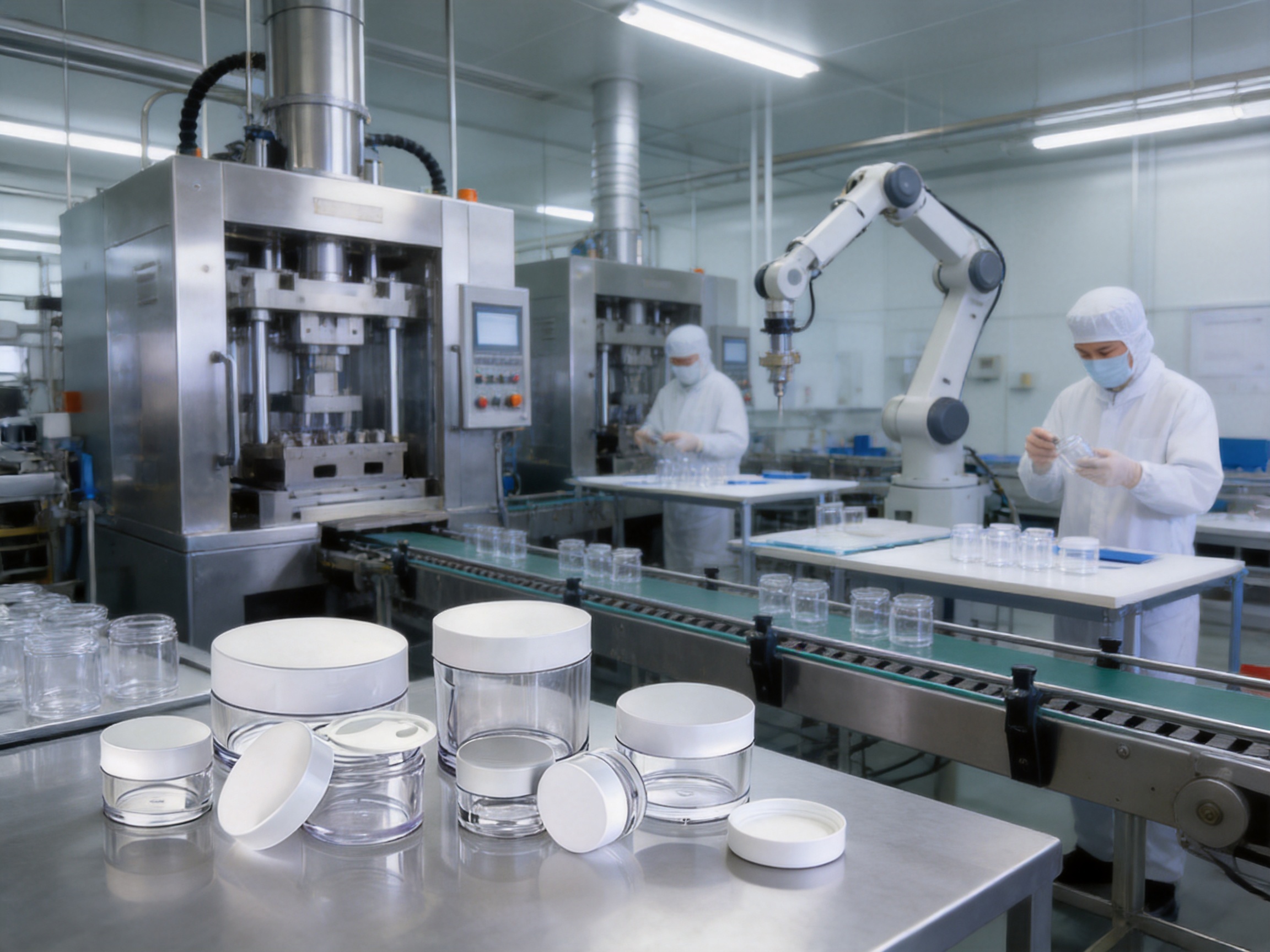
The company’s manufacturing capabilities include mold design, injection molding, automated assembly, and quality inspection. These processes are important because packaging quality depends on the interaction of tooling accuracy, material control, molding conditions, component assembly, and final inspection.
Mold Design and Engineering
Mold design is the foundation of consistent molded packaging. The mold determines the shape, dimensions, surface details, wall distribution, closure interface, and many other characteristics of the finished part. A carefully engineered mold can support stable production, reduce defects, and improve repeatability from one production batch to the next.
For a transparent PETG Jar, mold quality is particularly important because visual defects may be easier to notice through a clear wall. Flow marks, distortion, uneven surfaces, scratches, and inconsistent gloss can affect the package’s appearance. Engineering attention to the mold and processing parameters helps manufacturers work toward a clean, attractive finish.
GreenYard’s internal mold design capability allows the company to participate in product development at an earlier stage. This can help customers review practical considerations such as draft angles, wall thickness, parting lines, closure fit, ejection, decoration areas, and manufacturing feasibility before mass production begins.
Injection Molding
Injection molding enables the production of plastic packaging components with repeatable shapes and dimensions. The process involves heating the selected material, injecting it into a mold, allowing it to cool, and removing the finished component. Proper control of temperature, pressure, cooling, cycle time, and material handling is necessary to achieve stable results.
With transparent PETG packaging, processing control affects both structural performance and appearance. The manufacturer must manage the material and molding conditions carefully to reduce unwanted marks, deformation, haze, and dimensional variation. Consistent molding also supports reliable assembly with the closure and any additional components.
Injection molding is well suited to multiple capacity options because it can support repeatable production across different tooling configurations. Once the design has been validated, the process can provide efficient output for both smaller trial orders and larger commercial programs, subject to tooling and production planning.
Automated Assembly
Automated assembly can improve production consistency and throughput. Packaging components often require precise placement, fitting, pressing, or inspection. Automation helps reduce variation associated with repetitive manual operations and supports the company’s high-volume manufacturing model.
For customers purchasing complete packaging systems, assembly capability can simplify the supply chain. Instead of coordinating several suppliers for individual components, a customer may work with a manufacturer that can provide bottles, jars, caps, pump heads, sprayers, or assembled units within one broader packaging program.
Automation does not eliminate the need for quality control. It must be supported by appropriate machine settings, operator oversight, maintenance, sampling plans, and traceability. When these elements work together, automated assembly can help provide dependable output for domestic and international markets.
Quality Inspection
Quality inspection is necessary to verify that packaging meets the required visual, dimensional, functional, and assembly standards. Inspections may include checks for appearance, color, transparency, surface condition, dimensions, weight, closure fit, leakage, and component integrity.
Transparent jars require careful visual inspection because the package is intended to be seen by the consumer. Surface defects that may be less noticeable on an opaque component can be more apparent in a clear product. Inspection helps identify unacceptable molding marks, contamination, scratches, deformation, or other issues before shipment.
Customers should define their own quality requirements in advance. These may include acceptable defect levels, critical dimensions, packaging cleanliness, carton requirements, sampling standards, and functional tests. A clear technical specification helps align the manufacturer and the customer before production begins.
Product Development from Concept to Production
A successful packaging project normally progresses through several stages. The first stage is product definition. The brand identifies the formulation, target market, capacity, use environment, desired appearance, closure preference, decoration, and expected annual demand.
The second stage is packaging evaluation. Samples are reviewed for size, visual appearance, opening experience, fill level, label area, and compatibility with the formulation. At this point, the brand may compare the PETG Jar with other options, including glass, tubes, airless packages, and pump bottles.
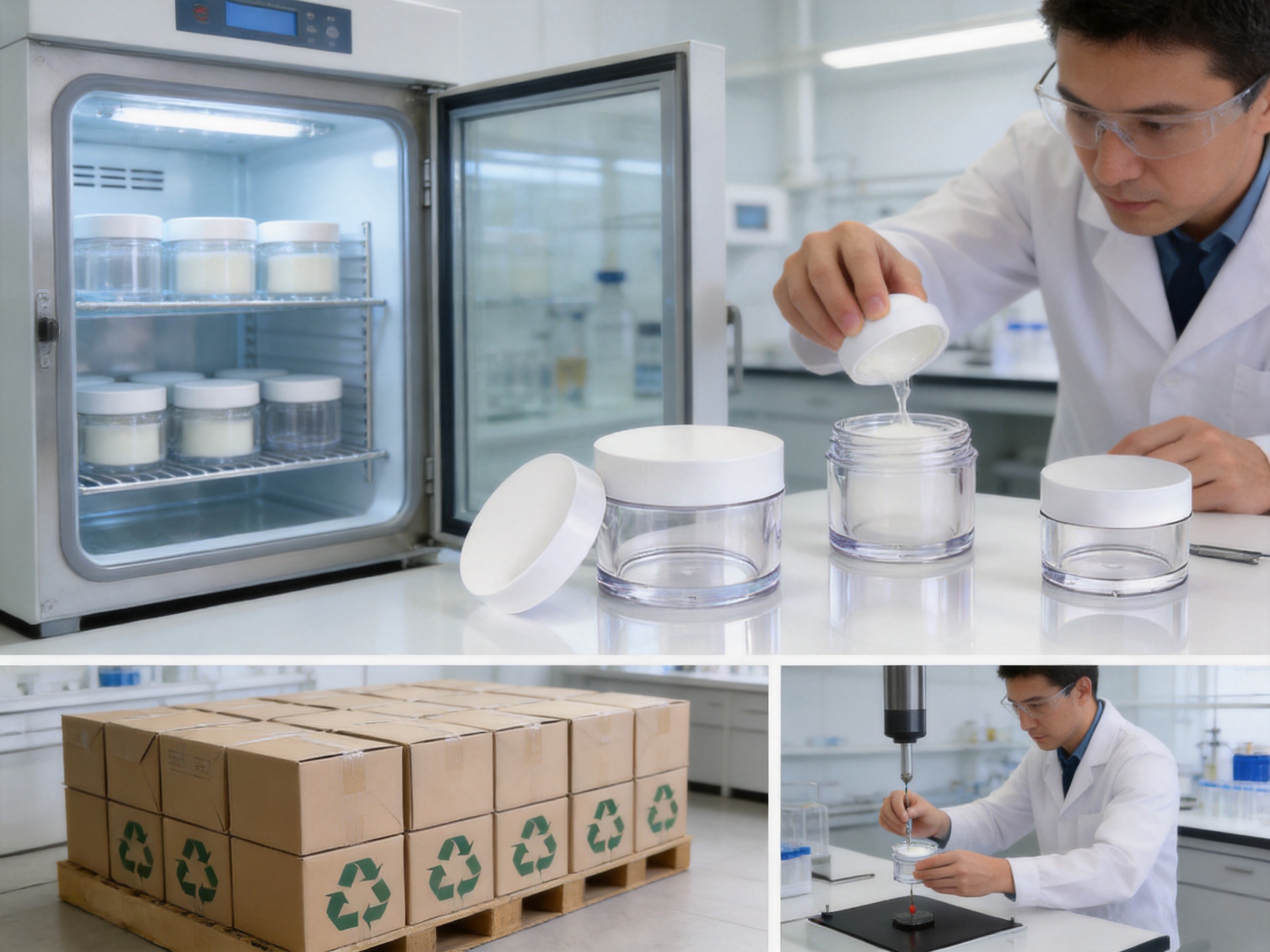
The third stage is testing. The filled package should undergo compatibility testing with the actual formula. Testing may include accelerated storage, room-temperature storage, freeze-thaw cycles where relevant, light exposure, leakage checks, drop testing, closure torque evaluation, and repeated opening and closing. The purpose is to identify potential changes in the material, formulation, seal, decoration, or appearance.
The fourth stage is production preparation. Approved specifications, drawings, artwork, inspection standards, packing instructions, and delivery schedules are confirmed. If custom tooling or decoration is required, these details should be finalized before mass production.
The final stage is mass production and ongoing quality management. Initial production should be reviewed carefully, and subsequent batches should be monitored for consistency. Regular communication between the packaging manufacturer, filling facility, and brand owner can help resolve issues quickly and support stable supply.
Filling and Use Considerations
The PETG Jar is designed for creams, lotions, and related formulations, but the filling process must be matched to the product’s viscosity and behavior. Thick creams may require heated filling, controlled cooling, or specialized filling equipment. A fluid lotion may require a different filling head and may need additional attention to splashing or air entrapment.
Filling temperature should be evaluated carefully. Excessive heat may affect the container, closure, decoration, or formulation. Insufficient temperature may result in poor flow, uneven fill levels, or excessive air pockets. The filling company should establish validated operating conditions based on the actual product and equipment.
Headspace is another important consideration. The jar should not be filled so high that the cream touches the closure during normal handling, but excessive headspace may create an undesirable appearance or affect the perceived value of the product. The correct fill level should be confirmed through actual production trials.
Brands should also consider consumer instructions. If the product is intended for direct finger application, the label may include hygiene guidance. If the formulation is sensitive to contamination or intended for professional use, a spatula or applicator may be recommended. A suitable inner seal can also be considered where the product and filling system require additional protection.
Supply Chain and Commercial Benefits
A packaging partner with a broad product portfolio can provide commercial advantages beyond the supply of one jar. GreenYard’s range includes packaging for fragrance, skincare, haircare, body care, and daily chemical products. This breadth may help brands consolidate sourcing for several product categories.
Supplier consolidation can reduce communication complexity, simplify quality coordination, and support a more consistent appearance across a product family. A brand may obtain a PETG Jar for a cream, a lotion pump for a lighter product, a perfume sprayer for a fragrance, and a trigger sprayer for a household or salon product through related manufacturing channels.
The company’s stated daily production capacity of one million units is also relevant to customers planning larger programs. High production capacity can support repeat orders and help manage demand growth, although actual lead times depend on tooling, order quantity, decoration, material availability, production scheduling, and inspection requirements.
For international customers, clear communication is essential. Product specifications should identify the material, capacity, dimensions, closure requirements, color, surface finish, decoration, packing method, and acceptable quality standards. Samples should be approved before production, and shipping cartons should be tested for the expected logistics conditions.
Environmental and Responsible Packaging Considerations
Responsible packaging design requires attention to the complete product life cycle. Material selection, package weight, manufacturing efficiency, transport, product protection, and end-of-life handling all contribute to the environmental profile of a container.
The PETG Jar is a plastic package, so brands should consider how it fits within their local recycling infrastructure and applicable packaging regulations. Clear material identification, appropriate labeling, and communication with recycling specialists may be necessary in different markets. Recycling acceptance can vary by region and by the presence of closures, labels, coatings, and other components.
Reducing unnecessary material is another important consideration. The jar should provide enough strength and protection for its intended use without excessive weight. However, weight reduction must not compromise package integrity, filling performance, or resistance to transportation damage. A damaged product may create greater resource waste than a slightly heavier package that successfully protects the formulation.
Durable packaging can support product preservation and reduce the likelihood of leakage, breakage, and premature disposal. The most appropriate package is not determined by appearance alone. It must protect the formula through its intended distribution and use period while meeting the practical expectations of the consumer.
Quality and Compatibility Testing Checklist
Before approving the PETG Jar for commercial use, a brand should prepare a structured testing plan. The following areas are commonly relevant:
Material and Appearance
Confirm the material specification, transparency, color, gloss, surface finish, and overall visual consistency. Check whether the filled jar displays the formulation as intended under normal lighting. Inspect for scratches, haze, contamination, deformation, and molding marks.
Dimensional and Mechanical Performance
Measure critical dimensions, wall areas, opening dimensions, closure fit, and overall height and diameter. Conduct suitable drop, compression, and transportation simulations. Confirm that the jar remains functional after ordinary handling and repeated opening and closing.
Formula Compatibility
Fill the jar with the actual formulation and monitor changes over time. Observe color, odor, viscosity, separation, swelling, shrinkage, stress cracking, leakage, label adhesion, and closure performance. Testing should reflect both normal and accelerated storage conditions where appropriate.
Filling and Sealing
Verify that the jar works with the intended filling equipment. Check the fill weight, headspace, production speed, sealing method, closure torque, and package cleanliness. Evaluate whether the package can be capped consistently without damaging the jar or creating an unreliable seal.
Consumer Experience
Conduct practical user evaluations. Review how easily the cap opens, how the product is removed, whether the jar can be held comfortably, and whether the label remains legible during use. Consumer feedback can identify issues that may not appear in a laboratory test.
How the PETG Jar Supports Brand Differentiation
In crowded skincare markets, differentiation often depends on a combination of formula, branding, packaging, and user experience. The PETG Jar gives brands a transparent platform that can make the formulation itself part of the product story.
A colorful cream can be presented as a visual signature. A botanical formulation can display its natural tone. A pearlescent mask can show its reflective appearance. A rich body butter can communicate texture through its surface and color. These presentation possibilities can help a product stand out in physical retail, product photography, e-commerce listings, and social media content.
The jar can also support different positioning strategies. With a simple label and a colored cap, it may suit an approachable everyday skincare line. With premium decoration and carefully controlled graphics, it can support a luxury treatment range. With clear technical information and visible product color, it may suit a professional or clinical-inspired concept.
Because the available capacities range from 5g to 100g, the same packaging idea can be adapted to multiple price points and sales channels. This flexibility is valuable for brands launching a new product, expanding a successful line, or creating special editions.
Why Work with an Experienced Packaging Manufacturer
Experience in packaging manufacturing can reduce uncertainty during product development. A manufacturer that understands molds, injection molding, assembly, and inspection can help identify practical problems before they become expensive production issues.
GreenYard Tools Co., Ltd. has focused on spray product manufacturing for 16 years and has developed experience in perfume sprayers, pump components, closures, bottles, and other personal care packaging. Its design team supports product innovation, while its manufacturing infrastructure covers mold design, injection molding, automated assembly, and quality inspection.
This combination of technical and production capability can be useful when a customer requires more than a standard catalog item. Packaging projects may involve custom colors, decoration, modified components, coordinated product families, or specialized assembly. A manufacturer with multiple internal capabilities can help connect design decisions with production realities.
Customers should still perform their own supplier evaluation. Important considerations include production samples, technical documentation, quality systems, communication response, tooling arrangements, production capacity, inspection procedures, packaging methods, and delivery performance. A strong partnership is built through clear requirements, documented approvals, and continuous quality communication.
Ordering and Customization Discussion Points
When discussing the PETG Jar with a packaging manufacturer, customers should provide as much project information as possible. This allows the supplier to recommend an appropriate configuration and prepare accurate quotations and samples.
Useful information includes the intended product category, formulation type, nominal fill weight, target markets, expected order quantity, annual demand, desired color, closure style, decoration method, label dimensions, filling temperature, sealing requirements, and required delivery schedule.
Customers should also explain whether the product will be sold in retail stores, online channels, hotels, salons, spas, professional clinics, or gift sets. The distribution environment can affect the required packaging strength, carton design, labeling, and testing program.
If a brand wants the product color to remain highly visible, it should clarify whether the jar body, cap, label, and decoration should all be transparent or whether some components should provide contrast. Physical samples are strongly recommended because the visual result can change when a real formulation is placed inside the jar.
For repeat production, customers should retain an approved reference sample and an agreed specification sheet. These documents help compare future batches and reduce misunderstandings regarding acceptable color, transparency, dimensions, surface finish, and decoration.
Frequently Asked Questions
What is the PETG Jar made from?
The jar is made from PETG, or Polyethylene Terephthalate Glycol. PETG is a clear plastic material known for transparency, strength, and suitability for a range of packaging applications.
What sizes are available?
The listed capacities are 5g, 10g, 15g, 30g, 50g, and 100g. Actual fill weight should be confirmed with the specific formulation because density and filling conditions can affect the final fill level.
What products can be packed in the jar?
The jar is intended for cream, lotion, and similar personal care formulations. It may be suitable for facial creams, body creams, masks, balms, treatment products, and other semi-solid formulations after compatibility testing.
What is the main visual advantage of PETG?
The main visual advantage is high transparency. The consumer can see the color and appearance of the formulation through the container, which can be valuable for products with attractive or distinctive textures and colors.
Is the PETG Jar suitable for thick creams?
The jar format is suitable for many thick creams because its wide opening allows convenient product removal. The exact suitability depends on the formulation, fill process, closure, and compatibility results.
How does the jar compare with glass packaging?
PETG provides a clear appearance with a lighter and more impact-resistant plastic construction than conventional glass. It may be easier to transport and handle, although final performance must be evaluated through appropriate testing.
Can the jar be used for samples?
Yes. The 5g, 10g, and 15g capacities can be used for samples, trial products, travel kits, promotional campaigns, professional treatments, and gift sets.
Can the PETG Jar be customized?
Customization possibilities should be discussed with the manufacturer. Depending on the project, options may include color, closure selection, label application, printing, decoration, packaging configuration, and coordinated components. Technical feasibility should be confirmed using samples.
What testing should be completed before production?
Brands should consider material and appearance inspection, dimensional checks, formula compatibility testing, leakage testing, drop testing, closure evaluation, filling trials, label adhesion testing, stability testing, and transportation simulation where relevant.
Does transparency affect product development?
Yes. Because the formulation is visible, changes in color, texture, separation, settling, or surface appearance may be more noticeable. Stability and visual evaluation should therefore be included in the development process.
What manufacturing capabilities does GreenYard provide?
GreenYard Tools Co., Ltd. provides mold design, injection molding, automated assembly, and quality inspection. The company also manufactures perfume sprayers, pump heads, caps, bottles, and other daily chemical packaging products.
Where is the manufacturer located?
GreenYard Tools Co., Ltd. is located at No. 97-1 Fengyi Road, Lanjiang Street, Yuyao City, Zhejiang Province, China. Customers can contact the company through its sales channels to discuss samples, specifications, customization, and orders.
Conclusion
The PETG Jar is a practical and visually distinctive option for cream, lotion, and treatment packaging. Its high transparency allows the inner formulation to remain visible, helping brands showcase color, texture, and product character. Its PETG construction provides a useful balance of clarity and durability, while the range of 5g, 10g, 15g, 30g, 50g, and 100g capacities supports samples, travel products, daily skincare, professional treatments, and larger body-care formats.
Compared with opaque plastic jars, the PETG Jar offers stronger product visibility. Compared with glass, it provides a lighter plastic alternative with reduced breakage concerns. Compared with tubes and pump bottles, it is well suited to thick and rich formulations that require a wider opening. These advantages make it a flexible choice for brands seeking both functional performance and attractive shelf presentation.
The product is supported by GreenYard Tools Co., Ltd.’s broader manufacturing capabilities, including mold design, injection molding, automated assembly, and quality inspection. With 16 years of experience in spray and personal care packaging and a reported daily production capacity of one million units, the company is equipped to support standard packaging supply as well as coordinated product development programs.
For the best result, brands should treat the jar as part of a complete packaging system. Formula compatibility, filling conditions, closure performance, labeling, transport, storage, and consumer use should all be evaluated before approval. When these factors are properly managed, the PETG Jar can provide a clear, durable, and commercially effective presentation for modern cream and lotion products.
References
1. GreenYard Tools Co., Ltd. Product information for PETG Jar and personal care packaging applications.
2. GreenYard Tools Co., Ltd. Company information regarding mold design, injection molding, automated assembly, quality inspection, and packaging production capacity.
3. General technical references on Polyethylene Terephthalate Glycol properties and transparent plastic packaging design.
4. General packaging development practices for cosmetic containers, including compatibility testing, stability evaluation, leakage testing, and transport simulation.
5. General personal care packaging guidance concerning cream jars, lotion containers, closures, filling operations, labeling, and consumer usability.
Product: PETG Jar

-
Roll On Bottles: Types, Refill Guide, and Packaging Buying Tips for Your Brand
The first sample rolled smoothly, the second clicked, and the third leaked after ten presses. Three...
-
Amber Plastic Bottles: Lightweight, Protective, Customizable Packaging for Cosmetics
You have spent months stabilizing a vitamin C serum, only to watch a pallet of amber glass bottles ...
-
What's Inside a Lotion Pump and How Does It Work ?
A lotion pump is a precision dispensing closure that draws liquid product from a bottle and delivers...
-
Best Skincare Packaging: How to Choose Bottles, Pumps & Jars That Last
The last time a skincare brand sent us a bottle to test, the cap looked premium but the pump leaked...
Copyright © GreenYard Tools Co.,ltd. All Rights Reserved.
Personal Care Packaging Manufacturer Custom Perfume Sprayers Factory