
-
About Us
Why Choose Us?The company possesses advanced capabilities in mold design, injection molding, and automated assembly, supported by a professional quality inspection team to ensure product reliability. A dedicated design team continuously drives product innovation, providing customers with high-quality spray solutions.
 Coming From China, Marketing To The World.
-
Products
-
News
 English
 Français
 русский
 Español
8-Gram Bamboo-Design Cosmetic Stick Container: A Compact, Versatile Solution for Modern Beauty Packaging
Content
- 1 Introduction
- 2 Product Overview
- 3 Why the 8-Gram Format Is Practical
- 4 Advantages of a Stick Packaging Format
- 5 Bamboo-Inspired Design and Market Differentiation
- 6 Advantages Compared with Conventional Cosmetic Containers
- 7 Manufacturing Strengths
- 8 Development and Customization Considerations
- 9 Applications Across the Cosmetics Market
- 10 Consumer Experience and Functional Design
- 11 Supply and Production Support
- 12 Quality and Responsible Product Development
- 13 Why Choose This Packaging Solution
- 14 Recommended Evaluation Checklist
- 15 Frequently Asked Questions
- 15.1 What is the capacity of the GY-DS26 container?
- 15.2 What types of products can be filled into this container?
- 15.3 Is the container only suitable for deodorant?
- 15.4 What does the bamboo-inspired design mean?
- 15.5 What are the main advantages over a cosmetic jar?
- 15.6 Can the package be customized?
- 15.7 How should formula compatibility be verified?
- 15.8 What manufacturing capabilities support this product?
- 15.9 Is this container suitable for travel?
- 15.10 Can this package be used for an entire cosmetic collection?
- 15.11 Does the bamboo appearance prove that the package is environmentally friendly?
- 15.12 What should a buyer provide when requesting a quotation?
- 16 Conclusion
- 17 References
- 18 Product: GY-DS26 Bamboo Design 8Gram Stick Container
Introduction
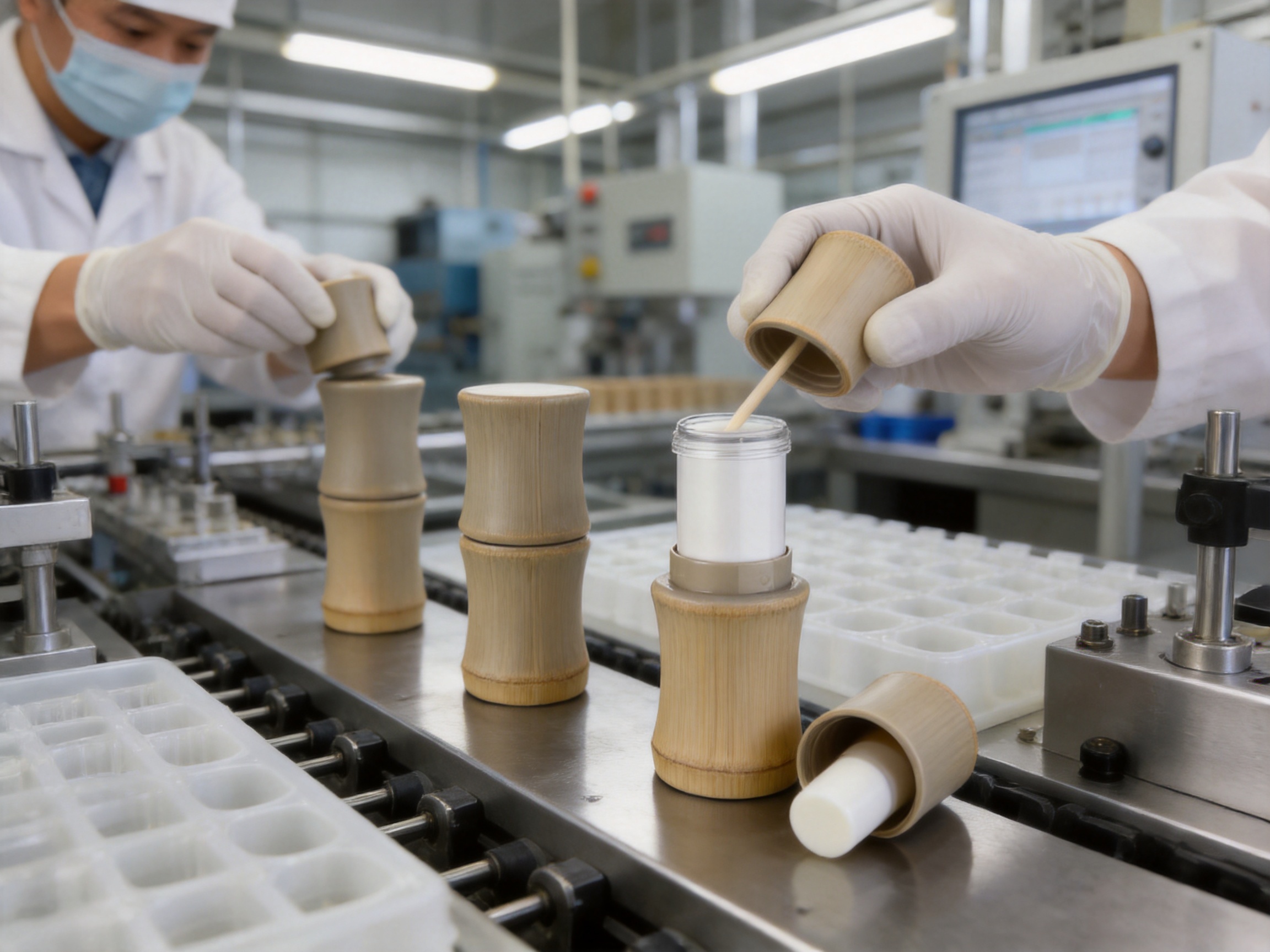
Cosmetic packaging plays an important role in product performance, user experience, brand presentation, and manufacturing efficiency. For makeup products such as blush, foundation, balm, and other cream-based formulas, a well-designed stick container can offer a practical alternative to traditional jars, tubes, and compact cases. The GY-DS26 8-gram bamboo-design stick container is developed for cosmetic applications that require portability, convenient direct application, and a distinctive visual identity.
With an available capacity of 8 grams, this container provides a balanced format for personal makeup products. It is large enough to hold a useful quantity of cosmetic formula while remaining compact enough for handbags, travel kits, retail displays, and everyday use. Its cylindrical stick structure supports controlled handling and direct application, reducing the need for brushes, sponges, or other accessories.
The product also features a bamboo-inspired exterior design. This appearance gives the container a natural, textured, and visually differentiated character. Compared with plain cylindrical cosmetic packaging, the bamboo-style structure can help a product stand out on a crowded shelf and support packaging concepts centered on minimalism, natural beauty, contemporary simplicity, or eco-conscious visual positioning.
Manufactured by GreenYard Tools Co., Ltd., a Chinese personal care packaging manufacturer with 16 years of experience in spray product manufacturing and related packaging solutions, the product benefits from established capabilities in mold design, injection molding, automated assembly, and quality inspection. These capabilities support the development of consistent, practical, and commercially suitable packaging for cosmetic brands and product developers.
Product Overview
The GY-DS26 is an 8-gram cosmetic stick container categorized as a deodorant stick bottle. Although its product category relates to stick packaging, the container is also suitable for a broader range of cosmetic formulas. The supplied product information identifies compatibility with blush, foundation, and similar cosmetic products. This makes the container appropriate for both color cosmetics and selected balm-based personal care applications.
Product Attribute |
Specification |
Product model |
GY-DS26 |
Packaging type |
Cosmetic stick container |
Available volume |
8 grams |
Primary usage |
Cosmetic packaging |
Suitable product examples |
Blush, foundation, balm, and similar formulations |
Design direction |
Bamboo-inspired exterior |
Form factor |
Compact cylindrical stick |
Manufacturer capability |
Mold design, injection molding, automated assembly, and quality inspection |
The product is designed around several practical principles. First, its stick format enables direct product application. Second, its compact dimensions are suitable for mobile use. Third, its bamboo-inspired surface creates a more distinctive appearance than a standard smooth package. Finally, its moderate 8-gram capacity gives brands an option between very small sample-size packaging and larger professional or retail formats.
Why the 8-Gram Format Is Practical
Capacity affects not only how much product a package can hold but also how consumers perceive portability, value, storage, and usage frequency. An 8-gram package offers a useful middle ground for many cosmetic products. It can provide enough formula for repeated personal use without making the package unnecessarily large or difficult to carry.
For blush sticks, an 8-gram capacity can support a product positioned for regular daily makeup routines. Consumers can keep the container in a handbag, cosmetic pouch, or desk drawer and use it for quick touch-ups. The same capacity may also be suitable for foundation sticks, contour products, highlighters, color balms, and other solid or semi-solid formulations, subject to formula compatibility and filling validation.
Smaller packaging is often associated with convenience, but extremely small containers may limit the amount of product available to the consumer or reduce the visual impact of the package. Larger packages, by contrast, can be less convenient for portable use. The 8-gram format offers a balanced solution for brands seeking a compact presentation with sufficient usable capacity.
The moderate size also provides flexibility in product positioning. A brand may use the container for a standard retail product, a travel edition, a limited-edition shade, a promotional kit, or a coordinated makeup collection. Because the format is not restricted to a single application, it may support a broader packaging program across several cosmetic categories.
Suitable Product Concepts
Blush sticks are one of the most natural applications for this container. A cream or balm blush can be applied directly to the cheeks and blended with fingers, a sponge, or a brush. The stick format helps users place the formula accurately and can simplify the application process compared with loose powders or traditional pans.
Foundation sticks are another possible application. A user can apply the product directly to the forehead, cheeks, nose, and chin before blending. The cylindrical format can support controlled placement and convenient storage. Formula developers should conduct their own compatibility, stability, and filling tests to confirm that the package performs correctly with the chosen foundation formula.
The container may also be considered for highlighters, contour products, color balms, tinted skin products, solid treatment products, and other similar cosmetics. Each application requires evaluation of product viscosity, hardness, melting behavior, fragrance interaction, color migration, filling temperature, and mechanical performance.
Although the packaging may be used for products resembling deodorant sticks, the available product information specifically emphasizes cosmetic applications. Therefore, brands should select the final filling formula based on technical testing rather than assuming that every formula will perform identically in the same container.
Advantages of a Stick Packaging Format
Direct and Convenient Application
A stick container allows the formula to be applied directly to the skin. This can simplify the user experience by reducing the number of tools required. For products such as blush and foundation, direct application may make it easier for consumers to apply a controlled amount to specific areas before blending.
Traditional jars often require the consumer to use fingers, spatulas, or brushes to remove the product. This additional step can be inconvenient when the user is traveling or completing a quick makeup routine. A stick package places the product in an applicator-oriented format, making the package and the product work together as one system.
Improved Portability
The compact cylindrical structure is convenient for handbags, travel makeup kits, drawers, and small storage spaces. It does not require the footprint of a wide compact or the additional space associated with a jar and separate applicator. This portability can be especially valuable for consumers who regularly reapply or adjust makeup during the day.
Portable packaging also supports several commercial formats. Brands can offer the product as a daily-use item, travel-friendly product, makeup-bag essential, gift-set component, or limited-edition collectible. A compact package can be easier to organize in retail displays and may allow multiple shades or product variants to be arranged together.
Cleaner Product Handling
A closed stick format can help limit direct contact between the user’s fingers and the unused product remaining inside the package. This may contribute to a more orderly user experience and can reduce the need for consumers to repeatedly open a wide container. The exact hygiene performance depends on the formula, closure design, consumer behavior, and storage conditions, but the stick format offers a practical foundation for controlled product access.
Efficient Use of Packaging Space
The vertical cylindrical form makes efficient use of space in a cosmetic bag and on a retail shelf. It provides a recognizable silhouette that can be coordinated with other products in a collection. Compared with some wider cosmetic formats, a stick container may allow brands to create a compact product range without excessive package volume.
Bamboo-Inspired Design and Market Differentiation
Packaging appearance influences the first impression of a cosmetic product. The bamboo-inspired design of the GY-DS26 introduces a natural visual direction while maintaining the functionality of a modern cosmetic stick. This design can help distinguish the package from conventional smooth plastic containers that offer limited visual variation.
The textured or bamboo-style appearance may complement beauty brands that want to communicate simplicity, botanical inspiration, calmness, wellness, or a connection with natural materials. It can also be used by contemporary brands seeking a more unusual alternative to glossy, highly decorative packaging.
The design does not require a brand to position the product as made from bamboo. The term “bamboo-inspired” describes the visual direction of the exterior. This distinction is useful because it allows brands to use the appearance as part of their design language while making accurate material and sustainability claims based on the actual composition of the finished package.
Compared with plain packaging, a bamboo-style exterior can reduce the need for excessive decorative elements. A distinctive surface may provide visual character before the addition of labels, printing, color treatments, or other branding methods. This can help create a minimalist presentation in which the structure itself contributes to the product identity.
The design may be particularly suitable for cosmetics positioned around natural shades, soft textures, botanical ingredients, clean visual systems, or understated luxury. At the same time, its neutral cylindrical form can be adapted to more colorful or fashion-oriented collections through suitable decoration and labeling.
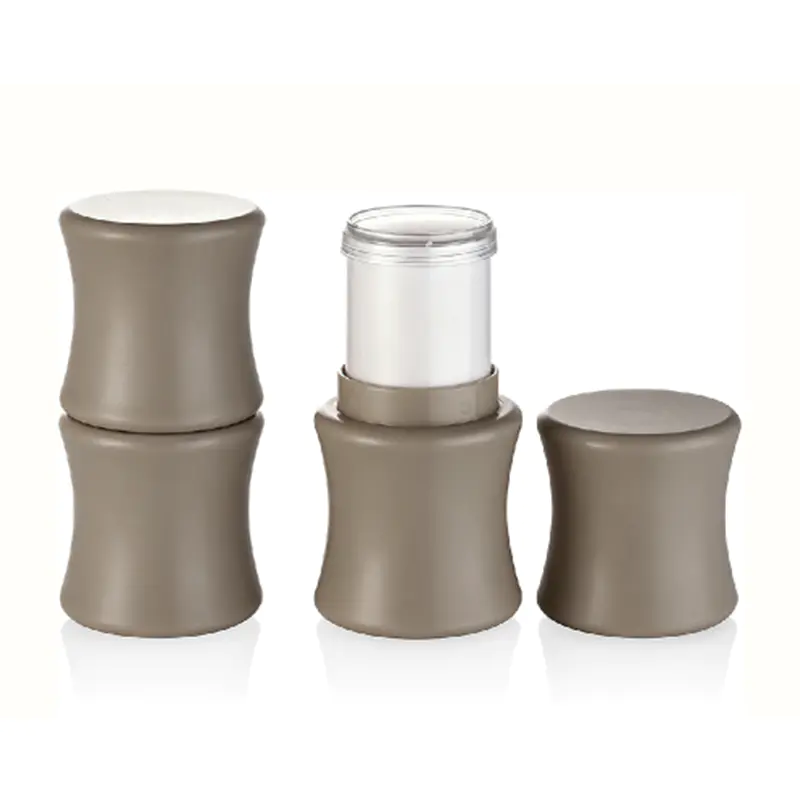
GY-DS26 Bamboo Design 8Gram Stick Container
Advantages Compared with Conventional Cosmetic Containers
Compared with Wide-Mouth Jars
Wide-mouth jars are familiar in the cosmetic industry and can be useful for thick creams, masks, and balms. However, they normally require direct finger contact or a separate applicator. They may also occupy more horizontal space and provide a less convenient solution for on-the-go application.
The GY-DS26 stick container offers a more portable alternative. Its product delivery format can allow the cosmetic to be applied directly to the skin, while the closed structure can reduce the need to repeatedly scoop product from a jar. This may create a faster and more convenient routine for products intended for cheeks, facial areas, or other targeted applications.
Compared with Powder Compacts
Powder compacts are suitable for pressed or loose powder products, but they do not provide the same packaging solution for cream and balm formulas. A stick container is specifically suited to product concepts that need solid or semi-solid delivery and direct application.
For cream blush, foundation sticks, and similar formulations, a stick package can communicate the product’s texture and method of use more clearly than a powder compact. It can also help brands develop a consistent family of cream-based products in a recognizable format.
Compared with Standard Smooth Tubes
Standard smooth tubes can offer flexibility and cost efficiency, but they may appear generic if not supported by strong decoration or labeling. The bamboo-inspired exterior of the GY-DS26 provides a built-in visual feature that can help the package appear more distinctive.
The cylindrical stick structure may also offer a more stable and controlled application experience for products that are designed to glide directly across the skin. Tubes can be squeezed, while stick containers provide a more structured form that can be easier to hold and guide during application.
Compared with Larger Stick Formats
Larger stick containers can be useful for high-consumption products, but they may be less convenient for small bags, travel kits, and limited-edition product concepts. The 8-gram GY-DS26 format is designed to remain compact while still offering meaningful capacity.
This balance can be advantageous for brands that need a product package suitable for both everyday use and portability. It may also help product developers create a more refined, compact appearance without reducing the package’s usefulness to a sample-only level.
Manufacturing Strengths
Packaging performance depends heavily on manufacturing control. A visually attractive design must also be produced with dimensional consistency, reliable assembly, and appropriate quality inspection. GreenYard Tools Co., Ltd. provides manufacturing capabilities intended to support these requirements.
The company specializes in spray product manufacturing and related personal care packaging solutions. Its product range includes perfume sprayers, pump heads, caps, bottles, and daily chemical packaging. This broader experience provides an industrial foundation for producing components that require accurate molding, functional assembly, and repeatable quality.
The company has operated in this field for 16 years and reports a daily production capacity of one million units. High production capacity can be important for brands that require repeat orders, coordinated packaging programs, or supply support for international markets. Capacity alone does not replace quality control, but it can help a manufacturer respond to different order volumes and production schedules.
Mold Design
Mold design is a critical stage in the production of plastic packaging. The mold determines the shape, surface details, dimensional features, and repeatability of the molded components. For a bamboo-inspired product, mold design is especially important because the exterior appearance depends on the accurate formation of the intended visual pattern.
GreenYard’s mold design capability supports the development of packaging structures that combine appearance and function. Proper mold engineering can help control wall thickness, part geometry, draft angles, component fit, and production stability. It can also reduce the risk of defects related to incomplete filling, surface variation, or difficult demolding.
For customers developing custom packaging programs, mold design experience can support the transition from a concept or sample to a manufacturable product. The manufacturer’s design team can help evaluate whether a proposed structure is practical for injection molding, assembly, filling, and quality inspection.
Injection Molding
Injection molding is widely used for plastic packaging because it can produce repeated parts with defined dimensions and consistent surface features. It is suitable for manufacturing components such as outer shells, caps, bases, mechanisms, and other packaging parts.
Controlled injection molding can contribute to the quality of the GY-DS26 container by supporting stable part dimensions and consistent appearance. For a stick package, dimensional control is important because the components must work together correctly. The cap, outer body, internal support, and product-elevating mechanism require suitable coordination to achieve a functional package.
Injection molding also offers flexibility in material selection, color development, and surface design. Depending on the customer’s project requirements, the appearance may be adapted through color, texture, printing, labeling, or other decoration methods. Any final material and decoration selection should be confirmed through technical discussion and sample evaluation.
Automated Assembly
Assembly is another important part of packaging manufacturing. A cosmetic stick container may contain multiple components that must be positioned correctly and joined with appropriate force. Automated assembly can improve production consistency by reducing variation associated with repetitive manual operations.
Automation may also support production efficiency and help maintain stable output for larger orders. When assembly processes are properly controlled, the manufacturer can monitor component alignment, fit, movement, and closure behavior more consistently. This is valuable for packaging that must be opened, closed, raised, lowered, and carried repeatedly by consumers.
Automated assembly does not eliminate the need for human supervision. Skilled production personnel remain important for process setup, equipment monitoring, troubleshooting, sampling, and final evaluation. The combination of automation and technical oversight can create a more reliable manufacturing system than relying on a single production method alone.
Quality Inspection
Quality inspection helps identify issues before packaging reaches the customer. Inspection may cover appearance, dimensions, assembly, closure, component fit, surface quality, and functional operation. The appropriate inspection plan depends on the customer’s specifications and the intended application.
For the GY-DS26, relevant evaluation may include checking the bamboo-inspired exterior, cap fit, body integrity, stick movement, component alignment, and overall appearance. Cosmetic packaging also requires attention to cleanliness and protection during production, storage, and shipment.
GreenYard’s reported quality inspection capabilities form part of its broader packaging manufacturing system. By integrating inspection into production, the manufacturer can work toward consistent output and help customers reduce the risk of receiving packaging that does not match approved samples or specifications.
Development and Customization Considerations
Packaging customization usually begins with a clear definition of the intended product, market, appearance, and production volume. Although the GY-DS26 has a defined 8-gram format and bamboo-inspired design, brands may still need to discuss color, decoration, labeling, formula compatibility, filling requirements, and order specifications.
Before production, a brand should confirm the cosmetic formula that will be filled into the container. Important variables include viscosity, hardness, oil content, wax content, pigment concentration, fragrance, melting point, filling temperature, and expected shelf life. A package that performs well with one formula may require adjustment when used with another.
Sample testing can help evaluate whether the formula fills correctly, solidifies properly, advances through the mechanism, and applies smoothly to the skin. Testing should also examine leakage, deformation, cap retention, odor transfer, color interaction, and package stability under appropriate storage conditions.
Appearance Customization
The bamboo-inspired design provides a visual foundation, but brands can further develop the appearance through color choices, printed information, labels, surface treatments, or coordinated secondary packaging. A soft neutral color may emphasize the natural visual direction, while a bold color may create a more fashion-oriented presentation.
Decoration should be evaluated for adhesion, abrasion resistance, chemical resistance, and compatibility with the selected package surface. The most appropriate decoration method will depend on the customer’s artwork, order quantity, desired durability, and budget.
Brand Architecture
The container can support a broader product family when used consistently across multiple shades or product types. For example, a brand may use the same package structure for blush, highlighter, contour, and foundation sticks while using different colors or labels to distinguish each product.
Consistent packaging architecture can make a product range easier for consumers to recognize. It may also simplify retail presentation and support a cohesive visual identity across a collection. The bamboo-inspired form can function as a recognizable structural element even when the product shades vary significantly.
Filling and Compatibility Testing
Filling conditions should be determined according to the formula and package design. Solid and semi-solid cosmetics may require controlled temperature, filling speed, cooling conditions, and surface finishing. These variables can influence the final appearance and performance of the product.
Brands should conduct compatibility studies over the planned shelf-life period. Such studies may assess changes in color, odor, texture, hardness, application performance, and interaction between the formula and packaging components. Package testing is an essential part of responsible product development and should be completed before commercial launch.
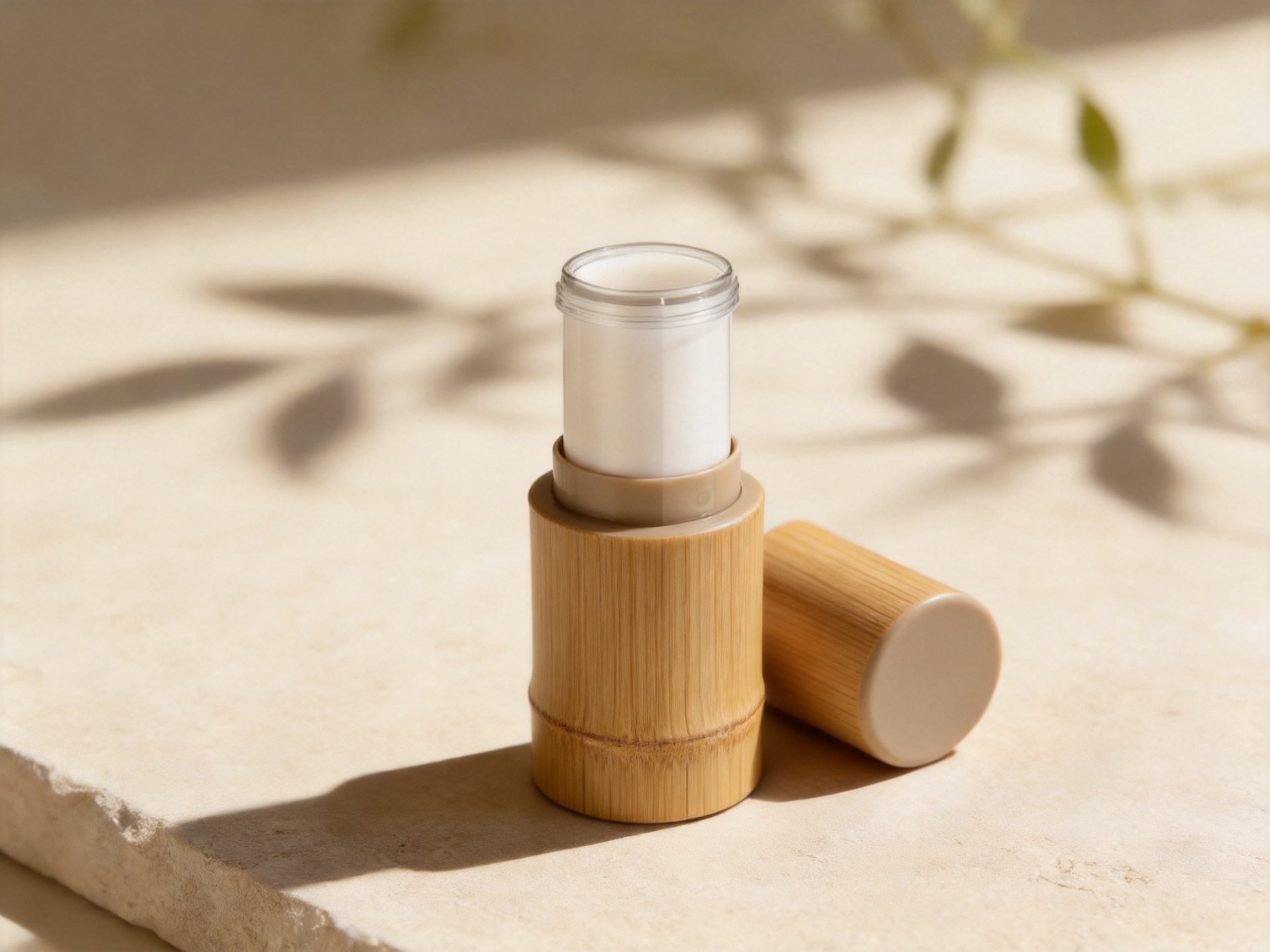
Applications Across the Cosmetics Market
The GY-DS26 format can support several types of cosmetic product concepts. Its most direct applications include blush sticks and foundation sticks, but the same package may also be considered for highlighters, contour products, tinted balms, skin-color correctors, and other compatible formulations.
For blush, the package provides a direct application format that can be positioned as convenient and portable. For foundation, it can support targeted application before blending. For highlighter, the stick format may allow controlled placement on the cheekbones, brow bone, nose, or other areas. For contour products, it can help define lines before blending into the skin.
Brands developing multi-use products may also consider the package for formulas intended for cheeks, lips, and selected facial areas. However, the suitability of a multi-use formula should be determined through appropriate safety, stability, and user testing. Packaging convenience should always be combined with responsible formulation and product development practices.
Travel and Portable Collections
Travel-oriented beauty products benefit from compact packaging. The 8-gram size can fit naturally into makeup pouches and travel kits without taking up excessive space. It can also serve as part of a coordinated collection containing several shades or complementary products.
Portable formats may appeal to consumers who value simple routines, quick touch-ups, and products that can be carried throughout the day. The direct application method can be especially convenient in situations where a full makeup setup is not available.
Gift Sets and Limited Editions
The bamboo-inspired appearance can provide a distinctive visual element for gift sets and limited-edition collections. A brand may combine several shades in one set or pair the stick container with complementary cosmetic packaging such as cream jars, dropper bottles, or other personal care formats.
Limited editions often require packaging that looks different from a brand’s standard range. The surface design of this container can help create a special appearance without requiring an entirely unusual shape. This may support seasonal collections, collaboration products, promotional programs, or special color launches.
Consumer Experience and Functional Design
Good packaging should make the product easy to understand and use. The cylindrical stick structure communicates that the product is intended for direct application. The user can hold the package in one hand, remove the cap, apply the product, and replace the cap after use.
The compact format also supports a straightforward storage experience. Consumers can place the package upright or horizontally in a cosmetic bag, depending on their preferences and the specific closure design. A secure cap is important because it helps protect the product during transport and limits unwanted contact with other items.
The bamboo-inspired surface may also influence how the package feels in the hand. A textured or visually structured exterior can provide a more distinctive tactile experience than a completely smooth cylinder. The exact tactile performance depends on the final surface specification and production execution.
For a direct-application product, the relationship between the package and the formula is especially important. The stick should advance and retract in a controlled way, and the exposed product should remain sufficiently supported during normal use. These functions should be verified through sample testing and repeated operation tests.
Supply and Production Support
Cosmetic brands often require more than a single packaging component. They may need bottles, caps, pumps, sprayers, jars, or other formats for an entire product line. A manufacturer with experience across personal care packaging can provide a broader platform for coordinated sourcing.
GreenYard produces perfume sprayers, perfume pump heads, lotion pumps, caps, bottles, and daily chemical packaging solutions in addition to cosmetic-related products. This product range may be useful for customers that want to develop several types of packaging through one manufacturing partner.
The company’s reported daily production capacity of one million units is relevant for projects that require scalable supply. Whether a customer needs a small product launch, a recurring retail program, or a larger international order, production planning should be based on confirmed specifications, capacity allocation, quality requirements, and delivery schedules.
Communication during the project is also important. Customers should provide artwork, formula information, target quantities, packaging requirements, inspection standards, and intended markets as early as possible. Clear specifications help reduce misunderstandings and support more efficient sampling and production preparation.
Quality and Responsible Product Development
Packaging quality should be evaluated from both a visual and functional perspective. A container may look attractive but still require improvement if its cap fit, component alignment, or product movement is inconsistent. Conversely, a package may function well but need better surface finishing or decoration to meet a brand’s presentation requirements.
A complete evaluation may include visual inspection, dimensional measurement, assembly checks, opening and closing tests, product advancement tests, filling trials, storage tests, and transportation simulation. The specific testing program should be developed according to the product formula, distribution conditions, and customer expectations.
Brands should also ensure that claims about environmental benefits accurately reflect the package materials, manufacturing process, decoration, and end-of-life options. The bamboo-inspired design provides a natural visual style, but it should not automatically be described as biodegradable, compostable, or made from bamboo unless those claims are technically verified.
Responsible communication benefits both the brand and the consumer. Clear product information can help users understand how to apply, store, and dispose of the product. It can also reduce the risk of confusing visual design with unverified material claims.
Why Choose This Packaging Solution
The GY-DS26 combines several characteristics that are valuable in contemporary cosmetic packaging: an 8-gram capacity, compact stick construction, direct application, broad cosmetic compatibility, and bamboo-inspired appearance. Together, these features create a packaging option that is both functional and visually differentiated.
Its primary advantage over more conventional packaging is the balance between portability and product capacity. The container is not limited to a sample-sized format, yet it remains compact enough for daily carrying. Its stick structure also supports faster application than many jar-based formats.
Another advantage is design flexibility. The bamboo-inspired exterior can support natural, minimalist, wellness-oriented, or modern beauty concepts. It can also be integrated into a colorful product range through suitable decoration and shade differentiation.
The manufacturer’s capabilities add further value. Mold design, injection molding, automated assembly, and quality inspection are important steps in producing reliable packaging at commercial scale. GreenYard’s experience in personal care packaging and its reported high production capacity provide a foundation for customers seeking a manufacturing partner with broader technical resources.
For brands, product developers, and packaging distributors, this combination can simplify the process of identifying a suitable container for cream and balm-based cosmetics. The final result still depends on formula compatibility, decoration requirements, testing, and quality standards, but the base format provides a strong starting point.
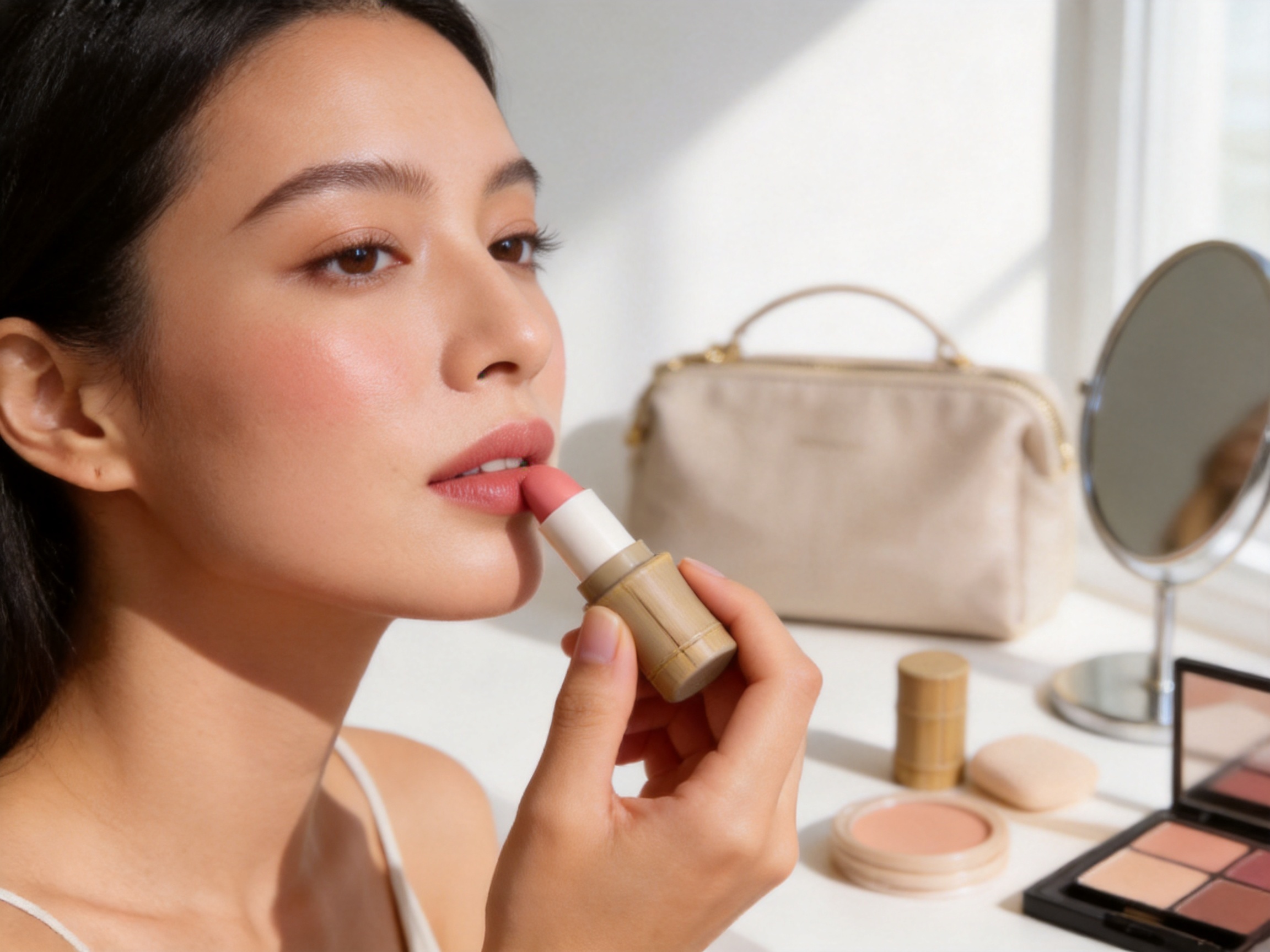
Recommended Evaluation Checklist
Before confirming a commercial order, customers should review the following areas:
Evaluation Area |
Recommended Considerations |
Capacity |
Confirm the 8-gram target and the actual fill quantity for the selected formula. |
Formula compatibility |
Test viscosity, hardness, oils, waxes, pigments, fragrance, and long-term stability. |
Application |
Check product advancement, retraction, glide, coverage, and blending performance. |
Closure |
Evaluate cap fit, retention, opening force, and protection during transport. |
Appearance |
Review surface texture, color, decoration, printing, labels, and sample consistency. |
Assembly |
Inspect alignment, component fit, movement, and structural stability. |
Production |
Confirm mold, tooling, order quantity, lead time, inspection standards, and packaging for shipment. |
Claims |
Ensure natural, bamboo-related, sustainability, and performance claims are supported by accurate information. |
This checklist can help customers organize discussions with the manufacturer and reduce avoidable issues during development. A successful packaging project requires cooperation among the packaging supplier, formula developer, filling facility, quality team, and brand owner.
Frequently Asked Questions
What is the capacity of the GY-DS26 container?
The available capacity is 8 grams. The final practical fill quantity may depend on the formula’s density, filling process, and the customer’s product specifications.
What types of products can be filled into this container?
The container is designed for cosmetic applications and is identified as compatible with blush, foundation, and similar cosmetic products. It may also be considered for highlighter, contour, balm, and other solid or semi-solid formulas after compatibility testing.
Is the container only suitable for deodorant?
No. Although it is listed within the deodorant stick bottle category, the supplied product information specifically presents it as a cosmetic packaging solution. Brands should confirm the formula and application requirements before production.
What does the bamboo-inspired design mean?
It refers to the exterior appearance, which is designed to resemble or suggest bamboo through its visual styling. The design can support natural or minimalist branding, but material and environmental claims must be based on verified package composition and certifications.
What are the main advantages over a cosmetic jar?
The stick format supports direct application, improved portability, compact storage, and reduced reliance on separate applicators. A jar may still be preferable for certain formulas, but the stick format is particularly useful for portable blush, foundation, balm, and similar products.
Can the package be customized?
Customers can discuss appearance, color, decoration, labeling, and other project requirements with the manufacturer. Customization options and minimum order requirements should be confirmed during the quotation and sampling process.
How should formula compatibility be verified?
Brands should conduct filling trials and stability testing using the intended formula. Testing should examine filling behavior, product movement, application, odor, color, texture, leakage, and changes during storage.
What manufacturing capabilities support this product?
The manufacturer reports capabilities in mold design, injection molding, automated assembly, and quality inspection. These processes help support consistent component production and reliable packaging assembly.
Is this container suitable for travel?
Its compact cylindrical stick structure is suitable for handbags, travel makeup kits, and portable cosmetic storage. Customers should still verify cap retention and package performance under their anticipated transport conditions.
Can this package be used for an entire cosmetic collection?
Yes, the same structural format may be used for multiple compatible products or shades. Different colors, labels, or decoration styles can help distinguish individual products within a coordinated collection.
Does the bamboo appearance prove that the package is environmentally friendly?
No. The bamboo-inspired appearance is a design feature and does not by itself establish biodegradability, compostability, recycled content, or other environmental attributes. Such claims require technical verification.
What should a buyer provide when requesting a quotation?
A buyer should provide the intended product type, formula information, target fill quantity, order volume, preferred appearance, decoration requirements, delivery destination, and any inspection or compliance standards. Complete information helps the manufacturer prepare a more accurate proposal.
Conclusion
The GY-DS26 8-gram bamboo-design stick container is a practical packaging option for brands developing portable cream and balm-based cosmetics. Its moderate capacity supports repeated personal use, while its compact cylindrical format makes it convenient for handbags, travel kits, and everyday makeup routines.
The direct-application stick structure offers clear advantages over many conventional jars, powder compacts, and generic smooth tubes. It can simplify application, reduce the need for additional tools, and provide a more recognizable product format. The bamboo-inspired exterior adds visual differentiation and can complement natural, minimalist, wellness-oriented, or modern beauty concepts.
Manufacturing strength is another important part of the product proposition. GreenYard Tools Co., Ltd. combines experience in personal care packaging with capabilities in mold design, injection molding, automated assembly, and quality inspection. Its reported large production capacity supports the needs of customers developing packaging for domestic and international markets.
For the best results, brands should complete formula compatibility testing, sample approval, decoration evaluation, assembly checks, and quality planning before commercial production. When these steps are properly managed, the GY-DS26 can provide a strong combination of convenience, portability, distinctive appearance, and scalable manufacturing support for contemporary cosmetic packaging programs.
References
1. Product specification information for GY-DS26 Bamboo Design 8Gram Stick Container, including stated capacity, usage, category, and compatible cosmetic applications.
2. Manufacturer information for GreenYard Tools Co., Ltd., including reported experience, product range, manufacturing capabilities, and production capacity.
3. General principles of cosmetic packaging development, including formula compatibility testing, filling evaluation, closure performance, and quality inspection.
4. General injection molding and automated assembly practices for plastic personal care packaging.
5. General packaging design considerations for portable cosmetics, direct-application formats, and coordinated beauty product collections.
Product: GY-DS26 Bamboo Design 8Gram Stick Container

-
Amber Plastic Bottles: Lightweight, Protective, Customizable Packaging for Cosmetics
You have spent months stabilizing a vitamin C serum, only to watch a pallet of amber glass bottles ...
-
Aluminum Cosmetic Packaging: Benefits, Types & Supplier Selection Guide
Aluminum cosmetic packaging has moved out of the prestige-only aisle. Independent skincare labels a...
-
Aerosol vs Spray: Key Differences, Packaging Choices, and Practical Buying Tips
Two quotations land on a packaging buyer's desk. One is a pressurized aerosol can; the other is a m...
-
Airless Pump Makeup Packaging: How It Works and What Brands Should Specify
Open a foundation that has been sitting in a warehouse for eighteen months and the first thing a pa...
Copyright © GreenYard Tools Co.,ltd. All Rights Reserved.
Personal Care Packaging Manufacturer Custom Perfume Sprayers Factory