
-
About Us
Why Choose Us?The company possesses advanced capabilities in mold design, injection molding, and automated assembly, supported by a professional quality inspection team to ensure product reliability. A dedicated design team continuously drives product innovation, providing customers with high-quality spray solutions.
 Coming From China, Marketing To The World.
-
Products
-
News
 English
 Français
 русский
 Español
Oval Plastic Bottom Filling Deodorant Stick Container for Versatile Personal Care Packaging
Content
- 1 Product Overview
- 2 Why the Oval Format Is Valuable
- 3 Advantages of Bottom Filling
- 4 Application Potential Across Personal Care Categories
- 5 Compact and Travel-Friendly Design
- 6 Surface Finishing and Custom Branding
- 7 Manufacturing Strengths Behind the Packaging Solution
- 8 How It Compares With More Basic Packaging Options
- 9 Product Development and Customization Process
- 10 Quality, Hygiene, and Product Protection
- 11 Sustainability and Material Efficiency Considerations
- 12 Benefits for Brand Owners and Contract Manufacturers
- 13 Recommended Evaluation Checklist
- 14 Frequently Asked Questions
- 14.1 What is the GY-DS05A container designed for?
- 14.2 What capacities are available?
- 14.3 Why is the container described as bottom filling?
- 14.4 Can the container be used for sunscreen?
- 14.5 Can it be used for lip balm and blush?
- 14.6 What decoration options are available?
- 14.7 What are the advantages of the oval shape?
- 14.8 Is the package suitable for travel products?
- 14.9 How should compatibility be tested?
- 14.10 What manufacturing capabilities support this product?
- 14.11 Can the container be customized?
- 14.12 What should buyers confirm before ordering?
- 15 Conclusion
- 16 References
- 17 Product: Oval Plastic Bottom Filling Deodorant Stick Container
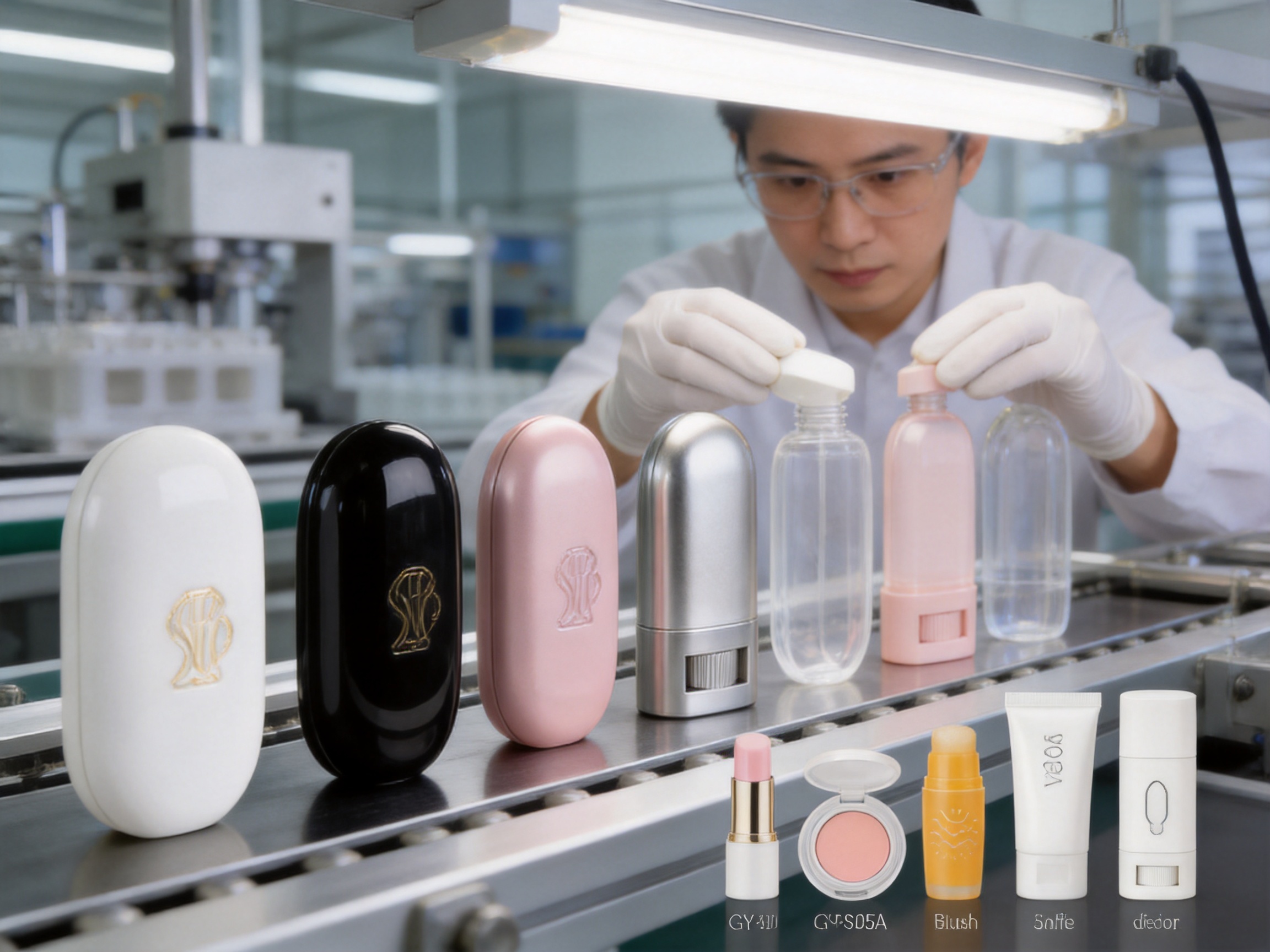
Packaging plays a central role in the performance, usability, appearance, and commercial success of personal care products. For solid formulas such as deodorant, lip balm, blush, sunscreen, body balm, and treatment sticks, the container must do more than simply hold the product. It must protect the formula, support smooth application, remain comfortable in the hand, suit modern branding requirements, and provide an efficient solution for filling and large-scale production.
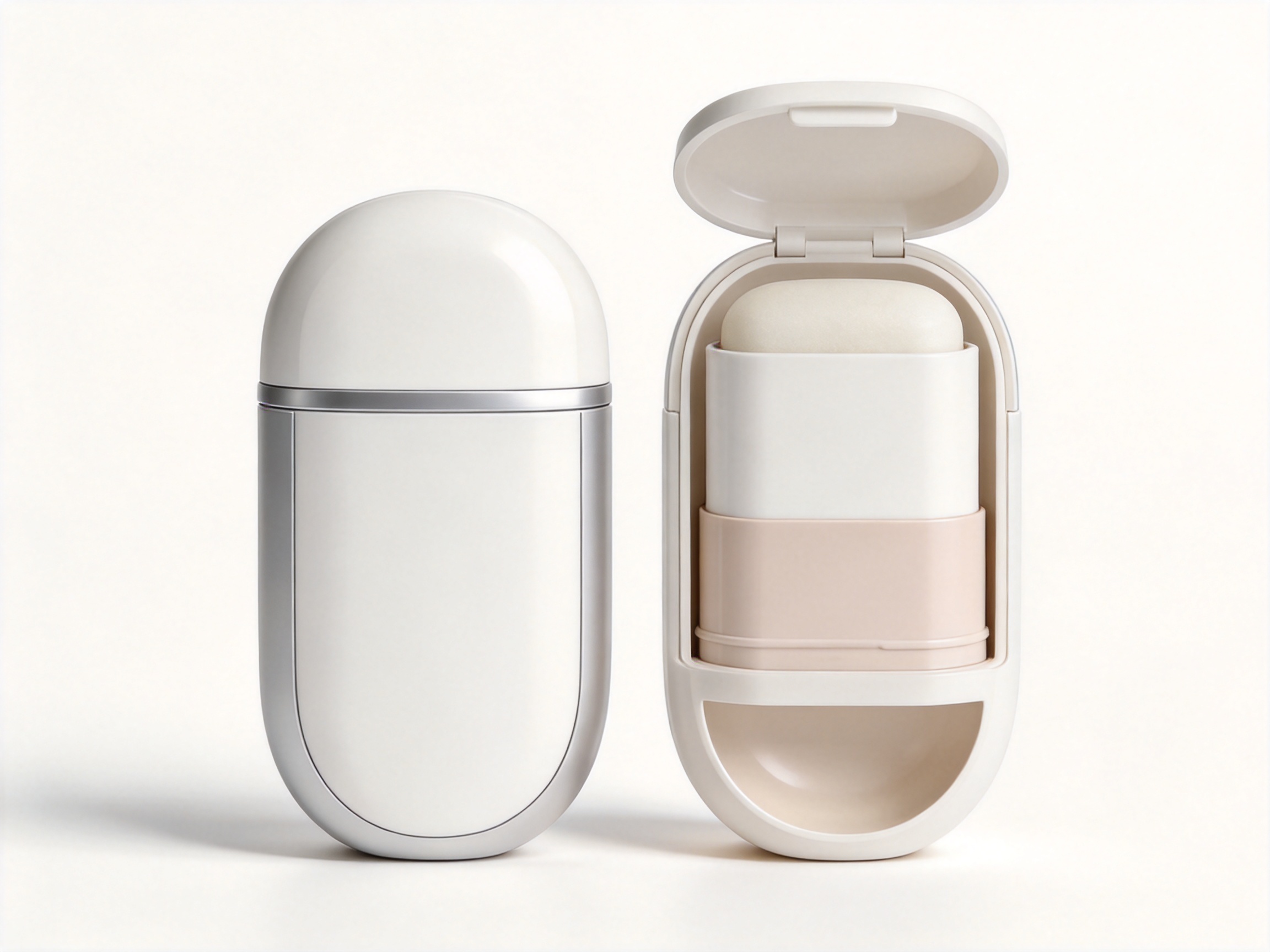
The Oval Plastic Bottom Filling Deodorant Stick Container, identified as model GY-DS05A, is designed to meet these needs. Its practical oval profile, bottom-filling structure, compact format, and broad decoration potential make it a useful packaging option for cosmetic, skincare, and personal care manufacturers. The design can support different product concepts while maintaining a clean, portable, and user-friendly appearance.
According to the supplied product information, the container is associated with several available capacities, including 8 grams, 15 grams, and 20 grams. The detailed specification highlights an 8-gram version for lip balm, blush, and sunscreen applications, while the product content also lists 15-gram and 20-gram options. Because capacity availability may depend on the final configuration, formula density, filling level, and production arrangement, buyers should confirm the required volume before placing an order.
With professional capabilities in mold design, injection molding, automated assembly, and quality inspection, the manufacturer behind this packaging solution is positioned to support both standard packaging requirements and customized personal care projects. Its experience in spray products, pump heads, caps, bottles, and daily chemical packaging provides a broad manufacturing foundation for customers seeking coordinated packaging development.
Product Overview
The GY-DS05A is an oval plastic deodorant stick container that uses a bottom-filling format. This configuration is suitable for products that are poured, filled, cooled, or assembled into a stick package from the lower section of the container. The design can help manufacturers organize their filling process while creating a finished package with a smooth and attractive exterior.
The oval silhouette gives the container a distinctive alternative to conventional round stick packaging. Its shape can improve visual differentiation on retail shelves and may provide a comfortable grip during application. The profile also creates additional opportunities for branding, especially when artwork is arranged across the broad front and rear surfaces.
The container is intended for personal care and beauty applications. The listed uses include lip balm, blush, and sunscreen. Depending on compatibility testing, filling technology, and final closure configuration, similar packaging concepts may also be considered for deodorant sticks, solid fragrance, color cosmetics, body balms, protective skincare products, and other semi-solid formulas.
Packaging selection must always be based on the specific formula. Factors such as oil content, wax content, fragrance concentration, pigment load, melting temperature, cooling behavior, shrinkage, surface adhesion, and chemical compatibility can affect performance. The container offers a practical platform, but the final product should be validated through filling trials, storage testing, transport testing, and application testing.
Product Item |
Oval Plastic Bottom Filling Deodorant Stick Container |
Model |
GY-DS05A |
Product Category |
Deodorant Stick Bottle |
Primary Format |
Oval plastic stick container with bottom-filling structure |
Listed Capacities |
8 grams, 15 grams, and 20 grams, subject to final confirmation |
Highlighted Detailed Capacity |
8 grams |
Suggested Uses |
Lip balm, blush, sunscreen, and comparable solid or semi-solid personal care formulas |
Surface Finishing |
Screen printing, hot stamping, 3D printing, and other available options |
Manufacturing Capabilities |
Mold design, injection molding, automated assembly, and quality inspection |
Why the Oval Format Is Valuable
Shape is one of the first characteristics noticed by consumers. A familiar package may communicate reliability, but a differentiated profile can help a product establish a stronger identity. The oval format of the GY-DS05A offers an appealing balance between familiarity and distinction. It remains easy to hold while providing a more refined appearance than a basic cylindrical package.
An oval package can feel natural in the hand because its curved edges reduce the sharp visual and tactile impression sometimes associated with rectangular packaging. The broader front face can also provide a useful area for logos, product names, usage information, decorative patterns, or regulatory details. For brands that want a clean, modern, and premium appearance, the shape can be adapted to minimalist or highly decorative artwork.
The oval form may be particularly suitable for products used directly on the skin. Lip balm, sunscreen, and blush are frequently carried in handbags, travel cases, pockets, or makeup pouches. A compact oval container can be easy to grasp, open, and apply without requiring a separate applicator.
From a merchandising perspective, the shape can help create a recognizable product family. Different colors, surface finishes, or label treatments can be combined with the same container format for multiple formulas. A brand may use one capacity for lip balm, another for blush, and another for sunscreen while maintaining a consistent visual language across the product range.
Compared with packaging that relies only on labels for differentiation, an oval container provides a physical design feature that remains visible even before decoration is added. This can support a more integrated brand presentation and potentially reduce the need for excessive graphic treatment.
Advantages of Bottom Filling
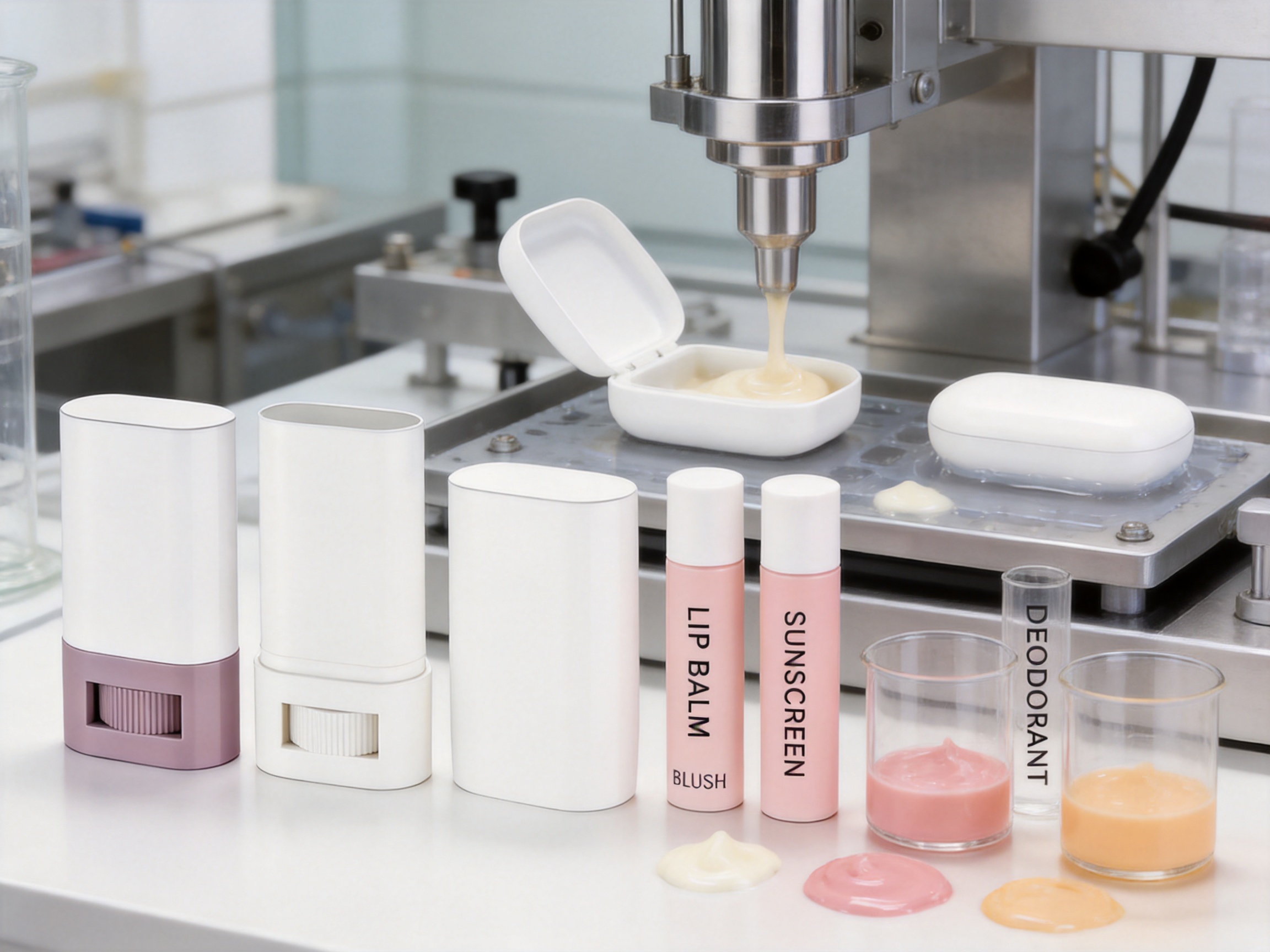
Bottom filling is an important feature of this container. In a bottom-filling system, the product is introduced through the lower part of the package and then sealed or completed after filling. This method can be useful for solid or semi-solid formulas that require controlled pouring and cooling.
For manufacturers, the bottom-filling format can support a more organized production sequence. The empty package can be prepared, positioned, filled with the appropriate formula, cooled or stabilized, and then completed with its base components. The exact process depends on the formula and filling equipment, but the design provides a practical foundation for production planning.
Bottom filling can also help preserve the visual condition of the outer package. When filling is performed from the lower section, the visible side walls and upper application area may be less exposed to direct contact with the bulk formula during the filling operation. This may help reduce external contamination or the need for extensive cleaning, although the actual result depends on equipment accuracy and operator control.
Another potential benefit is improved suitability for molded or poured stick products. Certain formulas need to be heated until fluid and then cooled inside the final package. A bottom-filling container can be integrated into a filling line designed for these materials, allowing the package to function as both a protective holder and an application mechanism.
Manufacturers should still verify the filling parameters carefully. The correct temperature, dosing volume, cooling time, sealing method, and release behavior must be determined for each formula. A filling trial is especially important when the product contains volatile fragrance, sensitive active ingredients, natural waxes, pigments, or ingredients that may shrink during cooling.

Oval Plastic Bottom Filling Deodorant Stick Container
Application Potential Across Personal Care Categories
Lip Balm Packaging
Lip balm is one of the most natural applications for a compact stick container. Consumers generally expect lip balm packaging to be portable, hygienic, simple to open, and easy to apply. An 8-gram format can provide a practical balance between product quantity and portability, while larger capacities may suit family-size, professional, or extended-use products.
The oval shape may provide a comfortable grip when the user applies the balm directly to the lips. The package can also be decorated with soft colors, natural textures, metallic effects, or simple printed graphics to communicate moisturizing, organic, medical, sun-protection, or luxury positioning.
For lip balm projects, manufacturers should evaluate the formula’s hardness, melting point, surface finish, and compatibility with the inner contact area. The package should allow the stick to remain stable during ordinary use while still dispensing smoothly when raised. Testing should include warm and cold conditions because lip balm may be stored in vehicles, handbags, bathrooms, or outdoor environments.
Blush and Solid Color Cosmetics
Stick blush products require packaging that supports direct application and controlled product movement. A compact container can protect the cosmetic stick from dust, contact with other items, and unnecessary exposure. The oval profile may also fit well with makeup products designed for soft, portable, and convenient use.
For blush, the appearance of the package may be closely connected to the product shade. Custom color matching, printed decoration, and hot-stamped details can help distinguish different shades in a product range. A manufacturer may use coordinated packaging colors while keeping the shape consistent, helping consumers identify the desired shade quickly.
Because cosmetic formulas can vary significantly, compatibility testing is essential. Pigments, oils, emollients, waxes, and fragrances may interact differently with plastic components. The filling and cooling process should also be evaluated for surface smoothness, stick stability, and resistance to breakage during transport.
Sunscreen Stick Packaging
Sunscreen sticks are increasingly valued for convenient application, targeted use, and travel-friendly portability. The container format can protect the sunscreen formula while enabling direct application to the face, nose, cheeks, ears, or other exposed areas. The compact size may be suitable for daily carry and reapplication.
For sunscreen packaging, the closure should fit securely and help protect the product from dust and accidental contact. The container should also be evaluated under warm storage conditions because sunscreen products may be used outdoors or carried in hot environments. The formula’s softening behavior, stick retraction, surface stability, and resistance to leakage should be tested before commercialization.
Decoration can support sunscreen positioning through clean white graphics, high-visibility sun imagery, metallic details, or water-resistant printed elements. The selected surface treatment should be tested against sunscreen oils, skin oils, friction, and repeated handling.
Deodorant and Body Care Sticks
The container category is especially relevant to deodorant stick applications. Deodorant formulas often require a package that can be opened and closed repeatedly, withstand regular handling, and allow the product to advance smoothly. An oval shape can help create a distinctive silhouette in a category where many packages use cylindrical forms.
The appropriate capacity depends on the intended market, usage frequency, formula density, and positioning. Smaller sizes may be useful for travel, sampling, promotional programs, or compact retail products. Larger sizes may support extended daily use. The listed 8-gram, 15-gram, and 20-gram options give buyers several potential directions, subject to confirmation during project development.
Solid Fragrance and Treatment Products
Although the supplied product information specifically highlights lip balm, blush, and sunscreen, the packaging concept may also be considered for certain solid fragrance and treatment formulas. Solid perfume, anti-chafing balm, cuticle treatment, after-sun balm, and targeted skincare products may benefit from a direct-application format.
These applications require careful compatibility evaluation. Fragrance oils and active ingredients may affect plastic components, printed surfaces, or seals. The product developer should carry out stability testing and confirm that the package maintains its appearance and function throughout the intended shelf life.
Compact and Travel-Friendly Design
Portability is a major consideration in modern personal care packaging. Consumers often carry cosmetics and skincare products during commuting, travel, outdoor activities, and daily routines. A compact stick container eliminates the need for separate brushes, spatulas, or other applicators in many use cases.
The 8-gram configuration described in the detailed product information is positioned as a compact and travel-friendly option. It can fit into small cosmetic bags, pockets, and toiletry cases while providing enough capacity for targeted applications. The 15-gram and 20-gram listings may provide additional choices for products that require greater volume.
A travel-friendly container must balance small size with practical usability. The package should be easy to open, simple to hold, and sufficiently robust for transport. It should also resist ordinary pressure inside a handbag or luggage case. Closure fit, component alignment, and base stability are therefore important quality considerations.
The package can also support promotional and trial formats. A smaller container may be used for sample distribution, subscription boxes, event kits, hotel amenities, seasonal launches, or limited-edition products. This flexibility can help manufacturers introduce a new formula without immediately committing to a larger package size.
Surface Finishing and Custom Branding
One of the strongest commercial advantages of this container is the availability of multiple surface finishing options. The supplied information identifies screen printing, hot stamping, and 3D printing, along with other possible treatments. These options allow a standard package structure to be adapted to different market positions and visual identities.
Screen Printing
Screen printing is a widely used method for applying logos, text, patterns, and decorative graphics directly to a package surface. It can be suitable for simple brand marks, product names, shade identifiers, usage instructions, and visual accents. Multiple ink colors may be considered depending on the artwork and production requirements.
For an oval package, artwork should be developed with the curved surface in mind. Designers should account for the transition between the front, side, and rear areas. Clear positioning standards help maintain consistency across production batches and ensure that the printed design remains aligned with the package geometry.
Hot Stamping
Hot stamping can create a premium appearance through metallic or special-effect finishes. Gold, silver, and other visual effects may be used for logos, borders, lettering, or decorative details. This treatment is often suitable for luxury cosmetics, high-end skincare, gift sets, and limited-edition packaging.
The final appearance depends on the plastic material, surface texture, stamping temperature, pressure, artwork size, and selected foil. Trial production is recommended to verify adhesion, clarity, and resistance to handling. The decorated package should also be checked after exposure to oils, moisture, friction, and temperature changes.
3D Printing and Special Decoration
3D printing can offer additional opportunities for raised lettering, textured symbols, dimensional patterns, or tactile decoration. This technique may help a product stand out through a more noticeable surface effect. It can be particularly useful for premium product concepts or brand identities based on texture and dimensional design.
Other finishing options may be available depending on the project. These could include custom colors, matte or glossy effects, partial treatments, metallic details, or coordinated component finishes. The final decoration plan should consider production volume, budget, artwork complexity, durability, and the desired consumer experience.
Manufacturing Strengths Behind the Packaging Solution
The manufacturer is described as a China-based high-end packaging material producer with 16 years of experience in spray product manufacturing. Its product scope includes perfume sprayers, pump heads, caps, bottles, and daily chemical packaging solutions. This background is relevant because personal care packaging frequently requires coordination between plastic components, closures, dispensing mechanisms, and decorative surfaces.
Mold Design
Mold design is the foundation of consistent plastic packaging production. A well-designed mold influences dimensional accuracy, surface quality, component fit, cycle efficiency, and long-term manufacturing stability. For an oval container, mold engineering is especially important because the shape must maintain balanced wall thickness, appropriate parting lines, smooth curves, and reliable release from the mold.
Experienced mold development can help reduce defects such as warping, sink marks, uneven surfaces, flash, incomplete filling, and inconsistent dimensions. It can also support the integration of functional details, including assembly points, base structures, guide features, and closure interfaces.
When customers request custom colors, capacity changes, special textures, or modified proportions, mold design expertise becomes even more important. The manufacturer’s ability to support mold development can simplify communication between product designers, packaging engineers, and production teams.
Injection Molding
Injection molding enables plastic components to be produced efficiently and repeatedly. The process involves heating the selected plastic material, injecting it into a mold, allowing it to cool, and removing the formed component. The quality of each stage affects the final appearance and function of the package.
For personal care packaging, injection molding must be controlled carefully. Important factors include material drying, melt temperature, injection speed, holding pressure, cooling time, mold temperature, and ejection conditions. Proper process control helps create stable dimensions and smooth surfaces suitable for printing, hot stamping, or other finishing treatments.
High-volume production also requires consistent cycle management. The supplied company information states that the manufacturer has a daily production capacity of one million units. This capacity indicates the potential to support substantial orders, although the actual output for a specific product depends on mold configuration, component count, decoration requirements, order quantity, and production scheduling.
Automated Assembly
Automated assembly can improve production consistency and reduce variation in repetitive operations. Packaging components may need to be fitted, aligned, pressed, or checked before shipment. Automation can help standardize these actions while supporting efficient output.
For a bottom-filling stick container, assembly accuracy is important because the base and body must work together correctly. Poor alignment may affect filling, product movement, stability, or the consumer’s ability to use the package. Automated processes can help maintain repeatable assembly conditions, particularly for large-volume orders.
Automation does not eliminate the need for human oversight. Skilled technicians and quality personnel remain important for setup, process adjustment, inspection, maintenance, and response to unusual conditions. The most reliable manufacturing systems combine equipment efficiency with experienced production management.
Quality Inspection
Quality inspection is essential for packaging used in direct-contact personal care applications. Inspection may involve appearance checks, dimensional measurement, component fit, assembly performance, decoration evaluation, and sampling according to the customer’s quality requirements.
Common appearance checks may look for scratches, black spots, color variation, deformation, flash, contamination, and uneven finishing. Functional checks may evaluate closure fit, base stability, stick movement, component alignment, and resistance to ordinary handling.
Customers should define their inspection expectations clearly before production. Requirements may include acceptable quality limits, reference samples, color standards, decoration tolerances, packaging methods, and sampling frequency. Early agreement helps reduce misunderstanding and creates a more transparent quality process.
How It Compares With More Basic Packaging Options
The GY-DS05A can offer several advantages over very basic stick packaging formats. Its oval profile provides stronger visual differentiation than a standard round tube. Its bottom-filling structure may be more suitable for certain poured or molded formulas than packages designed only for pre-formed inserts. Its decoration options also support a wider range of brand presentations.
Basic packaging may be appropriate when cost and speed are the only priorities. However, personal care brands often need a package that communicates quality and supports a specific user experience. A distinctive shape, carefully selected capacity, and customized finish can help create greater perceived value.
Another potential advantage is application flexibility. The package is not limited to one formula category in the supplied information. It is identified for lip balm, blush, and sunscreen, while its deodorant stick category makes it relevant to broader personal care development. This can allow a manufacturer to use one package family across multiple product lines.
Compared with jars, the stick format can reduce direct finger contact with the formula. Compared with liquid bottles, it may eliminate the need for a pump, dropper, or separate applicator. Compared with larger containers, the compact format can improve portability. Each alternative has its own advantages, but the stick container is well suited to products designed for direct, controlled application.
The best package depends on formula behavior, target price, filling method, brand identity, and market requirements. The oval bottom-filling design should therefore be evaluated not only for appearance but also for production compatibility and full product lifecycle performance.
Product Development and Customization Process
Stage One: Define the Formula and Capacity
The first stage is to identify the formula type, target fill weight, intended application, and market positioning. Buyers should clarify whether the product is a lip balm, blush, sunscreen, deodorant, or another solid or semi-solid formula. The listed capacity options should then be matched to the required dose and expected usage period.
Because the supplied information includes 8-gram, 15-gram, and 20-gram references, the exact capacity should be confirmed with the manufacturer. The final fill weight may vary depending on formula density and the internal dimensions of the selected configuration.
Stage Two: Confirm Material and Component Requirements
The packaging material should be evaluated for compatibility with the formula. The development team should consider direct contact, temperature exposure, fragrance and oil resistance, color stability, and regulatory requirements for the target market.
Other component decisions may include the cap structure, base design, color, finish, and any internal parts required for product movement. These decisions should be made before mass production so that mold, decoration, and assembly requirements can be coordinated.
Stage Three: Develop Artwork
Artwork should be prepared according to the selected decoration method. Screen printing, hot stamping, and 3D printing each have different requirements for line thickness, registration, color, relief, and surface area. Designers should request technical guidance before finalizing files.
The oval surface should be mapped carefully. Important information should remain visible and legible, while brand elements should be positioned consistently. A physical sample or decorated prototype can help confirm how the artwork appears on the finished shape.
Stage Four: Conduct Samples and Testing
Samples allow the buyer to evaluate appearance, fit, application, filling behavior, and overall usability. The formula should be filled into the actual container whenever possible because empty-package evaluation alone cannot reveal all performance issues.
Testing may include leakage checks, drop or impact evaluation, temperature cycling, storage stability, opening and closing cycles, product advancement, product retraction, decoration adhesion, and transport simulation. The testing plan should reflect the formula and intended distribution conditions.
Stage Five: Approve Mass Production
Mass production should begin only after the customer approves the relevant sample and specifications. The approved sample can serve as a reference for color, dimensions, decoration, assembly, and overall appearance.
Production documentation should identify the model, capacity, material, color, decoration method, packaging arrangement, quantity, and inspection requirements. Clear documentation supports consistent communication throughout manufacturing and shipment.
Quality, Hygiene, and Product Protection
Personal care packaging must support a clean and controlled product experience. The container should be manufactured, assembled, packed, and stored in conditions appropriate for the intended application. The specific hygiene requirements depend on the formula, market regulations, filling environment, and customer quality system.
The package should protect the product from ordinary environmental exposure while the cap is closed. This includes dust, accidental contact, friction, and transport pressure. For sunscreen, deodorant, and balm products, protection from heat and excessive sunlight may also be important because the formula can soften or change under high temperatures.
Although the container can help protect the formula, it is not a substitute for appropriate formulation, filling, sealing, storage, or distribution controls. Packaging and product development teams should work together to define realistic performance expectations.
Clean component handling is also important. Packaging that comes into direct contact with a cosmetic or personal care formula should be protected from contamination during production and delivery. Buyers may request information about cleaning procedures, packing conditions, inspection standards, and shipment protection as part of their supplier qualification process.
Sustainability and Material Efficiency Considerations
Packaging sustainability involves more than selecting a material. It includes reducing unnecessary material use, optimizing component design, improving manufacturing efficiency, supporting responsible production, and considering how the package is handled after use.
The compact stick format can help reduce the overall size of a personal care product compared with larger or more complex dispensing systems. A small package may require less transport space and may be convenient for products sold in targeted quantities. However, the sustainability performance of the complete package depends on the material choice, wall thickness, decoration, component count, and local waste management system.
Manufacturers can evaluate opportunities to reduce excess material while maintaining strength and function. Efficient injection molding, optimized cycle times, and accurate quality control may also help reduce production waste. Customers should discuss material specifications and sustainability objectives during the development stage rather than after the package has been finalized.
Decoration should be considered carefully as well. Multiple finishing layers can increase visual appeal, but they may influence recycling or end-of-life processing in some markets. A balanced design can combine attractive branding with responsible material and decoration choices.
Benefits for Brand Owners and Contract Manufacturers
Brand owners can use this container to create a consistent and recognizable product family. The oval form can be shared across different formulas, while colors, decoration, and capacity distinguish each item. This approach may simplify visual identity and help consumers understand the relationship between products.
Contract manufacturers may value the package because it can support several personal care applications. A versatile container reduces the need to develop a completely different package for every solid formula. With suitable testing and configuration, the same packaging concept may be used for multiple customer projects.
Retailers and distributors may also benefit from a compact package that is easy to display, store, and transport. The final commercial benefit depends on the product, price, decoration, and market strategy, but packaging that combines portability with shelf differentiation can support a stronger product presentation.
For international buyers, supplier capability is an important consideration. A manufacturer with mold design, injection molding, automated assembly, and inspection resources can provide a more integrated development process than a supplier that only distributes finished components. Coordinated production may help reduce communication gaps between mold development, molding, decoration, and assembly.
Recommended Evaluation Checklist
Before selecting the container for a commercial product, buyers should review the following points:
Confirm the required capacity and whether the project needs 8-gram, 15-gram, 20-gram, or another configuration.
Confirm the formula type, filling temperature, cooling behavior, and expected product hardness.
Test compatibility between the formula and all components that may contact the product.
Evaluate the cap fit, base stability, product movement, and direct-application experience.
Select a decoration method appropriate for the artwork, order volume, budget, and durability requirements.
Request physical samples and, when possible, test filled samples rather than empty components alone.
Define appearance standards for color, surface quality, printing, hot stamping, and dimensional tolerances.
Review packing methods and protection against dust, scratches, deformation, and transport damage.
Discuss production capacity, lead time, mold ownership, minimum order quantity, and inspection procedures.
Confirm all technical details before approving mass production.
Frequently Asked Questions
What is the GY-DS05A container designed for?
The GY-DS05A is an oval plastic bottom-filling stick container designed for personal care and cosmetic products. The supplied information identifies lip balm, blush, and sunscreen as key applications, while the product category is deodorant stick bottle. Other compatible solid or semi-solid formulas may be considered after testing.
What capacities are available?
The detailed information highlights an 8-gram version, while the product content also lists 15-gram and 20-gram options. Availability can depend on the selected configuration and project requirements. Buyers should confirm the final capacity with the manufacturer before ordering.
Why is the container described as bottom filling?
The package is designed to be filled through the lower section. This can be suitable for poured or molded solid formulas and may help manufacturers organize the filling and cooling process. The exact filling method must be adapted to the formula and production equipment.
Can the container be used for sunscreen?
Yes. Sunscreen is one of the listed applications. The formula should be tested for compatibility, heat stability, filling behavior, stick strength, and application performance before commercial production.
Can it be used for lip balm and blush?
Yes. Lip balm and blush are specifically identified as suitable uses. The selected capacity and formula characteristics should be matched to the intended product concept.
What decoration options are available?
The supplied information lists screen printing, hot stamping, and 3D printing, along with other possible surface finishing options. The best method depends on the artwork, surface condition, production volume, desired appearance, and durability requirements.
What are the advantages of the oval shape?
The oval shape can provide a distinctive appearance, comfortable handling, and a broad area for branding. It may help a product stand out from conventional round stick packages while remaining compact and easy to carry.
Is the package suitable for travel products?
The 8-gram configuration is described as compact and travel-friendly. The package can be considered for travel sizes, samples, promotional kits, and daily carry products. Closure security and heat resistance should be tested for the intended travel conditions.
How should compatibility be tested?
The formula should be filled into the actual package and evaluated under expected storage and use conditions. Testing may include temperature cycling, long-term storage, leakage, deformation, product movement, decoration resistance, and repeated opening and closing.
What manufacturing capabilities support this product?
The manufacturer is described as having capabilities in mold design, injection molding, automated assembly, and quality inspection. It also has experience with perfume sprayers, pump heads, caps, bottles, and daily chemical packaging solutions.
Can the container be customized?
Customization may include capacity selection, colors, artwork, screen printing, hot stamping, 3D printing, and other finishing treatments. The exact scope should be confirmed during the development process.
What should buyers confirm before ordering?
Buyers should confirm capacity, material, color, formula compatibility, filling method, decoration, minimum order quantity, lead time, sample approval procedure, inspection standards, packaging method, and shipping requirements.
Conclusion
The Oval Plastic Bottom Filling Deodorant Stick Container provides a practical and adaptable solution for modern personal care packaging. Its oval profile offers visual differentiation and comfortable handling, while the bottom-filling structure can support the production of poured and molded solid formulas. The listed 8-gram, 15-gram, and 20-gram options provide potential flexibility for compact, standard, and extended-use product concepts, subject to final confirmation.
Its application range includes lip balm, blush, sunscreen, and deodorant-related products. Multiple surface finishing choices, including screen printing, hot stamping, and 3D printing, allow the package to be adapted to different brand identities and market positions. The container can support minimalist, premium, colorful, natural, clinical, or promotional product designs.
The manufacturing foundation is another important advantage. Experience in mold design, injection molding, automated assembly, and quality inspection can help support consistent production and coordinated packaging development. A stated daily production capacity of one million units indicates the potential to serve substantial volume requirements, while the company’s broader experience in spray and daily chemical packaging provides additional technical context.
For the best results, buyers should treat the container as part of a complete product development process. Formula compatibility, filling conditions, capacity, decoration, closure performance, storage stability, and transport requirements should all be evaluated before mass production. When these factors are carefully coordinated, the oval bottom-filling container can provide a reliable, attractive, and commercially flexible package for personal care products.
References
1. Product specification sheet for the GY-DS05A Oval Plastic Bottom Filling Deodorant Stick Container.
2. Supplied product information describing the 8-gram, 15-gram, and 20-gram capacity references.
3. Supplied application information for lip balm, blush, sunscreen, and deodorant stick packaging.
4. Supplied manufacturing information concerning mold design, injection molding, automated assembly, and quality inspection.
5. General packaging development principles for solid and semi-solid personal care products.
6. General quality considerations for plastic cosmetic packaging, decoration, filling, storage, and transport testing.
Product: Oval Plastic Bottom Filling Deodorant Stick Container

-
Amber Plastic Bottles: Lightweight, Protective, Customizable Packaging for Cosmetics
You have spent months stabilizing a vitamin C serum, only to watch a pallet of amber glass bottles ...
-
What Makes a Good Deodorant Stick Bottle for Brands?
A deodorant stick bottle is a twist-up or push-up dispensing container designed to hold and advance...
-
Deodorant Containers Eco Friendly: Sustainable Bottle Guide
Deodorant Containers Eco Friendly: The Direct Answer The most eco-friendly deodorant containers are...
-
Can You Recycle Deodorant Containers? A Complete Guide to Proper Disposal
Can You Recycle Deodorant Containers? The Short Answer You just finished your last stick of deodora...
Copyright © GreenYard Tools Co.,ltd. All Rights Reserved.
Personal Care Packaging Manufacturer Custom Perfume Sprayers Factory