
-
About Us
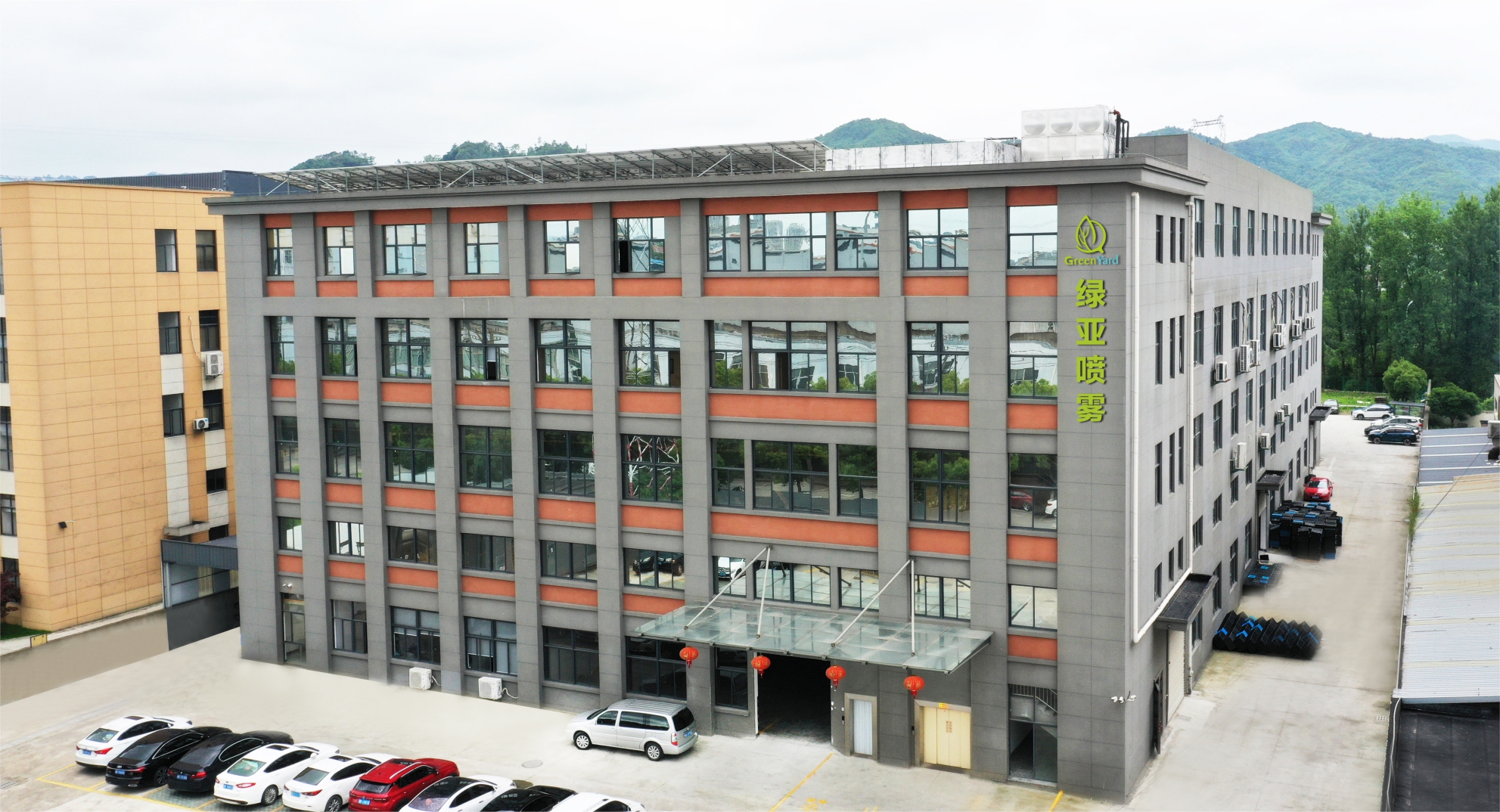
Why Choose Us?The company possesses advanced capabilities in mold design, injection molding, and automated assembly, supported by a professional quality inspection team to ensure product reliability. A dedicated design team continuously drives product innovation, providing customers with high-quality spray solutions.
 Coming From China, Marketing To The World.
 -
Products
-
News
 English
 Français
 русский
 Español
All-Plastic 4ml Lotion Pump for High-Output Personal Care Packaging
Content
- 1 Product Overview
- 2 Key Specifications
- 3 Why a 4ml Dosage Matters
- 4 All-Plastic Construction and Recycling Considerations
- 5 Performance Advantages Over Conventional Pump Designs
- 6 Application Areas
- 7 Bottle and Closure Compatibility
- 8 Designing for Consumer Convenience
- 9 Manufacturing Strengths and Technical Capabilities
- 10 Production Process for an All-Plastic Lotion Pump
- 11 Quality and Reliability Factors
- 12 Sustainability Benefits for Packaging Development
- 13 Advantages for Brand Owners and Packaging Buyers
- 14 Advantages for Contract Manufacturers and Fillers
- 15 Product Development and Customization Options
- 16 Recommended Evaluation Procedure
- 17 Comparison with Other Dispensing Formats
- 18 Supply and Manufacturing Support
- 19 Ordering and Project Preparation
- 20 Frequently Asked Questions
- 20.1 What is the nominal dosage of the GY-320 pump?
- 20.2 Which bottle neck sizes are available?
- 20.3 Does the pump contain a metal spring?
- 20.4 Does the pump contain a glass ball?
- 20.5 How does the locking mechanism work?
- 20.6 Can the dip tube be customized?
- 20.7 What products are suitable for this lotion pump?
- 20.8 What closure styles are available?
- 20.9 Is the pump recyclable?
- 20.10 Is the 4ml dosage suitable for all formulas?
- 20.11 Can the pump be used with a custom bottle?
- 20.12 Why is tube length important?
- 20.13 What manufacturing capabilities support this product?
- 20.14 Can the pump be tested before ordering?
- 21 Conclusion
- 22 References
- 23 Product: All Plastic Lotion Pump 4ml Dosage
Modern personal care packaging must do more than contain a product. It must dispense accurately, provide a comfortable user experience, protect the formula, support efficient filling and assembly, and respond to growing demand for more recyclable packaging. The GY-320 All Plastic Lotion Pump 4ml Dosage is designed to address these requirements in one high-output dispensing solution.
Developed for shower gel, shampoo, body lotion, hand wash, liquid soap, and similar products, this lotion pump combines a generous 4ml dosage with a practical left-right locking system and a fully plastic internal construction. It is available for 28-410 and 32-410 neck finishes, while the dip tube can be customized to suit different bottle dimensions.
The pump is especially suitable for larger-format personal care packaging. Its 4ml output allows consumers to dispense a substantial amount of product with each stroke, reducing the number of presses needed during use. At the same time, the all-plastic design eliminates the metal spring and glass ball commonly found in conventional pump structures. This construction can simplify recycling and reduce the need to separate dissimilar materials after use.
For packaging buyers, product developers, brand owners, and contract manufacturers, the GY-320 offers a combination of functional performance, material-conscious design, adaptable dimensions, and manufacturing support. Its flexible closure options, customized tube length, and compatibility with common bottle neck standards make it a practical choice for a broad range of liquid and semi-liquid formulations.
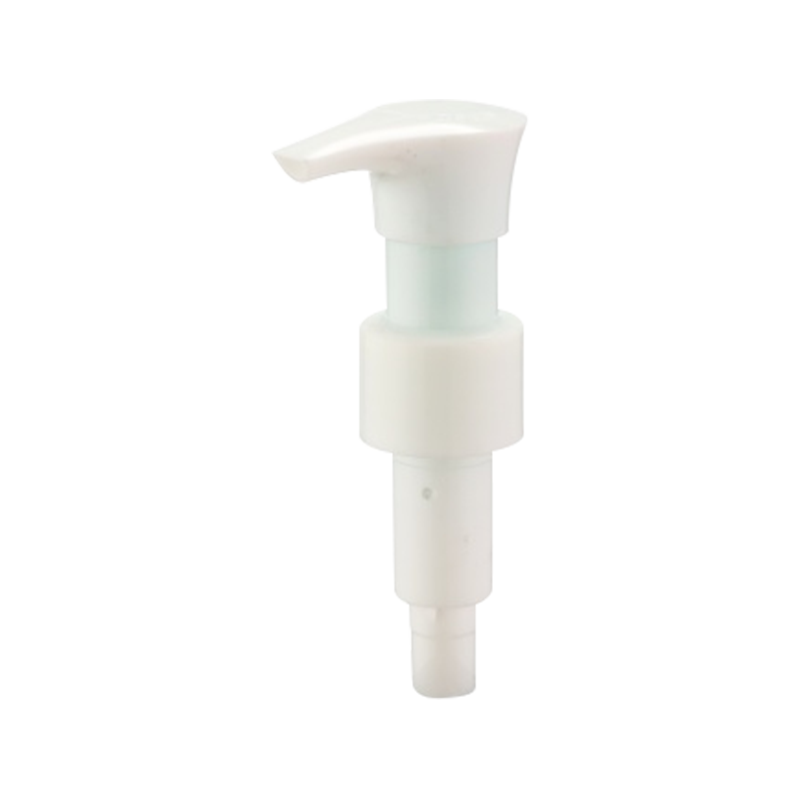
All Plastic Lotion Pump 4ml Dosage
Product Overview
The GY-320 is an all-plastic lotion pump engineered for a nominal 4ml dosage per actuation. The pump is intended for packaging applications that require a relatively large output, including bath and body products, family-size liquid products, and other personal care formulations used in generous quantities.
Unlike a fine mist sprayer, which is designed to atomize a small volume into a spray, a lotion pump is designed to deliver a controlled stream or portion of a thicker liquid. The GY-320 follows this dispensing principle while offering a higher output than many lower-dosage lotion pumps. A single press releases approximately 4ml of product, helping users apply shampoo, shower gel, body lotion, or liquid soap quickly and conveniently.
The available neck sizes are 28-410 and 32-410. These dimensions are widely used in personal care and household packaging, allowing the pump to be matched with a variety of compatible bottles. The dip tube length is customizable, which helps ensure that the tube reaches an appropriate position inside the selected container. Proper tube adaptation is important because it supports efficient product uptake and helps reduce the amount of residual product left at the bottom of the bottle.
The pump head uses a left-right locking mechanism. By rotating the actuator in the appropriate direction, the pump can be placed in an open or locked position. This helps prevent accidental dispensing during transportation, storage, or use in a travel bag. The locking structure also gives the package a familiar and intuitive operation for consumers.
Closure finishes can include smooth, ribbed, or aluminum-style options, depending on the desired appearance, tactile performance, and packaging configuration. These alternatives allow buyers to coordinate the pump with different bottle materials, surface treatments, colors, and product positioning.
Key Specifications
Product model | GY-320 |
Product type | All-plastic lotion pump |
Nominal dosage | 4ml per stroke |
Available neck sizes | 28-410 and 32-410 |
Locking method | Left-right lock |
Closure options | Smooth, ribbed, and aluminum-style options |
Dip tube | Customized length |
Recommended applications | Shower gel, shampoo, body lotion, hand wash, liquid soap, and similar products |
Internal construction | Plastic construction without a metal spring or glass ball |
Why a 4ml Dosage Matters
Dosage is one of the most important performance characteristics of a lotion pump. It affects how quickly consumers can use a product, how much product is dispensed during each application, and how a brand communicates value to the market. A 4ml dosage is particularly useful for formulations that are applied over a large area or packaged in larger containers.
For shower gel and body wash, a 4ml output can provide a practical amount for a single application or for use with a sponge, bath puff, or washcloth. For shampoo, the output can be suitable for consumers with medium or long hair, depending on the formula and individual usage habits. For body lotion and hand wash, the higher output helps users dispense a substantial amount without repeated pumping.
Compared with a lower-output pump, a 4ml pump can reduce the number of actuation cycles required for routine use. This can improve the perceived convenience of the package, particularly in busy environments such as family bathrooms, gyms, hotels, salons, and hospitality facilities.
The larger dosage also supports product positioning. A high-output pump can visually and functionally communicate that a package is designed for generous, easy dispensing. It may be used with larger bottles and refill-oriented formats where quick access to the product is more important than delivering a very small, highly measured portion.
Actual output can be influenced by formula viscosity, temperature, filling level, pump assembly, and user actuation. Product developers should conduct compatibility and performance testing with the final formula and bottle combination before mass production. The stated 4ml dosage serves as the intended nominal output for the GY-320 design.
All-Plastic Construction and Recycling Considerations
The defining feature of the GY-320 is its all-plastic construction. Conventional dispensing pumps may use a combination of plastic parts, a metal spring, and a glass ball or other dissimilar components. These elements can make recycling more complicated because the pump may need to be separated or processed differently from the bottle.
The GY-320 is designed without a metal spring or glass ball inside the pump. This mono-material-oriented approach can make the packaging component easier to handle in recycling systems that prefer packaging with fewer material combinations. Consumers and recyclers may also find it easier to process a plastic pump that does not contain hidden metal or glass components.
It is important to distinguish between an all-plastic pump design and a guarantee of recycling in every market. Recycling availability depends on local infrastructure, resin identification, sorting technology, regulations, and the materials used in the complete package. Nevertheless, reducing material complexity is a meaningful step toward more recyclable packaging and can help brands develop a clearer sustainability strategy.
The absence of a metal spring may also provide advantages during manufacturing and end-of-life processing. Metal components can require additional separation steps, and hidden metal parts may complicate material recovery. By using a plastic internal structure, the GY-320 is designed to support simplified component management while maintaining the functional requirements of a high-output pump.
For brands communicating environmental benefits, responsible wording is essential. The pump can be described as an all-plastic or mono-material-oriented dispensing component, and the absence of metal and glass can be highlighted as a design advantage. However, final recyclability claims should be evaluated according to the complete package and the target market’s recycling standards.
Performance Advantages Over Conventional Pump Designs
The GY-320 provides several potential advantages compared with conventional lotion pumps that use more complex material combinations or smaller output volumes.
High Output with Fewer Presses
The 4ml dosage supports fast dispensing. Users can obtain a relatively large amount of product from one actuation, which can be more convenient than repeatedly pressing a low-output pump. This is particularly helpful for body care and family-use products.
Reduced Material Complexity
The pump does not rely on a metal spring or glass ball. This reduces the number of material types inside the component and supports a more streamlined packaging construction. For companies working toward improved packaging recyclability, this feature can be an important part of a broader design-for-recycling program.
Secure Left-Right Locking
The left-right locking mechanism helps prevent the actuator from being pressed unintentionally. This is valuable during shipping because accidental actuation can cause leakage, product loss, carton contamination, and customer dissatisfaction. The lock can also make the pump more convenient for travel and storage.
Adaptable Neck Compatibility
With 28-410 and 32-410 options, the GY-320 can be used with multiple bottle formats. Buyers may be able to use a preferred bottle platform across several product lines while selecting the pump size that fits the packaging design.
Customized Tube Length
The customizable dip tube allows the pump to be adapted to bottle height and geometry. This is particularly important for tall bottles, wide bottles, and packages with different internal shapes. A correctly sized tube can support more consistent product pickup throughout the package life.
Multiple Exterior Styles
Smooth, ribbed, and aluminum-style closure options provide flexibility in the visual and tactile design of the finished package. A smooth surface may support a clean and minimal appearance, while a ribbed design can improve grip. An aluminum-style finish may help create a premium visual effect without changing the basic dispensing function.
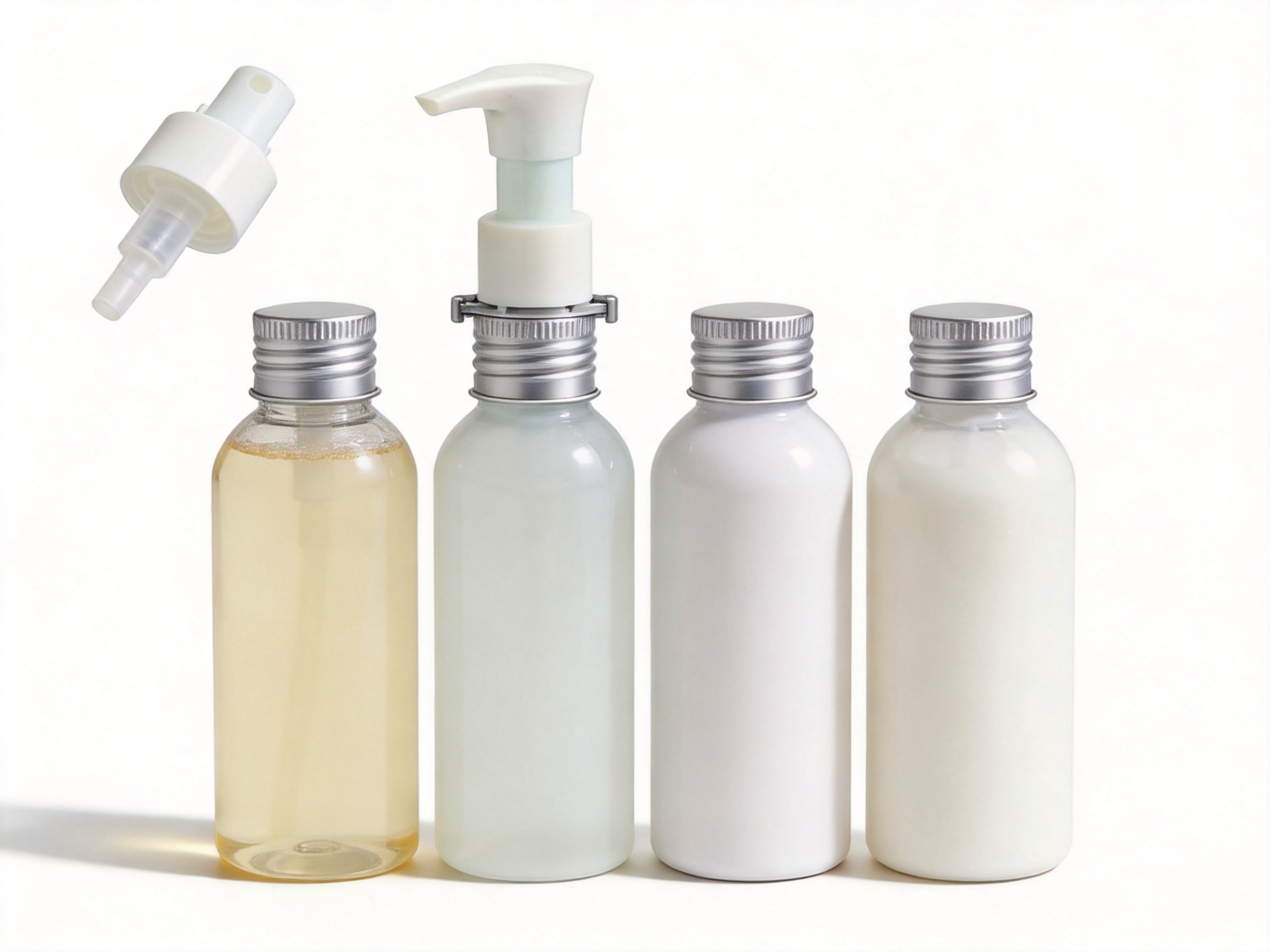
Application Areas
The GY-320 is suitable for a wide selection of personal care and daily chemical products. Its high output and lotion-pump format make it especially appropriate for formulas that need to be dispensed in moderate to generous quantities.
Shower Gel and Body Wash
Shower gel and body wash are natural applications for the GY-320. These products are often used in the shower, where wet hands and limited attention make simple dispensing important. The left-right lock can reduce the risk of accidental discharge during transport, while the 4ml output can help users obtain enough product without repeated pumping.
Shampoo
Shampoo packaging must balance controlled dispensing with speed and convenience. The GY-320 can be used for a variety of shampoo formats, particularly larger bottles intended for household, salon, hotel, or professional use. Formula viscosity should be evaluated during compatibility testing because thicker products may require different handling and may affect the perceived pump stroke.
Body Lotion
Body lotion users frequently need more product than can be delivered by a small-dose dispenser. The 4ml output can provide a practical amount for use on the arms, legs, or other areas of the body. The pump format also helps keep the package upright and minimizes the need to open a cap with lotion-covered hands.
Hand Wash and Liquid Soap
Hand wash and liquid soap packages are commonly placed near sinks in homes, offices, restaurants, hotels, and public facilities. A high-output pump can help provide a comfortable dose for hand cleansing, while the lock supports safer storage and transportation before installation or use.
Other Liquid Care Products
Depending on formula compatibility, the GY-320 may also be considered for conditioners, cleansing gels, bath products, moisturizing products, and selected household liquids. Each application should be evaluated for viscosity, chemical compatibility, color stability, odor transfer, leakage resistance, and long-term pump performance.
Bottle and Closure Compatibility
A pump and bottle function as a system. The closure must match the bottle neck accurately, the dip tube must reach the correct depth, and the sealing surfaces must provide reliable resistance to leakage. The GY-320 is available in 28-410 and 32-410 configurations, giving packaging developers two common neck options for product development.
The first number in a neck-finish designation generally refers to the approximate neck diameter in millimeters, while the second number indicates the thread style or thread specification. Exact compatibility should always be confirmed through physical samples, technical drawings, and fit testing because bottle manufacturers may have tolerances and variations in neck design.
When selecting a bottle, developers should consider the shoulder shape, overall height, internal diameter, bottle rigidity, base stability, and product fill volume. A pump that delivers 4ml per stroke may be used with a large bottle, so the bottle should be stable enough to resist tipping during repeated use.
Tube length is another critical consideration. If the tube is too short, product may remain in the lower part of the bottle and become difficult to access. If it is too long, the tube may bend, interfere with the bottle bottom, or restrict product flow. Customized tube length allows the component to be matched more precisely to the selected container.
The closure finish can also influence the user experience. Smooth closures are often associated with simple, clean packaging. Ribbed closures may provide additional tactile grip, especially when the package is wet. Aluminum-style finishes may be chosen when the brand requires a metallic appearance or a more premium visual direction.
Designing for Consumer Convenience
Good dispensing packaging should be intuitive. Consumers should understand how to open the pump, how to lock it, and how much pressure is needed to obtain product. The GY-320’s left-right lock uses a familiar rotational action. Once the pump is unlocked, the actuator can be pressed to dispense the formula. When the product is not in use, the actuator can be rotated back to the locked position.
A high-output pump can also reduce hand fatigue during repeated use. Consumers who use shower products every day may appreciate receiving a larger amount per press rather than performing multiple small actuations. This can be particularly valuable for products shared by several members of a household.
The exterior design should be selected according to the environment of use. A ribbed closure may be advantageous in a wet bathroom because it gives the fingers additional texture. A smooth closure may be suitable for a minimalist premium package or a bottle that will be used primarily in a dry setting.
Packaging designers should also consider the shape, width, and height of the actuator. The pump should be comfortable to press and should provide adequate space for the fingers. The final user experience depends not only on the pump mechanism but also on the bottle shape, product viscosity, actuator geometry, and package stability.
Manufacturing Strengths and Technical Capabilities
The manufacturer behind the product has specialized in spray and dispensing packaging production for 16 years. Its product range includes perfume sprayers, pump heads, caps, bottles, and daily chemical packaging solutions. This focused industry experience supports an understanding of the dimensional, functional, and aesthetic requirements associated with personal care packaging.
The company operates with a reported daily production capacity of one million units. High production capacity can be important for brands that require stable supply, repeat orders, and coordinated delivery schedules. It also provides a foundation for supporting both standard packaging programs and larger-volume projects.
Advanced mold design is one of the company’s stated capabilities. Accurate mold engineering is essential for producing pump components with consistent dimensions, reliable mating surfaces, and stable appearance. In a multi-part dispensing product, small dimensional variations can affect assembly, actuation, sealing, and output. Strong mold development helps reduce these risks from the beginning of the manufacturing process.
Injection molding is used to form plastic pump components with repeatable geometry. Process control can influence part weight, surface finish, dimensional accuracy, and structural integrity. For an all-plastic pump, consistent molding is especially important because the internal plastic components must work together to create reliable product uptake and dispensing.
Automated assembly supports production efficiency and repeatability. A pump may contain multiple molded parts that need to be assembled in a specific sequence and orientation. Automation can help control assembly force, component placement, and production speed while reducing variation associated with manual handling.
Quality inspection is another important part of the manufacturing process. Inspection activities may include visual checks, dimensional verification, assembly evaluation, actuation testing, leakage testing, and output assessment. The exact inspection program should be established according to the product specification and the customer’s quality requirements.
The company’s dedicated design team supports product innovation and packaging customization. This can be valuable when a customer needs a modified actuator, a different closure finish, a special color, a customized tube length, or a packaging component adapted to a particular bottle. A manufacturer with design and mold capabilities can often coordinate these activities more efficiently than a supplier that only performs final assembly.
Production Process for an All-Plastic Lotion Pump
The production of a reliable lotion pump begins with product design and application analysis. Engineers review the required dosage, neck size, locking method, closure appearance, formula characteristics, tube length, and expected order volume. These requirements are converted into component designs and process specifications.
Design and Mold Development
Computer-aided design is used to develop the pump structure and its individual components. The design process considers fluid pathways, sealing interfaces, moving parts, actuator travel, locking geometry, and assembly relationships. Mold design follows the component geometry and must account for material flow, cooling, ejection, shrinkage, and production efficiency.
For customized projects, the manufacturer may review bottle drawings or physical samples to ensure that the pump, closure, and dip tube are compatible with the container. Early coordination can reduce the risk of costly modifications after tooling has begun.
Injection Molding
Plastic parts are produced through injection molding. In this process, plastic material is heated, injected into a mold cavity, cooled, and ejected. The selected processing conditions influence the quality of the finished component. Stable temperature, pressure, cooling time, and cycle control can help achieve consistent parts.
Different pump components may have different structural requirements. Exterior parts may prioritize appearance and surface quality, while internal components may require tight dimensional control and smooth movement. A controlled molding environment supports the consistent performance of both visible and hidden parts.
Component Inspection
Molded components are checked for defects such as flash, short shots, deformation, discoloration, surface damage, and dimensional variation. Parts that do not meet the established requirements can be removed before assembly. Inspection standards should address both visual quality and functional performance.
Automated or Controlled Assembly
After molding and inspection, the components are assembled into the completed pump. Automated assembly equipment can help maintain a consistent sequence and reduce handling variation. Assembly checks confirm that the actuator, closure, internal plastic components, and dip tube are correctly positioned.
Functional Testing
Finished pumps may be tested for actuation, output, lock operation, leakage resistance, and compatibility with the designated bottle neck. Output testing helps confirm that the pump is operating within the target dosage range. Lock testing verifies that the left-right mechanism performs as intended. Leakage testing helps identify problems at the closure or internal sealing points.
The test plan can be adjusted according to the customer’s project requirements. Products intended for export, high-volume retail, hotel use, or professional environments may require more extensive validation than a small trial project.
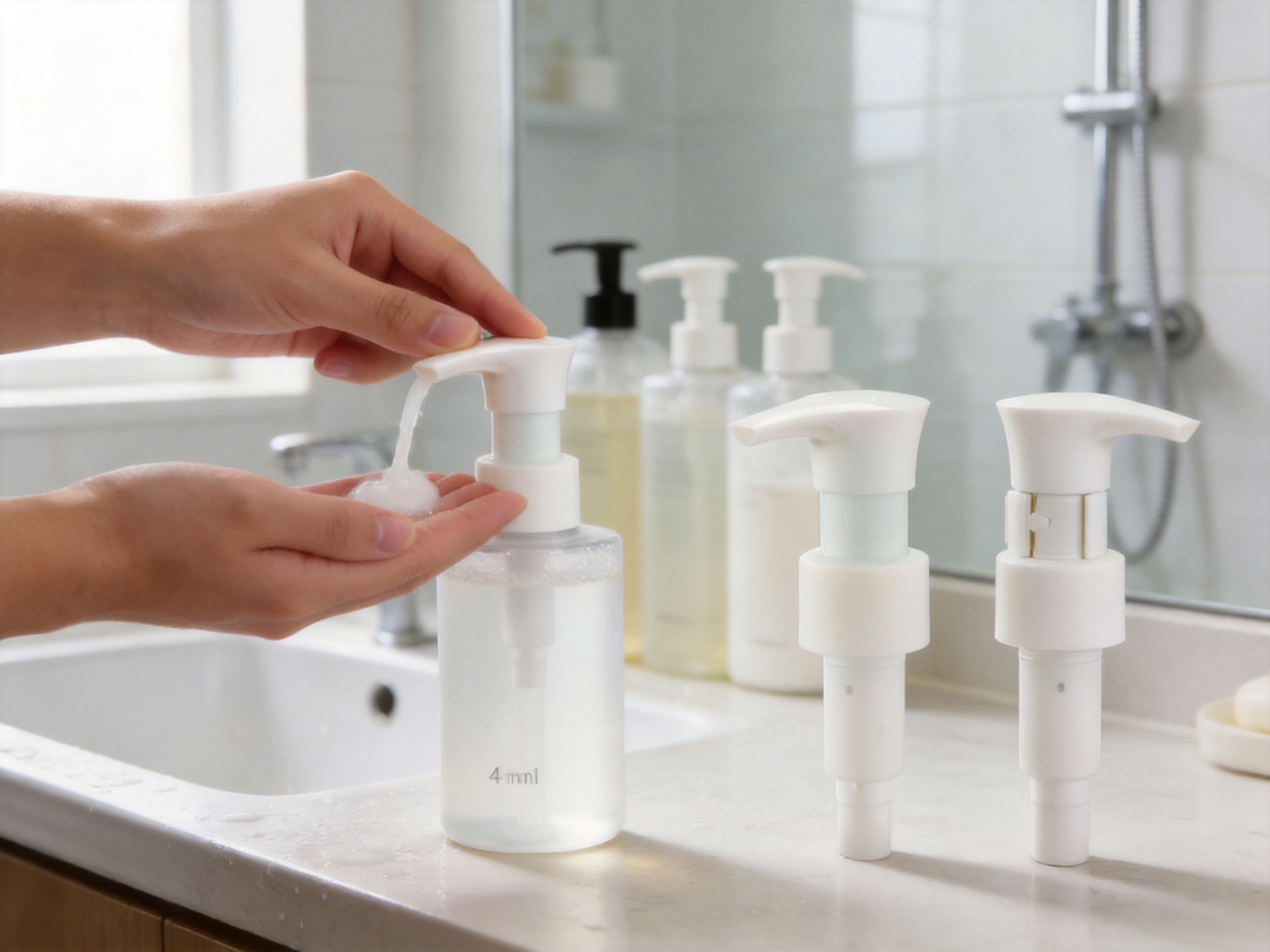
Quality and Reliability Factors
Packaging reliability is essential because a pump failure can affect both the product and the consumer’s perception of the brand. A leaking pump can contaminate cartons, create shipping losses, and cause inconvenience at the point of use. A pump that does not prime properly or delivers an inconsistent amount can also create complaints.
The GY-320 should be evaluated with the actual formula and bottle rather than tested only as an isolated component. Product viscosity, surface tension, pH, alcohol content, oils, fragrances, preservatives, and active ingredients may influence material compatibility and pump behavior. Accelerated aging and storage testing can help identify potential changes over time.
Environmental conditions should also be considered. Temperature changes can affect formula viscosity and plastic dimensions. Transportation vibration can challenge the closure and locking mechanism. Repeated use testing can provide information about actuator durability and output consistency over the expected product life.
The package should be tested in both locked and unlocked conditions. Locked-condition testing helps evaluate resistance to accidental actuation during shipping. Unlocked-condition testing evaluates normal consumer use. If the product will be shipped internationally, testing should reflect the expected transportation route and storage conditions.
Color and appearance are important for branded packaging. The pump can be coordinated with a bottle or label through color matching, surface finish, printing, or other decorative methods, subject to project specifications. Appearance standards should be agreed in advance so that acceptable variation is clearly defined.
Sustainability Benefits for Packaging Development
Sustainability is increasingly being considered at the concept stage of packaging development. Brands may seek to reduce material complexity, improve recyclability, lower packaging weight, increase recycled content, or design packages that are easier for consumers to sort. The GY-320 contributes to this discussion through its all-plastic structure without a metal spring or glass ball.
A simpler material structure can support more straightforward packaging evaluation. Instead of managing a plastic exterior together with hidden metal and glass parts, the product developer can focus on a plastic pump assembly and the compatibility of the complete package. This does not eliminate the need for recycling assessment, but it can reduce one source of complexity.
The all-plastic approach may also support brand communication. Packaging buyers can explain that the dispenser was designed without commonly used metal and glass internal parts. Such communication should be accurate, transparent, and consistent with local environmental marketing rules.
Sustainability should be assessed across the product life cycle. Important factors include the amount of plastic used, manufacturing energy, transportation efficiency, product protection, consumer use, and end-of-life management. A pump that helps prevent leakage and product waste may provide practical environmental value because it protects the contents throughout distribution and use.
Companies should also consider whether the complete bottle, pump, label, decoration, and remaining product are compatible with local recycling systems. The GY-320 can be one part of a broader design strategy that includes compatible bottle materials, removable or compatible labels, appropriate color selection, and clear disposal guidance.
Advantages for Brand Owners and Packaging Buyers
For brand owners, the GY-320 offers a balance between performance and design flexibility. The 4ml dosage can support larger personal care formats, while the choice of neck size makes it easier to match the pump with existing bottle platforms. This can help reduce the need to redesign an entire package when expanding a product line.
The customizable tube length is useful for companies that use bottles with different heights. Instead of adapting the bottle to a fixed tube, the pump can be configured to suit the container. This may simplify project coordination and help improve product evacuation.
The locking system provides an additional layer of packaging security. A pump that can be locked during transportation is less likely to dispense product accidentally when cartons are moved, stored, or displayed. This feature is particularly relevant for liquid products that could otherwise create sticky residue or damage secondary packaging.
The all-plastic construction can support sustainability goals while maintaining the convenience expected from a modern pump. This is relevant for personal care companies that want to improve packaging material choices without abandoning pump dispensing, which many consumers prefer for hygiene and ease of use.
The manufacturer’s integrated capabilities are another advantage. Mold design, injection molding, automated assembly, and quality inspection are available within the supplier’s manufacturing system. Coordinating these processes through one experienced packaging manufacturer can help reduce communication gaps between design, tooling, production, and quality teams.
Advantages for Contract Manufacturers and Fillers
Contract fillers and private-label manufacturers often need packaging components that can be integrated into different product programs. The GY-320’s available neck sizes and customized tube length provide useful flexibility when working with multiple bottle formats.
A standardized high-output pump can be used across related products, such as shampoo, body wash, conditioner, and lotion, provided that formula compatibility and performance testing confirm suitability. Using a common pump platform can simplify purchasing, inventory planning, and production setup.
The left-right locking mechanism can also help during logistics. Pumps can remain locked before filling, during shipment to the filling facility, and during distribution after assembly. This can reduce the risk of accidental pressing while products move through different stages of the supply chain.
Contract manufacturers should confirm the pump’s dimensions, bottle fit, filling-line requirements, and cap torque or assembly parameters before approving a production program. Samples should be evaluated using the actual filling equipment and finished product to verify that the package performs properly in real operating conditions.
Product Development and Customization Options
Although the core GY-320 specification is defined by a 4ml dosage and all-plastic structure, packaging projects may involve additional customization. The most direct option is tube length. This should be selected according to the bottle’s internal height and bottom profile.
Closure surface is another customization area. Smooth, ribbed, and aluminum-style options can be selected to support different brand identities and handling preferences. Color selection may also be coordinated with the bottle, label, or product range.
Brands may request samples to evaluate the pump with their formula and bottle. Sample testing should include visual inspection, fit, actuation feel, output volume, lock operation, leakage, and storage behavior. If the formula is particularly thick, volatile, acidic, oily, or sensitive to contamination, additional compatibility testing may be appropriate.
For larger projects, the manufacturer can review technical drawings, target annual demand, delivery requirements, packaging configuration, and quality standards. Early involvement of the supplier can help determine whether an existing pump platform is suitable or whether a modified component is required.
Recommended Evaluation Procedure
A structured evaluation process helps packaging buyers make an informed decision.
Step One: Confirm the Bottle Neck
Verify whether the bottle uses a 28-410 or 32-410 neck finish. Check the neck diameter, thread profile, sealing surface, and available closure height. Physical fit testing should be performed even when the nominal neck designation appears correct.
Step Two: Measure the Bottle Interior
Measure the internal height from the sealing area to the lowest usable point of the bottle. Review the bottom shape and determine the appropriate tube length. The customized tube should reach product efficiently without creating unnecessary bends or obstruction.
Step Three: Test the Formula
Fill representative bottles with the final formula and test the pump under normal conditions. Observe priming, first-use performance, output, stream behavior, retraction, and any dripping after actuation. Test the formula at different temperatures if the product will experience seasonal or international transportation conditions.
Step Four: Evaluate the Lock
Open and close the left-right lock repeatedly. Confirm that the locked position prevents normal actuation and that the unlocked position allows comfortable dispensing. Check whether the lock remains secure during handling and vibration.
Step Five: Conduct Storage and Transport Testing
Store assembled packages under representative conditions and evaluate them after the planned test period. Transportation simulation may include vibration, compression, temperature variation, and repeated handling. Inspect for leakage, loosening, deformation, and changes in output.
Step Six: Approve Appearance and Quality Standards
Review color, gloss, texture, closure finish, actuator appearance, and decoration requirements. Establish acceptable limits for cosmetic variation and functional performance before mass production begins.
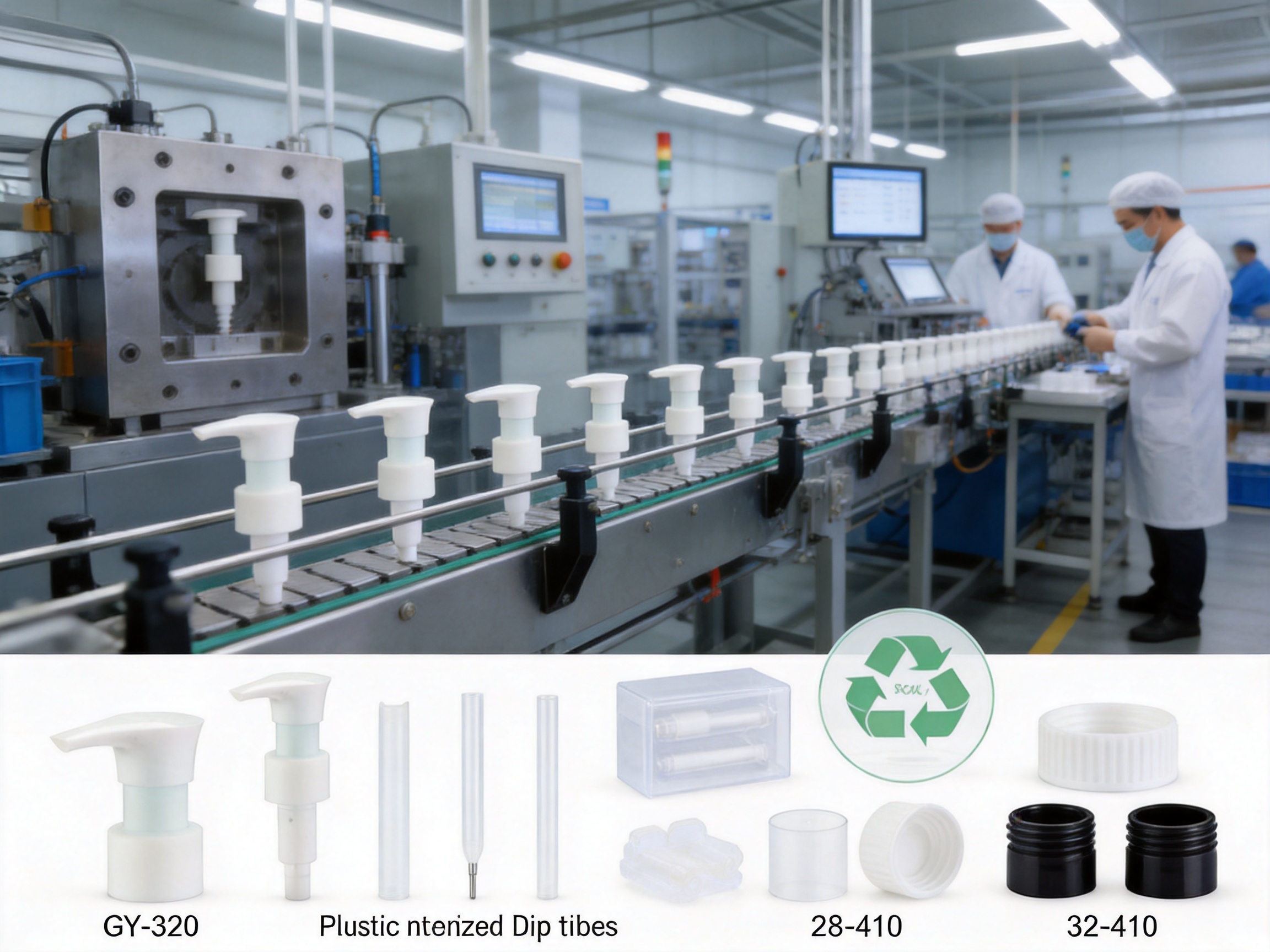
Comparison with Other Dispensing Formats
Different dispensing formats serve different product needs. A fine mist sprayer is designed to distribute a liquid as small droplets over a wider area. A trigger sprayer is suitable for household cleaners and larger surface applications. A dropper provides small, controlled quantities for serums, treatments, and laboratory-style products. A lotion pump is generally preferred for thicker liquids and personal care products that require a direct portion of formula.
The GY-320 is distinguished within the lotion pump category by its 4ml output and all-plastic internal design. It is not intended to replace every type of dispenser. Instead, it is best matched with products where a substantial, direct dose is more useful than atomization or micro-dosing.
Compared with a flip-top or disc-top cap, the pump offers one-handed dispensing and reduces the need to touch the bottle opening. This can be more hygienic and convenient, especially when the user’s hands are wet or covered with product.
Compared with a small-dose lotion pump, the GY-320 can provide a faster application for body care products. Compared with a conventional mixed-material pump, its plastic-oriented structure can support a simpler material profile. Selection should still be based on the formula, bottle, dosage, consumer habits, and sustainability requirements of the specific product.
Supply and Manufacturing Support
A reliable packaging supplier should provide more than a catalog component. Successful projects depend on communication, technical review, sample management, quality control, and consistent production. The manufacturer of the GY-320 has experience in spray product manufacturing and a product portfolio covering perfume sprayers, pump heads, caps, bottles, and daily chemical packaging.
Its reported capabilities in mold design, injection molding, automated assembly, and quality inspection allow the company to support multiple stages of product development. This integrated structure can be helpful when customers require customized dimensions or need to coordinate several packaging components.
The reported daily production capacity of one million units provides a foundation for supplying high-volume programs. Capacity alone does not replace quality management, so buyers should confirm lead times, production planning, inspection procedures, packaging methods, and shipment arrangements for each project.
A dedicated design team can contribute to packaging innovation by reviewing user requirements and translating them into practical component solutions. For brands entering a new category or updating an existing package, technical cooperation at the early stage may reduce development risk and improve the final user experience.
Ordering and Project Preparation
Before requesting a quotation or placing an order, buyers should prepare the essential project information. This normally includes the required neck size, target dosage, bottle dimensions, dip tube length, formula type, color, closure finish, estimated order quantity, delivery destination, and desired packaging method.
It is also useful to provide the intended application, such as shampoo, shower gel, body lotion, or hand wash. Formula information helps the manufacturer recommend an appropriate testing process. If the formula contains oils, alcohol, aggressive solvents, unusual surfactants, or high levels of fragrance, this should be disclosed during compatibility review.
Sample approval should be completed before mass production. Approved samples can serve as a reference for appearance, dimensions, fit, actuation, output, and lock operation. For repeat orders, buyers should maintain clear records of approved specifications and any changes.
Packaging and shipment planning should account for pump orientation, carton strength, protection from dust, and prevention of deformation. The final delivery configuration should be suitable for the customer’s filling line and warehouse conditions.
Frequently Asked Questions
What is the nominal dosage of the GY-320 pump?
The nominal dosage is 4ml per stroke. Actual output may vary according to formula viscosity, temperature, bottle configuration, pump assembly, and testing conditions.
Which bottle neck sizes are available?
The pump is available in 28-410 and 32-410 neck sizes. Compatibility should be confirmed using the actual bottle and physical samples.
Does the pump contain a metal spring?
No. The GY-320 is designed as an all-plastic pump without a metal spring inside.
Does the pump contain a glass ball?
No. The internal design does not use a glass ball. This helps reduce the number of material types in the pump assembly.
How does the locking mechanism work?
The pump uses a left-right locking mechanism. The actuator is rotated to open or lock the pump, helping reduce accidental dispensing during storage and transportation.
Can the dip tube be customized?
Yes. The tube length can be customized according to the height and internal geometry of the selected bottle.
What products are suitable for this lotion pump?
Recommended applications include shower gel, shampoo, body lotion, hand wash, liquid soap, and similar personal care or daily chemical liquids. Formula compatibility testing is recommended for every product.
What closure styles are available?
Smooth, ribbed, and aluminum-style closure options are available, subject to project requirements and production confirmation.
Is the pump recyclable?
The all-plastic construction is designed to simplify material management and avoid the metal spring and glass ball found in some conventional pumps. Final recyclability depends on the complete package and the recycling infrastructure in the target market.
Is the 4ml dosage suitable for all formulas?
Not necessarily. The dosage is well suited to many liquid and semi-liquid personal care products, but formula viscosity, ingredients, temperature, and required dispensing behavior must be evaluated through compatibility testing.
Can the pump be used with a custom bottle?
It can be considered for custom bottles using the compatible 28-410 or 32-410 neck specifications. The bottle neck, dip tube, shoulder, and sealing surfaces should be checked before approval.
Why is tube length important?
A properly sized tube supports efficient product pickup and helps reduce residual product in the bottle. A tube that is too short or too long may affect dispensing performance.
What manufacturing capabilities support this product?
The manufacturer reports capabilities in mold design, injection molding, automated assembly, and quality inspection, supported by a design team and long-term experience in spray and dispensing packaging.
Can the pump be tested before ordering?
Sample evaluation is recommended before mass production. Buyers should test fit, dosage, actuation, locking, leakage, appearance, and formula compatibility with the final bottle and product.
Conclusion
The GY-320 All Plastic Lotion Pump 4ml Dosage is a high-output dispensing solution for personal care and daily chemical packaging. Its 4ml dosage supports fast and convenient application, while the 28-410 and 32-410 neck options provide compatibility with widely used bottle formats.
The pump’s left-right locking mechanism helps protect against accidental actuation, and the customized dip tube length allows the component to be adapted to different bottle heights and shapes. Smooth, ribbed, and aluminum-style closure options provide additional flexibility for product appearance and handling.
Its most significant design advantage is the all-plastic construction without a metal spring or glass ball. This reduces material complexity and can support packaging strategies focused on easier component management and improved recyclability. As with all packaging sustainability claims, the complete package and local recycling conditions should be evaluated.
Manufacturing strengths in mold design, injection molding, automated assembly, quality inspection, and packaging design support the product’s development and production. Combined with long-term industry experience and high reported production capacity, these capabilities make the GY-320 a suitable option for brands, fillers, distributors, and packaging buyers seeking a reliable, customizable, and material-conscious lotion pump.
For the best result, buyers should evaluate the pump together with the final bottle and formula. Confirming neck fit, tube length, output, lock performance, leakage resistance, appearance, and storage stability before mass production will help ensure a dependable finished package.
References
1. Product specification materials for the GY-320 All Plastic Lotion Pump 4ml Dosage, including neck sizes, dosage, locking method, closure options, tube customization, and recommended applications.
2. General packaging engineering principles for lotion pumps, dispensing systems, container compatibility, and product-to-package testing.
3. General design-for-recycling considerations for plastic packaging components and packaging systems with reduced material complexity.
4. General injection molding and automated assembly principles for plastic dispensing components.
5. General quality-control practices for pump output, leakage, actuation, locking, dimensional accuracy, and formula compatibility.
Product: All Plastic Lotion Pump 4ml Dosage

-
Amber Plastic Bottles: Lightweight, Protective, Customizable Packaging for Cosmetics
You have spent months stabilizing a vitamin C serum, only to watch a pallet of amber glass bottles ...
-
Crimp Pumps Demystified: Choosing the Right Type and Material for Every Cosmetic Formula
Walk into any cosmetic filling facility and you will find crimp pumps on everything from a delicate ...
-
What's Inside a Lotion Pump and How Does It Work ?
A lotion pump is a precision dispensing closure that draws liquid product from a bottle and delivers...
-
Airless Bottles Uncovered: How to Protect Your Skincare and Perfect Every Pump
If you have ever opened a pump bottle of serum and found the last quarter of the product impossible ...
Copyright © GreenYard Tools Co.,ltd. All Rights Reserved.
Personal Care Packaging Manufacturer Custom Perfume Sprayers Factory