
-
About Us
Why Choose Us?The company possesses advanced capabilities in mold design, injection molding, and automated assembly, supported by a professional quality inspection team to ensure product reliability. A dedicated design team continuously drives product innovation, providing customers with high-quality spray solutions.
 Coming From China, Marketing To The World.
 -
Products
-
News
 English
 Français
 русский
 Español
Airless Cream Bottle for Compact Premium Skincare Packaging
Content
- 1 Product Overview: Compact Airless Packaging for Eye Cream and Facial Care
- 2 Why Airless Packaging Matters for Modern Skincare
- 3 Advantages Over Competing Packaging Formats
- 4 Design Features That Support Performance and Consumer Satisfaction
- 5 Manufacturing Strength Behind the Product
- 6 How the Airless Cream Bottle Supports Brand Competitiveness
- 7 Applications in Eye Cream and Facial Care
- 8 Comparison With Common Competitor Solutions
- 9 Customization and Brand Development Opportunities
- 10 Production Scale and Supply Reliability
- 11 Quality Considerations for Airless Cream Bottle Selection
- 12 Role in Sustainable and Responsible Packaging Strategy
- 13 Company Capabilities Supporting Global Personal Care Packaging Needs
- 14 Why This Bottle Is Suitable for High-End Small-Volume Facial Care
- 15 Recommended Purchasing and Development Considerations
- 16 Q&A Section
- 16.1 What is the Airless Cream Bottle GY-5611A designed for?
- 16.2 What capacities are available?
- 16.3 What type of closure does it use?
- 16.4 Why choose an airless cream bottle instead of a traditional jar?
- 16.5 Is this bottle suitable for eye cream?
- 16.6 Can the bottle be used for facial care products other than eye cream?
- 16.7 How does this product help a brand compete in the skincare market?
- 16.8 What manufacturing strengths support this product?
- 16.9 Is the bottle appropriate for travel-size or trial products?
- 16.10 Should brands test their formula before launch?
- 17 Conclusion
- 18 References
- 19 Product: Airless Cream Bottle
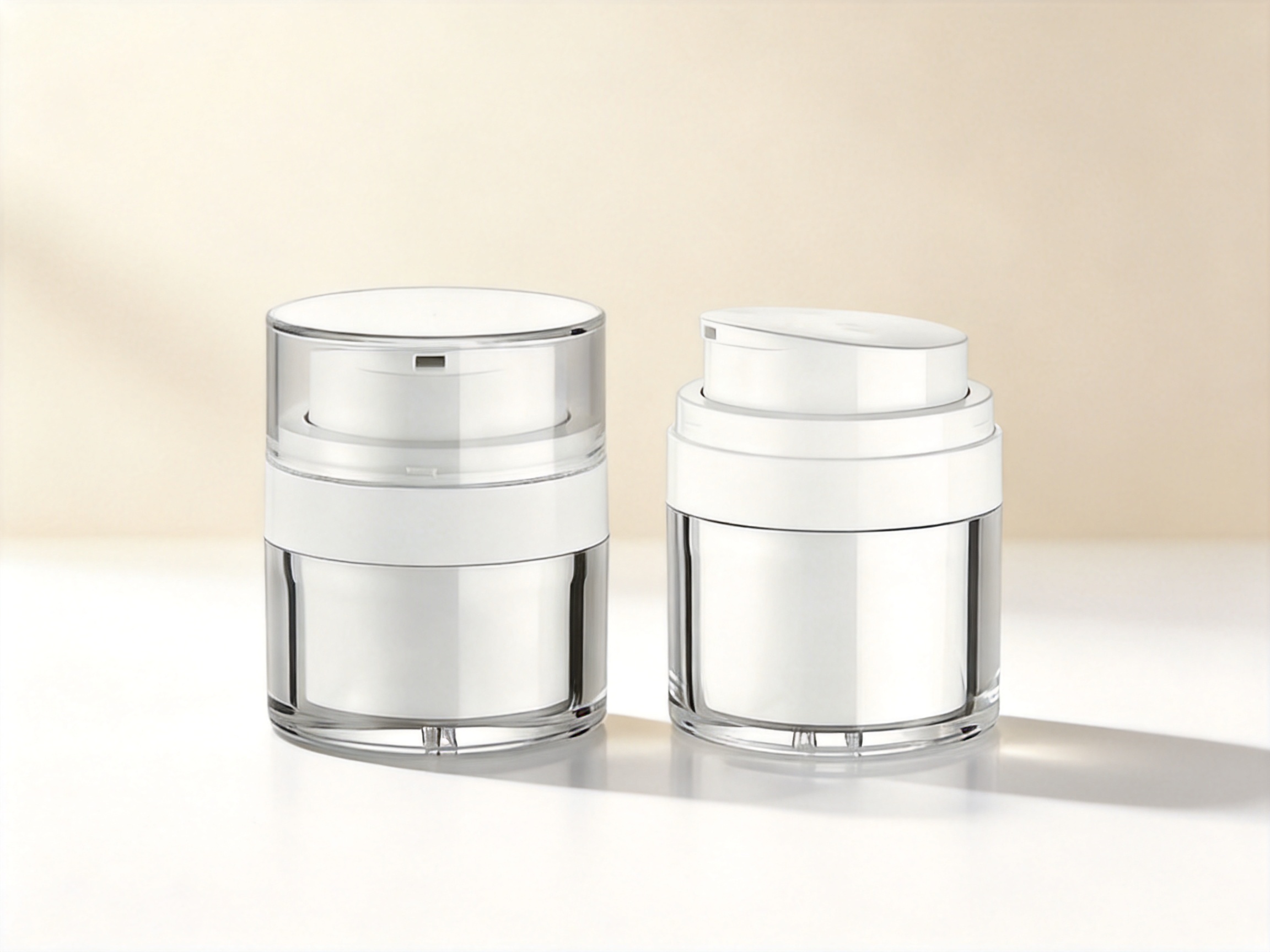
In the fast-moving personal care market, packaging is no longer a simple container. It is a protection system, a dispensing tool, a visual identity carrier, and an essential part of the consumer experience. For high-value skincare products such as eye cream, facial cream, targeted treatment balm, concentrated serum cream, and other small-capacity formulations, the package must perform with precision from the first use to the last. The Airless Cream Bottle, model GY-5611A, is designed for this exact purpose. Available in 15 gram and 30 gram capacities, it provides a compact, hygienic, and user-friendly solution for brands that require reliable packaging for premium facial care products.
This airless bottle belongs to the airless packaging category and is especially suitable for small-volume facial care products. Its snap-on closure is engineered for secure sealing, easy assembly, convenient handling, and dependable product protection. In comparison with traditional jars or ordinary bottles, an airless cream bottle offers stronger formulation protection, better dispensing control, and a more refined user experience. For eye cream and other concentrated skincare products, these advantages can directly support product quality, shelf appeal, and customer satisfaction.
GreenYard Tools Co., Ltd. manufactures this airless cream bottle as part of its broader personal care packaging portfolio, which includes perfume sprayers, pump heads, lotion pumps, foam pumps, dropper systems, trigger sprayers, PE and PET bottles, roll-on bottles, deodorant stick bottles, cream jars, and related cosmetic plastic packaging components. With 16 years of experience in spray and pump packaging production, the company combines mold design, injection molding, automated assembly, and quality inspection capabilities to provide stable packaging solutions for global cosmetic and personal care markets.
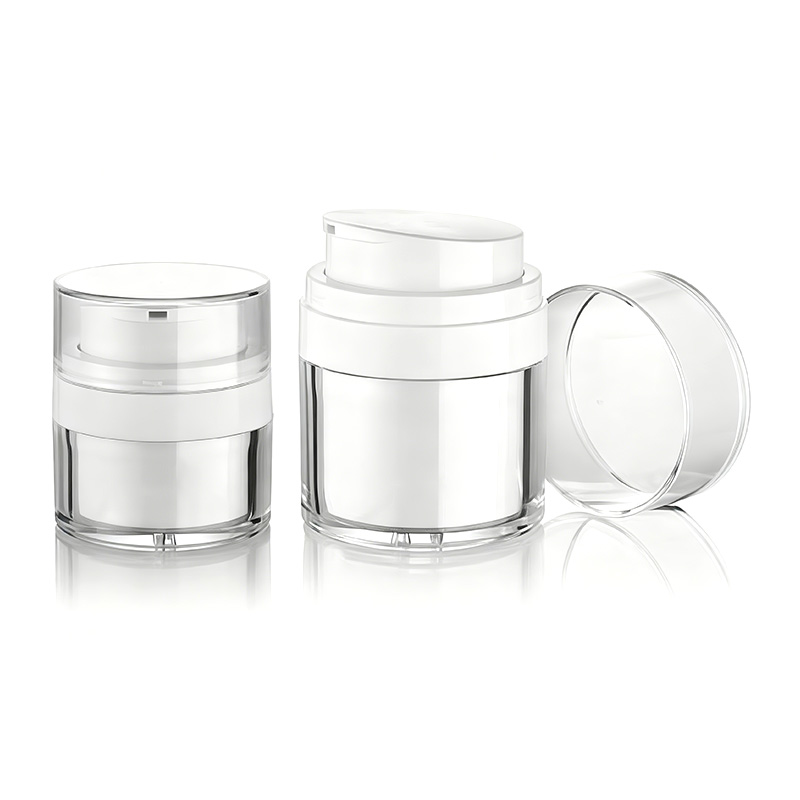
Product Overview: Compact Airless Packaging for Eye Cream and Facial Care
The Airless Cream Bottle GY-5611A is built around a simple but important idea: small-capacity skincare packaging must protect the formula while delivering a premium daily-use experience. Eye cream and facial care products are often formulated with active ingredients, delicate textures, and high perceived value. These products require packaging that limits exposure, reduces contamination risk, supports accurate application, and looks appropriate for the premium skincare category.
The bottle is available in 15 gram and 30 gram sizes. These two capacities are highly practical for eye cream, travel-size facial care products, trial kits, concentrated facial treatments, and luxury skincare lines. The 15 gram format is especially suitable for products used in small amounts, such as eye cream, wrinkle care cream, brightening treatment, targeted repair cream, or concentrated anti-aging formulas. The 30 gram format offers more capacity while still maintaining a compact and elegant presentation.
The snap-on closure type supports fast and secure assembly. For manufacturers and filling operations, closure design is important because it affects production efficiency, sealing reliability, handling consistency, and the final appearance of the package. A well-designed snap-on closure helps reduce assembly complexity and improves the repeatability of the sealing process. For end users, it provides a convenient and clean opening and closing experience while helping prevent leakage and contamination.
As an airless bottle, the product is intended to support hygienic dispensing. Unlike conventional open jars, where the user repeatedly dips a finger or spatula into the formula, airless packaging reduces direct contact with the contents. This feature is particularly valuable in facial care because consumers increasingly associate hygienic packaging with product safety, freshness, and premium quality.
Product Item |
Specification |
Practical Value |
Product Name |
Airless Cream Bottle |
Designed for premium small-capacity skincare packaging |
Model |
GY-5611A |
Identifiable product code for sourcing and production communication |
Category |
Airless Bottle |
Helps protect cream formulations through controlled dispensing |
Volume Available |
15 gram and 30 gram |
Ideal for eye cream, facial care, trial products, and premium compact lines |
Closure Type |
Snap-on |
Supports secure sealing, easy handling, and efficient assembly |
Recommended Usage |
Eye cream and facial care products |
Suitable for small-capacity treatments and high-value skincare formulas |
Why Airless Packaging Matters for Modern Skincare
Skincare formulas have become more sophisticated. Many facial care products now include active ingredients, botanical extracts, peptides, vitamins, moisturizing systems, or other functional components that require careful handling. Although the actual stability of a formulation depends on its ingredients and formulation technology, packaging plays a critical role in reducing unnecessary exposure and improving the product’s performance throughout its usage cycle.
Traditional jars remain popular because they are familiar and visually attractive, but they have limitations. Every time a jar is opened, air can enter, and the cream surface may be exposed. If the user applies the product with fingers, contact contamination may occur. For some products, this may not be a major concern, but for eye-area skincare and premium facial treatment products, consumers increasingly prefer packaging that looks cleaner, dispenses more precisely, and supports better formula care.
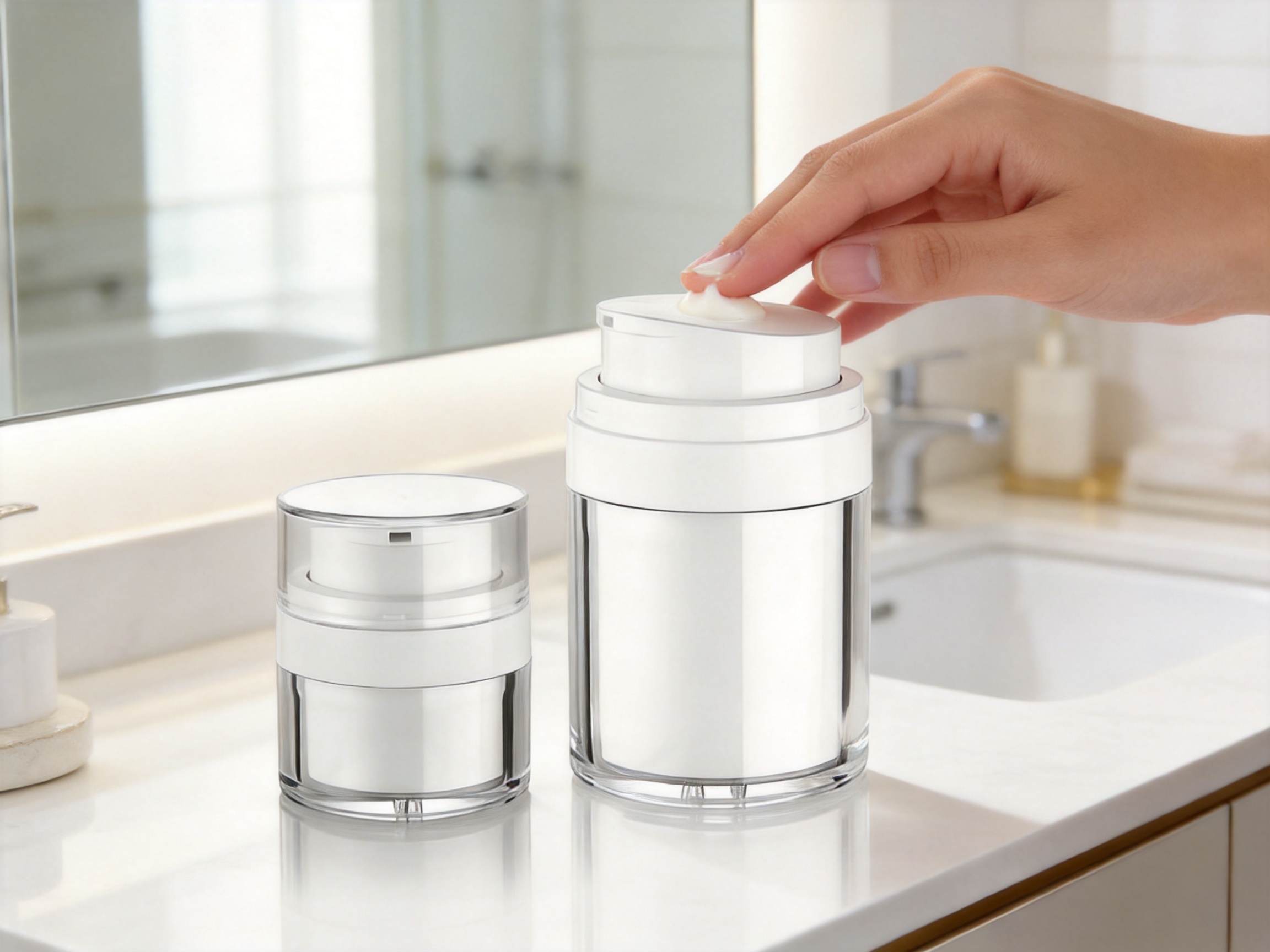
Airless packaging offers an improved solution. By using a controlled dispensing structure, it helps reduce unnecessary contact with the product. The consumer can press or operate the dispenser and receive a measured amount without opening a wide-mouth container. This provides convenience and a sense of hygiene. It also helps the brand communicate that the product is modern, effective, and carefully packaged.
For eye cream specifically, dosage control is important. Consumers often need only a small amount. Excessive dispensing can lead to waste, while insufficient dispensing can make the product feel inconvenient. A compact airless cream bottle offers a balanced experience by making small-volume use easier and cleaner. The 15 gram and 30 gram sizes match the way eye cream and targeted facial products are typically consumed, making the package more practical than oversized containers.
Another important factor is portability. Consumers travel, commute, and increasingly carry skincare items in handbags, gym bags, or toiletry kits. A compact bottle with a secure snap-on closure is easier to transport than a larger jar. It is also more appropriate for sample sets, gift sets, hotel amenities, professional skincare kits, and direct-to-consumer product launches where compact presentation and reliable closure matter.
Advantages Over Competing Packaging Formats
The Airless Cream Bottle GY-5611A competes not only with other airless bottles but also with jars, tubes, squeeze bottles, and simple pump containers. Its advantages are most visible when evaluated through product protection, user experience, brand positioning, manufacturing efficiency, and suitability for small-capacity facial care products.
Better Hygiene Than Conventional Cream Jars
One of the clearest advantages is hygiene. Traditional jars require users to open the package and touch the product directly or use an applicator. Even with careful use, the cream surface is exposed each time the jar is opened. An airless cream bottle reduces direct exposure and allows dispensing without repeated contact with the main product reservoir. For facial care and eye cream, this feature creates a cleaner and more professional image.
Many consumers today read product claims carefully and pay attention to how packaging supports product freshness. A package that dispenses without finger dipping can strengthen trust. It suggests that the brand values formulation integrity and everyday cleanliness. For competitive skincare shelves, this perception can be a major advantage.
More Premium Than Basic Squeeze Tubes
Squeeze tubes are economical and practical, but they may not always communicate luxury or precision. They can deform during use, sometimes dispense irregularly, and may not fit the premium image expected for high-end facial care. In contrast, a compact airless cream bottle provides a more structured and elegant presentation. It is suitable for premium product lines where the packaging must reinforce value before the consumer even applies the product.
The 15 gram and 30 gram sizes also help brands create clear product tiers. A 15 gram format can be positioned as a targeted eye cream, while a 30 gram version can be used for a facial treatment or travel-friendly moisturizer. The similar packaging structure helps maintain consistent brand identity across a product series.
Improved Dispensing Control Compared With Open Containers
Open containers make it easy to take too much product. This is especially true for rich creams and high-value formulations. An airless cream bottle helps control the amount dispensed and supports more consistent daily use. Consumers appreciate packaging that minimizes waste because premium eye cream and facial care products are often expensive per gram.
Better dosage control can also support the consumer’s perception of product effectiveness. When users apply a consistent amount, they are more likely to follow the intended usage routine. This can contribute to better satisfaction with the product and reduce frustration associated with messy or wasteful packaging.
Stronger Shelf Appeal for Premium Skincare
Packaging appearance strongly influences purchasing decisions. A compact airless bottle can look clean, modern, and technical. For eye cream and facial treatment products, this visual language communicates precision and efficacy. In contrast, some competing packages may look generic, low-cost, or less aligned with advanced skincare positioning.
The Airless Cream Bottle GY-5611A offers a suitable base for brand customization. Cosmetic brands may adapt color, surface finish, decoration, labeling, and component combinations according to their identity. Although the product’s core function is practical, its appearance can support many brand styles, including clinical skincare, natural beauty, luxury facial care, professional salon products, and travel-size premium collections.
Compact Capacity That Matches Real Usage
Oversized packaging can create problems for small-dose skincare. It may look impressive initially, but it can be less convenient, less sustainable in material use, and less aligned with the product’s actual usage pattern. The 15 gram and 30 gram capacities of this airless cream bottle are designed for realistic skincare consumption. For eye cream, a small package often feels appropriate and trustworthy because users expect the formula to be concentrated and applied in small amounts.
This capacity advantage is also useful for product launches. Brands can introduce premium formulas in compact sizes to reduce consumer purchase hesitation. A smaller pack can act as an entry-level product while maintaining a premium look. It can also be used for trial programs, influencer marketing kits, subscription boxes, gift sets, and seasonal promotional campaigns.
Design Features That Support Performance and Consumer Satisfaction
The design of a skincare package must balance beauty, function, manufacturing feasibility, filling compatibility, storage stability, shipping durability, and daily handling. The Airless Cream Bottle GY-5611A combines multiple design features that support this balance.
15 Gram and 30 Gram Capacity Options
The availability of two capacities gives skincare brands flexibility. The 15 gram version is especially well suited to eye cream, spot treatment, lip and eye area balm, anti-wrinkle concentrate, or premium sample products. The 30 gram version can serve as a compact facial cream, travel moisturizer, neck cream, repair treatment, or professional skincare product.
Using two related capacities also simplifies brand line development. A company can use the same visual language across different products, creating a family effect on retail shelves and e-commerce pages. Consistency in packaging helps customers recognize the brand and understand the product hierarchy.
Snap-On Closure for Security and Ease of Use
The snap-on closure offers practical advantages in production and consumer use. During assembly, snap-on systems can improve efficiency because they are designed for clear engagement and stable positioning. For users, the closure provides a secure and convenient feel. A reliable closure reduces concerns about leakage, accidental opening, and contamination during storage or travel.
In competitive packaging, closure quality can be a key differentiator. A loose closure can damage consumer trust even if the formula is excellent. A closure that feels too difficult may create frustration. The goal is a balance between security and convenience. The snap-on closure of this airless cream bottle is intended to support that balance.
Small-Capacity Shape for Targeted Skincare Products
Small facial care products should feel precise, compact, and purposeful. The bottle’s small-capacity design reinforces the idea that the formula is concentrated and designed for targeted application. This is especially useful for eye creams, where consumers expect a refined package that fits the delicate nature of the product.
A compact package also supports modern lifestyle needs. It can be stored easily on a bathroom shelf, packed into a travel pouch, included in a skincare routine set, or presented in a gift box. Its size makes it convenient without sacrificing premium appeal.
Compatibility With Premium Brand Presentation
Although the technical function of airless packaging is important, visual presentation is equally critical. The Airless Cream Bottle GY-5611A can fit into different cosmetic design directions. A brand may choose minimalist white for clinical skincare, soft pastel tones for gentle facial care, metallic accents for luxury positioning, or transparent and natural tones for botanical concepts. Decoration and color choices can transform the same functional package into different market identities.
This flexibility gives cosmetic brands an advantage over competitors using fixed, generic packaging. A package that can be adapted to brand strategy helps improve product differentiation, reduce design limitations, and support stronger market storytelling.
Manufacturing Strength Behind the Product
Packaging performance depends not only on design but also on manufacturing quality. A well-designed product can fail if molds are inaccurate, materials are inconsistent, assembly is unstable, or quality inspection is insufficient. GreenYard Tools Co., Ltd. has developed a manufacturing system that supports stable production of personal care packaging, including airless bottles and pump-related products.
The company has 16 years of experience in spray product manufacturing and personal care packaging production. This experience is valuable because pump and airless systems require precision. Components must fit accurately, surfaces must be clean, closures must engage securely, and dispensing parts must operate reliably. Experience helps the manufacturer anticipate production challenges and improve product consistency.
Mold Design Capability
Mold design is the foundation of plastic packaging quality. The dimensions, wall thickness, parting lines, surface finish, and assembly interfaces of each component are determined by mold engineering. For an airless cream bottle, mold precision affects appearance, closure fit, component assembly, and overall reliability.
GreenYard’s mold design capability allows the company to support product innovation and customization. When customers require a specific capacity, design adjustment, decorative feature, or component interface, mold expertise helps transform design ideas into manufacturable packaging. Strong mold design also reduces defects such as warpage, poor fit, visible flash, uneven surfaces, or inconsistent assembly performance.
Injection Molding Strength
Injection molding is a critical manufacturing process for cosmetic plastic packaging. It requires control over temperature, pressure, cooling time, material flow, and cycle stability. For premium skincare packaging, visual consistency is especially important. Consumers may notice color variation, surface defects, scratches, deformation, or poor fit. Reliable injection molding helps reduce these issues.
The company’s injection molding capabilities support the production of bottles, caps, pump components, and related packaging parts. For the Airless Cream Bottle GY-5611A, controlled molding contributes to stable dimensions and a refined appearance. This helps the bottle achieve the level of quality expected for facial care products.
Automated Assembly for Consistency
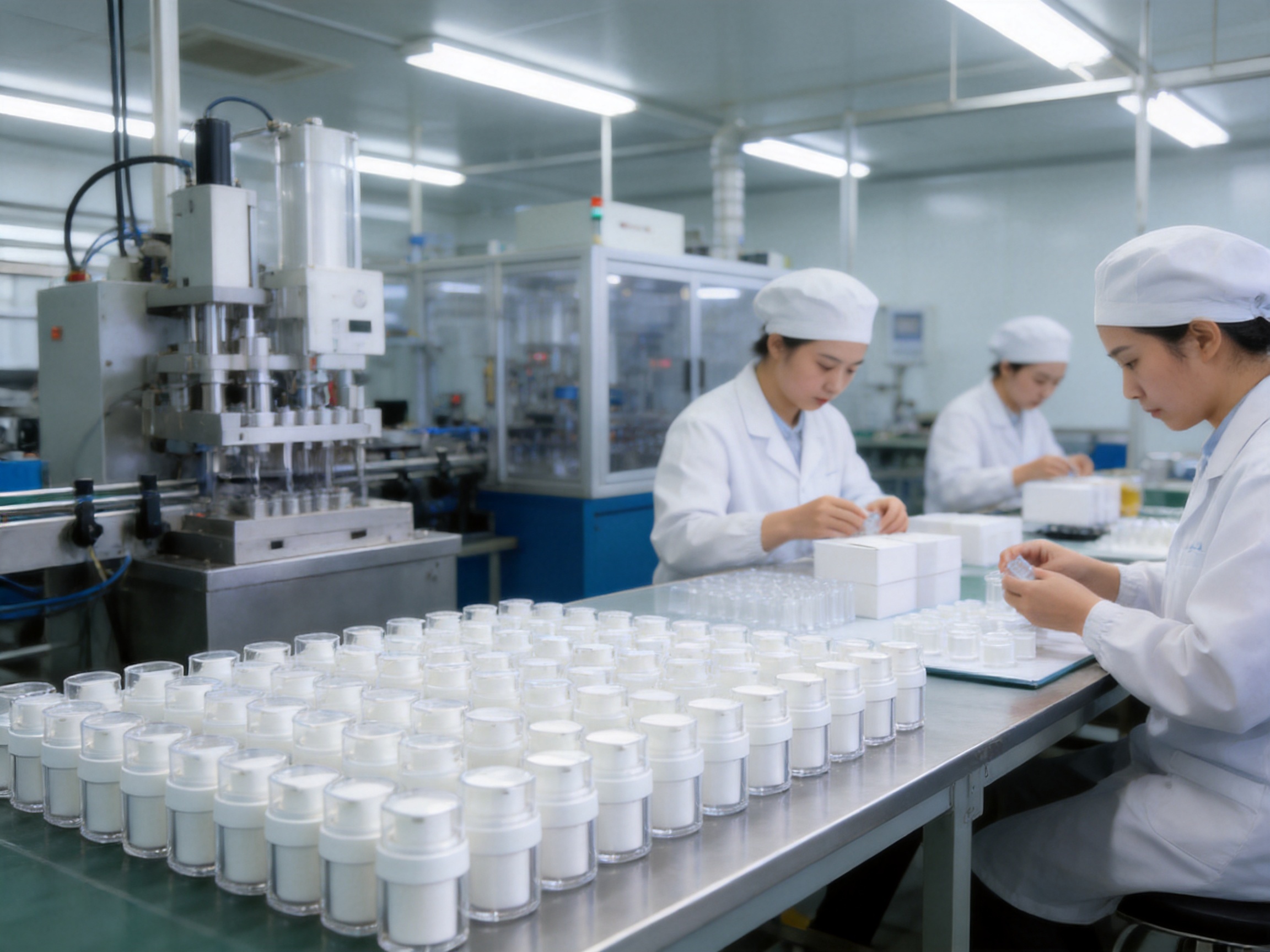
Automated assembly is an important advantage in pump and airless packaging manufacturing. Manual assembly can be effective for small batches, but large-scale production requires consistent positioning, controlled force, repeatable engagement, and efficient throughput. Automated assembly helps reduce variation, improve productivity, and support stable quality.
GreenYard’s automated assembly capability is particularly relevant because the company produces spray products, pump heads, and packaging systems at high volume. Its daily production capacity reaches one million units, indicating strong operational scale. For global customers, this capacity helps support stable supply, large orders, promotional launches, and long-term packaging programs.
Quality Inspection for Reliable Packaging
Quality inspection is essential for personal care packaging. A small defect can affect sealing, dispensing, appearance, or customer satisfaction. Inspection may include dimensional checks, assembly evaluation, visual inspection, closure testing, function testing, and packaging verification depending on the product and customer requirements.
For the Airless Cream Bottle GY-5611A, quality control supports confidence in closure security, component fit, appearance, and usability. Brands need packaging that performs consistently across thousands or millions of units. A strong inspection system helps reduce risk and protect the brand’s reputation.
How the Airless Cream Bottle Supports Brand Competitiveness
In cosmetic and personal care markets, brands compete on formulation, packaging, price, story, distribution, sustainability claims, and consumer trust. Packaging can influence all of these areas. The Airless Cream Bottle GY-5611A helps brands compete by combining functional protection with premium presentation and efficient manufacturing support.
Supports Premium Price Positioning
Premium skincare products require premium packaging cues. If an eye cream is positioned as a high-performance formula but packaged in a basic low-end container, the consumer may question its value. A compact airless bottle supports a higher-value perception by looking more advanced, hygienic, and refined. This can help brands justify premium pricing and improve shelf impact.
Improves Consumer Confidence
Consumers often judge a product before reading all of its claims. They touch the package, open the closure, observe the dispensing method, and evaluate how clean and convenient it feels. Airless packaging can create confidence because it appears controlled and hygienic. The snap-on closure adds a sense of security, while the compact format communicates targeted care.
Reduces Product Waste
Controlled dispensing helps reduce overuse. For high-value eye cream, waste is a major concern. Consumers appreciate packages that allow them to use the right amount without mess. Compared with jars, where users may scoop too much, or tubes that may squeeze unpredictably, airless cream bottles offer a more disciplined dispensing experience.
Enhances E-Commerce Suitability
E-commerce packaging must be attractive in images and reliable in shipping. Compact airless bottles photograph well because they have a clean, modern silhouette. They are also convenient for small parcel shipment, beauty subscription boxes, and online skincare kits. A secure closure is important because leakage during delivery can lead to refunds, negative reviews, and brand damage.
Facilitates Product Line Expansion
The two available capacities allow brands to build product families. A brand might use 15 gram packaging for eye care and 30 gram packaging for face care. It may also develop day and night versions, trial and retail sizes, or professional and consumer lines. This flexibility is valuable for marketing and inventory planning.
Applications in Eye Cream and Facial Care
The primary recommended uses for this bottle are eye cream and facial care products. These categories are well matched with small-capacity airless packaging because they involve controlled application, higher formula value, and consumer expectations for cleanliness.
Eye Cream
Eye cream is one of the strongest applications for the 15 gram capacity. Eye-area products are used in small amounts and are often positioned as anti-aging, brightening, moisturizing, firming, or soothing treatments. Consumers expect eye cream packaging to be clean, precise, and elegant. An airless cream bottle supports these expectations by reducing direct product contact and providing controlled dispensing.
Facial Care Cream
The 30 gram format is suitable for facial care creams, including moisturizing creams, repair creams, day creams, night creams, and targeted treatment products. For brands that want a more premium option than tubes or jars, an airless cream bottle can elevate the user experience. It is especially useful for formulas marketed around freshness, cleanliness, and active ingredients.
Travel and Trial Packaging
Small-capacity airless packaging is excellent for travel sizes and trial products. Consumers are more willing to try a premium skincare product when the package is compact, convenient, and attractive. A 15 gram or 30 gram format can be included in gift sets, discovery kits, holiday promotions, or professional sampling programs.
Professional Beauty and Spa Products
Professional skincare brands often require packaging that is practical in treatment rooms and elegant for retail. Airless packaging helps maintain cleanliness during repeated use. The compact size also fits well in professional kits, demonstration sets, and retail displays.
Comparison With Common Competitor Solutions
To understand the competitive value of the Airless Cream Bottle GY-5611A, it is useful to compare it with other common packaging options. Each type has benefits, but the airless cream bottle offers a strong balance for premium small-capacity facial care.
Packaging Type |
Main Strength |
Common Limitation |
Advantage of Airless Cream Bottle |
Traditional Cream Jar |
Familiar appearance and wide opening |
Repeated product exposure and possible finger contact |
More hygienic dispensing and more controlled use |
Squeeze Tube |
Lightweight and economical |
May look less premium and can dispense unevenly |
More refined appearance and better premium positioning |
Basic Pump Bottle |
Convenient for lotions and fluids |
May be too large or less suitable for dense creams |
Compact format designed for small facial care volumes |
Simple Sample Pot |
Low cost for sampling |
Limited premium feel and lower hygiene perception |
Better experience for trial, travel, and high-end mini products |
Dropper Bottle |
Good for liquid serums |
Not ideal for cream textures |
Better suited to cream and facial care formulations |
This comparison shows that the Airless Cream Bottle GY-5611A occupies a valuable position between luxury appearance, functional dispensing, and compact practicality. It gives brands an alternative to conventional packaging without forcing them into a format that is too large, too costly, or unsuitable for cream products.
Customization and Brand Development Opportunities
Cosmetic packaging must often be customized to match brand identity. Even when a bottle has a standard structure, its market effect depends heavily on color, finish, logo placement, decoration method, and overall coordination with secondary packaging. The Airless Cream Bottle GY-5611A can be adapted to a range of brand concepts.
For clinical skincare brands, a clean white or soft neutral color can communicate purity and professional care. For luxury skincare, metallic tones, deep colors, or refined surface finishes can create a more premium impression. For natural or botanical products, soft green, beige, or translucent effects can support a gentle and nature-inspired identity. For youth-oriented skincare, bright colors and playful decoration can make the product more noticeable online and in retail displays.
GreenYard’s design and manufacturing capabilities support packaging development beyond basic supply. With experience in mold design and injection molding, the company can assist customers in evaluating how packaging concepts translate into production. This is important because attractive design must also be practical. Wall thickness, closure fit, decoration area, component tolerance, and assembly method all influence final quality.
Brands can also use the 15 gram and 30 gram capacities strategically. A 15 gram package may be used for an eye cream within a larger skincare line, while a 30 gram version may be used for facial cream. Matching colors and decoration can create a coordinated family. Alternatively, different colors can identify different functions, such as hydration, anti-aging, brightening, and repair.
Production Scale and Supply Reliability
Reliable supply is a major consideration for cosmetic brands. Packaging delays can disrupt product launches, marketing campaigns, retail commitments, and seasonal promotions. A manufacturer with strong production capacity offers an important advantage. GreenYard Tools Co., Ltd. has a daily production capacity of one million units across its packaging operations, supported by mold design, injection molding, automated assembly, and quality inspection.
This scale is useful for both established brands and growing companies. Established brands may need large volumes and repeated orders. Emerging brands may start with smaller projects but require a supplier capable of scaling production as demand grows. Working with a manufacturer that has broad packaging experience can reduce sourcing complexity and support long-term cooperation.
The company’s product range also provides an advantage. Since it produces perfume sprayers, pump heads, lotion pumps, foam pumps, droppers, caps, bottles, airless bottles, deodorant stick bottles, cream jars, nail polish pumps, trigger sprayers, PE and PET bottles, and roll-on bottles, customers can source multiple packaging components from one supplier. This can improve coordination, reduce communication time, and help maintain consistent quality standards across different packaging formats.
Quality Considerations for Airless Cream Bottle Selection
When selecting an airless cream bottle, cosmetic brands should consider several practical quality factors. These include capacity accuracy, closure fit, dispensing performance, visual appearance, material compatibility, decoration quality, packaging protection during shipment, and supplier communication. The Airless Cream Bottle GY-5611A is positioned to address many of these concerns through its practical design and the manufacturer’s production capabilities.
Capacity Suitability
Brands should choose 15 gram or 30 gram capacity based on formula usage rate, product positioning, and price strategy. Eye cream typically benefits from a smaller format, while facial cream may require more capacity. The two options allow brands to select a format that matches real consumer behavior.
Closure Performance
The snap-on closure should feel secure and easy to use. Closure performance affects leakage prevention, transportation safety, and daily handling. A good closure also contributes to perceived quality. Consumers may not consciously analyze closure engineering, but they immediately notice whether a package feels stable and well made.
Formula Compatibility
Any cosmetic package should be evaluated with the intended formula. Cream viscosity, ingredient system, fragrance content, oils, active ingredients, and preservatives may influence packaging compatibility. Brands should conduct appropriate filling and stability tests before commercial launch. A reliable packaging supplier can support communication during this evaluation process.
Appearance Consistency
Premium skincare products require consistent color, finish, and component alignment. Appearance defects can reduce consumer confidence. Injection molding control and quality inspection help maintain visual consistency across production batches.
Assembly and Filling Efficiency
Packaging should support efficient filling and assembly. Snap-on closure design can help streamline production. For contract manufacturers and brand owners, efficient packaging handling reduces production time and improves cost control.
Role in Sustainable and Responsible Packaging Strategy
Sustainability is increasingly important in personal care packaging. While sustainability performance depends on material selection, product design, local recycling systems, transportation, refill strategies, and lifecycle evaluation, compact airless packaging can support responsible thinking in several ways.
First, right-sized packaging helps reduce unnecessary material use compared with oversized containers. The 15 gram and 30 gram capacities are aligned with small-volume skincare applications, which may reduce the tendency to use excessive package size for products that are consumed slowly. Second, controlled dispensing helps reduce formula waste. For premium skincare, wasted product represents not only financial loss but also wasted formulation resources. Third, durable and reliable packaging can reduce returns and disposal caused by leakage, breakage, or consumer dissatisfaction.
Brands can further strengthen sustainability by selecting appropriate materials, optimizing secondary packaging, reducing excessive decoration where possible, and educating consumers about proper disposal according to local rules. The Airless Cream Bottle GY-5611A provides a practical platform that can be included in broader responsible packaging strategies.
Company Capabilities Supporting Global Personal Care Packaging Needs
GreenYard Tools Co., Ltd. is located in Yuyao City, Zhejiang Province, China, a region known for manufacturing and plastic packaging supply chains. The company specializes in high-end packaging materials and has focused on spray product manufacturing for 16 years. Its experience covers perfume sprayers, perfume pump heads, lotion pumps, caps, bottles, and daily chemical packaging solutions.
The company’s strengths are relevant to customers seeking stable personal care packaging supply. Advanced mold design supports product development and precision. Injection molding capability supports component production. Automated assembly improves efficiency and consistency. Quality inspection helps ensure reliable products. A dedicated design team supports innovation and customer-specific solutions. Together, these capabilities help the company provide packaging solutions for global markets.
For the Airless Cream Bottle GY-5611A, these capabilities translate into practical customer benefits. Brands can receive a product designed for small-capacity facial care, supported by a manufacturer that understands pumps, sprayers, caps, bottles, and cosmetic packaging systems. This broad expertise is important because airless packaging requires coordination between structure, closure, assembly, and final usability.
Why This Bottle Is Suitable for High-End Small-Volume Facial Care
High-end facial care products require packaging that reflects product value. The Airless Cream Bottle GY-5611A is well matched to this category for several reasons. It is compact, making it suitable for premium formulas used in small quantities. It is hygienic, helping reduce direct contact with the product. It is convenient, supporting daily use and portability. It uses a snap-on closure, helping improve security and handling. It is available in two practical sizes, allowing brands to build a coherent product line.
For eye cream, the bottle’s small size and controlled dispensing style reinforce a sense of precision. For facial care products, the 30 gram option offers enough volume for routine use while maintaining a premium compact profile. For brands, the package can help communicate quality, care, and professionalism.
Compared with many competitors, this bottle is not merely a container; it is a packaging solution designed around the realities of modern skincare. It addresses hygiene concerns better than jars, offers a more premium impression than basic tubes, supports more controlled dispensing than open containers, and provides capacity options better aligned with concentrated facial care products.
Recommended Purchasing and Development Considerations
When developing a product with the Airless Cream Bottle GY-5611A, brands should begin by defining the intended formula, target user, price positioning, and channel strategy. An eye cream sold through premium retail may require a different decoration style than a travel facial cream sold online. The packaging structure may be the same, but the final presentation can be adjusted to suit the commercial goal.
Brands should request samples for evaluation, test filling compatibility, assess dispensing behavior, confirm closure security, and review decoration options. They should also consider how the bottle will appear in secondary packaging, retail displays, and online product photography. Since compact skincare products are often sold in sets, coordination with boxes, labels, inserts, and outer cartons may be important.
Communication with the manufacturer should include volume requirements, expected order schedule, color preferences, decoration needs, quality standards, shipping requirements, and any regulatory or market-specific packaging expectations. Clear communication helps ensure that the final package meets both functional and branding requirements.
Q&A Section
What is the Airless Cream Bottle GY-5611A designed for?
It is designed for small-capacity facial care products, especially eye cream and premium skincare treatments. Its compact format, airless dispensing concept, and snap-on closure make it suitable for products that require clean, controlled, and convenient application.
What capacities are available?
The bottle is available in 15 gram and 30 gram capacities. The 15 gram size is ideal for eye cream and targeted treatment products, while the 30 gram size is suitable for facial cream, travel skincare, and compact premium care products.
What type of closure does it use?
It uses a snap-on closure. This closure type supports secure sealing, efficient assembly, and convenient daily use. It helps reduce concerns about leakage and contamination during storage and handling.
Why choose an airless cream bottle instead of a traditional jar?
An airless cream bottle offers a more hygienic dispensing experience because users do not need to repeatedly dip fingers into the product. It also supports controlled dosage, reduces mess, and creates a more modern premium image compared with many traditional jars.
Is this bottle suitable for eye cream?
Yes. Eye cream is one of the most suitable applications. The small capacity matches typical eye cream usage, and the hygienic dispensing style supports the premium and delicate nature of eye-area skincare products.
Can the bottle be used for facial care products other than eye cream?
Yes. It can be used for facial creams, targeted skincare treatments, repair creams, moisturizing creams, travel-size skincare, sample kits, and other small-capacity cosmetic formulations, provided that compatibility testing is completed with the intended formula.
How does this product help a brand compete in the skincare market?
It improves perceived product value through premium appearance, hygienic dispensing, compact capacity, and secure closure design. These features help differentiate the product from competitors using ordinary jars, tubes, or basic sample pots.
What manufacturing strengths support this product?
The manufacturer has capabilities in mold design, injection molding, automated assembly, and quality inspection. These strengths support consistent dimensions, reliable closure performance, stable appearance, and efficient production.
Is the bottle appropriate for travel-size or trial products?
Yes. The 15 gram and 30 gram sizes are convenient for travel, discovery sets, promotional kits, professional skincare samples, and direct-to-consumer trial programs. The compact structure and secure closure make it practical for these uses.
Should brands test their formula before launch?
Yes. As with any cosmetic packaging, brands should conduct compatibility, filling, stability, dispensing, and transportation tests with their actual formula before commercial production. This helps confirm that the package performs correctly under real conditions.
Conclusion
The Airless Cream Bottle GY-5611A is a practical and premium packaging choice for eye cream and small-capacity facial care products. With 15 gram and 30 gram options, it gives brands the flexibility to package targeted skincare formulas in formats that match actual consumer use. Its snap-on closure supports secure sealing and convenient handling, while the airless bottle concept helps improve hygiene, dosage control, and product presentation.
Compared with traditional jars, basic tubes, and simple sample containers, this bottle offers a stronger combination of cleanliness, premium appeal, and user convenience. It is especially valuable for brands that want to position their skincare products as refined, effective, and modern. Its compact design makes it suitable for retail products, travel sizes, trial kits, gift sets, and professional skincare applications.
Behind the product is the manufacturing strength of GreenYard Tools Co., Ltd., a China-based personal care packaging manufacturer with 16 years of experience in spray and pump packaging. The company’s mold design, injection molding, automated assembly, quality inspection, large daily production capacity, and dedicated design support provide a strong foundation for reliable packaging supply. For brands seeking high-quality personal care packaging, this airless cream bottle offers a balanced solution that combines product protection, consumer satisfaction, and competitive market value.
References
1. Soroka, W. Fundamentals of Packaging Technology. Institute of Packaging Professionals.
2. Yam, K. L. The Wiley Encyclopedia of Packaging Technology. John Wiley and Sons.
3. Robertson, G. L. Food Packaging and Shelf Life: A Practical Guide. CRC Press.
4. Mitsui, T. New Cosmetic Science. Elsevier Science.
5. Barel, A. O., Paye, M., and Maibach, H. I. Handbook of Cosmetic Science and Technology. CRC Press.
6. Draelos, Z. D. Cosmetic Dermatology: Products and Procedures. Wiley-Blackwell.
7. Packaging Machinery Manufacturers Institute. Packaging Design and Production Guidelines.
8. Personal Care Products Council. Quality Assurance Guidelines for Cosmetic Products.
Product: Airless Cream Bottle

-
Airless Bottles Uncovered: How to Protect Your Skincare and Perfect Every Pump
If you have ever opened a pump bottle of serum and found the last quarter of the product impossible ...
-
How Glass Airless Bottle Packaging Prevents Contamination and Boosts Shelf Life?
Glass airless bottle packaging prevents contamination and extends shelf life by completely eliminat...
-
Amber Plastic Bottles: Lightweight, Protective, Customizable Packaging for Cosmetics
You have spent months stabilizing a vitamin C serum, only to watch a pallet of amber glass bottles ...
-
The Secret to Perfect Skincare Dosing: Choosing the Right Dropper Bottle
The dropper bottle is one of the most familiar formats in skincare — and one of the most underestima...
Copyright © GreenYard Tools Co.,ltd. All Rights Reserved.
Personal Care Packaging Manufacturer Custom Perfume Sprayers Factory